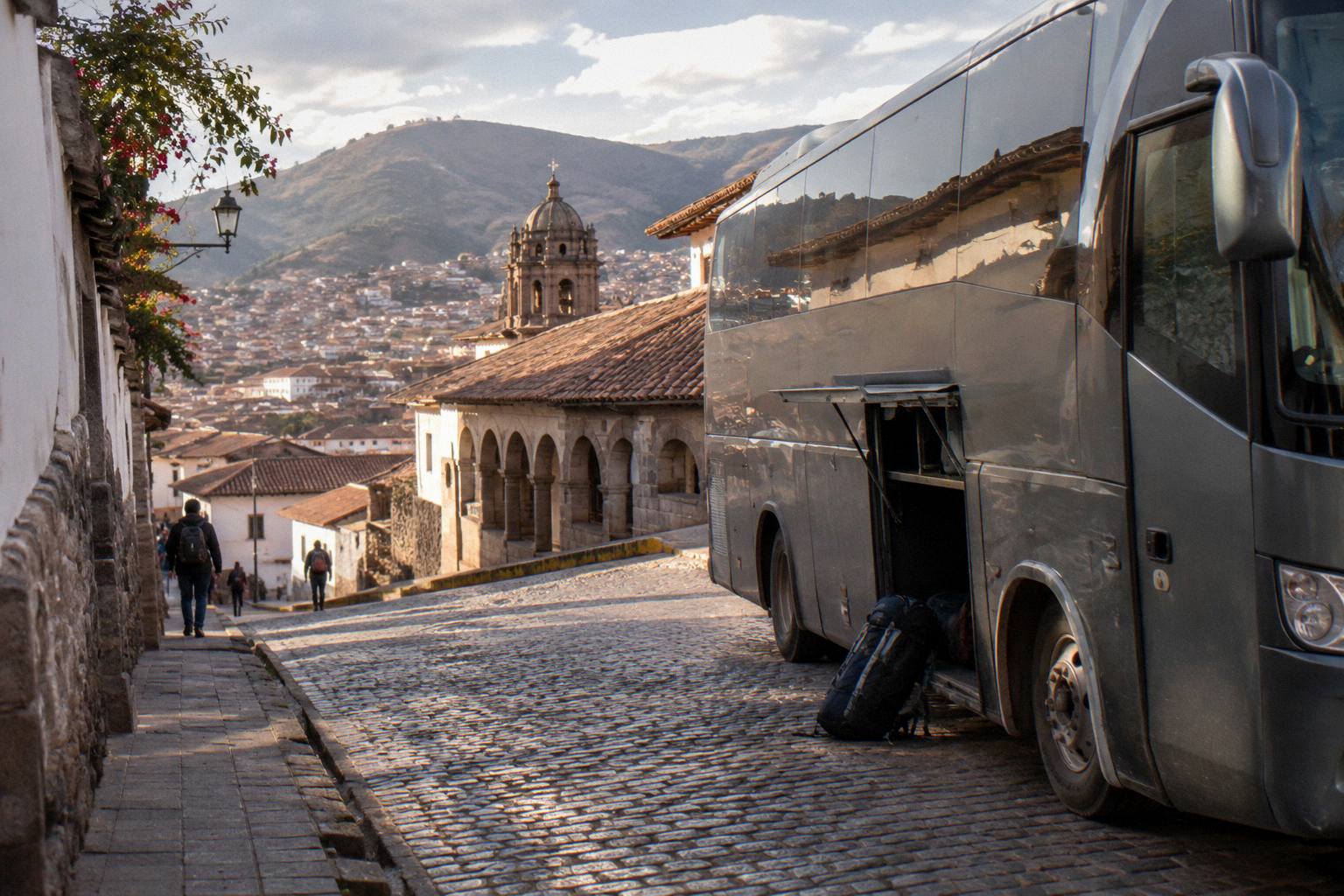
Peru Itinerary 10 Days By Bus
Ten days is enough for one clean south-to-highlands bus chain: Lima, Paracas, Huacachina, Nazca, Arequipa, Puno and Cusco, connected entirely by road.
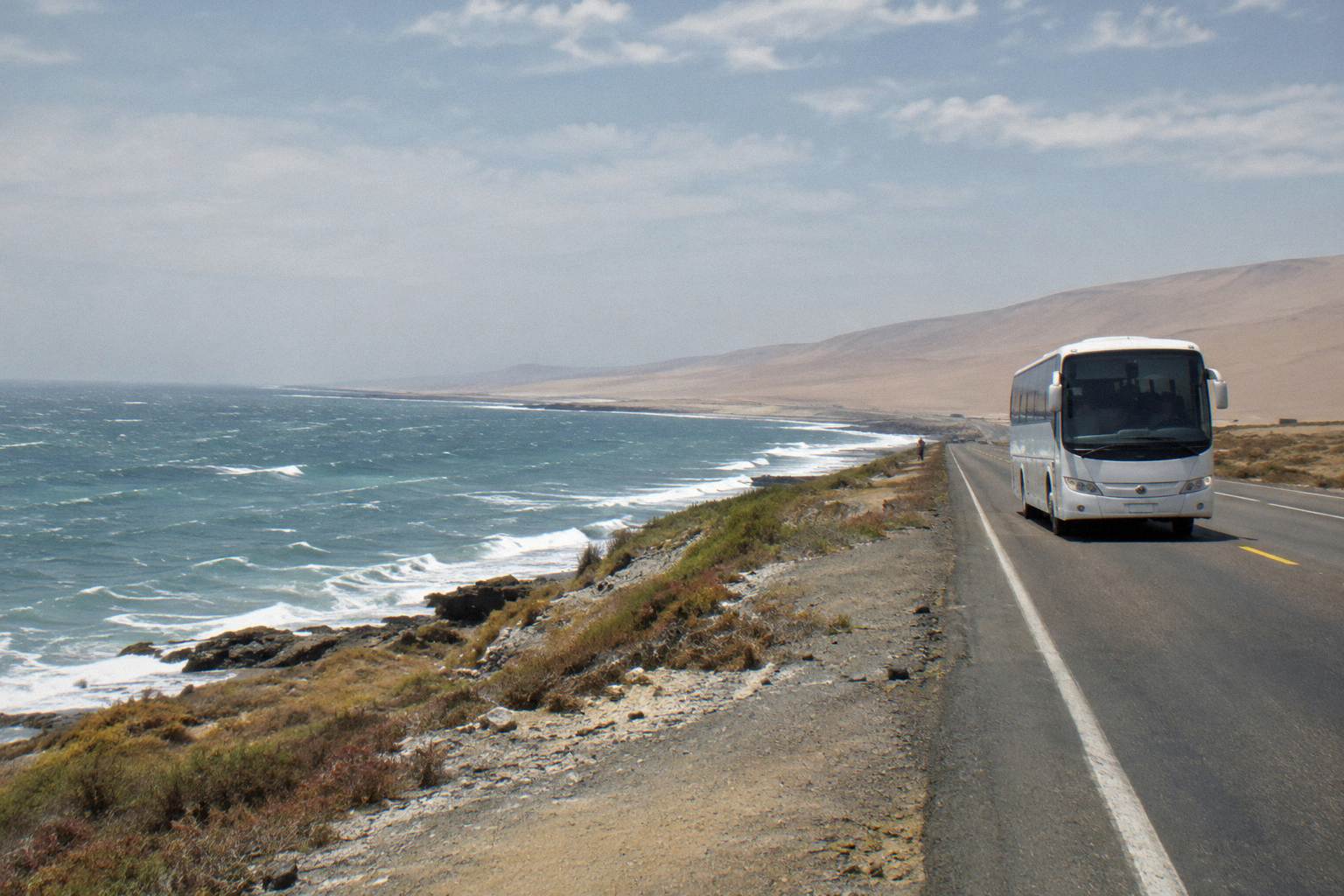
Short answer
A ten day bus route works best as one direction: Lima to Paracas (about 251 km), Paracas to Huacachina, on to Nazca, then Nazca to Arequipa (about 566 km), Arequipa to Puno, and Puno to Cusco. That single chain covers desert coast, Colca country, Lake Titicaca and Cusco at about 3,400 m without backtracking.
How Does A 10 Day Peru Bus Route Fit Together?
One clean chain, run in a single direction, is what makes ten days work: Lima to Paracas, Paracas to Huacachina, Huacachina to Nazca, Nazca to Arequipa, Arequipa to Puno, and Puno to Cusco, a total of roughly 2,100 km run south and then uphill. Every leg runs south and then climbs, the route never repeats itself, and the final arrival in Cusco at about 3,400 m lands the traveller at the door of Machu Picchu country rather than in a bus shed with a 17 hour return still owed. Flying out of Cusco closes the loop.
That one-way shape matters more than any individual choice on the route. A plan that doubles back to Lima burns two full days on a road already travelled, and the Cusco to Lima corridor is the longest single domestic bus run in the country. The free-flow drive estimate for Cusco to Lima through Abancay and Nazca is about 1,103 km and 17.8 hours, and timetabled trips run 20 hours or more, so a return by road is a plan-killer inside a ten day budget.
The southern chain, by contrast, breaks into comfortable pieces. Nothing on it demands a night on board except optionally Nazca to Arequipa, and even that leg can be run in daylight with an early start or split with a stop. Each town on the chain also earns its place: Paracas for the coast and the Ballestas side trips, Huacachina for the dunes, Nazca for the lines, Arequipa for the colonial core and Colca Canyon access, Puno for Lake Titicaca, and Cusco for everything above it.
| Leg | Distance | Free-flow drive estimate |
|---|---|---|
| Lima to Paracas | about 251 km | about 3.5 h |
| Paracas to Huacachina | about 74 km | about 1.3 h |
| Huacachina (Ica) to Nazca | about 142 km | about 2.4 h |
| Nazca to Arequipa | about 566 km | about 7.8 h |
| Arequipa to Puno | about 273 km | about 5.5 h |
| Puno to Cusco | about 387 km | about 6.2 h |
Every figure in that table is an OSRM free-flow drive estimate, a routing-engine number for an empty road, and real bus journeys exceed it because of stops, terminals, mountain grades and traffic. None of them is a timetable time, and a booking page or operator timetable is the place to find how long a specific service takes.
Before the legs are booked, it is worth reading how the wider system works: seat classes, terminals and ticket rules each shift what a day on the road feels like. The how Peru bus travel works guide covers the basics, and the Peru bus classes, cama and semi cama guide explains the recline degrees that matter on the two long legs of this route.
Which Bus Legs Fill Days 1 To 3, Lima To Paracas And Huacachina?
Days 1 to 3 cover Lima, the Paracas coast and the Huacachina dunes, a stretch of short and easy legs with no need for a night bus: Lima to Paracas is about 251 km and Paracas to Huacachina only about 74 km more. Lima deserves a full first day, the run south to Paracas is the shortest long leg of the route at a free-flow drive estimate of about 3.5 hours, Paracas earns a day for the reserve and the islands, and Huacachina sits only about 1.3 free-flow hours further on, close enough that the move between them barely dents a morning.
Lima itself sits at 162 m, sea level for acclimatisation purposes, which makes it the right place to start for anyone heading to altitude later in the chain. The city's role in a bus plan is mostly as a departure point, and its terminals are spread by company rather than gathered in one place: Cruz del Sur boards at Terminal Javier Prado, Av. Javier Prado Este 1109, La Victoria, while Oltursa lists Jiron Manuel Portocarrero No 380, Surquillo among its Lima points. There is no single main terminal, so the departure address belongs to the company booked, not the city.
The first leg south is also the one with the most tourist-oriented options. The One-Way Bus from Miraflores, Lima to Paracas run by Wayki Bus Peru is rated 4.2 across 62 reviews, boards in Miraflores and Barranco, drops at El Chaco in Paracas, and its listing gives 3 hours, with free cancellation up to 24 hours before for a full refund; Check availability. A second booking page by another operator offers the same corridor from US$18 per person with hotel pickup in Miraflores and Barranco, a separate listing with its own basis rather than a merged product.
For anyone who would rather fold the coast and the dunes into one ticket, a combined option exists. The one-way tourist bus from Lima to Huacachina with a Paracas stop, also by Wayki Bus Peru, is rated 3.7 across 77 reviews, runs from Miraflores, San Isidro and Barranco to a Viajero hostel meeting point in Huacachina with a stop in Paracas on the way, and its listing gives 8 hours including that stop, again with free cancellation up to 24 hours before. It trades a full day in Paracas for a simpler single booking.
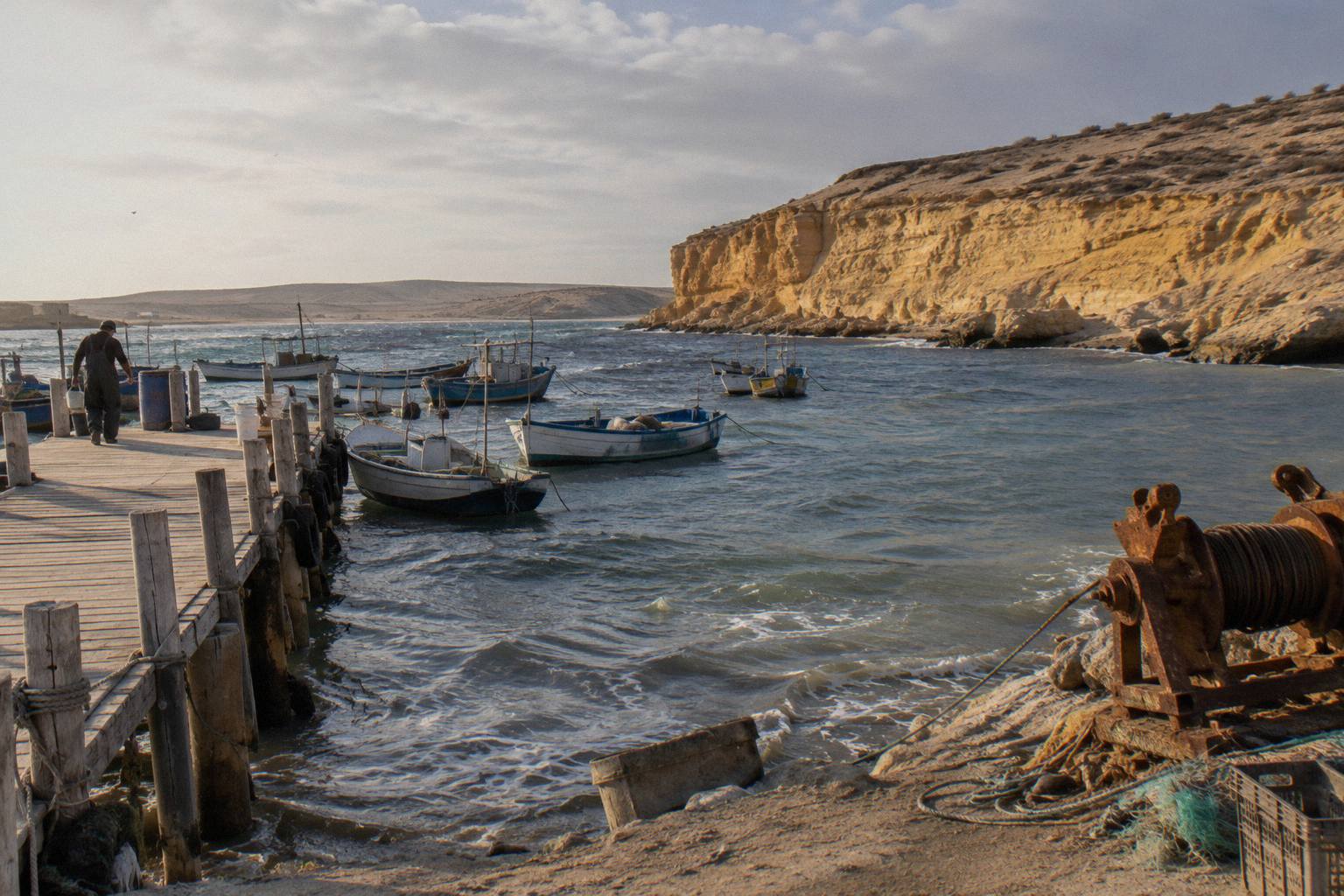
Day 3 belongs to Huacachina, the oasis settlement ringed by dunes near Ica. The town is near sea level desert, hot in the day, and the dune buggy and sandboarding trips that fill the afternoons there are separate products from the bus legs. From a routing point of view Huacachina's job is simple: it sits between Paracas and Nazca, and the Ica to Nazca leg, about 142 km with a free-flow drive estimate of about 2.4 hours, stands in for the Huacachina to Nazca run since the oasis is effectively an Ica suburb on the road south.
How Do You Get From Nazca To Arequipa Without Losing A Day?
The Nazca to Arequipa leg, about 566 km with a free-flow drive estimate of about 7.8 hours, is the longest single stretch of the ten day chain, and it is the one leg where a night on board is worth considering, with the caveats the governments attach to overnight travel. Run in daylight it eats a full day; run overnight it costs a night's sleep on a mountain highway. The UK FCDO is blunt on the trade-off: "Bus crashes are common, especially at night. Only use reputable transport companies, and where possible, avoid overnight travel, especially in mountainous and remote regions" (FCDO safety and security).
Nazca itself needs only half a day. The lines are seen from the air on a flight, or for free and at ground level from the viewing tower south of town, and the town's role on the chain is otherwise as a waypoint. Day 4 in a ten day plan can be the Nazca morning and the Arequipa journey combined, or the Nazca morning and a night departure, each a legitimate reading of the same map.
For the daylight reading, the arithmetic is workable but tight. A town-to-town run of about 7.8 free-flow hours becomes something longer in practice with terminal boarding, stops and the climb off the coast, so daylight travel means most of a day on the bus. For the overnight reading, the same government advice cuts against it, and Canada's is more direct still: "Avoid taking buses and coaches at night" (Government of Canada travel advice). A ten day plan that stages this leg as a long daytime ride, with a morning in Nazca and a late arrival in Arequipa, is the reading most consistent with the published advice.
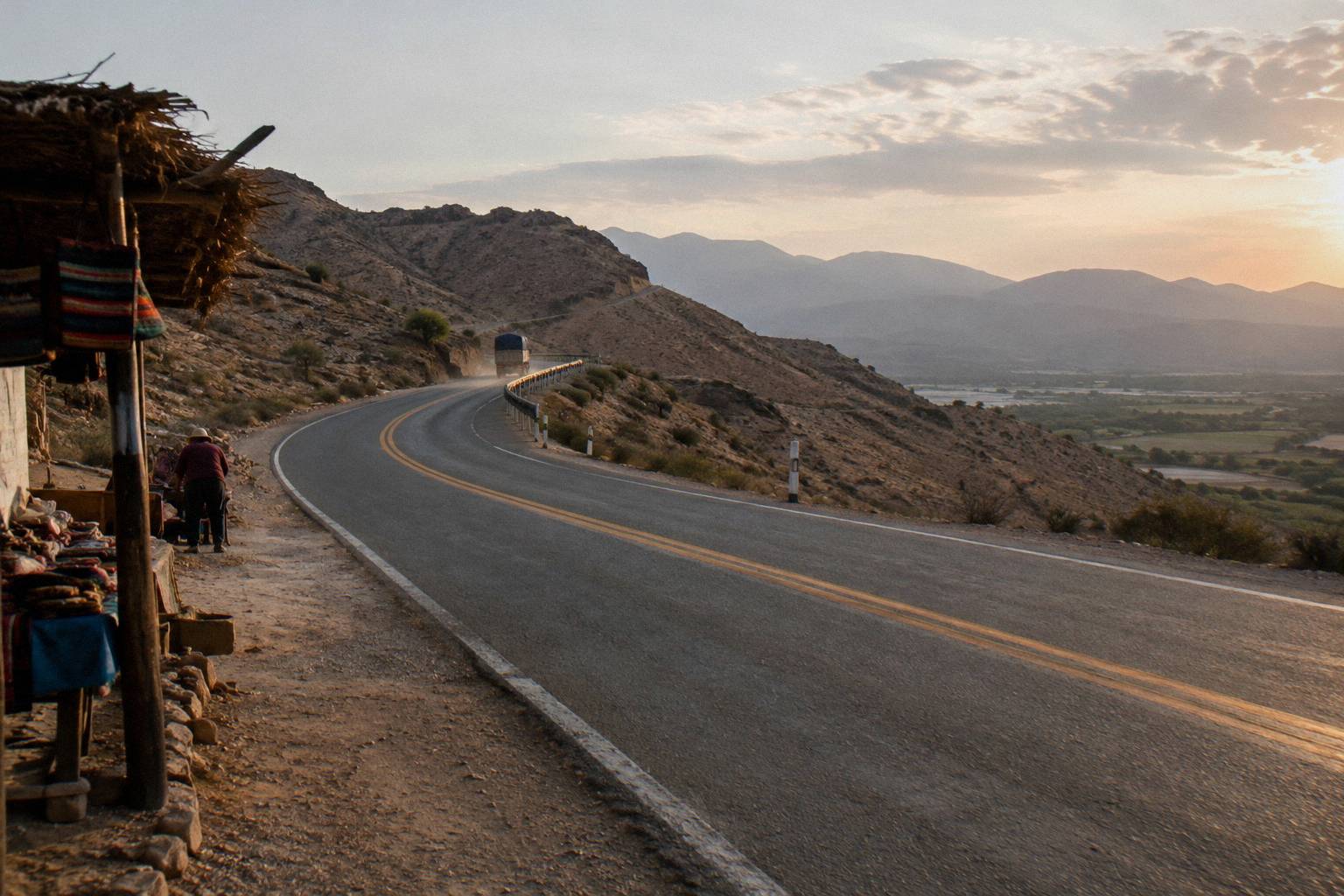
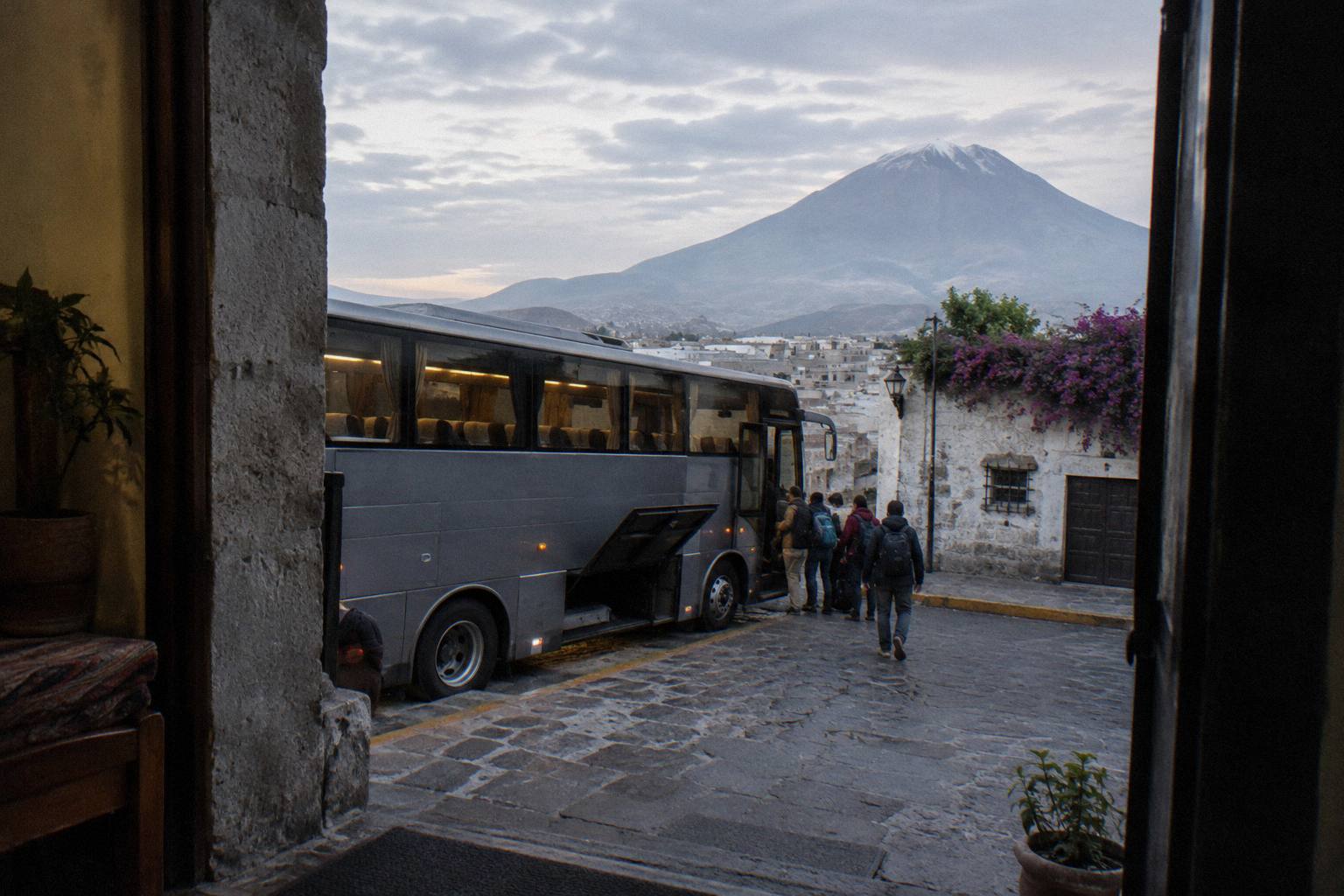
Arequipa arrives as a reward either way. At 2,429 m it is the first real altitude of the route, a useful staging step between the coast and the 3,848 m of Puno, and the white volcanic stone of its centre plus the Santa Catalina convent fill a day without any transport at all. The city is also the base for Colca Canyon trips, which the Arequipa to Colca Canyon by bus guide covers, though a ten day chain that continues to Puno and Cusco has room for Colca only as a decision, not as an addition.
How Many Days Should Arequipa And Puno Get On A Ten Day Plan?
Arequipa earns two nights and Puno one to two, with the Arequipa to Puno bus leg, about 273 km and 5.5 free-flow hours, running between them and climbing from 2,429 m to 3,848 m in a single afternoon. That climb is the most altitude a body gains anywhere on the chain, and the reason the coast-to-Arequipa-to-Puno order matters: arriving at 3,848 m straight from Lima is a harder day than arriving from a 2,429 m city already two days acclimatised.
Day 5 to 6 in Arequipa covers the city itself, with Colca as the optional detour for plans that trim elsewhere. Day 7 runs the bus to Puno. The leg is short by this route's standards, and tourist-class options exist on the corridor. The direct sleeper service from Arequipa to Puno run by Turismo Mer, a sleeper bus with a 160 degree recline that the listing names, is rated 4.3 across 20 reviews, its listing gives 7 hours, and the terminal boarding fee is not included, so check the boarding fee line on the listing. It is a night service, and the FCDO's overnight caution applies to it like any other. Everything else covered here is indexed on Peru By Bus.
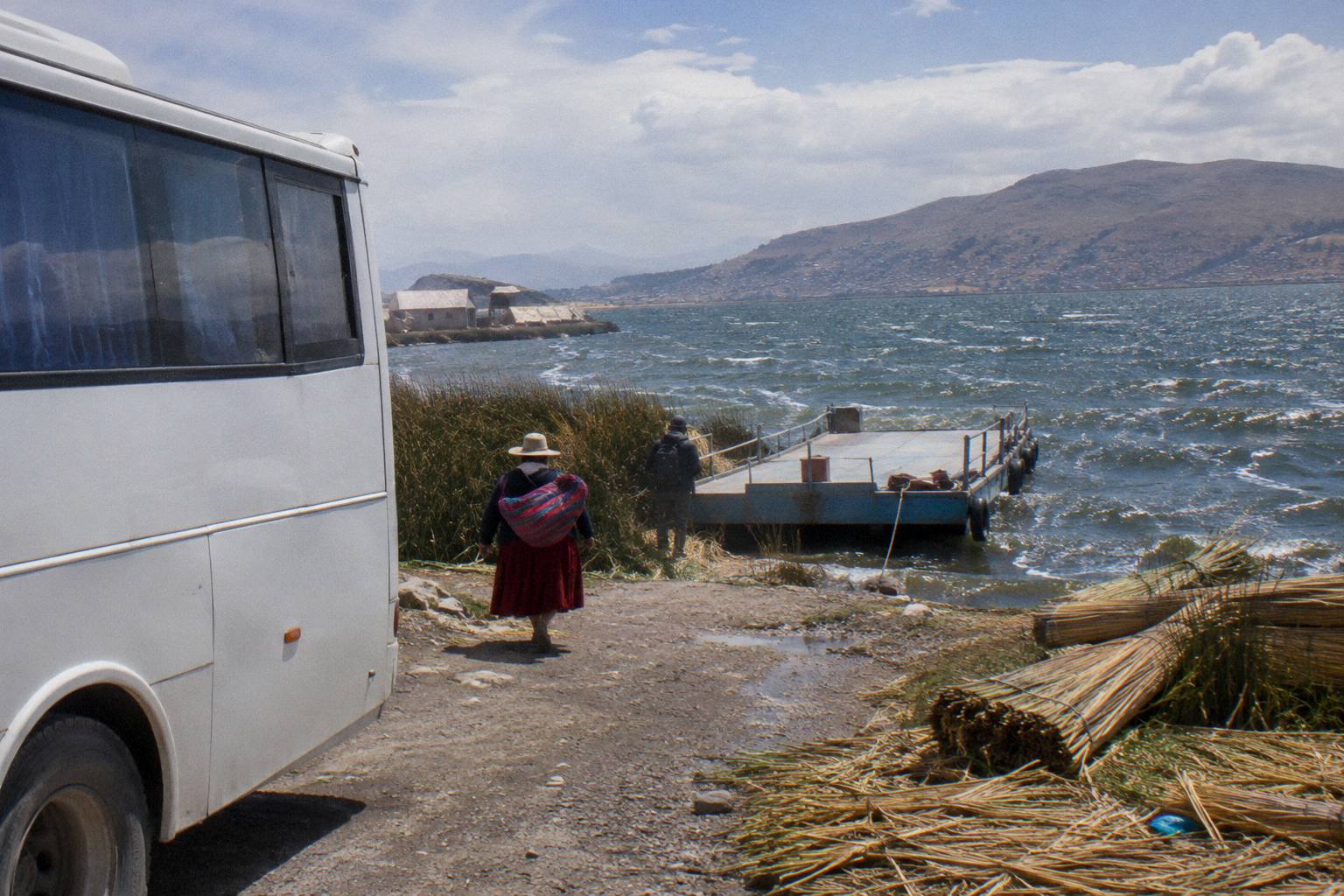
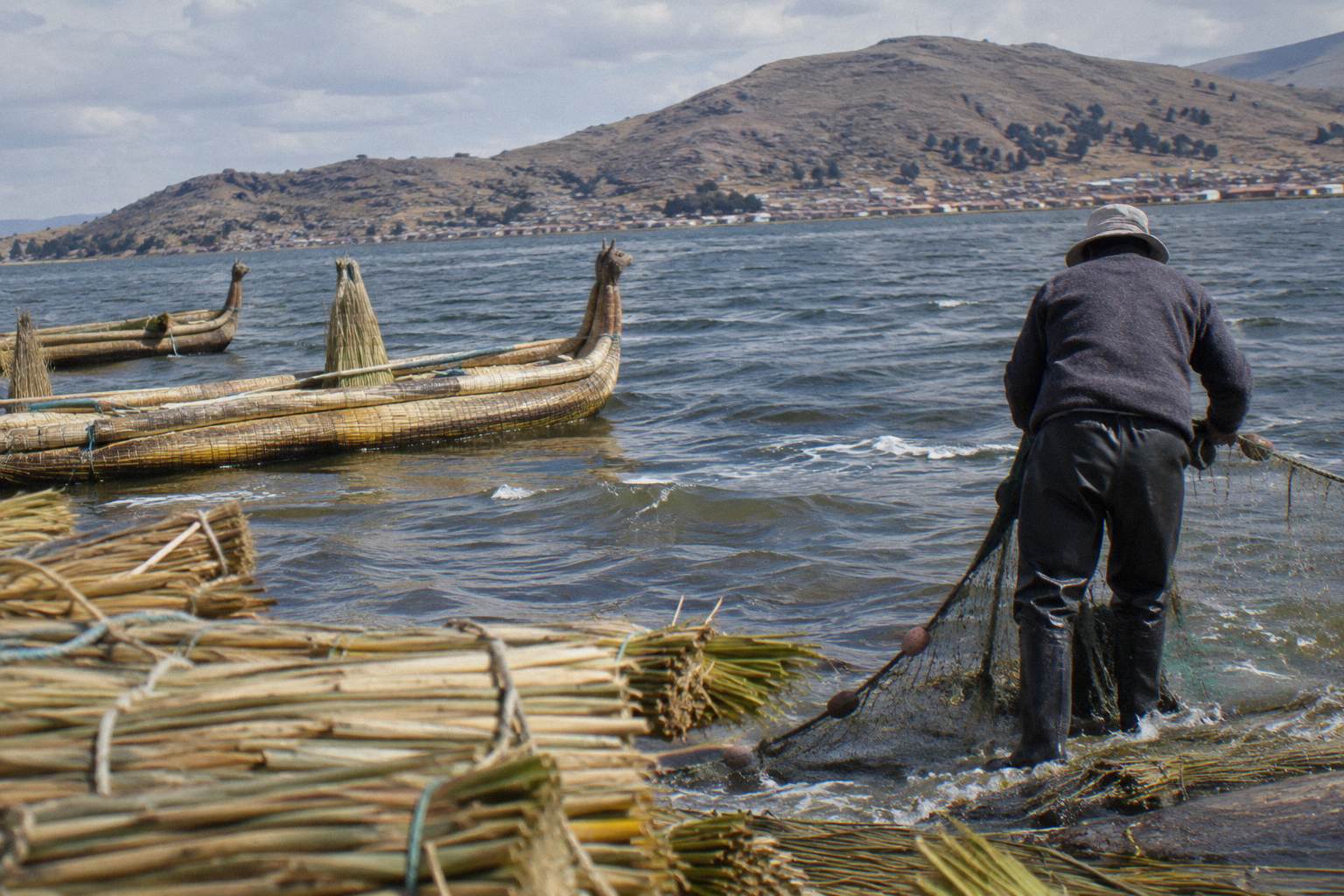
Puno on day 8 is the Lake Titicaca day: the Uros floating islands, Taquile, or the longer homestay trips that a ten day budget cannot really host. The lake sits at 3,812 m and the city at 3,848 m, the high point of the whole route in more ways than one, and the altitude table below shows why the itinerary climbs in steps rather than one jump.
| Stop | Altitude | Stage of the chain |
|---|---|---|
| Lima | 162 m | Start, sea level |
| Paracas and Huacachina | near sea level | Days 1 to 3, coastal |
| Nazca | about 585 m | Day 4, coastal desert |
| Arequipa | 2,429 m | Days 5 to 6, first step |
| Puno | 3,848 m | Days 7 to 8, high plain |
| Cusco | about 3,400 m | Days 9 to 10, end point |
The altitude figures come from INEI's statistical compendium, and the practical reading is the steps between them, not the numbers themselves: each overnight stop on this chain is lower than the one after it except Cusco, which is lower than Puno. Anyone wanting the physiology and the practical pacing in detail should read the Peru bus altitude and acclimatisation guide; the staging table above is the itinerary-level version of the same idea.
Which Bus Runs Puno To Cusco, And Why Is It A Day Trip?
The Puno to Cusco leg, about 387 km with a free-flow drive estimate of about 6.2 hours, is the best-value day of the whole route, because the tourist buses that run it turn the crossing into a sightseeing run, and the Turismo Mer service with an all-you-can-eat lunch stop is rated 4.6 across 24 reviews. Its listing gives 11 hours for the full journey, a day spent watching the altiplano roll past with a lunch stop included, and it drops at the Turismo Mer private terminal in Cusco. Free cancellation up to 24 hours before applies as listed.
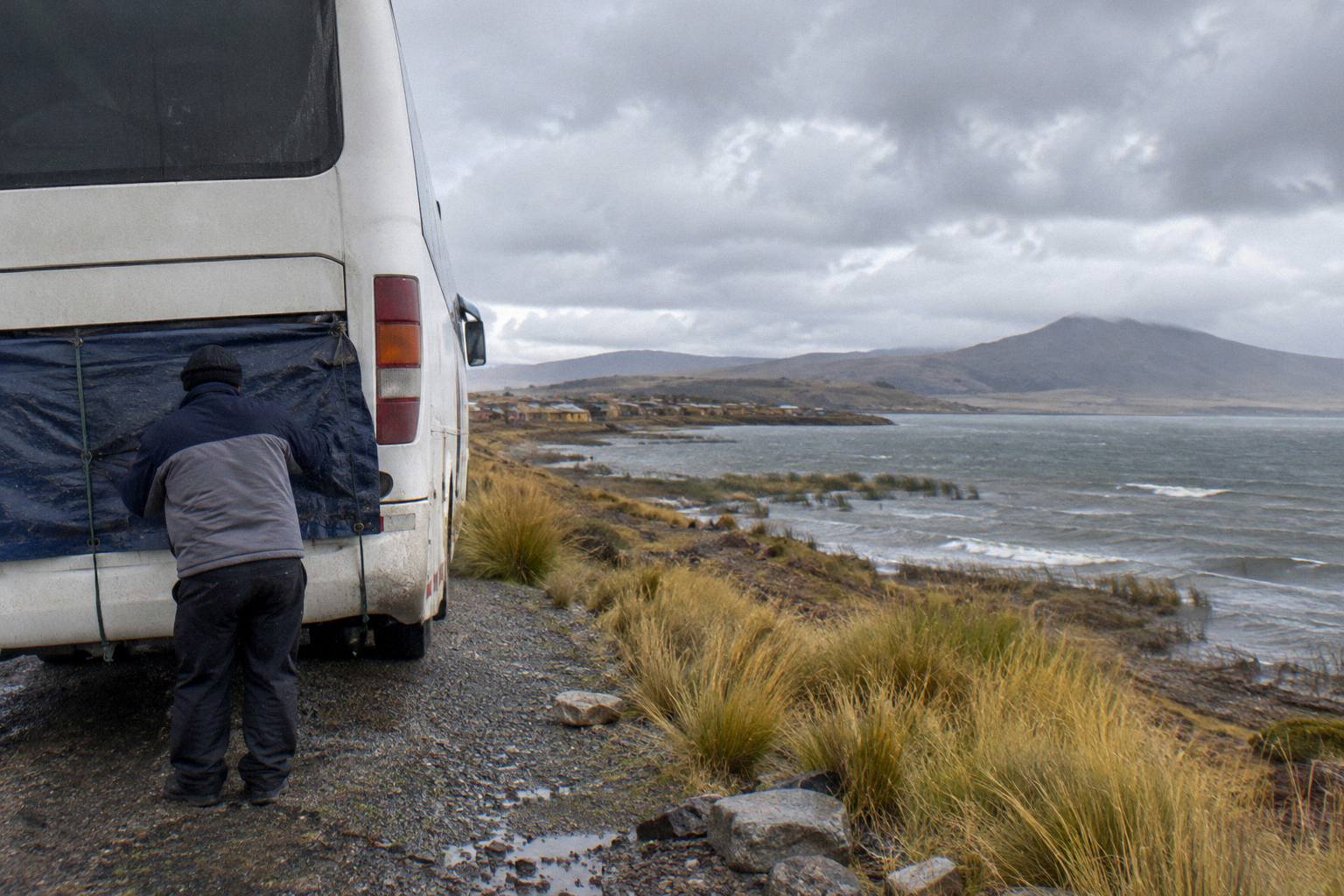
That 11 hour listing figure against a 6.2 hour free-flow estimate is the clearest illustration on the route of what a tourist bus buys: the difference is stops, the lunch, and the sightseeing pace on the Aymara high plain. The road crosses the La Raya pass at about 4,300 m, the highest point a passenger reaches on any regular southern route, and the descent into the Cusco valley drops back to about 3,400 m for the final two days of the plan.
The Bus from Puno to Cusco with all-you-can-eat lunch is the leg this itinerary would book as its set piece, and it fits day 9 of a ten day plan cleanly: overnight in Puno, on the bus in the morning, and into Cusco with the evening free. Check availability.
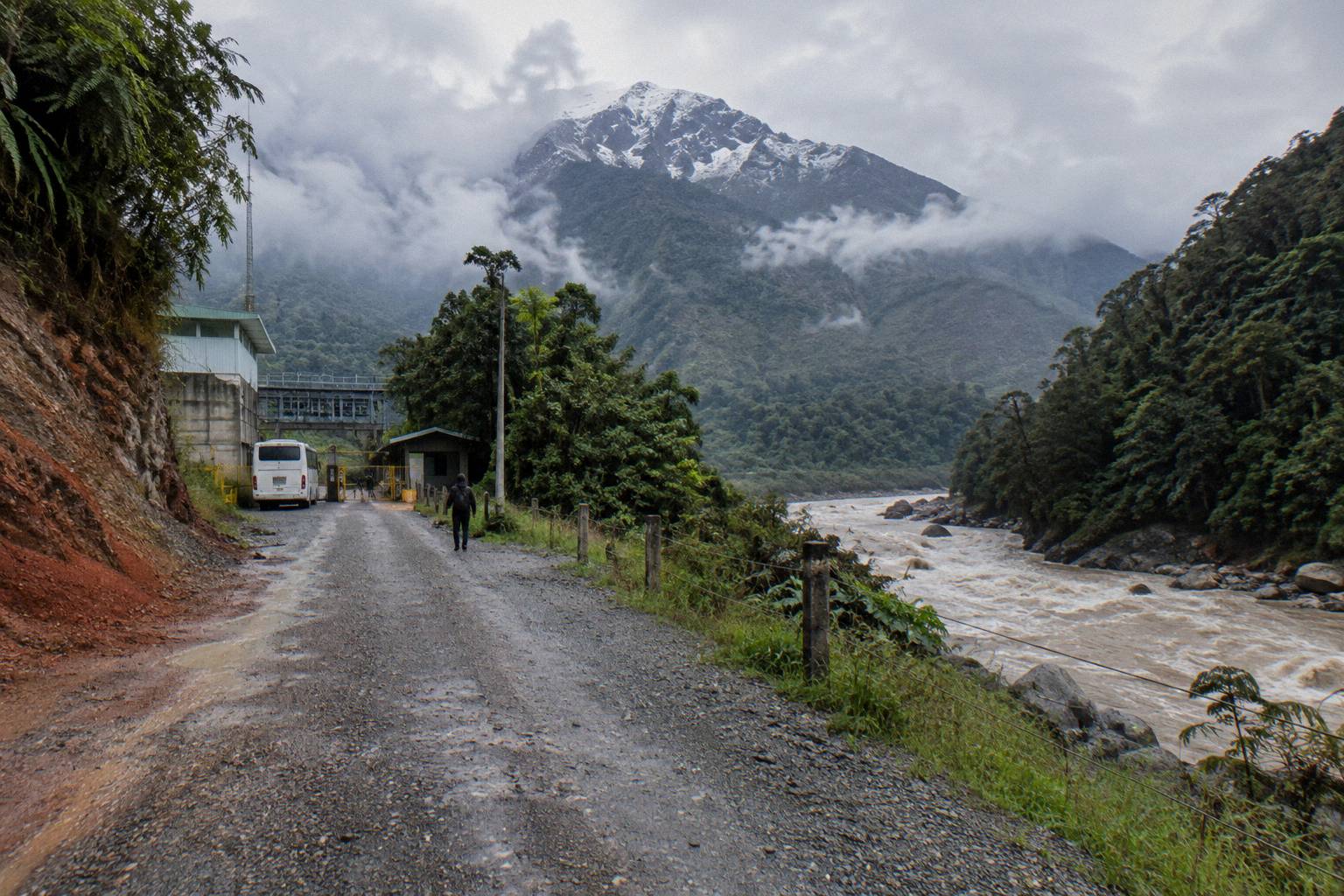
Cusco on day 10 is the plan's dividend. The city itself fills a day with the plaza, the San Pedro market and the ruins on its hillside, and it is the staging point for the back-door bus run toward Machu Picchu, the 212 km Cusco to Hidroelectrica route with a free-flow drive estimate of about 5.1 hours that the Cusco to Machu Picchu by bus via Hidroelectrica guide covers. A ten day plan that ends here is a plan that stops one extension short of Machu Picchu itself, which is the honest trade-off of the format.
Can A Hop-On Hop-Off Pass Replace This Itinerary?
A hop-on hop-off pass covers the same Lima to Cusco chain, and for a traveller who wants flexibility rather than fixed dates it is a genuine alternative to booking six separate legs, with passes valid for a year and bus times changeable in the app up to 12 hours before departure, per its pass terms. Peru Hop runs daily buses on the corridor, picks up at hotels rather than terminals, and its pass pages name the exact stops this itinerary uses: Chincha, Paracas, Huacachina, Nazca, Arequipa, Lagunillas, Puno, Cusco, Copacabana and La Paz.
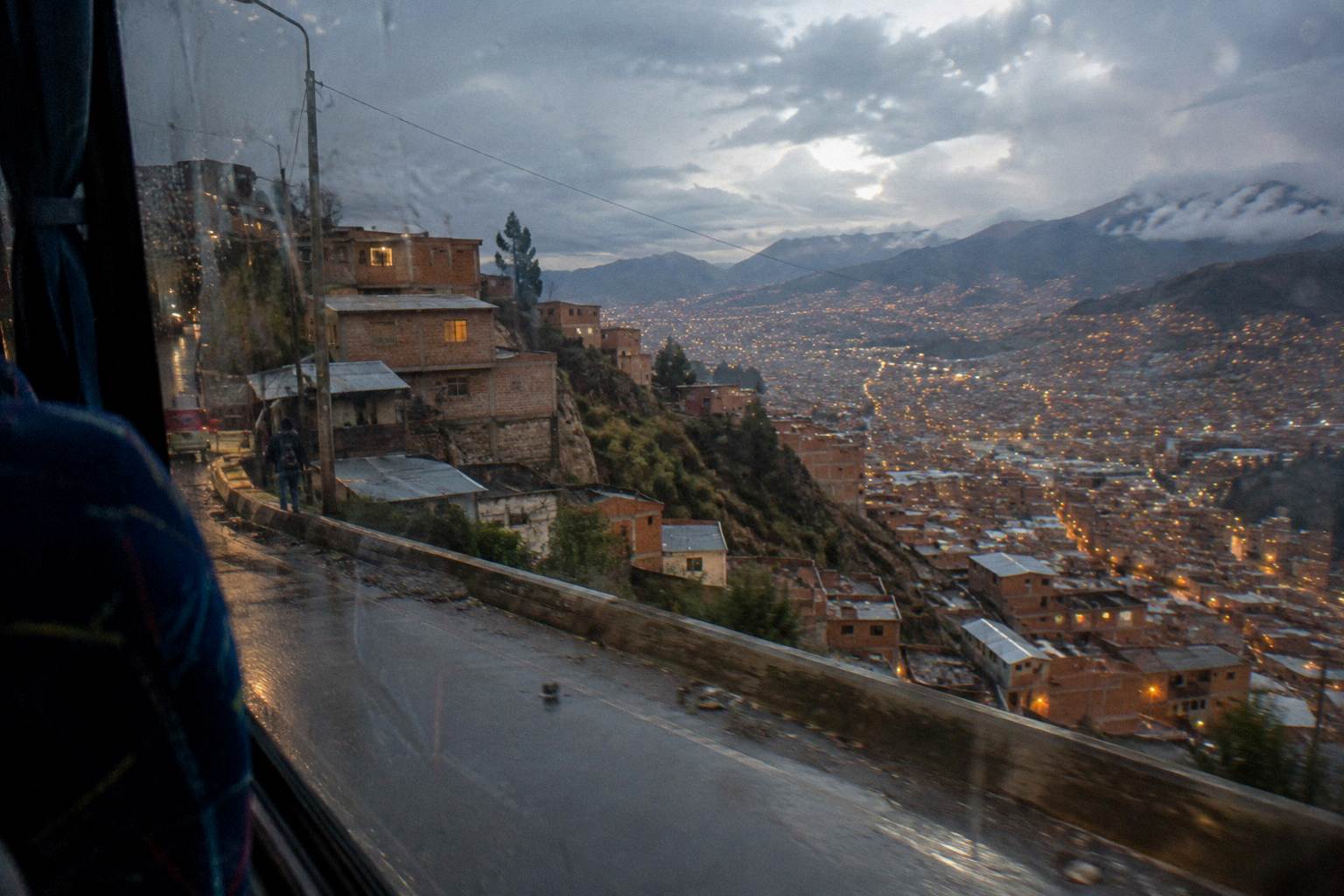
The pass system's value for a ten day plan is the skip logic. Peru Hop lists a fastest time of 6 days for the Full South To Cusco pass, which covers the whole chain, and 3 days for Get To Cusco Quick, which skips Arequipa and Puno, where a fixed-ticket traveller would need to rebook a leg, a pass holder changes a bus time in the app.
| Pass | Route covered | Fastest time (Peru Hop lists) |
|---|---|---|
| Full South To Cusco | Chincha, Paracas, Huacachina, Nazca, Arequipa, Lagunillas, Puno, Cusco | 6 days |
| Get To Cusco Quick | Chincha, Paracas, Huacachina, Nazca, Lagunillas, Cusco | 3 days |
| Canyon To Lima | Arequipa, Nazca, Huacachina, Paracas, Chincha, Lima | 3 days |
| Lima To Cusco To La Paz | Full chain plus Copacabana and La Paz | 10 days |
A pass is not the only way to run this route, and it is not automatically the better one. The fixed tourist buses profiled above run the same corridors as individual tickets with set drop-off points, and the Peru Hop versus public bus guide sets out the differences in control, cost structure and pacing. What a pass buys is the year of validity and the ability to change plans mid-route, which matters on a ten day chain where one delayed day would otherwise cascade through five bookings.
What Disruptions Should A 10 Day Bus Plan Allow For?
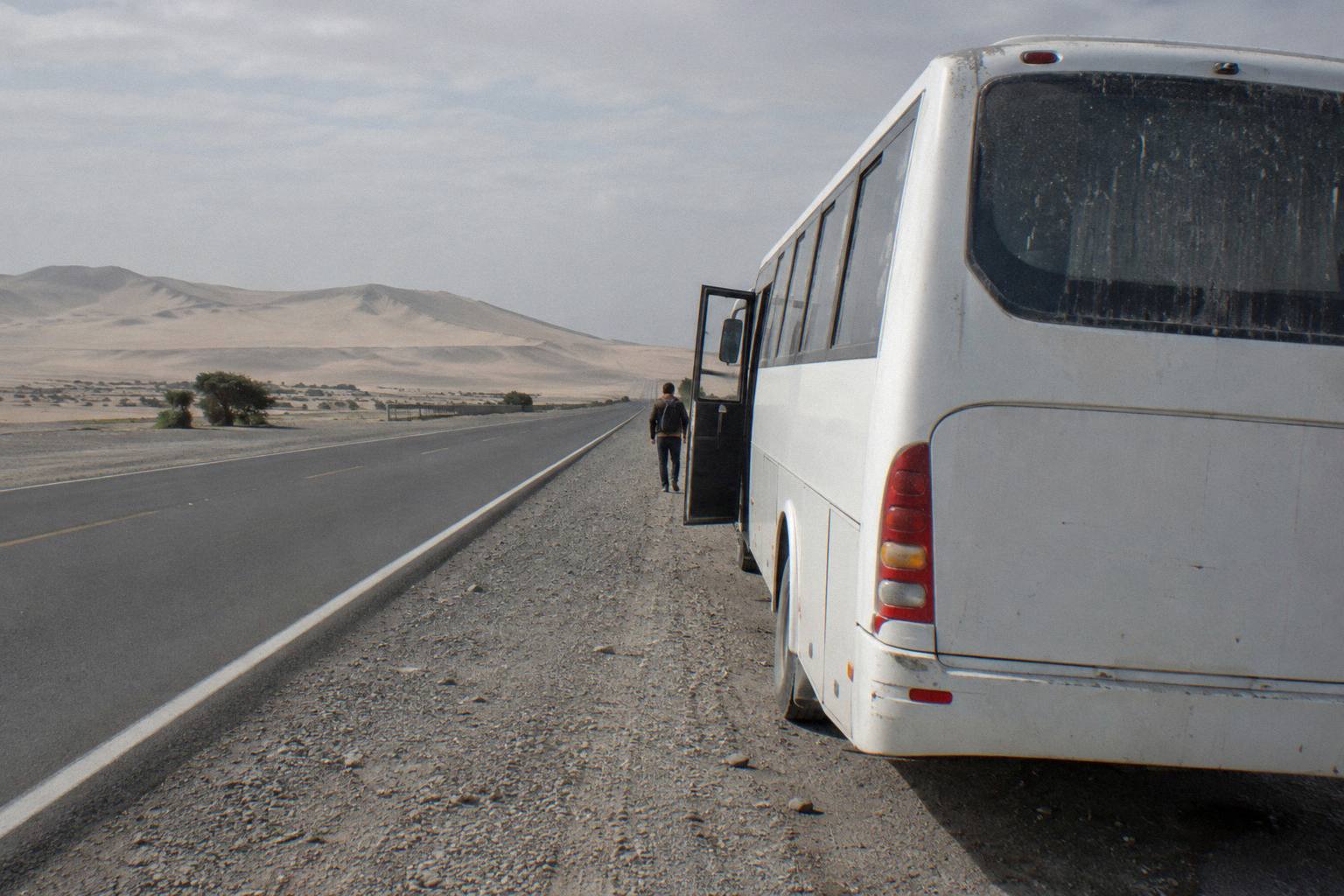
Two things derail southern Peru bus plans: road blocks from strikes and protests, and rain-season damage on the highland legs, and a ten day chain should carry at least one buffer half-day and a same-day checking habit to absorb them. The FCDO names the risk plainly: "Political protests in Peru are unpredictable and can escalate quickly. Demonstrations can become violent and lead to roadblocks, travel disruption, including trains, and suspension of immigration services at land borders", and it names Arequipa, Cusco and Puno among the regions with recent protests, three of this itinerary's own stops.
The checking habit has a tool. SUTRAN's alert map at alertasviales.sutran.gob.pe shows closed roads in red, restricted in yellow and open in green, updated as a live picture rather than a forecast, and it is the fastest way to see a blockade on the Nazca to Arequipa or Arequipa to Puno legs before leaving for the terminal. Strikes, the FCDO notes, can be announced "with little or no notice, particularly in areas connected to mining", and the same advice is explicit about what to do at a block: "Do not attempt to pass blockades."
Rain is the second variable. The Andean rainy season runs roughly September to April, and the FCDO carries an El Nino notice for the coast: "Through late 2026 to April 2027, the El Nino weather event is expected to generate heavy rainfall, possible flooding, landslides, and mudslides, especially in, but not restricted to, the northern and central coast. These could cause travel disruption, such as road closures." The southern coast legs sit outside the worst of that band, but the highland legs from Arequipa upward share in the general season.
A buffer built into the plan costs little. The day 7 Arequipa to Puno leg is the natural place to hold slack, because Puno's day 8 content is flexible and the Puno to Cusco tourist bus runs daily. The wider subject, including what to do at a road block and how rebooking works, is covered in the Peru bus delays, strikes and rainy season guide, and passenger-side ticket rules, including the right to postpone or transfer a domestic ticket with 24 hours notice at reissue cost under INDECOPI's rules, sit with the Peru bus tickets and how to book guide.
Terminal security is the last piece of daily practice. The FCDO warns of "a risk of robbery by criminals posing as taxi drivers, especially at Jorge Chavez International Airport and bus terminals" and advises travellers to "use one of the taxis registered at bus terminals" and, "on bus journeys, keep your passport with you". The Peru bus safety guide collects the full advisory picture, and the Peru bus luggage and theft guide covers the hold and hand-luggage allowances each operator on this chain states.
That is the whole machine: six legs, four altitude steps, one long day between Nazca and Arequipa, one set-piece tourist run from Puno, and a buffer against the two things that actually stop buses in the south. Ten days holds it with room for a wasted morning or a moved bus time, which is the definition of a plan that survives contact with the road.
Common Questions About A 10 Day Peru Bus Itinerary
Is 10 Days Enough For Lima To Cusco By Bus?
Yes. The one-way chain of Lima, Paracas, Huacachina, Nazca, Arequipa, Puno and Cusco fits ten days with a buffer half-day, using legs of about 251 km up to about 566 km, and it ends in Cusco at about 3,400 m with Machu Picchu extensions available from there.
Which Is The Longest Bus Leg On The 10 Day Route?
Nazca to Arequipa, about 566 km with a free-flow drive estimate of about 7.8 hours. Run in daylight it takes most of a day once terminal boarding and stops are added, and the published government advice counsels against overnight buses in mountainous regions.
Do You Have To Take An Overnight Bus On This Itinerary?
No. The only leg where a night service is tempting is Nazca to Arequipa or Arequipa to Puno, and both have daytime options. The Arequipa to Puno Turismo Mer sleeper exists, but the FCDO advises avoiding overnight travel in mountainous regions where possible, and this itinerary can be run entirely in daylight.
Is Puno Worth A Stop On The Way To Cusco?
On a ten day plan, yes, for two reasons. Lake Titicaca at 3,812 m with Puno at 3,848 m is a destination in its own right, and the Puno to Cusco tourist bus with a lunch stop, rated 4.6 across 24 reviews, is the most enjoyable transport day on the whole southern chain.
How Does Altitude Work On A 10 Day Bus Route?
The route climbs in steps: Lima at 162 m, the coast near sea level, Arequipa at 2,429 m, Puno at 3,848 m and Cusco at about 3,400 m. Each overnight stop except Puno is lower than or close to the next one, which is the staging pattern the itinerary is built around.
What Happens If A Strike Blocks The Road Mid-Itinerary?
Check SUTRAN's alert map the day before each leg: closed roads show in red, restricted in yellow, open in green. The FCDO advises never attempting to pass a blockade, and under INDECOPI's rules a domestic bus ticket can be postponed or transferred with 24 hours notice at reissue cost only.