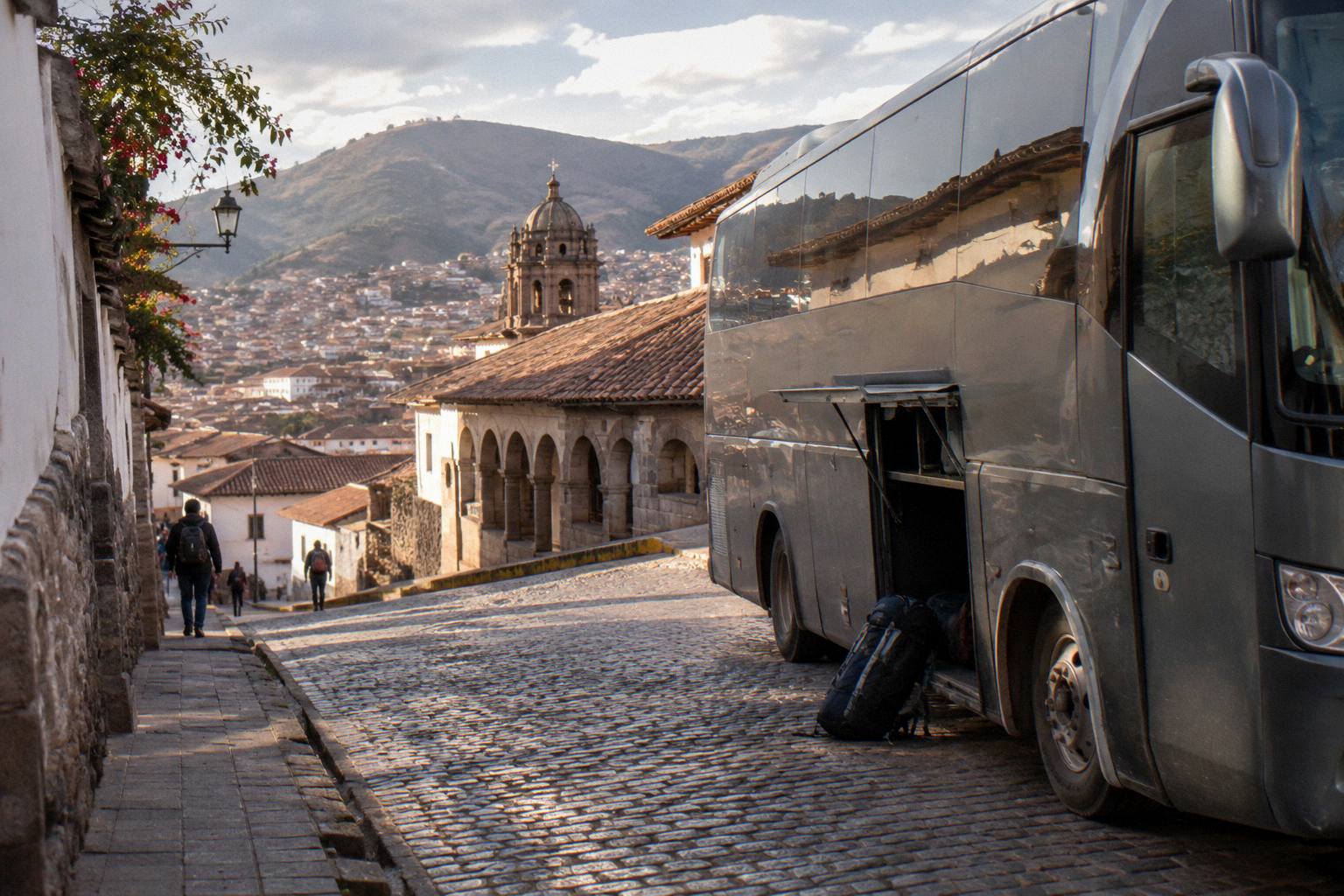
How Peru Bus Travel Works: Terminals, Classes And Tickets
Peru's long-distance buses run on a system of company terminals, named seat classes and written passenger rights. Here is how each piece works, from the ticket to the drop-off.
Short answer
Peru bus travel runs between company-owned terminals, not street stops. A ticket names your seat, allows up to 20 kg of hold luggage on national service under Peru's transit regulation, and can be postponed or transferred with 24 hours notice at reissue cost. Seat classes range from 120 degree recliners to 180 degree beds, and Peru Hop offers a door-to-door pass alternative.
Peru moves between its cities by bus. The distances are enormous, the rail network touches a fraction of the country, and the result is one of the most developed interprovincial bus systems in South America, run by private companies that each own terminals, name their seat classes and publish their own luggage rules. For a first-time visitor the system can look opaque, but it is built on a small number of repeated mechanics: a ticket that names your seat, a terminal that belongs to a specific company, a class name that encodes a recline angle, and a set of written passenger rights in Peru's national transit regulation. Peru By Bus breaks these mechanics down one by one, with the operator's own pages and the regulator's own text as the sources.
How Does A Peru Bus Ride Work From Start To Finish?
A Peru bus ride runs terminal to terminal: you buy a ticket that assigns a specific seat, arrive at the company's own terminal, have your bag weighed and tagged for the hold, pass a document check, board at a gate, and are dropped at the operator's terminal or listed stop in the destination city. Peru's transit regulation grants passengers a written set of rights on national service, including up to 20 kg of hold luggage and a fare receipt.
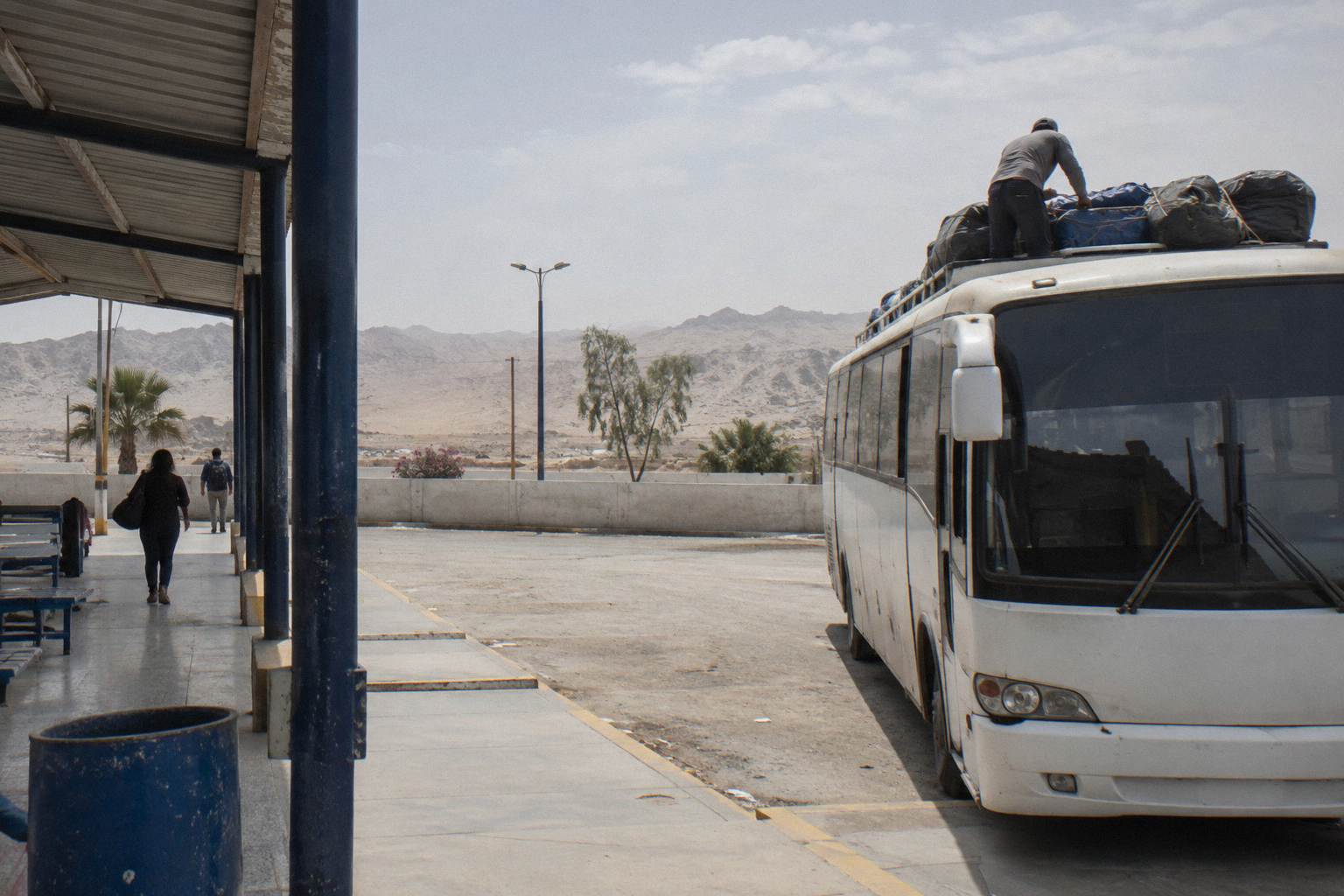
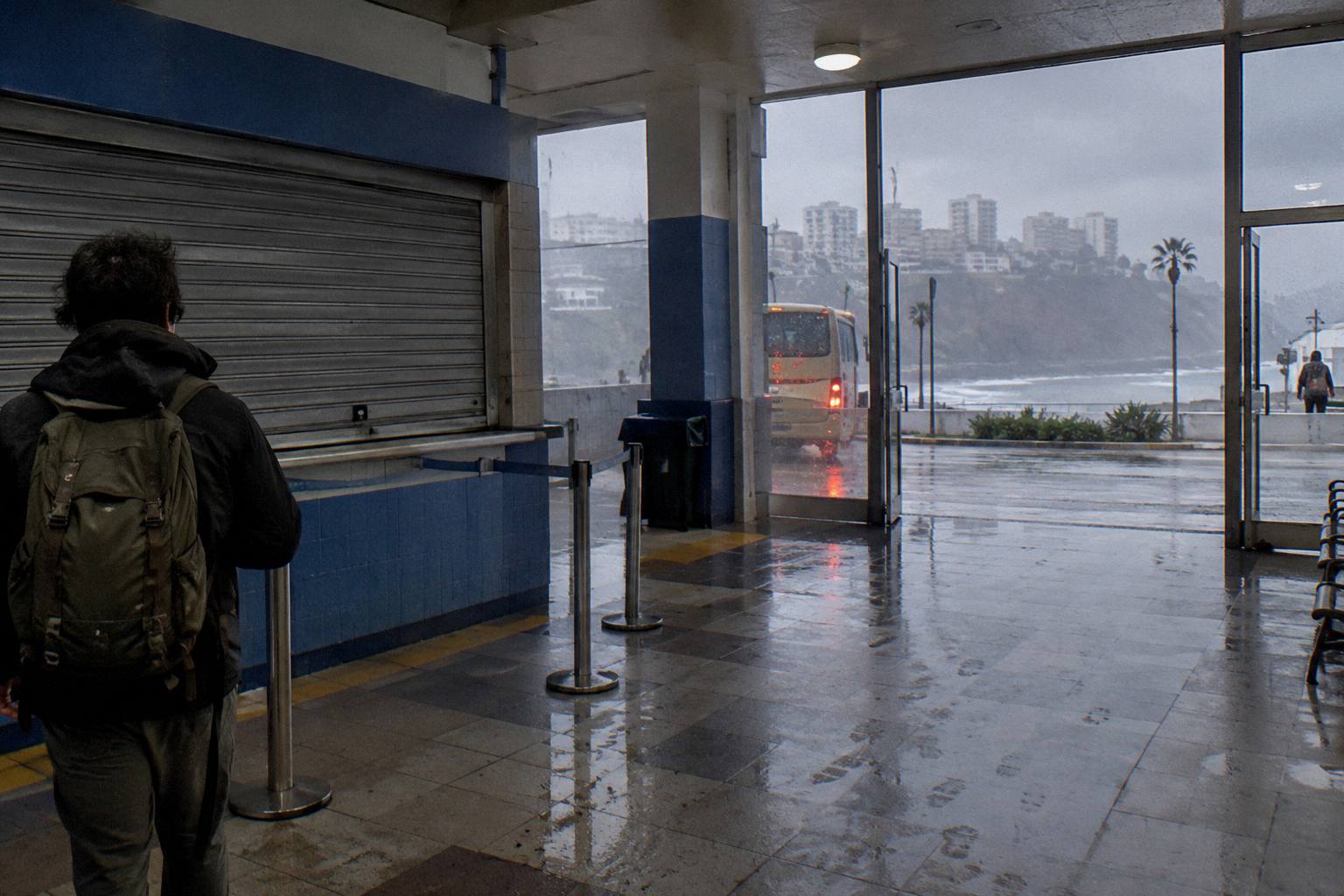
The ride begins before the bus does. Regular carriers in Peru must use authorised terminals at origin, destination and stops, and the public road may not be used as a terminal, so every trip you take starts at a named address belonging to the company you bought from. At the terminal your ticket is checked, your identity document is recorded in some cases, and your hold bag is weighed and tagged. Cruz del Sur, for one, lists DNI control and a metal detector at its Lima terminal alongside a medical check and alcohol test for its crews.
On board, the crew announces that seat belts are mandatory, which the regulation requires of them. National buses carry GPS monitoring that transmits to the transport authority permanently, and speed is controlled in software. The bus stops at rest points on long routes, and at the destination you collect your hold bag against the tag you were given. If something goes wrong, INDECOPI, Peru's consumer agency, runs an online complaints portal at Reclama Virtual, and every carrier must keep a complaints book.
| Quick Fact | What Applies |
|---|---|
| Hold luggage | Up to 20 kg free on national service, per Peru's transit regulation |
| Fare receipt | A passenger right on national service |
| Ticket changes | Postpone or transfer with 24 hours notice at reissue cost only, per INDECOPI |
| Boarding | Only at authorised points, with the bus stopped |
| Speed limit | 90 km/h for interprovincial buses where no sign sets another speed, SUTRAN states |
| Driver hours | Two drivers when a trip exceeds 5 hours by day or 4 at night |
What Does A Peru Bus Ticket Include?
A Peru bus ticket includes a named seat, the terminal-to-terminal ride, and up to 20 kg of hold luggage on national service; it does not include meals, and each operator's listing states what else, if anything, is on board. The ticket itself is a regulated document: you are entitled to a receipt, and a domestic ticket can be postponed or transferred with at least 24 hours notice with only the real reissue cost charged, per INDECOPI.
Tickets are sold at terminal counters, on operator websites, and through tourist-listing products. Cruz del Sur, for example, lists online sales until one hour before departure on its Lima to Cusco page. What the ticket guarantees is a specific numbered seat in a named class, and the class names matter more than the marketing around them: they encode a recline angle the operator states on its own page.
Tourist-ticket products layer extras on top. The Turismo Mer tourist bus from Puno to Cusco with a lunch stop is rated 4.6 across 24 reviews, runs one way from Puno to Cusco with a lunch stop named in the listing, and drops at the Turismo Mer private terminal in Cusco; the listing gives 11 hours, and free cancellation applies up to 24 hours before for a full refund. Products like this sit beside the regular carriers rather than replacing them.
One point of the regulation worth knowing before a dispute arises: carriers must not carry more passengers than the manufacturer's seat count, seating is the only position allowed, and children from age 5 need their own seat. If a carrier fails to run the service, the passenger has a right to information and to reprogramming or a refund. The full class-by-class picture is in the Peru bus seat classes explained guide.
Where Do Peru Buses Depart From?
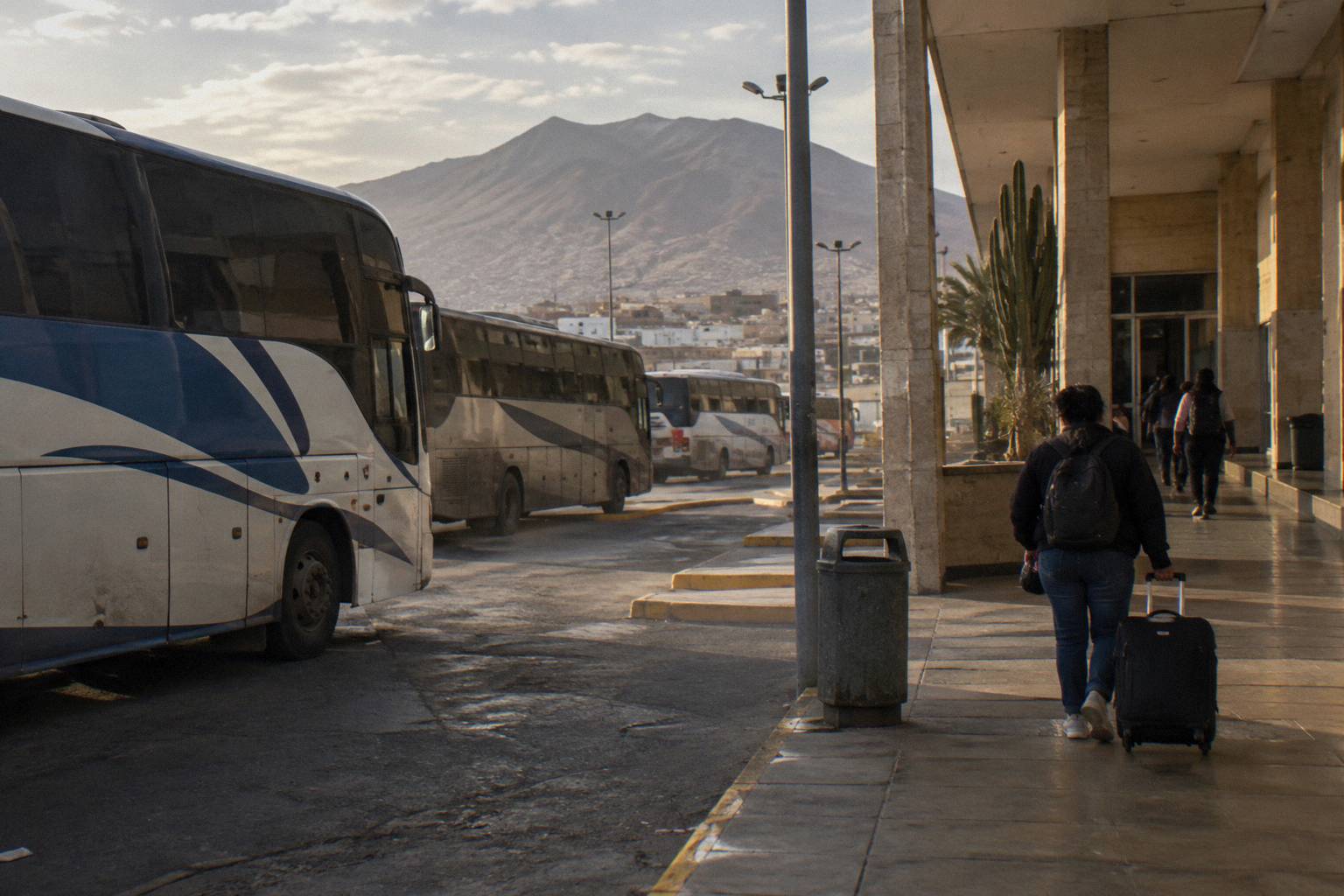
Peru buses depart from terminals owned or rented by each individual company, so there is no single main terminal in Lima, Cusco or Arequipa: Cruz del Sur Lima departs from Av. Javier Prado Este 1109 in La Victoria, Oltursa Lima from Jiron Manuel Portocarrero 380 in Surquillo, and Movil Bus Lima from Av. Tomas Valle 651 at the Terrapuerto del Norte. The terminal address is printed on your ticket, and it differs by operator even within one city.
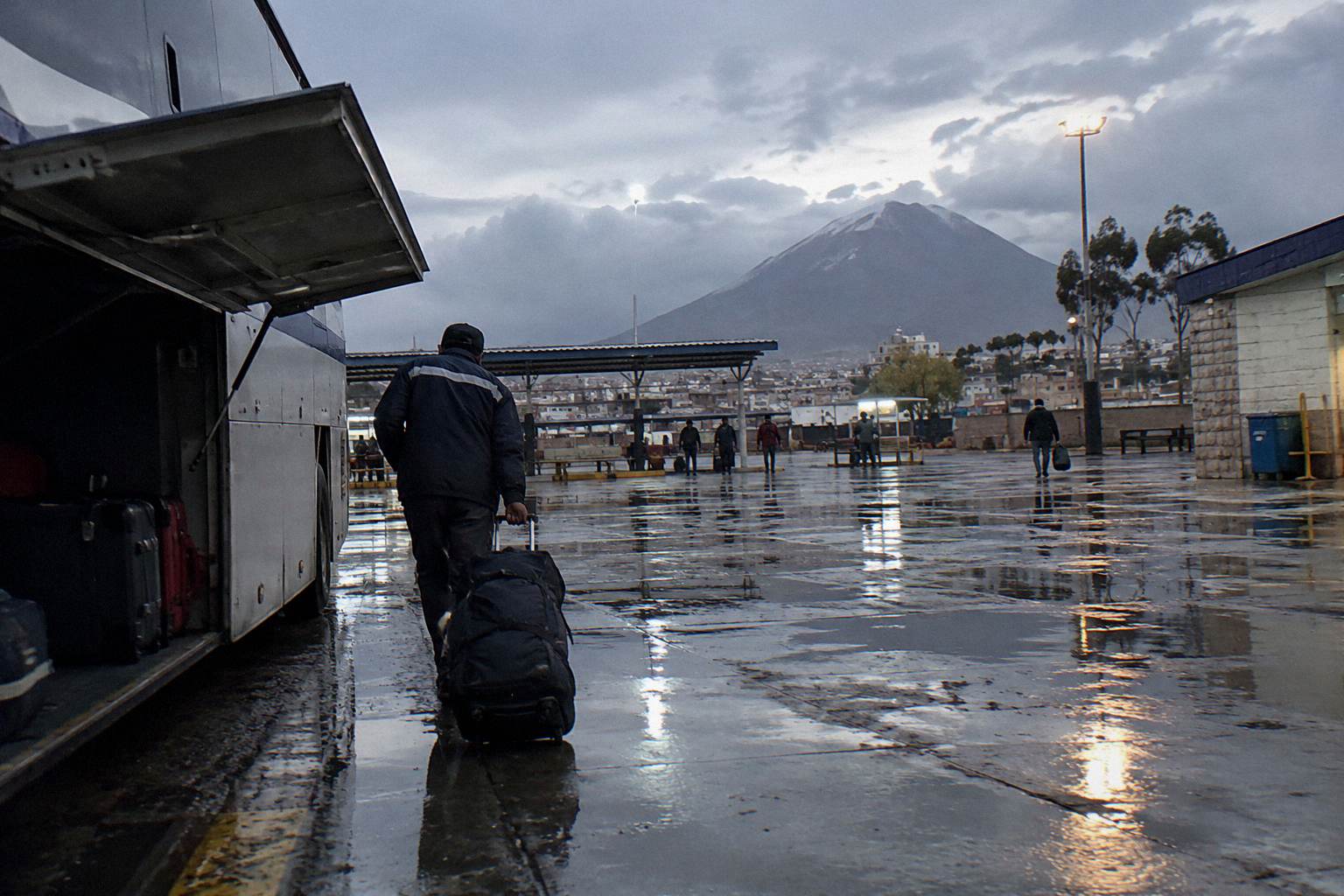
This is the single biggest structural difference between Peru and European bus travel. Instead of a city-centre stop shared by all lines, each company runs its own point of departure, sometimes several. Lima illustrates the spread: besides the company terminals above, the Gran Terminal Terrestre Plaza Norte sits on the Panamericana Norte between Av. Tomas Valle and Av. Tupac Amaru beside the Plaza Norte mall, and Civa is reported at Av. Paseo de la Republica 569 for its EconoCiva and SuperCiva services and Av. Javier Prado Este 1155 for Excluciva.
Wait, that figure needs a real scene. Correcting: the terminal map looks like this:
| City | Operator And Terminal |
|---|---|
| Lima | Cruz del Sur, Av. Javier Prado Este 1109, La Victoria |
| Lima | Oltursa, Jiron Manuel Portocarrero 380, Surquillo |
| Lima | Movil Bus, Av. Tomas Valle 651, Terrapuerto del Norte |
| Lima | Civa, reported at Av. Paseo de la Republica 569 and Av. Javier Prado Este 1155 |
| Cusco | Cruz del Sur arrivals, Terminal Terrestre Cusco, Av. Vallecito 538 |
| Cusco | Oltursa, Terminal Terrestre, Av. Industrial 24, Urb. Huancaro |
| Arequipa | Cruz del Sur, Terrapuerto, Av. Arturo Ibanez S/N, Pab. B |
| Puno | Cruz del Sur, Jr. 1 de Mayo 703-705 |
| Trujillo | Cruz del Sur, Av. Amazonas 437; Oltursa, Av. del Ejercito 342; Linea, Av. America Sur 2857 |
| Huaraz | Movil Bus, Av. Confraternidad Internacional Oeste 451; Linea, Jr. Simon Bolivar 450; Cruz del Sur, Jr. Teresa Gonzales de Faning 457 |
The practical consequence: check the terminal address on your ticket before travelling to it, because the operator's page is the only reliable source, and a city can hold five or more departure points. The Peru bus terminals by city guide collects the addresses in one place. At the terminal itself, the FCDO advises travellers to "use one of the taxis registered at bus terminals", because "there is a risk of robbery by criminals posing as taxi drivers, especially at Jorge Chavez International Airport and bus terminals", per the FCDO safety and security page.
What Seat Class Should You Choose?
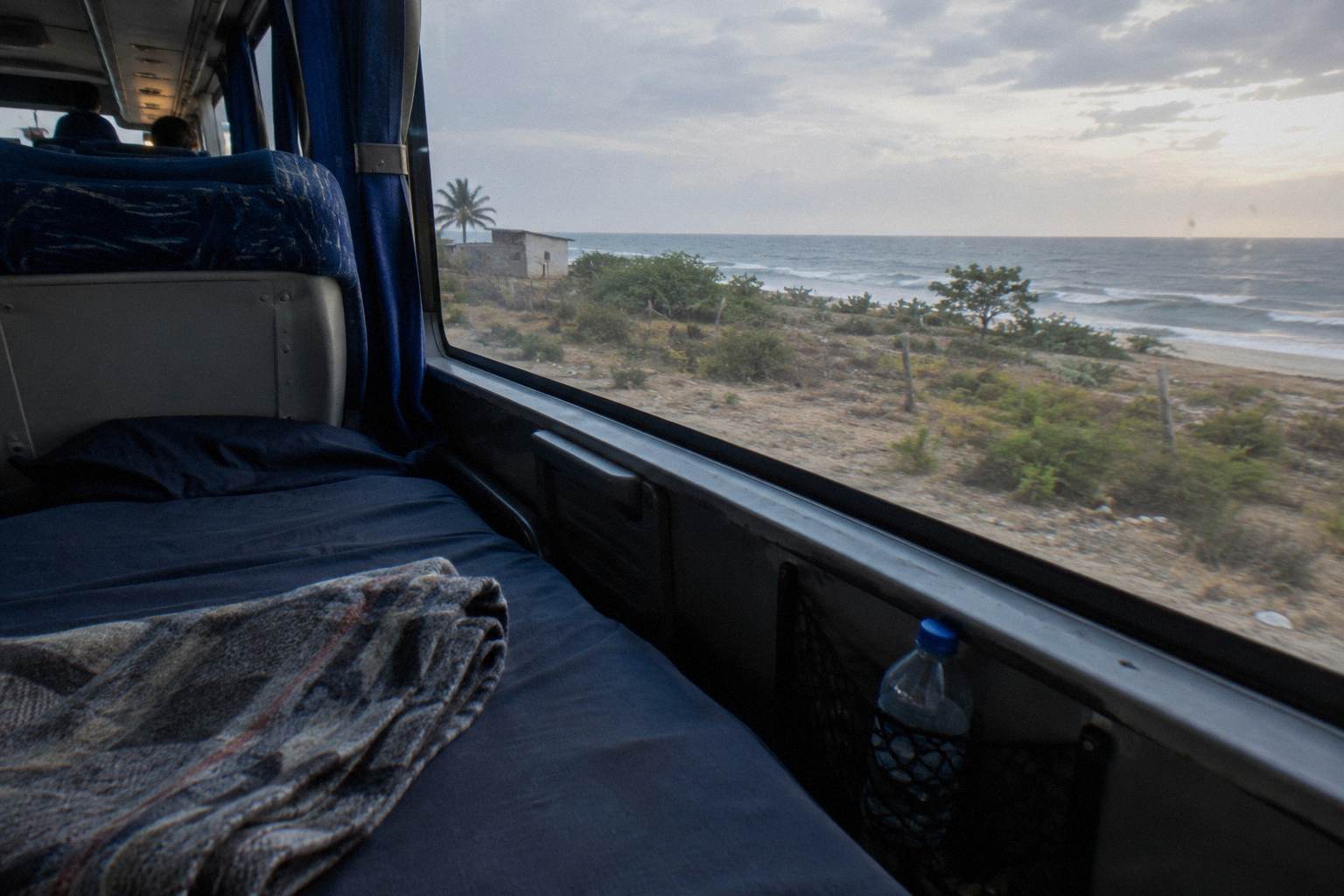
Seat class in Peru is a recline angle and a floor position, stated by each operator for its own fleet: Linea's Super VIP reclines 180 degrees as a bed-type seat, Movil Bus's Economico reclines 120 degrees, and Civa's SuperCiva lists 160 degrees on its first level and 140 on its second. Choose by the length of the ride: a 140 to 160 degree recline covers most night trips, and a full 180 degree bed suits the longest corridors.
Operators name their classes, and the names do not transfer between companies. Cruz del Sur lists reclining seats at 180 degrees on its comfort page and a Suite seat at 160 degrees on its Lima to Cusco page, alongside a pilot change every 4 hours, permanent medical checks and alcohol tests, GPS satellite monitoring, a toilet, and Wi-Fi and crew marked as courtesy service. Oltursa states no recline degrees at all: its classes are economico and bus cama VIP, and its tariffs are listed as reference prices that can change with season, per its own terms.
| Operator | Class And Recline (As The Operator States) |
|---|---|
| Cruz del Sur | Reclining seats 180 degrees; Suite 160 degrees on Lima to Cusco |
| Civa | SuperCiva 160 degrees first level, 140 degrees second level |
| Movil Bus | Economico 120; Ejecutivo VIP 140/160; Presidencial 160; Premier 160 first level and 180 full flat second level |
| Linea | Super VIP 180; VIP 160; Dorado 160; Especial 145 |
| Oltursa | Economico and bus cama VIP, no recline degrees stated |
A worked example of a night class in practice: the Turismo Mer sleeper bus from Arequipa to Puno, rated 4.3 across 20 reviews, uses a sleeper bus whose listing says a 160 degree recline, runs the one-way night service in the 7 hours the listing gives, and drops in Puno; the listing notes the terminal boarding fee is not included, so check the boarding fee line on the listing, and free cancellation applies up to 24 hours before. You can check availability on the live listing.
Where Does A Hop-On Hop-Off Pass Fit In?
A hop-on hop-off pass replaces the terminal-and-ticket mechanics with hotel pickup, a bilingual host and open-dated travel along the southern corridor: Peru Hop reports tickets valid for 1 year, bus times changeable in the app up to 12 hours before departure, and hidden stops including the Secret Slave Tunnels in Chincha, the Nazca Lines viewing tower, the Paracas National Reserve, the Lagunillas viewpoint and a pisco vineyard in Ica.
For a reader who has just learned how terminals, classes and luggage tickets work, the pass is the version that removes most of them. Peru Hop runs a daily hop-on hop-off network over Peru and Bolivia with departures from Lima, Cusco, Arequipa, Copacabana and La Paz, picks up at hotels and Airbnbs rather than terminals, and carries a local bilingual host on every bus; its buses list semi-cama reclining seats, toilets, GPS tracking, speed-restriction software, seat belts and a team of drivers, with Starlink Wi-Fi claimed as an operator statement. One route fact from its own fleet pages: Bolivia Hop buses have no onboard toilet because of the lake-crossing weight limit, with public toilets used at the Strait of Tiquina.
The pass does not cover everything: Machu Picchu, Huaraz and the far north are outside the network, and the operator's own page sends Machu Picchu travellers to train, trek or bus connections from Cusco. Whether the pass or individual tickets suit a trip depends on how many stops you want along the southern corridor; the comparison is laid out in the Peru Hop versus public bus guide. If the southern circuit is your plan, See Peru Hop Passes on the operator's own site for the stop lists.
How Much Luggage Can You Bring On A Peru Bus?
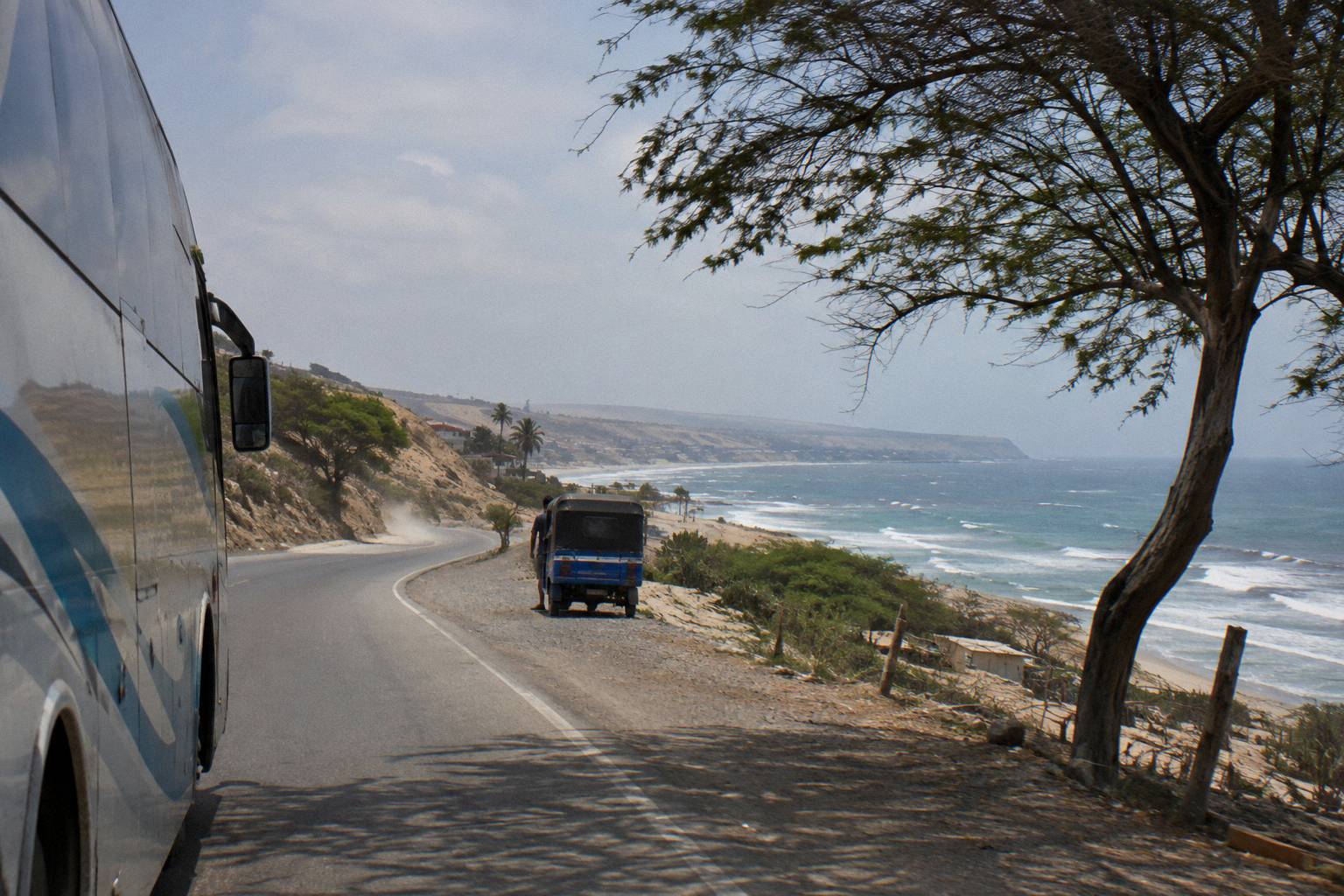
On Peru buses, national rules entitle you to up to 20 kg of free hold luggage, and operators publish allowances on top: Cruz del Sur allows 20 kg hold plus 6 kg hand luggage, Oltursa 20 kg hold plus one hand piece up to 5 kg, Movil Bus 20 kg hold in up to 3 pieces plus 8 kg hand luggage in up to 2 pieces, and Linea 20 kg. Bags travel in the hold or on overhead racks.
The weight limit is enforced at the terminal scale, so distribute anything heavy across your hold pieces before you queue. SUTRAN advises passengers to get a luggage ticket for each hold bag, and that tag is your claim on collection. If luggage is lost or damaged through the carrier's fault, the regulation sets a minimum compensation of 25 percent of the fare multiplied by a weight band factor, so keep both the ticket and the receipt.
| Operator | Hold Luggage | Hand Luggage |
|---|---|---|
| Regulation (national service) | Up to 20 kg free | A fare receipt is the passenger's right |
| Cruz del Sur | 20 kg | 6 kg |
| Oltursa | 20 kg | One piece up to 5 kg |
| Movil Bus | 20 kg in up to 3 pieces | 8 kg in up to 2 pieces |
| Linea | 20 kg | Check the operator's page |
Theft from hold luggage is a known pattern on intercity corridors, and the FCDO's wording is direct: "on bus journeys, keep your passport with you". Smartraveller reports "theft as you sleep on intercity bus routes between Lima, Ica, Nazca and Cusco". Practical prevention and what to do after a loss are covered in the luggage and theft on Peru buses guide.
How Do Boarding And Safety Checks Work?
Boarding happens inside the terminal at authorised points with the bus stopped, the crew announces that seat belts are mandatory, and any bus and driver can be checked by plate number or driver DNI on SUTRAN's public lookup before you travel; government advice on night travel and roadblocks is specific and worth reading in the source's own words rather than a paraphrase.
The checks run in both directions. The terminal checks you, and you can check the operation: SUTRAN's service at gob.pe lets any passenger confirm a bus and driver have their papers in order, with a 24 hour phone line. Drivers are capped at 5 hours of continuous driving by day and 4 at night, with a second driver required beyond that and a third on trips over 20 hours, under Peru's national transit regulation. Cruz del Sur additionally lists a pilot change every 4 hours on its own comfort page.
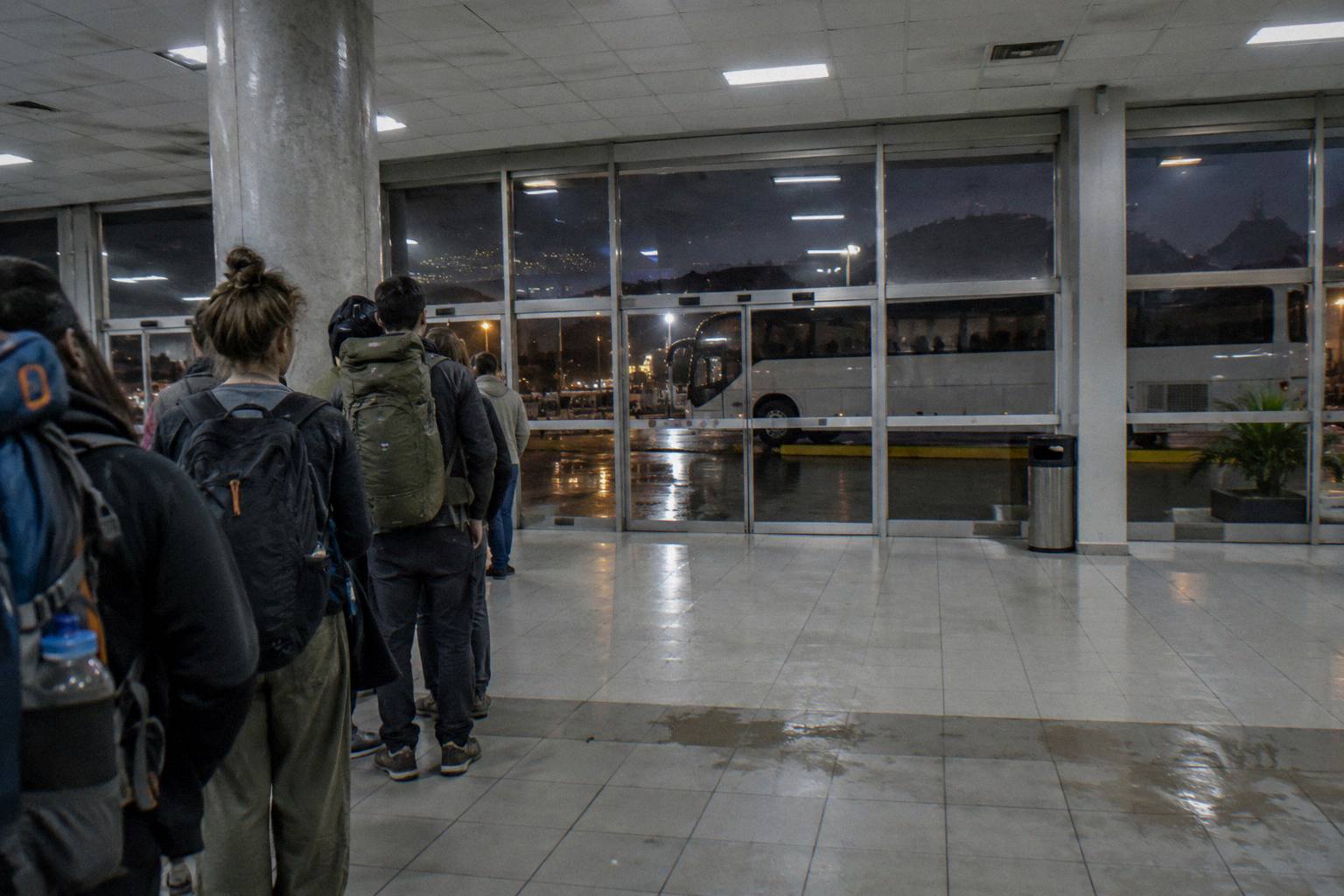
Government advice is the honest source on risk, and it is blunt. The UK FCDO states: "Bus crashes are common, especially at night. Only use reputable transport companies, and where possible, avoid overnight travel, especially in mountainous and remote regions." The same page warns that "armed robbers sometimes hold up provincial and inter-city buses." Canada's advice is similar: "Intercity bus travel can be dangerous due to the risk of bus accidents, which are usually caused by excessive speed, poor vehicle maintenance and driver fatigue", with the instruction to "avoid taking buses and coaches at night". The US advisory rates Peru at "Level 2 - Exercise Increased Caution", and permits its own employees to travel at night with commercial bus companies along the Pan-American Highway, to Huaraz, and on the Lima-Arequipa-Cusco corridor. None of this says a corridor is fine or not fine; it says day travel on main roads with established carriers is the pattern the advisories point toward.
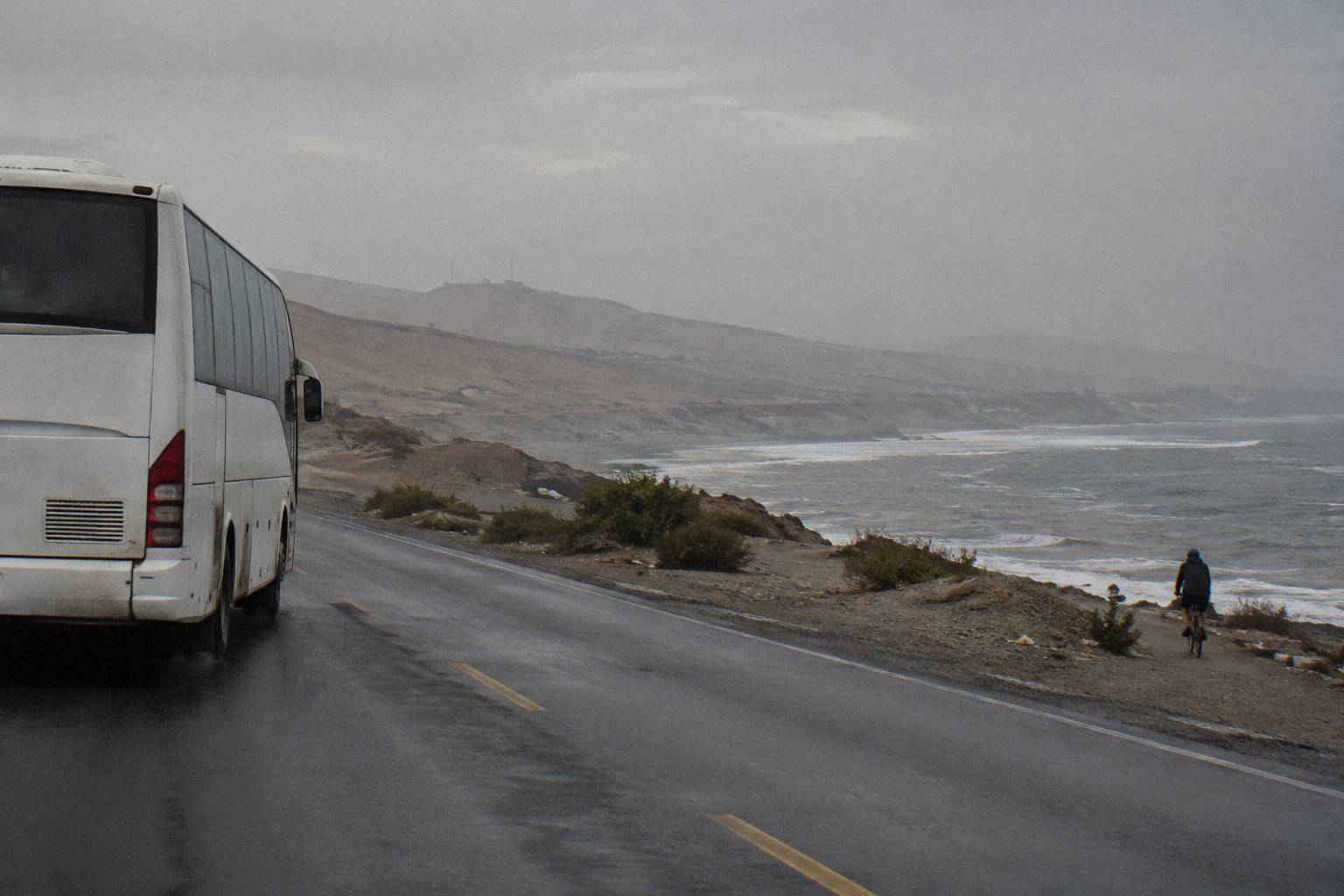
Disruption is the other half of safety. Strikes and blockades appear live on SUTRAN's alert map at alertasviales.sutran.gob.pe, and the FCDO's instruction on encountering one is simply "Do not attempt to pass blockades". How to read the map and plan around a paro is set out in the Peru bus delays, strikes and road blockades guide.
How Do The Mechanics Look On Real Routes?
On real routes the mechanics are concrete: a tourist bus from Miraflores in Lima to Paracas lists 3 hours and drops at El Chaco, Puno to Cusco with a lunch stop lists 11 hours, and the Arequipa to Puno sleeper lists 7 hours overnight, each with its own terminal, drop-off point and cancellation terms, while free-flow estimates of 3.5, 6.2 and 5.5 hours set a planning floor.
The free-flow figures are routing-engine estimates of driving a car without stops, and real bus journeys exceed them because of terminals, rest stops and mountain roads. They are still the cleanest way to compare corridors before choosing a ticket, and each figure below is labelled for exactly the pair named.
| Route Pair | Distance | Free-Flow Drive Estimate |
|---|---|---|
| Lima to Paracas | 251 km | 3.5 hours |
| Lima to Ica | 297 km | 4.3 hours |
| Paracas to Huacachina | 74 km | 1.3 hours |
| Arequipa to Puno | 273 km | 5.5 hours |
| Puno to Cusco | 387 km | 6.2 hours |
| Cusco to Hidroelectrica | 212 km | 5.1 hours |
Tourist tickets bundle the corridor with a meeting point. The Wayki Bus Peru one-way tourist bus from Miraflores in Lima to Paracas is rated 4.2 across 62 reviews, picks up in Miraflores and Barranco, lists 3 hours for the ride, and drops at El Chaco in Paracas, with free cancellation up to 24 hours before; a second listing by another operator covers the same corridor from US$18 per person with hotel pickup, a separate product with its own basis. The price of the Wayki listing itself sits on the live listing.
Further south, the Turismo Mer lunch-bus pairs the Puno to Cusco corridor with an all-you-can-eat lunch stop named in the listing, and the sleeper from Arequipa turns the same corridor's night leg into a 160 degree recline. Which one fits depends on whether your itinerary crosses the altiplano by day or by night, and the southern Peru bus circuit guide lays the whole chain end to end.
Altitude is the last mechanical difference from bus travel elsewhere. Cusco sits about 3,400 m, Puno at 3,848 m per INEI's compendium, and the Puno to Cusco bus crosses the La Raya pass at about 4,300 m. The physiology and the pacing advice are in the altitude sickness and Peru buses guide, and it is worth reading before booking any southern route.
Common Questions About Peru Bus Travel
How Does Peru Bus Travel Work?
You buy a ticket for a named seat in a named class, travel terminal to terminal between addresses owned by the individual company, check in your hold luggage against a tag at up to 20 kg on national service, and board at an authorised point inside the terminal. The regulation grants a fare receipt, and INDECOPI allows postponing or transferring a domestic ticket with 24 hours notice at reissue cost only.
Do Peru Buses Have One Main Terminal In Each City?
No. Each operator runs its own terminal or counter, so Lima alone has Cruz del Sur at Av. Javier Prado Este 1109, Oltursa at Jiron Manuel Portocarrero 380, Movil Bus at the Terrapuerto del Norte and others, plus the shared Gran Terminal Terrestre Plaza Norte. The address on your ticket is the one that matters.
What Do Seat Class Names Like Cama And Semi-Cama Mean?
They describe recline angle, stated by each operator for its own fleet. Linea lists Super VIP at 180 degrees, VIP at 160; Movil Bus lists Economico at 120 degrees; Civa's SuperCiva lists 160 degrees on the first level and 140 on the second. The names do not transfer between companies, so check the operator's own page.
How Much Luggage Can I Bring On A Peru Bus?
The regulation allows up to 20 kg of hold luggage free on national service. Operator allowances on top: Cruz del Sur 20 kg hold plus 6 kg hand, Oltursa 20 kg plus one hand piece up to 5 kg, Movil Bus 20 kg in up to 3 pieces plus 8 kg in up to 2. SUTRAN advises getting a luggage ticket for each hold bag.
Is Night Bus Travel In Peru Advised Against?
Government advisories warn about it in direct terms. The FCDO states bus crashes are common, especially at night, and advises avoiding overnight travel where possible in mountainous and remote regions; Canada advises avoiding buses and coaches at night; the US advisory permits its employees night travel with commercial companies only along the Pan-American Highway, to Huaraz and on the Lima-Arequipa-Cusco corridor.
Can I Check Whether A Peru Bus Company Is Properly Licensed?
Yes. SUTRAN's public lookup at gob.pe/11146 lets you check any bus by plate number and any driver by DNI, with a 24 hour phone line. The same authority's alert map shows road closures and restrictions live, with a 24 hour WhatsApp line at 999 382 606.