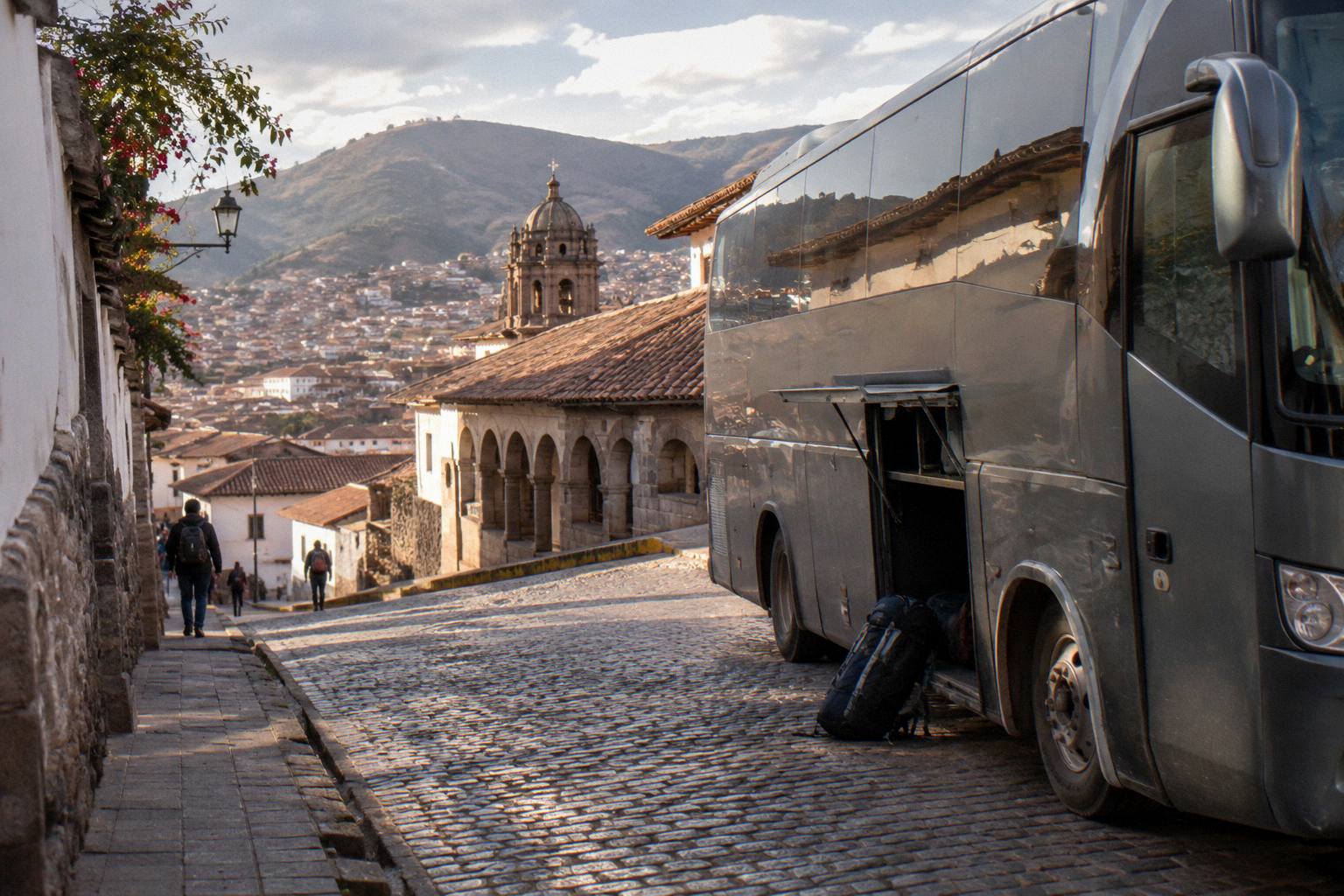
Peru Bus Vs Flight: When Flying Is Worth The Extra Cost
Peru's bus network covers nearly every destination a visitor wants, and on several corridors the bus competes with flying on comfort as well as on price-free factors like luggage and arrival altitude. This guide compares the two modes by route distance, night-travel advice, luggage allowances and what a bus ticket fixes in advance.
Short answer
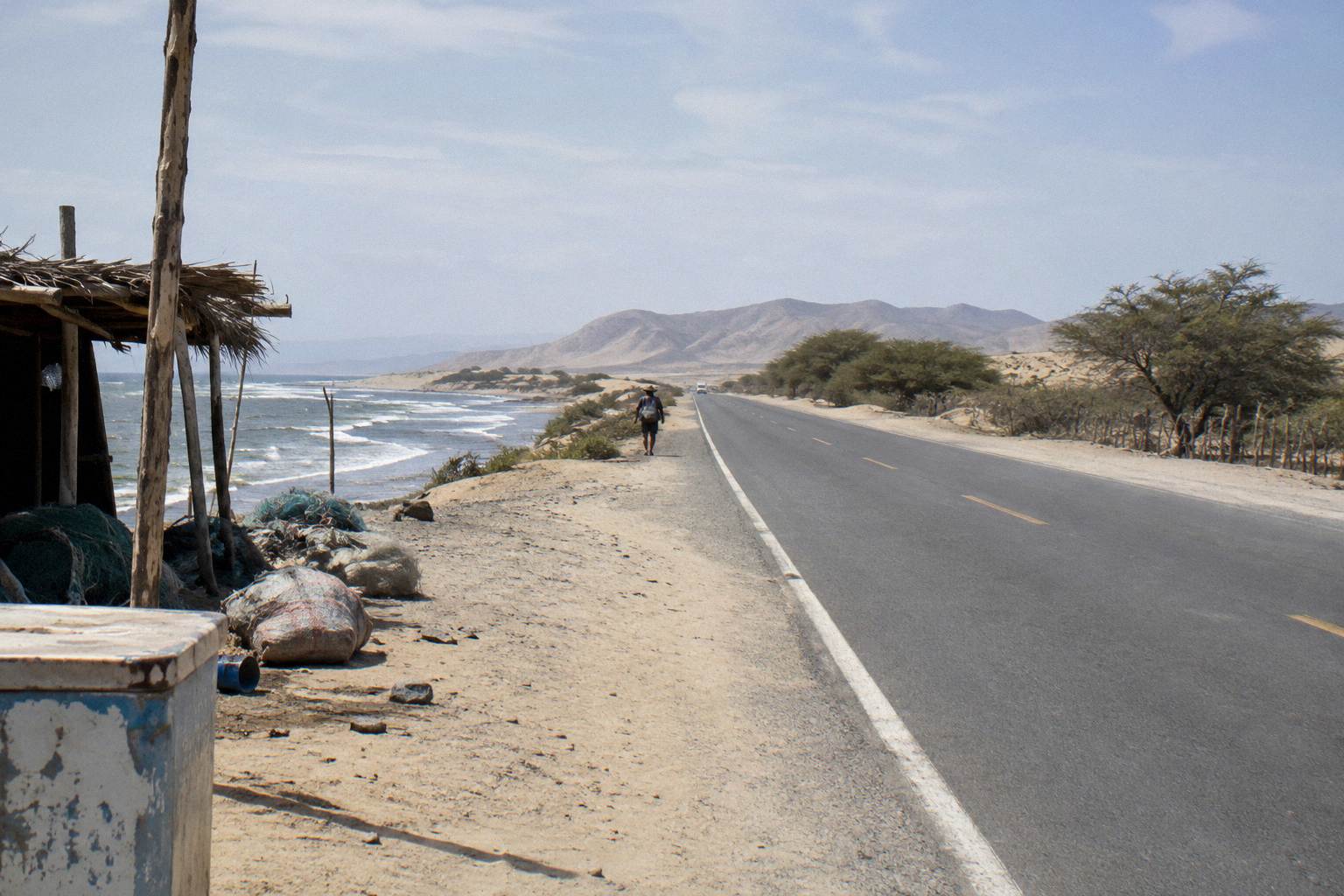
On Lima-Arequipa the road distance is about 1,002 km with an OSRM free-flow drive estimate of about 14.3 hours, and real bus journeys exceed that, so flying wins back most of a day. On Arequipa-Cusco, about 487 km and about 9.4 hours free-flow, the daytime tourist bus is a genuine rival to the plane.
Peru is one of the few countries in South America where the question "bus or plane?" is a real decision on almost every long corridor. The interprovincial network reaches Arequipa, Cusco, Puno, Trujillo, Huaraz and the north coast, with seat classes that recline up to 180 degrees on some operators, and regulation that caps driving hours, mandates seat belts and gives passengers a documented set of rights. Flying, by contrast, skips the scenery and the altitude ramp but comes with its own constraints that a first-time visitor does not always expect: tighter luggage treatment, airport transfers at each end, and arrival at 3,400 m in Cusco's case with no gradual adjustment.
No verified flight fare, flight time or schedule exists for this comparison, and none is invented here. What can be compared honestly is the road distance and free-flow drive estimate for each corridor, the altitude you arrive at, what government travel advice says about night buses, what luggage each mode allows, and what a bus ticket locks in. Those five axes decide most bus-versus-flight questions in Peru before any airfare is even quoted.
How Do You Decide Between A Bus And A Flight In Peru?
The decision comes down to four measurable things: the road distance against the free-flow drive estimate, whether the journey would run at night, the altitude at each end, and the luggage you carry. Where the free-flow estimate alone exceeds nine or ten hours, the plane buys back most of a day. Where it sits under that and the route climbs gradually through the sierra, the bus is a serious option on comfort, not just on outlay.
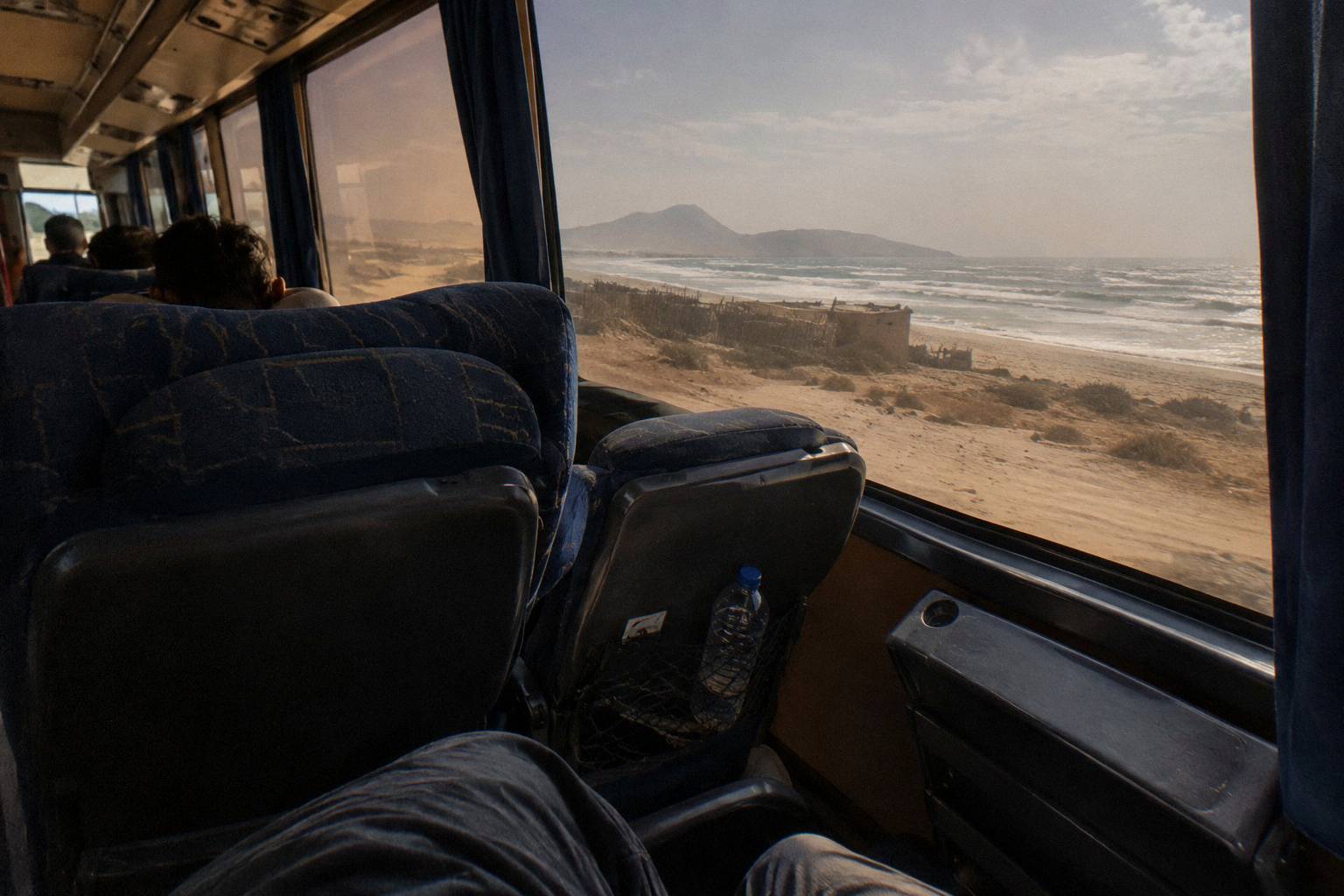
Start with the road, because Peru's geography does the sorting. The Pan-American Highway runs flat along the coast, so Lima to Trujillo is about 557 km with an OSRM free-flow drive estimate of about 9.1 hours, and Lima to Arequipa about 1,002 km with a free-flow estimate of about 14.3 hours. These are free-flow estimates that real bus journeys exceed, with terminal stops, checkpoints and mountain grades adding hours; they are never timetable times. The southern sierra is different: Arequipa to Cusco is about 487 km, free-flow about 9.4 hours, and Cusco to Puerto Maldonado about 669 km, free-flow about 12.2 hours. On those corridors the bus climbs and descends through passes that a plane simply deletes from the trip.
Then weigh altitude. Lima sits at 162 m, Arequipa at 2,429 m, Cusco about 3,400 m and Puerto Maldonado at 204 m, per INEI figures. Flying from Lima to Cusco moves you from sea level to about 3,400 m in a single morning. The bus from Arequipa to Cusco takes you up through a pass of about 4,300 m (Abra La Raya, INEI) and back down, which is a harder single day but spreads the change over daylight hours. Neither mode is medical advice, and the altitude-sickness question is handled in full in the guide to altitude sickness and Peru bus travel.
| Route | Road distance | OSRM free-flow drive estimate | Arrival altitude (INEI) |
|---|---|---|---|
| Lima to Arequipa | about 1,002 km | about 14.3 h | 2,429 m |
| Lima to Trujillo | about 557 km | about 9.1 h | 74 m |
| Arequipa to Cusco | about 487 km | about 9.4 h | about 3,400 m |
| Cusco to Puerto Maldonado | about 669 km | about 12.2 h | 204 m |
The third axis is time of day. Government advice on night buses is specific and quoted in its own section below; on several corridors it pushes the decision toward a daytime bus or a flight. The fourth is luggage: a national bus ticket carries up to 20 kg in the hold free under Peru's transit regulation, an allowance that air travel does not match.
Which Long Routes Are Worth Flying Instead Of Busing?
Fly the corridors whose free-flow drive estimates pass twelve hours, Lima to Arequipa and Cusco to Puerto Maldonado above all, because real bus journeys run longer and the longest legs travel through the night, so the plane buys back most of a day and sometimes two. On six-to-ten-hour runs like Arequipa to Cusco and Lima to Trujillo, the daytime bus still competes.
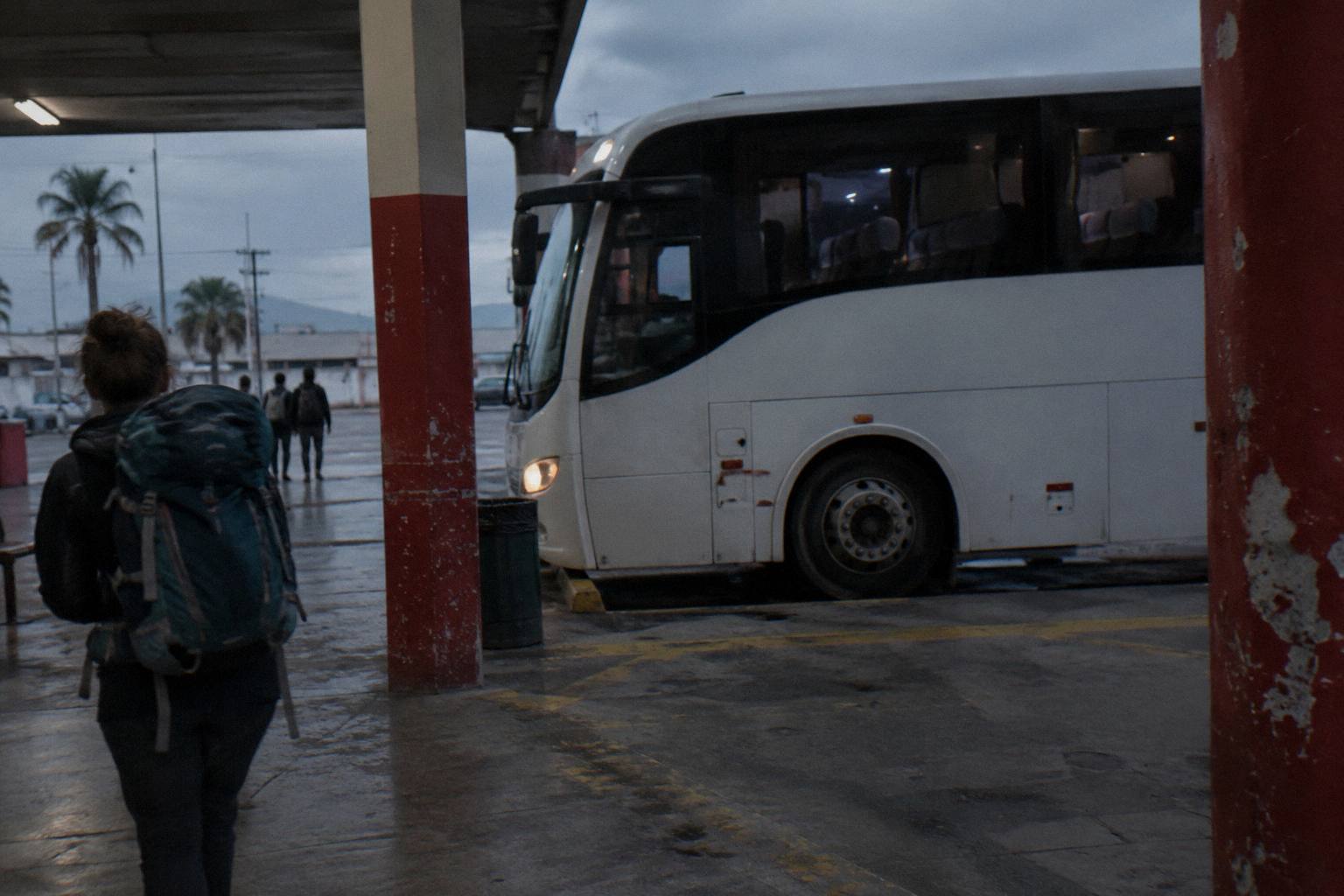
Lima to Arequipa is the clearest fly case in the south. About 1,002 km of road, a free-flow estimate of about 14.3 hours, and a real journey that runs longer than that. The alternative is a full waking day on a coach, or a night on one, and the night option collides with the official advice quoted below. A plane covers the corridor in a fraction of the time, with no schedule figure printed here because none is verified. What the bus does offer on this route is the coastal desert at ground level, and terminals on both ends that sit inside the cities rather than outside them; Cruz del Sur's Arequipa Terrapuerto is at Av. Arturo Ibanez S/N, Pab. B, Local 23-27.
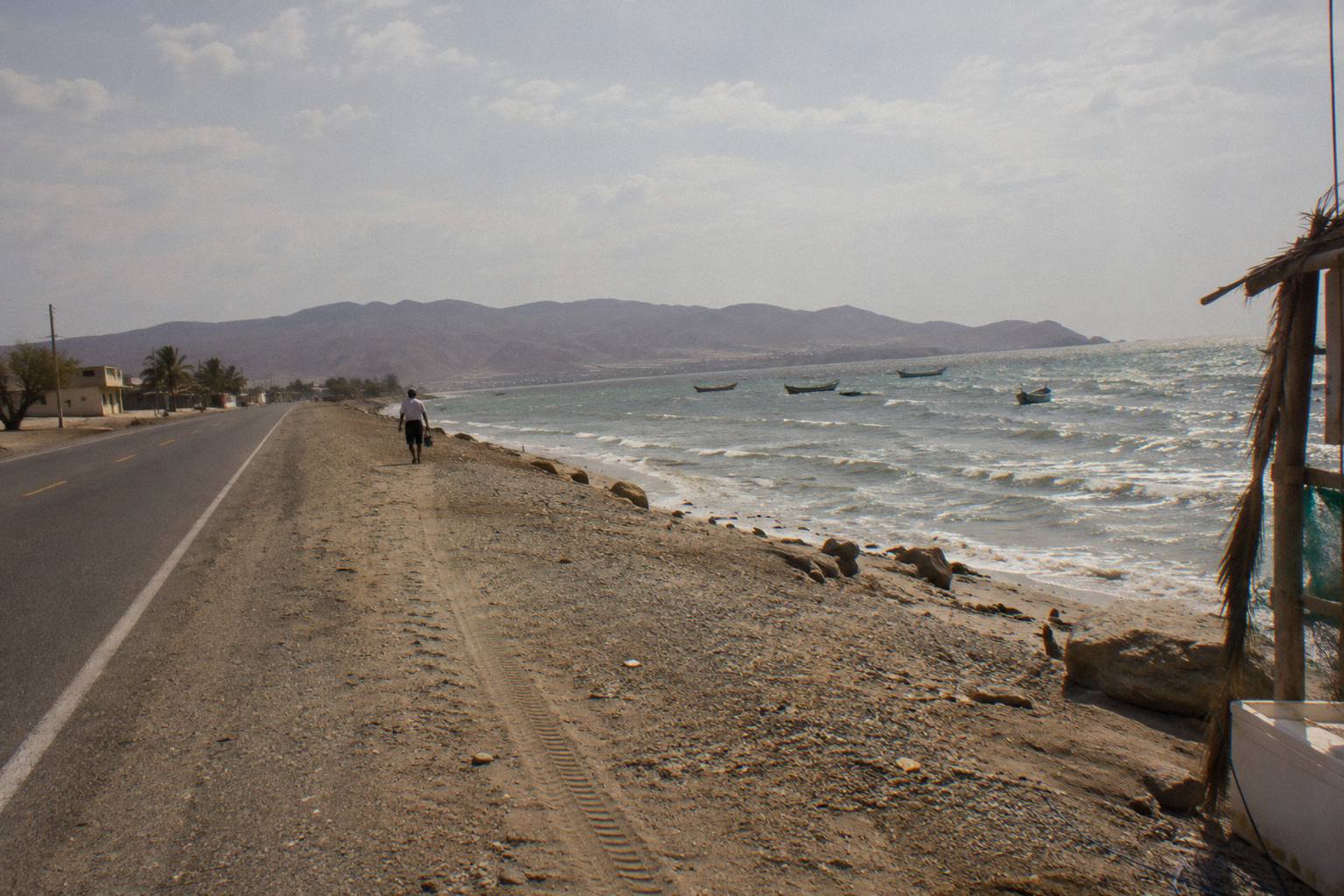
Cusco to Puerto Maldonado splits the decision. The road is about 669 km with a free-flow estimate of about 12.2 hours, dropping from about 3,400 m to 204 m through the cloud-forest edge of the Madre de Dios region. It is a spectacular day if conditions are good, and the route is covered in detail in the Cusco to Puerto Maldonado bus guide. But the corridor is long, mountainous and slow, and the same corridor is one the US advisory singles out for caution in its protest regions list, so the flight case rests on exposure hours, not on any claim about the road itself.
Lima to Trujillo is the opposite: about 557 km, free-flow about 9.1 hours, flat Pan-American Norte the whole way, both cities near sea level. A daytime cama seat on this corridor is a straightforward working day, and the north-coast options are laid out in the north coast bus guide.
If a tourist-bus ticket fits your dates, the corridor selection below covers the three southernmost decisions in one place: the Arequipa-Cusco direct, the Puno-Cusco sightseeing run and the Lima-Huaraz mountain link.
What Do Tourist Buses Include That A Flight Does Not On The Southern Corridor?
Tourist buses on the southern corridors sell the journey as part of the product: sightseeing stops, lunch halts, hostel-door drop-offs and seats that recline up to 160 degrees. A flight sells none of that. The Turismo Mer Puno to Cusco service, rated 4.6 across 24 reviews, runs an 11-hour journey with a lunch stop, and the listing gives the full ride as the product rather than a cost of getting there.
The Puno to Cusco corridor is where the bus most clearly beats the plane on experience. The road is about 387 km with a free-flow estimate of about 6.2 hours, crossing Abra La Raya at about 4,300 m (INEI), and the tourist version of the trip turns it into a sightseeing day. The Turismo Mer service, listed as "Bus from Puno to Cusco with all-you-can-eat lunch", gives 11 hours in its listing, drops at the operator's private terminal in Cusco, and carries free cancellation up to 24 hours before for a full refund as listed. Its rating sits at 4.6 across 24 reviews. The direct Puno to Cusco bus listing carries the full details, and an all-you-can-eat lunch stop on the Puno Cusco bus is the difference between a transfer and a tour.
The Arequipa to Cusco direct runs the same logic. World Explorer Peru operates the "Direct Bus Cusco - Arequipa", rated 3.7 across 16 reviews, in a Cruzero Suite 160 degree seat as the listing names it, with a listed duration of 10 hours, drop at the Arequipa bus terminal, and free cancellation up to 24 hours before for a full refund as listed. Against a flight on the same pair, the bus gives you the pass country between the two cities rather than a taxi, a terminal and a cabin.
No flight product bundles a stop at a viewpoint, and no flight drops you at a hostel meeting point. The tourist buses do: the Puno service ends at a private terminal, and the Lima to Huacachina services on the coast drop at a named hostel meeting point. That last-mile difference is real money and real time in cities where the airport sits well outside the centre and the advice on terminal-area taxis, quoted below, is not casual.
How Do Night Buses Change The Bus Versus Flight Math?
Every government advisory covering Peru treats night intercity buses as a distinct risk category, and that treatment shifts whole corridors toward flying. The UK FCDO states: "Bus crashes are common, especially at night. Only use reputable transport companies, and where possible, avoid overnight travel, especially in mountainous and remote regions." Any route whose realistic bus option is a night departure has to be weighed against that sentence.
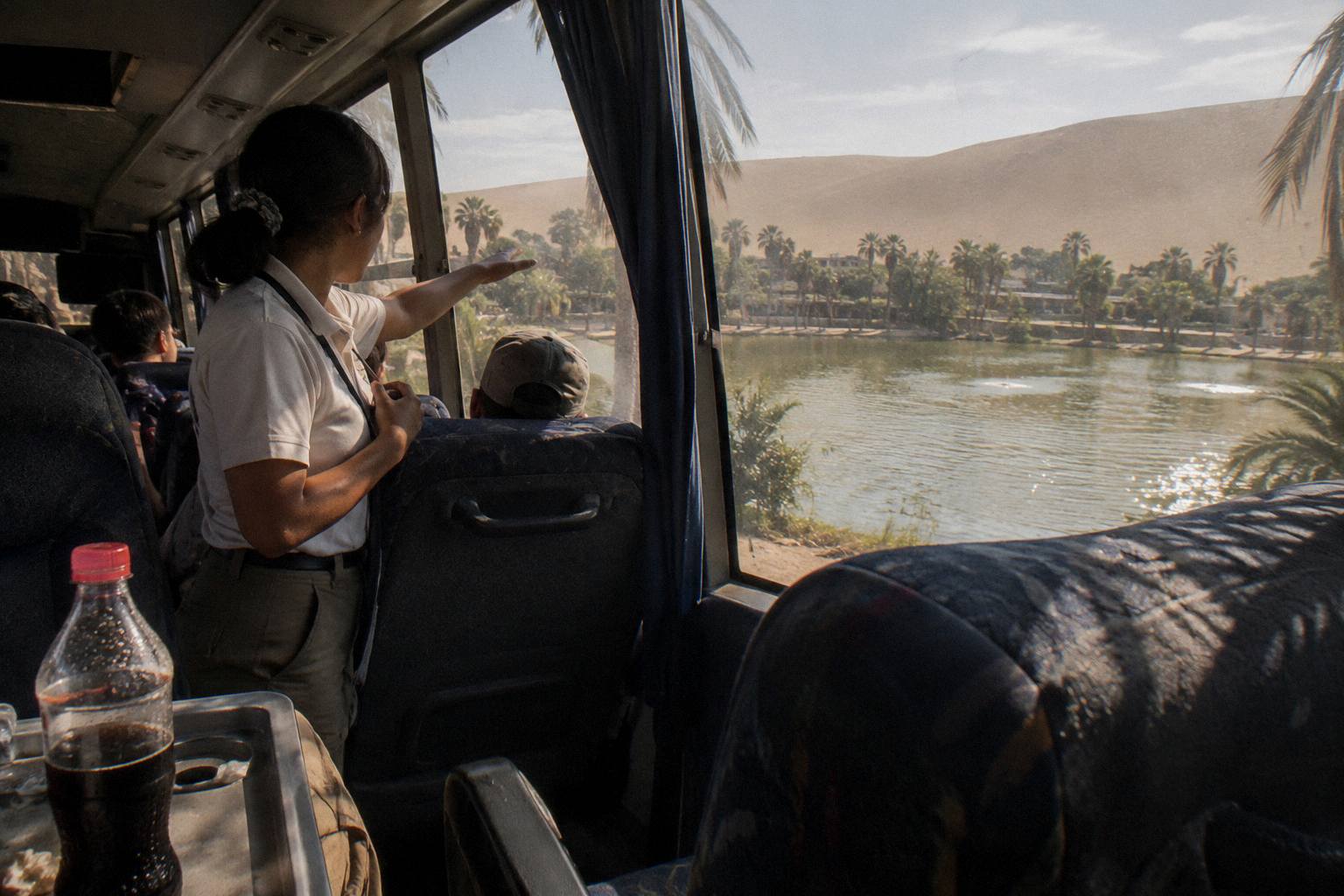
The Canadian advisory goes further on cause: "Intercity bus travel can be dangerous due to the risk of bus accidents, which are usually caused by excessive speed, poor vehicle maintenance and driver fatigue. Armed gangs have been known to stop buses to rob travellers, especially at night", and it adds the direct instruction "Avoid taking buses and coaches at night" (Government of Canada travel advice for Peru). Smartraveller reports "Robberies and assaults occur frequently on intercity buses, including while passengers are sleeping" and "bogus roadblocks or checkpoints on roads outside major cities after dark". The US advisory, for its part, notes that its own government employees "may travel at night with commercial bus companies along the Pan-American Highway, to Huaraz, and on the Lima-Arequipa-Cusco corridor", which tells you which night corridors are treated as routine by a cautious institution.
What this means for the comparison is simple. On Lima-Arequipa, where the free-flow estimate is about 14.3 hours, the realistic bus is an overnight one, and that specific pattern is what the advisories single out. The daytime alternatives are few on a corridor that long. The plane therefore wins not on scenery or luggage but on avoiding the exact travel shape the governments flag. The night-bus question, including what the advisories do and do not say, is covered in full in the overnight bus in Peru guide.
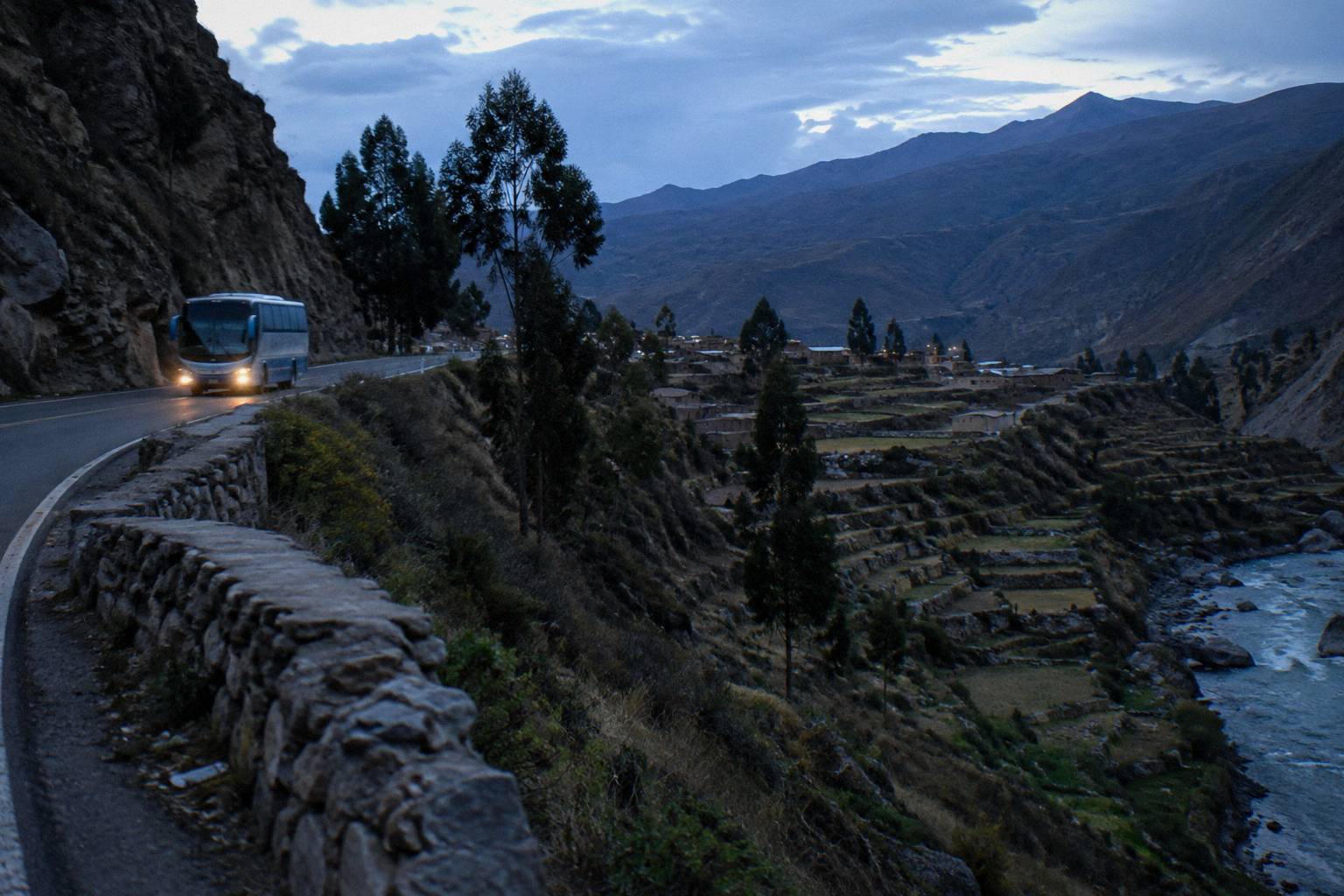
One caveat runs the other way: Peru's regulation caps continuous driving at 5 hours by day and 4 at night, with a second driver required beyond that and a third on trips over 20 hours, per the national transit regulation. Cruz del Sur lists a pilot change every 4 hours, permanent medical checks and an alcohol test before departure, on its own comfort page. Regulation does not make a night bus risk-free, and no sentence here says bus travel is safe; it means the crew rules are written down and checkable. The deeper safety picture is in the Peru bus safety guide.
How Do Luggage Rules Differ Between Bus And Air Travel?
On Peru's national buses, the law does the heavy lifting: the transit regulation's passenger-rights article guarantees up to 20 kg of hold luggage at no extra charge, and major operators quote that same 20 kg hold allowance plus 5 to 8 kg of hand luggage. Air travel works differently, with each airline setting its own limits, so the key contrast is a regulatory right versus a commercial policy.
The 20 kg figure comes from the RNAT passenger-rights article, which also gives passengers the right to a fare receipt, a seat from age five, and a vehicle with valid technical inspection and insurance. SUTRAN advises passengers to take a luggage ticket for hold bags. The operators layer their own hand-luggage numbers on top, all stated on their own pages: Cruz del Sur 20 kg hold plus 6 kg hand, Oltursa 20 kg plus one hand piece at 5 kg maximum, Movil Bus 20 kg across up to three hold pieces plus 8 kg across two hand pieces, and Linea 20 kg. Tourist-bus products booked as travel products state their own luggage terms per listing; where a listing says nothing, check the operator's page before booking, because a surfboard bag or a trekking duffel changes the answer.
| Operator | Hold allowance | Hand allowance | Source |
|---|---|---|---|
| National service baseline | up to 20 kg free | regulation sets no hand figure | Peru's national transit regulation |
| Cruz del Sur | 20 kg | 6 kg | operator's own pages |
| Oltursa | 20 kg | one piece, max 5 kg | operator's terms page |
| Movil Bus | 20 kg, up to 3 pieces | 8 kg, up to 2 pieces | operator's own pages |
| Linea | 20 kg | operator states no hand figure | operator's terms page |
For a bus-versus-flight decision, the practical reading is this: on the bus side your 20 kg is a right with a complaint route behind it, since INDECOPI holds that a domestic bus ticket can be postponed or transferred with 24 hours notice at only the real reissue cost. On the air side, allowances and excess charges are commercial terms you accept at booking. Neither number makes one mode cheaper, because no air fare is printed here; the difference is who guarantees the figure.
What Happens When Roads Close, And How Does That Compare With A Flight?
Strikes, blockades and rain closures are the bus network's specific failure mode, and the advisories treat them as routine rather than exceptional. The FCDO states: "Political protests in Peru are unpredictable and can escalate quickly. Demonstrations can become violent and lead to roadblocks, travel disruption, including trains, and suspension of immigration services at land borders." Flights are not immune, since the same advisory notes demonstrations "can shut down local roads, trains, and major highways" without warning.
The bus-side defence is checkable and public. SUTRAN's interactive alert map (alertasviales.sutran.gob.pe) shows closed roads in red, restricted in yellow and open in green, updated around the clock, with blockades from social protests appearing as live points under "human factor". SUTRAN also runs a 24-hour WhatsApp line, 999 382 606. Before any long bus booking, the map and the carrier are the two checks worth making the day before travel. The FCDO adds "Do not attempt to pass blockades", and names Arequipa, Ayacucho, Cusco, La Libertad, Madre de Dios and Puno among regions with recent protests, which covers most of the corridors in this comparison. The full playbook is in the guide to delays, strikes and road blocks in Peru.
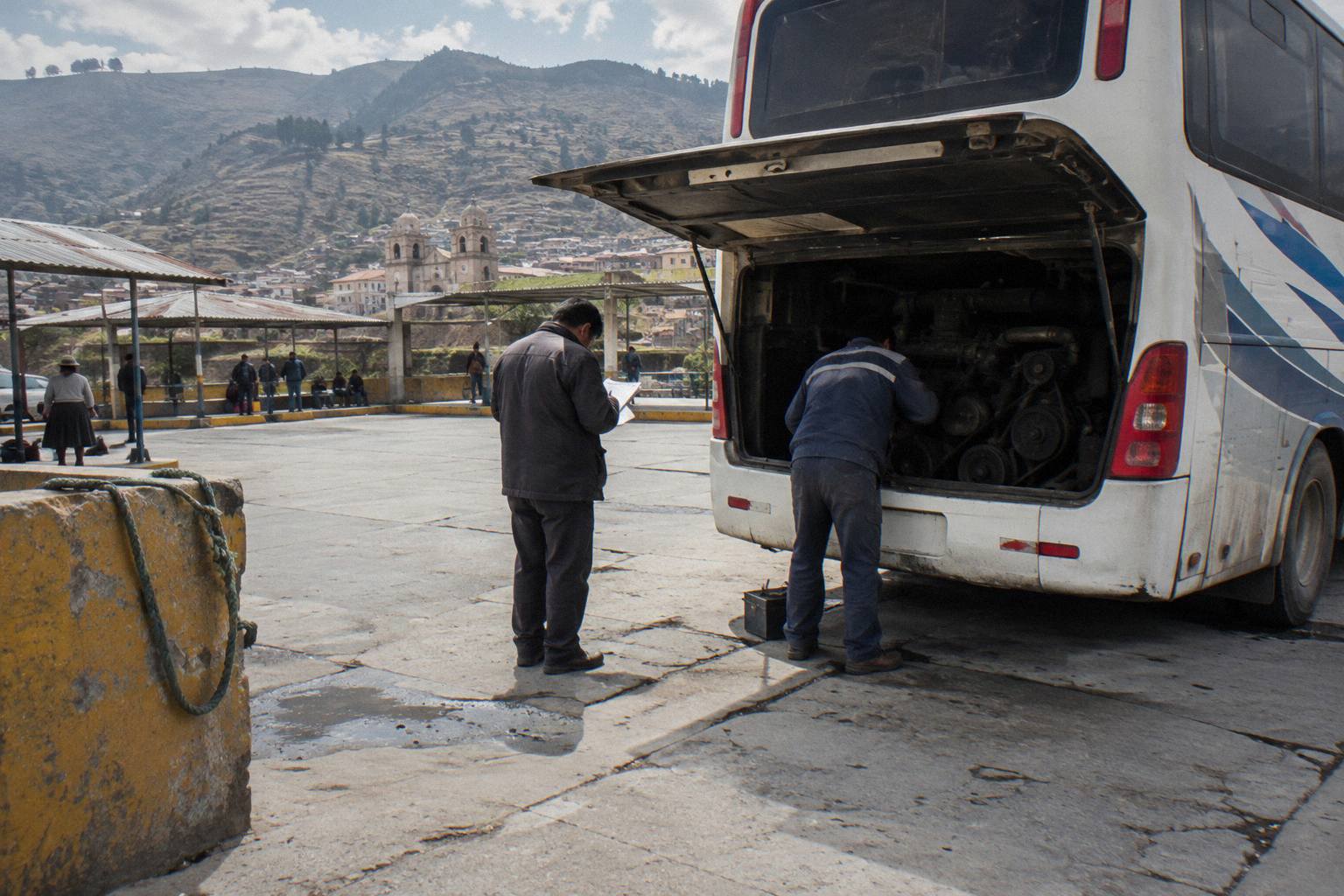
Weather adds a second layer. The FCDO's notice states: "Through late 2026 to April 2027, the El Nino weather event is expected to generate heavy rainfall, possible flooding, landslides, and mudslides, especially in, but not restricted to, the northern and central coast. These could cause travel disruption, such as road closures." That is a direct hit on the coastal corridors, Lima to Trujillo included, and a reason to hold flexibility on any bus ticket bought for that window. INDECOPI's postponement right, 24 hours notice at reissue cost only, is the passenger's lever; complaints go to the carrier's Libro de Reclamaciones first and to INDECOPI's Reclama Virtual platform (enlinea.indecopi.gob.pe/reclamavirtual/) if the carrier does not answer in 15 working days.
A flight does not remove the risk so much as move it: a highway closure strands a bus, a protest can close an airport road or suspend a train connection, and the same advisory covers both. What the plane does give you is a shorter exposure window, hours instead of a day on the road, which matters more on the 1,002 km corridors than on the 487 km ones.
Is The Bus To Huaraz A Realistic Alternative To Flying?
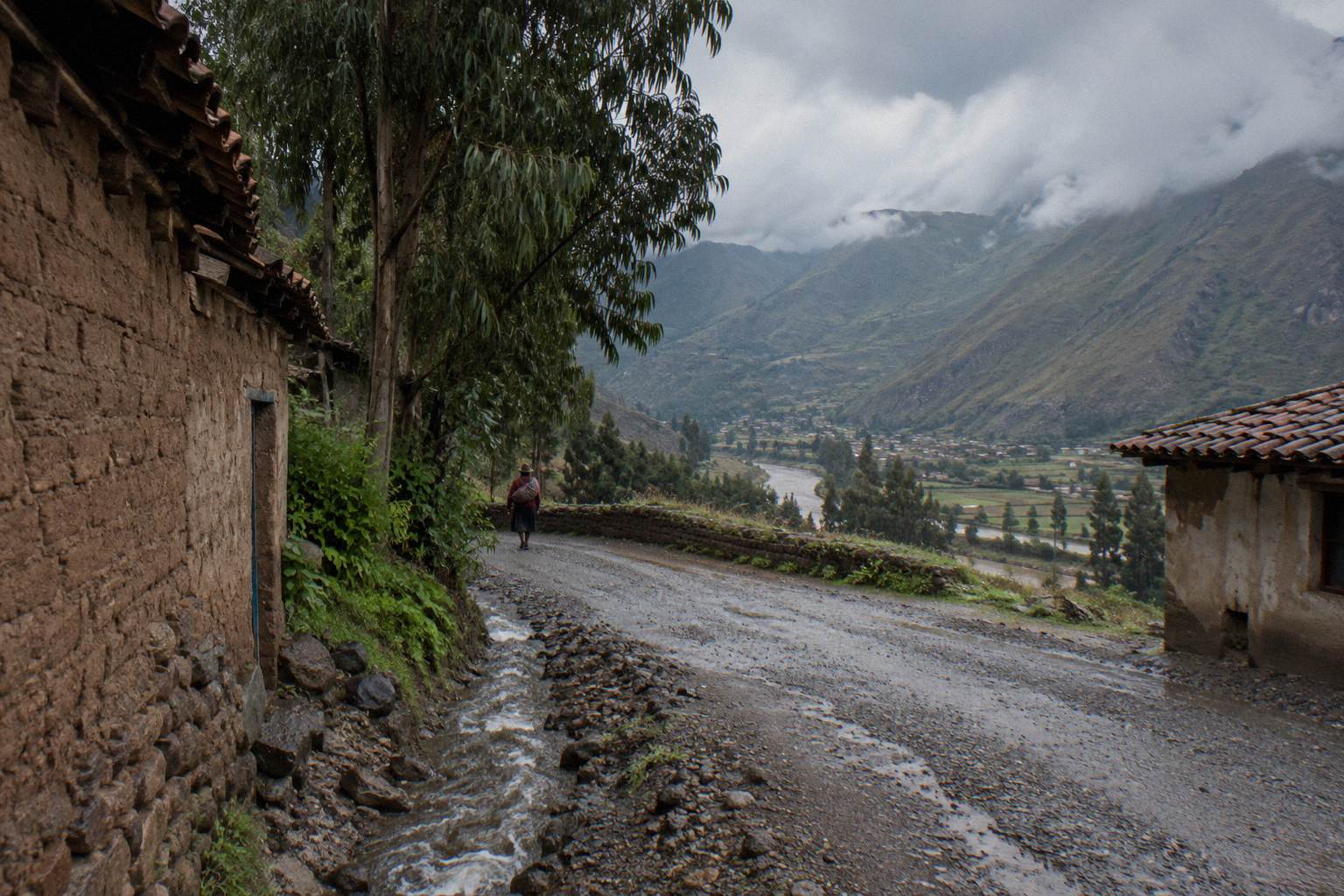
The Lima to Huaraz road is about 402 km with an OSRM free-flow drive estimate of about 5.5 hours, and real journeys exceed that as the road climbs from 162 m in Lima to 3,073 m in Huaraz per INEI. It is one of the corridors where the US advisory's own employees are permitted to travel at night by commercial bus, and a scheduled tourist-bus product connects Lima, including the airport, directly to the city.
Huaraz sits at the edge of the Cordillera Blanca, and the road up the Callejon de Huaylas crosses the Conococha pass area at about 4,087 m (INEI) before dropping into the valley. The listed First Class Huaraz product, "Lima Airport - Huaraz BusTickets", runs from Lima, Miraflores or Lima airport to Huaraz with a listed duration of about 9 hours, from US$50 per person on the listing, hotel pickup on request by sending the operator the hotel address after booking, and full names plus passport numbers required to print tickets. Its cancellation terms differ from the other listed tickets: the listing states it is non-refundable and cannot be changed, so it is the one product in this comparison where the flexibility lever does not exist. Reviews are on the listing. The route detail is in the Lima to Huaraz bus guide.
Against a flight on the same pair, the bus case rests on three things: the hold allowance is the regulated 20 kg, the drop is in Huaraz rather than at an airport with a transfer still to come, and the airport pickup option on the listing means an arrival and a departure can be chained without a night in Lima. The flight case rests on the climbing road, the roughly nine listed hours, and the fact that Huaraz trips involve trekking gear that lives better in a hold than a cabin. Note that the hop-on network does not serve Huaraz; this corridor belongs to scheduled carriers and tourist products like the one above.
Which Seat Class Makes A Long Bus Ride Competitive?
Seat class is what turns a ten-hour road into a tolerable day, and Peru's operators publish recline angles that let you compare before booking: Cruz del Sur lists 180 degree reclining seats with Suite at 160 degrees, Movil Bus lists Presidencial at 160 degrees and a 180 degree full flat on the second level of its Premier class, and Linea lists Super VIP at 180 degrees. The degree figures are operator claims, printed on their own pages.
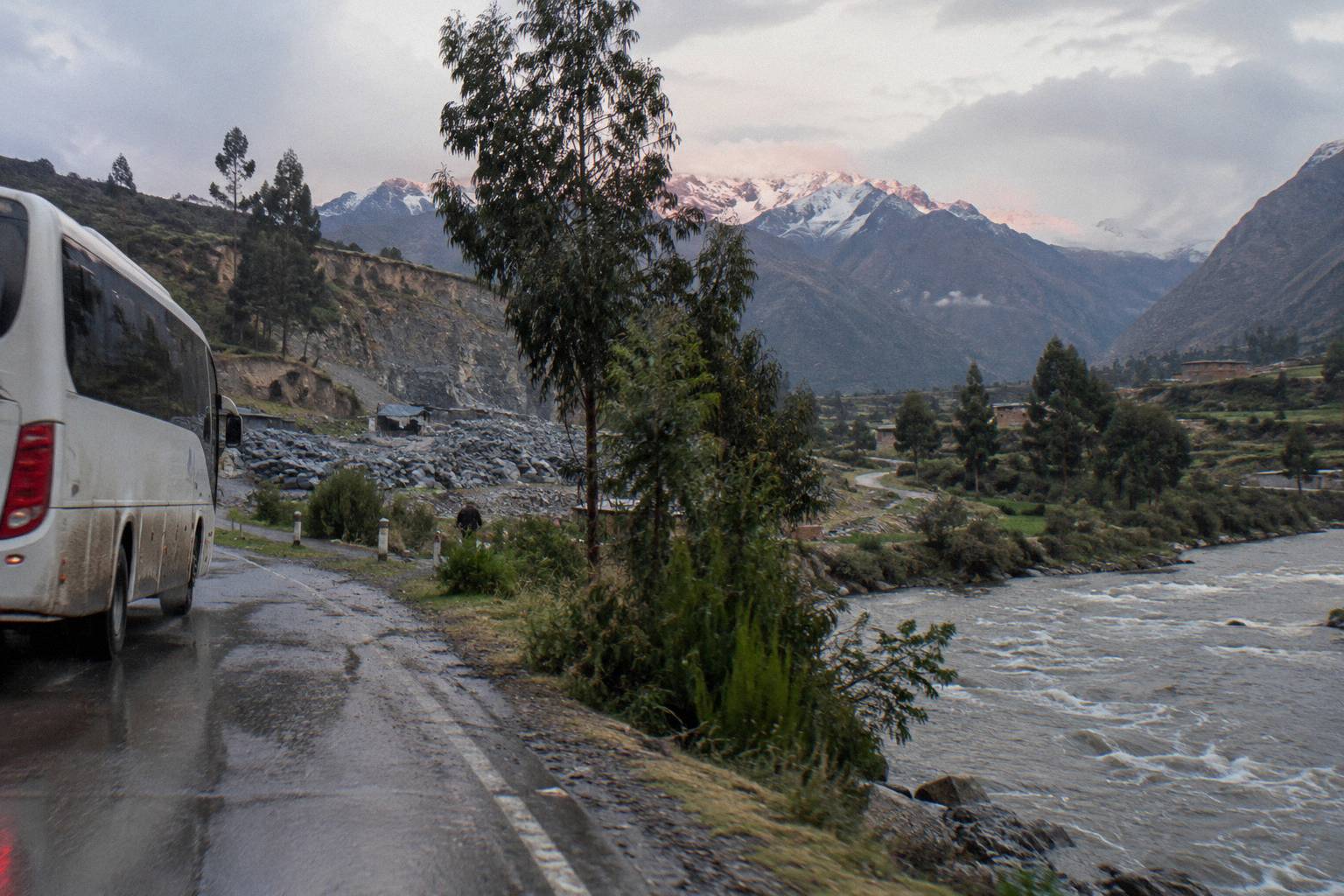
The classes stack up clearly enough to plan around. On the comfort side, Cruz del Sur's page lists a pilot change every 4 hours, seat belts, toilet, GPS monitoring and Wi-Fi marked as a courtesy service. Movil Bus lists reclines from 120 degrees in Economico through 160 in Ejecutivo VIP and Presidencial to the 180 full flat. Linea lists Super VIP at 180 degrees, VIP at 160 and Dorado at 160, with Wi-Fi and streaming subject to the operator's availability. Civa's SuperCiva page states 160 degree recline on the first level and 140 on the second. Oltursa publishes no recline degrees, so compare its classes on the operator's own descriptions rather than a number. The class landscape is mapped in the guide to Peru bus classes, cama and semi cama.
| Operator and class | Recline (operator's own page) | Notes from the operator's page |
|---|---|---|
| Cruz del Sur, reclining seats | 180 degrees | toilet, GPS, Wi-Fi as courtesy service |
| Cruz del Sur Suite | 160 degrees | listed on the Lima-Cusco route page |
| Movil Bus Presidencial | 160 degrees | GPS and speed control stated |
| Movil Bus Premier, level 2 | 180 degrees full flat | first level listed at 160 degrees |
| Linea Super VIP | 180 degrees | Wi-Fi subject to availability |
| Civa SuperCiva | 160 level 1, 140 level 2 | stated on the operator's page |
Speed is regulated rather than promised: SUTRAN states that the 90 km/h limit for interprovincial buses applies only on roads without another speed sign (SUTRAN notice on the 90 km/h limit), and a national limiter stops buses passing 110 km/h without raising the traffic limit. A plane beats any of this on raw time; the seat class question is whether the bus day is productive rest or lost time, and a 160 or 180 degree seat is the difference.
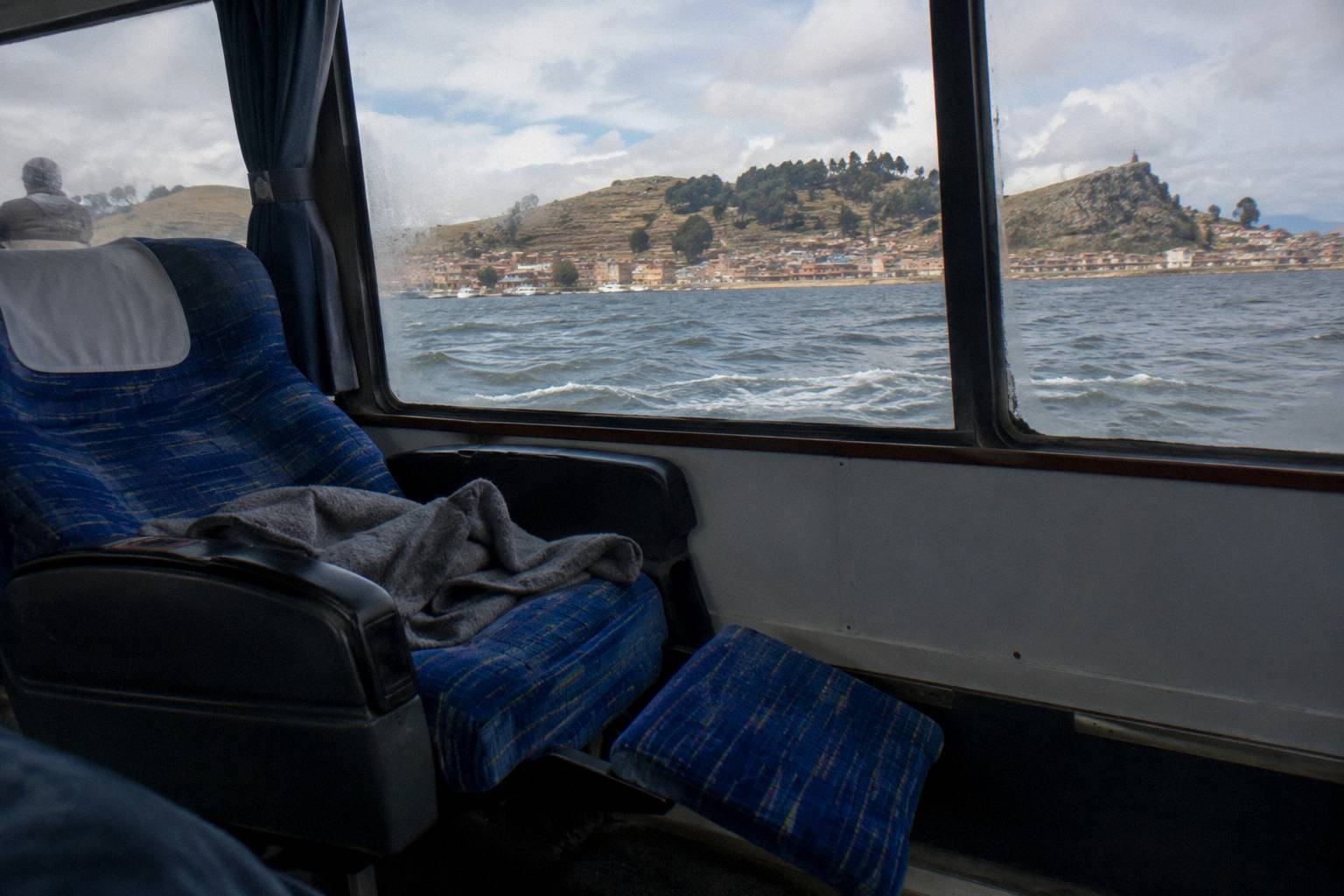
The tourist-bus products bring the same logic in a single ticket. The World Explorer Peru Cusco-Arequipa direct, rated 3.7 across 16 reviews, names a Cruzero Suite 160 degree seat in its listing, gives 10 hours, and allows free cancellation up to 24 hours before for a full refund as listed. You can read the details and check the direct Cusco Arequipa bus on its own page, with Direct Bus, 10 Hours alongside.
What About The Airport End: Buses Serving Lima Airport Itself?
The airport-to-city leg is part of the flight comparison, and it runs by bus too: the Airport Express Lima service connects Lima airport (LIM) to Miraflores on an air-conditioned luxury bus, from US$6.5 per person on the listing, with a listed duration of about 1 hour and free cancellation up to 24 hours before for a full refund as listed. Reviews are on the listing.
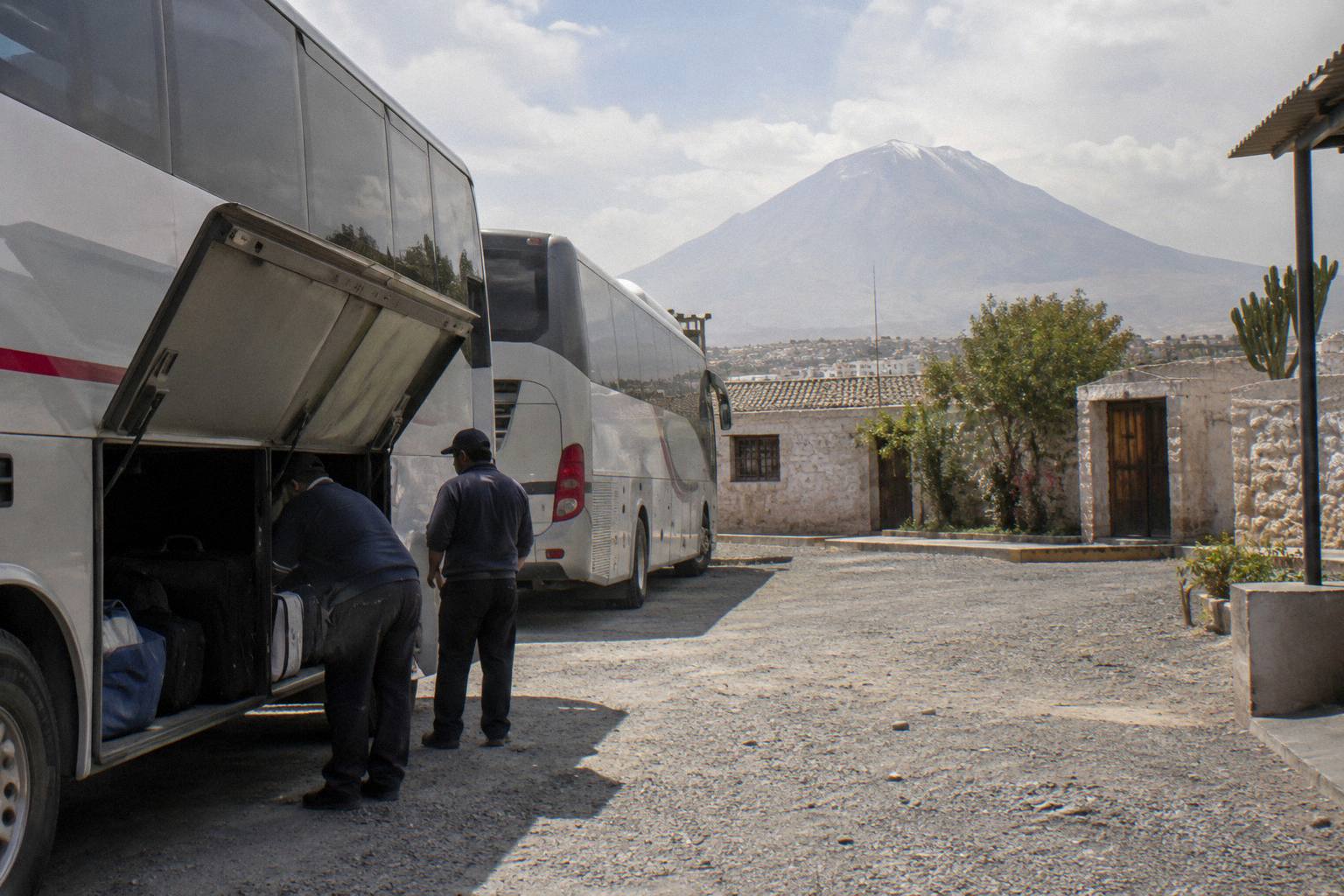
The point for the wider comparison is that a flight's true door-to-door shape includes this leg twice. Jorge Chavez airport sits outside central Lima, and the FCDO's terminal-caution language applies there directly: "There is a risk of robbery by criminals posing as taxi drivers, especially at Jorge Chavez International Airport and bus terminals", with the advice to "use one of the taxis registered at bus terminals" (FCDO safety and security advice for Peru). A scheduled airport bus with a named drop zone removes that decision, and the same logic applies at the bus terminals: Canada's advisory says to "remain particularly vigilant at bus terminals and in taxis" and to use only authorized cabs inside terminals and stations.
Weighing the whole chain, a flight on a 1,002 km corridor still comes out well ahead on hours once the airport legs are counted, because the bus alternative is a full day or a night. On a 487 km corridor like Arequipa-Cusco, the airport legs, the luggage handling and the city-centre terminals claw back a real share of the plane's advantage, which is the honest reason tourist buses sell on that pair at all. This site, Peru By Bus, holds the route-by-route detail in the Peru bus routes overview for every corridor named here.
Common Questions About Bus Versus Flight In Peru
Is It Cheaper To Fly Or Take The Bus In Peru?
No verified flight fare exists to print, so the honest comparison runs on other axes: the bus carries up to 20 kg in the hold free under the national regulation, drops in city centres, and tourist-bus products bundle stops and meals. Air fares are quoted by airlines and change constantly; check both live before deciding.
How Long Is The Bus From Lima To Arequipa Compared With Flying?
The Lima-Arequipa road is about 1,002 km with an OSRM free-flow drive estimate of about 14.3 hours, and real bus journeys exceed that. No verified flight time is printed, but the plane covers the corridor in a fraction of the bus day, which is why the corridor is the clearest fly case in the south.
Are Overnight Buses In Peru A Good Way To Save A Hotel Night?
The advisories are specific on this. The UK FCDO states: "Bus crashes are common, especially at night. Only use reputable transport companies, and where possible, avoid overnight travel, especially in mountainous and remote regions." Canada says to avoid buses and coaches at night. Night buses run, but the official advice weighs against them on mountain corridors.
Is The Bus From Arequipa To Cusco Better Than Flying?
On experience, it is competitive: about 487 km, a free-flow estimate of about 9.4 hours, and a tourist option, the World Explorer Peru direct, in a Cruzero Suite 160 degree seat with a listed duration of 10 hours, rated 3.7 across 16 reviews. On speed, the plane wins. The bus delivers the pass country between the two cities and a terminal drop inside Arequipa.
Do Peru Buses Have Luggage Allowances Like Airlines?
Yes, and the baseline is regulatory: up to 20 kg free in the hold on national service, with operators adding hand-luggage figures of 5 to 8 kg on their own pages. SUTRAN advises taking a luggage ticket for hold bags, and INDECOPI backs ticket changes with 24 hours notice at reissue cost only.
Which Routes Should I Fly Rather Than Bus In Peru?
Lima-Arequipa, about 1,002 km, and Cusco-Puerto Maldonado, about 669 km, are the two corridors where the free-flow estimate alone (about 14.3 and about 12.2 hours) makes the plane buy back most of a day. Lima-Trujillo at about 9.1 hours free-flow is borderline, and Arequipa-Cusco at about 9.4 hours is a genuine daytime bus contender.