
The North Coast By Bus: Lima, Trujillo, Chiclayo, Mancora And Tumbes
The Pan-American Highway strings Lima, Trujillo, Chiclayo, Mancora and Tumbes into one continuous bus corridor, and every leg of it is served by scheduled interprovincial carriers.
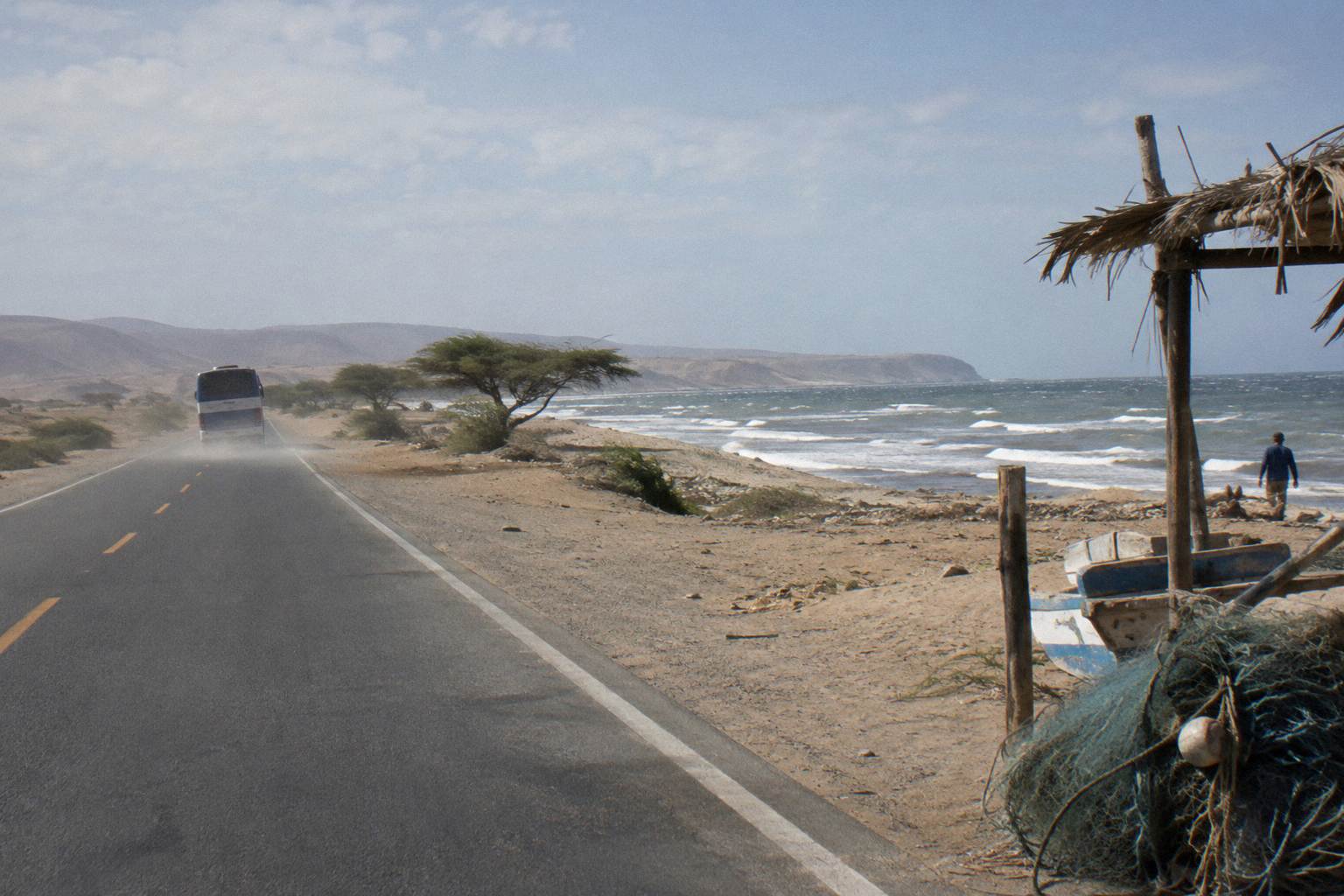
Short answer
The north coast runs about 557 km Lima to Trujillo, then 199 km to Chiclayo, 401 km to Mancora and 104 km to Tumbes as free-flow drive estimates. Movil Bus, Linea, Oltursa and Cruz del Sur all serve parts of the chain. Trujillo sits at 74 m and Chiclayo at 28 m, so altitude is not a factor on this route.
The Pan-American Highway gives Peru one bus corridor where the scenery changes faster than the operator does: desert outside Lima, green farmland around Trujillo, and beach towns by the time the road reaches Mancora. Riders plan this chain leg by leg, and each leg has its own carrier options, its own terminal and its own quirks. This guide walks the whole northern chain from Lima to the edge of Tumbes, with the verified distances, the operators that actually run each pair, and the government road advice worth reading before a long northern bus day.
One thing this corridor is not: a hop-on network. Peru Hop does not run buses in northern Peru. Everything here is a regular scheduled interprovincial service, bought as a point-to-point ticket for one leg at a time, which is why the terminals matter as much as the operators.
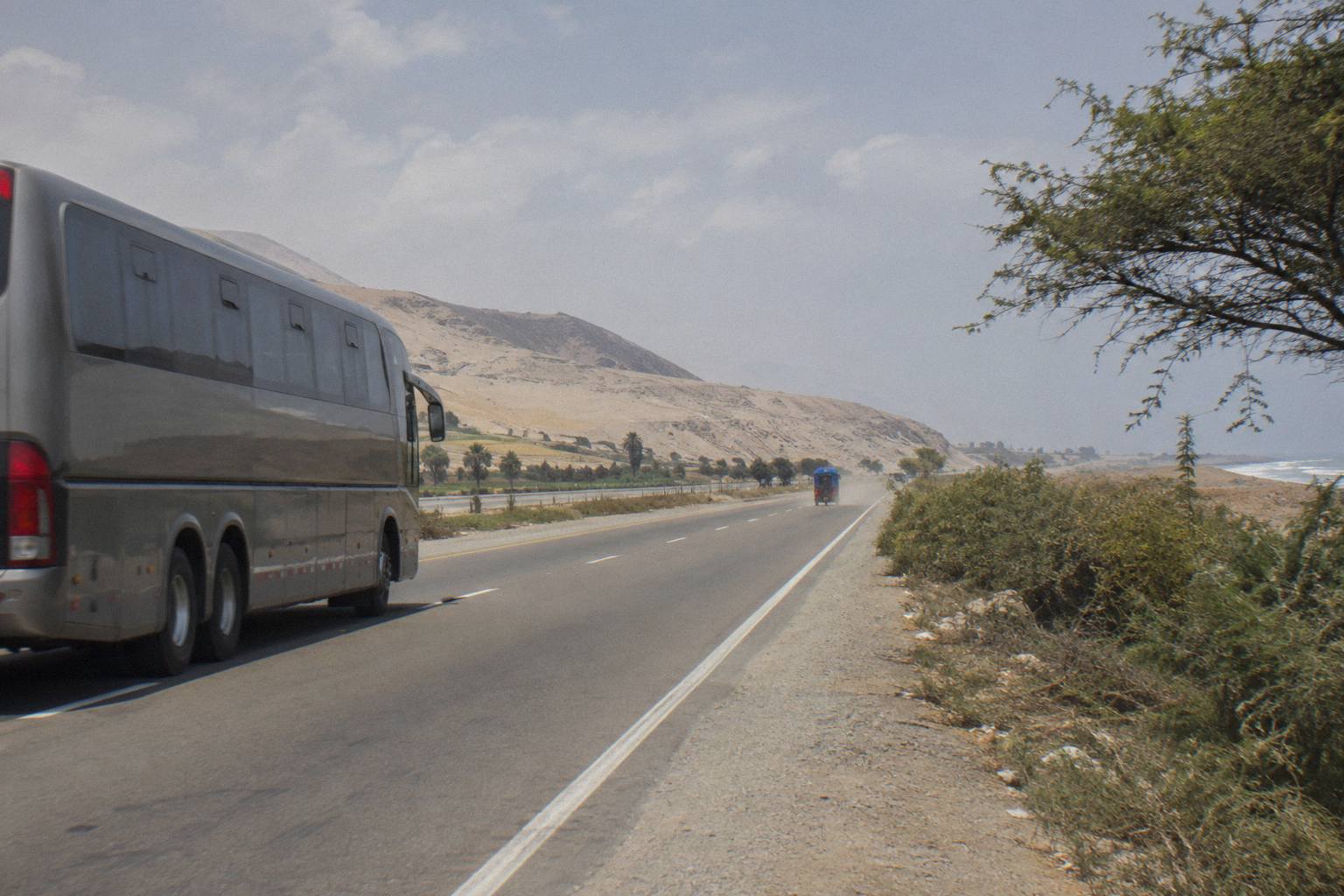
What Does The Lima To Mancora Bus Route Look Like?
The full chain runs Lima to Trujillo, Trujillo to Chiclayo, Chiclayo to Mancora and finally Mancora to Tumbes. Each pair below is an OSRM free-flow drive estimate, the time a car would need with no stops, and every real bus journey exceeds it because buses stop at terminals and hold the 90 km/h interprovincial limit. Treat these figures as spacing between towns, never as travel times to plan a day around.
The numbers come from the OSRM public router measuring city centre to city centre. Lima to Trujillo is about 557 km, a free-flow drive estimate of about 9.1 hours. Trujillo to Chiclayo shortens to about 199 km and roughly 3.2 hours free-flow. The long middle leg is Chiclayo to Mancora, about 401 km and around 5.3 hours free-flow, and the final hop, Mancora to Tumbes, is about 104 km and 1.5 hours free-flow. That last figure stands in for the general Tumbes area only; it is never a measure of the distance to the Ecuador border post itself.
| Leg | Distance | Free-flow drive estimate |
|---|---|---|
| Lima to Trujillo | about 557 km | about 9.1 h |
| Trujillo to Chiclayo | about 199 km | about 3.2 h |
| Chiclayo to Mancora | about 401 km | about 5.3 h |
| Mancora to Tumbes | about 104 km | about 1.5 h |
Altitude is the quiet advantage of this corridor. INEI lists Trujillo at 74 m and Chiclayo at 28 m, and Mancora and Tumbes sit near sea level, so none of the altitude planning that a Cusco or Puno itinerary demands applies here. The whole route is low, dry and hot in the northern summer, which is a different packing problem from the sierra. Readers crossing from the highlands should read the Peru bus altitude planning guide for the legs that do climb.
Two natural detours hang off this chain, and both are covered by their own pages on this site: the Lima to Cajamarca bus route branches east from the coast, and the route to Chachapoyas by bus branches from Chiclayo toward Kuelap. Travellers with more than a fortnight can work both into a northern loop.
How Do You Buy A Lima To Trujillo Bus Seat?
A Lima to Trujillo seat is bought as a single point-to-point ticket from one operator, either on the carrier's own website, at its Lima terminal, or through a seat search that lists the running carriers side by side. This is the longest leg of the chain and the one worth securing before travel dates firm up, because it is the leg where a sold-out class leaves you with the least flexibility the same day.
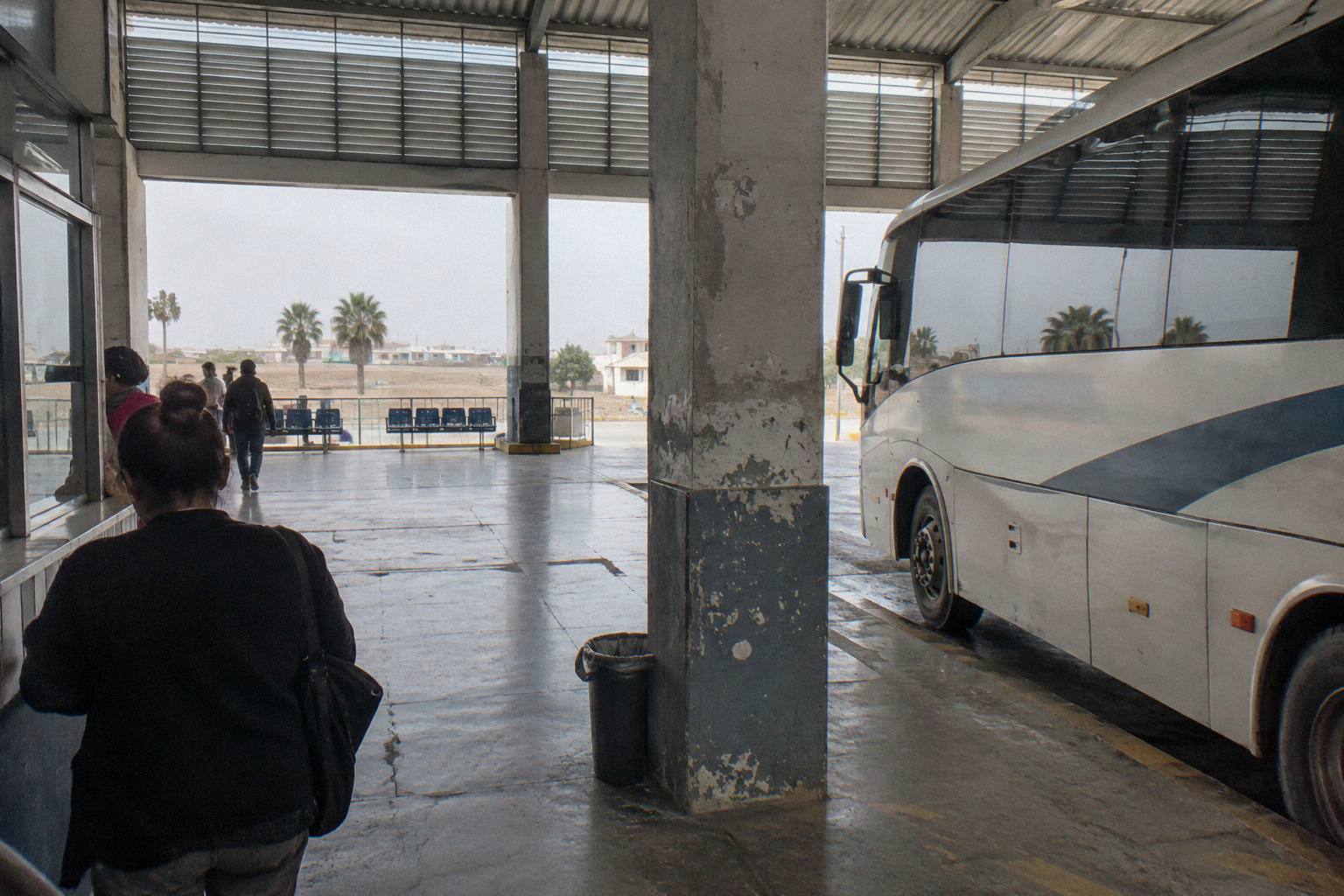
The leg is well served. Linea runs a northern network that includes Trujillo, Chiclayo, Piura and Cajamarca, and Movil Bus concentrates its routes on the north: Lima to Huaraz, Chiclayo, Trujillo, Chachapoyas, Cajamarca, Tarapoto and Oxapampa. Neither of these lines serves Cusco or Arequipa, so the northern corridor has its own operator set, distinct from the southern gringo trail. Cruz del Sur and Oltursa both list Trujillo among their stops on their own booking pages. When you are ready, Check availability for Lima to Trujillo seats across the running carriers.
Seats further north, Trujillo to Chiclayo and Chiclayo to Mancora, are bought the same way from the same carriers, leg by leg. There is no through-ticket that hops you down the whole coast; each pair is its own purchase. That is also the flexibility: because the chain is split, you can stop in Trujillo for Chanchan, add Chiclayo for the Royal Tombs of Sipan museum, and still pick up a Mancora seat afterwards.
If your northern trip starts with a flight into Lima, two listed connection products solve the airport-to-bus problem. The Airport Express Lima bus from Lima airport to Miraflores runs from Jorge Chavez International Airport to Miraflores, an air-conditioned luxury bus with a listed duration of about one hour and from US$6.5 per person on the listing, with free cancellation up to 24 hours before for a full refund. The Airport Express, 1 Hour link sits beside it for live times.
For readers combining the north with an Ancash leg, there is also the First Class Huaraz bus ticket from Lima to Huaraz, from US$50 per person on the listing, departing Miraflores or Lima airport with hotel pickup on request; note this product is non-refundable and cannot be changed, and the operator needs passport numbers and full names to print tickets. It is a booked-ahead product, not a turn-up-and-ride one, and it pairs with the Lima to Huaraz national route guide.
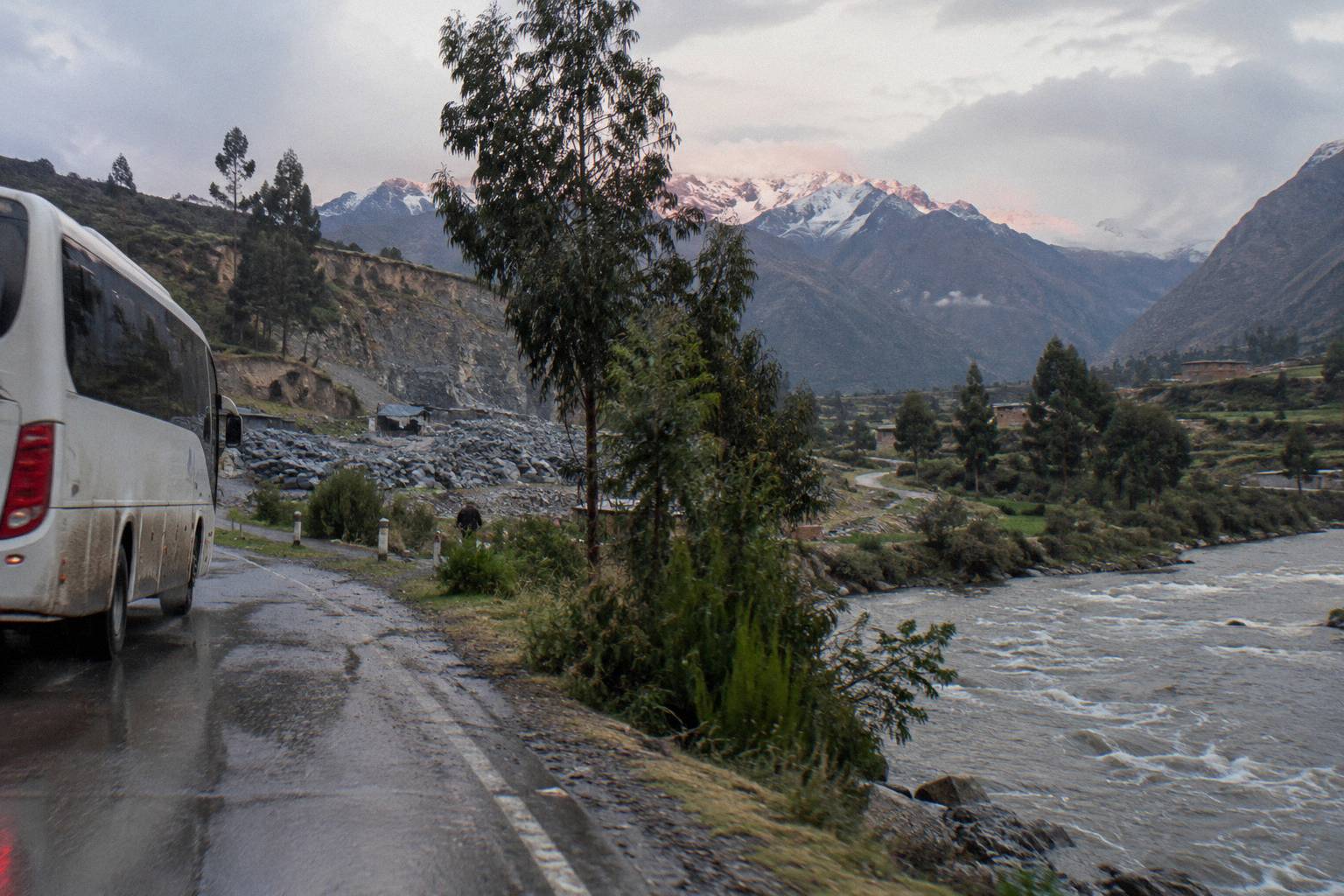
Which Bus Companies Run The North Coast Legs?
Movil Bus and Linea are the two carriers most anchored to the northern network, with Oltursa and Cruz del Sur also serving Trujillo and Chiclayo on their coastal runs. Movil Bus publishes five seat classes on its own pages, from a 120-degree Economico seat up to a 180-degree full-flat second-level Premier seat, and it allows 20 kg of hold luggage in up to 3 pieces plus 8 kg of hand luggage in up to 2 pieces.
Linea's own service page lists its classes with their recline angles: Super VIP at 180 degrees type cama, VIP at 160 degrees sofa cama, Dorado at 160 and Especial at 145, with Wi-Fi and streaming marked as subject to the operator's availability. Its network page confirms the northern footprint: Lima, Chimbote, Trujillo, Pacasmayo, Chiclayo, Piura, Huaraz, Cajamarca, Chepen and Jaen. Cruz del Sur's own comfort page lists reclining seats to 180 degrees, toilets, GPS satellite monitoring and Wi-Fi as a courtesy service, and its tickets carry 20 kg of hold luggage plus 6 kg by hand, as stated on its Lima-Cusco sales page. Oltursa confirms 20 kg hold free and one hand piece up to 5 kg on its terms page, with GPS monitoring, though it publishes no recline degrees for its classes.
| Operator | Classes and recline (operator's own pages) | Luggage allowance (as stated) |
|---|---|---|
| Movil Bus | Economico 120, Ejecutivo VIP 140/160, Presidencial 160, Premier 160 first level and 180 full flat second level | 20 kg hold (up to 3 pieces), 8 kg hand (up to 2 pieces) |
| Linea | Super VIP 180, VIP 160, Dorado 160, Especial 145 | 20 kg hold |
| Cruz del Sur | Seats reclining to 180 degrees, Wi-Fi as courtesy service | 20 kg hold plus 6 kg hand |
| Oltursa | Economico and Bus Cama VIP, no recline degrees stated | 20 kg hold, one hand piece up to 5 kg |
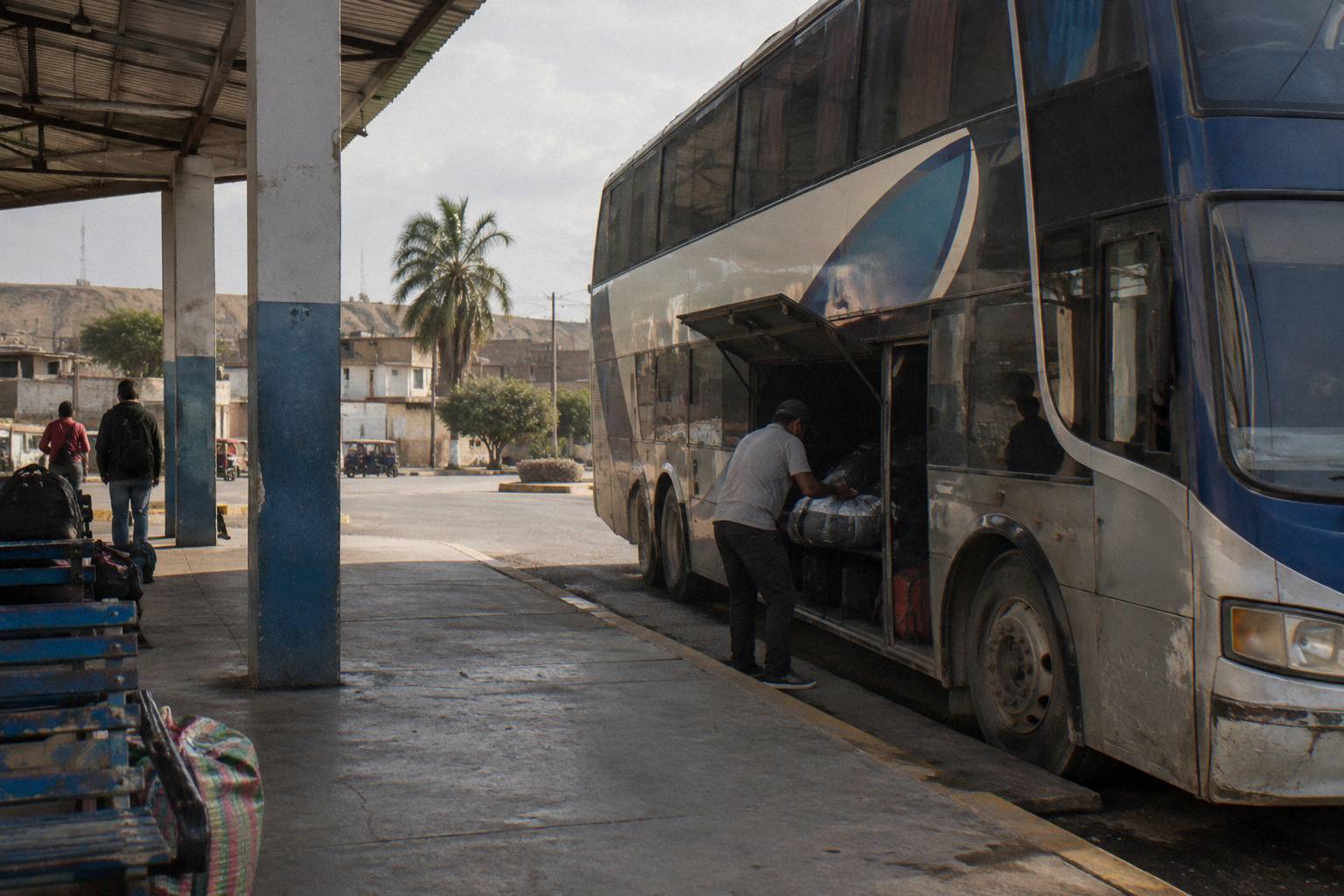
Movil Bus also states GPS position monitoring with speed control across its fleet, and Linea's safety page lists GPS position and speed control, alcohol testing, driver rest verification and seat-belt control. These are operator claims, printed here as such, but they line up with what Peru's national transit regulation demands of national service: GPS-based control and monitoring that transmits to the authority, seat belts at every seat and a crew announcement that belts are mandatory.
One class decision worth making consciously on the Lima to Trujillo leg: it is the longest of the chain, and a 160-degree cama seat versus a 120-degree Economico seat is the difference between arriving functional and arriving folded. Cruz del Sur's own comfort page is the reference for what its classes include, at cruzdelsur.com.pe/confort, and Oltursa's Lima page lists its northern departures at oltursa.pe/lima.
Which Terminals Do North Coast Buses Use?
Every north coast operator boards at its own named terminal or counter, not at a single city terminal: in Trujillo, Linea uses Av. America Sur 2857, Oltursa uses Av. del Ejercito 342 and Cruz del Sur uses Av. Amazonas 437, while in Chiclayo, Linea uses Av. Francisco Bolognesi 638, Oltursa uses Av. Vicente de la Vega 101 and Cruz del Sur uses Av. Bolognesi 888. Oltursa's Mancora point is Av. Grau 509.
These addresses come from the operators' own contact pages, and they differ by company, which is the point worth internalising: there is no one main terminal per city on this route, and the address on your ticket is the address you need, not the one a taxi driver assumes. In Lima, departures north spread across several points as well: Cruz del Sur boards at Terminal Javier Prado, Av. Javier Prado Este 1109, La Victoria, Oltursa at Jiron Manuel Portocarrero 380, Surquillo, and Linea at Av. Paseo de la Republica 979 plus a Plaza Norte point at Gerardo Unger 6917. The Gran Terminal Terrestre Plaza Norte sits beside the Plaza Norte mall between Av. Tomas Valle and Av. Tupac Amaru and hosts several carriers under one roof.
| City | Operator | Terminal or counter (operator's own page) |
|---|---|---|
| Lima | Cruz del Sur | Terminal Javier Prado, Av. Javier Prado Este 1109, La Victoria |
| Lima | Oltursa | Jiron Manuel Portocarrero 380, Surquillo |
| Lima | Linea | Av. Paseo de la Republica 979; Plaza Norte, Gerardo Unger 6917 |
| Trujillo | Linea | Av. America Sur 2857 |
| Trujillo | Oltursa | Av. del Ejercito 342, Urb. El Molino |
| Trujillo | Cruz del Sur | Av. Amazonas 437 |
| Chiclayo | Linea | Av. Francisco Bolognesi 638 |
| Chiclayo | Oltursa | Av. Vicente de la Vega 101 |
| Chiclayo | Cruz del Sur | Av. Bolognesi 888 |
| Mancora | Oltursa | Av. Grau 509 |
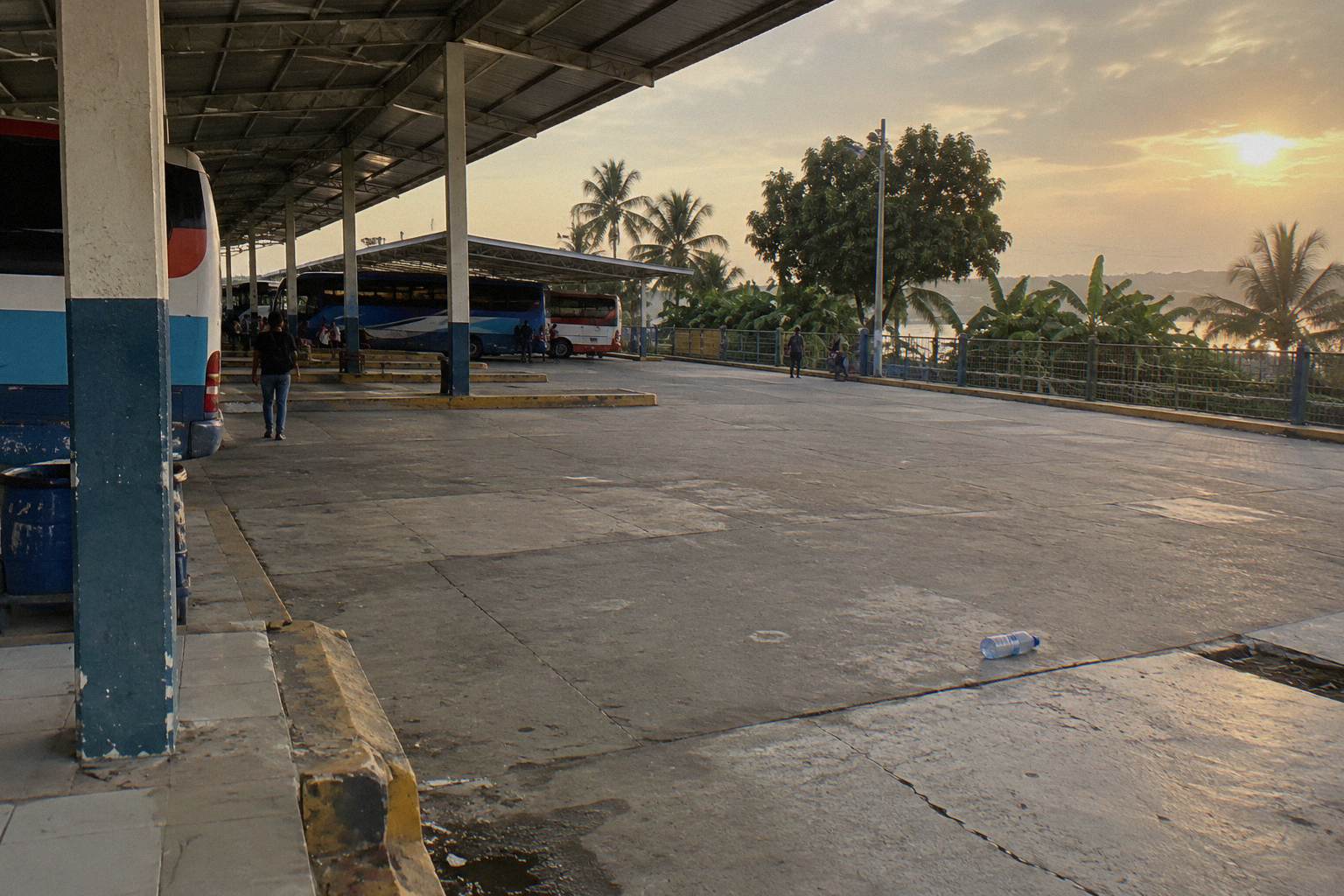
Regular carriers are required to use habilitated terminals at origin, destination and stops under Peru's national transit regulation, and passengers board only at authorised points with the bus stopped. That rule works in your favour here: it means a northern ticket names a real terminal, and it means the chaotic kerbside boarding common on city combis does not apply to these legs. The Peru bus terminals by city guide collects the same addresses for the rest of the network.
Terminal safety has its own official wording. The UK FCDO states: "There is a risk of robbery by criminals posing as taxi drivers, especially at Jorge Chavez International Airport and bus terminals", and advises readers to "use one of the taxis registered at bus terminals". Government of Canada's advice for Peru says "Remain particularly vigilant at bus terminals and in taxis" and "Only use authorized cabs located inside airport terminals and bus stations". The practical version: use the registered ranks at the terminal, not the offers that meet the bus.
How Long Does Each North Coast Leg Take?
Free-flow estimates give Lima to Trujillo about 9.1 hours, Trujillo to Chiclayo about 3.2, Chiclayo to Mancora about 5.3 and Mancora to Tumbes about 1.5, and every scheduled bus exceeds each figure because of terminal stops, boarding and the speed regime. No leg on this corridor has a timetable time worth printing here: fares and schedules move by season, and the operator's booking page is the live source for the day you want.
The infographic below puts the four legs side by side. Reading it honestly: the 9.1-hour free-flow figure for Lima to Trujillo is a floor, and real services add hours on top through stops and speed control. Build slack into any same-day connection, above all in Lima, and treat the Chiclayo to Mancora leg as a half-day commitment rather than a hop. The full index of guides sits on Peru By Bus.
The general guide to how Peru bus travel works covers what a scheduled interprovincial service includes, and the Peru bus cost by route overview explains why printed fares are unreliable on this site: operators themselves mark tariffs as referential and variable by season. What is stable is the geometry: the corridor is a straight line down the Pan-American Highway, and every leg is a single road with no mountain passes, which is why the free-flow and real-world gap is smaller here than on any sierra route in the country.
What About Luggage, Seats And Onboard Comfort?
The regulation baseline is 20 kg of hold luggage free on national service, with your own seat from age 5 and a right to a fare receipt, and the northern operators sit on or around that line: Movil Bus allows 20 kg in up to 3 hold pieces plus 8 kg hand in up to 2 pieces, Cruz del Sur 20 kg plus 6 kg, and Oltursa 20 kg plus one hand piece up to 5 kg.
SUTRAN advises taking a luggage ticket for anything checked into the hold, and the loss rule is worth knowing: damage or loss from the carrier's fault pays a minimum of 25 percent of the fare scaled by weight band under the passenger-rights article. The full packing and theft picture, including what to keep on your body rather than in the hold, is in the Peru bus luggage and theft guide.
Onboard, the north coast fleet is modern by any standard. Movil Bus states GPS and controlled speed across classes, Linea lists streaming subject to availability, and Cruz del Sur marks Wi-Fi as a courtesy service, which is the honest framing: treat connectivity as a bonus, download before you leave the terminal, and keep the FCDO's line in mind: "on bus journeys, keep your passport with you". The recline-degree table in the operators section above is the seat-comfort shortcut: on the long Lima to Trujillo leg, pay for the degrees.
How Safe Is The North Coast Bus Corridor?
No government source calls bus travel in Peru safe, and this guide does not either: the FCDO states "Bus crashes are common, especially at night", while Canada's advice says "Intercity bus travel can be dangerous due to the risk of bus accidents" and to "Avoid taking buses and coaches at night". The mitigations are named carriers, daytime legs where possible and the SUTRAN road map before you roll.
The US Embassy in Lima's republication of the State Department advisory carries a Level 2 rating, "Exercise Increased Caution", and notes that "Criminal groups sometimes set up roadblocks to rob people in areas outside of Lima" and that "Demonstrations can shut down local roads, trains, and major highways. This often happens without warning or clear information on reopening times." The same advisory records that U.S. government employees "may travel at night with commercial bus companies along the Pan-American Highway, to Huaraz, and on the Lima-Arequipa-Cusco corridor", which places the Pan-American Highway in the corridor that advisory treats as the standard commercial network. The full FCDO Peru page is at gov.uk/foreign-travel-advice/peru. The FCDO's full sentence on night travel reads: "Bus crashes are common, especially at night. Only use reputable transport companies, and where possible, avoid overnight travel, especially in mountainous and remote regions", and Canada attributes accidents to "excessive speed, poor vehicle maintenance and driver fatigue".
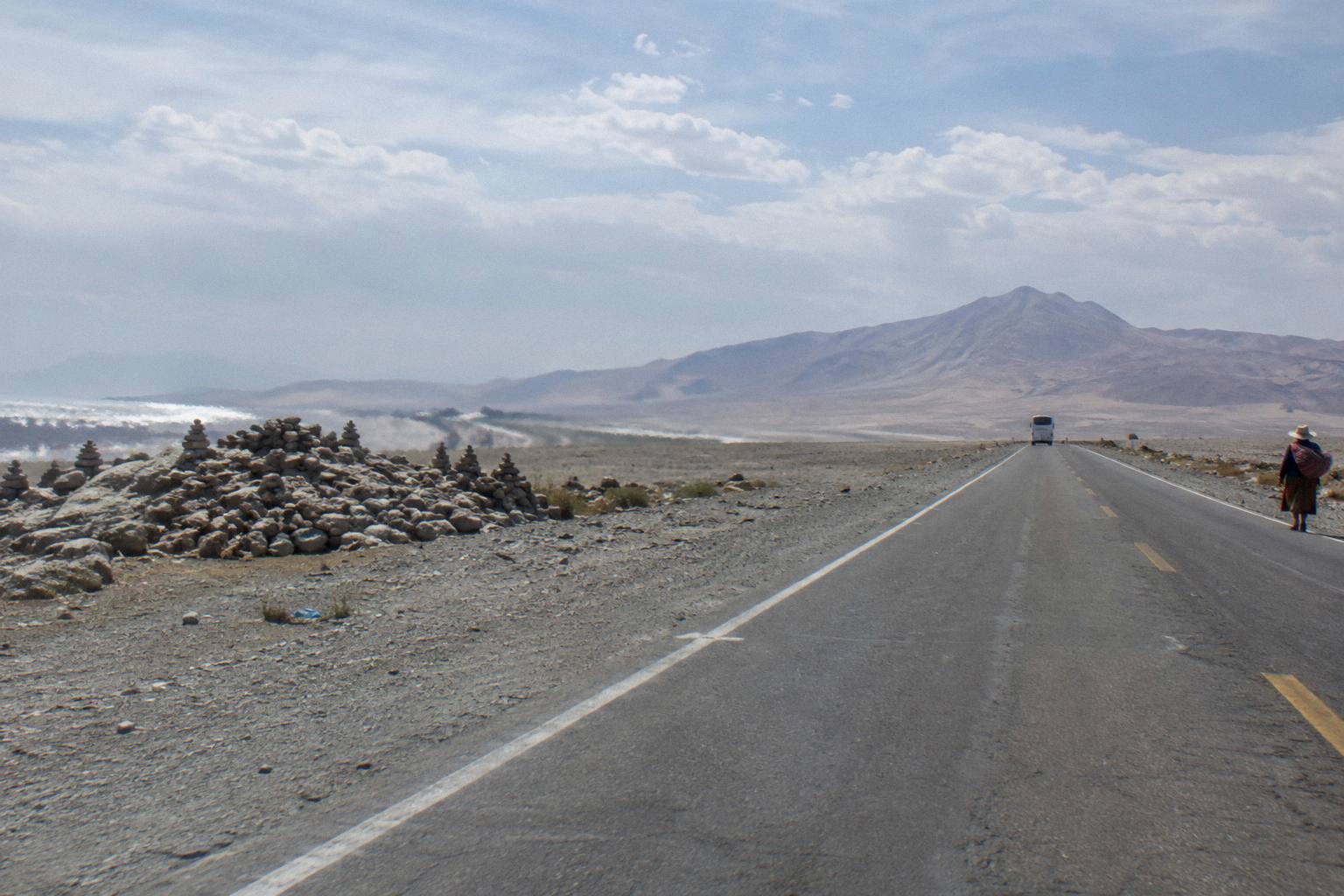
The north coast has one weather wildcard the south does not. The FCDO notice states: "Through late 2026 to April 2027, the El Nino weather event is expected to generate heavy rainfall, possible flooding, landslides, and mudslides, especially in, but not restricted to, the northern and central coast. These could cause travel disruption, such as road closures". That sentence names this corridor first, and it is the single most route-relevant piece of official text on the page: in an El Nino window, check the road before every northern leg. SUTRAN's live alert map, at alertasviales.sutran.gob.pe, marks closed roads in red, restricted in yellow and open in green, and blockades from social protests appear on the same map. The deeper playbook for strikes and closures is in the Peru bus delays, strikes and rainy season guide.
Two checks take under a minute each and cost nothing. SUTRAN's public lookup at gob.pe/11146 lets anyone confirm a bus and its driver are in order by plate number or the driver's DNI. And INDECOPI's rule that a domestic ticket can be postponed or transferred with 24 hours notice at only the real reissue cost is the rule to quote when a carrier's own staff are reluctant: the complaint route, if it comes to that, is INDECOPI's Reclama Virtual platform.
Is The Lima To Mancora Bus Trip Worth Building A Route Around?
Yes, as a chain of separate legs rather than one marathon: Trujillo's colonial centre and the Chanchan adobe city, Chiclayo's Royal Tombs of Sipan museum and the Mancora beach strip give each stop a reason to exist, and the corridor's low altitude, single-road simplicity and strong operator coverage make it the least complicated long bus route in Peru. The trade is the El Nino weather notice on the northern coast and the standing government caution about overnight intercity legs.
Built leg by leg, the route also forks well. From Trujillo, the Cajamarca branch climbs into the northern highlands. From Chiclayo, the Chachapoyas branch leads to Kuelap and Gocta, one of the country's most underrated detours. And from Tumbes, the Aguas Verdes-Huaquillas post is the main Peru-Ecuador crossing, with La Tina and La Balsa as smaller posts to check before you go; the crossing specifics, including what the official pages do and do not confirm about hours, are covered in the Peru to Ecuador bus border guide.
For travellers whose Peru trip runs coast first and south afterwards, the classic second act is the southern corridor: the one-way bus from Miraflores in Lima to Paracas, rated 4.2 across 62 reviews, is the tourist-bus way to start the Paracas and Huacachina leg, dropping at El Chaco in Paracas in a listed 3 hours with free cancellation up to 24 hours before. Check availability shows live departure options. From there the southern chain, covered in the southern Peru bus circuit guide, runs on to Arequipa, Puno and Cusco on completely different terrain.
The honest summary of the north: it is the corridor where Peru bus travel is at its most routine, in the good sense. Straight road, sea-level cities, terminals with addresses you can verify in advance, and carriers that publish their classes and luggage rules. Plan the legs, check the road map in the El Nino window, keep the passport on your body, and the chain from Lima to the edge of Ecuador is a straightforward piece of travel.
Common Questions About The North Coast Bus Route
How Do I Get From Lima To Mancora By Bus?
Buy it as separate point-to-point tickets: Lima to Trujillo, about 557 km with a 9.1-hour free-flow drive estimate, then Trujillo to Chiclayo, Chiclayo to Mancora, about 401 km more. Movil Bus, Linea, Oltursa and Cruz del Sur serve the chain, each from its own terminal, and every real journey runs longer than the free-flow figures because of stops and speed control.
Does Peru Hop Go To Mancora Or The North Coast?
No. Peru Hop does not run buses in northern Peru; its hop-on network covers the Lima, Paracas, Huacachina, Arequipa, Puno and Cusco corridor in the south. The north coast is served by scheduled interprovincial carriers bought leg by leg.
Which Bus Companies Run Lima To Trujillo?
Linea lists Trujillo on its northern network, Movil Bus concentrates its routes on the north including Trujillo, and both Oltursa and Cruz del Sur serve Trujillo on their coastal runs. Each boards at its own terminal: Linea at Av. America Sur 2857, Oltursa at Av. del Ejercito 342 and Cruz del Sur at Av. Amazonas 437.
How Much Luggage Can I Take On A North Coast Bus?
The regulation baseline is 20 kg of hold luggage free on national service. Movil Bus allows 20 kg in up to 3 hold pieces plus 8 kg hand luggage in up to 2 pieces, Cruz del Sur 20 kg hold plus 6 kg hand, and Oltursa 20 kg hold plus one hand piece up to 5 kg. SUTRAN advises taking a luggage ticket for hold bags.
Is The Overnight Bus From Lima To Trujillo A Problem?
The FCDO states "Bus crashes are common, especially at night" and advises avoiding overnight travel where possible, and Canada's advice says to avoid buses and coaches at night. The US Embassy advisory records that government employees may travel at night with commercial bus companies along the Pan-American Highway. If you ride overnight, use a named carrier and keep your passport with you, per the FCDO.
What Does The El Nino Notice Mean For The North Coast Route?
The FCDO states that through late 2026 to April 2027, El Nino is expected to bring heavy rainfall, possible flooding, landslides and mudslides, especially on the northern and central coast, with travel disruption such as road closures. Check SUTRAN's alert map, which shows closed roads in red and restricted roads in yellow, before each leg during that window.