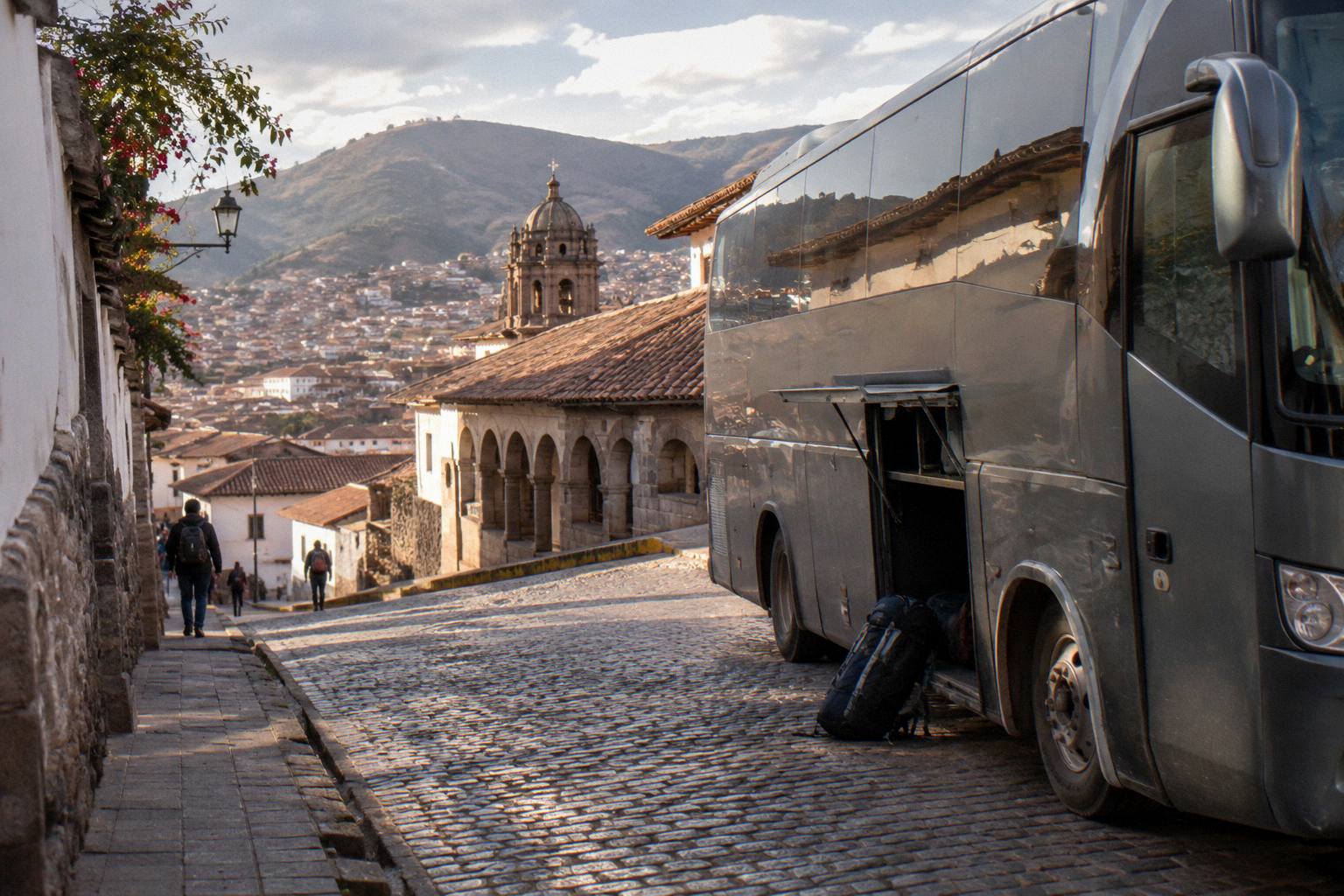
Peru Bus Tours Vs Independent Bus Travel
A hop-on hop-off pass and a run of separate terminal tickets both move you down the same highway. The difference sits in who handles the logistics, where you board, and what happens when plans change.
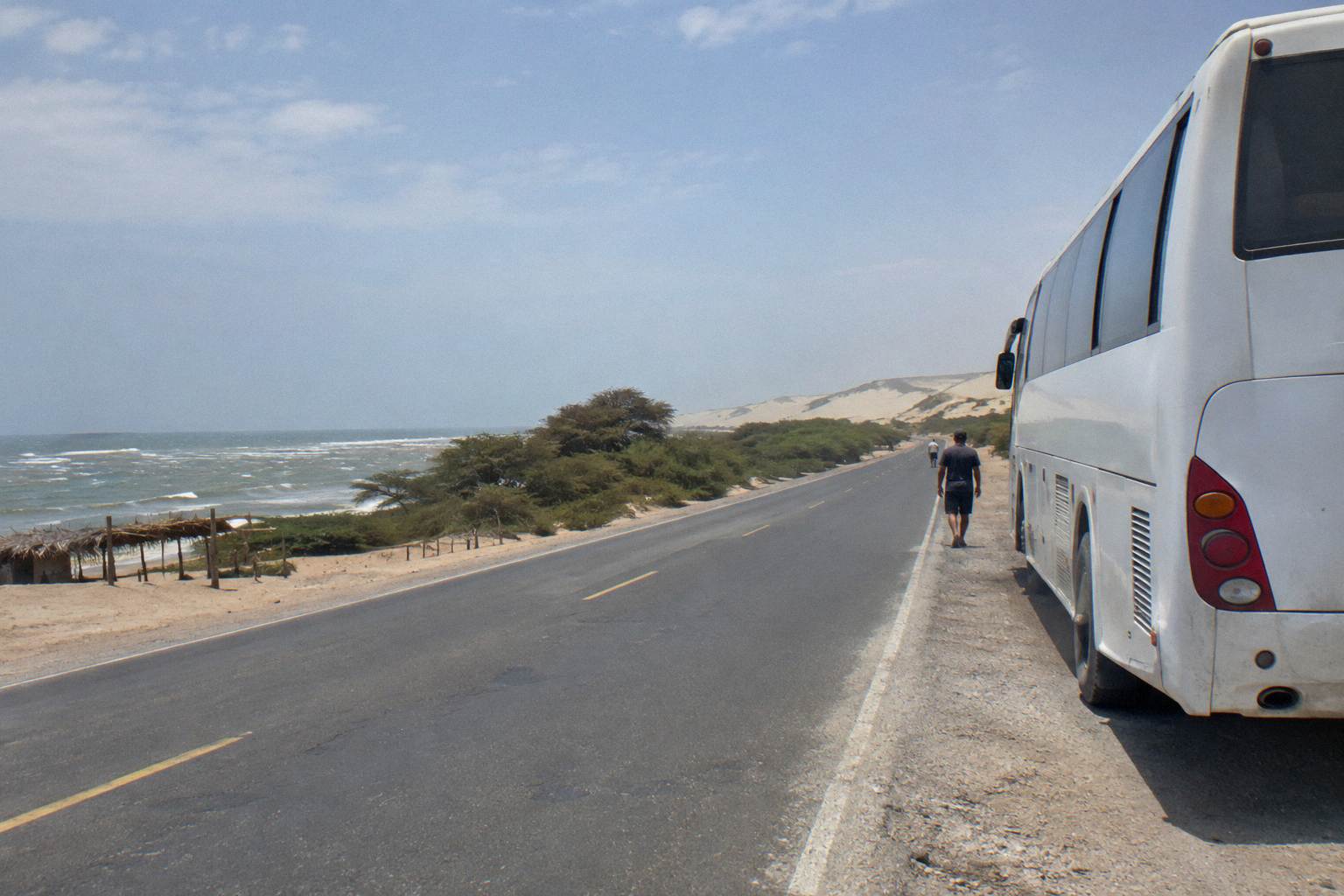
Short answer
A Peru bus tour bundles door pickup, a host, flexible hop-off stops and fixed sightseeing legs into one pass valid for a year, per its own terms. Independent travel means buying point-to-point seats at company terminals and arranging tours yourself. Travellers often find the totals comparable once taxis and separate tours are added.
What Is The Difference Between A Peru Bus Tour And Independent Bus Travel?
A Peru bus tour is a packaged product where one booking covers a chain of legs, door pickup, an onboard host, built-in sightseeing stops, and a ticket valid for a year under the operator's terms, while independent travel means buying separate point-to-point seats from regular carriers, boarding at company terminals, and arranging every stopover and connection yourself. Both run on the same Pan-American Highway and mountain roads, so the difference is logistics and flexibility, not scenery.
The distinction matters more in Peru than in countries with a single national rail spine, because the classic visitor route, Lima down the coast to Paracas and Huacachina, then Nazca, Arequipa, Puno and Cusco, is a chain of separate legs rather than one line. Do it independently and you buy several tickets from several companies, each with its own terminal address, luggage policy and boarding routine. Do it on a pass and one operator owns the whole chain, from the hotel pickup at the start to the drop-off at the end.
Neither style owns the word "tour" outright. A booked tourist-bus ticket for a single leg, such as a seat from Miraflores to Paracas with a set drop-off point, sits between the two: it is a one-off purchase, but it comes with the guided-product conveniences of a fixed meeting point and a listed cancellation window. Plenty of visitors mix all three approaches across one trip.
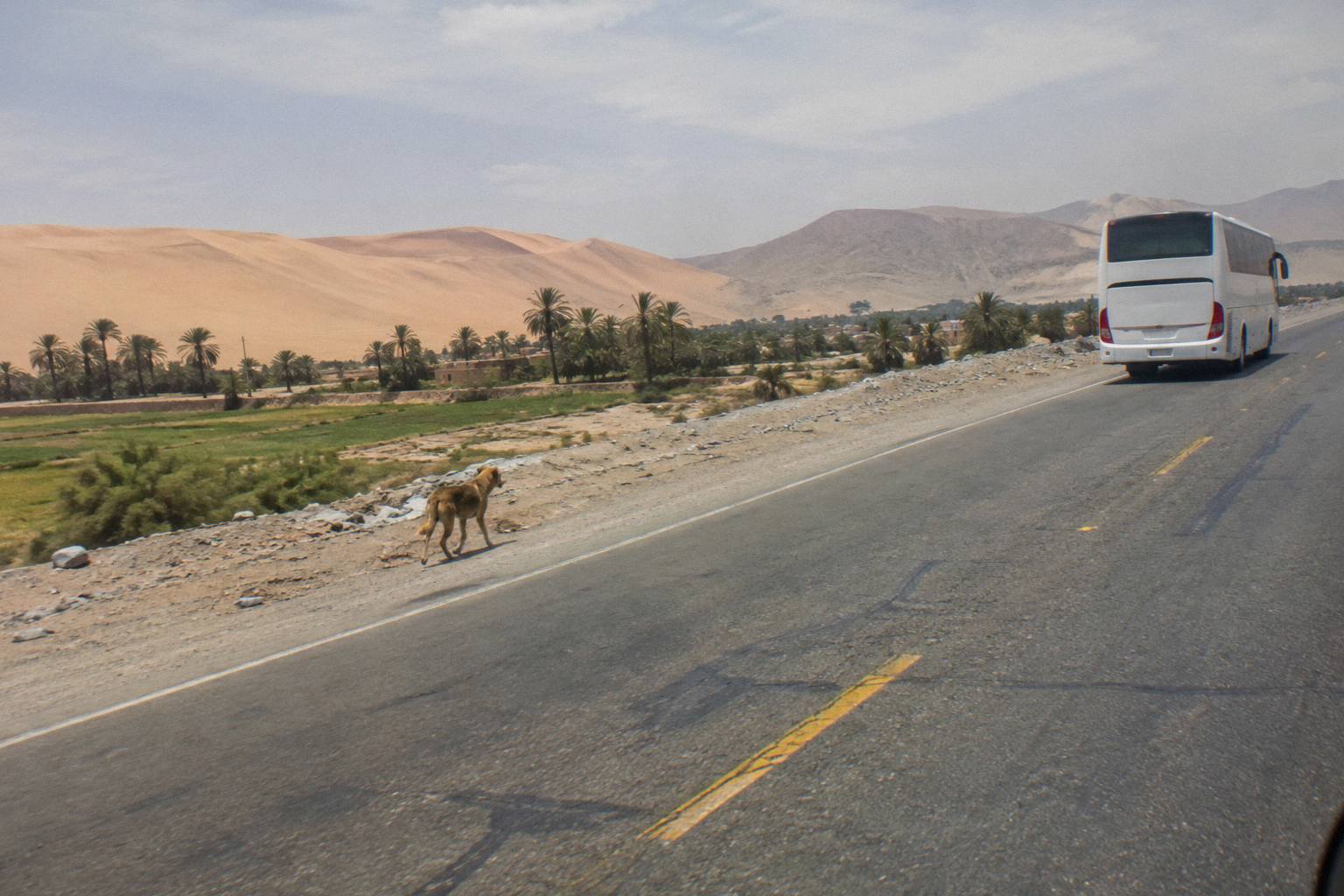
This page compares the two styles leg by leg: what a pass includes, what a terminal ticket includes, how boarding differs, and how the choice plays out for the destinations most visitors care about. The starting point is the southern coast, because that is where the two styles overlap most directly.
| Question | Bus tour or pass | Independent bus travel |
|---|---|---|
| Where do you board? | Hotel or Airbnb pickup, per the operator | Company terminals at listed addresses |
| Who runs each leg? | One pass operator across its network | A different carrier for each leg |
| Can you change plans? | Bus time changeable in the app up to 12 hours before departure, per its terms | Depends on each carrier's own terms |
| Sightseeing stops | Built into the route as hidden stops | Arranged and paid for separately |
| Ticket life | Valid 1 year, per the operator | Each ticket is for one departure |
What Does A Hop-On Hop-Off Pass Include That A Terminal Ticket Does Not?
A hop-on hop-off pass bundles the extras a terminal ticket leaves you to arrange alone: door pickup instead of a dash to the terminal, a local bilingual host on every bus, hidden sightseeing stops on the Lima routes, and a year of validity so plans can bend around weather and mood. A terminal ticket buys exactly one seat on one departure, boarded at the carrier's own address, and nothing more.
The operator in this space is Peru Hop, a hop-on hop-off network covering Peru and Bolivia with departures from Lima, Cusco, Arequipa, Copacabana and La Paz. Its pass model works differently from a normal carrier: you buy a direction, for example Full South To Cusco or Get to Cusco Quick, and hop on and off along the named stops. Peru Hop lists the Full South To Cusco pass as covering Chincha, Paracas, Huacachina, Nazca, Arequipa, Lagunillas, Puno and Cusco, with a fastest completion time of 6 days.

The hidden stops are where the tour character shows. On Lima passes the operator includes the Secret Slave Tunnels in Chincha, the Nazca Lines Viewing Tower, the Paracas National Reserve, the Lake Lagunillas viewpoint and a Pisco vineyard in Ica, stops a scheduled intercity bus cannot make because regular carriers must use terminals and authorised boarding points rather than the open road. Passengers also get a host who explains each stop, and the operator reports carrying 395,000+ passengers across 85+ nationalities since 2013, figures printed here as operator claims.
Honest caveats belong beside that list. Some legs on the southern chain are long, Nazca to Arequipa is the one passengers talk about, and some later legs run in the evening or overnight. A hop-on hop-off ticket is also not the cheapest direct seat on any single leg; the Peru Hop passes explained guide breaks down the pass types in detail. For a comparison of the pass against regular carriers on the same corridor, see the southern Peru bus circuit guide.
For readers who want the guided style on one leg only, single tourist-bus tickets cover the same first stretch of the southern route:
The pass operator's own buses are specified on its fleet page: semi-cama reclining seats, air conditioning and heating, TVs, USB ports, toilets, GPS tracking, speed-restriction software, seatbelts and a team of drivers, with Starlink Wi-Fi claimed on every bus as an operator statement. On the Bolivia side the sister buses have no onboard toilet because of the lake-crossing weight limit, with public toilets at the Strait of Tiquina and passengers crossing the lake on a separate boat.
Which Booked Bus Tickets Work Best For The Southern Circuit?
The best booked options are three tourist buses: Miraflores to Paracas in a listed 3 hours, Miraflores to Huacachina with a Paracas stop in a listed 8 hours, and Puno to Cusco with an all-you-can-eat lunch stop in a listed 11 hours. Each runs one way with a fixed meeting point or drop-off and free cancellation up to 24 hours before, as listed.
Start with the coast. The Wayki Bus Peru one-way tourist bus from Miraflores in Lima to Paracas, rated 4.2 across 62 reviews, runs from Miraflores and Barranco to a drop-off at El Chaco in Paracas, with the listing giving 3 hours. A twin booking page by another operator covers the same Lima to Paracas run with hotel pickup in Miraflores and Barranco, from US$18 per person on that listing's own basis. That twin exists alongside the Wayki service as a separate product with its own basis; the two are alternatives, never one merged option. You can weigh both on the Paracas tourist bus page, or check availability directly.
The second coast option chains Paracas into the ride. The Wayki Bus Peru one-way tourist bus from Lima to Huacachina with a Paracas stop, rated 3.7 across 77 reviews, picks up in Miraflores, San Isidro and Barranco, stops in Paracas, and finishes at the Viajero hostel meeting point in Huacachina, with the listing giving 8 hours for the full run including the stop. For the third leg of the triangle, the free-flow drive estimate for Paracas to Huacachina is 74 km and 1.3 hours, a figure real bus journeys exceed and which is never a timetable promise. Details are on the Huacachina one-way bus page.
The highland link is a different animal. The Turismo Mer tourist bus from Puno to Cusco with a lunch stop, rated 4.6 across 24 reviews, covers the Puno to Cusco leg in a listed 11 hours, dropping at the Terminal Privado Turismo Mer in Cusco, with the listing naming an all-you-can-eat lunch stop. The OSRM free-flow drive estimate for Puno to Cusco is 387 km and 6.2 hours, so the listed duration reflects the stops, the pass at Abra La Raya at about 4,300 m, and the climbing road rather than the bare distance. Full details sit on the Puno to Cusco lunch bus page.
| Ticket | Operator | Route and stop | Listed duration | Rating and reviews |
|---|---|---|---|---|
| One-Way Bus from Miraflores, Lima to Paracas | Wayki Bus Peru | Miraflores and Barranco to El Chaco, Paracas | Listing gives 3 hours | 4.2 across 62 reviews |
| One-Way Bus from Lima (Miraflores) to Huacachina | Wayki Bus Peru | Miraflores, San Isidro, Barranco to Huacachina via Paracas stop | Listing gives 8 hours | 3.7 across 77 reviews |
| Bus from Puno to Cusco with all-you-can-eat lunch | Turismo Mer | Puno to Terminal Privado Turismo Mer, Cusco | Listing gives 11 hours | 4.6 across 24 reviews |
How Do Terminals And Pickup Points Change The Experience?
Terminals and pickup points change each trip's start and end: independent carriers board at company terminals, and Peru's national transit regulation requires regular service to use terminals at origin, destination and stops rather than the public road. Pass products collect passengers at their hotel or Airbnb instead, removing the terminal journey and the taxi question at both ends, a difference felt most in Lima, where terminals sit well outside hotel districts and transit advice warns of taxi crime around them.
Terminal addresses differ company by company, and there is no single main terminal in any city on this route. Cruz del Sur departs Lima from its own terminal at Av. Javier Prado Este 1109, La Victoria, while Oltursa uses Jiron Manuel Portocarrero No 380, Surquillo, and those two addresses are in different districts. Anyone stringing legs together independently will visit several of these addresses in a week, each with a different queue, luggage tag system and boarding call. The wider set of guides lives on Peru By Bus.
The security advice on terminals is specific and worth quoting. The UK FCDO states: "There is a risk of robbery by criminals posing as taxi drivers, especially at Jorge Chavez International Airport and bus terminals," and advises travellers to "use one of the taxis registered at bus terminals" (FCDO safety and security). Door-to-door pickup in a pass product removes that specific handoff moment, though the underlying advice about registered taxis applies to any terminal arrival. The Peru bus terminals by city guide lists company-specific addresses for the whole network.
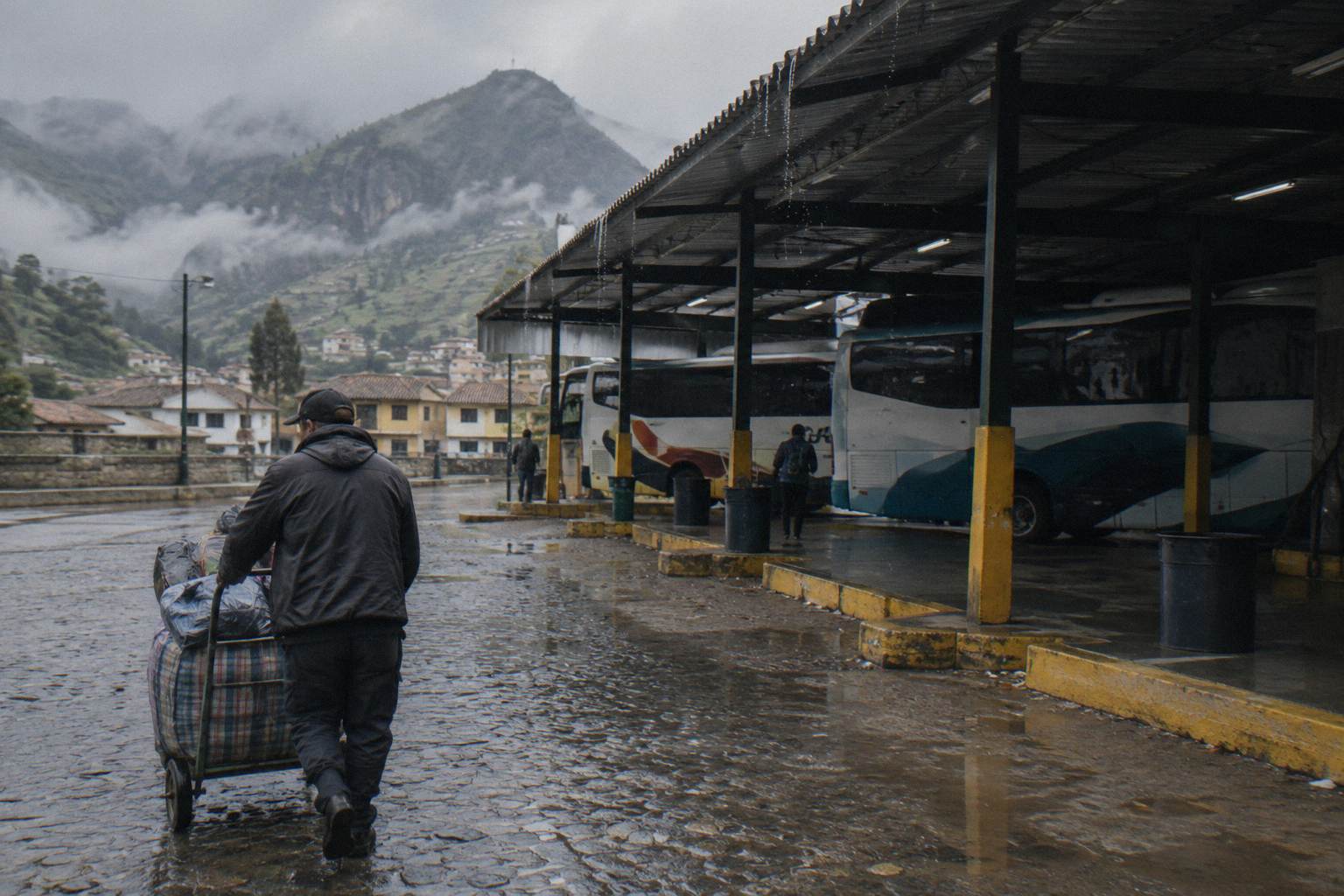
Terminals are not only a friction point; they are also where a booked tourist bus often differs. The Wayki coastal services use set meeting points in Miraflores and Barranco and drop at named points in Paracas and Huacachina, while the Turismo Mer Puno service ends at the operator's own private terminal in Cusco. In other words, single tourist-bus tickets sit closer to the pass model on boarding and closer to regular carriers on arrival.
What About Safety, Strikes And Road Blocks?
Neither travel style shields you from Peru's road realities: government advice warns of night crashes and armed hold-ups on intercity buses, protests can close roads and suspend border crossings with little notice, and an El Niño notice running to April 2027 flags rain, landslides and closures on the northern and central coast. A pass only changes your logistics, offering door pickup, one operator's WhatsApp help line, and app-based changes up to 12 hours before departure.
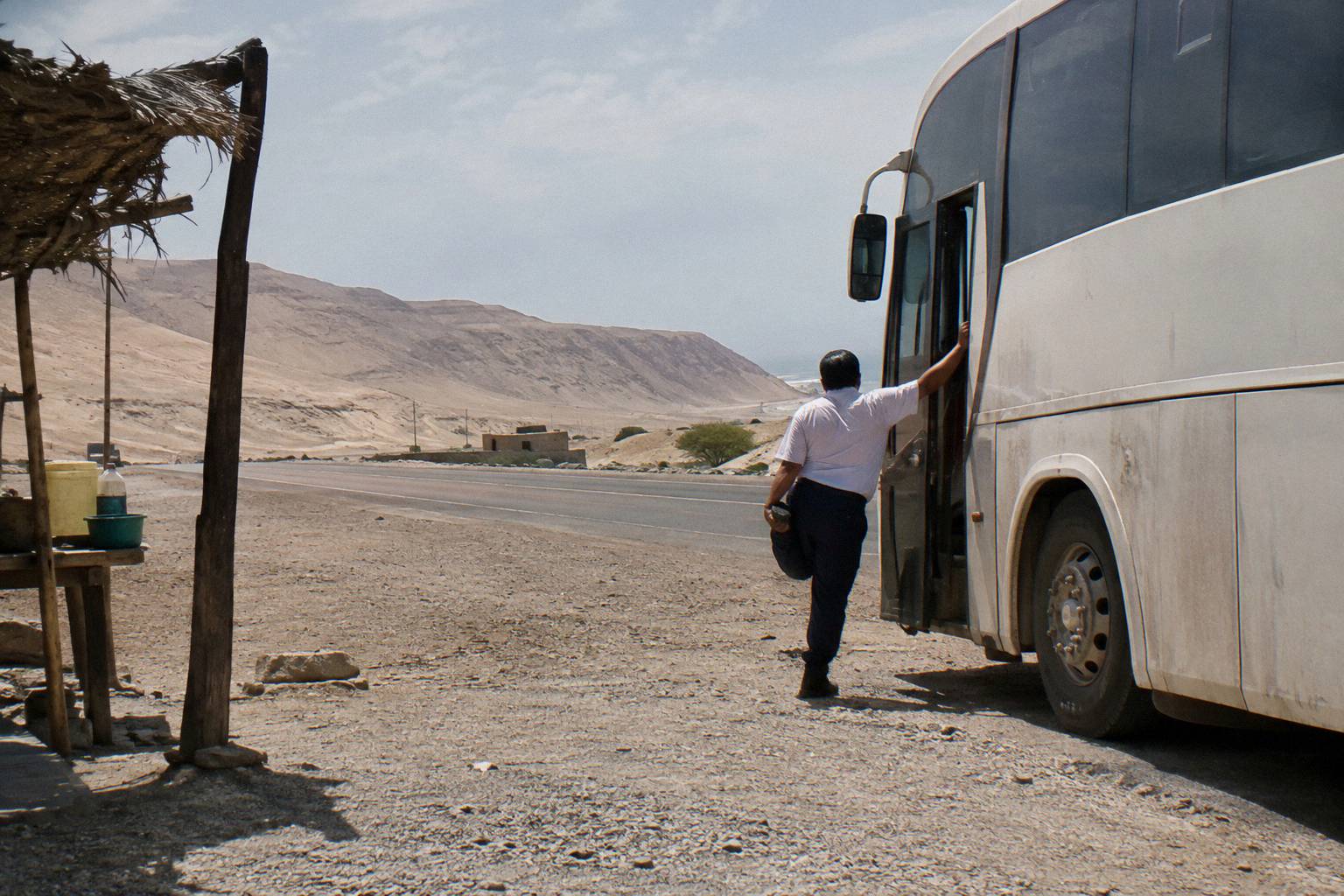
The advice itself deserves verbatim quotation rather than paraphrase. The FCDO states: "Bus crashes are common, especially at night. Only use reputable transport companies, and where possible, avoid overnight travel, especially in mountainous and remote regions." Smartraveller adds: "Robberies and assaults occur frequently on intercity buses, including while passengers are sleeping," and names "theft as you sleep on intercity bus routes between Lima, Ica, Nazca and Cusco," advice that covers exactly the corridor compared on this page. Canada's page says "Avoid taking buses and coaches at night" and "Follow the main roads used by bus tour companies" (Government of Canada travel advice). These are the sources' own words, not a verdict on any operator.
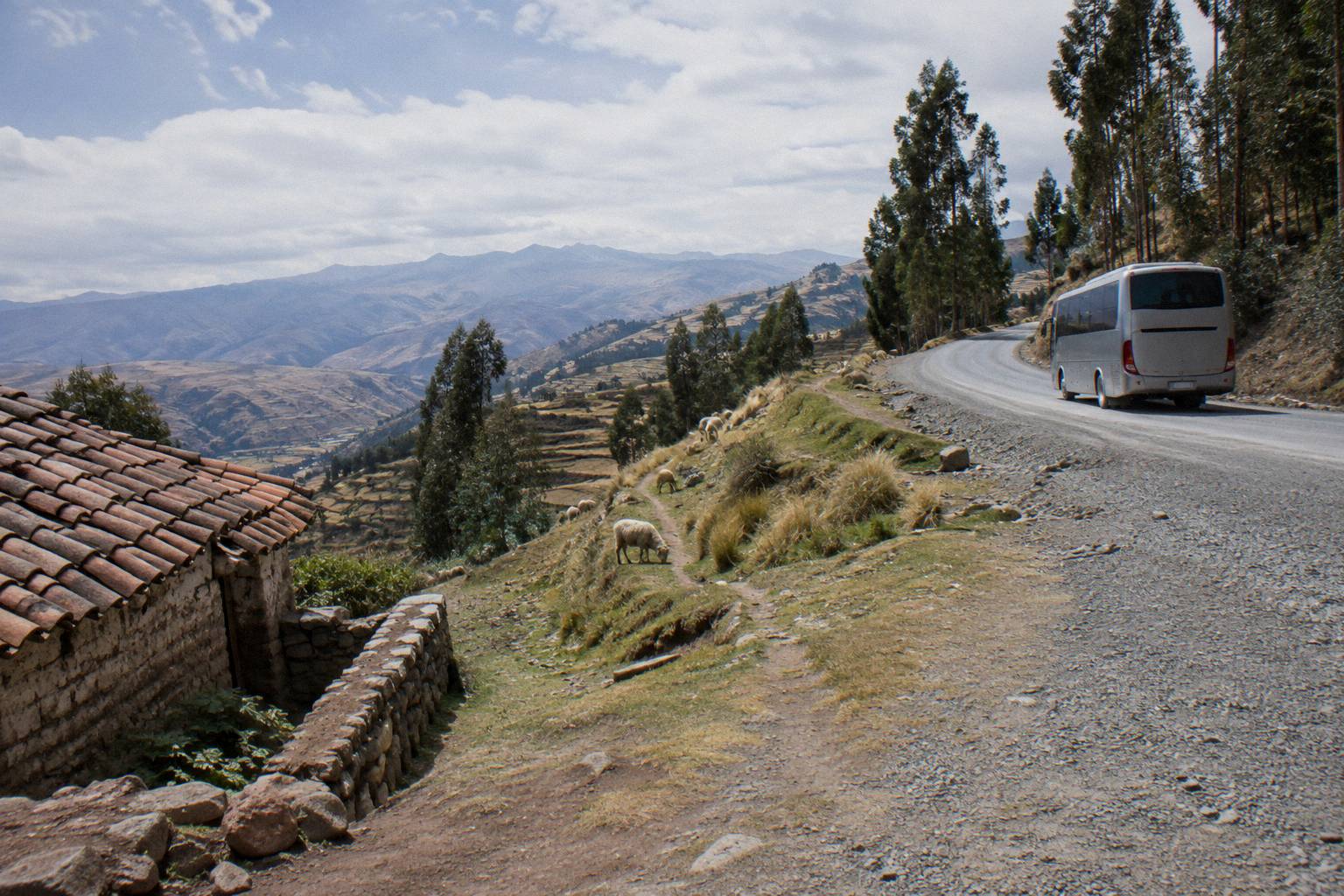
Disruption is the other shared risk. The FCDO notes that "Political protests in Peru are unpredictable and can escalate quickly. Demonstrations can become violent and lead to roadblocks, travel disruption, including trains, and suspension of immigration services at land borders," and names Arequipa, Ayacucho, Cusco, La Libertad, Madre de Dios and Puno as regions with recent protests, which covers most of the southern circuit. Its instruction is blunt: "Do not attempt to pass blockades." Before any leg, the SUTRAN alert map at alertasviales.sutran.gob.pe shows closed roads in red, restricted in yellow and open in green, and SUTRAN runs a 24 hour WhatsApp line on 999 382 606. The strikes and road blocks guide covers the practical response.
How Do Luggage, Comfort And Onboard Features Compare?
Luggage is standard by regulation, with up to 20 kg free on national bus service and a fare receipt required, while operators add their own limits, like Cruz del Sur at 20 kg hold plus 6 kg hand and Oltursa at 20 kg plus 5 kg; comfort splits the products, as the pass operator guarantees semi-cama reclining seats with toilets and crew on every bus, while independents climb from 120 degree recline to full 180 degree beds.
The comparison is easier to read side by side. Recline figures below are each operator's own claim from its own pages, and where an operator states no degrees, none are printed.
| Operator or product | Seat class and recline (operator's own claim) | Luggage (operator's own claim) |
|---|---|---|
| Hop-on hop-off network | Semi-cama reclining seats, toilets, crew | Check the operator's page |
| Cruz del Sur | Suite 160 degrees; reclining seats 180 degrees | 20 kg hold plus 6 kg hand |
| Movil Bus | Ejecutivo VIP 140/160; Presidencial 160; Premier 180 on the second level | 20 kg hold plus 8 kg hand |
| Linea | Super VIP 180 degrees cama; VIP 160 sofa cama | 20 kg |
| Oltursa | Two classes, no recline degrees stated | 20 kg hold plus one 5 kg hand piece |
For theft specifically, the FCDO instruction "on bus journeys, keep your passport with you" is the standing rule, and Smartraveller's warning about theft while sleeping on the Lima, Ica, Nazca and Cusco routes makes hand luggage placement a real decision on overnight legs. The luggage and theft guide works through hold tags, hand luggage and what to keep on your body. A host on a pass bus adds a person to ask when something goes missing mid-route; a terminal carrier hands the problem to its counter staff at the end of the line.
Is A Bus Tour Or Independent Travel Better For Machu Picchu And The North?
Neither option alone covers it: Machu Picchu sits beyond the pass network, which stops at Cusco, so you need a booked train, trek, or partner bus to Aguas Calientes, or the tourist bus to Hidroelectrica for the walk or rail leg. In the north, Huaraz, Trujillo, Chiclayo, Mancora, Chachapoyas and Cajamarca rely entirely on independent carriers.
The distinction is the cleanest decision rule on this page. If the trip is the classic southern loop, both styles compete and the choice is about logistics. If the trip leans north or to the mountains beyond Cusco, the comparison collapses: the hop-on hop-off network does not serve Huaraz, Puerto Maldonado, the northern cities, the central highlands, Tacna-Arica, Ecuador or the jungle, so separate terminal tickets are the only bus option on those routes. The north coast bus guide and the Lima to Huaraz route guide cover those corridors leg by leg.
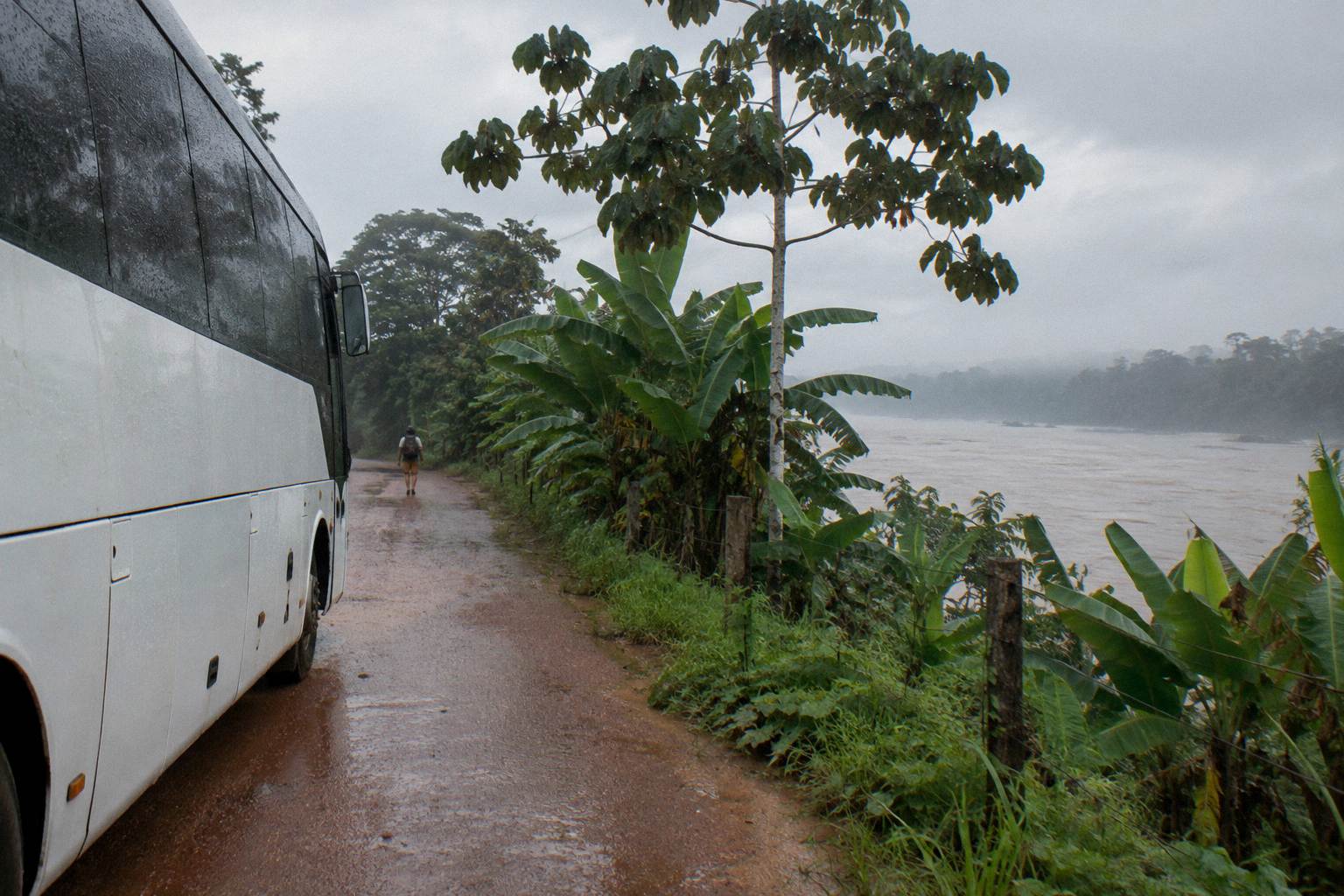
For Machu Picchu, the booked option is the Machu Picchu by Car Vip tourist bus from Cusco to Hidroelectrica, rated 4.3 across 53 reviews, departing Plaza de Armas in Cusco with two rest stops as its listing title states, in a listed 6 hours, and dropping at a private terminal at Hidroelectrica inside Restaurante Escobar. The free-flow drive estimate for Cusco to Hidroelectrica is 212 km and 5.1 hours, a figure real bus journeys exceed. Twin round-trip listings exist with their own figures and bases, 4.0 across 46 reviews for one round trip and 4.0 across 30 for a direct bus, and one round-trip listing from US$30 per person; each stands alone. The listing text on that round trip names Machu Picchu tickets in both its included and excluded wording, so nothing is claimed here about tickets either way. The Cusco to Machu Picchu by bus guide covers the walk from Hidroelectrica and the rail alternative.
Around Cusco, the pass operator sells day trips and extras separately from the pass itself, including Rainbow Mountain, the Ballestas Islands, buggy and sandboarding, a Nazca Lines flight, Colca Canyon options and Lake Titicaca tours, which softens the either/or framing: plenty of independent travellers book those exact day products while stringing their own bus legs together. The bus tours versus independent guide on this corridor approach is covered from the booking side in the tickets guide.
How Do You Decide Between A Pass And Separate Seats?
Pick the pass if you're riding the classic southern chain with loose dates and you value door pickup and a host over per-leg control, since its 1 year validity and app changes up to 12 hours before departure absorb the plan changes Peru's roads force on you. Book separate seats when your route leaves the network, your timetable is fixed, or one booked tourist-bus ticket already covers the leg that matters.
That last sentence deserves its plain form: a Peru Hop ticket costs more than a bare long-distance seat, and once taxis to terminals and separately bought tours are counted, travellers often find the totals land close together. No number is printed on either side here, because neither figure is stable or verified, and the balance shifts with how many stopovers a given itinerary actually uses. A fast Lima-to-Cusco run with no stops favours seats; a stop-everywhere month favours the pass. See Peru Hop Passes for the operator's own pass pages, where the stop lists and change terms are stated in full.
Three practical questions settle it faster than any feature table. First, does the route touch only places the network names? If Huaraz or the north is on the list, at least part of the trip is independent by definition. Second, how many stopovers are planned? Each hop-off multiplies the value of built-in stops and door pickup. Third, how fixed is the calendar? Fixed dates reward booked tourist-bus tickets with their listed free cancellation windows, up to 24 hours before for a full refund on the tickets compared on this page; loose dates reward a year-valid pass. Whichever way it lands, the overnight bus guide and the bus versus flight guide cover the neighbouring decisions.
Common Questions About Peru Bus Tours Vs Independent Bus Travel
What Is The Difference Between A Peru Bus Tour And Independent Bus Travel?
A bus tour bundles a chain of legs, door pickup, an onboard host and built-in sightseeing stops into one booking valid for a year under the operator's terms. Independent travel means separate point-to-point seats from regular carriers, boarding at company terminals, with stopovers and tours arranged by the traveller.
Does A Hop-On Hop-Off Pass Reach Machu Picchu?
No. The operator's own page states that Cusco to Aguas Calientes is by train, trek or bus, and it recommends a partner operator for tours. Its bus network stops at Cusco. The booked alternative is a tourist bus from Cusco to Hidroelectrica, the station used as the back-door start for the walk or rail leg.
Are Single Tourist-Bus Tickets A Middle Option?
Yes. Tickets such as the Miraflores to Paracas one-way, the Lima to Huacachina run with a Paracas stop, and the Puno to Cusco lunch bus each cover one leg with a set meeting point or drop-off, a printed rating with its review count, and free cancellation up to 24 hours before for a full refund as listed.
Which Style Is Better For Northern Peru?
Independent carriers are the only bus option for Huaraz, Trujillo, Chiclayo, Mancora, Chachapoyas and Cajamarca. The hop-on hop-off network does not serve the north, the central highlands, the jungle routes, Tacna-Arica or Ecuador.
Do Both Styles Face The Same Disruption Risks?
Yes. Protests and strikes can close roads with little notice, and the FCDO's El Nino notice flags heavy rainfall, possible flooding, landslides and road closures especially on the northern and central coast into 2027. Check the SUTRAN alert map before any leg, whichever style you book.
How Much Luggage Can I Take On Either?
Regulation allows up to 20 kg free on national bus service. Operators add their own allowances on top, such as Cruz del Sur's listed 20 kg hold plus 6 kg hand, and SUTRAN advises taking a luggage ticket for checked bags. Pass operators state their luggage terms on their own pages.