Peru Bus Delays: Strikes, Road Blocks And The Rainy Season
Strikes, community blockades and the Andean rainy season are the three forces that most often delay a Peru bus journey, and none of them follows a published timetable. Here is what each one looks like, where the official information lives, and what rights a passenger holds when the carrier fails to deliver the trip.
Short answer
Peru's Andean rainy season runs roughly September to April, and strikes and road blockades are announced locally with little notice. SUTRAN's alert map at alertasviales.sutran.gob.pe shows roads as red (closed), yellow (restricted) or green (open), and a 24 hour WhatsApp line 999 382 606 answers queries. INDECOPI gives passengers a right to information and to reprogramming or a refund when the company fails to comply.
Rain, strikes and blockades are the three disruptions a Peru bus traveller actually meets, and they behave differently. Rain follows a season you can plan around. Strikes are announced in a town you may never have heard of, sometimes the day before. Blockades appear as physical points on a map that the transport authority publishes live, in three colours. A reader deciding when and how to book buses can use all three of those signals, and this guide sets out where each one comes from and what to do when a journey still falls through.
The order of the page follows the order of a real decision. First, what actually causes delays and how the three forces differ. Then the calendar: when rain is likely and where it bites hardest. Then the tools: the official alert map, the WhatsApp line, and the passenger rights that catch a journey when it collapses. Finally, the route-by-route exposure picture for the legs most travellers ride, and a day-before routine that fits in five minutes.
What Disrupts Peru Buses Most Often?
Three forces account for the great majority of Peru bus disruption: the Andean rainy season, local strikes known as paros, and road blockades raised during protests, with landslides and flooding acting as the rainy season's mechanism of delay. Each has its own information source, and none of them publishes a calendar a traveller can rely on in advance. The overlap matters most in the sierra, where rain and blockades can close the same mountain road in the same week.
The UK FCDO describes the protest problem plainly: "Political protests in Peru are unpredictable and can escalate quickly. Demonstrations can become violent and lead to roadblocks, travel disruption, including trains, and suspension of immigration services at land borders." It adds that this "is often without notice or notification of estimated re-opening timelines." Regions the FCDO names as having seen recent protests include Arequipa, Ayacucho, Cusco, La Libertad, Madre de Dios and Puno, which covers a large share of the country's tourist bus corridor.
Strikes sit in a related but separate category. The FCDO notes that "Local groups can announce strike action, with little or no notice, particularly in areas connected to mining." Canada's travel advice makes the road consequence explicit: "Roadblocks are frequently erected during demonstrations", and warns that strikes "could also lead to border closures, including with Bolivia." No national register of announced paros exists on official pages, which is why the practical answer is to check the live road map and the carrier the day before travelling, a habit covered further down this page.
| Disruption | What it is | Where the official information lives |
|---|---|---|
| Rainy season landslides and flooding | Seasonal rain closing or damaging mountain roads | SENAMHI seasonal guidance; SUTRAN alert map |
| Paros (local strikes) | Community or labour stoppages announced locally | Carrier notices; local news; FCDO and Canada advice on notice periods |
| Protest blockades | Physical roadblocks during demonstrations | SUTRAN Mapa Interactivo de Alertas |
| Border immigration suspensions | Strike action pausing land border posts | Migraciones and carrier notices |
For readers planning the southern circuit, the southern Peru bus circuit guide lays out the route sequence, and disruption risk should be weighed when choosing how many days to give each leg. A tight plan with zero buffer turns a single yellow-road day into a missed connection two cities later.
When Is The Rainy Season For Peru Buses?
SENAMHI, Peru's weather service, places the Andean rainy season roughly September to April, with most of the Cusco sierra at its wettest November to March, and Puno's rains building from September with maximum totals December to March and January the peak. Puno holds 89 percent of its annual rain between September and March, and November often brings veranillos, short dry spells inside the wet months. Coastal desert stretches stay dry by comparison.
The geography does the rest. A bus from Cusco to Arequipa crosses the Abra La Raya pass at about 4,300 m on the Puno side of the range, and rain that falls harmlessly on a coast road can trigger landslides on a switchback climb. The OSRM free-flow drive estimate for Cusco to Arequipa is 487 km and 9.4 hours, and the free-flow estimate for Lima to Huaraz is 402 km and 5.5 hours; real journeys in rain run longer than both figures, and neither is a timetable time. Cusco sits about 3,400 m and Puno higher still, so wet-season road conditions and altitude compound on the same legs.
The FCDO also carries an El Nino notice with a stated period, the one government warning on this page that names dates: "Through late 2026 to April 2027, the El Nino weather event is expected to generate heavy rainfall, possible flooding, landslides, and mudslides, especially in, but not restricted to, the northern and central coast. These could cause travel disruption, such as road closures." A traveller heading to the north coast should read that alongside the seasonal table below.
| Region | Wet season pattern (SENAMHI) | What it means for buses |
|---|---|---|
| Cusco sierra | Roughly November to March wettest | Landslide risk on mountain legs; pass crossings affected |
| Puno and Lake Titicaca | Rains build from September; December to March maximum, January peak; 89 percent of annual rain September to March | Wet-season delays on Puno-Cusco and border legs |
| Northern and central coast | El Nino notice: heavy rain, flooding, landslides through April 2027 | Road closures possible on Panamericana stretches |
| South coast desert | Dry outside El Nino effects | Lowest rain risk on Lima-Paracas-Ica-Nazca legs |
Altitude interacts with all of this, and the Peru bus altitude and acclimatisation guide explains the elevation profile of the southern routes in more detail. A wet month is not a reason to skip the sierra; it is a reason to book legs with cancellation cover and to keep a spare day between the long mountain journeys and any fixed-date commitment such as a trek start.
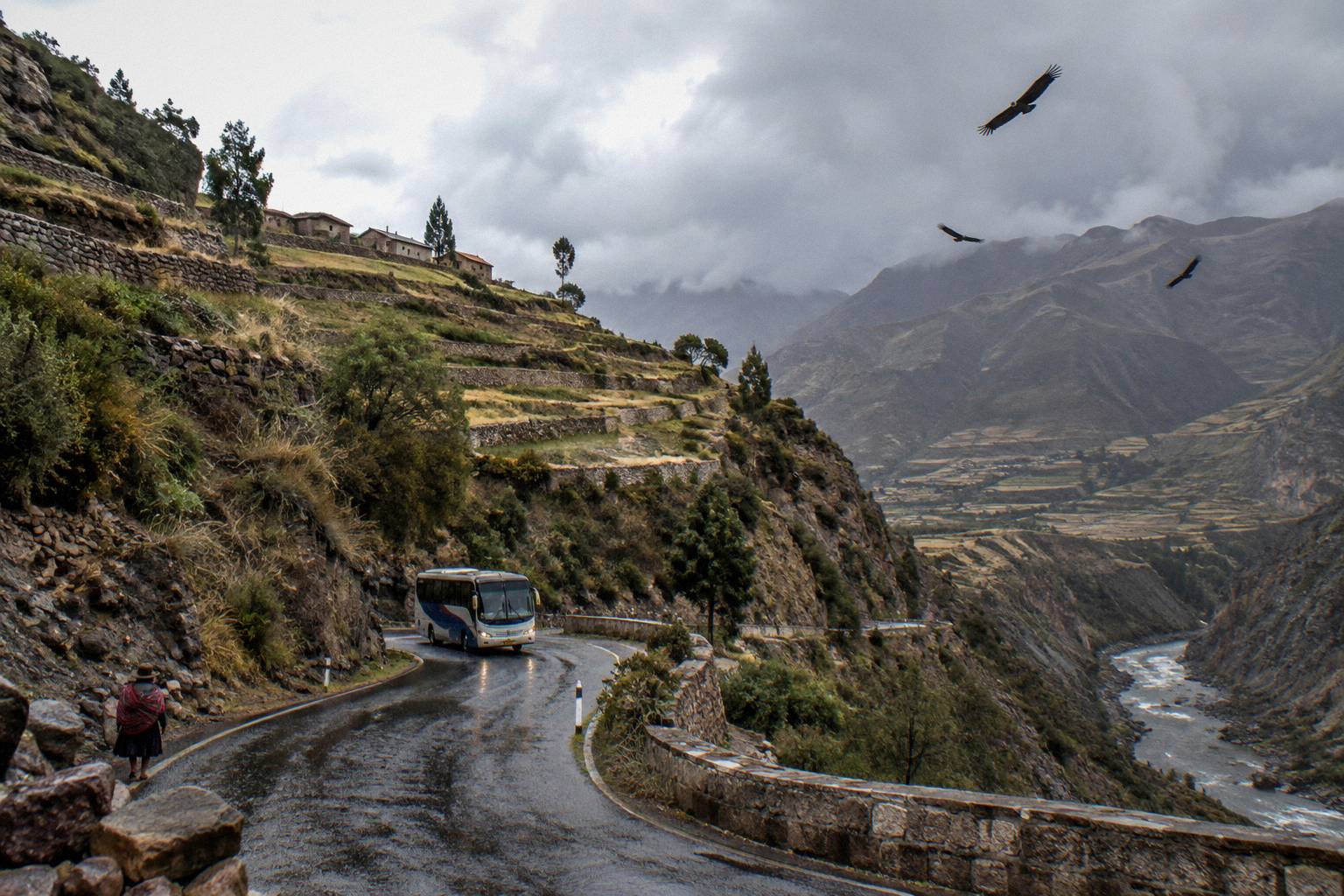
May to August sits outside the roughly September to April rainy season, making it the natural window for the driest mountain legs. The early edge can catch people out, though: Puno's rains build from September even though the December to March maximum is months away. A November veranillo is a pause inside the wet months rather than the end of them, so one clear week does not mean landslide risk has passed.
The El Nino notice runs through late 2026 to April 2027 and points especially at the northern and central coast, with road closures named as a possible consequence, so Panamericana journeys planned into that April carry a risk with both a government source and an end date. The south coast desert, dry outside El Nino effects, stays the lowest-rain option in the table, worth weighing for itineraries that can route Lima-Paracas-Ica-Nazca rather than north.
The drive figures reward one more reading. The 9.4 hours for Cusco to Arequipa and the 5.5 hours for Lima to Huaraz describe free-flow conditions, so in the wet months they work better as floors than as plans. Abra La Raya, at about 4,300 m, sits roughly 900 m above Cusco, and the highest stretch of the southern crossing is also the stretch exposed to wet-season landslides, so a hold-up there eats into a schedule quickly.
How Do You Check Road Closures Before A Bus Trip?
SUTRAN, Peru's transport superintendency, publishes a live Mapa Interactivo de Alertas at alertasviales.sutran.gob.pe that colours roads red for closed, yellow for restricted and green for open, with causes including natural events, accidents, infrastructure damage and human factor, the category under which blockade points appear. A 24 hour WhatsApp line, 999 382 606, answers queries, and the MTC and Provias agencies run their own emergency map viewers.
The colours are the practical tool. A red line on tomorrow's route is a reason to move the ticket; a yellow line means restrictions, and the carrier can say what those mean for the timetable. Blockades raised during social protests appear on the map as live points, so the map does double duty as a strike indicator even when no paro has reached the news. Checking it the day before departure, and again the morning of, is the single habit that most reduces surprise.
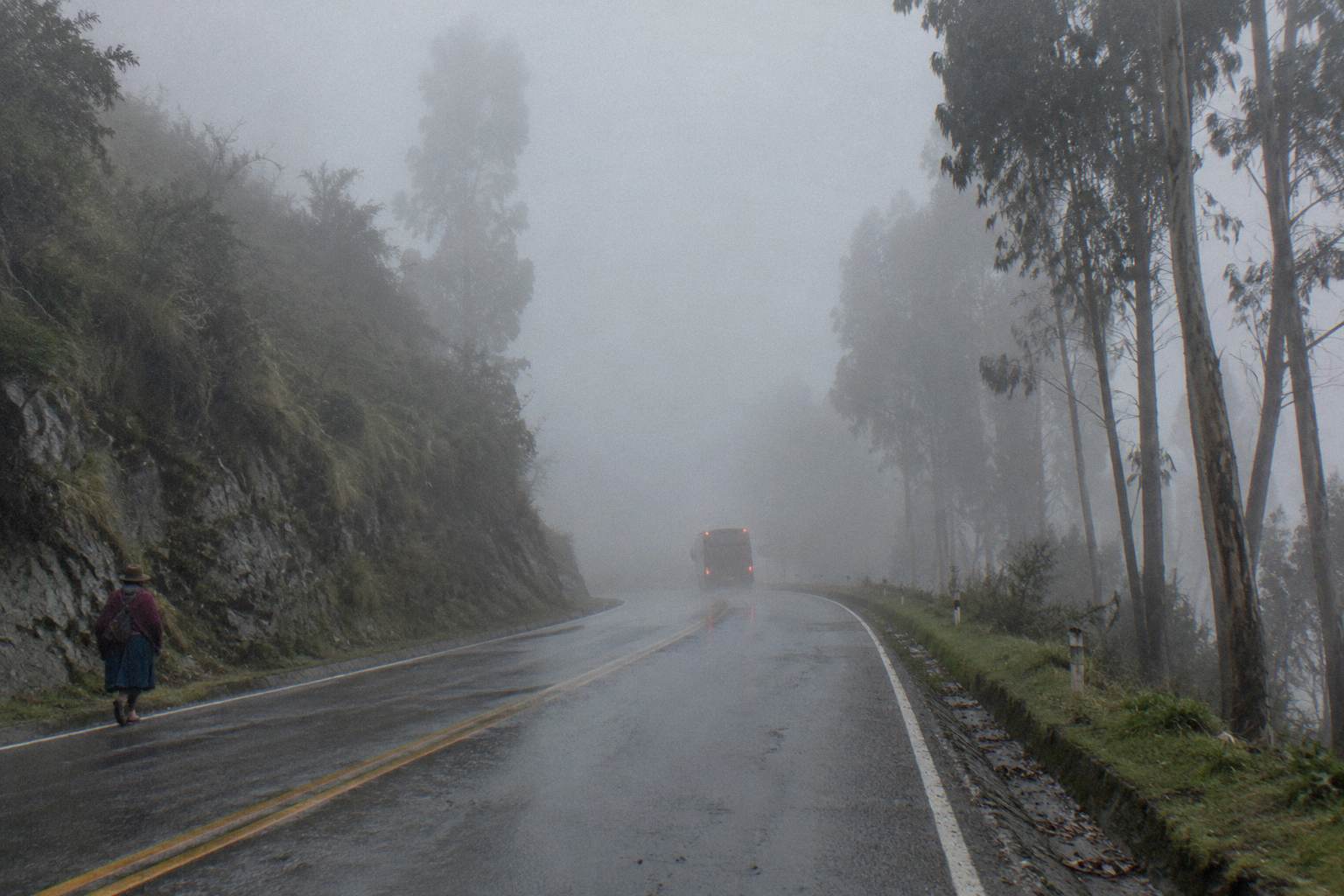
The FCDO frames the warning side plainly: "Do not attempt to pass blockades." That instruction is worth internalising, because a delayed bus is recoverable and an attempted crossing of a blockade is not. The FCDO also notes that "Demonstrations can shut down local roads, trains, and major highways", and the US Embassy Lima republication of the State Department advisory adds that "Criminal groups sometimes set up roadblocks to rob people in areas outside of Lima." Treat any unannounced checkpoint on a road outside a major city as a reason to stay on the bus and let the crew handle it; the blog post on what to do when a Peru bus is stopped by a road block walks through that scenario.
SUTRAN also runs a lookup that lets anyone check a bus and its driver by plate or driver DNI, which is worth doing when a disruption forces a switch to an unfamiliar carrier, and the SUTRAN speed-limit notice page explains the 90 km/h interprovincial bus limit that applies on roads with no other speed sign. Peru's national transit regulation caps continuous driving at 5 hours by day and 4 at night, with a second driver required beyond that and a third on trips over 20 hours, so a badly delayed journey has crew-rule consequences that carriers have to manage, and asking at the counter is fair.
What Happens If A Strike Blocks Your Route?
A strike or blockade that stops a route puts the carrier in charge of the practical response, and passengers hold an INDECOPI-backed right to information and to reprogramming or a refund when the company fails to comply. INDECOPI also allows a domestic bus ticket to be postponed or transferred with 24 hours notice at only the real cost of reissuing, with no penalty. Staying reachable through the contact details on the ticket matters as much as any rule.
The refund and reprogramming right comes from Ley 29571 and INDECOPI's guidance on domestic tickets. Where a company delays or fails to run the service, the passenger is entitled to information and to rebooking or money back. The voluntary-cancellation refund rule is a separate question with no published general figure, so the honest answer for a change of mind is to read the ticket's own conditions. Complaints that a carrier will not resolve go to its Libro de Reclamaciones, which has 15 working days to answer, and beyond that to INDECOPI's Reclama Virtual portal. The full index of guides sits on Peru By Bus.
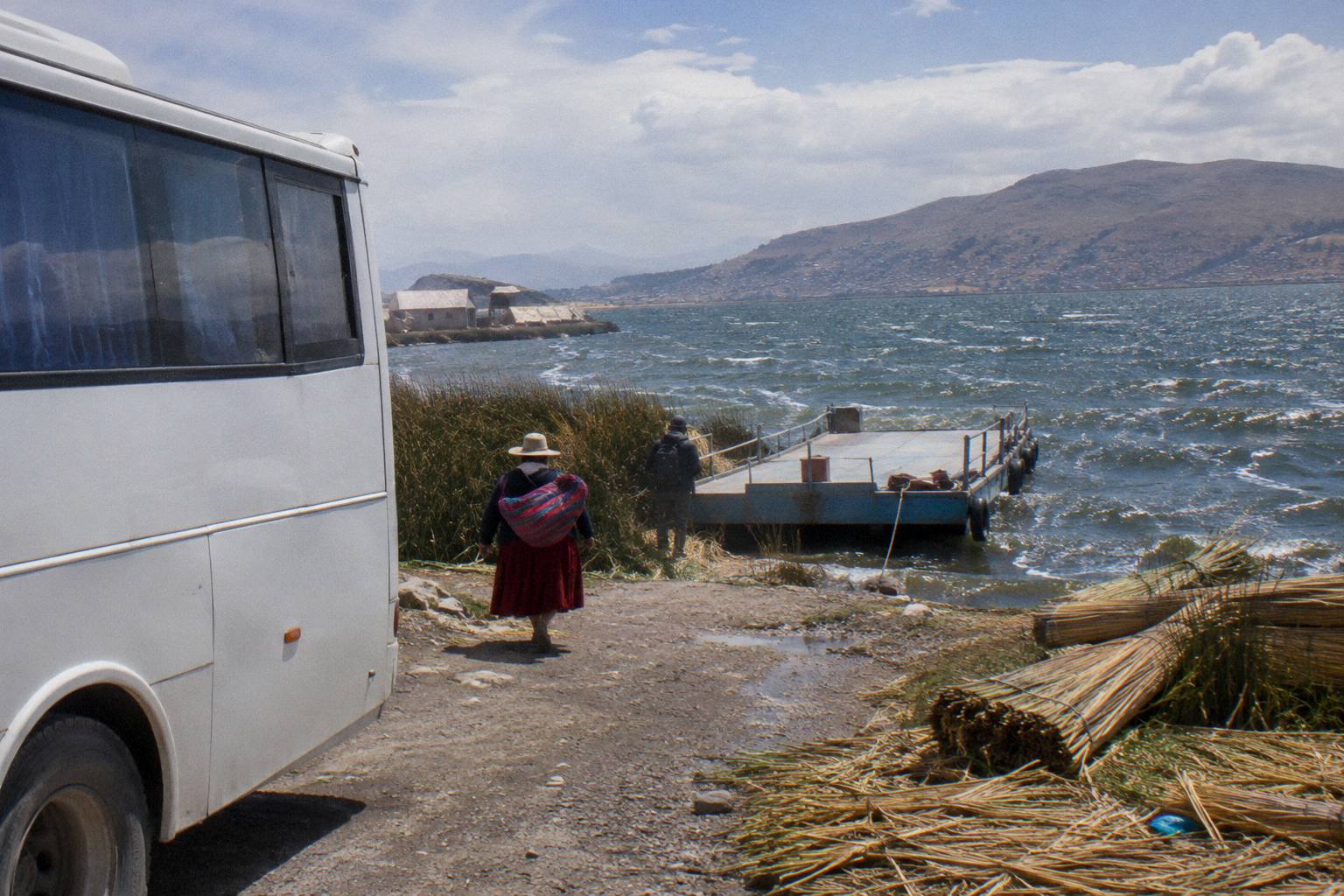
Booked tourist-bus seats soften this risk on the southern routes. The direct bus from Cusco to Arequipa, operated by World Explorer Peru, runs the 487 km leg the OSRM free-flow estimate gives as 9.4 hours, with the listing naming a Cruzero Suite 160 degree seat and a drop-off at the Arequipa bus terminal, free cancellation up to 24 hours before for a full refund, and a 3.7 rating across 16 reviews. If a blockade appears on the map two days out, that cancellation window is the escape hatch, and a fresh booking can follow once the road reopens. The seat itself can be checked on the operator's live listing: Check availability
The Turismo Mer bus from Puno to Cusco with a lunch stop, rated 4.6 across 24 reviews, has the same listed free cancellation up to 24 hours before, as does the Turismo Mer sleeper from Arequipa to Puno, rated 4.3 across 20 reviews, whose listing names a 160 degree recline on the night run. Peru By Bus keeps the disruption picture and the booking picture side by side for exactly this reason: a ticket with a 24 hour cancellation window is a different product from a no-refund terminal ticket when a paro is possible.
Should You Avoid Overnight Buses In The Rainy Season?
Government advice already warns against night buses on safety grounds, and rain adds a second reason: government sources describe night as the risk window without exception, and the rainy season puts more water on exactly the mountain roads those night services cross. The FCDO states "Bus crashes are common, especially at night. Only use reputable transport companies, and where possible, avoid overnight travel, especially in mountainous and remote regions." Canada's advice says "Avoid taking buses and coaches at night."
Those are the sources' words, not this page's verdict, and they are quoted because the question is asked every November. Smartraveller adds a rain-independent caution: "Robberies and assaults occur frequently on intercity buses, including while passengers are sleeping", and flags "theft as you sleep on intercity bus routes between Lima, Ica, Nazca and Cusco." The US Embassy advisory notes that U.S. government employees "may travel at night with commercial bus companies along the Pan-American Highway, to Huaraz, and on the Lima-Arequipa-Cusco corridor", which is a statement about those corridors, not an endorsement of night travel everywhere.
| Advice source | Night bus position | Words to note |
|---|---|---|
| UK FCDO | Avoid overnight travel where possible, especially in mountains | "Bus crashes are common, especially at night" |
| Government of Canada | Avoid buses and coaches at night | "Armed gangs have been known to stop buses... especially at night" |
| Smartraveller | Cautions on sleeping passengers | "Robberies and assaults occur frequently on intercity buses" |
| US Embassy advisory | Night travel allowed for staff on named corridors | Pan-American Highway, Huaraz, Lima-Arequipa-Cusco |
Daylight legs with cancellation cover are the practical alternative, and the overnight buses in Peru guide weighs the whole question, including the onboard-toilet question covered in the blog post on whether overnight buses have toilets. Neither source bans night buses outright; both name night as the window where their specific warnings apply, and the wet season stacks another factor onto that same window.
Which Routes Are Most Exposed To Rain And Blockades?
High-altitude mountain legs carry the most rain exposure, and the blockade pattern follows protest geography: the FCDO names Arequipa, Ayacucho, Cusco, La Libertad, Madre de Dios and Puno as regions with recent protests, and every long southern bus leg crosses at least one of them. Free-flow drive estimates give scale without promising a timetable: Lima to Arequipa 1,002 km and 14.3 hours, Cusco to Lima via Abancay and Nazca 1,103 km and 17.8 hours.
The Cusco-Lima figure deserves its caveat: it is a routing assumption through Abancay and Nazca, and real timetabled trips on that corridor run 20 hours or more even without disruption. In the wet season that corridor concentrates several risk factors at once, sierra passes, mining-linked strike geography, and long distances with few alternatives. The south coast desert legs, Lima to Paracas at a free-flow 251 km and 3.5 hours, Paracas to Huacachina at 74 km and 1.3 hours, are shorter, drier and nearer to the Pan-American Highway, though the El Nino notice puts the northern and central coast, not this stretch, at the front of the rain queue.
| Leg | Free-flow drive estimate | Exposure notes |
|---|---|---|
| Cusco to Arequipa | 487 km, 9.4 h | Sierra passes; both endpoints in FCDO-named protest regions |
| Arequipa to Puno | 273 km, 5.5 h | High plain; Puno rain peaks December to March |
| Puno to Cusco | 387 km, 6.2 h | Abra La Raya at about 4,300 m; wet-season landslide exposure |
| Cusco to Lima via Abancay and Nazca | 1,103 km, 17.8 h | Routing assumption; timetabled trips 20 h or more |
| Lima to Paracas | 251 km, 3.5 h | Desert coast; shortest southern leg |
| Arequipa to Chivay (Colca) | 151 km, 3.3 h | Mountain climb to the canyon valley |
Readers heading for Colca should pair this with the Arequipa to Colca Canyon bus guide, and anyone building a full loop should leave slack in the two week Peru itinerary by bus rather than booking back-to-back legs with no buffer. One missed morning in the sierra is inconvenient; three chained tickets with no gaps turns it into a cancelled leg at the far end.
What Should You Do The Day Before A Long Bus Journey?
The day-before routine is short: open the SUTRAN alert map and read the colour on the route, message the 24 hour WhatsApp line 999 382 606 if a stretch shows yellow or red, confirm with the carrier that the service is running, and re-check whether the ticket's cancellation window is still open. INDECOPI's 24 hour transfer rule means the last day is also the last cheap exit.
Two additions make the routine stronger. First, SUTRAN's bus-and-driver lookup lets a passenger confirm that a replacement vehicle, sometimes used when a fleet is disrupted, is properly authorised, by plate or driver DNI. Second, the terminal itself is a risk point in unsettled periods: the FCDO warns "There is a risk of robbery by criminals posing as taxi drivers, especially at Jorge Chavez International Airport and bus terminals" and advises to "use one of the taxis registered at bus terminals" and "on bus journeys, keep your passport with you." Canada's advice matches it: "Only use authorized cabs located inside airport terminals and bus stations."
For the border legs, strikes carry an extra consequence: Canada's advice notes they "could also lead to border closures, including with Bolivia", so the Puno to Copacabana bus guide and the Tacna to Arica border guide both deserve a live check against the alert map the day before crossing.
Common Questions About Peru Bus Delays, Strikes And Rain
What Is A Paro In Peru?
A paro is a local strike or stoppage, announced at community or regional level. The FCDO notes that "Local groups can announce strike action, with little or no notice, particularly in areas connected to mining", and no national register of announced paros exists, so carriers, local news and the SUTRAN alert map are the working sources.
How Do I Check If A Peru Road Is Blocked?
Open SUTRAN's Mapa Interactivo de Alertas at alertasviales.sutran.gob.pe. Roads show as red for closed, yellow for restricted and green for open, and blockades appear as live points. SUTRAN's 24 hour WhatsApp line 999 382 606 answers questions directly.
When Is The Rainy Season For Peru Bus Travel?
SENAMHI places the Andean rainy season roughly September to April, wettest November to March across most of the Cusco sierra. Puno's rains build from September, peak around January, and deliver 89 percent of annual rain between September and March.
Can I Get A Refund If My Peru Bus Is Cancelled?
INDECOPI gives passengers a right to information and to reprogramming or a refund when the company fails to comply with the service. Complaints go first to the carrier's Libro de Reclamaciones, which has 15 working days to answer, then to INDECOPI's Reclama Virtual portal.
Can I Change A Peru Bus Ticket?
A domestic bus ticket can be postponed or transferred with at least 24 hours notice, with only the real cost of reissuing charged and no penalty, under INDECOPI's rule. Tourist-bus listings on the southern routes add free cancellation up to 24 hours before for a full refund, as stated on each listing.
Is It Dangerous To Pass A Road Blockade In Peru?
The FCDO instruction is verbatim: "Do not attempt to pass blockades." The US Embassy advisory adds that "Criminal groups sometimes set up roadblocks to rob people in areas outside of Lima." Stay with the bus and let the crew manage any checkpoint.
A final check of the map and the carrier the evening before departure turns most of this from risk into routine. The working set is short: the alert map's three colours, the WhatsApp line, INDECOPI's 24 hour rule, and tickets whose cancellation window covers a changed plan.