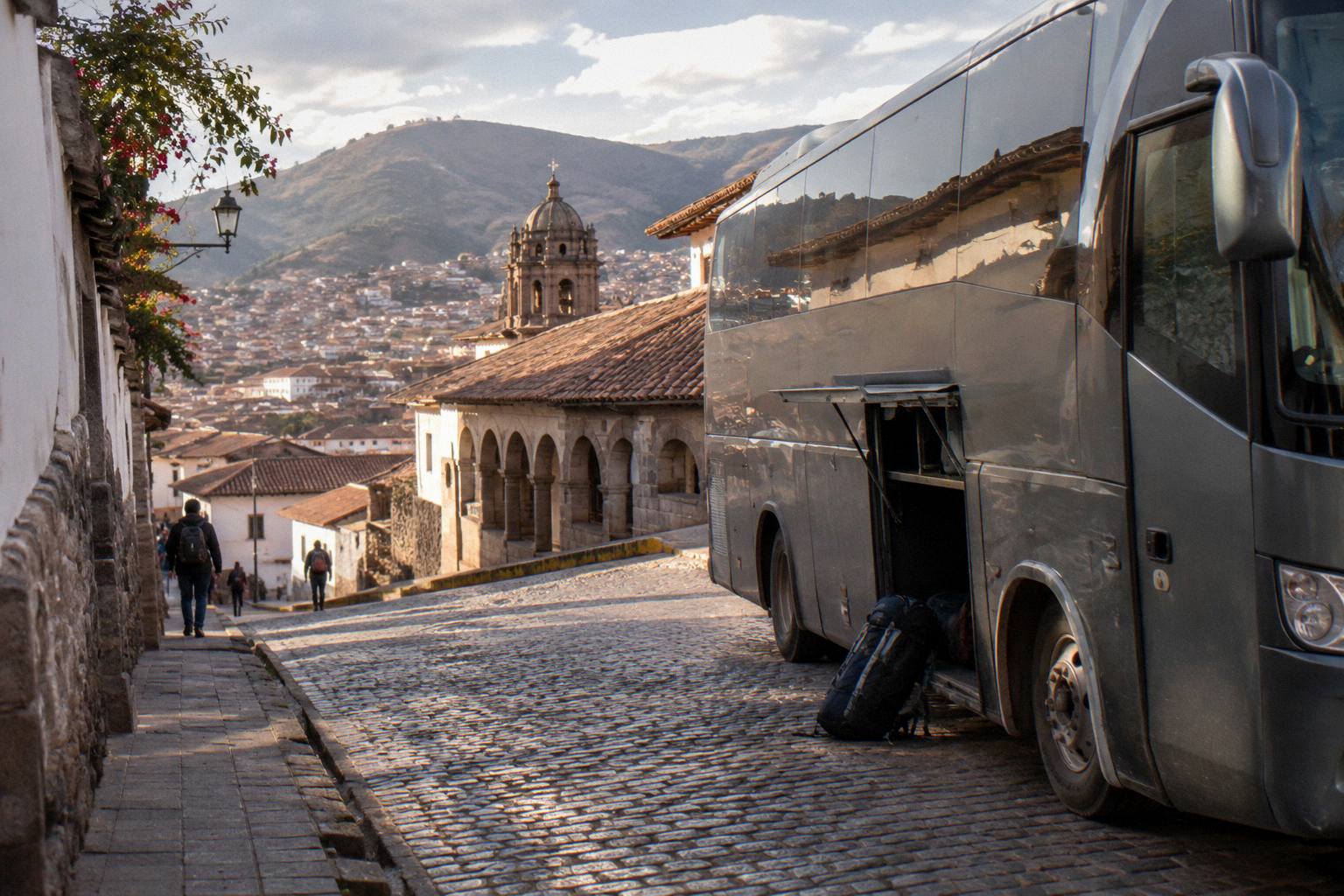
The Southern Peru Bus Circuit: Lima To Paracas, Huacachina, Nazca, Arequipa, Puno And Cusco
The classic southern loop is the trip most visitors to Peru actually take: down the desert coast from Lima, up into Arequipa, across the altiplano to Puno, and over the pass to Cusco. Here is how the pieces link by bus, what each stretch involves, and where the decisions are.
Short answer
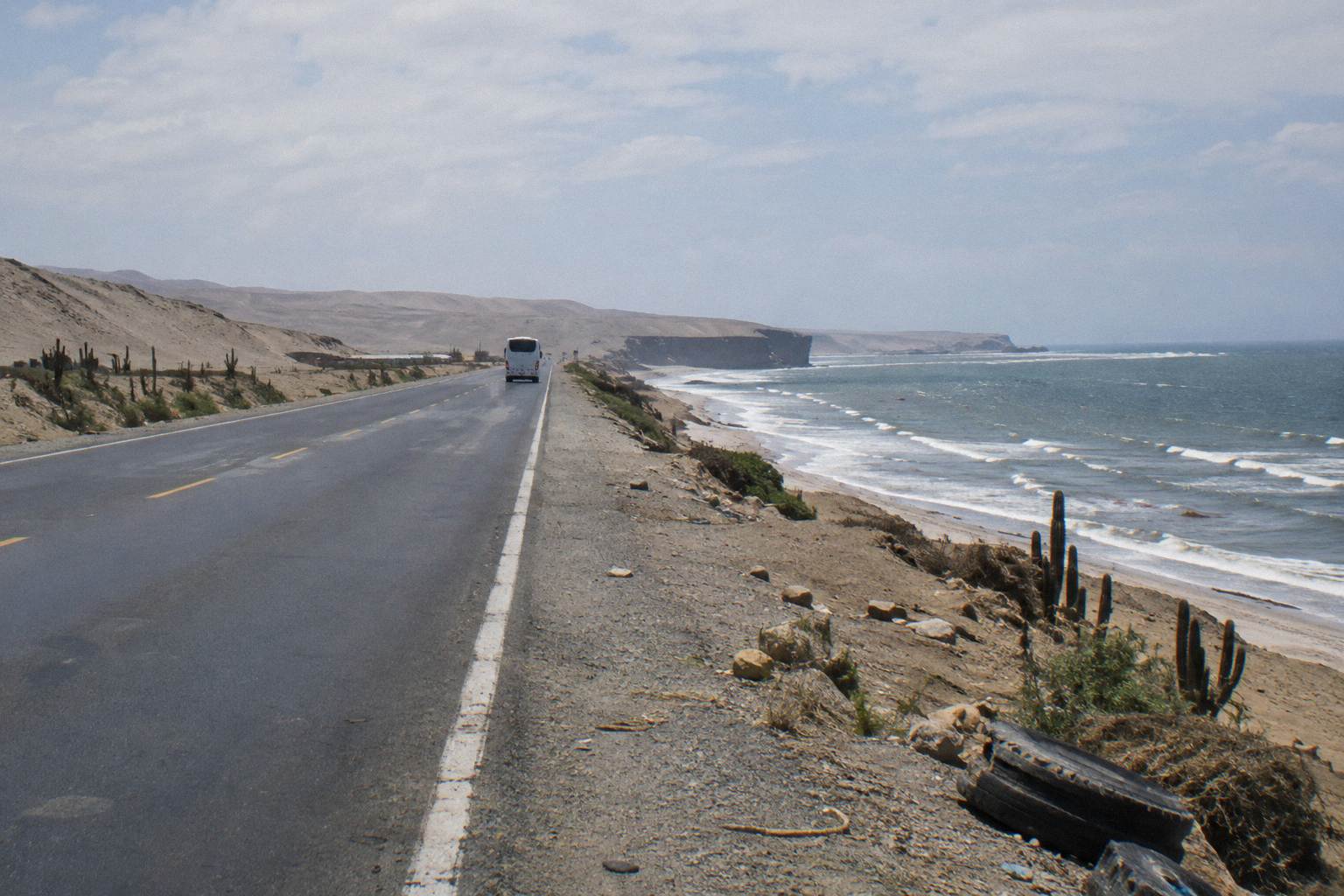
The standard order is Lima to Paracas (free-flow drive estimate about 3.5 h), Paracas to Huacachina (about 1.3 h), Huacachina to Nazca (about 2.4 h via Ica), Nazca to Arequipa (about 7.8 h), Arequipa to Puno (about 5.5 h) and Puno to Cusco (about 6.2 h), all free-flow estimates a real bus exceeds. Cusco sits about 3,400 m; Puno 3,848 m.
The southern circuit is the spine of Peruvian travel. Lima sits near sea level at 162 m; the route then runs down the Pan-American Highway through desert, turns inland at Nazca, climbs to Arequipa at 2,429 m, crosses the altiplano to Puno at 3,848 m, and finishes in Cusco at about 3,400 m after the Abra La Raya pass at roughly 4,300 m. Every figure on this page that looks like a time is a free-flow drive estimate, a distance a car would cover with no stops, and real bus journeys on these roads take longer because of terminal departures, meal breaks, checkpoints and mountain climbing.
This page is about the whole loop: the order, the legs, the altitude gain and the choice between separate tickets and a hop-on hop-off pass. Individual pairs, terminal by terminal, have their own pages, including guides such as the overnight buses leaving Lima and the how to get around Peru by bus overview, and this article stays on the circuit as a single decision.
What Order Should You Do The Southern Peru Bus Circuit?
The order that works with the geography is Lima, Paracas, Huacachina, Nazca, Arequipa, Puno, Cusco. It climbs in stages rather than all at once, puts the desert stops at the start while the altitude is still low, and saves the highest sleeping points for the second week, by which point a body has had Arequipa's 2,429 m as a stepping stone before Puno's 3,848 m.
The circuit works because the road does. Lima to Paracas is flat desert; Paracas to Huacachina is a short hop inland; Huacachina to Nazca follows the Pan-American South; Nazca to Arequipa is the long desert climb; Arequipa to Puno rises onto the altiplano; Puno to Cusco crests the pass and descends. Each leg is a separate ticket with separate operators, and the question at each stop is how long to stay, not whether the link exists.
A reasonable minimum is ten days, with two nights in Paracas or Huacachina combined, one in Nazca, two or three in Arequipa, two in Puno and the rest in Cusco. Fewer days forces the Nazca to Arequipa stretch and the Arequipa to Puno stretch into back-to-back long rides, which is exactly the pattern the overnight bus in Peru page examines in detail, since several of these legs only make sense as night services.
Travellers with two weeks can add the Colca Canyon from Arequipa as a loop, or break Puno to Cusco with a mid-route stop, which the how to get around Peru by bus overview covers. Reversing the loop is possible, but it throws the biggest altitude jump at the start rather than spreading it. The order below assumes the classic direction, coast first, mountains second, and treats each leg as its own decision.
How Long Is Each Leg Of The Southern Circuit?
The legs measure roughly 251 km Lima to Paracas, 74 km Paracas to Huacachina, 142 km Ica to Nazca standing in for Huacachina to Nazca, 566 km Nazca to Arequipa, 273 km Arequipa to Puno and 387 km Puno to Cusco, all free-flow drive estimates that real bus journeys exceed; the altitudes run from Lima's 162 m to Puno's 3,848 m, with Cusco at about 3,400 m.
Those numbers come from a public routing engine driven between city centres with no traffic, no stops and no terminal procedures. A bus adds boarding, luggage loading, meal breaks on the long legs and the simple arithmetic of a 90 km/h ceiling on unsigned highways, which SUTRAN states applies only on roads without other speed signs. Treat every figure as a floor, not a plan.
| Leg | Distance | Free-flow drive estimate | Sleeping altitude at the end |
|---|---|---|---|
| Lima to Paracas | 251 km | 3.5 h | Paracas, near sea level |
| Paracas to Huacachina | 74 km | 1.3 h | Huacachina, near sea level |
| Huacachina to Nazca (via Ica) | about 142 km | 2.4 h | Nazca, about 585 m (INEI, rounded) |
| Nazca to Arequipa | 566 km | 7.8 h | Arequipa, 2,429 m |
| Arequipa to Puno | 273 km | 5.5 h | Puno, 3,848 m |
| Puno to Cusco | 387 km | 6.2 h | Cusco, about 3,400 m |
The Lima to Ica figure, 297 km at a free-flow 4.3 h, stands in for the Lima to Huacachina run, since Huacachina sits beside Ica city. Two longer alternates exist for readers reshaping the loop: Lima to Arequipa direct is 1,002 km at a free-flow 14.3 h, and Arequipa to Cusco direct is 487 km at a free-flow 9.4 h, both skipping the middle stops.
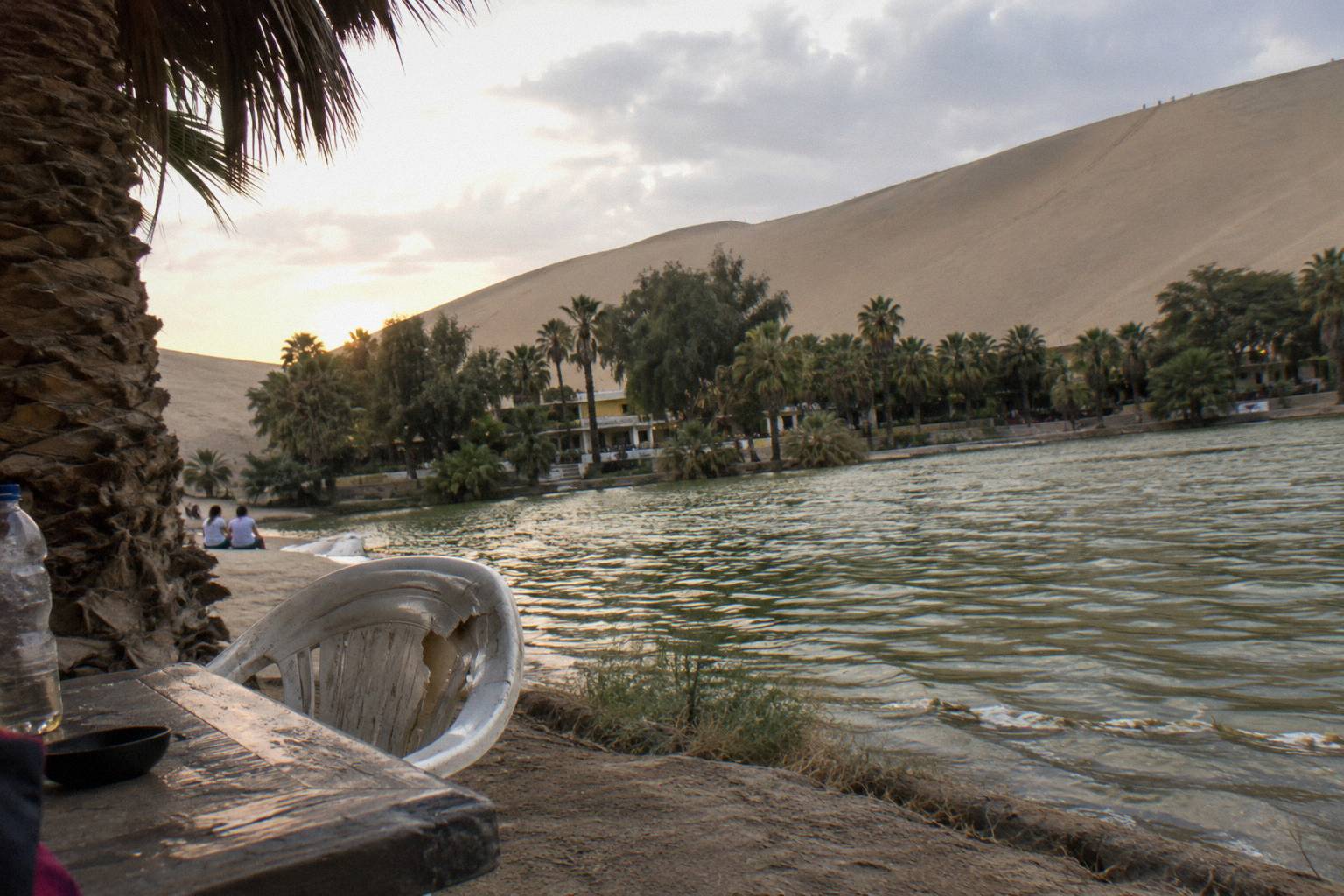
The pattern in those numbers matters more than the numbers themselves. Two short legs at the start, one very long leg in the middle, two medium mountain legs at the end. That is the shape of a trip that starts easy and gets serious, and it is why the ticket choices for the first two legs are the simplest on the circuit.
Which Ticket Covers Lima To Paracas And Huacachina?
The Lima to Paracas leg is covered by the Wayki Bus Peru one-way tourist bus from Miraflores in Lima to Paracas, rated 4.2 across 62 reviews, departing the Miraflores and Barranco district and dropping at El Chaco in Paracas with a listed duration of 3 hours, while the Huacachina run is covered by the same operator's one-way bus with a Paracas stop, rated 3.7 across 77 reviews.
Both are tourist buses rather than terminal-based interprovincial services: they collect in the hotel districts rather than at a bus station, which removes the first small friction of the trip. The Paracas service lists free cancellation up to 24 hours before for a full refund. The Huacachina service boards in Miraflores, San Isidro and Barranco, lists the same 24-hour free-cancellation window and a listed duration of 8 hours including the Paracas stop, and drops at the Viajero hostel meeting point in Huacachina.
The one-way bus from Miraflores, Lima to Paracas is the natural first ticket of the loop, Check availability if the first leg is already settled. A second booking page exists for a Lima to Paracas bus with hotel pickup in Miraflores and Barranco, from US$18 per person on its own listing basis; it is a separate product with its own terms, not a different price for the same seat.
The Huacachina option suits travellers who want Paracas and the dunes in one move. It boards in Miraflores, San Isidro and Barranco, stops in Paracas, and rolls into Huacachina eight listed hours after leaving Lima, which makes it a single ticket doing the work of two legs.
What Does The Nazca To Arequipa Stretch Involve?
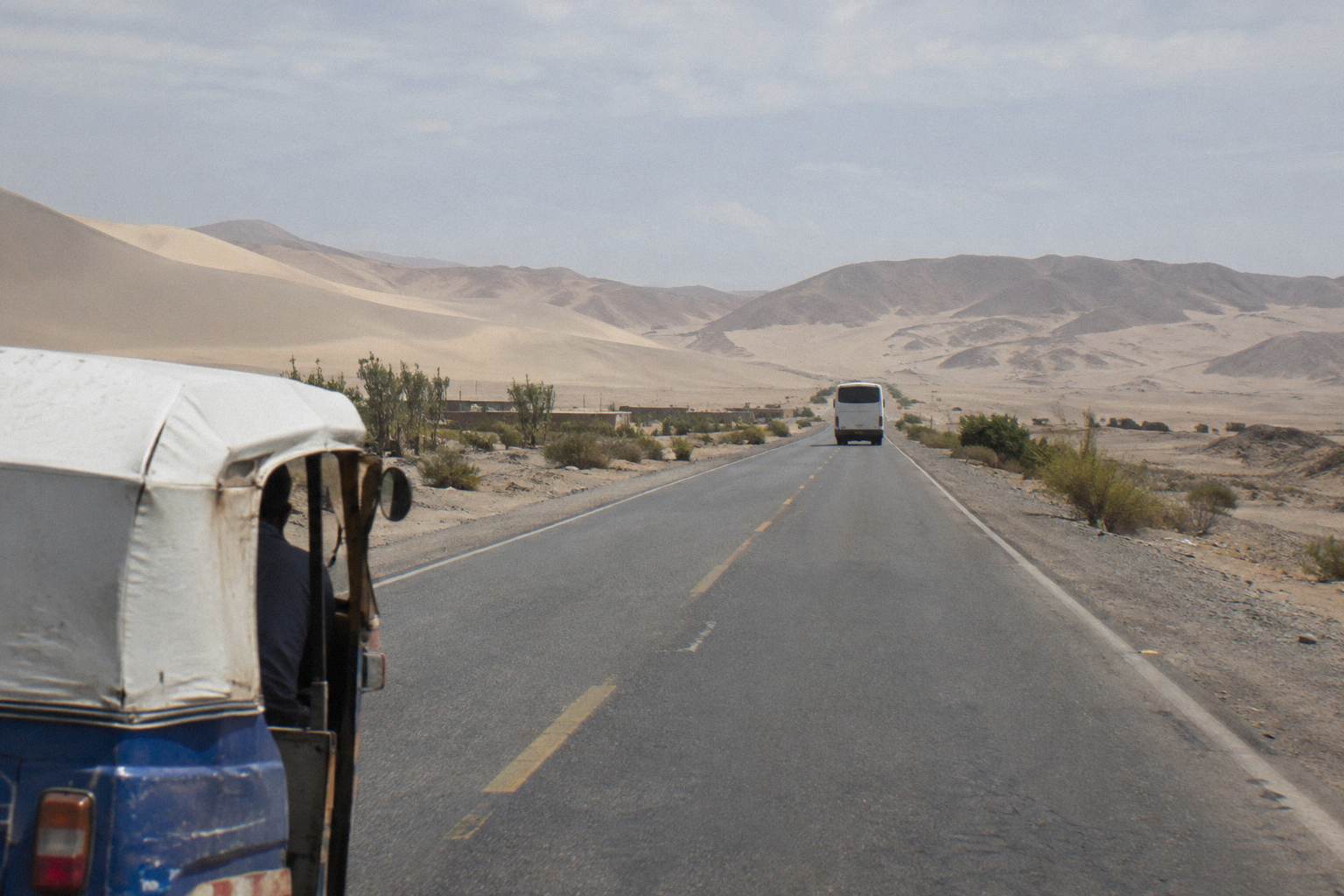
The Nazca to Arequipa leg is 566 km with a free-flow drive estimate of 7.8 h, the longest single stretch of the circuit, and it ends at 2,429 m after starting near 585 m, which makes it a genuine mountain bus ride dressed as a desert one; from Huacachina, the Ica to Nazca figure of 142 km and 2.4 h free-flow stands in for the first hop.
This is the leg where the bus, not the itinerary, is the decision. Seven to eight free-flow hours mean a real journey well beyond that, and operators run it as a full-day or overnight service with meal stops. The seat matters: readers weighing the options should start with the cama and semi-cama bus classes explained, because the difference between a 140-degree and a 160-degree seat is the difference between arriving rested and arriving flattened on a ride this length.
Arequipa is the altitude staging post of the circuit. Two or three nights at 2,429 m before the climb to Puno at 3,848 m is the standard advice, and the physiology behind it is on the altitude and bus travel in Peru page. From Arequipa the Colca Canyon adds a side loop of 151 km at a free-flow 3.3 h to Chivay, covered in the Arequipa to Colca Canyon bus guide.
Should You Ride Arequipa To Puno Overnight?
The Arequipa to Puno leg is 273 km with a free-flow drive estimate of 5.5 h, run overnight by the Turismo Mer sleeper bus, a 160-degree recline night service with a listed duration of 7 hours and a 4.3 rating across 20 reviews; the terminal boarding fee is listed as not included, so check the boarding fee line on the listing.
Sleeper seats change the arithmetic of this leg. A free-flow 5.5 h crossing becomes a listed 7-hour night ride, and the bus does the altitude climb while passengers sleep, arriving at 3,848 m in the morning. That arrival altitude is the highest sleeping point of the whole circuit, higher than Cusco, and arriving at dawn into thin air is a real cost to weigh against the saved hotel night, a trade the overnight bus article unpacks further.
The Direct Sleeper Bus from Arequipa to Puno listing names the 160-degree recline and free cancellation up to 24 hours before for a full refund.
How Do You Handle Puno, The Lake And The Climb To Cusco?
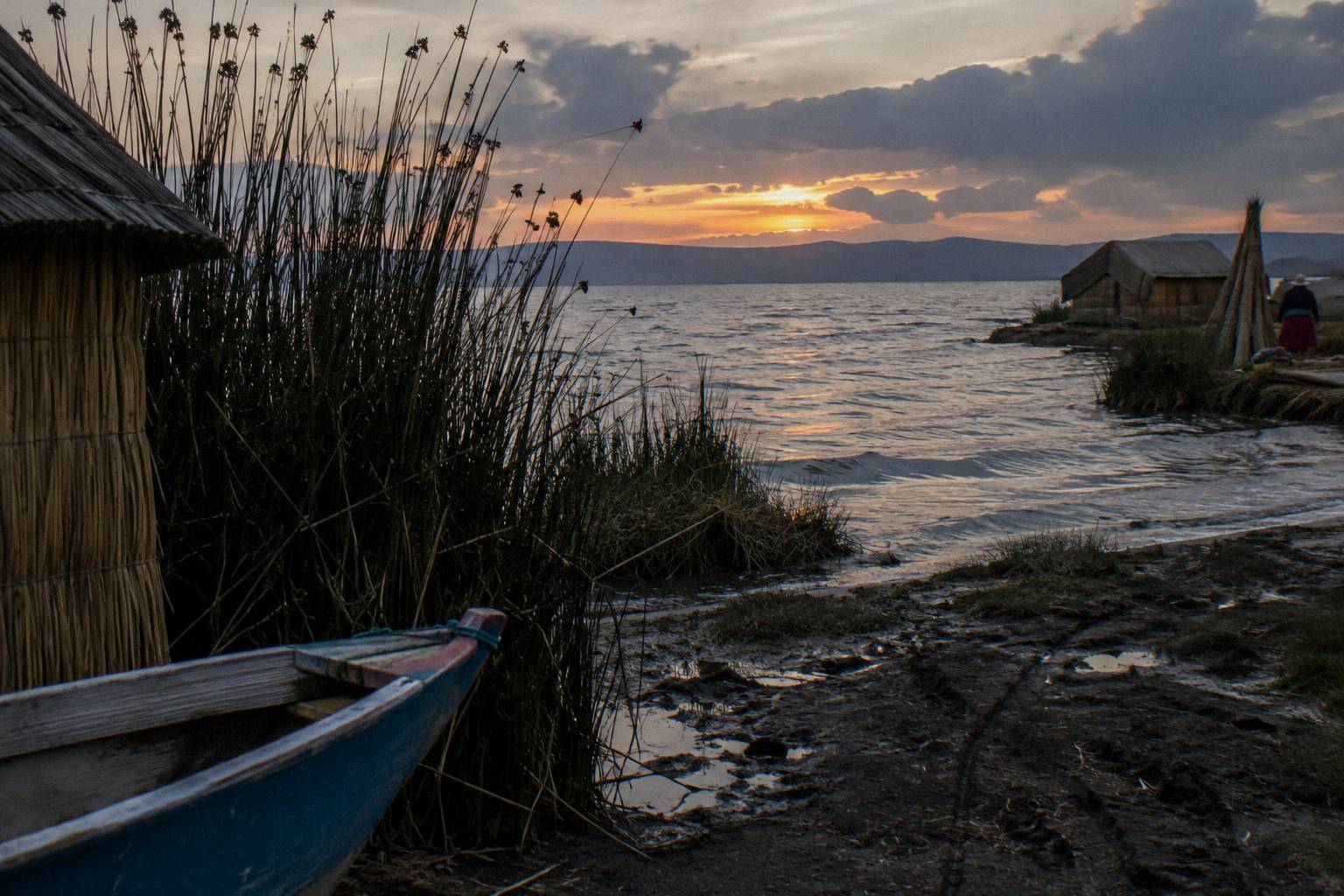
Puno to Cusco is 387 km with a free-flow drive estimate of 6.2 h, crossing the Abra La Raya pass at about 4,300 m before descending to Cusco at about 3,400 m; the Turismo Mer bus from Puno to Cusco with a lunch stop lists 11 hours for the journey, rated 4.6 across 24 reviews, a slow pace explained by sightseeing stops rather than traffic.
Two products compete for this leg and they are different animals. A regular interprovincial service runs the road efficiently; the tourist service turns the crossing into a sightseeing day, stopping at the pass and at colonial churches along the way, which is why the listing gives 11 hours for a road a car covers in a fraction of that. The lunch stop is named in the listing, and the drop-off is the operator's private terminal in Cusco. The full index of guides sits on Peru By Bus.
Rain is the planning variable at this end of the circuit. SENAMHI's Puno figures put 89 percent of the annual rainfall between September and March, and the Andean rainy season runs roughly through those months. Road status is checkable before any of these legs on SUTRAN's alert map, alertasviales.sutran.gob.pe, which marks closed roads in red, restricted in yellow and open in green.
Is A Hop-On Hop-Off Pass Better Than Separate Tickets?
A hop-on hop-off pass trades price opacity for flexibility, with passes valid for 1 year and bus times changeable in the app up to 12 hours before departure, covering the same southern stops with hotel pickup and no terminals, while separate tickets mean buying each leg on its own terms, keeping the option to mix tourist buses and regular carriers leg by leg.
The pass system maps closely onto this circuit. Peru Hop lists passes including Full South To Cusco, Get To Cusco Quick (skipping Arequipa and Puno), To Cusco Without The Canyon, Canyon To Lima, Canyon To The Lake To La Paz, Lima To Cusco To La Paz, Lima To La Paz To Cusco, Cusco To La Paz, Cusco To Canyon To La Paz, Copacabana To Puno To Cusco, Full South To Lima, Get To Lima Quick and Cusco To The Oasis To Lima, departing from Lima, Cusco, Arequipa, Copacabana and La Paz. Its pass pages name the stops Chincha, Paracas, Huacachina, Nazca, Arequipa, Lagunillas, Puno, Cusco, Copacabana and La Paz, which is this circuit plus a Bolivia extension.
| Circuit stretch | Pass that covers it (as listed) | Fastest time (Peru Hop lists) |
|---|---|---|
| Lima through the coast and mountains to Cusco | Full South To Cusco | 6 days |
| Lima to Cusco skipping Arequipa and Puno | Get To Cusco Quick | 3 days |
| Arequipa back to Lima via the coast | Canyon To Lima | 3 days |
| Arequipa to La Paz via Puno and Copacabana | Canyon To The Lake To La Paz | 2 days |
| Cusco across to Bolivia | Cusco To La Paz | 24 hours |
| Lima, Cusco and La Paz in one pass | Lima To Cusco To La Paz | 10 days |
A short callout for the middle of the planning process: See Peru Hop Passes for the version of this circuit that bundles every leg. Peru Hop reports more than 395,000 passengers carried since 2013, and tickets are valid for a year with changes allowed up to 12 hours before departure in the app. The pass does not reach Machu Picchu, Huaraz or the north; the circuit ends in Cusco, and the how the Machu Picchu back door bus works page picks up from there.
The separate-ticket route keeps control at the cost of coordination. Each leg is its own purchase with its own cancellation window, and the tourist-bus legs on the coast, Lima to Paracas or Lima to Huacachina, can be mixed with regular interprovincial carriers on the mountain legs. The deeper comparison, including what a pass does and does not include, is on the Peru Hop passes explained page and the Peru Hop versus public bus breakdown.
What Do Government Advisories Say About Night Buses On This Route?
The UK FCDO states "Bus crashes are common, especially at night. Only use reputable transport companies, and where possible, avoid overnight travel, especially in mountainous and remote regions", and the Government of Canada advises "Avoid taking buses and coaches at night", guidance that bears directly on the Nazca to Arequipa and Arequipa to Puno legs, both of which many riders run overnight.
Those quotes are verbatim from the advisory pages. The FCDO also warns that "Armed robbers sometimes hold up provincial and inter-city buses", and its Peru safety page adds that there is a risk of robbery by criminals posing as taxi drivers at Jorge Chavez International Airport and bus terminals, recommending the taxis registered at terminals. Canada's Peru advice tells travellers to remain particularly vigilant at bus terminals and to follow the main roads used by bus tour companies.
Night rides are not off the table, and the US Embassy's republication of the State Department advisory notes that US government employees "may travel at night with commercial bus companies along the Pan-American Highway, to Huaraz, and on the Lima-Arequipa-Cusco corridor", which includes most of this circuit. The practical read is on the bus safety in Peru page: pick the leg you sleep on carefully, keep the passport on your body as the FCDO advises, and treat the terminal arrival as the moment of highest vigilance.
Protest disruption is the second advisory theme. The FCDO names Arequipa, Cusco and Puno among regions with recent protests and states "Do not attempt to pass blockades", while Canada notes roadblocks are frequently erected during demonstrations. Strikes can be called at short notice, so the day-before habit, carrier plus the SUTRAN alert map, is the working defence, and the delays, strikes and road blocks guide covers what to do when one lands on your route.
Which Terminal Habits Make The Circuit Easier?
Each leg on the circuit boards at a company-specific terminal or pickup point, and Peru's transit regulation requires regular carriers to use habilitated terminals at origin, destination and stops rather than the public road, so the working habit is confirming the exact terminal address per operator per city before each leg, because no city on this route has a single main terminal.
The tourist buses on the coast dodge this entirely with district pickups in Miraflores, Barranco and San Isidro. The mountain legs do not. Cruz del Sur's Cusco arrival terminal is at Av. Vallecito 538, its Lima terminal at Av. Javier Prado Este 1109 in La Victoria, its Arequipa point at the Terrapuerto, Av. Arturo Ibanez, Pabellon B, and its Puno stop at Jr. 1 de Mayo 703-705, all per its own pages. Oltursa's Lima point is Jiron Manuel Portocarrero 380, Surquillo. Each address belongs to that company only, and the terminals by city guide holds the full working list.
| City | Operator point (per the operator's own pages) |
|---|---|
| Lima | Cruz del Sur, Av. Javier Prado Este 1109, La Victoria |
| Lima | Oltursa, Jiron Manuel Portocarrero 380, Surquillo |
| Arequipa | Cruz del Sur, Terrapuerto, Av. Arturo Ibanez S/N, Pab. B |
| Puno | Cruz del Sur, Jr. 1 de Mayo 703-705 |
| Cusco (arrival) | Cruz del Sur, Terminal Terrestre, Av. Vallecito 538 |
Luggage is the other habit. The regulation allows up to 20 kg in the hold free on national service, Cruz del Sur lists 20 kg hold plus 6 kg hand, and Oltursa lists 20 kg plus one hand piece at 5 kg, per their own terms. Hold bags are checked, and SUTRAN advises getting a luggage ticket for the hold bag. The fuller allowance table and the theft precautions sit on the luggage and theft page.
The circuit, in the end, is six tickets, one pass or a mix, a climb from sea level to 3,848 m and back down to about 3,400 m, and a set of legs that reward anyone who books the long ones around a good night's sleep rather than through it. Readers starting from the capital can also begin with the one week Peru itinerary by bus or the two weeks by bus plans, both of which trace this same spine at different speeds.
Common Questions About The Southern Peru Bus Circuit
What Order Should You Do The Southern Peru Bus Circuit?
Lima, Paracas, Huacachina, Nazca, Arequipa, Puno, Cusco. That order climbs in altitude stages, keeps the desert stops at the low end, and puts the highest sleep, Puno at 3,848 m, late in the trip after Arequipa's 2,429 m has served as acclimatisation.
How Long Is Each Leg Of The Southern Peru Bus Circuit?
As free-flow drive estimates: Lima to Paracas 251 km and 3.5 h, Paracas to Huacachina 74 km and 1.3 h, Huacachina to Nazca about 142 km and 2.4 h, Nazca to Arequipa 566 km and 7.8 h, Arequipa to Puno 273 km and 5.5 h, and Puno to Cusco 387 km and 6.2 h. Real bus journeys exceed every one of these.
Is A Hop-On Hop-Off Pass Better Than Separate Bus Tickets?
A pass such as those Peru Hop lists buys flexibility, hotel pickup and a year of validity with app changes up to 12 hours before departure. Separate tickets keep the ability to mix tourist buses on the coast with regular carriers in the mountains, and each leg keeps its own cancellation terms. The choice is a trade between coordination effort and control.
Should You Take The Overnight Bus From Arequipa To Puno?
The Turismo Mer sleeper bus runs the leg as a night service with 160-degree recline seats and a listed 7-hour duration over a 5.5 h free-flow distance, saving a hotel night. The cost is arriving at 3,848 m in the morning, the highest sleeping altitude of the circuit. The terminal boarding fee is not included, so check the boarding fee line on the listing.
How High Does The Southern Peru Bus Circuit Go?
Sleeping altitudes run Lima 162 m, Paracas and Huacachina near sea level, Nazca about 585 m, Arequipa 2,429 m, Puno 3,848 m and Cusco about 3,400 m. The Puno to Cusco leg crosses the Abra La Raya pass at about 4,300 m en route.
When Does Rain Disrupt The Southern Peru Bus Circuit?
The Andean rainy season runs roughly September to April, and SENAMHI figures put 89 percent of Puno's annual rain between September and March. Road closures and restrictions appear live on SUTRAN's alert map, with closed roads in red, restricted in yellow and open in green, so check the map and the carrier the day before each mountain leg.