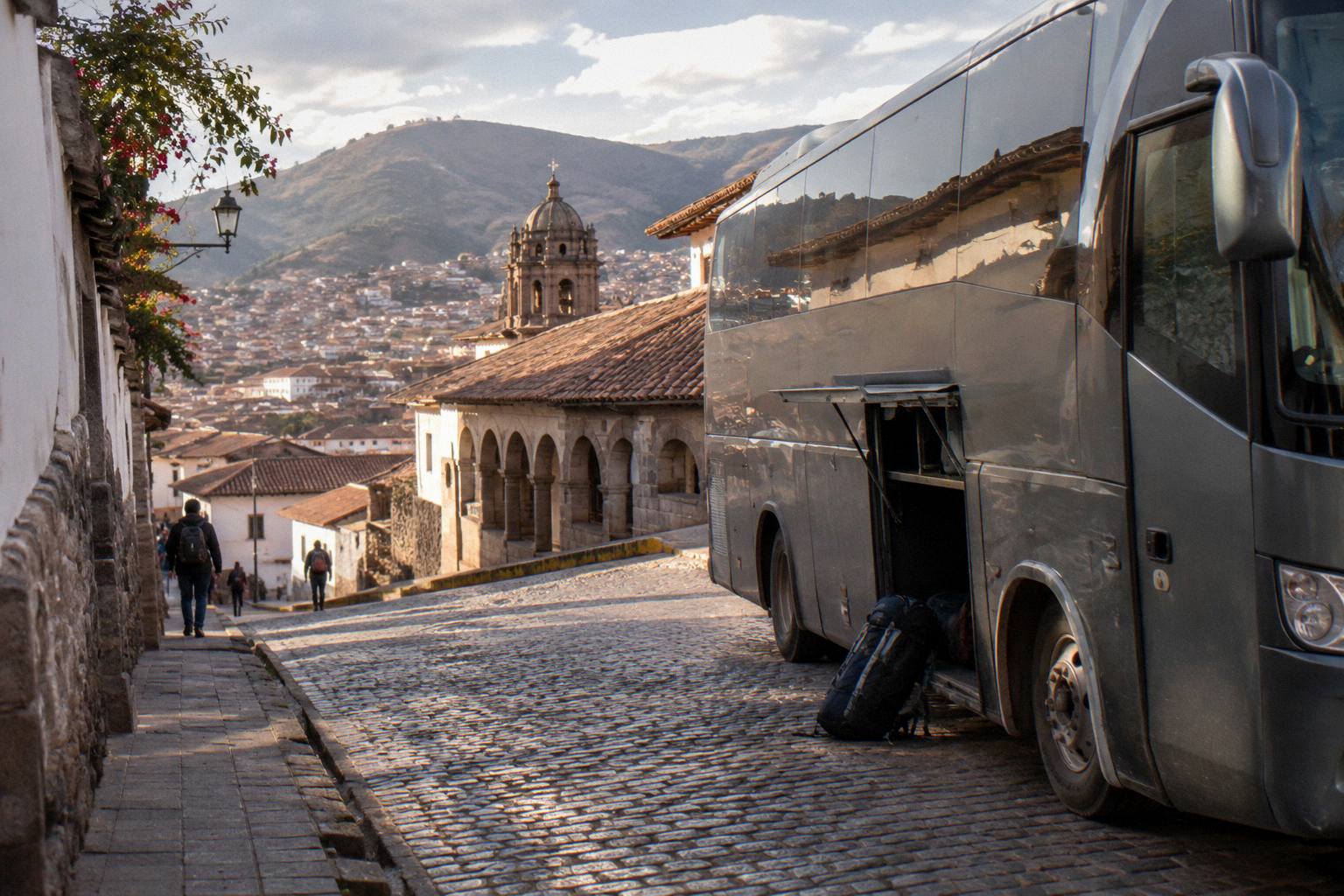
Peru Bus Terminals By City: Lima, Cusco, Arequipa, Trujillo And Beyond
Peru has no single national bus station: each company keeps its own terminal, and a city can hold a dozen of them. This guide lists the departure addresses operators publish, explains the terminal rules behind them, and covers how to arrive, board and leave safely.
Short answer
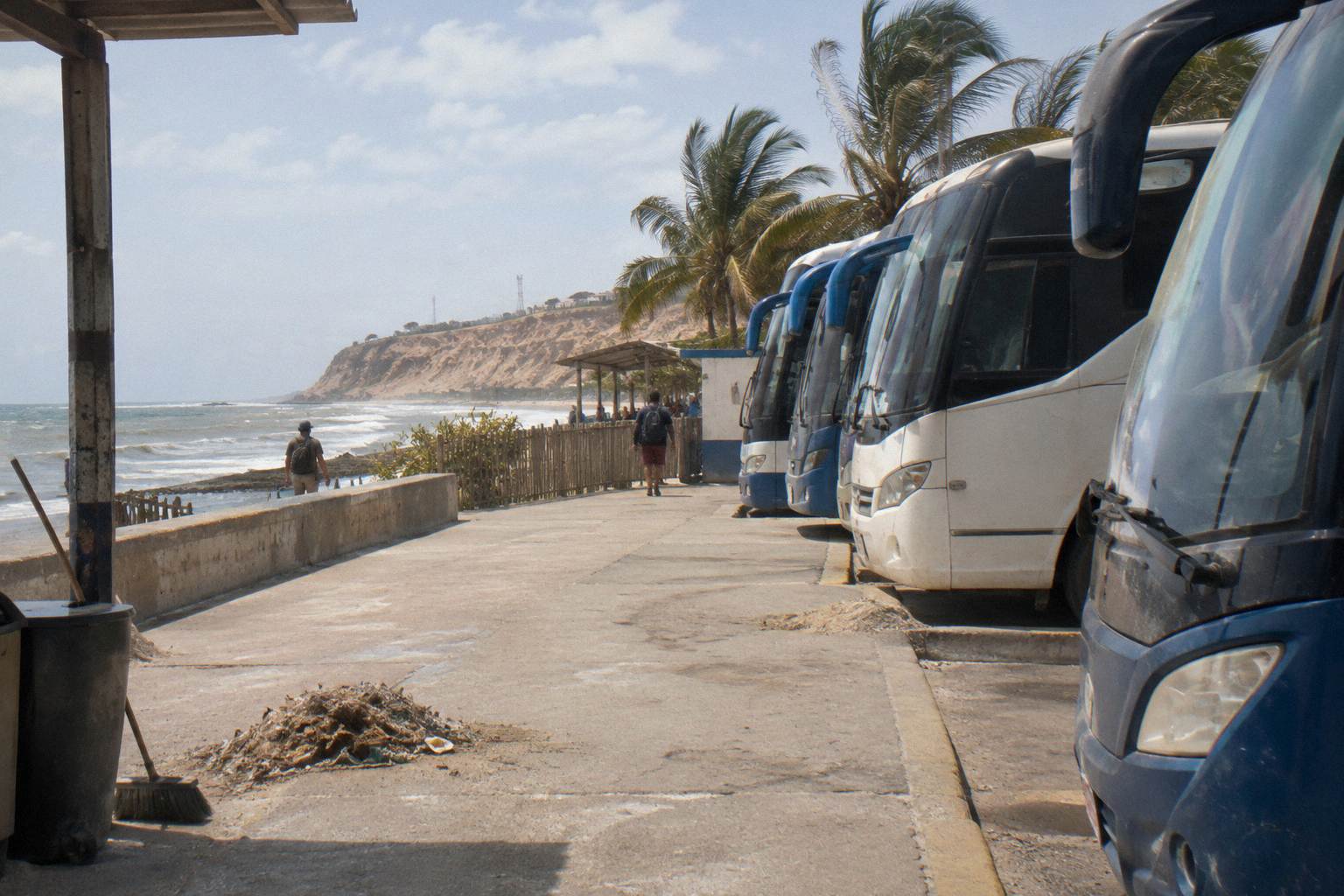
Every major Peruvian bus company departs from its own terminal, so the address depends on the operator, not the city. Cruz del Sur leaves Lima from Av. Javier Prado Este 1109, La Victoria, while Oltursa leaves from Jiron Manuel Portocarrero 380, Surquillo. Regular carriers must use terminals in towns of 200,000 or more people, and boarding happens inside the terminal with the bus stopped.
Peru does not run a single national bus station per city, and that single fact reshapes every departure. A traveller leaving Lima could board at a company terminal in La Victoria, a counter in Surquillo, a vast terminal complex beside the Panamericana Norte, or a pickup point in Miraflores, depending entirely on which operator and which ticket class they hold. Booking a seat is only half of the job; knowing the street address of the right terminal, and how the terminal system is regulated, is the other half.
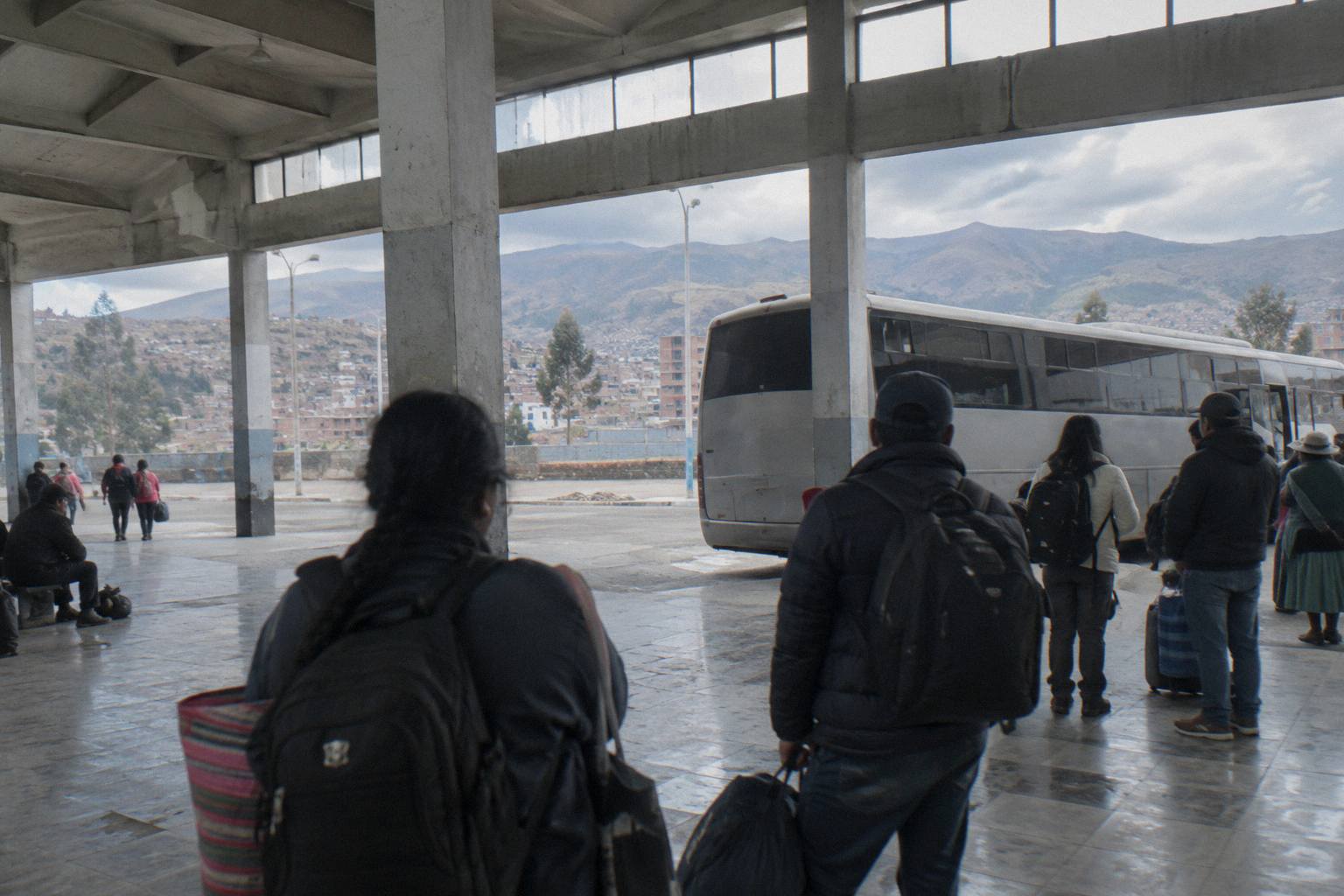
Peru's national transit regulation gives terminals a legal weight that surprises first-time visitors. Regular interprovincial carriers must operate from authorised terminals at origin, destination and intermediate stops, and the public road may not be used as a terminal. In towns of 200,000 people or more, a terminal is mandatory at both origin and destination, and passengers board and alight inside the terminal area with the bus stopped. That rule is why addresses matter: Peru By Bus exists to answer exactly this kind of question, and this guide collects the departure addresses that operators publish on their own pages, city by city.
A note on what appears here. Addresses are printed only where an operator or terminal company publishes them, and each one carries its source in the wording: a straight address means the operator lists it on its own page, while "reported" marks an address that appears only in archived or second-hand snippets. Where no street is published, this guide says nothing rather than guessing. The same caution applies to Yerbateros in Lima, a departure point whose street address no official page states.
Which Bus Terminal Does Your Company Use In Lima?
Lima has several separate bus terminals rather than one, and the correct one depends on the operator: Cruz del Sur departs from Av. Javier Prado Este 1109, Urb. Santa Catalina, La Victoria, Oltursa from Jiron Manuel Portocarrero 380, Surquillo, and Movil Bus from Av. Tomas Valle 651 at the Terrapuerto del Norte. The Gran Terminal Terrestre Plaza Norte sits on the Panamericana Norte between Av. Tomas Valle and Av. Tupac Amaru. Always confirm your departure point before crossing the city.
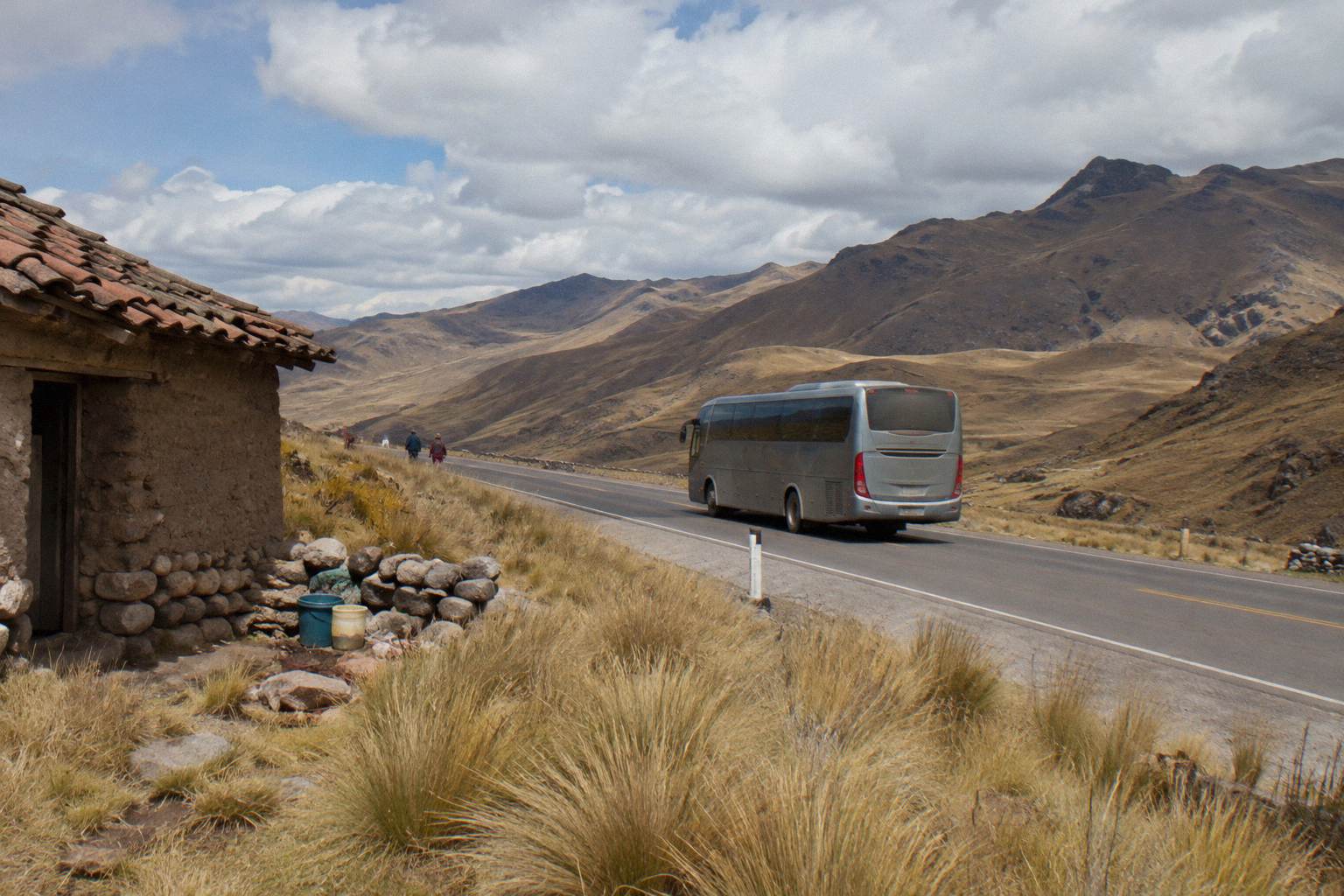
Cruz del Sur's Lima base is its Terminal Javier Prado at Av. Javier Prado Este 1109, Urb. Santa Catalina, La Victoria, an address the company publishes on its own Lima to Cusco route page, which also lists a VIP lounge at the same terminal. Oltursa, by contrast, gives Jiron Manuel Portocarrero 380, Surquillo as its Lima point on its own Lima page, and other Lima boarding points appear on its site as well. Two different streets, two different districts, one city.
The Gran Terminal Terrestre Plaza Norte is a terminal operator rather than a bus line: it sits on the Panamericana Norte between Av. Tomas Valle and Av. Tupac Amaru, beside the Plaza Norte mall, and multiple carriers use its platforms. Movil Bus gives its Lima points as Av. Tomas Valle 651 at the Terrapuerto del Norte, Nicolas Arriola 740 in La Victoria, and Av. Paseo de la Republica 767. Civa's Lima addresses appear in archived footer snippets as Av. Paseo de la Republica 569, La Victoria for EconoCiva and SuperCiva, and Av. Javier Prado Este 1155, La Victoria for Excluciva, so treat those as reported addresses and confirm with the company.
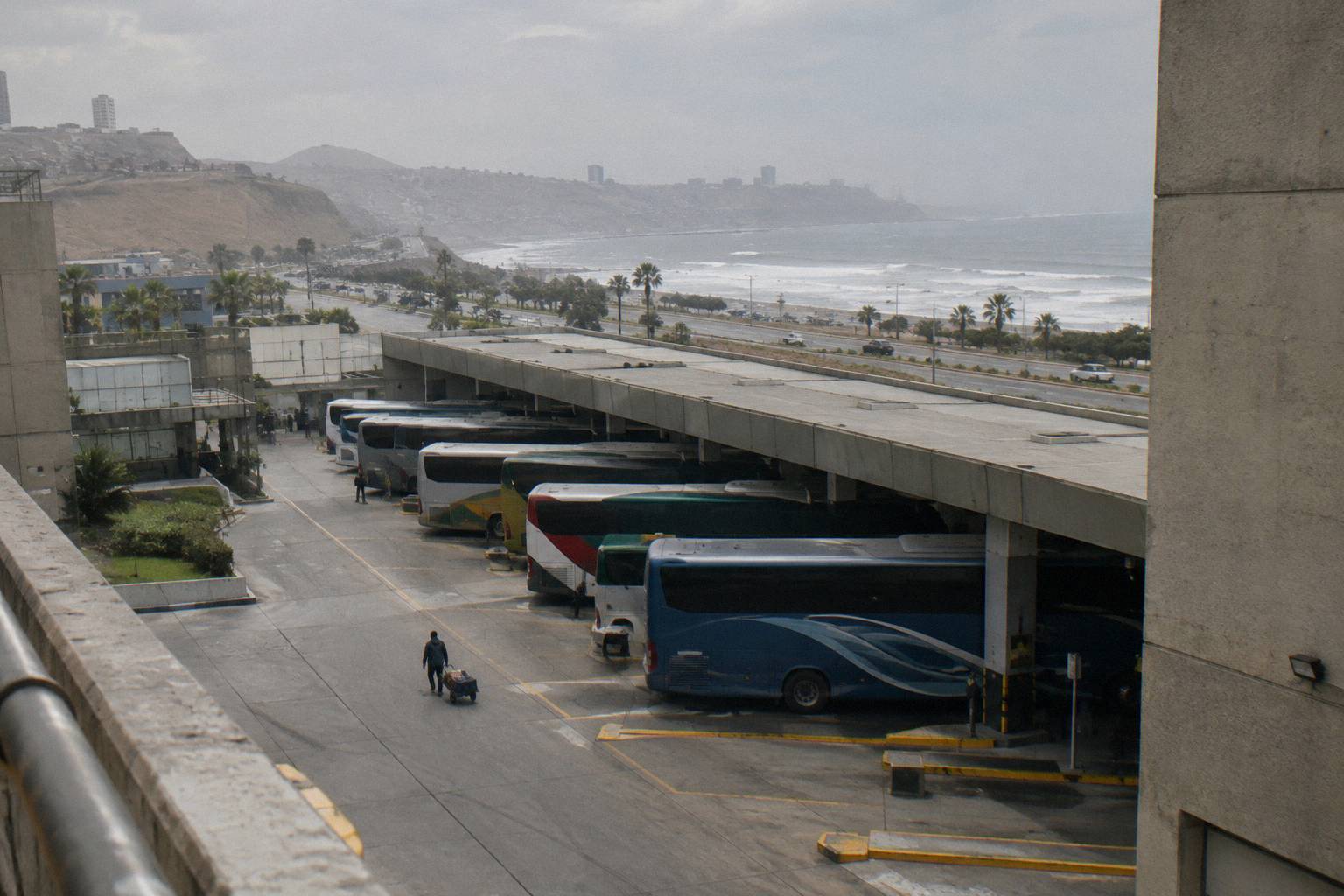
Yerbateros, in the city's east, is another common departure zone, but no official page publishes a street address for it, so none is printed here. The practical rule for Lima is simple and worth repeating: never plan a Lima morning around "the bus station", plan it around the address on the ticket. For a fuller picture of how ticketing and boarding work across the country, read the how Peru bus travel works guide.
| City | Company | Departure Address (Operator-Published) |
|---|---|---|
| Lima | Cruz del Sur | Av. Javier Prado Este 1109, Urb. Sta. Catalina, La Victoria |
| Lima | Oltursa | Jiron Manuel Portocarrero 380, Surquillo |
| Lima | Movil Bus | Av. Tomas Valle 651, Terrapuerto del Norte, SMP |
| Lima | Movil Bus | Nicolas Arriola 740, La Victoria |
| Lima | Movil Bus | Av. Paseo de la Republica 767 |
| Lima | Civa (EconoCiva, SuperCiva) | Av. Paseo de la Republica 569, La Victoria (reported) |
| Lima | Civa (Excluciva) | Av. Javier Prado Este 1155, La Victoria (reported) |
| Lima | Gran Terminal Terrestre Plaza Norte | Panamericana Norte, between Av. Tomas Valle and Av. Tupac Amaru |
Where Do Buses Depart From In Cusco And Arequipa?
Cusco arrivals on Cruz del Sur use the Terminal Terrestre at Av. Vallecito 538, while Oltursa's Cusco point is the Terminal Terrestre at Av. Industrial 24, Urb. Huancaro. In Arequipa, Cruz del Sur operates from the Terrapuerto at Av. Arturo Ibanez S/N, Pabellon B, and Oltursa from a counter in the same Terrapuerto complex. Each address is the company's own, not a shared "main terminal" claim.
Cusco's terminal landscape splits between the municipal Terminal Terrestre and company counters within or around it. Cruz del Sur's route page gives the arrival point as Terminal Terrestre Cusco, Av. Vallecito 538, and its own agency pages add an office at Av. Industrial 121, Urb. Bancopata, Santiago, plus a stand at the municipal terminal. Oltursa lists its Cusco point as Terminal Terrestre, Av. Industrial 24, Urb. Huancaro. No street for the municipal terminal beyond Av. Vallecito 538 is published, so nothing more is printed here.
Arequipa concentrates departures at the Terrapuerto, a purpose-built terminal on the city's edge. Cruz del Sur publishes its location as Av. Arturo Ibanez S/N, Pabellon B, Local 23-27, and Oltursa gives Counter 12-14, Pabellon D1-3 in the same complex. Civa's Arequipa boarding points appear in booking-page snippets as Av. Arturo Ibanez S/N, Int. R-S, and Terminal Terrestre B-14, so treat those as reported. For the routes that connect these two cities, the Southern Peru bus circuit guide maps the whole chain.
The Cusco to Arequipa leg is served by tourist tickets as well as regular carriers, and one listing connects the two terminals directly: the World Explorer Peru direct bus from Cusco to Arequipa, which the listing gives as 10 hours one way and drops at the Arequipa bus terminal. Its rating stands at 3.7 across 16 reviews, and the listing names a Cruzero Suite 160 degree seat. Check availability on the operator's live listing if that seat and route match your plan.
Two rest stops, one mountain corridor and roughly ten listed hours separate the two terminals, and the free-flow drive estimate for Arequipa to Cusco is 9.4 hours over 487 km, a figure real bus journeys exceed because of stops and the climbing road. The Direct Bus Cusco - Arequipa listing carries free cancellation up to 24 hours before departure for a full refund, as listed, which matters when Andean weather or a protest notice forces a change of plan.
Which Terminals Serve The Southern Route To Puno?
Puno's terminal picture is thinner on published addresses: Cruz del Sur gives Jr. 1 de Mayo 703-705, Barrio Cesar Vallejo, as its Puno point, while no official street for the city's Terminal Terrestre is published. Arequipa to Puno runs 273 km with a free-flow drive estimate of 5.5 hours, and Puno to Cusco runs 387 km with a 6.2 hour estimate. Tourist listings connect these terminals directly.
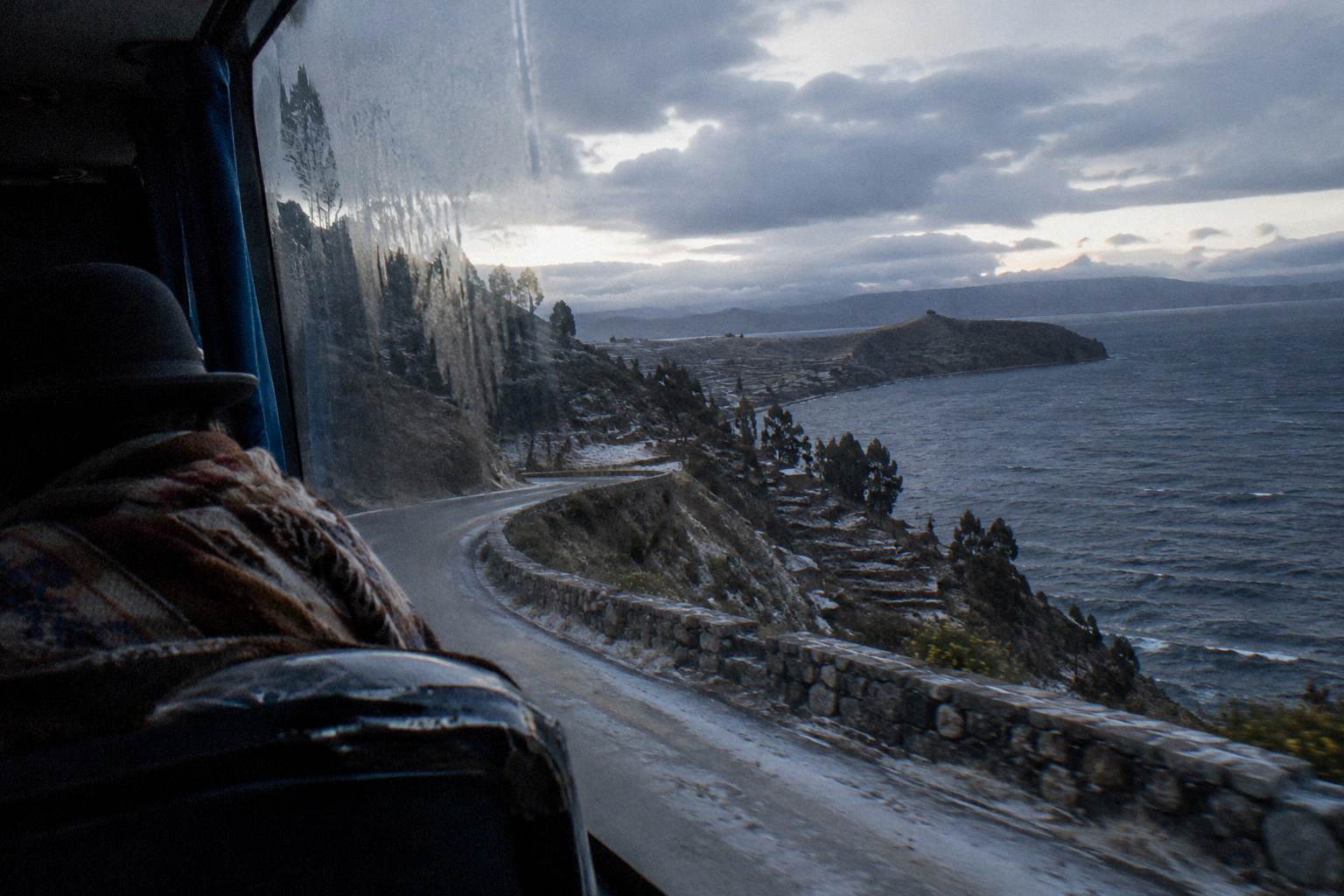
The south corridor from Arequipa to Puno to Cusco is the country's most-travelled bus chain after the Panamericana, and each leg ends at a terminal rather than a street stop. Turismo Mer runs the Puno to Cusco direction with a lunch stop included, dropping at its own Terminal Privado Turismo Mer in Cusco; the listing gives 11 hours and the product rates 4.6 across 24 reviews. In the other direction, the Turismo Mer sleeper bus from Arequipa to Puno lists a 160 degree recline seat on a night service, with the listing giving 7 hours; the terminal boarding fee is not included, so check the boarding fee line on the listing before you travel.
That sleeper carries a 4.3 rating across 20 reviews, and free cancellation up to 24 hours before departure for a full refund as listed. For readers continuing to Lake Titicaca, the Puno to Copacabana bus guide covers the border leg that starts from the same city. Puno sits at 3,848 m per INEI's compendium, which makes the arrival terminal the point where altitude management starts to matter; the Peru bus altitude guide covers that in depth.
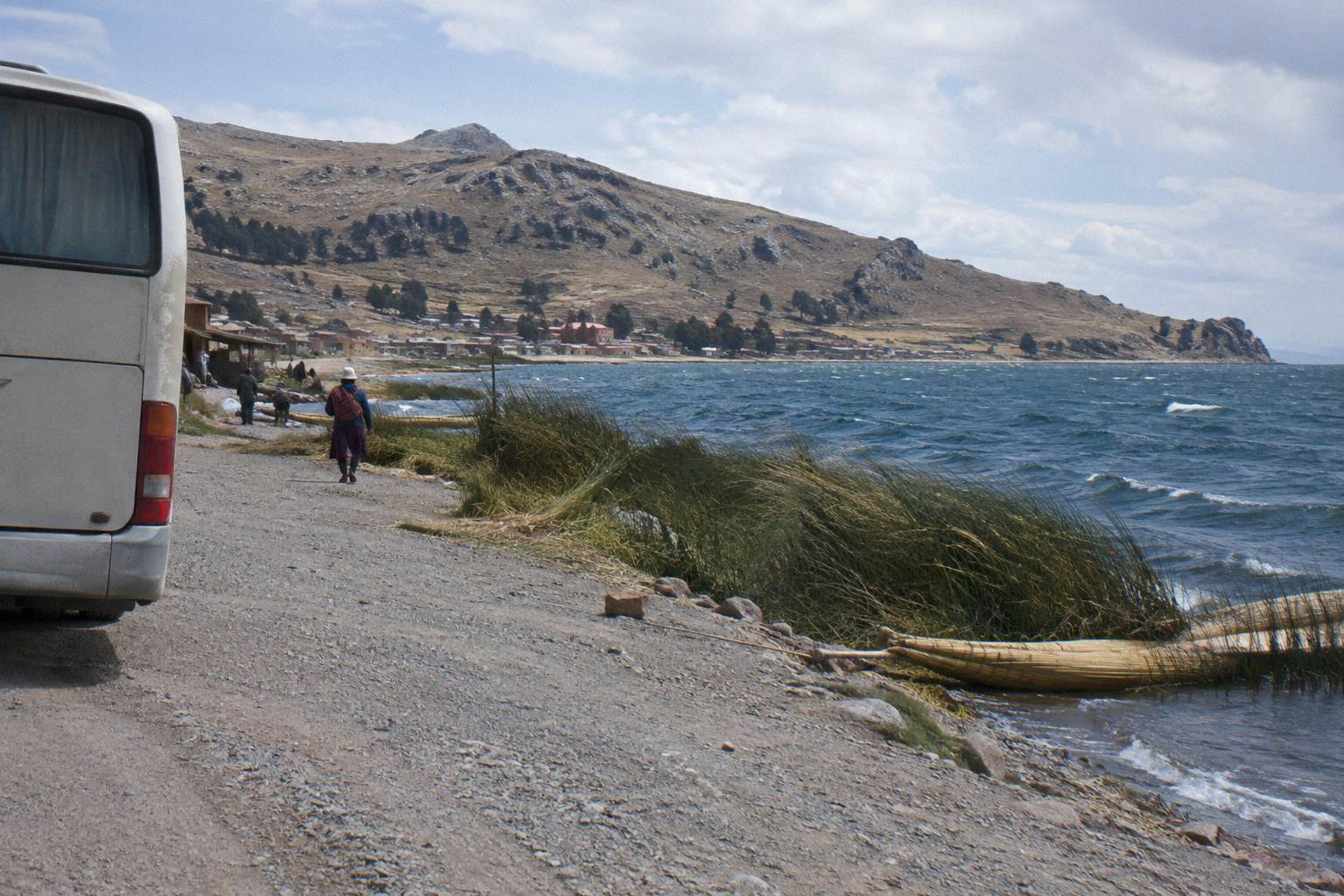
The Puno to Cusco tourist listing above drops passengers at a private terminal rather than the municipal one, and that distinction recurs across Peru: "terminal" on a tourist ticket can mean a private meeting point, a hostel forecourt or a company's own hall. The question a reader should ask of any ticket is which terminal, and the ticket's small print names it. Operators such as Cruz del Sur also publish their own Puno address, the Jr. 1 de Mayo 703-705 point in Barrio Cesar Vallejo, so the company page and the ticket together settle where you stand on arrival night.
A night leg into a high-altitude city rewards a booked seat rather than a terminal-counter search, and the sleeper listing above covers exactly that pairing: Arequipa's Terrapuerto boarding, a 160 degree recline named on the listing, and a Puno drop-off. Readers pairing it with the Cusco direction have the two Turismo Mer products on one chain, and both carry the listed free cancellation window.
Which Terminals Serve The North Coast Route?
Trujillo and Chiclayo anchor the north coast: Oltursa lists Trujillo at Av. del Ejercito 342, Urb. El Molino, and the Terrapuerto at Panamericana Norte Km 558, and Chiclayo at Av. Vicente de la Vega 101. Cruz del Sur lists Trujillo at Av. Amazonas 437 and Chiclayo at Av. Bolognesi 888. Linea publishes Trujillo at Av. America Sur 2857, La Perla, plus Jiron Orbegoso 300. Mancora's published point is Oltursa at Av. Grau 509.
The north chain runs Lima to Trujillo, a 557 km leg with a 9.1 hour free-flow drive estimate, then Trujillo to Chiclayo at 199 km and 3.2 hours, and Chiclayo to Mancora at 401 km and 5.3 hours. Trujillo sits near sea level at 74 m per INEI, and Chiclayo lower still at 28 m, so unlike the southern corridor the north coast poses no altitude question at its terminals. What it does pose is a longer overall haul from Lima, and the terminal addresses are spread across each city rather than gathered in one complex.
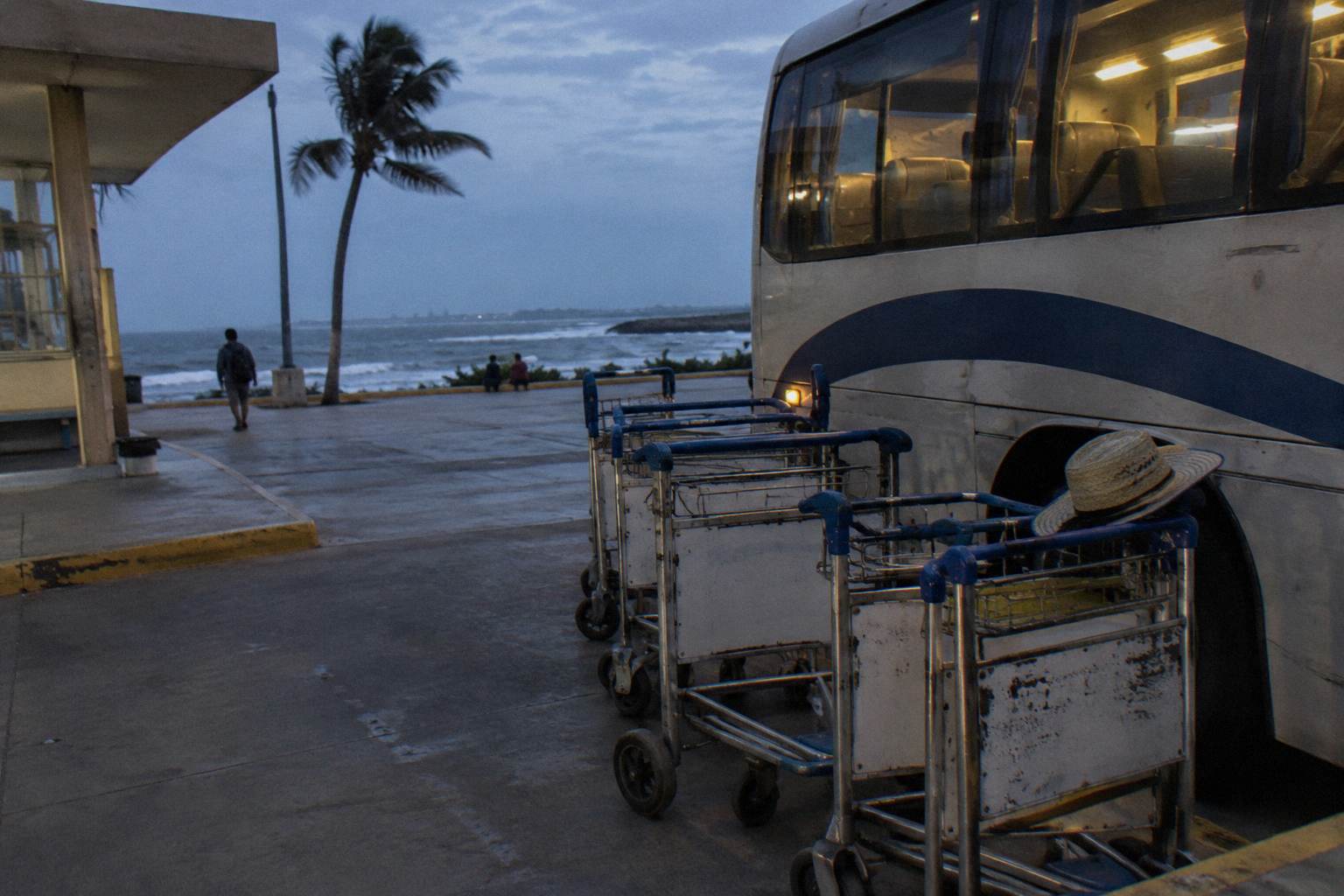
Linea, a northern specialist, publishes its Trujillo points as Av. America Sur 2857, La Perla and Jiron Orbegoso 300, and its Chiclayo points as Av. Francisco Bolognesi 638 and Carretera Panamericana Norte 4200, Jose Leonardo Ortiz, with Piura at Av. Sanchez Cerro 1215. Cruz del Sur adds Piura at Av. Loreto 1195 and Tacna readers should note its Tacna point sits inside the Terminal Terrestre Manuel A. Odria, Mod 16-17. Oltursa's Mancora address, Av. Grau 509, is the published arrival point for beach-bound travellers, 104 km and a 1.5 hour free-flow estimate from Tumbes. The full north route is mapped in the north coast bus guide.
| City | Company | Departure Address (Operator-Published) |
|---|---|---|
| Trujillo | Oltursa | Av. del Ejercito 342, Urb. El Molino |
| Trujillo | Oltursa | Terrapuerto, Panamericana Norte Km 558 |
| Trujillo | Cruz del Sur | Av. Amazonas 437 |
| Trujillo | Linea | Av. America Sur 2857, La Perla |
| Trujillo | Linea | Jiron Orbegoso 300 |
| Chiclayo | Oltursa | Av. Vicente de la Vega 101 |
| Chiclayo | Cruz del Sur | Av. Bolognesi 888 |
| Chiclayo | Linea | Av. Francisco Bolognesi 638 |
| Chiclayo | Linea | Carretera Panamericana Norte 4200, Jose Leonardo Ortiz |
| Mancora | Oltursa | Av. Grau 509 |
| Piura | Cruz del Sur | Av. Loreto 1195 |
| Piura | Linea | Av. Sanchez Cerro 1215 |
Do You Need A Terminal Ticket Or Can You Board On The Street?
Peru's national transit regulation requires regular carriers to use authorised terminals at origin, destination and stops, and the public road may not be used as a terminal; in towns of 200,000 people or more a terminal is mandatory at origin and destination. Boarding happens only at authorised points with the bus stopped, inside the terminal area. Tourist buses with hotel pickup operate as pre-booked products with their own meeting points.
This is the rule behind every address in this guide, and it explains why hailing an interprovincial bus at the roadside is not how the system works for regular service. The regulation also grants passengers concrete rights at the terminal: a licensed vehicle with technical inspection and insurance, up to 20 kg of luggage free on national service, a receipt for the fare, an own seat from age five, and never more passengers than the manufacturer's seat count. Those rights attach to the ticket, and the terminal is where they start.
Tourist tickets blur the model in a useful way. The Wayki Bus Lima to Paracas product, for instance, departs from Miraflores and Barranco pickup points and drops at El Chaco in Paracas, with the listing giving 3 hours; a twin listing by another operator offers Lima to Paracas with hotel pickup in Miraflores and Barranco from US$18 per person on its own basis. These are pre-booked products with meeting points rather than terminal-to-terminal tickets, and the difference matters for anyone comparing a regular carrier seat with a tourist bus seat. The Peru bus tickets guide walks through both.
How Do You Get To And From A Terminal Safely?
Government advice is blunt about terminal approaches: the UK FCDO states "There is a risk of robbery by criminals posing as taxi drivers, especially at Jorge Chavez International Airport and bus terminals" and advises travellers to "use one of the taxis registered at bus terminals". Canada says "Remain particularly vigilant at bus terminals and in taxis". Registered terminal taxis, not street hails, are the recommended link between terminal and lodging.
The same advisories shape what happens around the terminal itself. The FCDO adds "on bus journeys, keep your passport with you", and the US Embassy's republication of the State Department advisory warns "Criminal groups sometimes set up roadblocks to rob people in areas outside of Lima." Canada's page also advises "Only use authorized cabs located inside airport terminals and bus stations". None of this counsel says terminal transfers are fine by default; it names a specific risk and a specific mitigation, and the mitigation is the registered cab rank inside the terminal.
For passengers arriving at Lima's airport rather than a terminal, the airport bus is a listed alternative: the Airport Express Lima bus runs from Lima airport (LIM) to Miraflores on an air-conditioned luxury bus, from US$6.5 per person on the listing's basis, with the listing giving about 1 hour and free cancellation up to 24 hours before for a full refund as listed. Reviews for that product are on the listing. The FCDO's airport warning covers the same doorstep, which is why registered services and registered cabs dominate the advice.
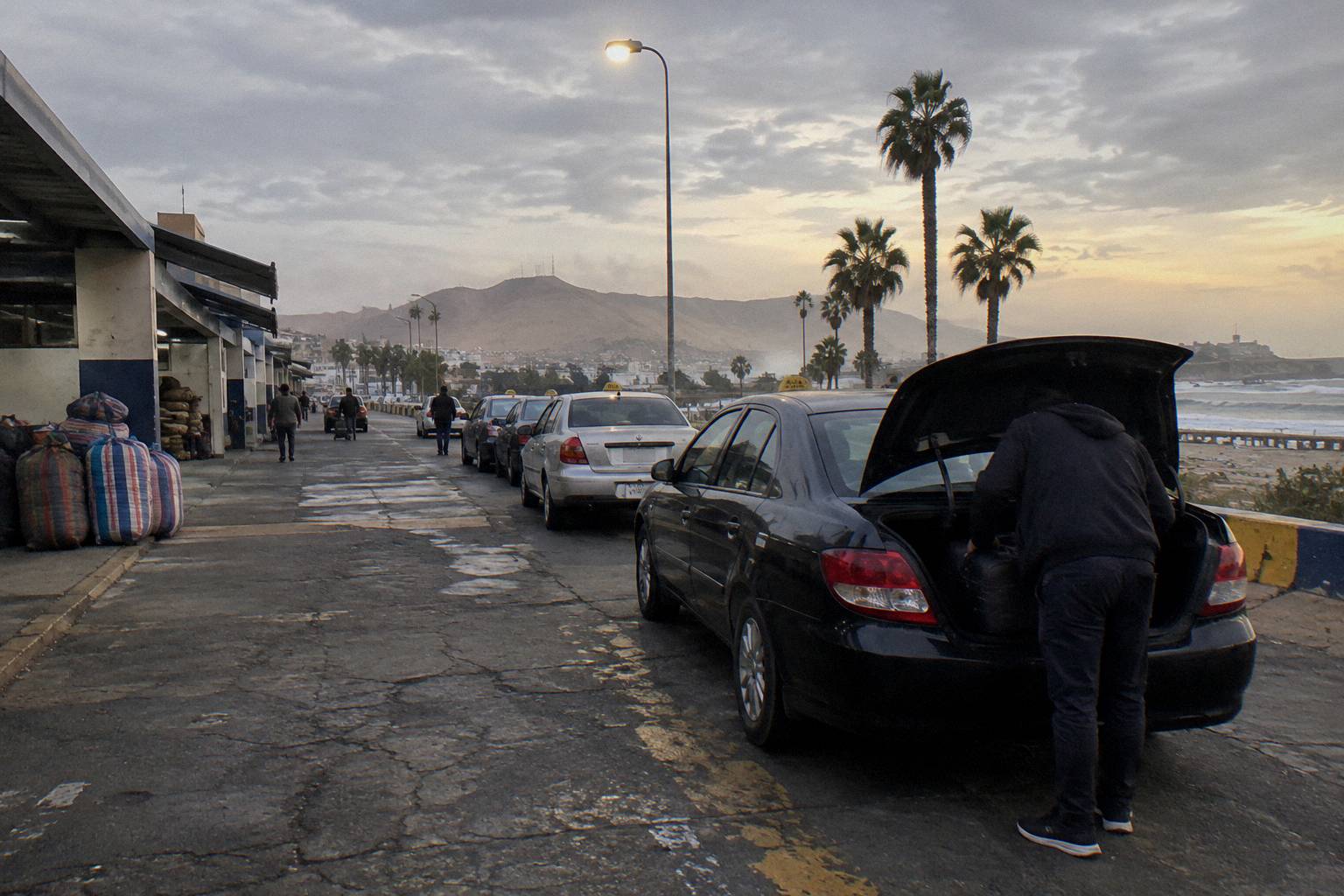
Night arrivals deserve the most careful reading. Canada advises "Avoid taking buses and coaches at night" and the FCDO states "Bus crashes are common, especially at night. Only use reputable transport companies, and where possible, avoid overnight travel, especially in mountainous and remote regions." When a night leg is unavoidable, the terminal-side plan matters more: the registered cab, the luggage ticket, the passport on your body. The overnight bus in Peru guide covers the trade-offs, and the Peru bus safety guide collects the full advisory picture.
What Altitude Change Should You Expect Between Terminals?
Expect dramatic altitude swings between Peruvian terminals: Lima sits at 162 m, while Arequipa stands at 2,429 m, Cusco at about 3,400 m, and Puno at 3,848 m, per INEI. Boarding at sea level in Lima and stepping off in Puno means climbing most of four vertical kilometres, so plan around that change; northern terminals like Trujillo at 74 m and Chiclayo at 28 m involve no such shift.
The southern corridor concentrates the problem. The route from Arequipa's Terrapuerto to Puno climbs past the Crucero Alto pass, which INEI lists at about 4,250 m, before dropping to the lake. Cusco-bound passengers cross Abra La Raya at about 4,300 m between Puno and Cusco. These are pass heights from INEI's statistical tables, printed rounded because INEI's own editions differ by tens of metres; they are not weather reports or warnings, just the vertical reality between two terminals.
| Terminal City | Altitude (INEI) |
|---|---|
| Chiclayo | 28 m |
| Trujillo | 74 m |
| Lima | 162 m |
| Ica | 432 m |
| Arequipa | 2,429 m |
| Cusco | About 3,400 m |
| Puno | 3,848 m |
Coastal stops such as Paracas and Huacachina sit near sea level, where no INEI figure is published for the towns themselves. Huaraz, a northern mountain terminal city, stands at 3,073 m per INEI, and Movil Bus publishes its Huaraz points at Av. Confraternidad Internacional Oeste 451, Independencia and Jr. Simon Bolivar 452, while Linea gives Jr. Simon Bolivar 450 and Cruz del Sur gives Jr. Teresa Gonzales de Faning 457. The altitude question on that route is covered fully in the Lima to Huaraz bus guide.
Which Terminal Rules Affect Your Ticket And Your Luggage?
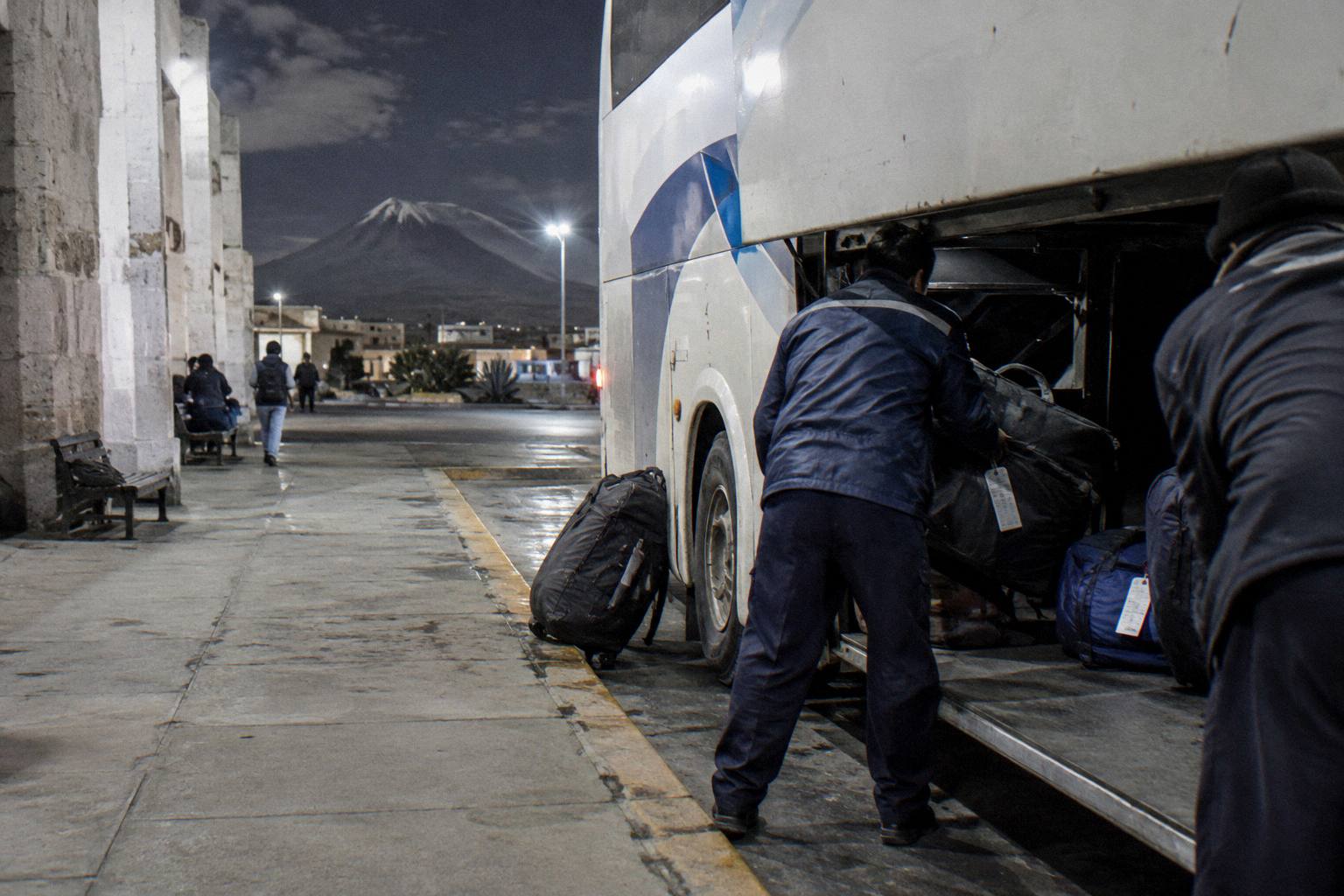
Three rules matter most: up to 20 kg of luggage travels free on national service and every passenger has the right to a fare receipt; INDECOPI allows a domestic ticket to be postponed or transferred with 24 hours notice at only the real reissue cost; and SUTRAN advises getting a luggage ticket for hold bags. Operators then add their own limits, such as Cruz del Sur at 20 kg hold plus 6 kg hand.
The luggage ticket deserves its own sentence at the terminal counter. SUTRAN and INDECOPI both tell passengers to obtain one for hold luggage; no transit-regulation article ordering it has been found, so the advice is attributed to SUTRAN rather than to law. Loss or damage from the carrier's fault carries a minimum compensation of 25 percent of the fare multiplied by a weight-band factor under the regulation. The Peru bus luggage and theft guide covers packing and claims in practice.
Tickets and complaints have their own channels. A carrier's Libro de Reclamaciones must answer within 15 working days, and INDECOPI runs a Lima line at 224 7777, a regions line at 0800 4 4040, and an online claim portal. SUTRAN's own complaints book is for complaints about SUTRAN itself, not about a bus company, a distinction that sends many passengers to the wrong desk. The what to do about delays and strikes guide carries the disruption side of the same system.
Before boarding, the plate and driver check is free and fast: SUTRAN's lookup takes a plate number or driver DNI, and the road network itself can be checked on the alert map the morning of travel. Between protest notices and weather closures, that map and the carrier's own notice are the two checks that catch most surprises.
What About The Smaller Terminal Cities?
Ica, Nazca and Huaraz carry published company addresses even though no terminal operator runs a single complex: Cruz del Sur lists Ica at Cal. Fray Ramon Rojas 189, Urb. San Miguel, and Nazca at the corner of Lima and San Martin, while Oltursa lists Nazca at Calle Lima 155, Of. 03. No street is published for Puno's Terminal Terrestre, for Puerto Maldonado, or for the Tacna-Arica international terminal, and none is invented here.
The south-central wine and desert towns illustrate how the system scales down. Ica's published points cluster in the San Miguel area; Nazca's sit on or near Calle Lima; Huacachina itself is near sea level and is served by tourist-bus drop-offs such as the Viajero hostel meeting point used by the Wayki Bus Lima to Huacachina product, which stops in Paracas en route and lists 8 hours including that stop, rated 3.7 across 77 reviews. That is a tourist product with a meeting point, not a terminal arrival, and the difference is exactly the sort of detail a ticket's small print settles.
Readers heading further afield have dedicated coverage: the Cusco to Machu Picchu by bus guide covers the Hidroelectrica back door, where the listed tourist bus drops at a private point inside a restaurant rather than any municipal terminal, and the Cusco to Puerto Maldonado bus guide covers the jungle leg. For the border terminals at each edge of the country, the Tacna to Arica bus border and Peru to Ecuador bus border guides carry the crossing detail, since border posts, not city terminals, are the decision points there.
The Cusco to Arequipa direct listing suits readers pairing the southern terminals in one booking, with its terminal drop-off, listed 10 hour duration and 160 degree seat named on the listing. Where a lunch stop matters more than a sleeper seat, the Puno to Cusco direction pairs naturally with it.
That Turismo Mer Puno to Cusco service, 4.6 across 24 reviews with a lunch stop and an 11 hour listing, drops at the company's private Cusco terminal, closing the southern loop back at one of the addresses in the table above. Terminal to terminal, the southern chain is a set of named streets, and every one of them is on the ticket.
Common Questions About Peru Bus Terminals
Which Bus Terminal Does My Bus Leave From In Lima?
The terminal depends on the operator, not the city. Cruz del Sur departs Lima from Av. Javier Prado Este 1109, La Victoria; Oltursa from Jiron Manuel Portocarrero 380, Surquillo; Movil Bus from Av. Tomas Valle 651 at the Terrapuerto del Norte and other listed points. Check the address printed on your ticket before crossing the city.
Does Lima Have One Main Bus Station?
No. Lima has several separate terminals and company counters spread across districts, plus the Gran Terminal Terrestre Plaza Norte on the Panamericana Norte between Av. Tomas Valle and Av. Tupac Amaru, which serves multiple carriers. Planning around a single "Lima bus station" is the commonest arrival mistake.
Can I Board An Interprovincial Bus On The Street In Peru?
No. Peru's national transit regulation requires regular carriers to use authorised terminals, and the public road may not be used as a terminal. Boarding happens only at authorised points with the bus stopped. Tourist buses with hotel pickup are pre-booked products with their own meeting points.
Where Does Cruz Del Sur Arrive In Cusco?
Cruz del Sur's route page lists the Cusco arrival as Terminal Terrestre Cusco, Av. Vallecito 538. Oltursa's Cusco point is Terminal Terrestre, Av. Industrial 24, Urb. Huancaro. Both are company-published addresses, not a single shared terminal claim.
Is There A Luggage Allowance At Peruvian Bus Terminals?
Up to 20 kg of luggage travels free on national service under the transit regulation, and operators add their own figures: Cruz del Sur lists 20 kg hold plus 6 kg hand, Oltursa 20 kg plus 5 kg, and Linea 20 kg. SUTRAN advises passengers to get a luggage ticket for hold bags.
How Do I Get From A Bus Terminal To My Hotel?
Use the registered taxi rank inside the terminal. The UK FCDO warns of "a risk of robbery by criminals posing as taxi drivers, especially at Jorge Chavez International Airport and bus terminals" and advises using "one of the taxis registered at bus terminals"; Canada's advice says the same.