Peru Bus Tickets: How To Book Online, At The Terminal Or Through An Agent
Peru bus tickets are sold three ways: on the operator's own website, at the company terminal counter, and through a ticket listing that books the seat for you. Each route into a seat has its own paperwork, its own deadlines and its own refund rules, and the differences matter more in Peru than in most bus countries.
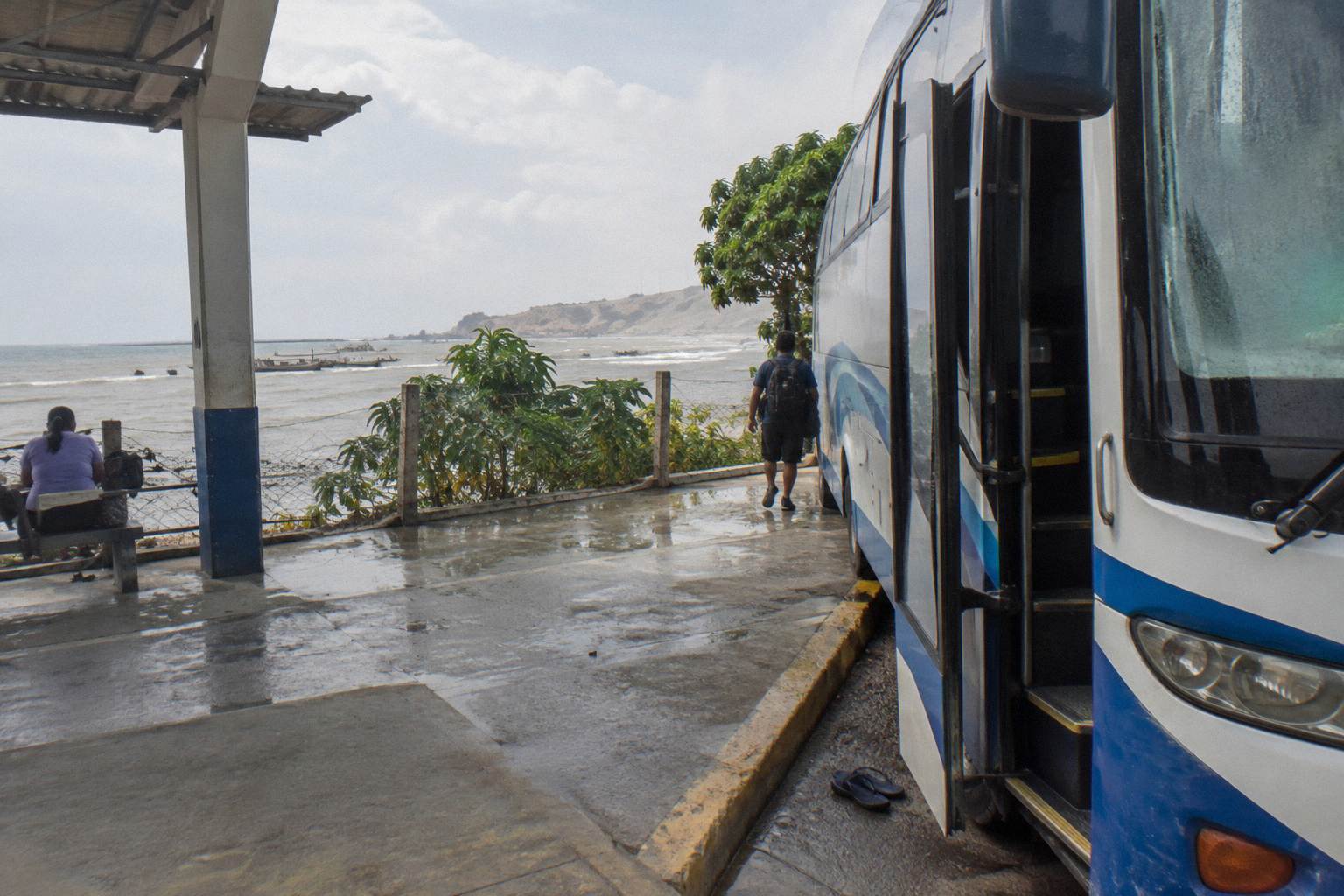
Short answer
Buy online when the operator's own site sells the route, which for Cruz del Sur means sales close one hour before departure on Lima to Cusco. Buy at the terminal when the route is short or the date is near. Buy through a listing when you want a tourist bus with free cancellation up to 24 hours before, in English, before you arrive.
Peru runs one of the larger scheduled bus networks in South America, and nearly every long-distance seat in it is sold through one of three channels: the operator's own website, the company counter inside its terminal, or a ticket listing that acts as a shop window for a tourist service. The channel you choose changes what you can do afterwards. A ticket bought at a counter, a ticket bought on an operator site and a ticket bought through a listing follow different cancellation rules, need different identification, and in one case even needs your passport number before the company will print it. This guide walks through each channel, the paperwork that comes with it, and the checks worth making the day before the bus leaves.
Peru's own rules sit underneath all three channels. The national transit regulation gives a passenger the right to a fare receipt, and SUTRAN advises taking a luggage ticket for anything placed in the hold. INDECOPI, the consumer authority, says a domestic bus ticket can be postponed or transferred with 24 hours notice at only the real cost of reissuing it. Those rights travel with the ticket whichever way it was bought.
Where Can You Actually Buy Peru Bus Tickets?
There are three working channels for buying a Peru bus ticket: the operator's own website, the company counter at the terminal named on your route, and a ticket listing run by a reseller that confirms a seat on a tourist service. Operator sites suit planned long routes, counters suit near-term travel on the day's own terms, and listings suit tourist buses whose cancellation terms are stated up front in the booking flow. A fourth idea people arrive with, the general city terminal selling every company's seats, does not match how Peru organises its terminals. Terminals in Peru are company-specific: Cruz del Sur departs from the Cruz del Sur terminal, Oltursa from the Oltursa address, and a walk to the wrong one means a cross-city taxi rather than a second counter. The practical first question is therefore not "where is the bus station" but "which company's terminal does this route use", because that decides where the ticket is bought in person.
The basics at a glance:
| Channel | Best For | What You Get | Watch For |
|---|---|---|---|
| Operator website | Long routes planned ahead | Seat map, e-ticket, class choice | Route and class availability vary by company |
| Terminal counter | Near-term travel, exact seat choice in person | Printed ticket, fare receipt | Terminals are company-specific |
| Ticket listing | Tourist buses booked before arrival | Free cancellation up to 24 hours before on the products that state it | Check the drop-off point and duration on each listing |
How Do You Book A Peru Bus Ticket Online?
Booking on the operator's own site means choosing the route, the service class and the seat, then paying and receiving an e-ticket that is presented with your ID at boarding. Cruz del Sur, for one, keeps online sales open until one hour before departure on Lima to Cusco, and lists seven daily departures on that route, with the first at 12:45 and the last at 16:45 as stated on its own page. The class choice matters more online than it does at a counter, because the seat map is in front of you: the same company sells fully flat 180 degree seats, 160 degree Suite seats and cheaper semi-cama options on different floors and services, and the price gap between them is part of what the booking flow shows. The guide to Peru bus classes, cama and semi-cama breaks down what each recline figure means for a night on the road. What an operator site will not do is sell a competitor's seat: comparing Cruz del Sur and Oltursa means opening both sites, which is why the Cruz del Sur guide and the Oltursa, Civa and Movil Bus comparison are worth reading side by side before you commit.
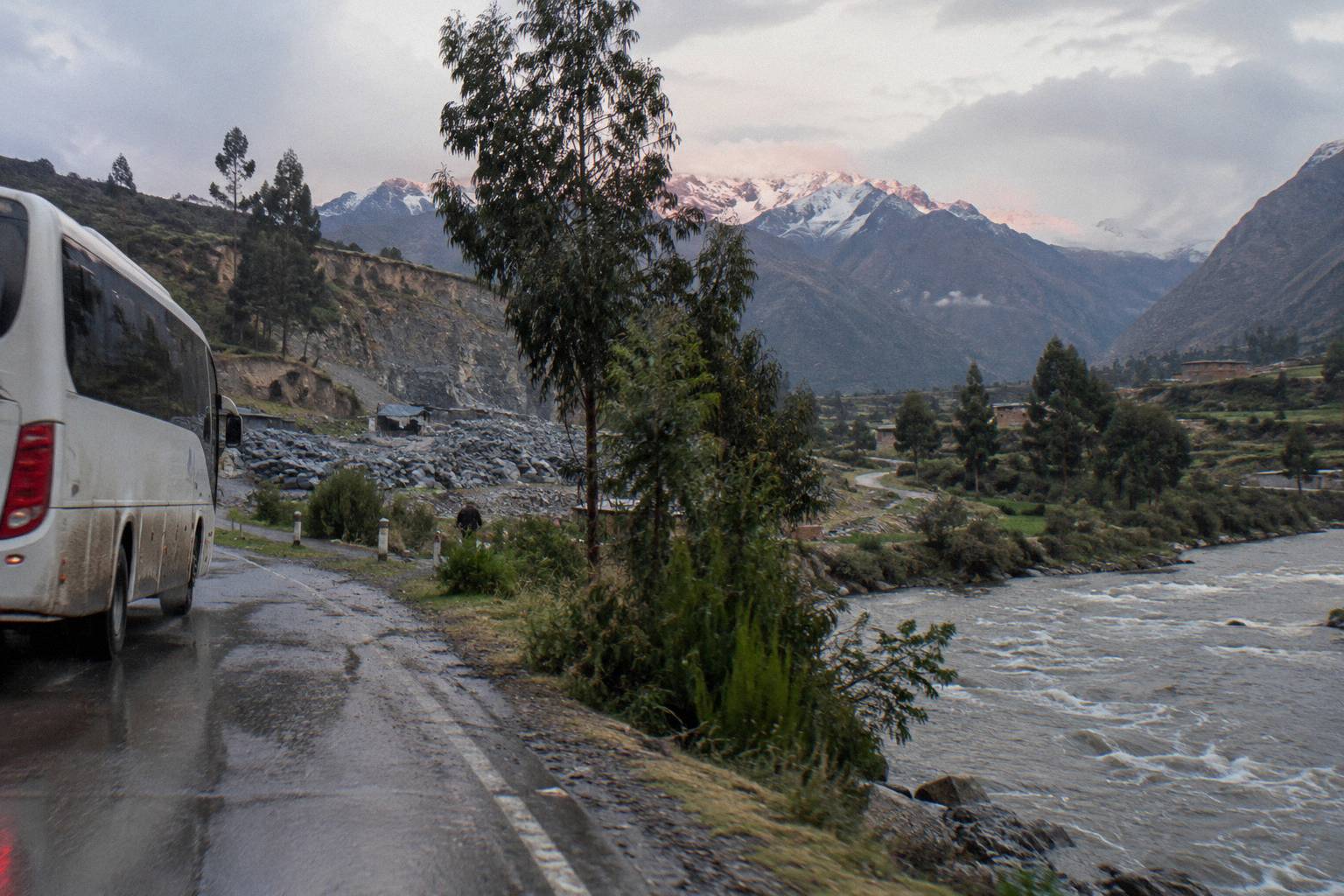
The paperwork side of online booking is light. The e-ticket plus the ID used at booking is what boarding asks for, and the regulation's right to a fare receipt is satisfied by the confirmation itself. One product in this article's tickets works differently: the First Class Huaraz ticket from Lima to Huaraz needs passport numbers and full names for every passenger before the operator can print the tickets, and pickup from a Miraflores hotel or Lima airport is arranged by sending the hotel address after booking, per its own listing. That is the exception, and it is stated on the product's page rather than hidden in a policy.
Online booking also suits the tourist buses that run point-to-point services rather than full schedules. Each states free cancellation up to 24 hours before departure on its own listing, which is the term to look for whenever a booking is made before arrival in the country.
What Happens When You Buy Through A Ticket Listing?
A ticket listing books a specific tourist service on your behalf: you pay the listing's price, receive a voucher, and board the bus with that voucher rather than an operator-issued ticket. The products worth buying this way state their drop-off point, their duration and their cancellation window on the listing page, and the strong ones spell out free cancellation up to 24 hours before departure for a full refund, as all three of this site's featured tickets do. The channel's strength is precision. A listing for the Turismo Mer bus from Puno to Cusco with a lunch stop, rated 4.6 across 24 reviews, names its drop-off at the operator's own private terminal in Cusco and a duration of 11 hours as the listing gives it, and that is more detail than a generic search result will carry. The channel's limit is equally plain: it sells one operator's one product, not a market. Prices on listings move with demand, so the figure to trust is the one on the live listing at the moment of booking, not a number quoted in an article.
Read the listing's own details before paying, because the fine print is the product. The Turismo Mer sleeper bus from Arequipa to Puno, rated 4.3 across 20 reviews, lists a 160 degree recline, a night service and a drop-off in Puno with a duration of 7 hours as the listing gives it; its listing also states that the terminal boarding fee is not included, so the boarding fee line on the listing is the one to read rather than any secondhand figure. A product page that does not name its drop-off point or its duration is a weaker product page, and there is no reason to accept a vague one when precise ones exist.
Which Terminal Does Your Bus Leave From?
Each operator keeps its own terminal address in each city, and the ticket is only valid from the address named on it, so the terminal question is settled by the ticket itself rather than by the city. There is no single main terminal in Lima that serves every company: Cruz del Sur departs from its own building, Oltursa from another, and Movil Bus from a third point in the north of the city. The addresses companies publish for their own terminals are the reliable source here, and the terminals by city guide collects them route by route. The table below gives the addresses stated by the operators themselves for the busiest stops on the southern and northern networks.
| City | Operator | Terminal Address (As The Operator States) |
|---|---|---|
| Lima | Cruz del Sur | Av. Javier Prado Este 1109, La Victoria |
| Lima | Oltursa | Jiron Manuel Portado 380, Surquillo |
| Lima | Gran Terminal Terrestre Plaza Norte | Panamericana Norte, between Av. Tomas Valle and Av. Tupac Amaru |
| Lima | Movil Bus | Av. Tomas Valle 651, Terrapuerto del Norte |
| Cusco | Cruz del Sur (arrival) | Terminal Terrestre Cusco, Av. Vallecito 538 |
| Cusco | Oltursa | Terminal Terrestre, Av. Industrial 24, Urb. Huancaro |
| Arequipa | Cruz del Sur | Terrapuerto, Av. Arturo Ibanez S/N, Pab. B |
| Puno | Cruz del Sur | Jr. 1 de Mayo 703-705, Barrio Cesar Vallejo |
| Trujillo | Cruz del Sur | Av. Amazonas 437 |
| Trujillo | Oltursa | Av. del Ejercito 342, Urb. El Molino |
| Huacachina area, Ica | Cruz del Sur | Cal. Fray Ramon Rojas 189, Urb. San Miguel |
| Mancora | Oltursa | Av. Grau 509 |
Two cautions keep this table honest. Civa's Lima addresses, Av. Paseo de la Republica 569 for EconoCiva and SuperCiva and Av. Javier Prado Este 1155 for Excluciva, are reported addresses rather than figures printed on the operator's live pages, so treat them as leads to confirm on the company's own site before travelling there. And some terminal streets simply are not published by the operators, in Puno's municipal terminal and on the Tacna to Arica corridor among others; for those, the company's contact page is the only source, and an invented address from a search result is worse than none.
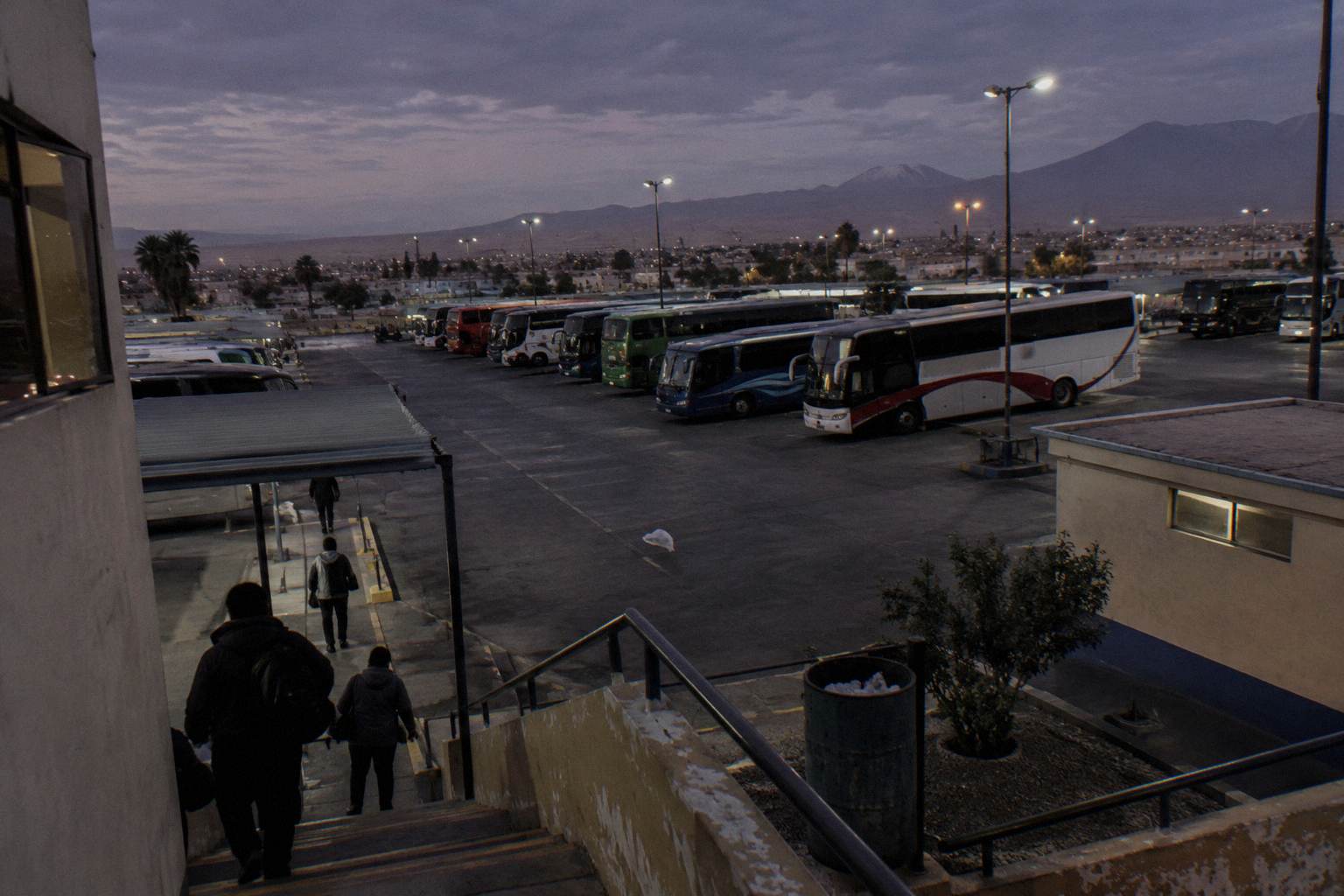
The rule that makes terminals work in the traveller's favour is regulatory: regular carriers must use enabled terminals at origin, destination and stops, and the public road may not be used as a terminal. Passengers board and alight inside the terminal area, at authorised points, with the bus stopped. That is why a Peru bus is not hailed on the street, and why the ticket in your hand names a building.
How Do You Buy At The Terminal Counter?
Buying at the counter means going to the operator's own terminal, choosing the departure and seat from the agent's screen, paying, and walking away with a printed ticket and a fare receipt on the spot. It suits travel booked a day or two ahead, changes made in person, and routes where the online seat map has already thinned out and the counter can see the fuller picture. The counter is also where the regulation's passenger rights are easiest to exercise in person: the fare receipt is handed over with the ticket, the luggage ticket is issued at the hold desk, and any complaint that the counter cannot resolve goes into the company's Libro de Reclamaciones, the formal complaints book that Peruvian consumer law obliges the business to keep and answer within fifteen working days. INDECOPI's own online channel, Reclama Virtual, is the escalation route if the book does not produce an answer: the consumer authority's claim portal takes bus complaints alongside any other.

Counter buying has one structural limit and one practical one. The structural limit is coverage: a counter sells its own company's seats and no other, so price comparison happens on foot or not at all. The practical limit is time. Counters open with the terminal and close with it, and the busiest departures fill first, which is the ordinary argument for booking a popular night route online instead. The overnight bus guide covers what to expect from a night departure once the seat is secured.
One ticket type in this article's tickets is bought the same way as any other listing but behaves differently at the counter stage: the First Class Huaraz ticket from Lima to Huaraz is marked non-refundable and unchangeable on its own listing, and it needs passport numbers and full names before tickets can be printed. Every other ticket named in this guide carries free cancellation up to 24 hours before departure as listed. Reading that one line before paying is the single highest-value habit in Peruvian bus booking. The full index of guides sits on Peru By Bus.

Can You Change Or Cancel A Peru Bus Ticket?
Yes, you can, under specific conditions. INDECOPI rules let you postpone or transfer a domestic Peru bus ticket with at least 24 hours notice, paying only the real cost of reissuing and no penalty, and if the company delays or fails to run the service, you are entitled to information plus reprogramming or a refund, while the strongest company terms add free cancellation up to 24 hours before departure for a full refund. The two systems stack rather than compete. The regulation and INDECOPI's notice govern the relationship with a Peruvian carrier; a listing's cancellation window governs the relationship with the listing. A traveller holding a listed tourist ticket with a 24 hour free-cancellation term, who cancels inside that window, deals with the listing and expects a refund from it; a traveller holding an operator e-ticket asks INDECOPI's rule to be honoured at the operator's counter or through its complaint channels.
What no one can promise is a refund rule for voluntary cancellation of an ordinary operator ticket, because no verified figure for that case exists. The First Class Huaraz product states plainly that it is non-refundable and cannot be changed, which is the exception among the tickets this site tracks and a useful reminder that the product's own page outranks any general assumption. Where a detail is missing, the operator's page is the source.
What Paperwork And Identification Do You Need?
Boarding a Peruvian interprovincial bus asks for the ticket plus the identity document used to book it, and for foreign passengers that is the passport, which the UK FCDO also advises keeping with you on the bus journey itself. Around the ticket sit three documents the rules either grant or advise: the fare receipt, the luggage ticket for hold baggage, and, for products that require pre-registration, the booking confirmation with passenger names matching the passport exactly. The luggage ticket deserves its own sentence because it is the one travellers skip. SUTRAN advises passengers to obtain a luggage ticket for anything checked into the hold, and the ticket is what ties a lost bag to a carrier's liability: the regulation sets a minimum compensation for loss or damage from the carrier's fault, scaled by weight band, and the claim starts with proof the bag was checked. The full picture on what to carry on and what to lock is in the luggage and theft guide.
| Document | Who Gives It To You | What It Is For |
|---|---|---|
| Ticket or e-ticket | Operator site, counter or listing | Boarding |
| Passport | Your own | Identity at booking and boarding |
| Fare receipt | Issued with the ticket | Proof of the fare paid |
| Luggage ticket | Hold desk at the terminal | Ties hold baggage to the carrier's liability |
| Booking confirmation with passenger names | The listing, for products needing pre-registration | Ticket printing where required |
Names matter more than travellers expect. The First Class Huaraz product needs full names and passport numbers before tickets print, and a mismatch between the booking name and the passport is the classic reason a counter reissues a ticket at the last minute. Booking with the passport you will actually carry, spelled as the passport spells it, removes the whole problem in advance.
How Do You Pick A Seat And A Bus Class?
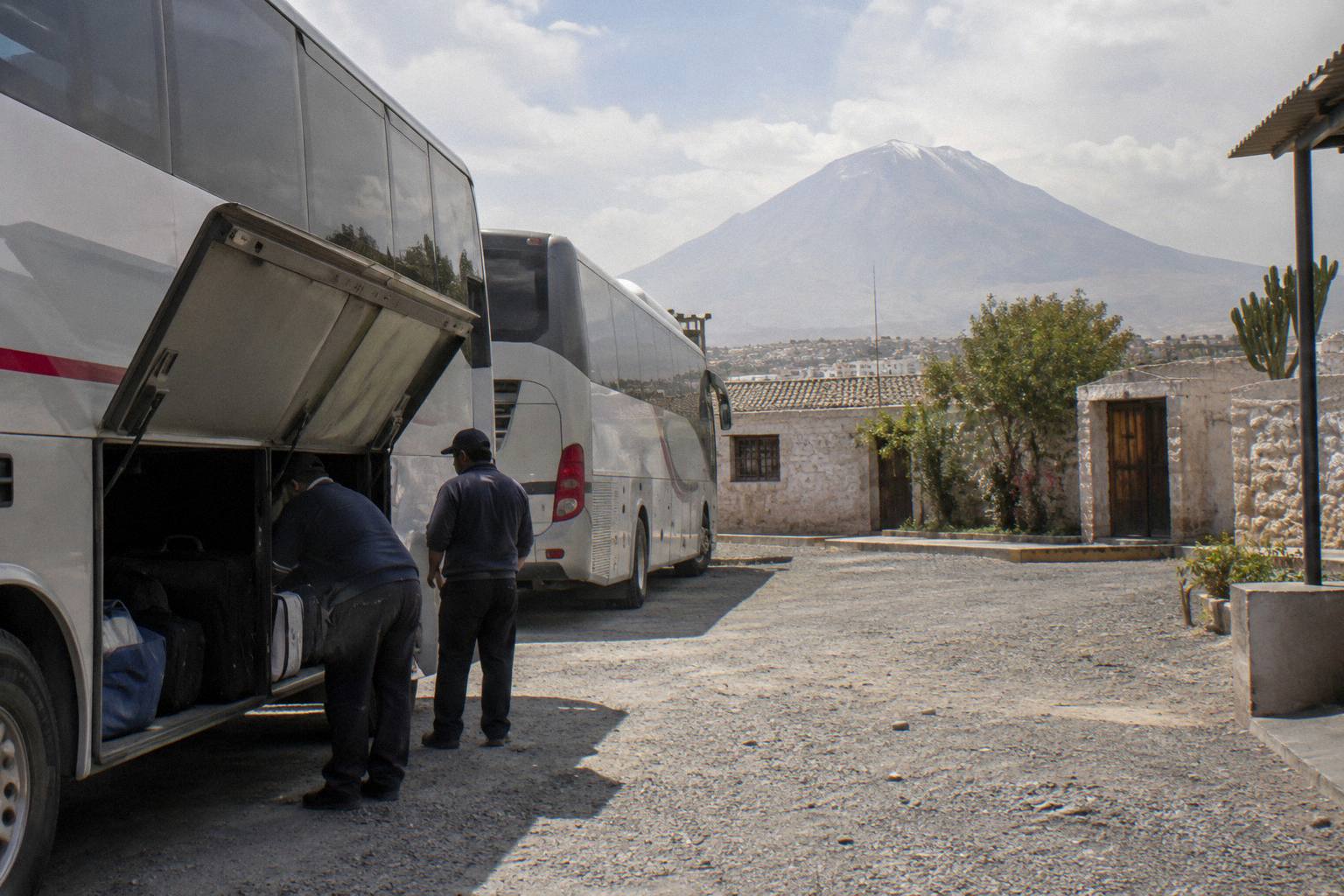
Class is chosen at booking, not at boarding, and the choice is between recline angles and floor layouts that the operators publish themselves: Cruz del Sur lists 180 degree fully flat seats, 160 degree Suite seats and 140 degree options across its services, Movil Bus lists 120 degree economic seats up to 180 degree full flat on the upper level of its Premier class, and Linea lists 180 degree cama seats in Super VIP down to 145 degrees in Especial. The seat itself is then picked from the map, and on a night service the seat choice is nearly as consequential as the class. The best seat on a Peru overnight bus article explains the trade-offs around stairs, doors and window sides, and the how Peru bus travel works guide sets the whole system out for a first trip. Two operator facts are worth carrying into the seat map: Cruz del Sur lists a pilot change every four hours on long services, and Oltursa publishes no recline degrees at all, so a fare row that promises a specific angle for Oltursa is a promise someone invented.
One class figure from the ticket listings themselves: the Turismo Mer sleeper from Arequipa to Puno, rated 4.3 across 20 reviews, lists a 160 degree recline on a night service, and the World Explorer Peru direct bus from Cusco to Arequipa, rated 3.7 across 16 reviews, names a 160 degree Cruzero Suite seat on its listing. Where a degree figure appears in this article it appears because the operator or the listing states it, and nowhere else.
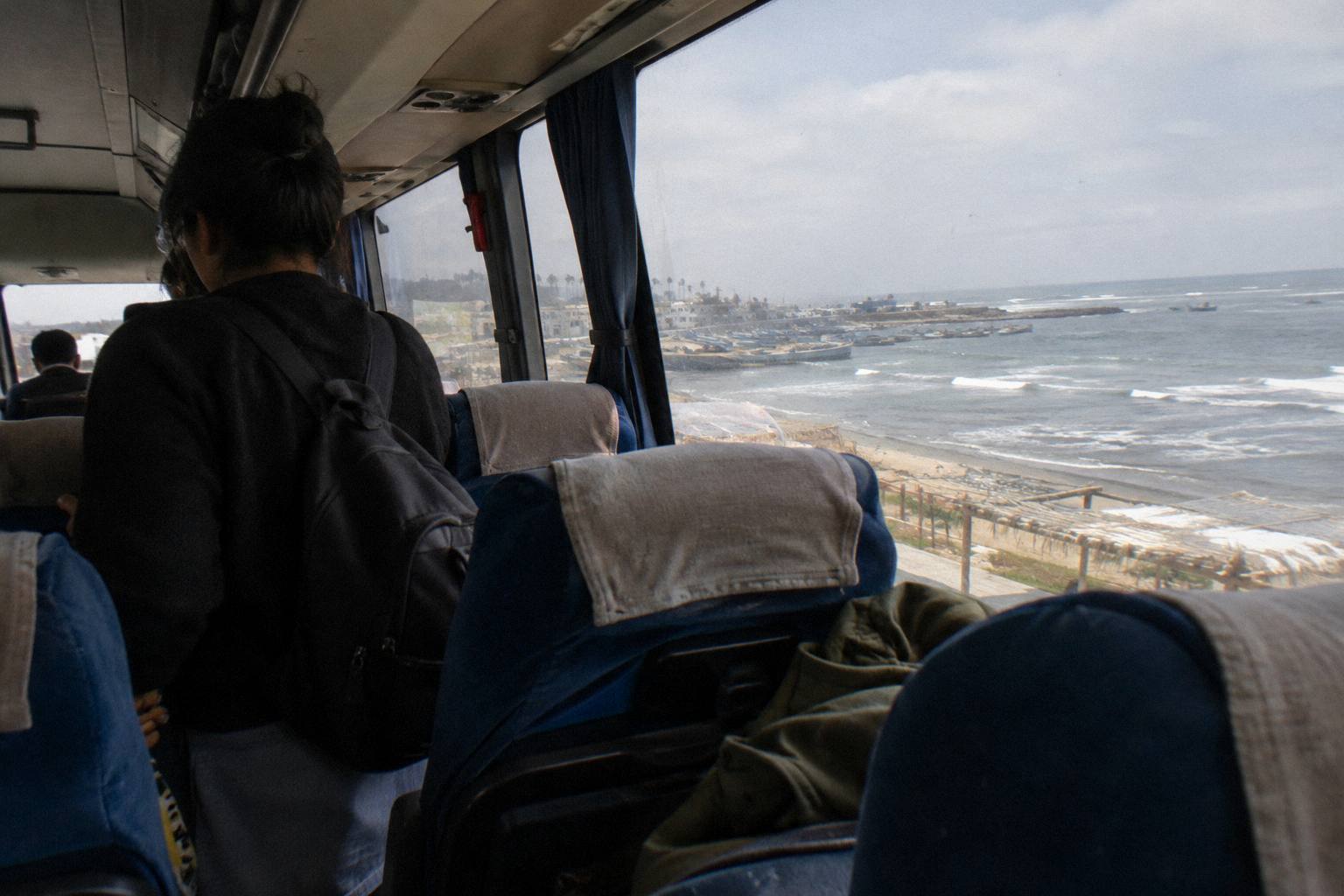
For a first taste of the tourist-ticket channel on a short route, the Wayki Bus Peru one-way tourist bus from Miraflores in Lima to Paracas, rated 4.2 across 62 reviews, drops at El Chaco in Paracas with a duration of 3 hours as the listing gives it, and free cancellation up to 24 hours before departure as listed. The figure on the live listing is the current price. See the Lima to Paracas tourist bus ticket or check availability for the current terms.
What Should You Check The Day Before Departure?
The day before the bus leaves, check three things: the road status on SUTRAN's alert map, the departure details on your ticket or listing, and the bus and driver, which SUTRAN's public lookup lets anyone verify by plate number or driver DNI. Closures appear on the map as live points, red for closed roads, yellow for restricted, green for open, and a strike that closes a highway shows up there before anywhere a traveller would organically see. The map lives at SUTRAN's road alert viewer, and the authority runs a 24 hour WhatsApp line alongside it. The UK FCDO's advice to treat demonstrations as unpredictable and to check before road travel is the frame for this: protests in Peru, the FCDO states, "are unpredictable and can escalate quickly", and its standing instruction is "Do not attempt to pass blockades." The delays, strikes and rainy season guide covers the full playbook for a disrupted departure day, and the FCDO's Peru travel advice is the primary source for the current picture.
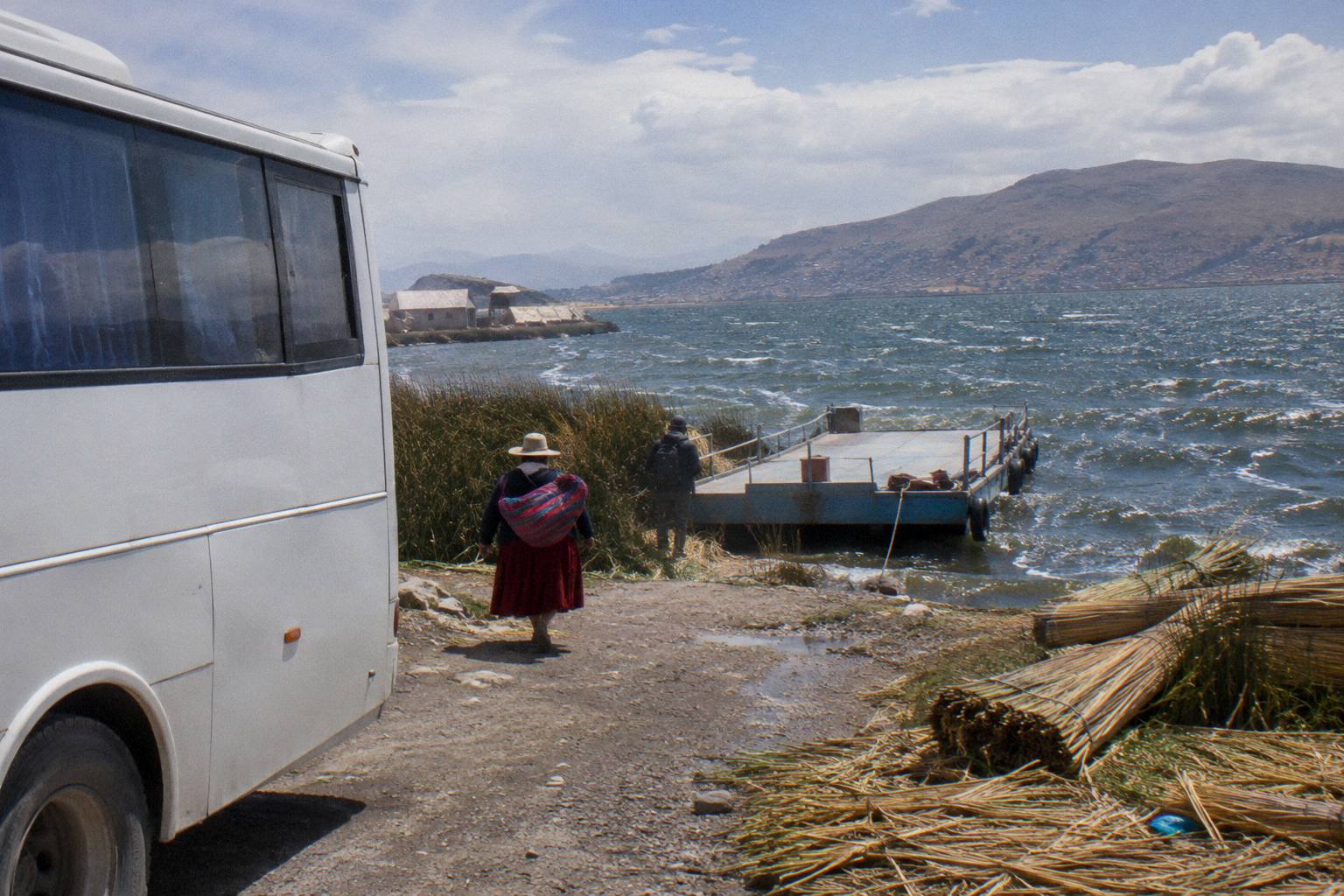
Verification of the vehicle is a step almost nobody takes and anybody can. SUTRAN's lookup at gob.pe answers a plate or a driver DNI with whether the bus and driver have their papers in order, which converts an anonymous night departure into a checked one in under a minute. Pair it with the ticket's own terminal address and the FCDO's terminal caution, "There is a risk of robbery by criminals posing as taxi drivers, especially at Jorge Chavez International Airport and bus terminals", and its instruction to "use one of the taxis registered at bus terminals", and the last mile to the terminal is as planned as the seat itself.
For the Arequipa to Puno night run, the featured ticket on this page is the Turismo Mer sleeper, a 160 degree recline night service rated 4.3 across 20 reviews, dropping in Puno after a listed duration of 7 hours, with free cancellation up to 24 hours before as listed and a boarding fee that is not included, so the boarding fee line on the listing is worth a read before travel.
Which Buying Route Suits Which Trip?
Book online with the operator when you are planning long routes ahead and want the widest class choice, book at the terminal counter for near-term departures and in-person changes, and book through a listing when you want tourist services secured before arrival, especially where free cancellation up to 24 hours before is stated. How far ahead you book, whether operators compete on the route, and whether the product exists only as a listed tourist ticket settle the choice. A solo traveller landing in Lima with a fixed itinerary loses nothing by booking the Miraflores to Paracas coach as a listing, the cancellation term protecting the plan against a shifted flight. A traveller already in Arequipa deciding between a day and a night departure to Puno can walk to the terminal and compare the same company's services face to face. A group booking Cusco to Arequipa six weeks out should work the operator sites, where the class maps and the seat picks are richest.
Common Questions About Booking Peru Bus Tickets
Can I Buy Peru Bus Tickets Online In Advance?
Yes. Operators sell their own routes on their own sites, with Cruz del Sur keeping online sales open until one hour before departure on Lima to Cusco. Tourist services are also sold through listings, the three featured on this page each carrying free cancellation up to 24 hours before departure as listed.
Is There One Main Bus Terminal In Lima?
No. Terminals in Peru are company-specific: Cruz del Sur departs from Av. Javier Prado Este 1109 in La Victoria, Oltursa from Jiron Manuel Portado 380 in Surquillo, Movil Bus from Av. Tomas Valle 651 at the Terrapuerto del Norte, and the Gran Terminal Terrestre Plaza Norte sits on the Panamericana Norte between Av. Tomas Valle and Av. Tupac Amaru. Your ticket names the building.
Can I Cancel Or Change A Peru Bus Ticket?
INDECOPI states a domestic bus ticket can be postponed or transferred with at least 24 hours notice at only the real reissue cost. Tourist listings add their own terms, the strongest being free cancellation up to 24 hours before departure for a full refund. Exceptions exist: the First Class Huaraz ticket from Lima to Huaraz is non-refundable and unchangeable as its listing states.
What ID Do I Need To Board A Bus In Peru?
For foreign passengers, the passport, presented with the ticket. The UK FCDO also advises keeping your passport with you on the bus journey. Some tickets need passport numbers and full names at booking before the operator can print them.
Are Bus Tickets In Peru Refundable If The Company Cancels?
If the company delays or fails to run the service, the passenger has the right to information and to reprogramming or a refund under the consumer rules INDECOPI enforces, and an unresolved dispute goes into the company's Libro de Reclamaciones or to INDECOPI's Reclama Virtual portal.
Should I Book A Tourist Bus Ticket Or Buy At The Counter?
Book a listing when the service is a tourist product you want secured before arrival, with the cancellation window stated up front, and buy at the counter when you are already in the city and want the day's own options. Counter buying gives a printed ticket and a fare receipt on the spot; listing buying gives English-language terms and a drop-off point named in advance.