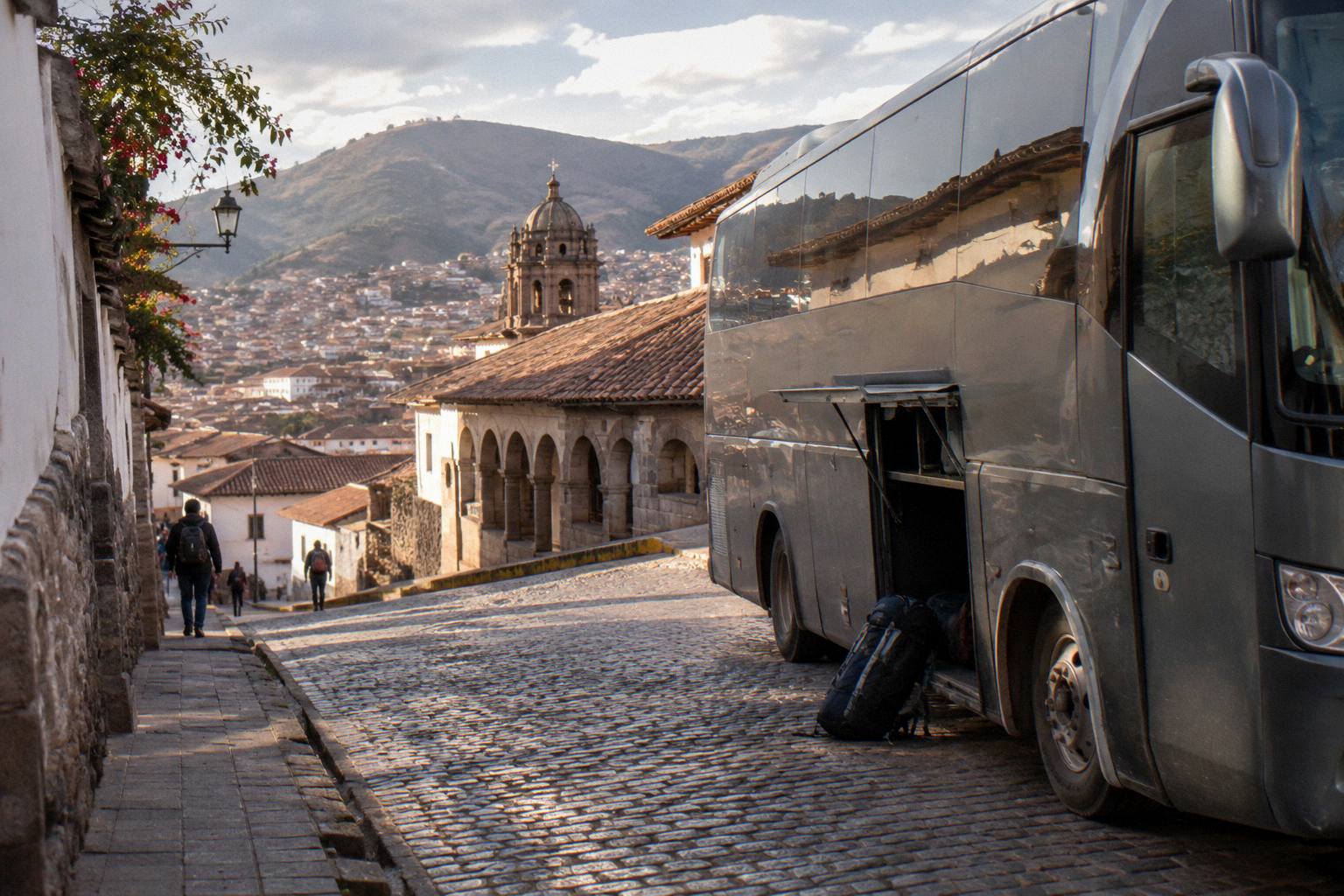
Peru Bus Companies: Oltursa, Civa And Movil Bus Compared By Route
Three of Peru's best-known bus lines, compared on the one thing that actually decides it: whether the company runs your route, and what its own pages say about the seat, the luggage and the terminal.
Short answer
Oltursa runs the southern corridor and the coast, Civa runs long north-south routes with SuperCiva recline listed at 160 degrees on the first level, and Movil Bus concentrates on Lima to Huaraz and the northern cities. Movil Bus does not serve Cusco or Arequipa as far as its pages show, so the route, not the brand, picks the line.
Peru's long-distance bus market is not one market. A company that dominates the paved southern corridor from Lima through Arequipa to Cusco can be absent entirely from the mountain road to Huaraz, and a line that runs six departures a day on the northern Panamericana can have no desk at all in Cusco. Picking between Oltursa, Civa and Movil Bus therefore starts with a map, not with a brand.
This comparison sticks to what the operators state on their own pages: the seat classes and recline degrees they publish, the luggage allowances they list, the terminal addresses they give, and the routes their network pages actually name. The same discipline applies to a fifth line, Linea, which appears here because it illustrates the pattern better than any other: a northern-network carrier, full stop.
One thing before the detail: Peru By Bus keeps these comparisons route-first because that is how Peruvian bus travel actually works. If you already know your route, jump to the corridor sections below. If you are still shaping the trip, the southern Peru bus circuit guide shows how the pieces chain together.
Which Peru Bus Company Serves Your Route?
The route decides the company, not the reverse. Oltursa's network pages show a southern and coastal spread reaching Cusco, Arequipa, Puno, Nazca, Trujillo, Chiclayo, Piura, Mancora and Tacna. Movil Bus concentrates on Lima to Huaraz, Chiclayo, Trujillo, Chachapoyas, Cajamarca, Tarapoto and Oxapampa, and does not serve Cusco or Arequipa as far as its pages show. Civa runs long north-south services along the Panamericana and into the sierra.
That last sentence deserves its own paragraph because it is the comparison travellers get wrong. People arrive in Lima having read about a favourite line, then discover it has no service to the place they are going. The Peruvian interprovincial market is regional by history: companies grew up along the corridors they still serve, and the big names in the south are frequently not the big names in the north.
Linea makes the point sharply. Its route list is Lima, Chimbote, Trujillo, Pacasmayo, Chiclayo, Piura, Huaraz, Cajamarca, Chepen and Jaen: a northern network, with no southern service listed. A traveller heading from Lima to Arequipa would find nothing on Linea's pages for that trip, while a traveller heading to Cajamarca would find exactly the right company.
A route-first check also protects you from a second error: assuming that because a company serves both endpoints of a trip, the trip is simple. Some corridors involve a pass above 4,300 m, and the Peru bus altitude sickness guide explains why that matters for how you plan the leg. Free-flow drive estimates give a sense of scale: the OSRM free-flow drive estimate for Lima to Arequipa is 14.3 hours over 1,002 km, and for Arequipa to Cusco 9.4 hours over 487 km, figures real bus journeys exceed because they include stops, checkpoints and mountain roads.
| Route family | Oltursa | Civa | Movil Bus | Linea |
|---|---|---|---|---|
| Lima to Arequipa, Cusco, Puno (south) | Listed | Listed | Not served | Not served |
| Lima to Paracas, Ica, Nazca | Listed | Listed | - | Not served |
| Lima to Trujillo, Chiclayo, Piura (north coast) | Listed | Listed | Listed | Listed |
| Lima to Huaraz | Listed | Listed | Listed | Listed |
| Lima to Cajamarca, Chachapoyas | - | Listed | Listed | Listed |
| Lima to Tarapoto, Oxapampa (central/jungle) | - | - | Listed | - |
The table reads down the operator pages, not across marketing claims. "Not listed" means the operator's own route pages do not name the pair; before booking a leg the table marks grey, check the operator's booking search directly.
How Do Oltursa, Civa And Movil Bus Differ?
Oltursa sells two tiers, economico and bus cama VIP, states no recline degrees, and lists 20 kg of hold luggage plus one hand piece up to 5 kg. Civa publishes a two-level SuperCiva layout, 160 degrees on the first level and 140 on the second. Movil Bus publishes four classes from 120 to 180 degrees, a 20 kg hold allowance in up to three pieces, plus 8 kg of hand luggage in up to two pieces.
Those are the operator-stated differences, and those are the ones printed here. Oltursa's own terms page says its tariffs are "referenciales" and move with the season, which is why no fare belongs in a comparison like this: any number printed today would mislead someone booking a month from now. Civa's luggage allowance and onboard GPS status are not on its own site, so this comparison leaves them out entirely rather than guessing.
Movil Bus is the most specific of the three on classes. Its service page names Economico at 120 degrees, Ejecutivo VIP at 140 or 160, Presidencial at 160, and Premier at 160 on the first level with a "full flat" 180 on the second, alongside GPS monitoring and speed control. That gradient matters on a long northern leg: the difference between 120 and 160 degrees over a mountain road at night is the difference between arriving rested and arriving wrecked, and the overnight bus in Peru guide covers how to judge it.
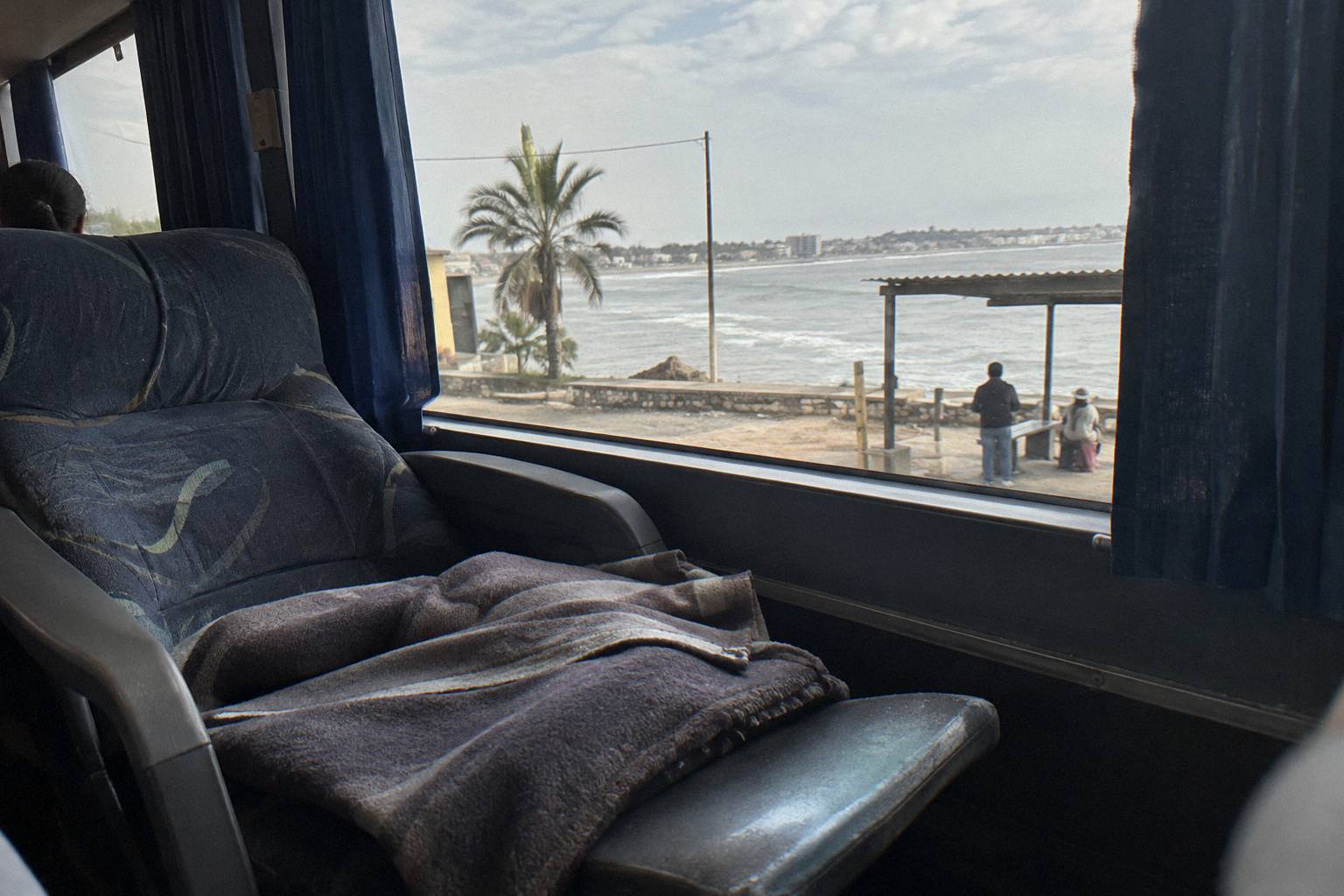
For context, Cruz del Sur, covered in detail in the Cruz del Sur guide, lists reclining seats at 180 degrees, a Suite seat at 160 degrees on Lima to Cusco, a pilot change every four hours, medical checks and alcohol tests, DNI control with a metal detector, and GPS satellite monitoring, with 20 kg of hold luggage plus 6 kg of hand luggage. Its comfort page states those terms itself. That sets the bar the three lines here are measured against.
What Seat Classes Does Each Operator Actually List?
Movil Bus lists four classes from 120 to 180 degrees, Civa lists SuperCiva at 160 degrees first level and 140 second, and Oltursa lists economico and bus cama VIP with no recline degrees published at all. Linea lists Super VIP at 180 degrees "tipo cama", VIP at 160 "sofa cama", Dorado at 160 and Especial at 145. Recline degrees are marketing measurements on the operator's own page, and this comparison prints them only where the operator itself states them.
The honest way to read a recline number is as a class indicator, not an engineering fact. One company's 160 is measured from a different point than another's, and no independent body verifies either. What the numbers reliably tell you is the ordering inside one company's range: on Movil Bus, Premier outranks Economico, and on Linea, Super VIP outranks Especial. Comparing 160 degrees across two different companies is close to meaningless.
| Operator | Class | Recline stated by operator |
|---|---|---|
| Movil Bus | Economico | 120 degrees |
| Movil Bus | Ejecutivo VIP | 140 or 160 degrees |
| Movil Bus | Presidencial | 160 degrees |
| Movil Bus | Premier | 160 first level, 180 "full flat" second level |
| Civa | SuperCiva | 160 first level, 140 second level |
| Oltursa | economico | No degrees stated |
| Oltursa | bus cama VIP | No degrees stated |
| Linea | Super VIP | 180 degrees, "tipo cama" |
| Linea | VIP | 160 degrees, "sofa cama" |
| Linea | Dorado | 160 degrees |
| Linea | Especial | 145 degrees |
Linea's own service page adds that Wi-Fi and streaming are "sujeto a disponibilidad del operador", subject to the operator's availability, a phrasing worth noticing because it is rarer than the claim it qualifies. A bus listed with Wi-Fi in Peru may or may not have working Wi-Fi on your departure; an operator that says so plainly is doing you a favour.
If your trip includes the southern corridor, a tourist-class alternative sits outside this table altogether: the direct bus from Cusco to Arequipa, rated 3.7 across 16 reviews, where the listing names a Cruzero Suite 160 degree seat and gives a duration of 10 hours. You can also Check availability, and the bus tours versus independent bus travel guide weighs when a tourist bus beats a scheduled line.
How Much Luggage Can You Bring On Each?
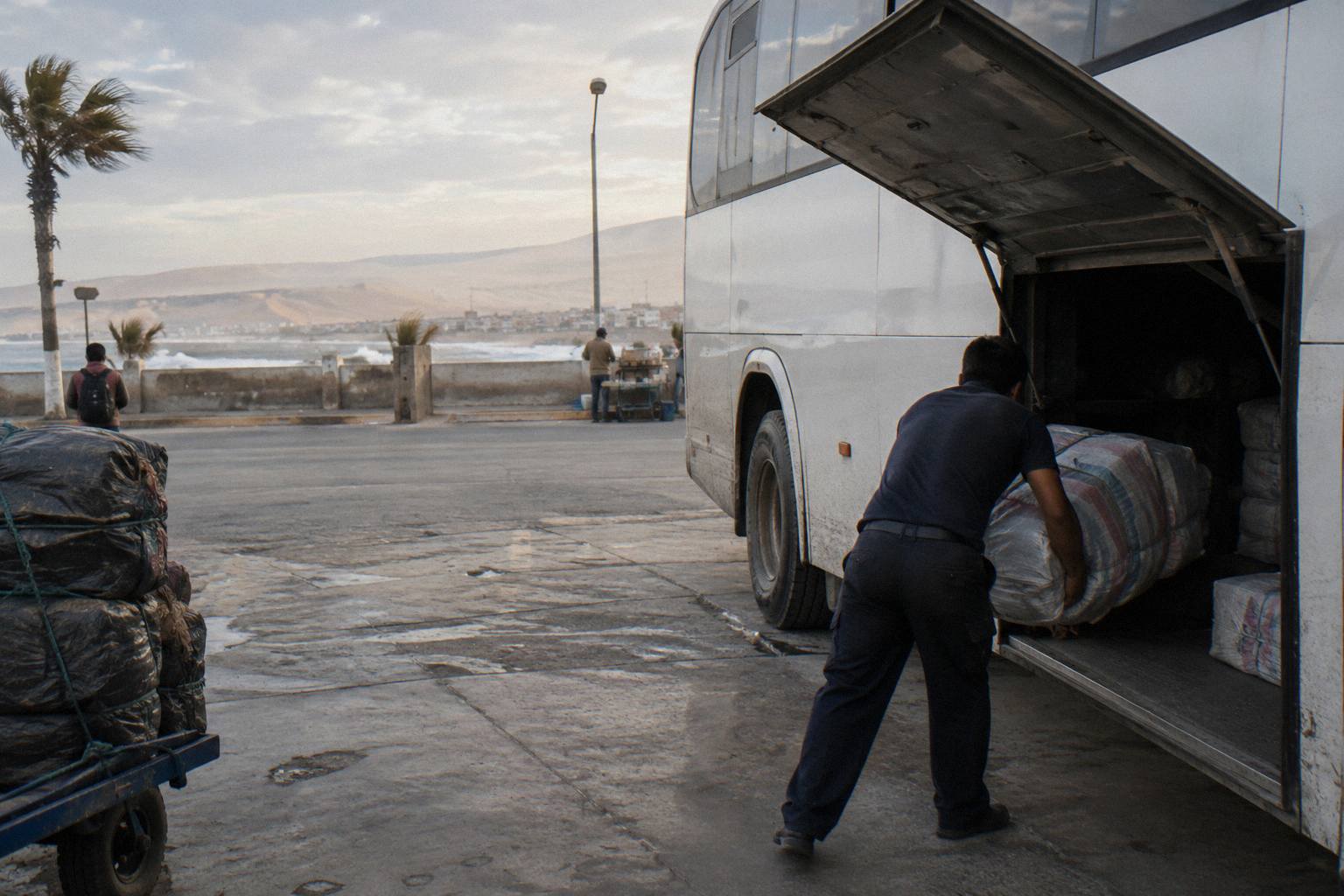
Most companies allow 20 kg in the hold: Movil Bus splits that across up to three pieces plus 8 kg of hand luggage in up to two pieces, Oltursa adds one hand piece up to 5 kg, and Linea simply allows 20 kg, while Civa's own pages state no allowance. Whatever the company, up to 20 kg travels free on national bus service under Peru's passenger-rights framework, and a fare receipt is the passenger's right.
The 20 kg figure repeating across operators is not a coincidence, it is the national baseline those allowances are built around. What differs is the hand-luggage policy and how many pieces the hold allowance can be split into, which matters if you travel with a backpack plus a duffel rather than one suitcase. Movil Bus is the most permissive of the three on piece counts.
| Operator | Hold luggage (operator-stated) | Hand luggage (operator-stated) |
|---|---|---|
| Oltursa | 20 kg | One piece up to 5 kg |
| Movil Bus | 20 kg, up to 3 pieces | 8 kg, up to 2 pieces |
| Linea | 20 kg | Check the operator's page |
| Civa | Check the operator's page | Check the operator's page |
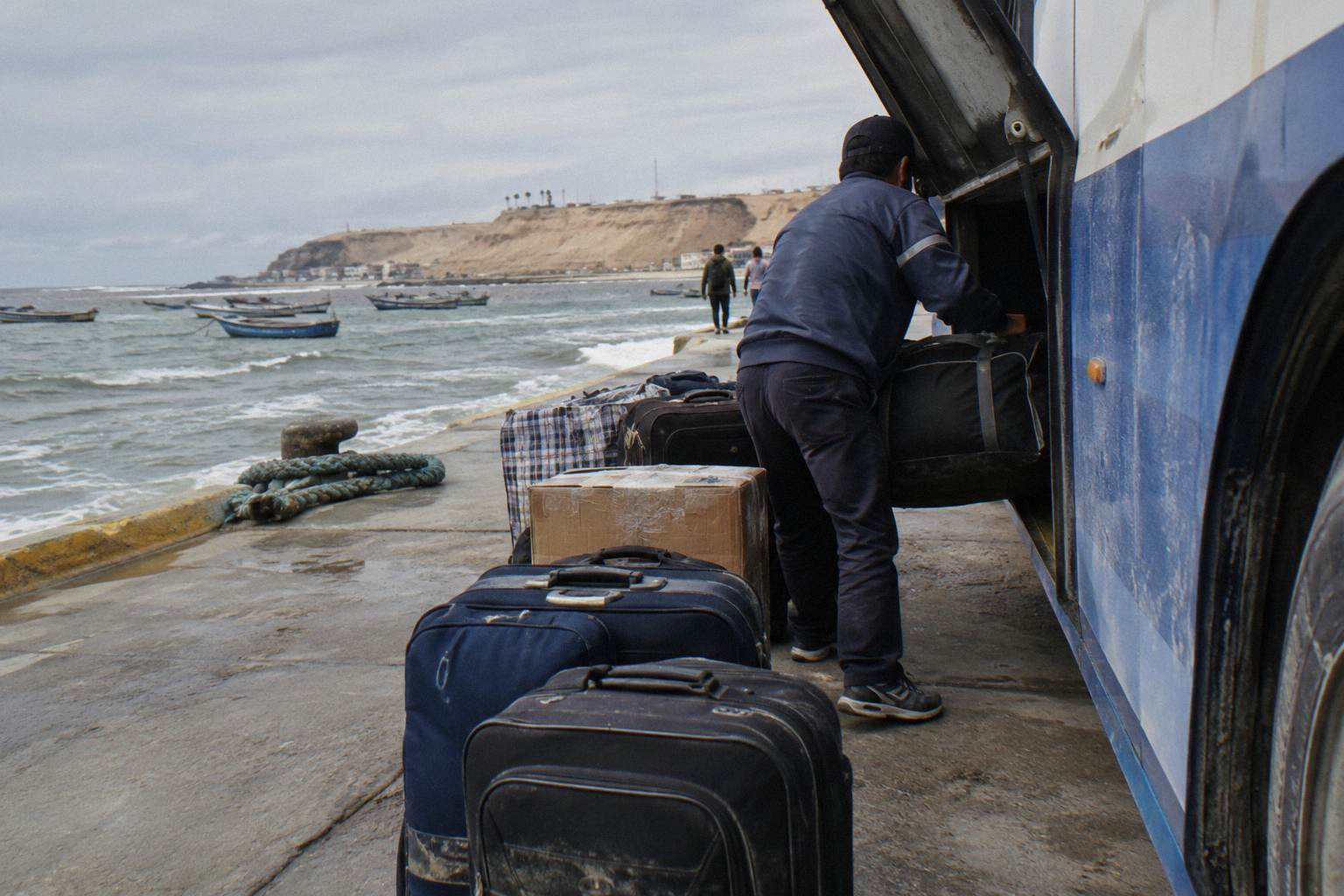
SUTRAN advises passengers to get a luggage ticket for hold bags, and the regulation says hold luggage travels in the hold and overhead racks, never in the aisle or by the exits. Loss or damage from the carrier's fault carries a minimum compensation tied to a share of the fare by weight band. The practical habits that follow from all this, including what to keep on your body rather than in the hold, are laid out in the Peru bus luggage and theft guide.
Where Does Each Bus Leave From?
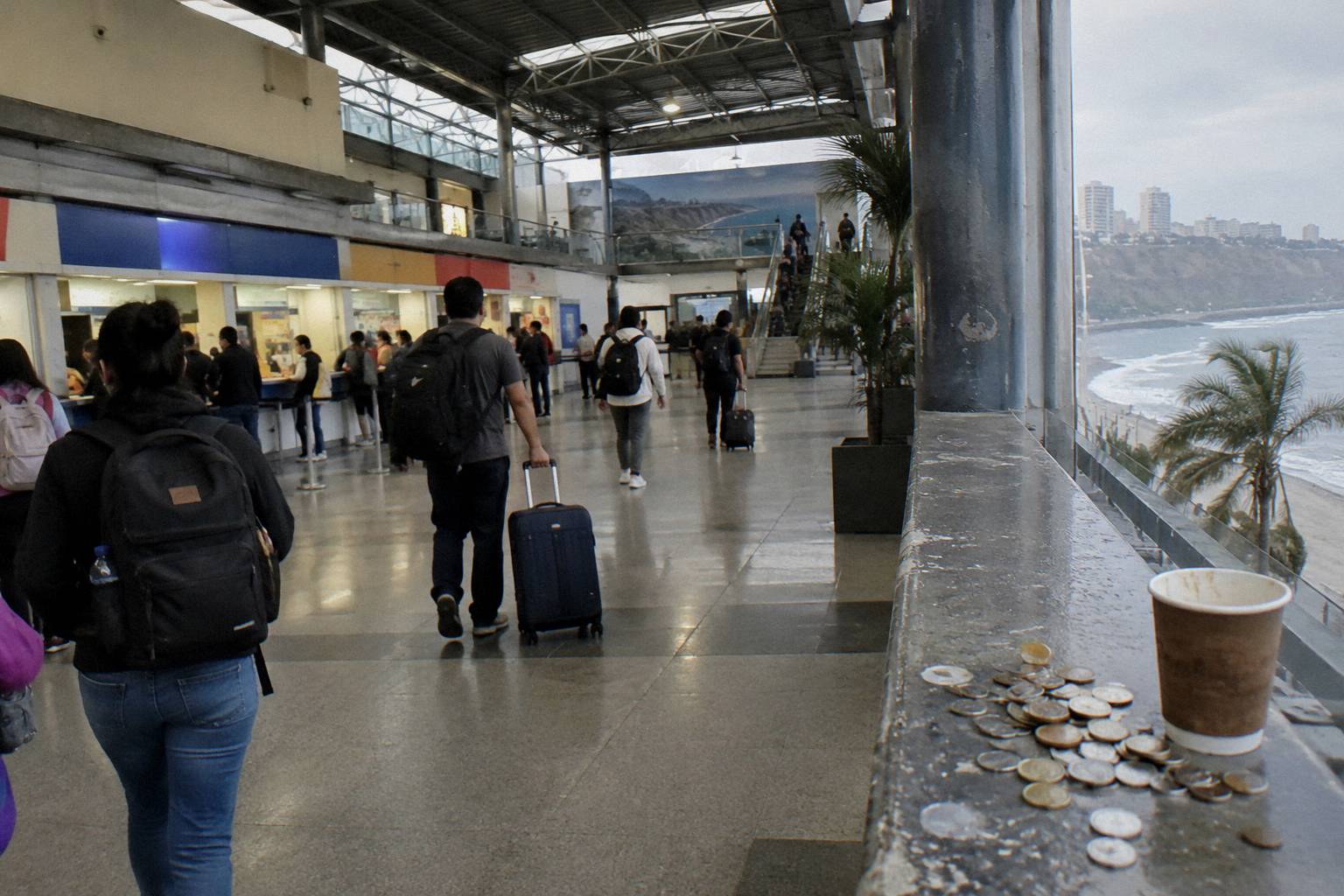
Peru has no single main terminal per city, so every bus leaves from the company's own departure point: Oltursa departs Lima at Jiron Manuel Portocarrero 380 in Surquillo, Movil Bus leaves from Av. Tomas Valle 651 at the Terrapuerto del Norte, and Civa uses both Av. Paseo de la Republica 569 and Av. Javier Prado Este 1155. Two Lima stops can sit an hour apart in traffic, so the terminal shapes your plans as much as the schedule.
The plural-terminal reality surprises visitors most on arrival. Lima's Gran Terminal Terrestre Plaza Norte sits on the Panamericana Norte between Av. Tomas Valle and Av. Tupac Amaru beside the Plaza Norte mall, and different companies use it, their own terminals, or both. Yerbateros, another Lima boarding zone, has no street address on the terminal pages this comparison draws from, so none is printed.
| City | Operator | Address as the operator lists it |
|---|---|---|
| Lima | Oltursa | Jiron Manuel Portocarrero 380, Surquillo |
| Lima | Movil Bus | Av. Tomas Valle 651, Terrapuerto del Norte, SMP |
| Lima | Civa | Reported: Av. Paseo de la Republica 569 (EconoCiva, SuperCiva); Av. Javier Prado Este 1155 (Excluciva) |
| Lima | Cruz del Sur | Av. Javier Prado Este 1109, Urb. Santa Catalina, La Victoria |
| Huaraz | Movil Bus | Av. Confraternidad Internacional Oeste 451, Independencia |
| Huaraz | Linea | Jr. Simon Bolivar 450 |
| Huaraz | Cruz del Sur | Jr. Teresa Gonzales de Faning 457 |
| Cusco | Oltursa | Terminal Terrestre, Av. Industrial 24, Urb. Huancaro |
| Cusco | Cruz del Sur (arrival) | Terminal Terrestre Cusco, Av. Vallecito 538 |
| Arequipa | Cruz del Sur | Terrapuerto, Av. Arturo Ibanez S/N, Pab. B |
| Puno | Cruz del Sur | Jr. 1 de Mayo 703-705, Barrio Cesar Vallejo |
| Trujillo | Linea | Av. America Sur 2857 |
| Trujillo | Oltursa | Av. del Ejercito 342, Urb. El Molino |
| Trujillo | Cruz del Sur | Av. Amazonas 437 |
| Chiclayo | Linea | Av. Francisco Bolognesi 638 |
| Chiclayo | Oltursa | Av. Vicente de la Vega 101 |
| Chiclayo | Cruz del Sur | Av. Bolognesi 888 |
| Nazca | Oltursa | Calle Lima 155, Of. 03 |
| Nazca | Cruz del Sur | Esquina Lima y San Martin s/n |
| Mancora | Oltursa | Av. Grau 509 |
Civa's Lima addresses carry the word "reported" deliberately: they come from archived footer material rather than a live street listing on the company's own current pages. Before travelling to any address in this table, confirm it on the operator's own site, because companies move counters inside shared terminals. The Peru bus terminals by city guide expands on the same discipline city by city.
One regulation stands behind all of this: regular carriers must use habilitated terminals at origin, destination and stops, the public road may not be used as a terminal, and passengers board only at authorised points with the bus stopped. The curb-side "terminal" a tout offers you is not one.
Who Runs The Southern Corridor To Cusco And Puno?
The south is Oltursa and Civa territory among the three compared here, with Cruz del Sur alongside them; Movil Bus does not serve Cusco or Arequipa, and Linea's network stops at the northern cities. The OSRM free-flow drive estimates: Cusco to Arequipa 9.4 hours over 487 km, Arequipa to Puno 5.5 hours over 273 km, Puno to Cusco 6.2 hours over 387 km. Real bus journeys exceed every one of them.
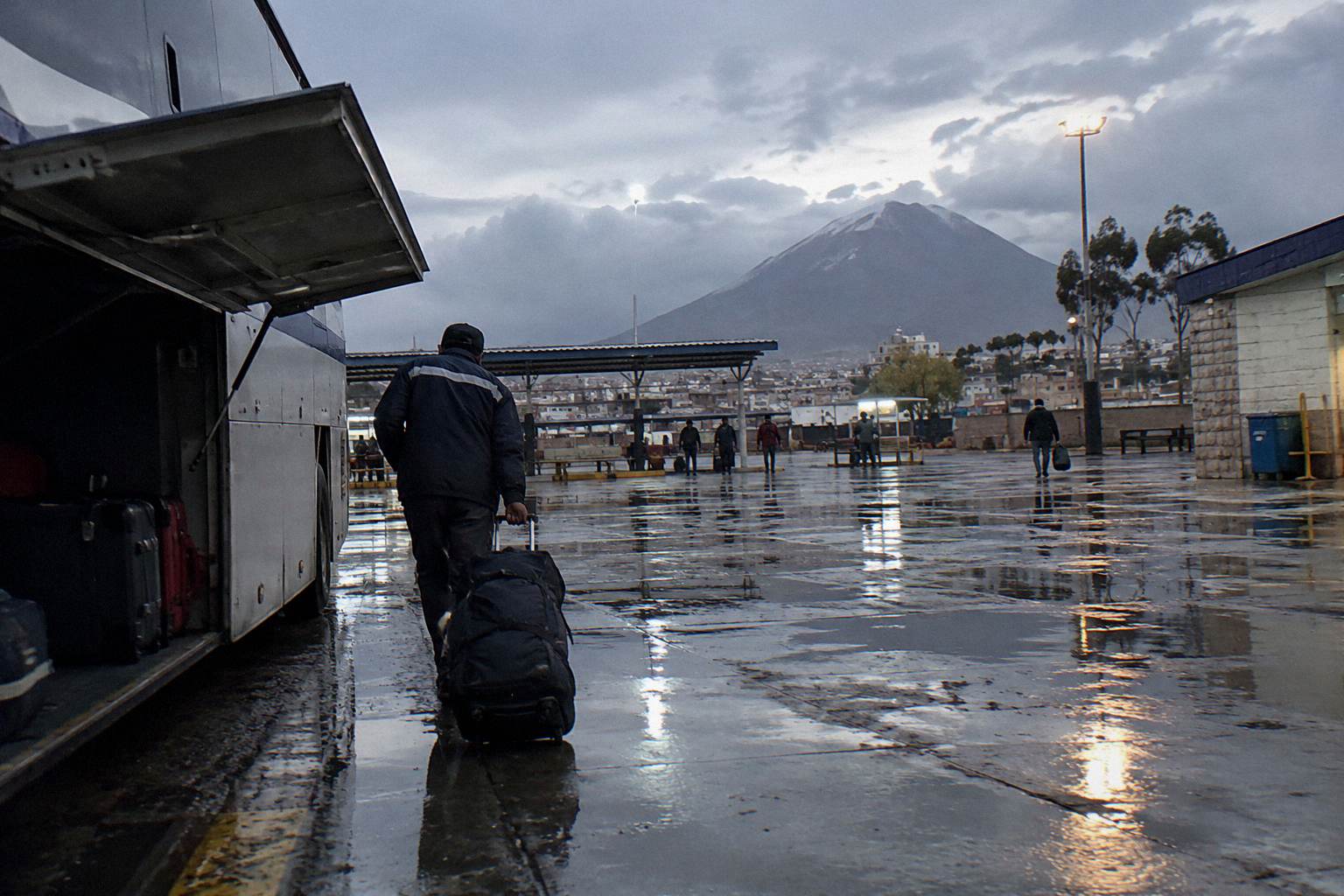
Those three legs are the spine of a southern circuit, and they are also where seat class earns its price, because the road crosses high ground: the pass near La Raya on the Puno to Cusco road sits at about 4,300 m. A listed 160 degree seat and a driver rotation system matter more on that road than on the flat Panamericana.
The tourist-bus layer on this corridor is worth knowing alongside the scheduled lines. The World Explorer Peru direct bus from Cusco to Arequipa, rated 3.7 across 16 reviews, lists 10 hours and a Cruzero Suite 160 degree seat, with free cancellation up to 24 hours before departure for a full refund as listed.
North of Arequipa, the Turismo Mer sleeper bus from Arequipa to Puno, rated 4.3 across 20 reviews, lists 7 hours with a 160 degree recline on a night service; the terminal boarding fee is listed as not included, so check the boarding fee line on the listing. It carries the same free-cancellation terms up to 24 hours before departure.
And closing the triangle, the Turismo Mer bus from Puno to Cusco with a lunch stop, rated 4.6 across 24 reviews, lists 11 hours and drops at the Terminal Privado Turismo Mer in Cusco. More on when a tourist bus makes sense on this corridor sits in the Cusco to Machu Picchu by bus via Hidroelectrica guide, which covers the back-door leg these southern buses connect to.
Who Runs The North And The Road To Huaraz?
Movil Bus and Linea are the northern specialists among these lines, and both reach Huaraz: Movil Bus from Av. Tomas Valle 651 in Lima to Av. Confraternidad Internacional Oeste 451 in Huaraz, Linea from Lima to Jr. Simon Bolivar 450. The OSRM free-flow drive estimate for Lima to Huaraz is 5.5 hours over 402 km, a figure the real mountain journey exceeds; Oltursa also lists the route, and Civa lists northern service along the Panamericana.
The Huaraz road leaves the coast and climbs past the Conococha pass, listed at 4,087 m in INEI's 2022 compendium, into the Callejon de Huaylas at 3,073 m. Huaraz itself sits higher than Cusco at about 3,400 m, which surprises travellers who budget acclimatisation days for the south and none for the north. The Lima to Huaraz bus guide covers the route in full.
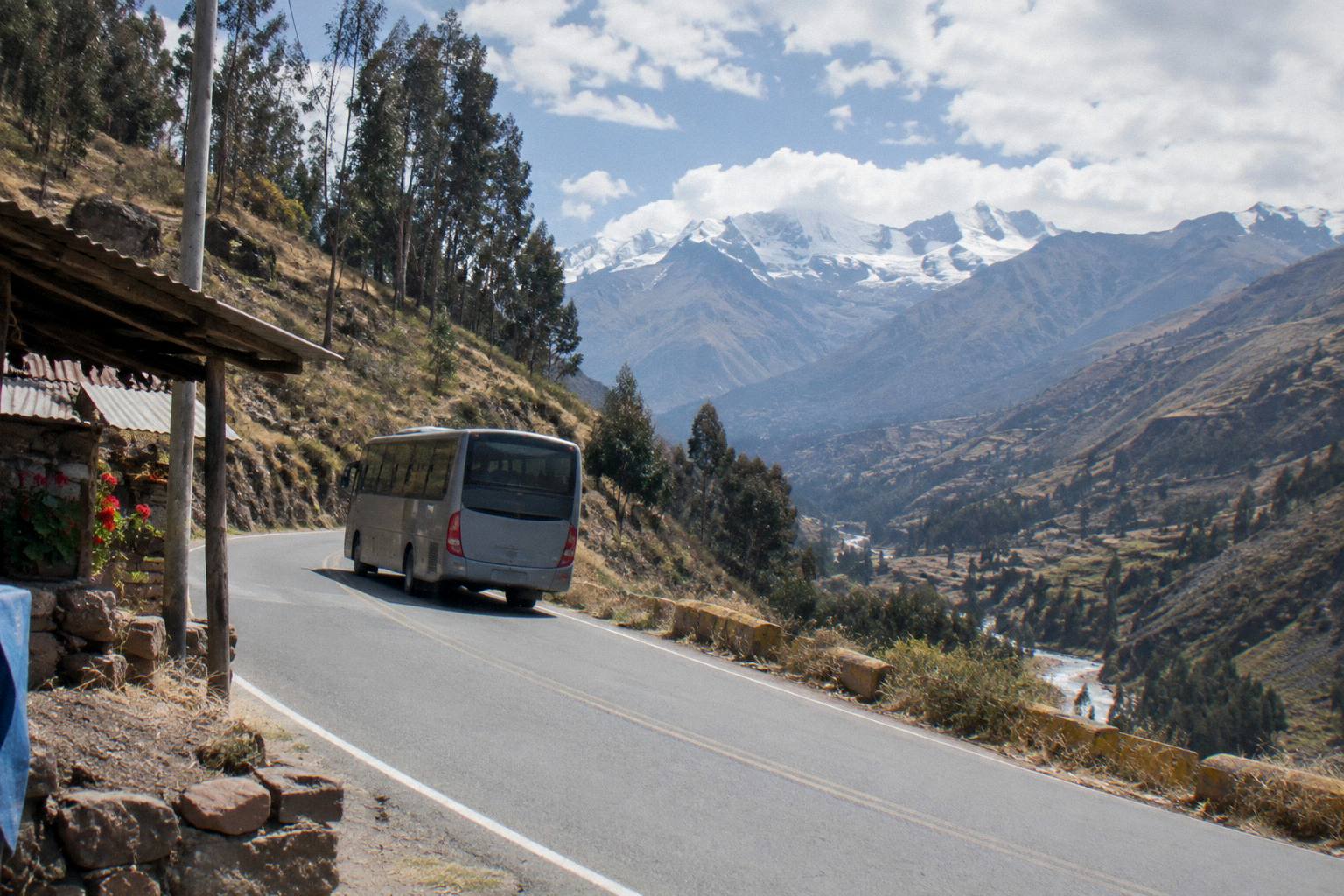
North of Trujillo the network picture tightens. Linea runs Lima, Chimbote, Trujillo, Pacasmayo, Chiclayo, Piura, Huaraz, Cajamarca, Chepen and Jaen, and Movil Bus concentrates on Lima to Huaraz, Chiclayo, Trujillo, Chachapoyas, Cajamarca, Tarapoto and Oxapampa. Tarapoto is the outlier worth flagging: among the lines compared here, Movil Bus's pages are the ones that name it, covered in the Lima to Tarapoto bus guide. Free-flow drive estimates give the scale: Lima to Trujillo 9.1 hours over 557 km, Trujillo to Chiclayo 3.2 hours over 199 km, Chiclayo to Chachapoyas 7.0 hours over 450 km, Trujillo to Cajamarca 4.1 hours over 290 km.
Linea's safety page lists GPS position and speed control, alcohol testing, driver rest verification and seat-belt control, and Movil Bus states GPS monitoring and speed control for its fleet. Neither publishes a pilot-rotation interval, and this comparison does not infer one.
How Do You Check A Bus Before You Board?
SUTRAN, Peru's transport authority, runs a public lookup where any bus and driver can be checked by plate number or driver DNI, plus a 24-hour road alert map that shows closed roads in red, restricted in yellow and open in green. The FCDO states plainly: "Bus crashes are common, especially at night. Only use reputable transport companies, and where possible, avoid overnight travel, especially in mountainous and remote regions."
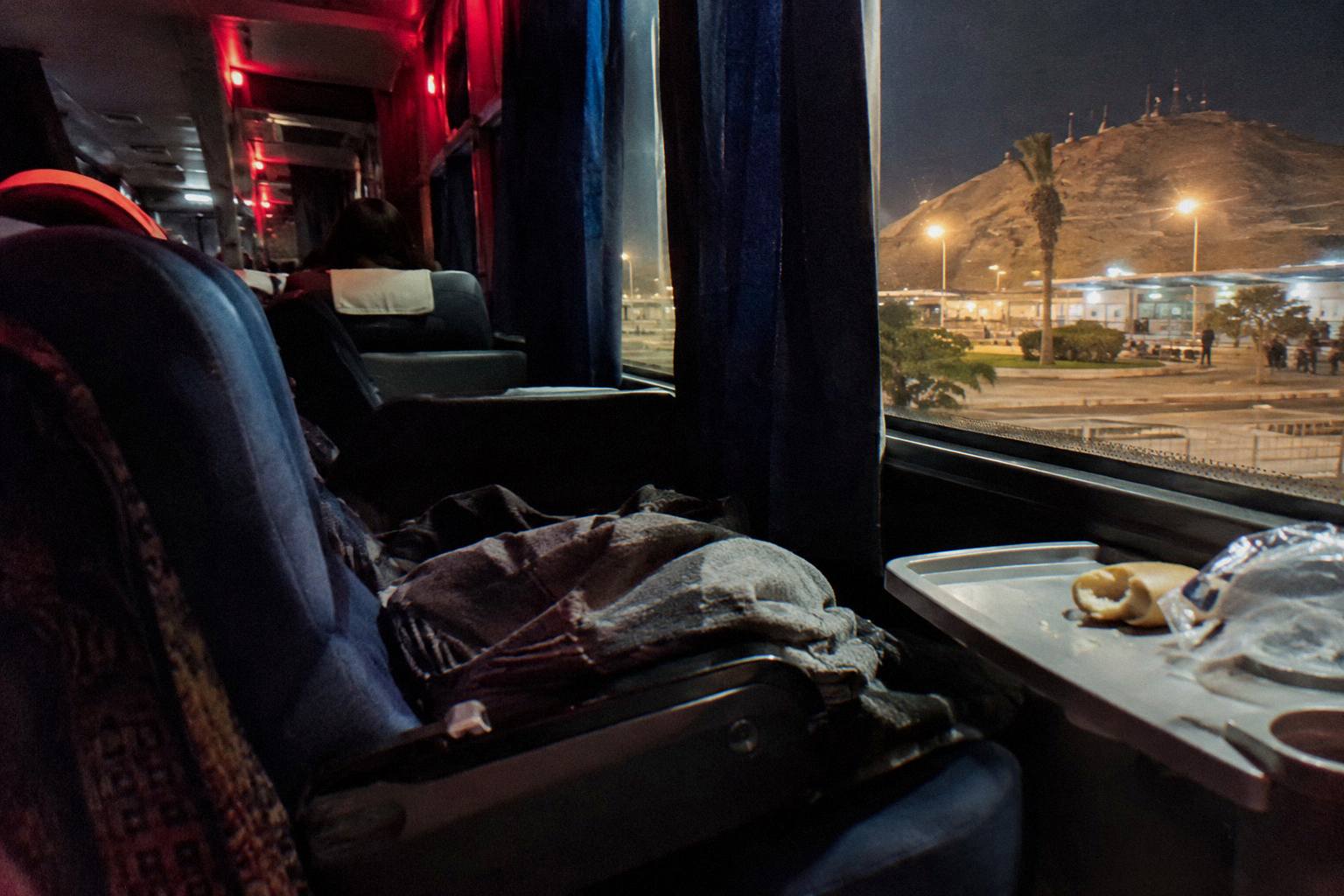
That verbatim sentence is the honest core of any safety discussion of Peruvian buses, and no page comparing companies should soften it. Canada's advisory adds: "Intercity bus travel can be dangerous due to the risk of bus accidents, which are usually caused by excessive speed, poor vehicle maintenance and driver fatigue. Armed gangs have been known to stop buses to rob travellers, especially at night," alongside the instruction to "Avoid taking buses and coaches at night". Smartraveller reports "Robberies and assaults occur frequently on intercity buses, including while passengers are sleeping."
The tools that follow from this are practical. SUTRAN's bus and driver lookup lets you confirm the vehicle's papers before boarding, and the SUTRAN alert map shows live road status, with a 24-hour WhatsApp line at 999 382 606. Regulation adds a speed rule worth knowing: SUTRAN states that the 90 km/h limit for interprovincial buses applies only on roads without other speed signs, and Peru's national transit regulation caps continuous driving at 5 hours by day and 4 at night, requiring a second driver beyond that and a third over 20 hours. Cruz del Sur, for its part, lists a pilot change every four hours.
The US Embassy in Lima republishes the State Department advisory at Level 2, Exercise Increased Caution, and notes that US government employees "may travel at night with commercial bus companies along the Pan-American Highway, to Huaraz, and on the Lima-Arequipa-Cusco corridor", a corridor-specific detail in the Peru bus safety guide.
What If The Bus Breaks Down, Strikes Or Overbooks?
INDECOPI states that a domestic bus ticket can be postponed or transferred with 24 hours' notice at only the real cost of reissuing, with no penalty, and that delay or non-compliance by the company gives the passenger the right to information and to reprogramming or a refund. Strikes and road blockades have no national advance register; the FCDO warns "Political protests in Peru are unpredictable and can escalate quickly" and "Do not attempt to pass blockades."
The transfer rule is the single most useful passenger right for route-based planning, because it means a changed itinerary does not have to mean a dead ticket. Complaints go first to the carrier's Libro de Reclamaciones, which has 15 working days to answer, then to INDECOPI, reachable on 224 7777 in Lima, 0800 4 4040 in the regions, or through its online claims portal.
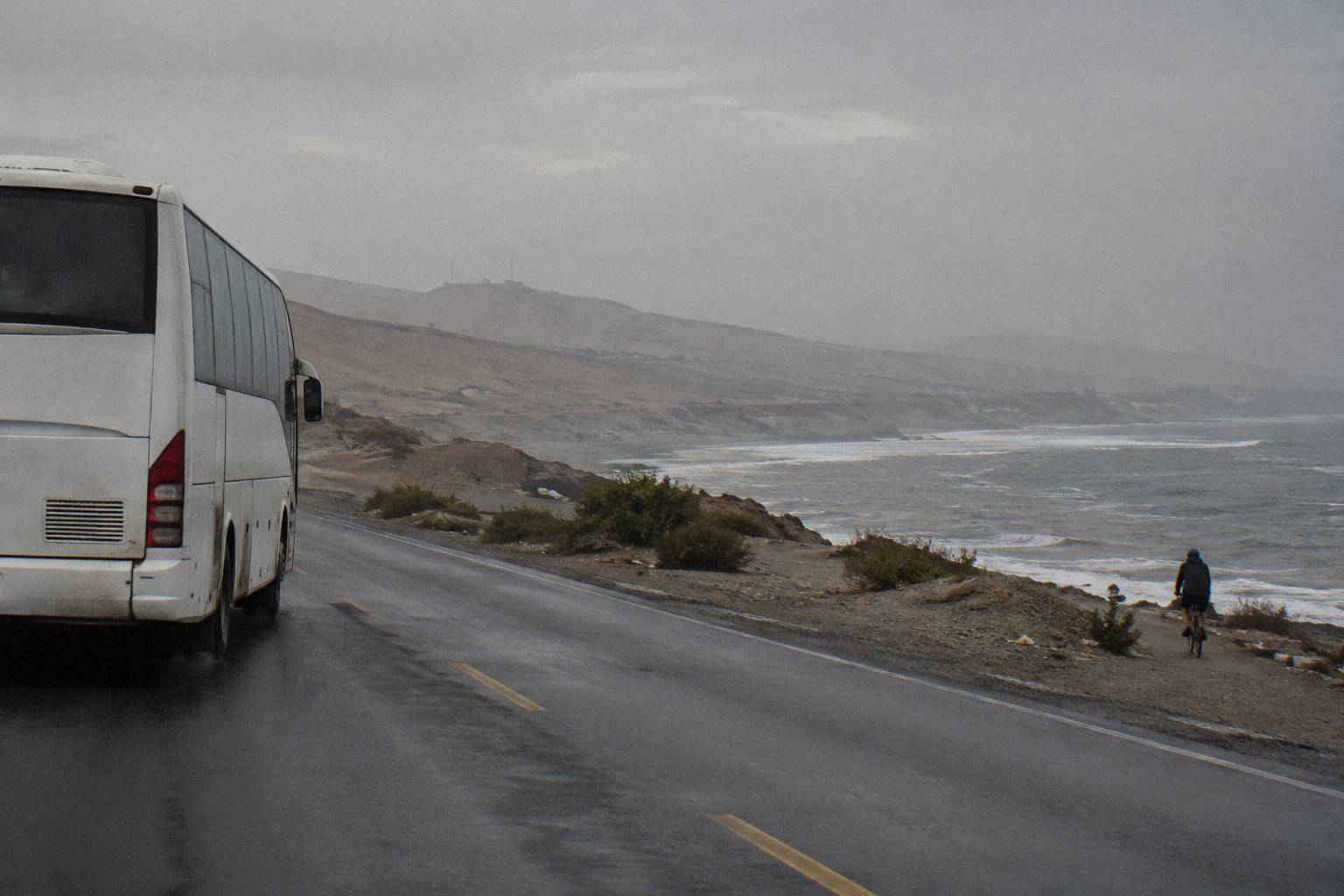
Blockades are the disruption no passenger right fixes, only planning does. The FCDO names Arequipa, Ayacucho, Cusco, La Libertad, Madre de Dios and Puno as regions with recent protests, and Canada notes "Roadblocks are frequently erected during demonstrations". The practical routine, checking the SUTRAN map and the carrier the day before a leg, is set out in the Peru bus delays and road blockades guide.
On the coast, add weather to the checklist: the FCDO states "Through late 2026 to April 2027, the El Nino weather event is expected to generate heavy rainfall, possible flooding, landslides, and mudslides, especially in, but not restricted to, the northern and central coast. These could cause travel disruption, such as road closures."
So Which Line For Your Leg?
Match the company to the corridor and the class to the hours. South to Arequipa, Cusco or Puno: Oltursa or Civa among these three, or the tourist buses on the same corridor. North coast or Huaraz: Oltursa, Movil Bus or Linea, with Movil Bus the one whose pages name Tarapoto and Chachapoyas. For a long night leg, buy the class with the biggest recline the operator actually states, and check the bus on SUTRAN's lookup the day before.
That is the whole method. Route first, class second, terminal third, and verification last. No ranking sits in this comparison because the operator pages themselves do not support one: Oltursa publishes the least on seats, Movil Bus the most, and the difference tells you about publishing habits as much as about buses. What the pages do support is the route table, the luggage table and the terminal addresses above, and those three answer the question a ticket buyer actually asks.
For the booking step itself, including when to buy and what a "referencial" tariff means for timing, the Peru bus tickets booking guide closes the loop, and the how Peru bus travel works guide is the place to start if any of the vocabulary here was new.
Common Questions About Peru Bus Companies
Which Is Better, Oltursa Or Civa?
No ranking is possible from operator pages alone. Oltursa lists two classes and a 20 kg hold allowance plus one hand piece up to 5 kg but states no recline degrees; Civa lists SuperCiva at 160 degrees first level and 140 second, and states no luggage allowance on its own pages. Pick by route coverage and by the class each states for your leg.
Does Movil Bus Go To Cusco Or Arequipa?
No. Movil Bus's pages do not show service to Cusco or Arequipa; its network concentrates on Lima to Huaraz, Chiclayo, Trujillo, Chachapoyas, Cajamarca, Tarapoto and Oxapampa. For the southern corridor, Oltursa and Civa are the two compared here that list it.
How Much Luggage Can I Bring On Oltursa, Movil Bus Or Civa?
Oltursa allows 20 kg in the hold plus one hand piece up to 5 kg. Movil Bus allows 20 kg in the hold split across up to three pieces plus 8 kg of hand luggage in up to two pieces. Civa's own pages state no allowance, so check the operator's page before packing to its limits.
Are Overnight Buses In Peru Advisable?
Government advice is specific and verbatim: the FCDO states "Bus crashes are common, especially at night" and advises avoiding overnight travel "especially in mountainous and remote regions", while Canada says "Avoid taking buses and coaches at night".
How Can I Check A Peruvian Bus Company Before Booking?
SUTRAN, the national transport authority, runs a public lookup by plate number or driver DNI to confirm a bus and driver have their papers in order, plus a live road alert map with a 24-hour WhatsApp line. Both are free and take minutes to use the day before a long leg.
Can I Change A Domestic Bus Ticket In Peru?
Yes. INDECOPI states a domestic bus ticket can be postponed or transferred with 24 hours' notice at only the real cost of reissuing, with no penalty, and if the company delays or fails to run the service the passenger has the right to reprogramming or a refund.