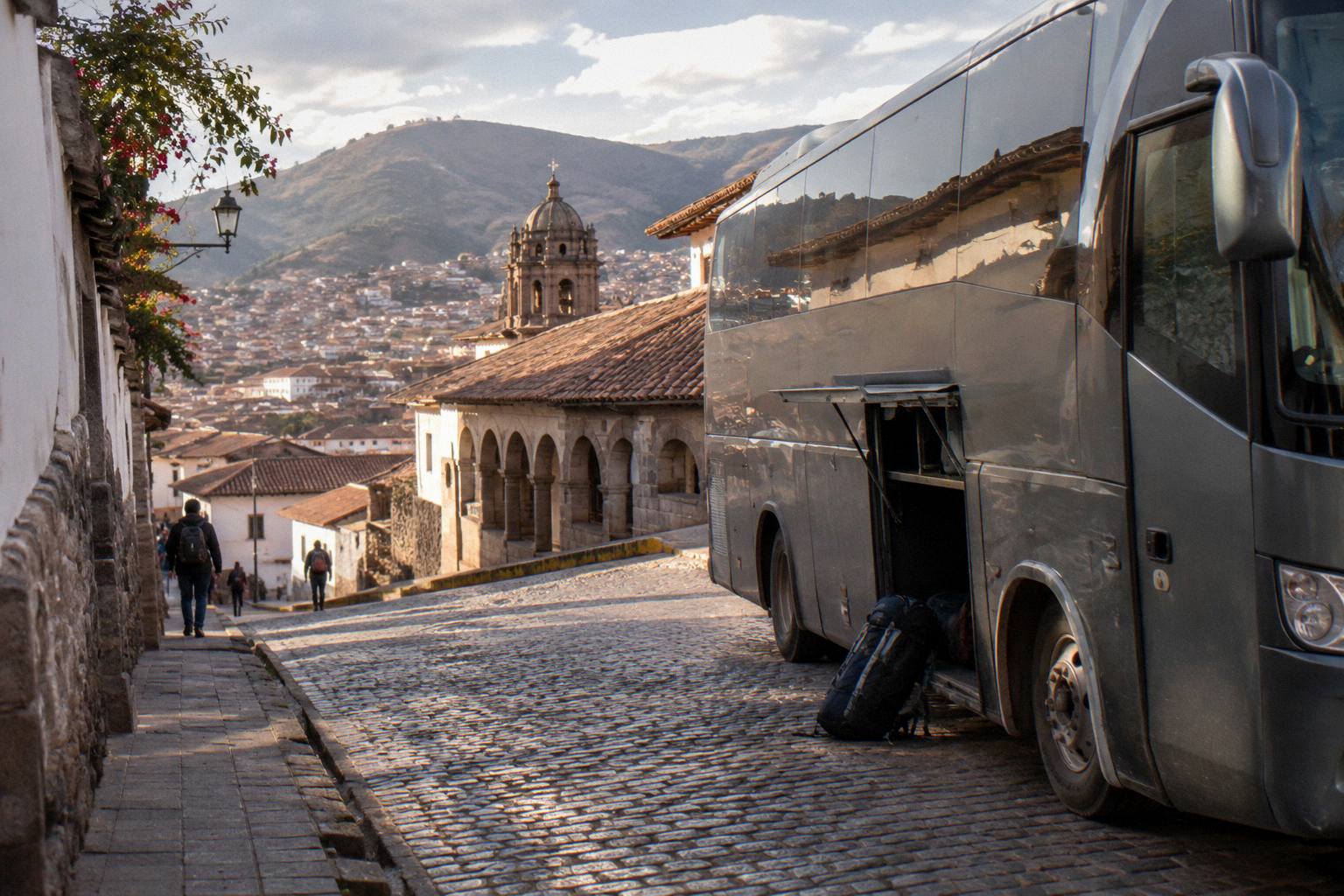
Peru Bus Safety: Night Travel, Theft, Crashes And Safer Companies
Four governments publish specific advice about Peru's intercity buses, and Peru's own transit regulation sets rules on speed, drivers and terminals. Here is what each says, verbatim where it matters, and what a passenger can check before boarding.
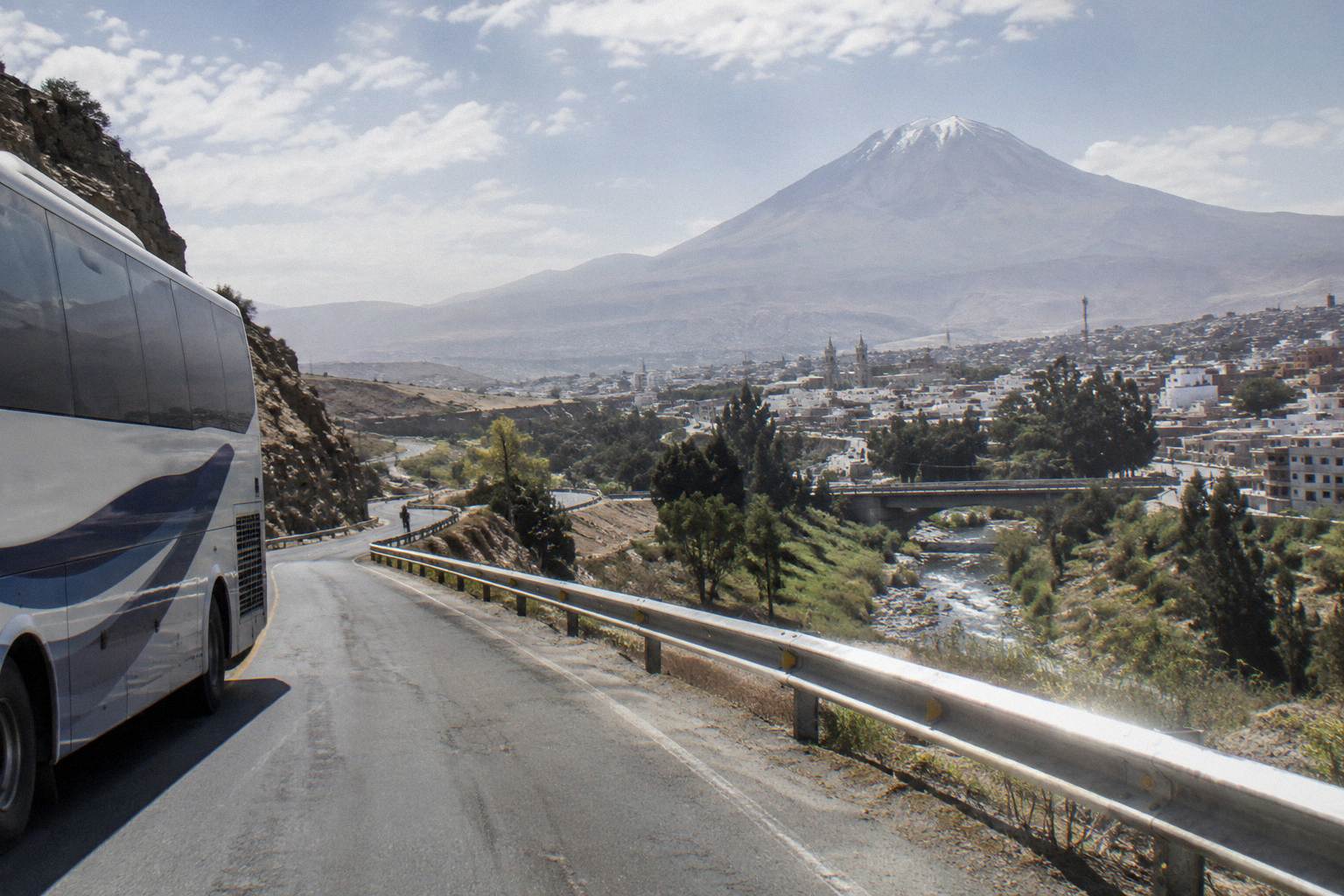
Short answer
Government advisories warn about night bus travel, crashes and robbery on intercity routes, and advise using reputable companies and authorized terminal taxis. Peru's national transit regulation caps continuous driving at 5 hours by day and 4 at night, requires GPS monitoring, seat belts and terminals, and lets any passenger check a bus and driver by plate or DNI on SUTRAN's lookup.
Intercity buses carry most of Peru's long-distance passengers, and the country's own rulebook for them is unusually specific: a national transit regulation that fixes speed limits, driving hours, luggage rights and boarding rules, plus a public agency, SUTRAN, that runs a live road-alert map and a lookup any passenger can use to check a bus and its driver before stepping aboard. Foreign governments publish pointed advice too, and their wording matters because it is the wording insurance companies and embassies fall back on. This guide gathers what the UK, Canadian, Australian and US authorities actually say about Peru's buses, what Peru's regulation requires of carriers, what the larger operators claim on their own pages, and the practical checks a worried passenger can make in the ten minutes before boarding. The buyer link for this page is a person deciding whether to take buses in Peru at all, so the honest answer comes first, then the detail.
How Safe Are Peru's Buses Overall?
No honest summary can call bus travel in Peru safe, and no government advisory does. The UK FCDO writes that "Bus crashes are common, especially at night", Canada warns that "Intercity bus travel can be dangerous", and Australia reports "Robberies and assaults occur frequently on intercity buses, including while passengers are sleeping". Peru's regulation layer is real and enforceable, but the risk it manages is genuine too.
The right framing is that Peru's bus system is heavily regulated on paper, partly regulated in practice, and unevenly risky depending on the route, the hour and the carrier. The Pan-American Highway corridor between Lima, Paracas and Arequipa, and the Lima-Arequipa-Cusco corridor, are the roads where oversight, formal terminals and the named international carriers concentrate. Remote mountain routes, informal vehicles and night departures carry the warnings. The distinction is not invented here: the US Embassy Lima republication of the State Department advisory notes that U.S. government employees "may travel at night with commercial bus companies along the Pan-American Highway, to Huaraz, and on the Lima-Arequipa-Cusco corridor", which is a corridor-by-corridor judgement, not a blanket one.
That still leaves a decision to make, and the decision is mostly about choices a passenger controls: which company, which seat, which departure window, how luggage is tagged, and whether the trip is worth doing in daylight instead. The sections below take each of those in turn, with the official quotes and the regulation text behind them.
| Question | Short answer | Where it comes from |
|---|---|---|
| Do buses crash in Peru? | "Bus crashes are common, especially at night" | UK FCDO, safety and security page |
| Are buses robbed? | "Armed robbers sometimes hold up provincial and inter-city buses" | UK FCDO |
| Is night travel advised against? | "Avoid taking buses and coaches at night" | Government of Canada |
| What overall rating do advisories give? | "Exercise a high degree of caution" (Canada, Australia); "Level 2 - Exercise Increased Caution" (US) | Official advisory pages |
| What is the FCDO headline warning? | Advises against all but essential travel to parts of Peru, meaning border and remote areas, not the tourist bus corridor | UK FCDO |
One warning to read correctly: the FCDO headline "against all but essential travel to parts of Peru" refers to specific border and remote zones listed on its own map, not to the Lima to Cusco or Lima to Paracas corridors. Presenting it as a blanket ban on tourist bus travel would misread the advisory.
What Do The Government Advisories Say About Bus Travel?
The advisories agree on four points: crashes cluster at night, robbers target buses and terminals, roadblocks appear with little notice, and terminal taxis are a specific robbery vector. Each government phrases it differently, and each quote below is verbatim from the named source, because paraphrasing safety advice into softer language is how travellers end up misled.
The UK FCDO safety and security page is the most specific on buses. Beyond the crashes line quoted above, it warns: "Armed robbers sometimes hold up provincial and inter-city buses", "There is a risk of robbery by criminals posing as taxi drivers, especially at Jorge Chavez International Airport and bus terminals", and it advises passengers to "use one of the taxis registered at bus terminals" and "on bus journeys, keep your passport with you". Those last two are practical rules a traveller can follow from the moment the bus stops.
Canada's advisory for Peru, which sits at "Exercise a high degree of caution (with regional advisories)", is blunt on causes: "Intercity bus travel can be dangerous due to the risk of bus accidents, which are usually caused by excessive speed, poor vehicle maintenance and driver fatigue. Armed gangs have been known to stop buses to rob travellers, especially at night." Its recommendations include "Avoid taking buses and coaches at night", "Follow the main roads used by bus tour companies", "Remain particularly vigilant at bus terminals and in taxis" and "Only use authorized cabs located inside airport terminals and bus stations". Read the full advisory at Canada's travel page for Peru, and the FCDO's bus-specific wording on its safety and security page.
Australia's Smartraveller adds a detail the others do not: theft from sleeping passengers on named routes. Its advisory states "Exercise a high degree of caution in Peru overall due to the threat of violent crime", that "Robberies and assaults occur frequently on intercity buses, including while passengers are sleeping", with specific mention of "theft as you sleep on intercity bus routes between Lima, Ica, Nazca and Cusco" and "bogus roadblocks or checkpoints on roads outside major cities after dark". Its remedy is operator choice: "Use only reputable bus companies." That phrase belongs to Smartraveller; this page does not hand out the label itself.
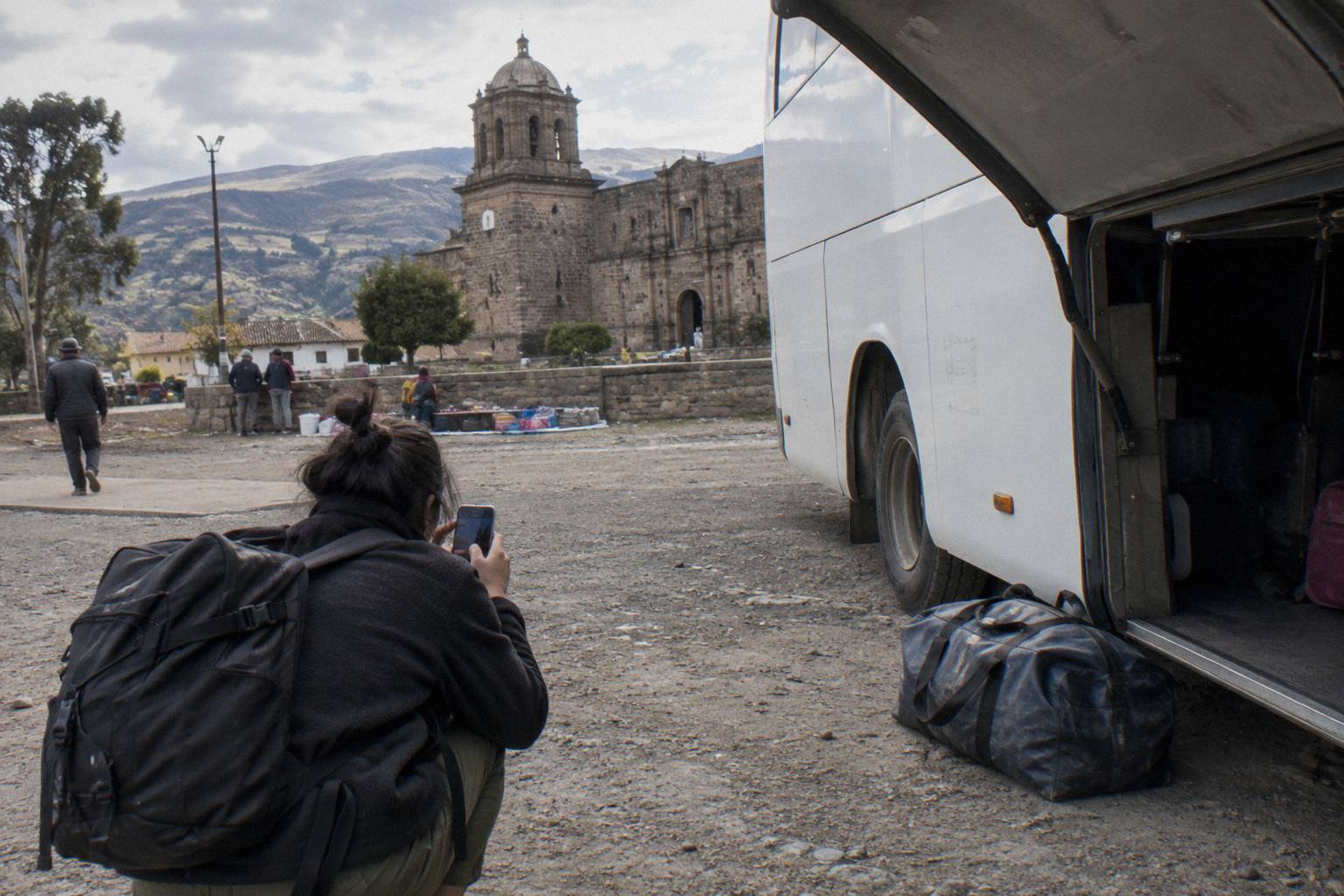
The US Embassy Lima republication of the State Department advisory carries the Level 2 rating and two lines worth quoting: "Criminal groups sometimes set up roadblocks to rob people in areas outside of Lima" and "Demonstrations can shut down local roads, trains, and major highways. This often happens without warning or clear information on reopening times."
On disruption, the advisories converge. The FCDO states "Political protests in Peru are unpredictable and can escalate quickly" and can lead to "roadblocks, travel disruption, including trains, and suspension of immigration services at land borders", naming Arequipa, Ayacucho, Cusco, La Libertad, Madre de Dios and Puno as regions with recent protests. Its instruction is short: "Do not attempt to pass blockades." The deeper treatment of strikes and closures, including the SUTRAN alert map, sits in the guide to Peru bus delays, strikes and rainy-season road blocks; the safety point here is simply that a blockade is a robbery context, not a delay context.
The trio below is a fair cross-section of how formal tourist-bus products present themselves on the corridor where advisories concentrate their caution, each with free cancellation up to 24 hours before for a full refund as listed.
Which Bus Companies Have The Strongest Safety Practices?
Only operator pages can answer this, and only in their own words: Cruz del Sur lists a pilot change every 4 hours, medical checks, alcohol tests, DNI control, a metal detector, GPS satellite monitoring and seat belts, while Oltursa and Movil Bus publish GPS monitoring and set luggage limits. No advisory ranks companies, and this page does not either; it prints what each operator claims on its own site.
Cruz del Sur's comfort page is the most detailed safety disclosure among the larger operators. It lists a pilot change every 4 hours, a permanent medical check and alcohol test for crew, DNI control and a metal detector for passengers, video recording of boarding, GPS satellite monitoring, seat belts, a toilet and an ECO3 air purifier, with Wi-Fi and crew described as a courtesy service. Its Lima to Cusco route page adds reclining seats up to 180 degrees in its top class, a Suite seat at 160 degrees on that route, 20 kg of hold luggage plus 6 kg of hand luggage, and online sales until one hour before departure. All of this is the operator's own marketing and operational disclosure, printed here as "Cruz del Sur lists", not as an audited fact.
Oltursa publishes less operational detail but states 24/7 GPS monitoring, 20 kg of hold luggage free and one hand-luggage piece up to 5 kg, with tariffs marked as reference prices that change by season. Movil Bus lists GPS monitoring and speed control alongside its seat classes, and 20 kg hold plus 8 kg hand luggage. Linea's safety page lists GPS position and speed control, an alcohol test, driver rest verification and seat-belt control. None of these claims is independently verified by this page; a passenger who wants verification can use SUTRAN's own lookup, covered below, which checks a specific bus and driver rather than a brand.
For a reader choosing a specific seat on a specific night, the three corridor products below illustrate the formats available: a sleeper bus with a listed 160 degree recline, a daytime tourist bus with a lunch stop, and a direct bus naming a Cruzero Suite 160 degree seat. Each listing carries its own rating and review count, printed exactly as the listing gives it.
Why Do Night Buses Carry More Risk?
Three advisories single out night travel: Canada says "Avoid taking buses and coaches at night", the FCDO says to avoid overnight travel "where possible, especially in mountainous and remote regions", and Smartraveller ties sleeping-passenger theft and after-dark bogus checkpoints to night routes. The US note that its employees may travel at night with commercial companies on three named corridors is the only night-travel allowance anywhere in the advice.
The mechanics behind the warnings are consistent across the sources. Canada attributes accidents to "excessive speed, poor vehicle maintenance and driver fatigue"; darkness compounds all three on mountain roads. The FCDO's crash line, "Bus crashes are common, especially at night", pairs with its armed-robbery line, and Canada's version says armed gangs "have been known to stop buses to rob travellers, especially at night". Smartraveller's contribution is the sleeping-passenger theft pattern on the Lima, Ica, Nazca and Cusco routes, plus "bogus roadblocks or checkpoints on roads outside major cities after dark".
Peru's regulation recognises the added risk in its text: night is defined as 22:00 to 05:59, and the continuous-driving cap tightens from 5 hours by day to 4 hours at night, with a second driver required once a trip exceeds the applicable limit. That is the rulebook acknowledging that night driving is harder driving.
Practical conclusions, none of them a promise: prefer daylight legs on mountain routes where the schedule allows; on a night leg, choose one of the formal carriers with terminal boarding, GPS and a listed safety regime; keep valuables on your body, not in the hold or the overhead rack; and treat any unplanned stop after dark with suspicion, since the advisory pattern is exactly that. The full night-travel picture, including onboard toilets and seat choice, is in the guide to overnight buses in Peru.
What Safety Rules Do Peru's Bus Regulations Impose?
Peru's national transit regulation caps continuous driving at 5 hours by day and 4 at night, requires a second driver past that and a third over 20 hours, mandates GPS monitoring that reports to the authority, requires seat belts with a crew announcement, and confines regular carriers to habilitated terminals. SUTRAN states the 90 km/h interprovincial limit applies only on roads with no other speed sign.
The driving-hours text is the rule misquoted most often. The regulation text states that continuous driving runs at most 5 hours by day and 4 hours at night, that a second driver is required when a trip exceeds 5 hours by day or 4 hours at night, and that trips over 20 hours need a third driver. Day is 06:00 to 21:59, night is 22:00 to 05:59. Cruz del Sur's own claim of a pilot change every 4 hours sits inside that framework.
Speed works differently from how it is described secondhand. SUTRAN states that the 90 km/h limit for interprovincial buses applies only on roads without other regulatory signage, which means a posted lower limit governs wherever one exists. Separately, the regulation text states that buses carry a speed limiter set at 110 km/h; that is a device requirement, not a permission to travel at 110. SUTRAN's page on the 90 km/h limit is the primary source.
Passenger-side rules matter at the terminal and at the ticket window. The regulation text states that up to 20 kg of luggage travels free on national service, that a fare receipt is the passenger's right, that boarding happens only at authorised points with the bus stopped, and that regular carriers must use habilitated terminals at origin, destination and stops, never the public road. Seat belts are mandatory, minimum 2-point at passenger seats with 3-point at the driver seat, and crew must announce that belts are mandatory. SUTRAN advises getting a luggage ticket for hold bags; INDECOPI gives the same advice. On the ticket itself, INDECOPI states that a domestic bus ticket can be postponed or transferred with at least 24 hours notice, with only the real cost of reissue charged and no penalty.
| Rule | What the text states | Who says it |
|---|---|---|
| Continuous driving | 5 hours max by day, 4 at night | Peru's national transit regulation |
| Second driver | Required when a trip exceeds 5 h day or 4 h night | Peru's national transit regulation |
| Third driver | Trips over 20 hours | Peru's national transit regulation |
| Speed | 90 km/h only where no other sign applies; 110 km/h limiter as a device rule | SUTRAN; regulation text |
| GPS | Wireless monitoring transmitting to the authority permanently | Peru's national transit regulation |
| Seat belts | Minimum 2-point at seats, crew must announce | Peru's national transit regulation |
| Luggage | 20 kg free on national service; SUTRAN advises a luggage ticket | Regulation; SUTRAN |
| Boarding | Authorised points only, bus stopped, terminals mandatory for regular carriers | Peru's national transit regulation |
How Can You Check A Bus And Driver Before Boarding?
SUTRAN runs a public lookup where any passenger can check a bus by plate number or a driver by DNI before travelling, plus a 24-hour phone line, 0800 12345, and a live road-alert map showing closed roads in red, restricted in yellow and open in green. It is the single most concrete safety action available, and almost nobody uses it.
The lookup answers a narrow but important question: whether the specific bus and driver are in order, papers current, no outstanding sanction visible. Doing it takes the plate from the ticket or the terminal board and the driver's DNI, which carriers are required to display. The SUTRAN check page is the entry point, and Alo SUTRAN at 0800 12345 answers around the clock.
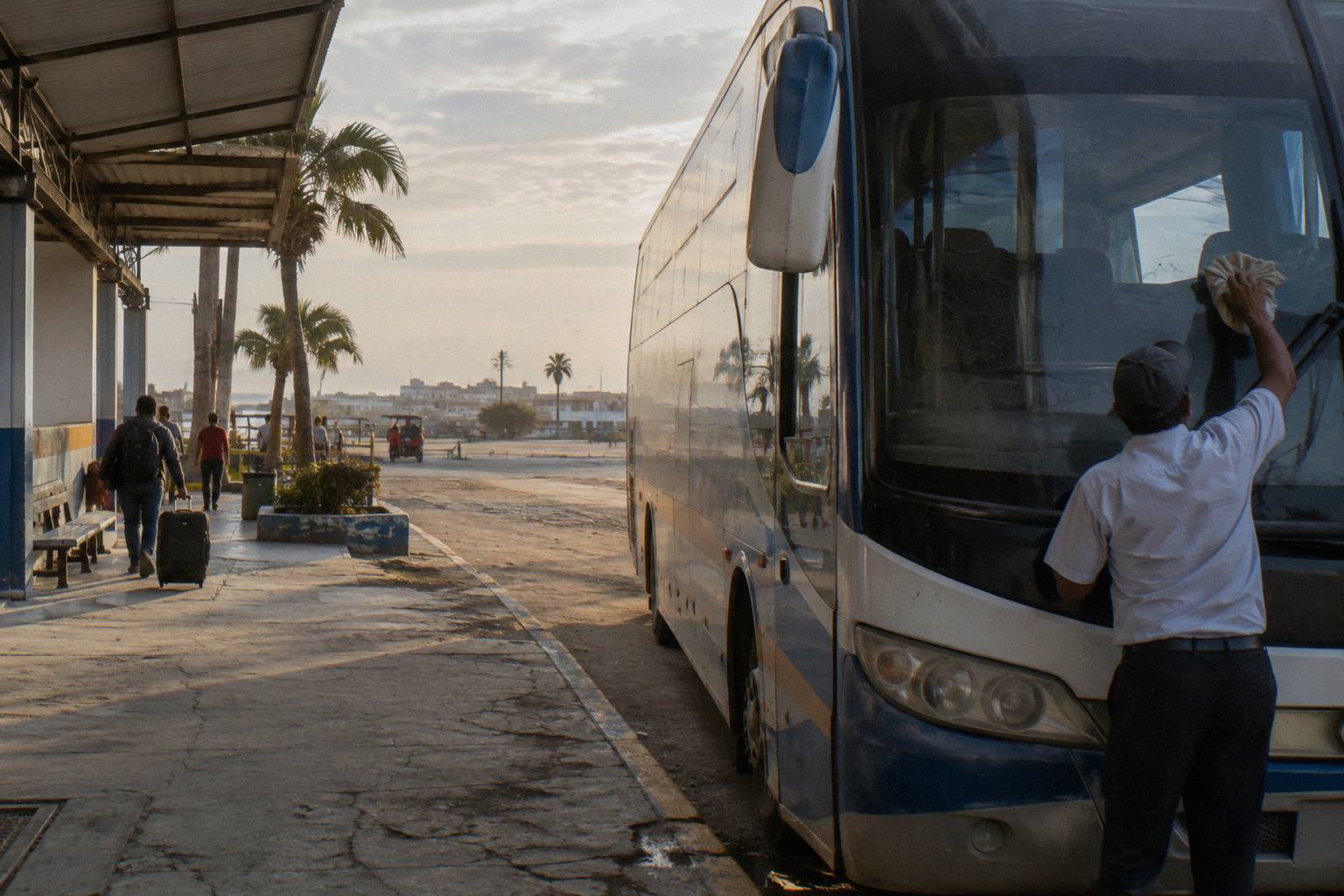
The second check is the road itself. SUTRAN's alert map at alertasviales.sutran.gob.pe shows live closures and restrictions, including blockades recorded under human factor causes, and SUTRAN runs a 24-hour WhatsApp line for road status. Checking the map the day before departure, and again the morning of, converts the advisories' "little or no notice" warning into something a passenger can actually see coming. Blockades recorded on the map are a reason to rebook, not to wait beside one; the FCDO's "Do not attempt to pass blockades" is unqualified.
How Do You Avoid Theft On Peru Buses?
Smartraveller names the pattern plainly: "theft as you sleep on intercity bus routes between Lima, Ica, Nazca and Cusco". The countermeasures that follow come from the same advisories: keep your passport with you, stay vigilant at terminals and in taxis, use only authorized cabs inside terminals and stations, and treat the hold bag as something you insure with a luggage ticket rather than trust.
Theft on Peruvian buses splits into three scenes: the terminal, the onboard journey, and the arrival taxi. Each advisory contributes to at least one. The FCDO covers the terminal and the taxi: robbery by criminals posing as taxi drivers "especially at Jorge Chavez International Airport and bus terminals", answered by using "one of the taxis registered at bus terminals". Canada repeats it: "Only use authorized cabs located inside airport terminals and bus stations", and "Remain particularly vigilant at bus terminals and in taxis".
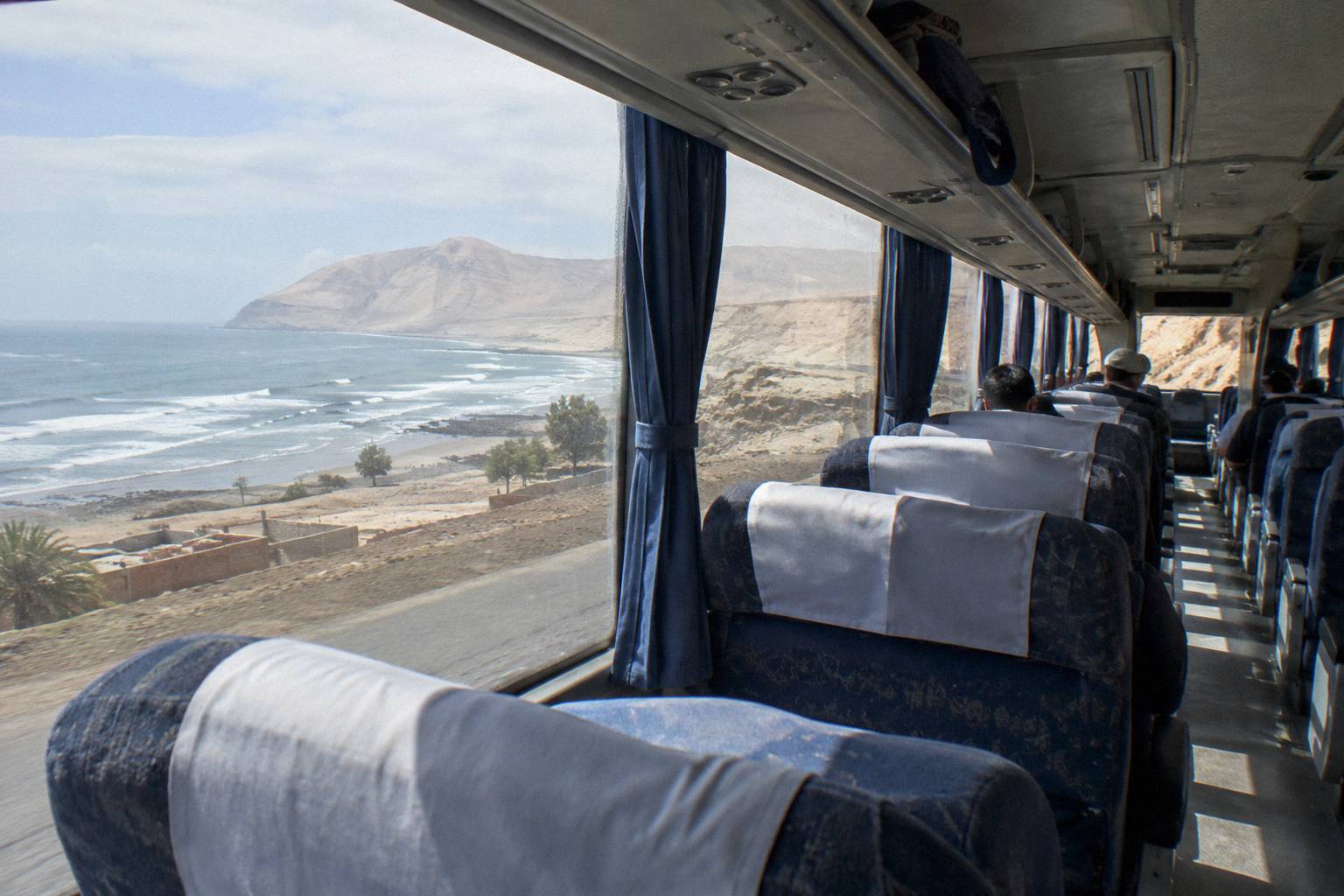
Onboard, the sleeping-passenger pattern is the one to defend against on night legs: valuables against the body, daypack between the knees or under the knees rather than in the overhead rack, passport and card in a front pocket or money belt. The FCDO's "on bus journeys, keep your passport with you" is a direct instruction, and the hold bag carries what you can afford to lose, tagged with a luggage ticket as SUTRAN advises. The regulation's luggage-damage minimum, 25 percent of the fare scaled by weight band when loss is the carrier's fault, is a floor, not a compensation scheme for a phone left in a hold bag. The fuller theft and luggage picture, including hold-versus-hand decisions by bag type, is in the guide to Peru bus luggage and theft.
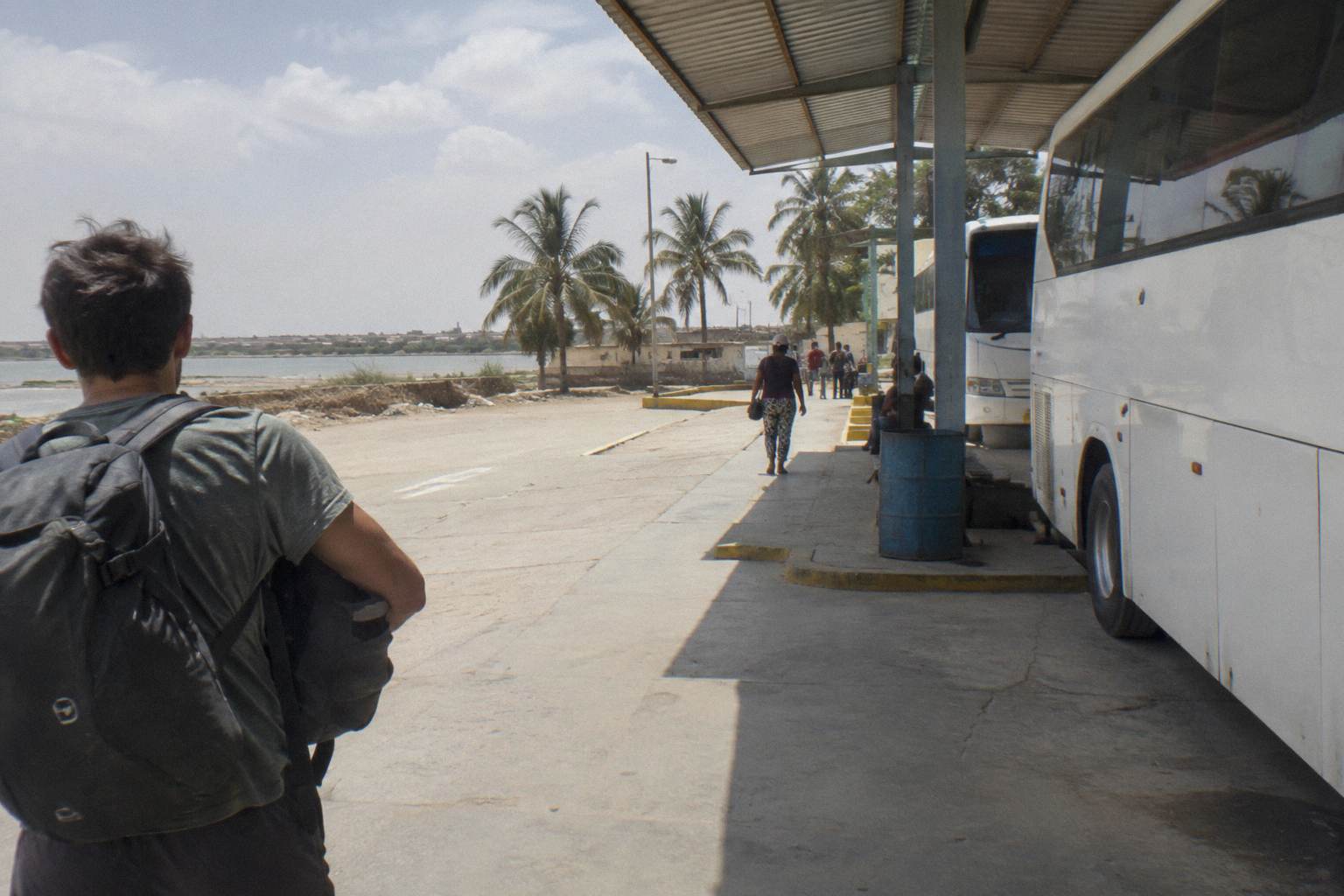
Theft also frames the seat choice. The overhead rack is easier to raid from behind than from across the aisle, and an aisle seat in the middle of the coach keeps the bag in view without offering a wall for a neighbour to lean on. That reasoning is layout, not a guarantee, and it belongs to this page rather than to any advisory.
Which Seats And Routes Are Safer Choices?
On routes, the advisory pattern itself draws the map: the Pan-American Highway, the Lima-Arequipa-Cusco corridor and the Huaraz road are the three night corridors US government employees may use with commercial companies, while remote mountain roads carry the strongest warnings. On seats, no advisory addresses it, so what follows is layout reasoning, not official advice.
Route choice is the single biggest safety lever, because it decides which carrier pool, which road standard and which terminal network a trip uses. The corridor logic also matches where the formal operators run their best-serviced classes and where tourist-bus products concentrate: the southern circuit from Lima through Paracas, Huacachina and Nazca to Arequipa, and the highland legs from Arequipa to Puno and Puno to Cusco. On those legs, daylight tourist-bus products exist as an alternative to night departures, which is the cleanest way to follow Canada's "Avoid taking buses and coaches at night" without abandoning buses.
| Leg | Free-flow drive estimate | What it means for planning |
|---|---|---|
| Lima to Paracas | 251 km, 3.5 h | A daylight-leg distance; real bus journeys exceed the estimate |
| Arequipa to Puno | 273 km, 5.5 h | Long enough for a sleeper format; free-flow estimate only |
| Puno to Cusco | 387 km, 6.2 h | The leg where tourist buses run with a lunch stop |
| Cusco to Arequipa | 487 km, 9.4 h | A long sierra leg; free-flow estimate only |
Three products illustrate the daylight-first approach on the southern highlands. The Turismo Mer tourist bus from Puno to Cusco with a lunch stop is rated 4.6 across 24 reviews and its listing gives 11 hours. The Turismo Mer sleeper bus from Arequipa to Puno, rated 4.3 across 20 reviews, is the night alternative, with a 160 degree recline and a boarding fee that the listing marks as not included, so check the boarding fee line before booking. The World Explorer Peru direct bus from Cusco to Arequipa, rated 3.7 across 16 reviews, names a Cruzero Suite 160 degree seat and its listing gives 10 hours.
What Should You Do After A Crash, Robbery Or Dispute?
Peru's complaint path runs company-first: the carrier's Libro de Reclamaciones, which has 15 working days to answer, then INDECOPI at 224 7777 in Lima or 0800 4 4040 in the regions, or its online Reclama Virtual form. For a robbery, the police report comes first and the embassy notification second; for a road incident, the SUTRAN WhatsApp line and 0800 12345 take emergency notice.
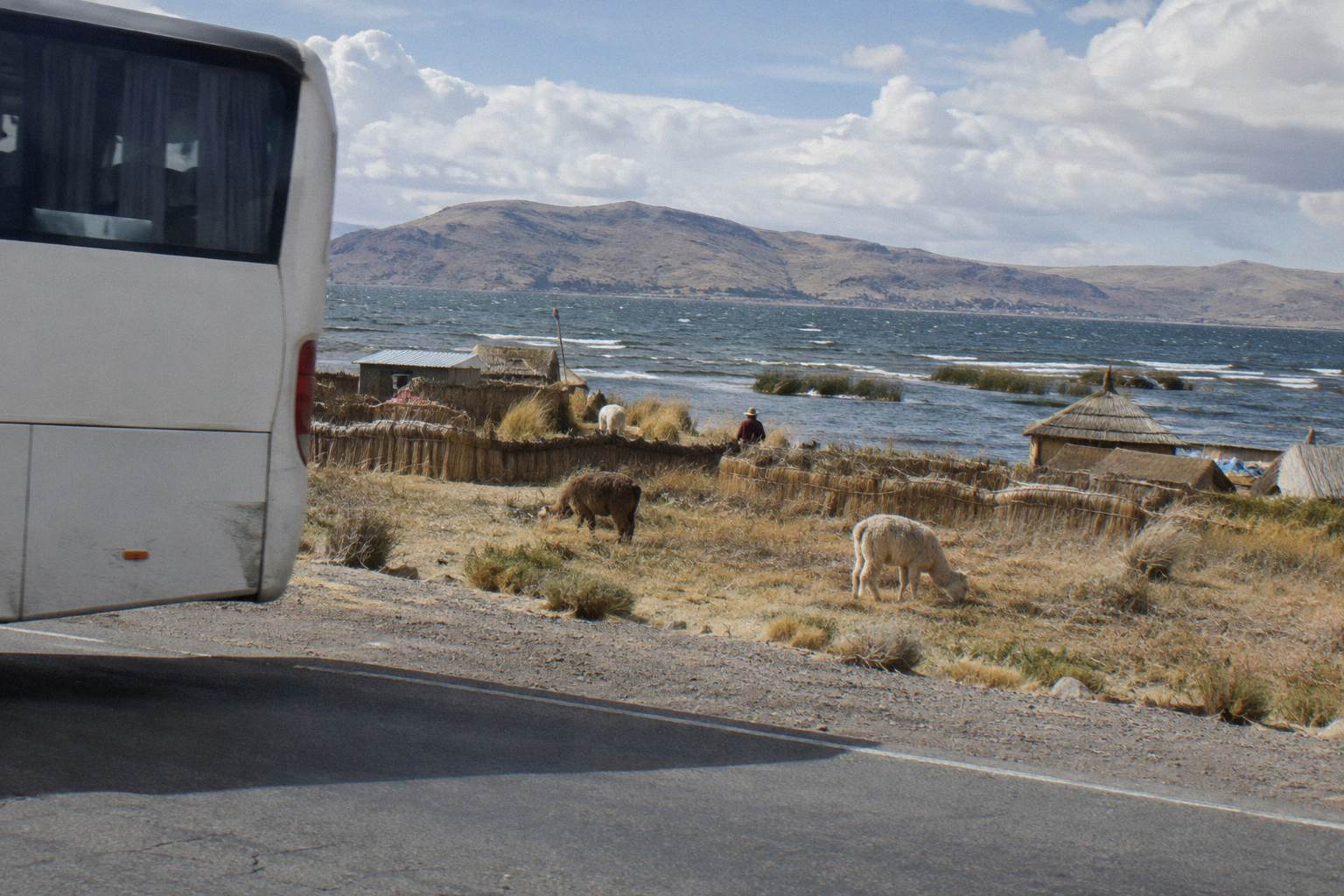
The Libro de Reclamaciones is a legal obligation on Peruvian businesses, and writing in it starts a clock: 15 working days for the company to answer. If the answer does not come, or does not satisfy, INDECOPI takes the complaint forward, by phone at 224 7777 in Lima and 0800 4 4040 elsewhere, or through the Reclama Virtual portal. Ticket disputes have their own rule, covered earlier: INDECOPI states a domestic ticket can be postponed or transferred with 24 hours notice at only the real reissue cost.
For crime, the sequence is a police report (needed for any insurance claim and for a replacement passport), then the embassy or consulate, then the carrier. The advisories add one preventive note: keep your passport with you on the journey, because a passport in a stolen hold bag turns a theft into a consular problem as well as an insurance one. For road incidents and blockades, SUTRAN's 24-hour channels, the 0800 12345 line and the WhatsApp number 999 382 606, are the official notice points, and the alert map is where the incident or closure should already be visible.
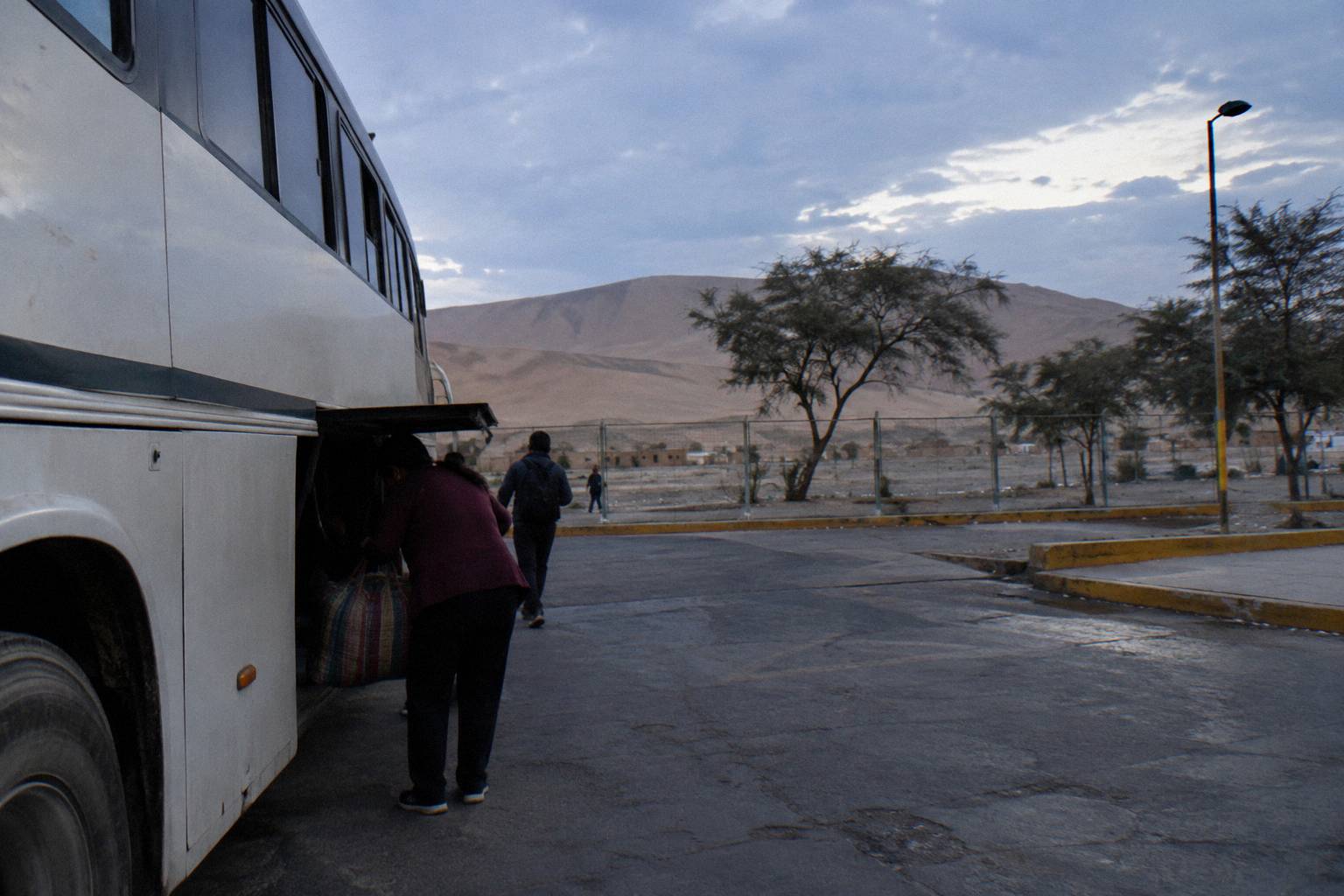
What Does The Weather Add To Bus Risk In Peru?
The FCDO carries a specific El Nino notice: "Through late 2026 to April 2027, the El Nino weather event is expected to generate heavy rainfall, possible flooding, landslides, and mudslides, especially in, but not restricted to, the northern and central coast. These could cause travel disruption, such as road closures". That is a quoted forecast, not this page's judgement, and it is the one advisory text naming a period.
Weather risk on Peruvian buses is seasonal and regional. The Andean rainy season runs roughly September to April, and in Puno the September-to-March window holds 89 percent of annual rainfall. Rain translates to landslides and closures on sierra roads, which is why the SUTRAN alert map earns its place in the pre-departure routine during those months, and why the rainy-season guide linked earlier carries the fuller disruption picture.
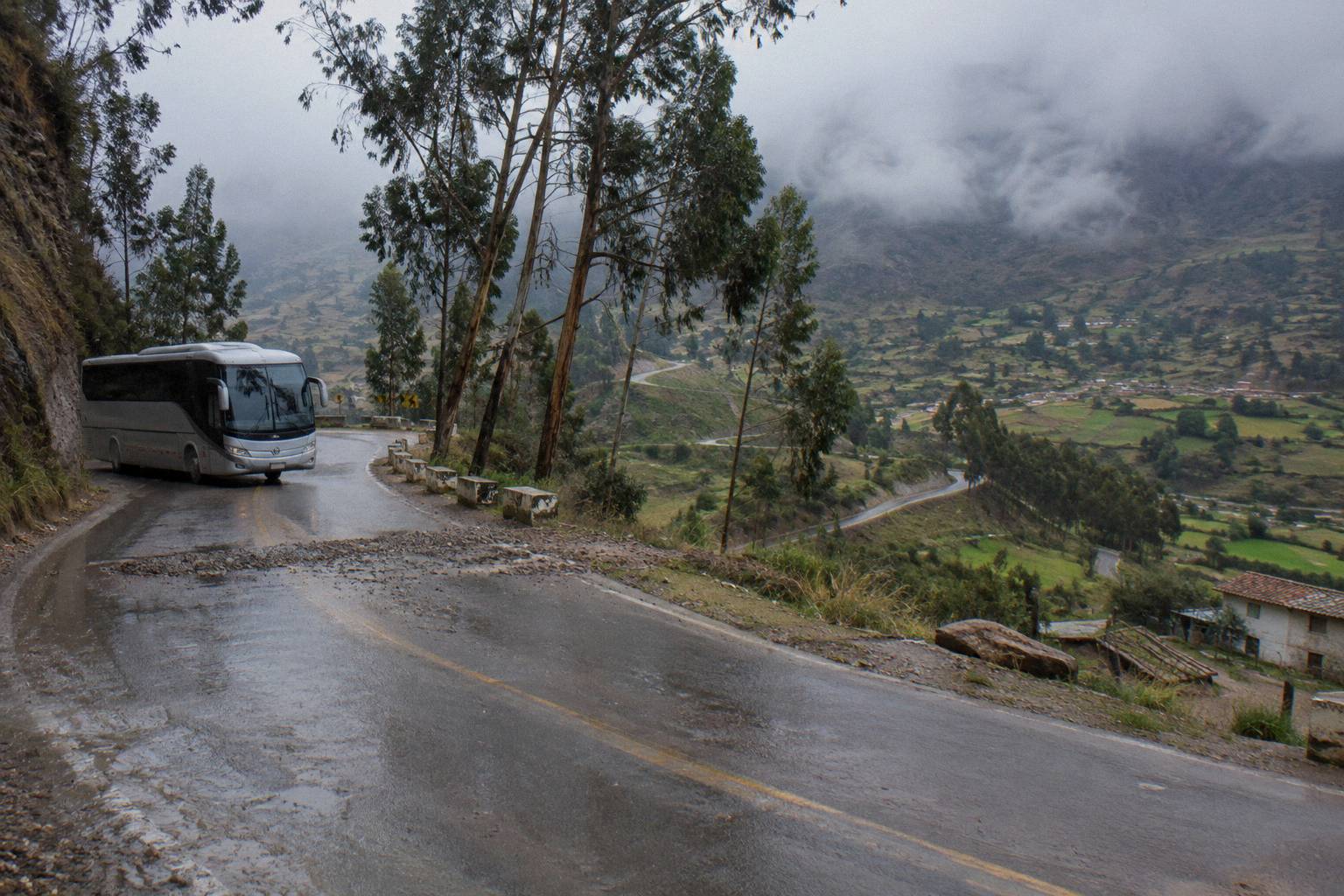
The practical rule the advisories and the map together suggest: check the alert map and the carrier the day before any long sierra leg in the rainy months, rebook rather than wait when a closure shows red, and read the FCDO notice above as the forecast it is, heaviest on the northern and central coast. None of this argues against buses; it argues for checking before the mountain leg.
How Should A Worried Traveller Decide?
Take buses in Peru on the named corridors with formal carriers, in daylight where the schedule allows, with the SUTRAN plate-and-driver check done the day before, valuables on the body, hold bags ticketed, and the alert map checked twice. That is the full set of levers the advisories and the regulation give a passenger, and every one of them is in the traveller's hands rather than the operator's.
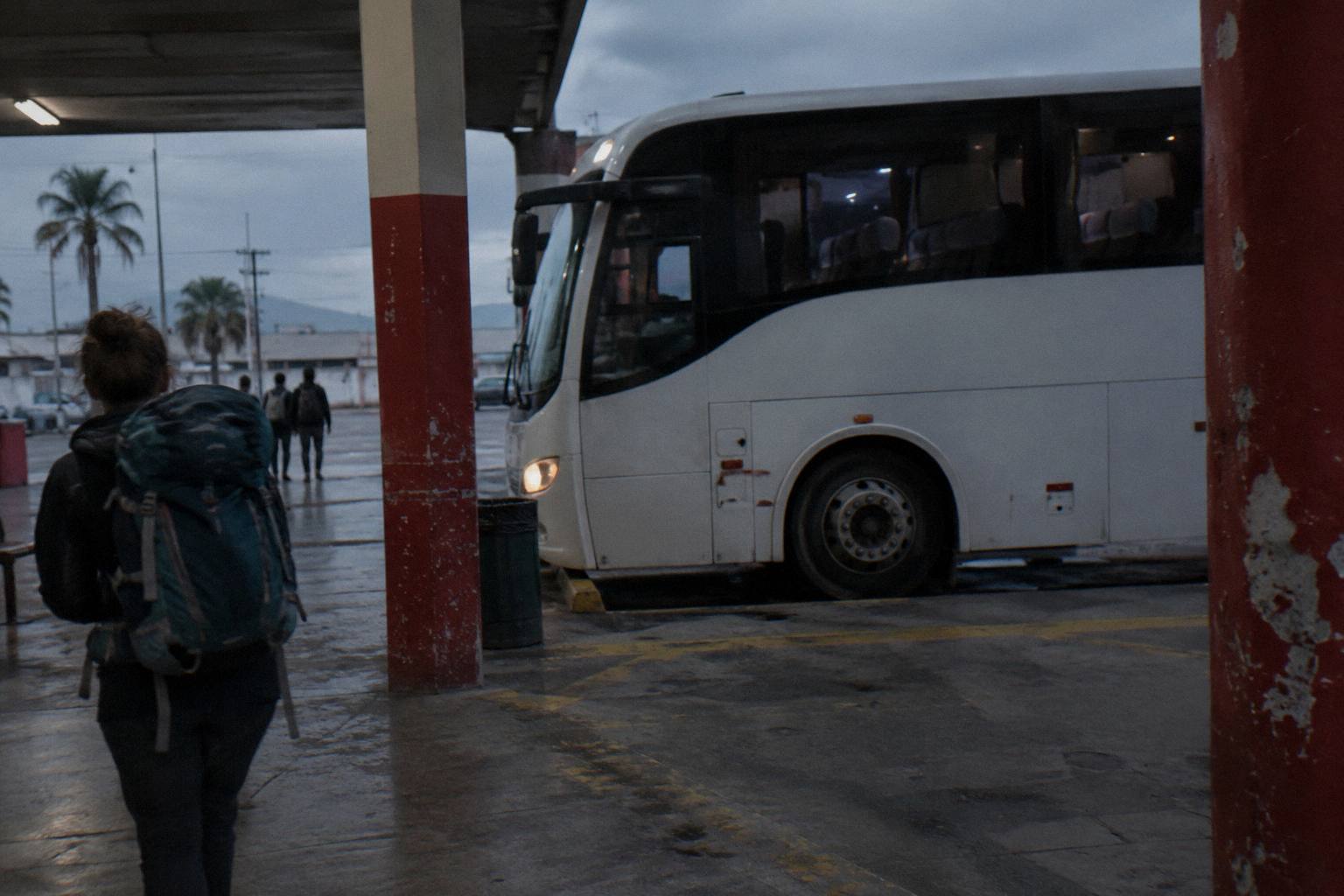
The decision framework in one paragraph: the corridor decides the carrier pool, the carrier decides the safety regime, the hour decides the risk profile, the seat and the bag placement decide the theft exposure, and the SUTRAN checks decide what you know before boarding. A reader on Peru By Bus planning a full circuit can carry this framework across every leg, and the booking-side detail, including how tickets and changes work, sits in the guide to how Peru bus travel works.
The night sleeper remains a legitimate choice when the schedule demands it, provided it is a formal carrier with terminal boarding and a listed recline class rather than an unmarked vehicle collecting passengers at a roadside. The Turismo Mer sleeper from Arequipa to Puno, discussed above with its 160 degree recline, its 4.3 rating across 20 reviews and its listing-given 7 hours, is exactly that format, and its free cancellation up to 24 hours before for a full refund leaves an exit if the alert map turns red the day before.
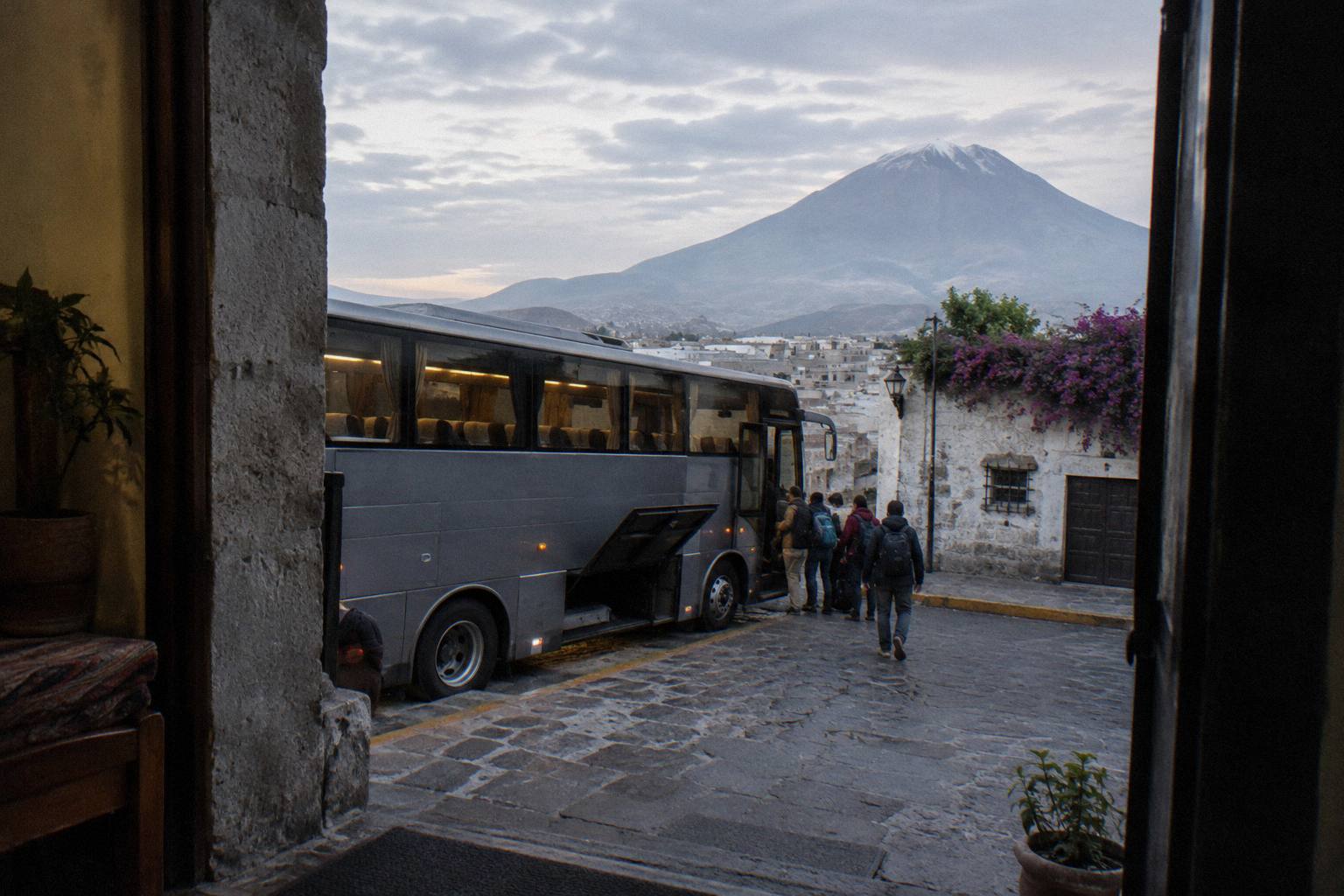
For the daylight preference, the Puno to Cusco tourist bus with a lunch stop and the direct Cusco to Arequipa service are the format contrast: one spreads a 387 km leg into a sightseeing day, the other covers a 487 km leg in a named seat class. Every listed product named on this page prints its rating with its review count, its listed duration as the listing gives it, and its cancellation terms as listed, because a safety-conscious buyer should read those the same way.
The bottom line this site can honestly print: no advisory says Peru's buses are safe, every advisory says the risk is manageable by company choice, hour choice and situational care, and Peru's own regulation and SUTRAN tooling give passengers more pre-boarding visibility than most countries do. Use the tools, read the quotes as written, and make the corridor-and-carrier decision with the same seriousness as the ticket decision.
Common Questions About Peru Bus Safety
Is Bus Travel In Peru Safe?
No government advisory describes it as safe. The UK FCDO writes "Bus crashes are common, especially at night", Canada says "Intercity bus travel can be dangerous", and Australia reports frequent robberies and assaults on intercity buses. Advisories manage the risk through company choice, daylight travel and terminal vigilance rather than ruling buses out.
Are Night Buses In Peru Dangerous?
All four advisories single out night travel. Canada says "Avoid taking buses and coaches at night", the FCDO says to avoid overnight travel where possible, especially in mountainous and remote regions, and Smartraveller links sleeping-passenger theft and after-dark bogus checkpoints to night routes. US government employees may travel at night with commercial companies only on three named corridors.
Which Bus Company Is The Safest In Peru?
No advisory and no official ranking names one. Cruz del Sur lists the most detailed safety regime on its own page: a pilot change every 4 hours, medical checks, alcohol tests, DNI control, a metal detector and GPS monitoring. Oltursa, Movil Bus and Linea each publish GPS monitoring and luggage limits. Verify a specific bus and driver on SUTRAN's lookup instead of trusting a brand.
How Do I Check If A Peru Bus Company Is Legitimate?
Use SUTRAN's public lookup to check the bus by plate number and the driver by DNI before travelling. SUTRAN also runs a 24-hour line, 0800 12345, and a live road-alert map at alertasviales.sutran.gob.pe showing closures in red, restrictions in yellow and open roads in green.
What Happens If My Peru Bus Is Robbed Or Crashes?
File a police report first, then notify your embassy and the carrier. For disputes with the company, the Libro de Reclamaciones starts a 15-working-day answer clock, after which INDECOPI takes the complaint at 224 7777 in Lima, 0800 4 4040 in the regions, or online through Reclama Virtual. Keep your passport on your body during the journey, as the FCDO advises.
Do Peru Buses Have Seat Belts And Speed Limits?
Peru's national transit regulation requires seat belts, at least 2-point at passenger seats, and crew must announce that they are mandatory. SUTRAN states the 90 km/h limit for interprovincial buses applies only on roads with no other speed sign, and buses carry a speed limiter set at 110 km/h as a device requirement.