Peru Bus Luggage: Stowage, Theft Prevention And What To Carry On
Luggage on a Peru bus splits into a tagged hold bag and a small cabin bag you keep at your seat, and the gap between those two worlds is where nearly every theft story on these routes begins. Here is how stowage works, what each operator allows, what the regulation says you are owed, and where the real risks sit.
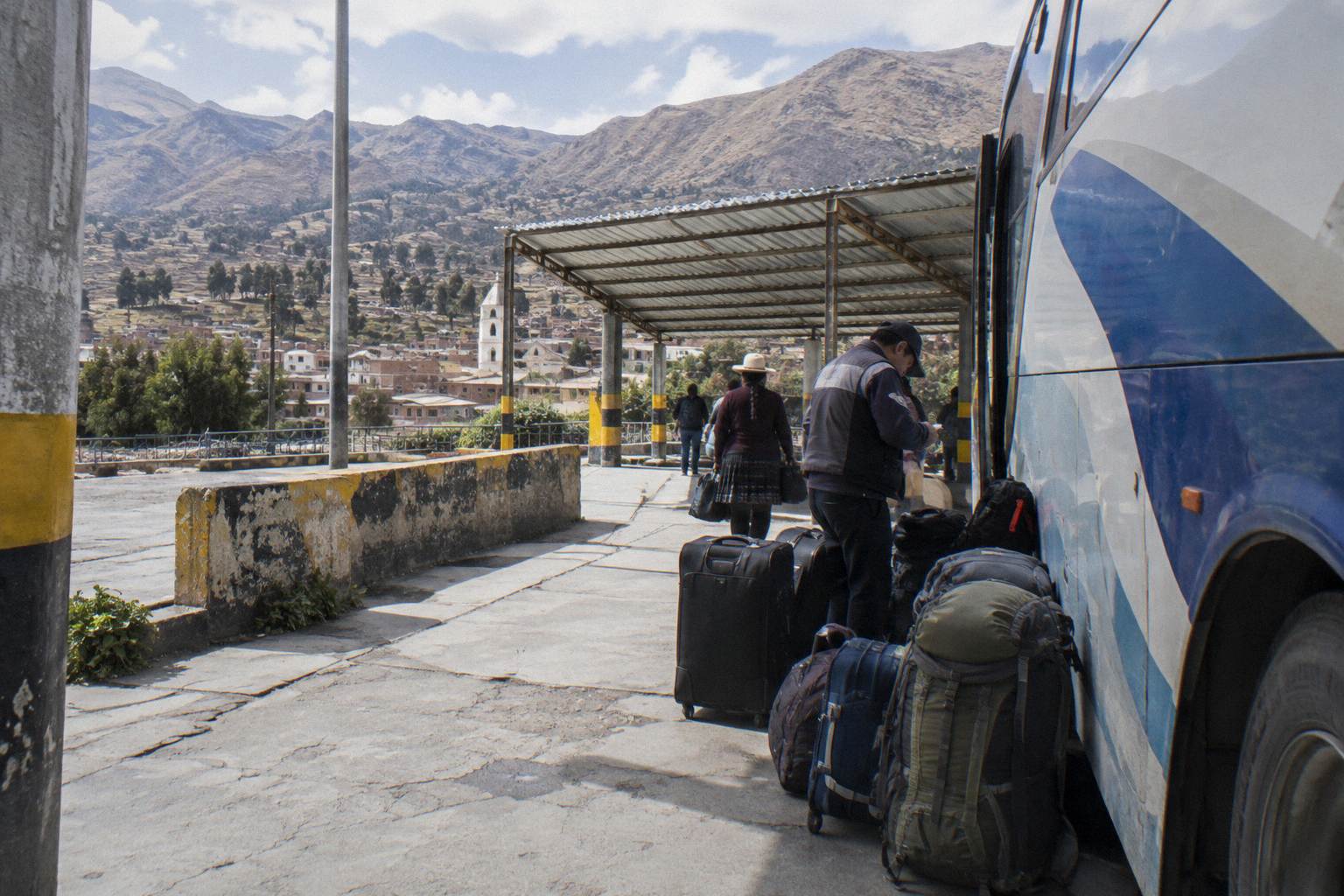
Short answer
Peru's national transit regulation allows up to 20 kg of luggage free on national service, and the major operators list hold allowances of 20 kg with hand allowances from 5 to 8 kg. Hold bags are tagged and stowed under the bus, hand luggage stays with you, and both SUTRAN and INDECOPI advise getting a luggage ticket for every checked bag.
Luggage handling is the part of Peru bus travel that turns a routine ride into a stressful one when it goes wrong. Buses here separate your belongings into two streams: a hold bag that leaves your sight under the vehicle, and a cabin bag that stays within arm's reach. The regulation, the operators and the government advisories each govern a different piece of that split, and the theft warnings that fill the advisory pages are nearly all about the hand-luggage stream, on the bus and at the terminal, rather than the hold. This guide works through stowage mechanics, the allowances each operator publishes, the rights attached to a domestic bus ticket, and the practical habits that reduce theft risk, without telling you what to pack.
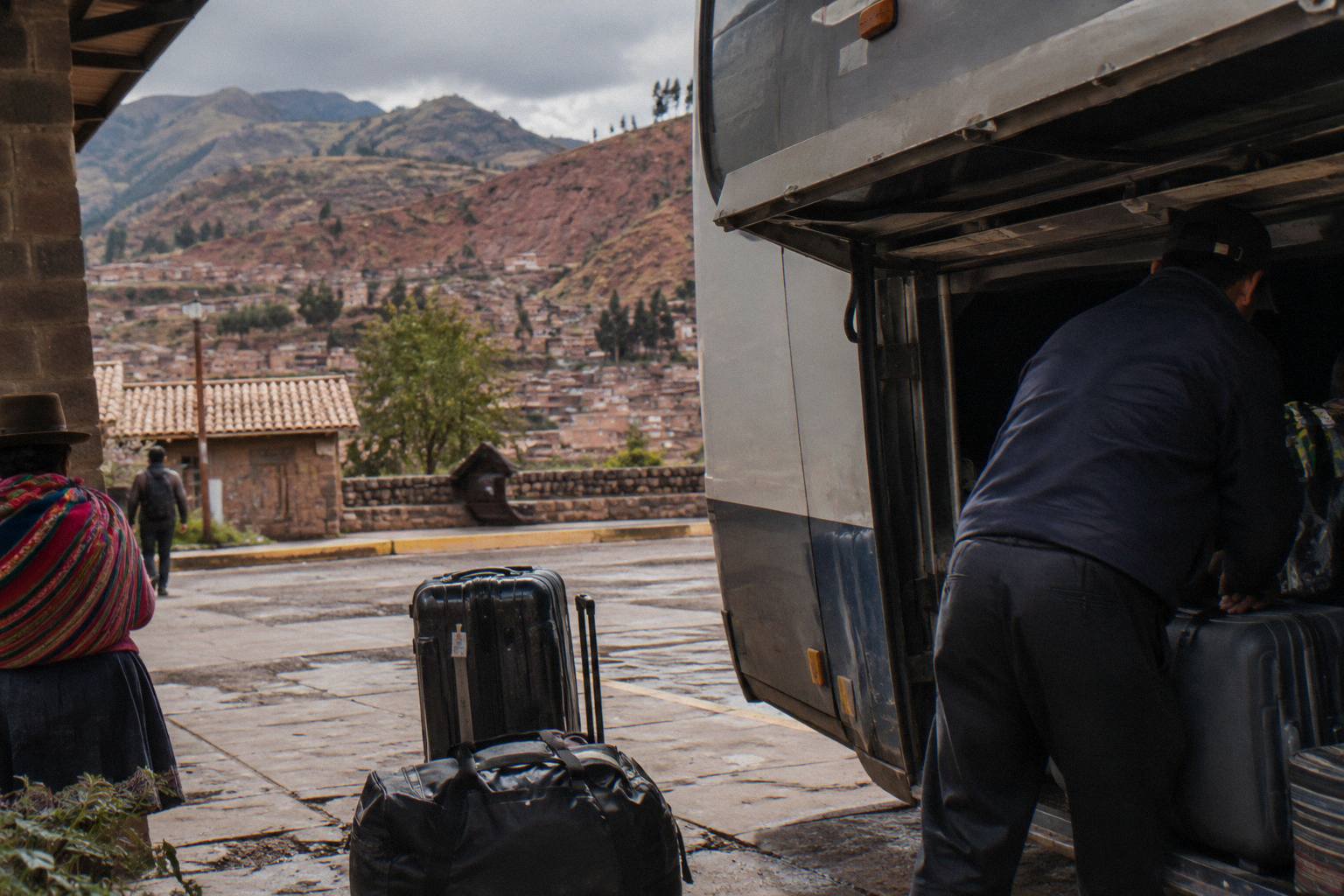
How Does Luggage Stowage Work On Peru Buses?
Every interprovincial bus in regular service splits your luggage at boarding: larger bags go into the hold under the vehicle, where a handler tags them and hands you a stub, and smaller pieces come into the cabin with you. Peru's national transit regulation states that luggage travels in the hold and the overhead racks, never in the aisle or blocking exits, and that boarding happens only at authorised points with the bus stopped.
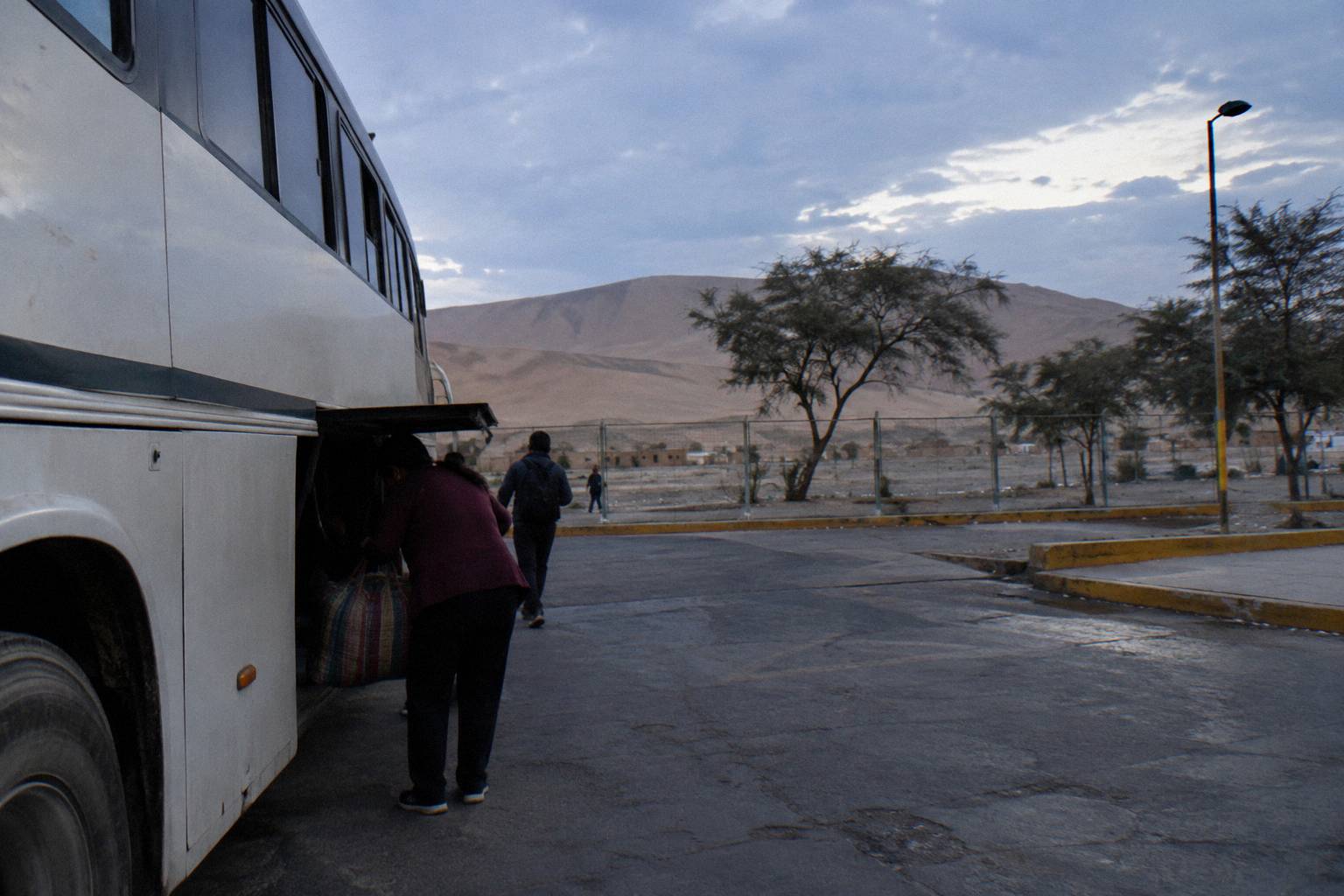
The hold loading is the moment to pay attention. A handler weighs or eyes your bag, attaches a numbered tag, and gives you the matching stub; you surrender that stub at the destination before anyone hands the bag back. SUTRAN and INDECOPI both advise getting a luggage ticket for every checked bag, and that stub is what turns an argument at the platform into a documented claim. If a loader skips the tag, ask for it before the bag disappears under the bus.
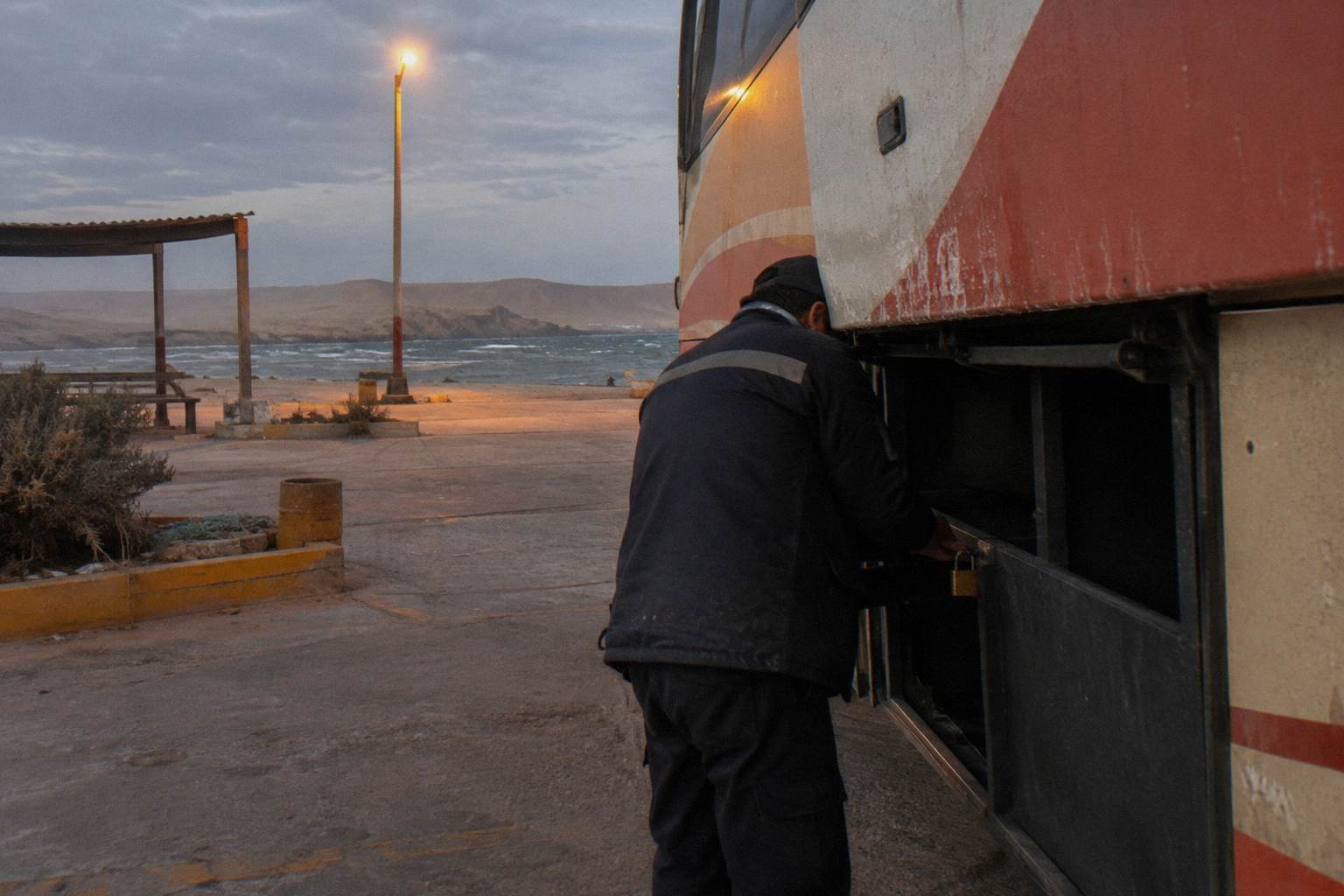
The tag itself is a modest paper thing, but it carries real weight in any dispute. The number on your stub matches the number on the bag, and a terminal employee has to reconcile those numbers before releasing luggage. Passengers who keep the stub folded into a passport pocket rather than tossed into a jacket have a far easier time proving ownership when two identical black suitcases come off the same hold, which happens more than anyone would like on busy departures.
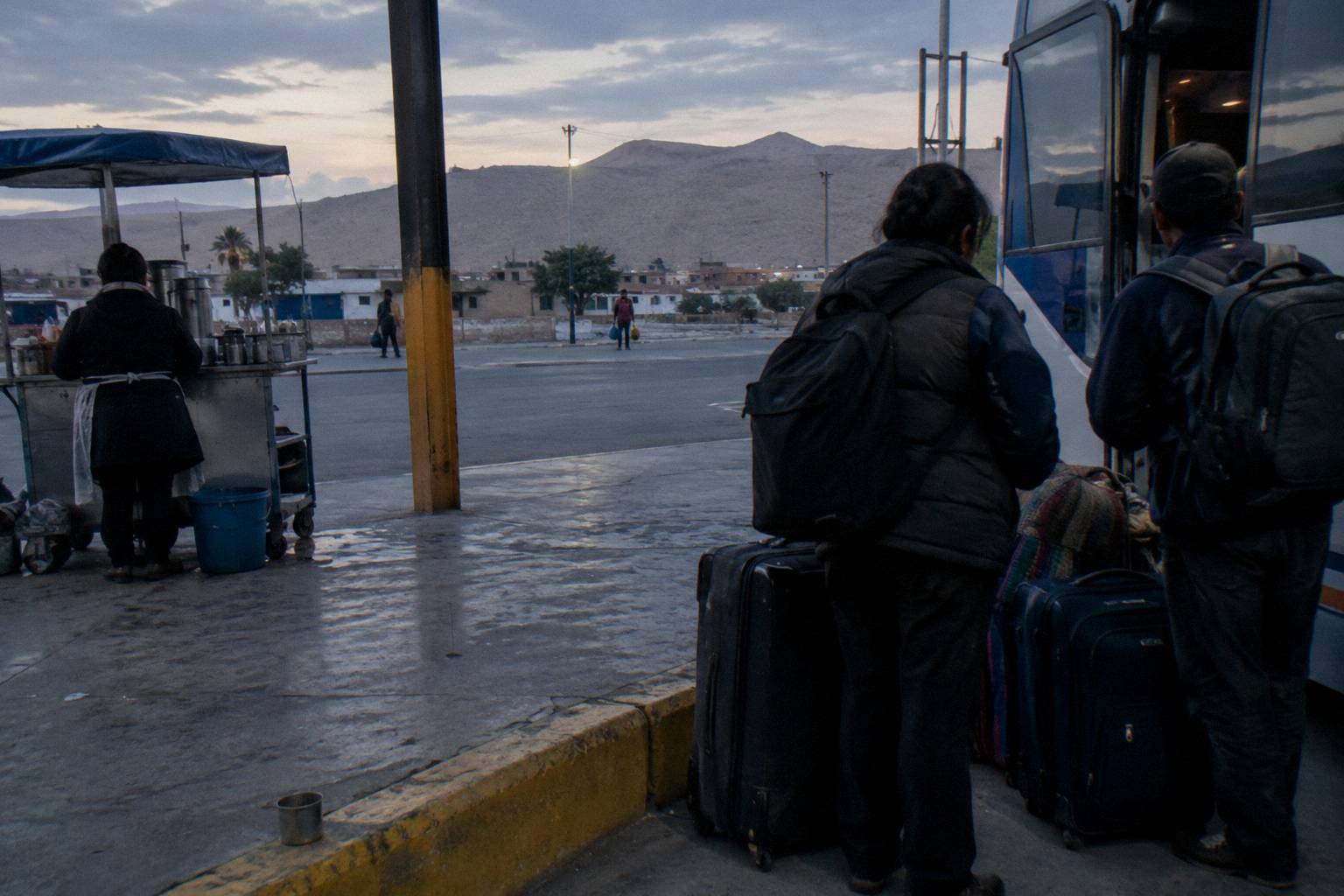
Regular carriers in Peru must use habilitated terminals at origin, destination and intermediate stops, and the public road may not be used as a terminal. That rule matters for luggage because it concentrates loading into a supervised area rather than a kerbside free-for-all. The practical reading is straightforward: bags are loaded and unloaded inside the terminal area, and that is where you collect yours, stub in hand, watching the hold open rather than waiting at the door.
| Stage | What happens | Your move |
|---|---|---|
| Check-in at terminal | Bag weighed or assessed, hold tag attached | Keep the stub; photograph the bag if you want a record |
| Boarding | Hand luggage stays with you, rack or footwell | Valuables on your body or under your legs, not the rack |
| En route | Hold stays locked; cabin is unpoliced | Nothing valuable in the rack while you sleep |
| Arrival | Stub matched before handover | Stand near the hold opening and watch bags come out |
For a fuller picture of how terminals operate, see the Peru bus terminals by city guide, which lists company-specific terminal addresses.
How Much Luggage Can You Bring On A Peru Bus?
The regulation baseline is generous: up to 20 kg of luggage travels free on national bus service, and every major operator's own terms sit at that figure. Cruz del Sur lists 20 kg hold plus 6 kg hand, Oltursa lists 20 kg hold plus one hand piece up to 5 kg, Movil Bus lists 20 kg in the hold across up to three pieces plus 8 kg hand across up to two pieces, and Linea lists 20 kg.
Each of those figures is the operator's own published allowance, so check the carrier's page for the route you booked, since terms pages change by season and the printed ticket carries the binding version. What none of the operators publish is a single piece-size limit in the way airlines do; the weight cap and the physical reality of the hold are the working constraints. A standard large suitcase at 20 kg fits; a second bag depends on how full the departure runs.
| Operator | Hold allowance (operator's terms) | Hand allowance (operator's terms) |
|---|---|---|
| Cruz del Sur | 20 kg | 6 kg |
| Oltursa | 20 kg | One piece up to 5 kg |
| Movil Bus | 20 kg, up to 3 pieces | 8 kg, up to 2 pieces |
| Linea | 20 kg | Check the operator's page |
If your itinerary mixes operators, as a southern circuit does, plan around the smallest hand allowance you will meet. A bag that passes Cruz del Sur's 6 kg hand limit still has to clear Oltursa's 5 kg line, and repacking on a terminal floor at midnight is nobody's idea of a holiday. The simplest discipline is to make the day bag small enough for the strictest carrier on the ticket stack and let the hold absorb the rest.
The Peru bus classes explained guide covers how seat class changes the cabin experience, and the wider southern Peru bus circuit route guide shows where these carriers connect.
A long ride with luggage decisions attached is easier on a direct booking than on a chain of connections. Three tickets on the southern routes each pair a defined drop-off point with a defined operator, which is the part that matters when you are managing bags.
How Do You Protect Your Bag From Theft On A Peru Bus?
The theft risk concentrates in three places: the overhead rack above your seat, the hold at intermediate stops where the door opens for other passengers' bags, and the terminal forecourt where bags pile up during boarding. Smartraveller warns of "Robberies and assaults occur frequently on intercity buses, including while passengers are sleeping" and names "theft as you sleep on intercity bus routes between Lima, Ica, Nazca and Cusco".
The overhead rack is the single most theft-exposed spot on the bus. A bag above your head is invisible to you for hours, and on a night service everyone around you is asleep or pretending to be. The working rule that follows from the advisory language: nothing with a passport, cards, cash or electronics travels in the rack. Those items go into a small bag at your feet, under your legs, or against the window side of your body.
The UK FCDO adds a specific instruction about documents: "on bus journeys, keep your passport with you", meaning on your person rather than in any bag, checked or racked. That single habit removes the costliest version of the problem, because a lost passport on a route like Arequipa to Puno means consular appointments and missed connections rather than an annoying evening.
At the terminal, the FCDO also warns: "There is a risk of robbery by criminals posing as taxi drivers, especially at Jorge Chavez International Airport and bus terminals", and advises you to "use one of the taxis registered at bus terminals". Canada's advice runs parallel: "Remain particularly vigilant at bus terminals and in taxis" and "Only use authorized cabs located inside airport terminals and bus stations". Arriving with your hands full of bags is exactly the moment those warnings describe, so settle the luggage before settling the taxi.
A night service that gives you a defined drop-off point reduces the time you spend standing in a terminal forecourt with everything you own. The Turismo Mer direct sleeper bus from Arequipa to Puno is one such product: a 160 degree recline sleeper on a night run, rated 4.3 across 20 reviews, with free cancellation up to 24 hours before for a full refund as listed, and the listing notes that the terminal boarding fee is not included, so check the boarding fee line on the listing.
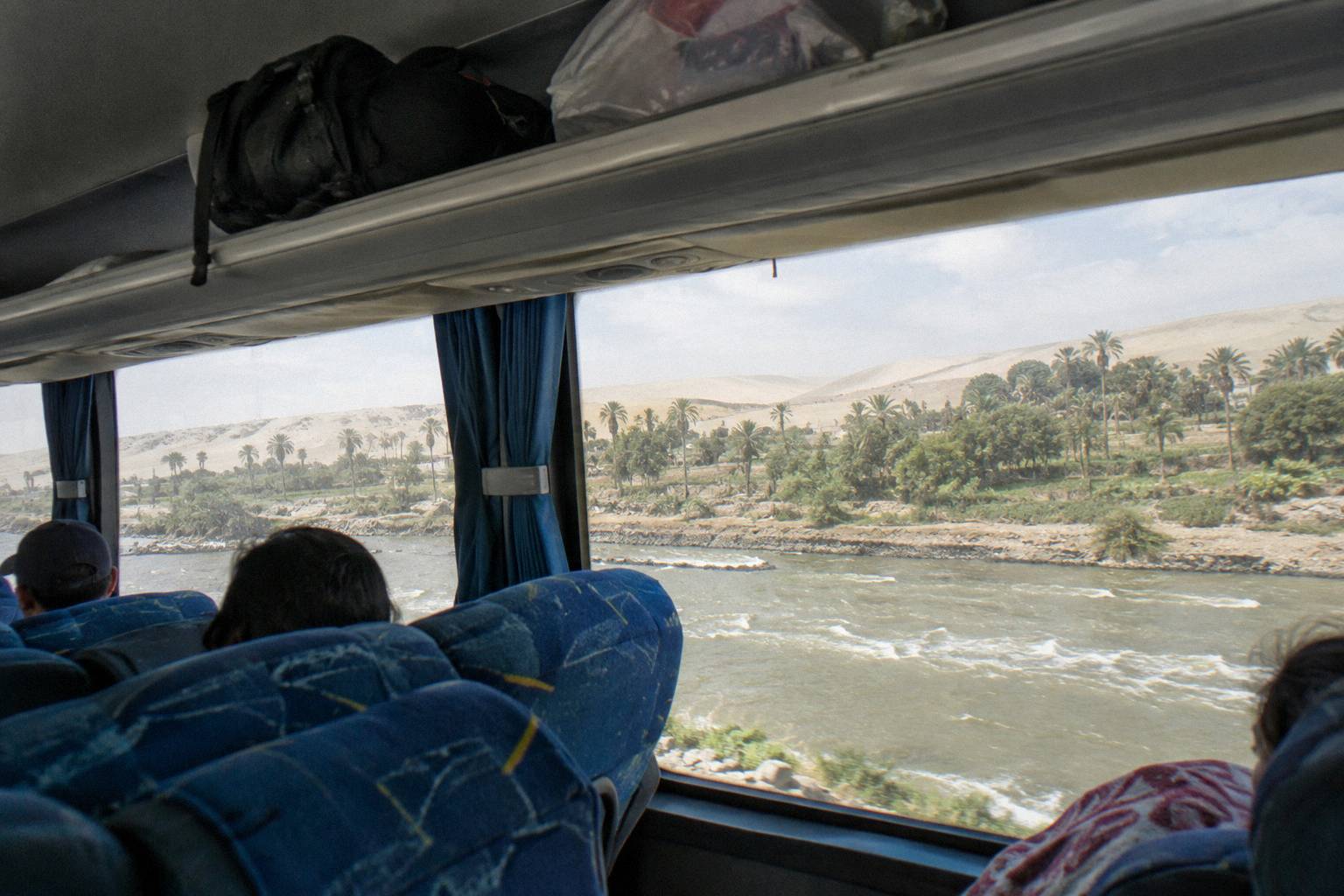
What Are Your Rights If Your Luggage Is Lost Or Damaged?
When a carrier is at fault for lost or damaged hold luggage, Peru's national transit regulation sets minimum compensation at 25 percent of the fare multiplied by 5, 10, 15, or 20, depending on the weight band of the bag. The same rules also entitle you to a receipt for your fare.
That 25 percent formula is a floor, not a ceiling on negotiation, and it is weight-banded, which is why the luggage ticket and the fare receipt matter together: one proves the bag was checked, the other proves the fare the percentage attaches to. Damage claims go first to the carrier's Libro de Reclamaciones, the formal complaints book any business in Peru must hold, which has 15 working days to answer.
If the answer is absent or wrong, INDECOPI is the consumer authority: 224 7777 in Lima, 0800 4 4040 in the regions, or the Reclama Virtual portal for an online claim. The claim process is free to start, and the documentation that wins it is the stub, the fare receipt and photographs of the bag before and after.
The postponement right deserves a line of its own, because a missed departure is a luggage problem too. With 24 hours notice, INDECOPI's notice states the carrier may charge only the real reissue cost and no penalty, and if the company itself delays or fails to run the service, the passenger has the right to information and to reprogramming or a refund.
| Situation | Where it goes | What to bring |
|---|---|---|
| Bag lost or damaged in the hold | Carrier's Libro de Reclamaciones, 15 working days to answer | Hold stub, fare receipt, photos |
| No answer or a refused claim | INDECOPI: 224 7777 Lima, 0800 4 4040 regions, Reclama Virtual | Copies of the complaints-book entry and receipts |
| Ticket needs postponing or transferring | Direct to the carrier with 24 hours notice | Ticket and ID; only the real reissue cost applies |
| Vehicle or driver concern | SUTRAN lookup or Alo SUTRAN 0800 12345 | Plate number or driver DNI |
Where Should Valuables Go On An Overnight Bus?
On an overnight bus, valuables belong in exactly one place: on your body or within physical reach at all times, never in the overhead rack and never in the hold. Since armed gangs have been known to stop buses and rob travellers at night, and Canada's official advice is to avoid buses after dark, anything you cannot afford to lose should stay physically attached to you until morning.
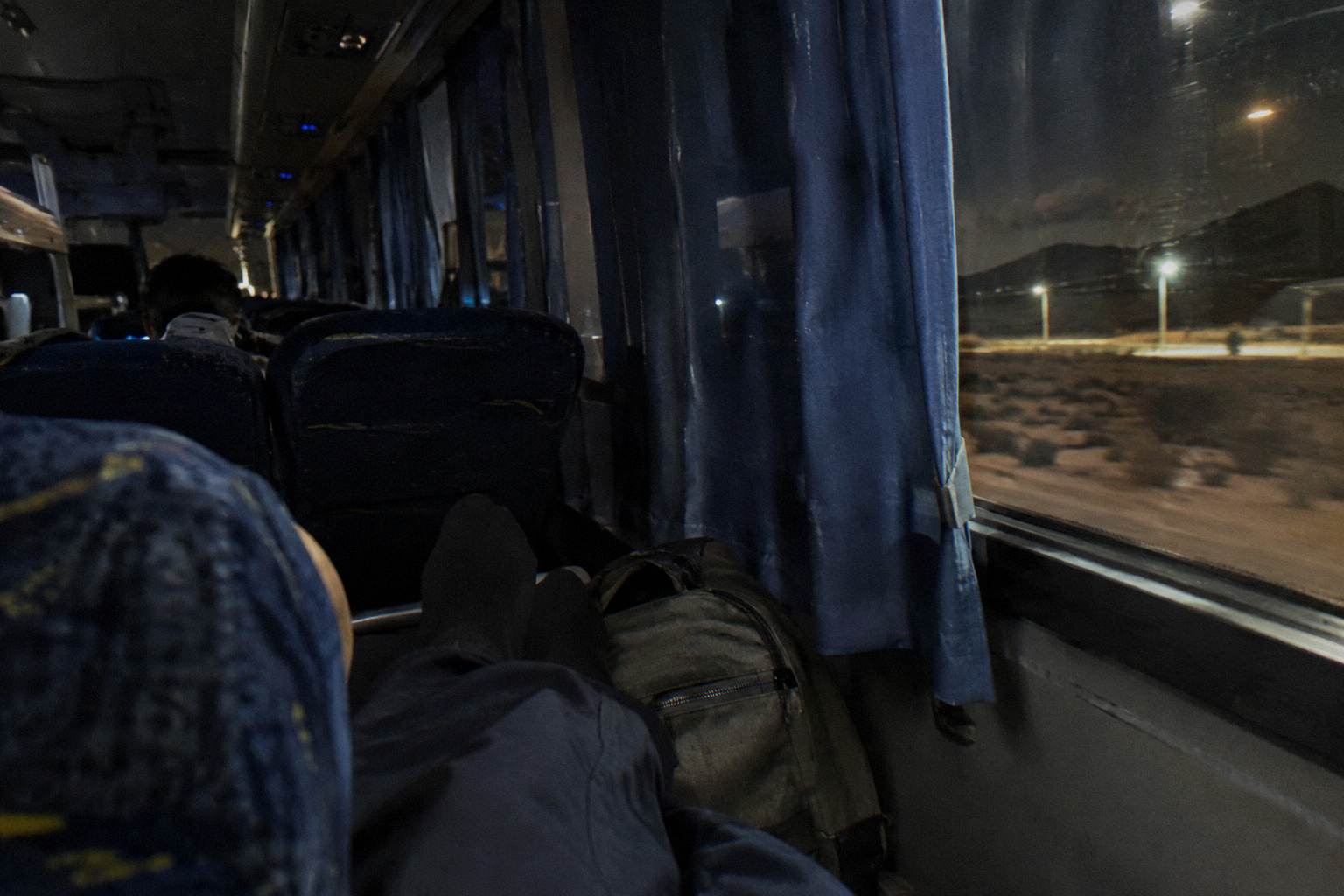
That is the strongest language in any of the four advisory sets, and the seat-level advice follows from it. A cross-body bag worn under a jacket, a money belt with passport and cards, and a small day bag looped around your ankle or wedged under your legs keeps every document on your person through the hours you cannot watch anything. The overnight bus in Peru guide covers the wider night-riding picture, including which advisory warnings attach to which routes.
Day buses shift the arithmetic a little: you are awake, the rack is within sight, and a small bag with a strap looped through an armrest is a reasonable risk for a few hours. The habits worth keeping on any service are few and boring. Keep the hold stub on your body, not in the rack bag. Count your pieces before boarding and after every stop. And when the bus pauses at an intermediate terminal, keep your hand bag on your lap rather than the rack, because intermediate holds open and close while you sit.
Theft prevention is also a booking decision. A through ticket with a single operator and a single drop-off point means one hold opening and one collection rather than three, and a seat class with wider pitch gives you floor space to keep a bag against your legs. The Puno to Cusco bus with a lunch stop, run by Turismo Mer, is a 4.6-rated service across 24 reviews that drops at the operator's own private terminal in Cusco, and it pairs with a second long-haul option on the same corridor; you can check availability alongside that route link.
What Should You Watch For At Terminals?
Terminal forecourts are where bags change hands, where taxis circle, and where the FCDO's warning about criminals posing as taxi drivers applies directly. The regulation concentrates regular carriers into habilitated terminals with boarding inside the terminal area, and the registered taxi ranks sit inside that same perimeter, which is the FCDO's own instruction: "use one of the taxis registered at bus terminals".
The sequence worth rehearsing is arrival. Watch the hold open rather than heading for the exit. Collect on the stub. Move everything through the terminal before the street. The what to do when a road block stops your bus post covers the rarer but more disruptive version of terminal limbo, when a blockade leaves a bus and its hold stranded mid-route.
Operator terminals differ company by company, and there is no single main terminal in a city like Lima: Cruz del Sur departs from Terminal Javier Prado at Av. Javier Prado Este 1109, La Victoria, while Oltursa boards at Jiron Manuel Portocarrero No 380, Surquillo, both per their own pages. Knowing your carrier's address before arrival means you are not standing in a forecourt with two bags and an open question about where to go next.
The Smartraveller guidance for the street outside is plain: "Exercise a high degree of caution in Peru overall due to the threat of violent crime", with the specific note of "bogus roadblocks or checkpoints on roads outside major cities after dark". None of that is a reason to avoid the buses; it is a reason to keep the document bag on your body from terminal to hotel door, and to treat the walk between the terminal door and your taxi as the last unwatched stretch of the journey.
How Do You Claim, Complain Or Get Answers?
Complaints about a carrier start in the company's own Libro de Reclamaciones, which has 15 working days to respond, and escalate to INDECOPI at 224 7777 in Lima, 0800 4 4040 in the regions, or the Reclama Virtual portal online. Before any of that, SUTRAN lets you check the bus and driver themselves by plate or driver DNI, with Alo SUTRAN on 0800 12345 around the clock.
The order matters. A missing or damaged bag is a consumer claim against the carrier, so it runs through the complaints book and then INDECOPI, not through SUTRAN, whose own complaints book is for complaints about SUTRAN itself. A safety concern about the vehicle or driver is the reverse: SUTRAN's lane, checkable before you even board. Keeping both numbers on hand costs nothing, and the lookup page can be opened on a phone while you wait at the gate.
The advisory background to all of this is worth reading directly rather than second-hand. The FCDO's Peru safety and security page carries the bus-specific quotes, and Smartraveller's Peru page holds the overnight-theft wording. Both name terminals and night services as the exposure points, which is the same picture the stowage mechanics paint from the inside.
A booked ticket with clear cancellation terms is part of the same safety margin. The Wayki Bus Peru one-way service from Miraflores to Paracas, rated 4.2 across 62 reviews, drops at El Chaco in Paracas with the listing giving 3 hours, and free cancellation up to 24 hours before for a full refund is listed, which matters when plans shift after a disruption. A twin listing by another operator offers a Lima to Paracas bus with hotel pickup in Miraflores and Barranco from US$18 per person, on its own basis and never merged with this one.
What Does The Regulation Require Of The Bus Itself?
Peru's national transit regulation states that interprovincial buses must carry GPS monitoring that reports to the authority permanently, that seat belts are mandatory with three-point belts at the driver's seat and at least two-point belts at passenger seats, and that crew must announce the belt requirement. SUTRAN states the 90 km/h limit applies only on roads without another speed sign, and the regulation caps continuous driving at 5 hours by day and 4 at night.
That driving-hours rule is why long services carry relief drivers rather than one exhausted one, with a second driver when a trip exceeds 5 hours by day or 4 at night and a third over 20 hours, as the regulation text states, and the monitoring rule is why a carrier can reconstruct what happened when something goes wrong en route. Smartraveller names excessive speed, poor maintenance and driver fatigue as the causes behind bus accidents, which is the risk picture the regulation is written against.
For the reader weighing a booked tourist bus against an ordinary interprovincial service, the stowage mechanics are identical: hold tag at check-in, hand luggage in the cabin, stub matched at arrival. What changes is the boarding point and the drop-off, and both are printed on whichever ticket you hold. A longer comparison sits in the Peru bus tours versus independent bus travel guide, and the timing question is covered in how many days to see Peru by bus.
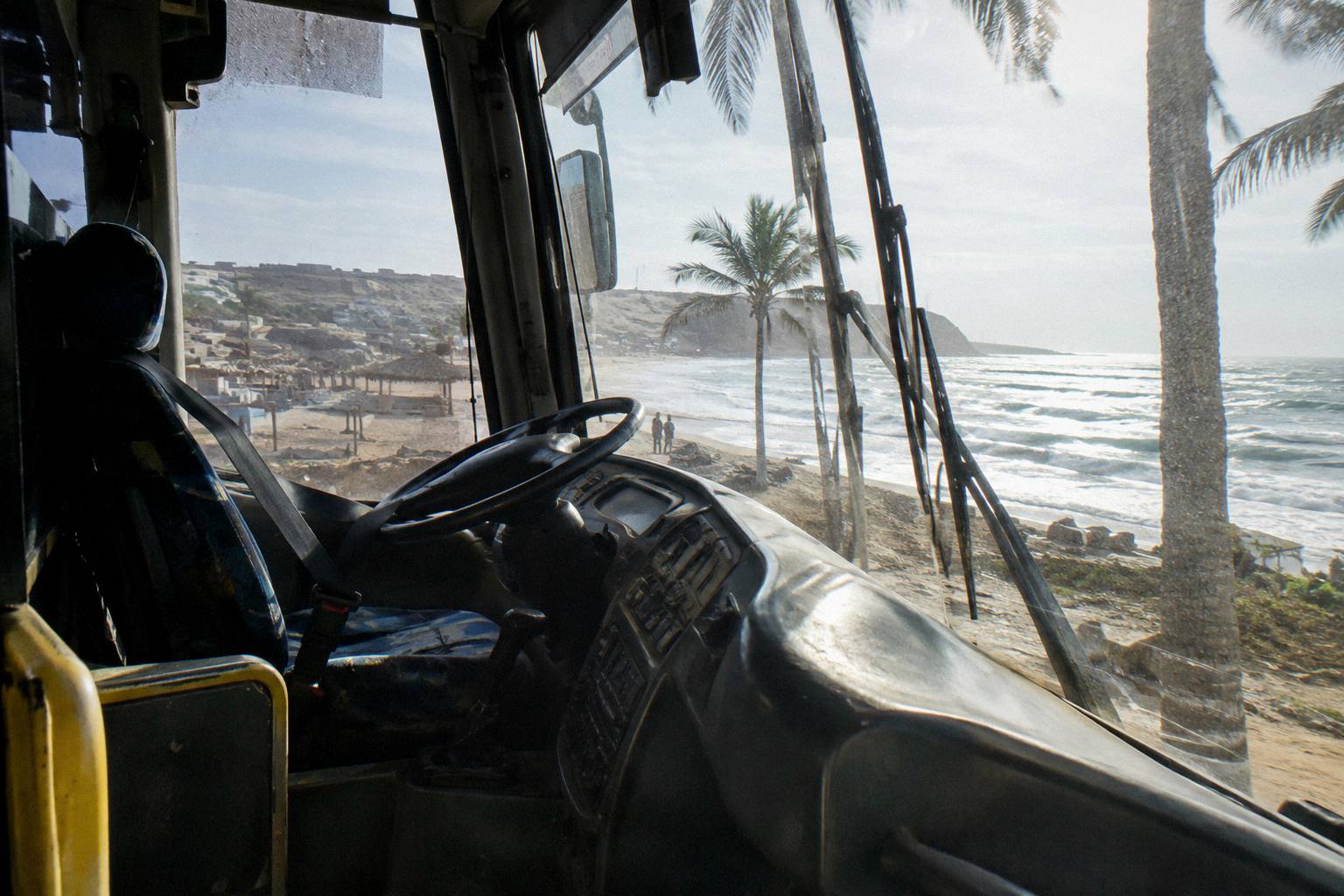
Whatever seat you end up in, the luggage routine on Peru By Bus routes stays the same: tag the hold bag, keep the stub, keep documents on your body, and keep the day bag where your legs can feel it. The habits fit in one paragraph, and they cover nearly every version of the problem that a long ride through the sierra can produce.
If the trip you are planning runs the southern corridor, the same three tickets that keep stowage simple are worth a side-by-side look before you commit.
Common Questions About Peru Bus Luggage
How Much Luggage Can I Bring On A Peru Bus?
Up to 20 kg travels free on national service under Peru's national transit regulation. Operator terms sit at the same hold figure: Cruz del Sur lists 20 kg hold plus 6 kg hand, Oltursa 20 kg plus one hand piece up to 5 kg, Movil Bus 20 kg across up to three pieces plus 8 kg hand, and Linea 20 kg.
Do Peru Buses Tag Hold Luggage?
Yes, hold bags receive a numbered tag at check-in and you get the matching stub, which you surrender at collection. SUTRAN and INDECOPI both advise getting a luggage ticket for every checked bag, and the stub is the document that supports any loss or damage claim.
Where Do Valuables Go On A Peru Overnight Bus?
On your body or within physical contact, never in the overhead rack and never in the hold. Smartraveller warns of theft from sleeping passengers on routes between Lima, Ica, Nazca and Cusco, and the FCDO instructs that on bus journeys you keep your passport with you, meaning on your person.
What Compensation Applies If My Bag Is Lost Or Damaged?
Where the carrier is at fault, the regulation sets a minimum of 25 percent of the fare multiplied by 5, 10, 15 or 20 depending on the bag's weight band, as Peru's national transit regulation states. Claims start in the carrier's Libro de Reclamaciones and escalate to INDECOPI at 224 7777 in Lima, 0800 4 4040 in the regions, or the Reclama Virtual portal.
Can I Change A Peru Bus Ticket After Booking?
INDECOPI states that a domestic bus ticket can be postponed or transferred with at least 24 hours notice, with only the real cost of reissue charged and no penalty. Booked tourist-bus products carry their own terms; several on the tickets listed on this site list free cancellation up to 24 hours before for a full refund.
Is Theft Common At Peru Bus Terminals?
The advisories treat terminals as an exposure point rather than a danger to be avoided. The FCDO warns of criminals posing as taxi drivers at Jorge Chavez International Airport and bus terminals and advises using taxis registered at the terminals; Canada's advice says to remain particularly vigilant at bus terminals and use only authorized cabs inside them.