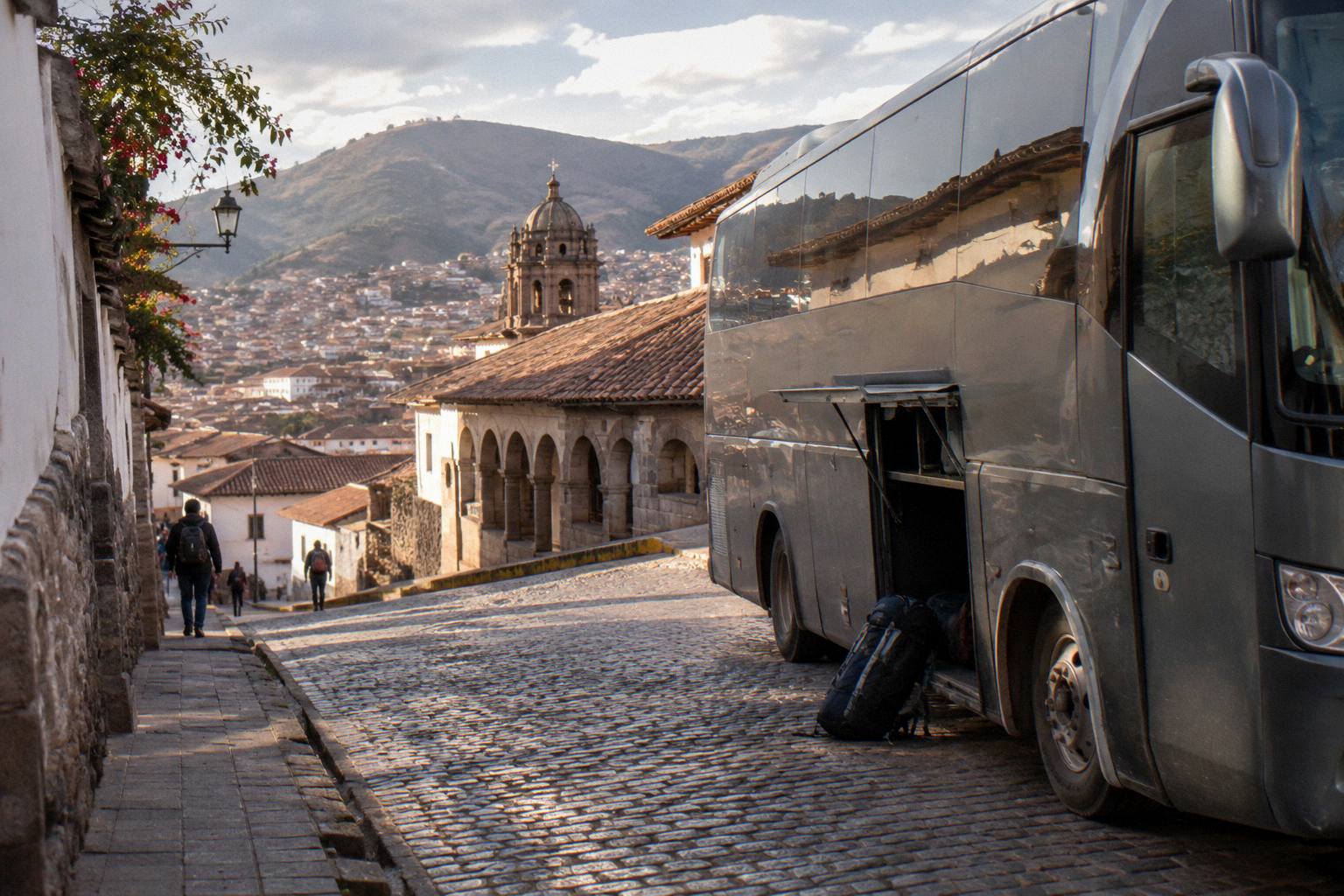
What Happens If A Peru Bus Is Stopped By A Road Block?
Road blocks from strikes and protests can stop an intercity bus in Peru. Here is what government advice says to do, how to check road status, and what happens to your ticket.
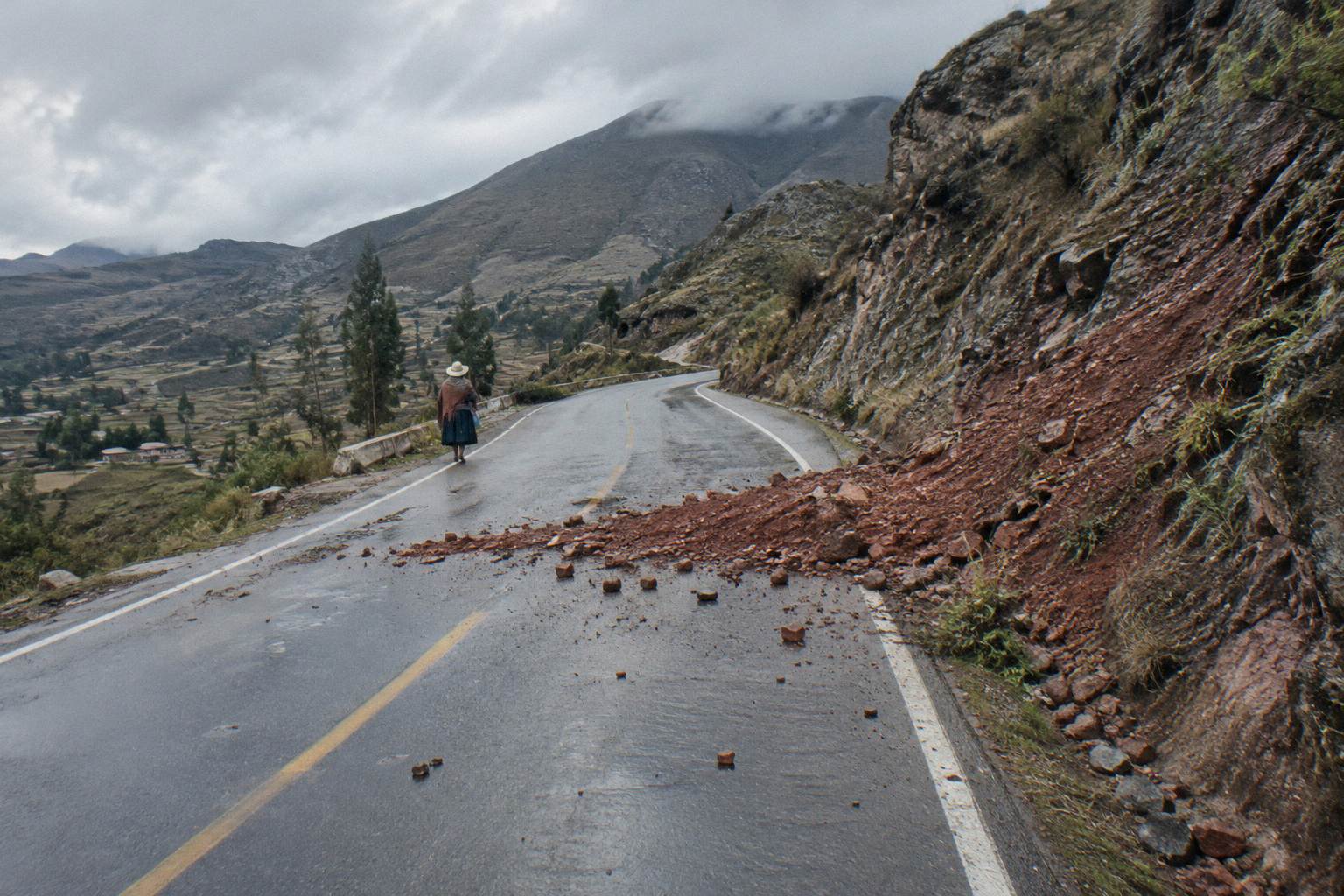
A road block stops the bus where it stands, the crew waits for the road to reopen, and passengers are not permitted to walk or drive around the barrier. The UK FCDO's instruction is verbatim: "Do not attempt to pass blockades." Trips resume when the block clears, or the carrier reruns the service; INDECOPI says a domestic ticket can be postponed or transferred with at least 24 hours notice at only the real reissue cost. Blocks in Peru come from two directions: political, strikes and protests that close highways, and physical, rain, landslides and damaged road during the Andean wet season. Both appear on SUTRAN's live alert map before you board, and both follow rules you can plan around. This article walks through what happens at the block itself, what government advice says in its own words, how to check the road before departure, and where your ticket stands if the route closes.
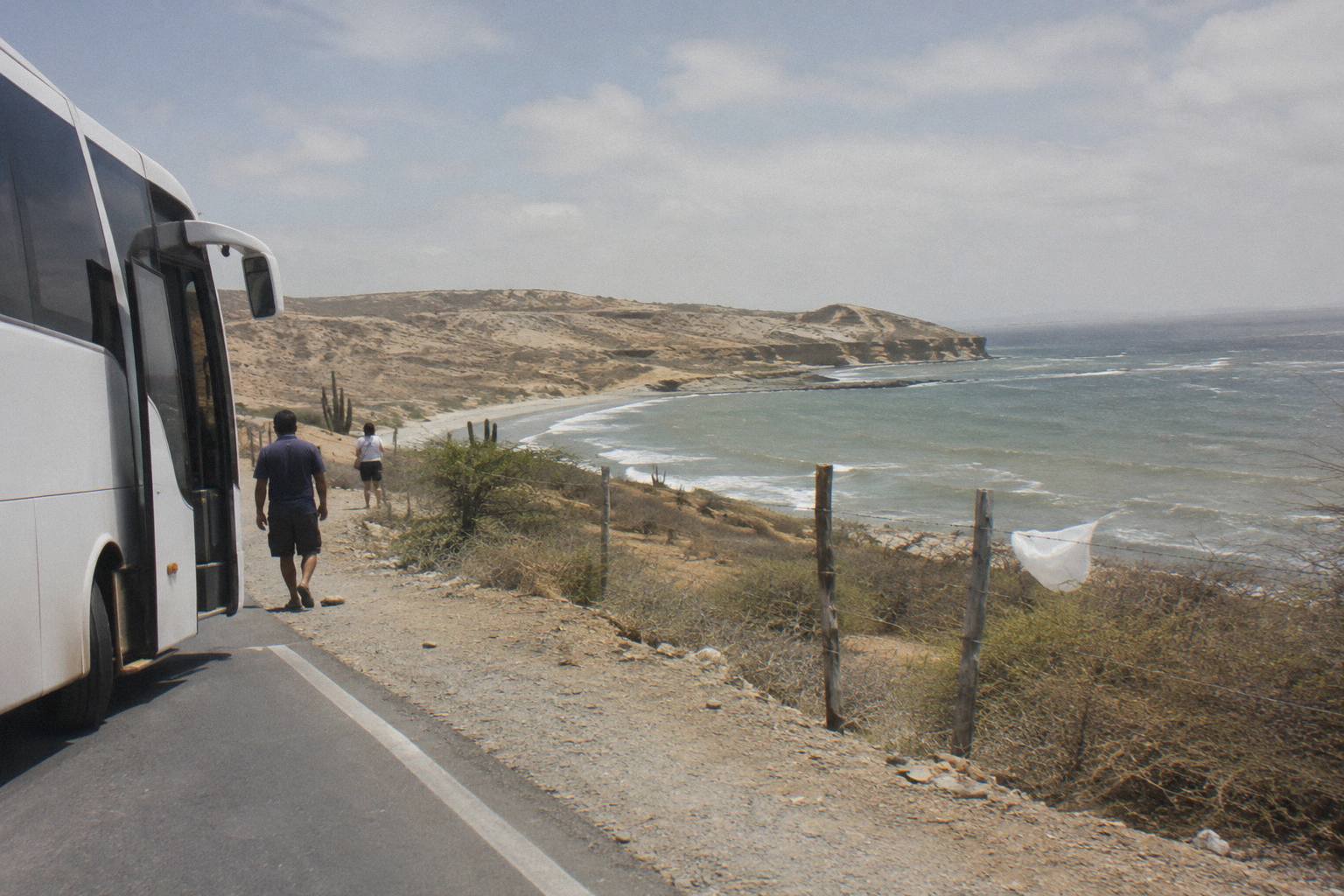
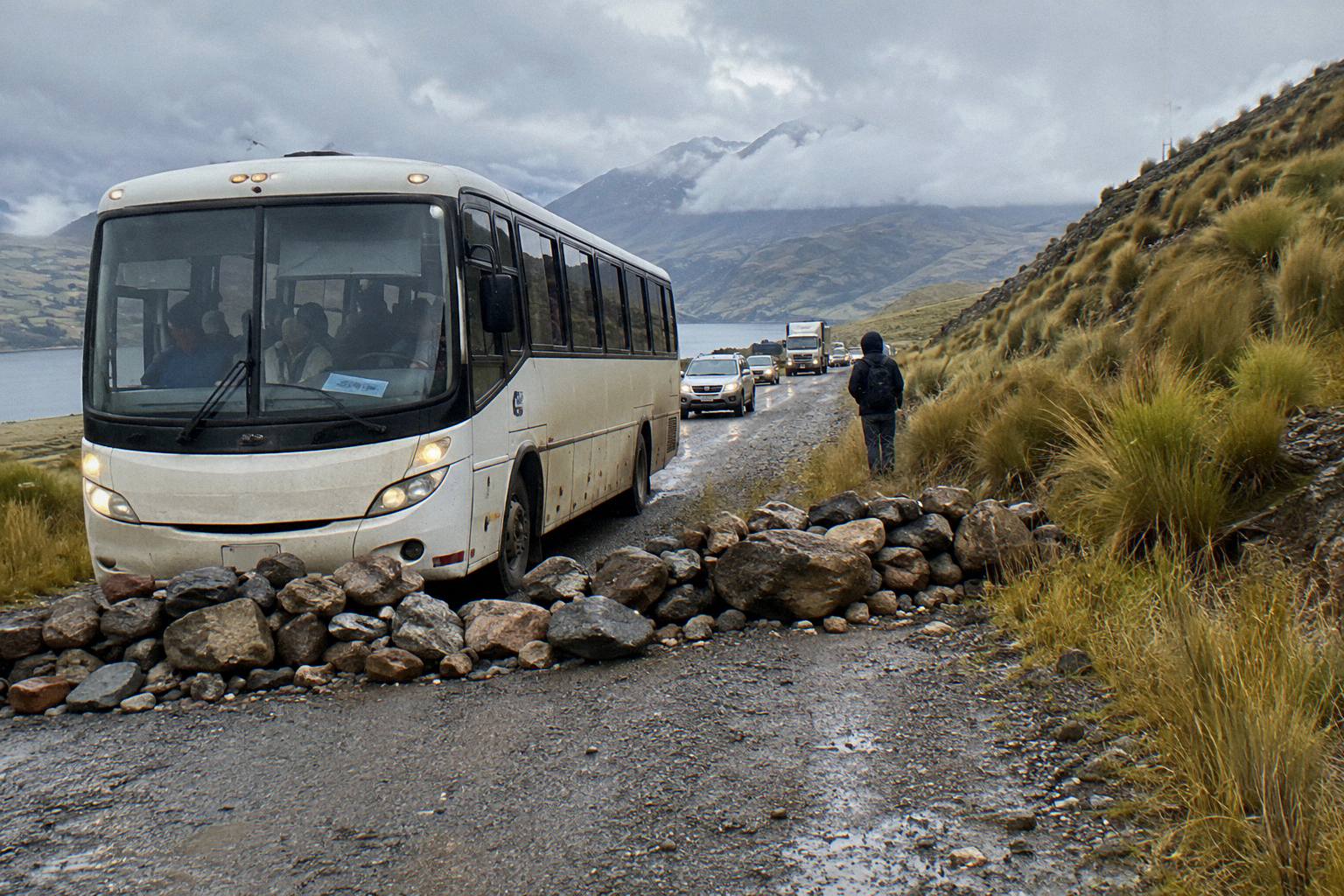
The mechanics of a block are unglamorous. A group occupies the carriageway with stones, tyres or bodies; vehicles queue in both directions; the bus company's options narrow to waiting, turning back or finding an authorised alternative route. Peru's national transit regulation states that regular carriers must use habilitated terminals at origin, destination and stops and may not use the public road as a terminal, so a stranded bus cannot simply set passengers down anywhere and call it a destination. The driver is carrying a schedule, a second driver if the trip exceeds 5 hours by day or 4 at night, and GPS monitoring that reports to the transport authority, which means the carrier's control room knows the bus has stopped even before passengers do.
For a reader weighing whether a long southern bus is dependable at all, the practical counterweight is picking services that list clear terms: free cancellation windows, named drop-off points and stated durations.
Why Do Road Blocks Happen On Peru Bus Routes?
Blocks are erected by local groups on strike, by protest movements, and by weather that damages the road itself. Canada's advice is direct: "Roadblocks are frequently erected during demonstrations," and the FCDO warns that "Political protests in Peru are unpredictable and can escalate quickly. Demonstrations can become violent and lead to roadblocks, travel disruption, including trains, and suspension of immigration services at land borders." Strikes in Peru are announced locally, not nationally; there is no single official register of planned paros. The FCDO notes that "Local groups can announce strike action, with little or no notice, particularly in areas connected to mining," and Canada adds that strikes "could also lead to border closures, including with Bolivia." The regions named by the FCDO for recent protests include Arequipa, Ayacucho, Cusco, La Libertad, Madre de Dios and Puno, which is a near-exact map of the southern tourist corridor.
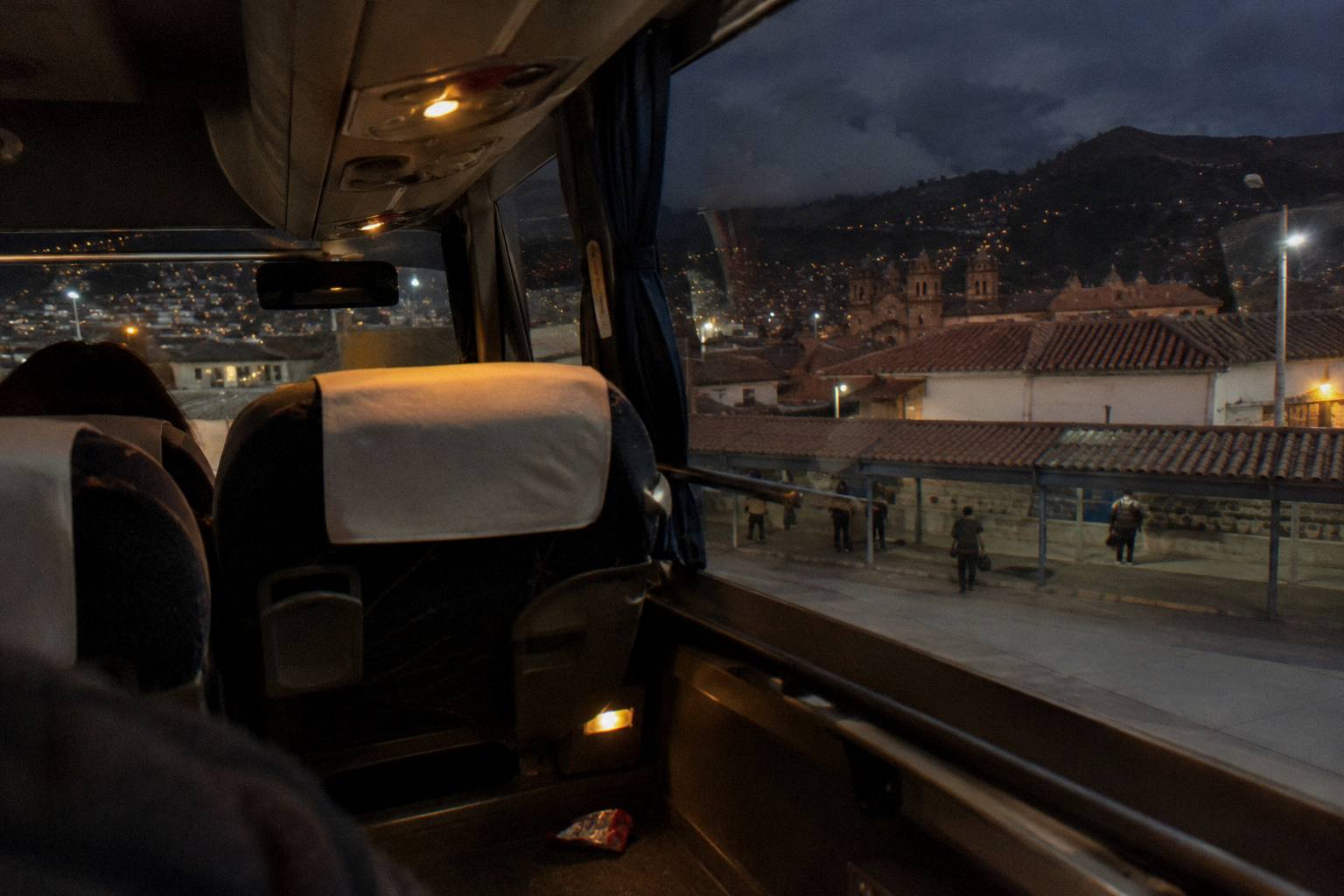
The second cause is physical. The Andean rainy season runs roughly September to April, with most of the Cusco sierra wettest from November to March, according to SENAMHI. Puno is the extreme case: SENAMHI's figures show Puno holds 89 percent of its annual rain between September and March, with January the peak month. Rain that heavy closes passes and washes out shoulders, and a road rendered impassable by a landslide is as closed as one held by strikers. The FCDO also carries a standing notice that "Through late 2026 to April 2027, the El Nino weather event is expected to generate heavy rainfall, possible flooding, landslides, and mudslides, especially in, but not restricted to, the northern and central coast. These could cause travel disruption, such as road closures."
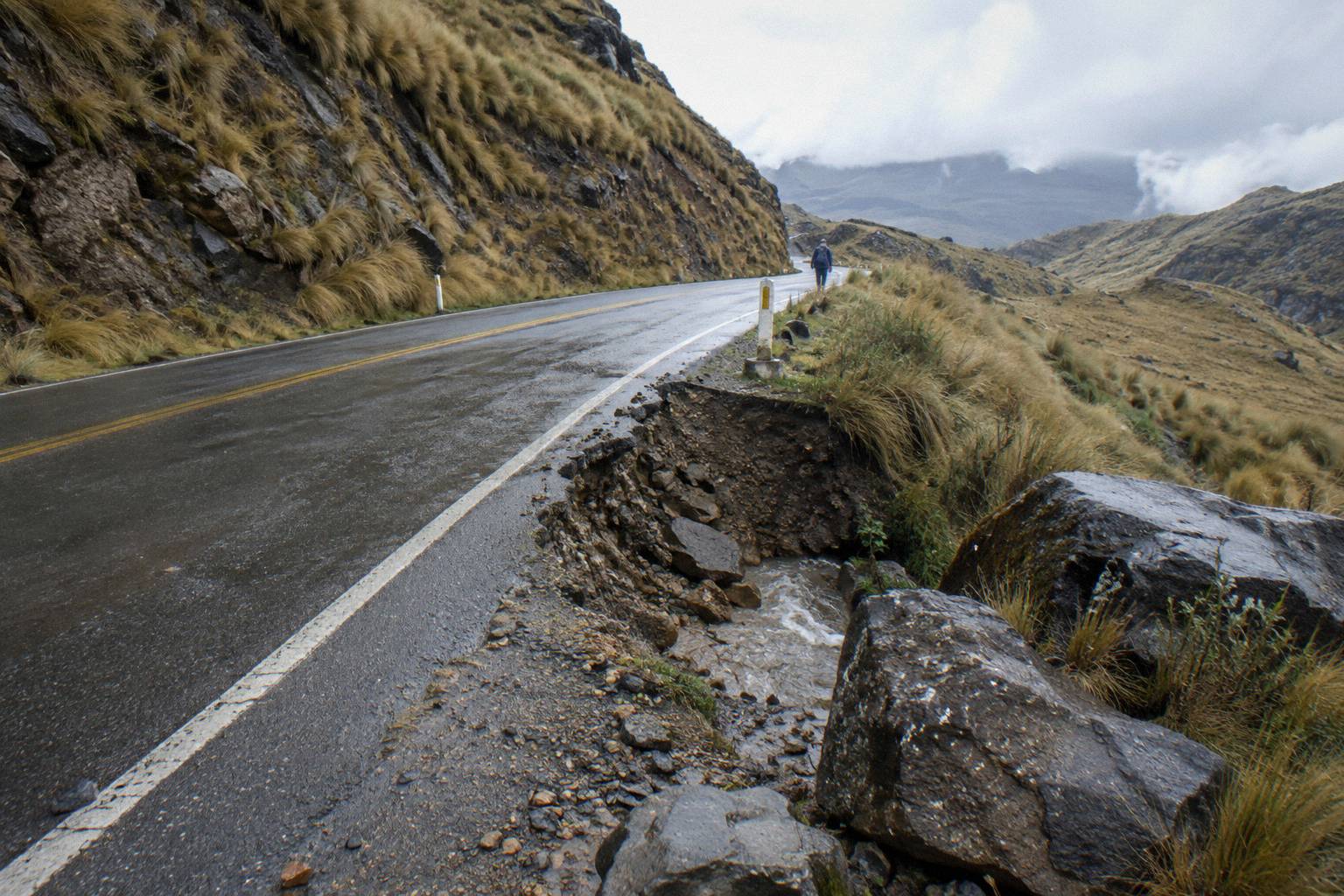
A third category gets its own warning line from Smartraveller, Australia's advisory service: "bogus roadblocks or checkpoints on roads outside major cities after dark." The US Embassy in Lima, republishing the State Department advisory, is blunter about motive: "Criminal groups sometimes set up roadblocks to rob people in areas outside of Lima." That distinction matters because it changes the correct response, a political block wants the road, while a bogus checkpoint wants the vehicle. Government advice on night driving is where the two categories overlap, and it is covered in its own section below.
| Source | Verbatim wording on road blocks |
|---|---|
| UK FCDO | "Do not attempt to pass blockades." |
| Government of Canada | "Roadblocks are frequently erected during demonstrations" |
| US Embassy Lima | "Criminal groups sometimes set up roadblocks to rob people in areas outside of Lima." |
| Smartraveller | "bogus roadblocks or checkpoints on roads outside major cities after dark" |
Because the whole southern corridor shares these risks, the ticket you buy matters as much as the day you travel. The World Explorer Peru direct bus from Cusco to Arequipa, linked here, covers the 487 km between the two cities, a route the OSRM router puts at a 9.4 hour free-flow drive estimate that real bus journeys exceed; the listing itself gives 10 hours and names a Cruzero Suite 160 degree seat. It is rated 3.7 across 16 reviews. Free cancellation up to 24 hours before applies for a full refund, as listed, which is the useful property when a strike is brewing.
What Should Passengers Do When A Bus Is Stopped?
Stay on the bus, keep your passport with you, and follow the crew's instructions without attempting to cross the barrier. The FCDO states "on bus journeys, keep your passport with you" and instructs "Do not attempt to pass blockades." Canada's parallel advice is to "Remain particularly vigilant at bus terminals and in taxis" once the journey resumes or turns back. That is the sum of what the official sources direct passengers to do at a block, and this article does not go beyond them: no source advises walking the line, negotiating with protesters or hiring a motorcycle to skirt the closure, so none of that appears here. What the sources do support is patience with the wait itself. Buses on regular service board only at authorised points with the bus stopped, per Peru's national transit regulation, and the carrier's obligation is to run the service from terminal to terminal.
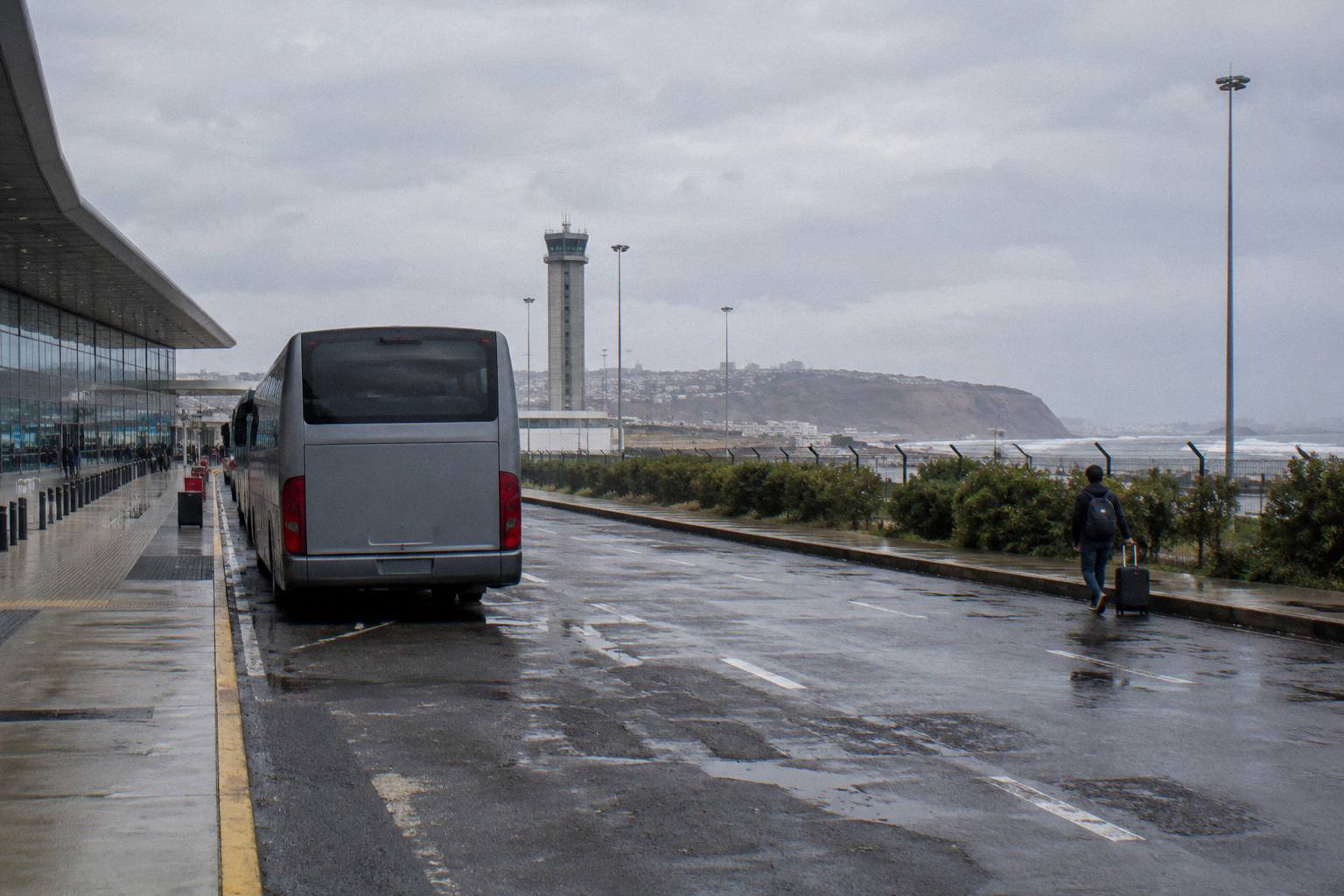
The wait can be long, and the crew is the only authority with information about reruns or reroutes. Peru's national transit regulation states the bus carries GPS monitoring that transmits to the authority permanently, so the company's operations desk sees the stoppage; asking the crew what control has told them is more productive than speculation. If the bus turns back to its origin terminal, the ticket rules in the section below take over: INDECOPI, Peru's consumer agency, says a domestic bus ticket can be postponed or transferred with at least 24 hours notice at only the real cost of reissuing, no penalty, and when the company itself fails to run the service, the passenger has the right to information and to reprogramming or a refund.
There is also a night dimension. Canada advises "Avoid taking buses and coaches at night," and the FCDO writes "Bus crashes are common, especially at night. Only use reputable transport companies, and where possible, avoid overnight travel, especially in mountainous and remote regions." Smartraveller adds that "Robberies and assaults occur frequently on intercity buses, including while passengers are sleeping," with "theft as you sleep on intercity bus routes between Lima, Ica, Nazca and Cusco." A bus stopped at a block after dark is the conjunction of every one of those warnings, which is why the advisories push against night legs on remote roads in the first place.
If a robbery occurs, the reporting route is formal: the carrier's Libro de Reclamaciones, then INDECOPI on 224 7777 in Lima or 0800 4 4040 in the regions, or the Reclama Virtual portal. Complaints to a carrier must be answered within 15 working days under the consumer rules. For road status rather than crime, the numbers that matter are SUTRAN's, in the next section.
How Do You Check Peru Road Conditions Before A Bus Trip?
SUTRAN, Peru's transport regulator, runs a live alert map at alertasviales.sutran.gob.pe that colours each road red for closed, yellow for restricted and green for open, plus a 24 hour WhatsApp line, 999 382 606. Because paros are announced locally with little notice, the working routine is to check the map and the carrier the day before travel. The map's causes include natural events, accidents, infrastructure damage and the "human factor" category that covers blockades from social protest. It is the closest thing Peru has to a national road-status register, and it is free.
| Check | Where | What it tells you |
|---|---|---|
| SUTRAN alert map | alertasviales.sutran.gob.pe | Red closed, yellow restricted, green open, by road segment |
| SUTRAN WhatsApp | 999 382 606 | 24 hour line for road alerts |
| Carrier's own page | The operator's terminal or site | Whether a specific departure is running, rerouted or cancelled |
| Bus and driver status | SUTRAN's lookup by plate or driver DNI | That the vehicle and driver have their papers in order |
Two further official references are worth holding. The FCDO's Peru safety and security page carries the standing advice quoted through this article, refreshed frequently when protest activity shifts. Canada's Peru travel advice adds the regional advisories and the border-closure warning. Both name strikes that "can be called at short notice," in Smartraveller's phrasing, which is why a map checked at breakfast can still be wrong by nightfall; the check is a filter, not a guarantee.
The seasonal picture rounds out the pre-trip check. SENAMHI places the Andean rainy season roughly September to April, wettest from November to March in most of the Cusco sierra, with Puno's rain building from September and peaking in January. November can bring veranillos, short dry spells inside the wet season, so a clear forecast in November says less about the month than it seems to. The FCDO's El Nino notice, quoted above, layers extra rain and closures onto the northern and central coast through April 2027.
What Happens To Your Bus Ticket When A Route Closes?
When the company cannot run the service, INDECOPI says the passenger has the right to information and to reprogramming or a refund; when the passenger steps back voluntarily, a domestic ticket can be postponed or transferred with at least 24 hours notice, with only the real reissue cost charged and no penalty. Those are the two doors out of a blocked trip, and they open in different directions. A strike that stops the carrier from departing is the company's failure, and the refund or rerun conversation starts from that fact. A forecast you dislike is your decision, and the 24 hour transfer rule, plus the product's own cancellation terms, is what governs it.
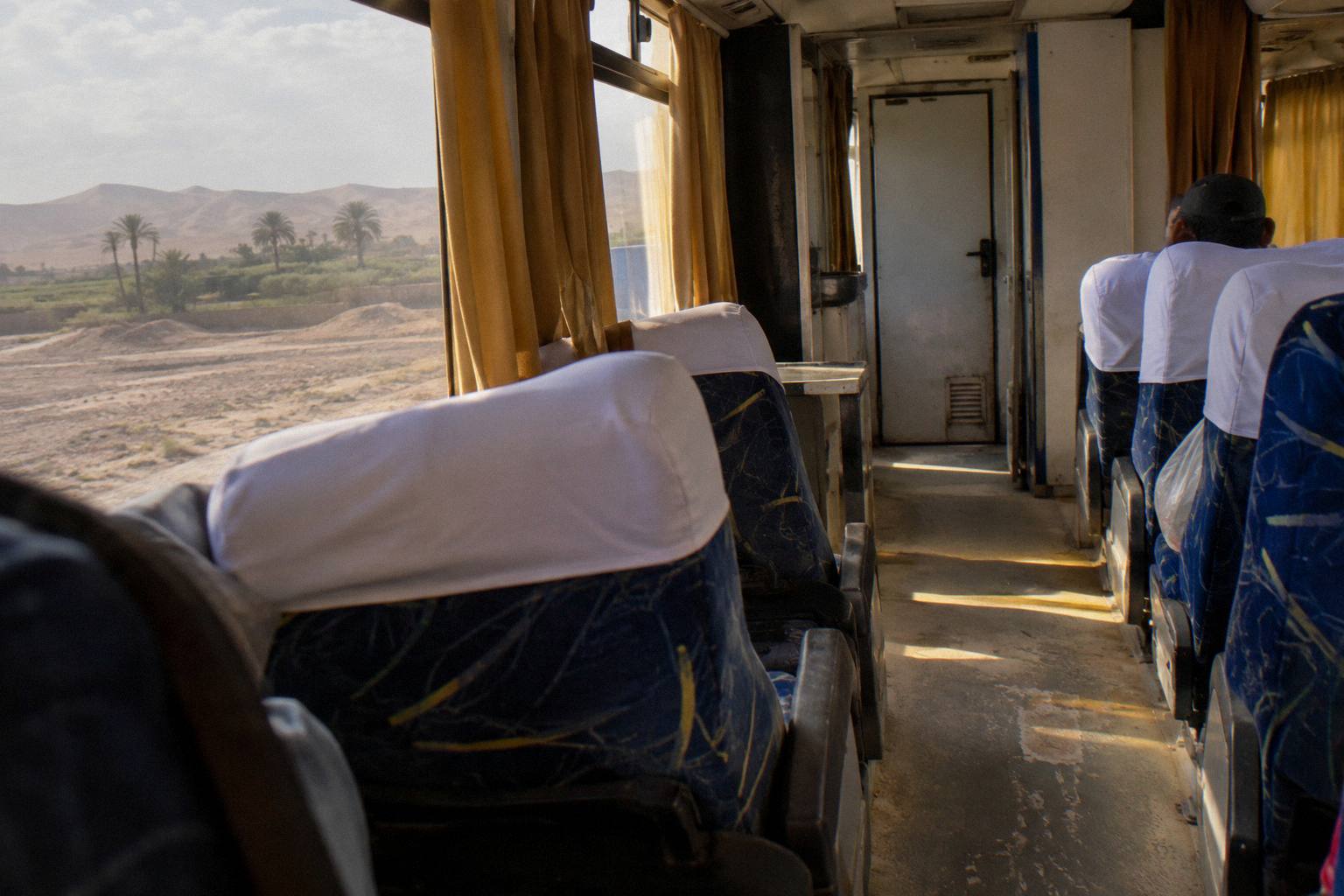
The Turismo Mer sleeper bus from Arequipa to Puno, available here, is rated 4.3 across 20 reviews, lists a 160 degree recline and a 7 hour duration, and runs the 273 km Arequipa to Puno leg, a 5.5 hour free-flow drive estimate that real journeys exceed; its listing notes the terminal boarding fee is not included, so check the boarding fee line on the listing. Check availability
The Arequipa to Puno crossing deserves its own note in a wet-season year, because it climbs into the puna where Puno's rain concentrates. The same logic applies to the Cusco side: the Turismo Mer tourist bus from Puno to Cusco with a lunch stop, rated 4.6 across 24 reviews, gives an 11 hour duration for the 387 km run, a 6.2 hour free-flow drive estimate that real journeys exceed. See the Puno to Cusco bus page for its drop-off and cancellation terms.
One caution on refunds: read the product's own terms before assuming. The 24 hour INDECOPI transfer right still applies to domestic tickets as a consumer rule, but a product that will not reissue will not reissue cheaply, so the free-cancellation listings are the ones to prefer when a block is live.
Which Southern Routes Are Most Exposed To Closures?
The corridors named in protest advisories, Arequipa, Cusco and Puno, and the rain-dominated climbs between them, carry the block risk; the FCDO lists those three regions among those with recent protests, and SENAMHI shows Puno taking 89 percent of its annual rain from September to March. Exposure here means length plus weather plus politics. A 10 hour bus crossing three named regions simply has more road to lose than a 3 hour coastal hop. The free-flow figures below, OSRM drive estimates that real bus journeys exceed, show how much road each southern leg puts under you.
| Route | Distance | Free-flow drive estimate |
|---|---|---|
| Cusco to Arequipa | 487 km | 9.4 h |
| Puno to Cusco | 387 km | 6.2 h |
| Arequipa to Puno | 273 km | 5.5 h |
| Arequipa to Nazca | 566 km | 7.8 h |
| Lima to Arequipa | 1,002 km | 14.3 h |
| Cusco to Hidroelectrica | 212 km | 5.1 h |
The US Embassy's note on its own staff is a quiet indicator of which roads the professionals treat as workable: U.S. government employees "may travel at night with commercial bus companies along the Pan-American Highway, to Huaraz, and on the Lima-Arequipa-Cusco corridor." The embassy's advisory pairs that with the Level 2 rating, "Exercise Increased Caution," and the roadblock robbery warning quoted earlier. None of it reads as a reason to avoid the corridor; it reads as a reason to use the main roads, which is also Canada's advice: "Follow the main roads used by bus tour companies."
The Lima, Arequipa, Cusco and Puno chain is the classic tourist sequence, and Peru By Bus covers its practical end to end, from the terminals in each city to the altitude jump from near-coastal Lima to Cusco at about 3,400 m and Puno higher still at 3,848 m per INEI's table. For readers planning the whole loop rather than one leg, the southern Peru bus circuit guide lays out the sequence with its pass heights and rest stops; the bus delays, strikes and rainy season guide collects the disruption picture in one place. Blocks are a corridor problem, and the corridor has a shape.
Should You Still Book A Bus When A Block Is Possible?
Yes, on the main corridors with free-cancellation tickets and a map check the day before, because blocks are temporary and local while the network keeps running. INDECOPI's reprogramming and refund rights, SUTRAN's live map and the FCDO's plain instruction not to pass blockades together form a workable safety net around a booked seat. The alternative, compressing a southern itinerary into flights or skipping the corridor, trades a manageable, checkable disruption risk for cost and rigidity of another kind. The advisories do not tell travellers to stay off Peru's buses; they tell them which companies, which hours and which behaviours to prefer, and those are bookable preferences.
Booking well looks like this: a seat with free cancellation up to 24 hours before, a departure in daylight on a road coloured green on the SUTRAN map the evening before, a main road used by tour buses rather than a shortcut, and the carrier's terminal confirmed on its own page. The Cusco to Arequipa direct bus, the ticket featured alongside this article, fits the pattern: a named 160 degree seat for a 10 hour listing duration, a 3.7 rating across 16 reviews, and free cancellation up to 24 hours before for a full refund, as listed. Its drop-off is the Arequipa bus terminal, a fixed, checkable endpoint rather than a roadside promise.
The last habit is the oldest one in the advisories: keep your passport with you on the bus, not in the hold, per the FCDO, and treat terminal taxis with the suspicion the same page directs at them, "There is a risk of robbery by criminals posing as taxi drivers, especially at Jorge Chavez International Airport and bus terminals," with the remedy "use one of the taxis registered at bus terminals." A block is the dramatic version of Peru's road risk; the taxi rank outside the terminal is the mundane one, and the advice covers both.
If a block does stop your bus, the sequence is short: stay on the bus, keep your passport on your body, follow the crew, do not cross the barrier, and if the service fails, take the INDECOPI route to a rerun or refund. Everything else, the map the night before, the cancellation window, the daylight departure, happens before the bus leaves the terminal, which is where the real decision is made.
Common Questions About Peru Bus Road Blocks
What Happens If A Peru Bus Is Stopped By A Road Block?
The bus waits where it stands until the road reopens or the carrier recalls it. Passengers stay on board, keep passports with them per FCDO advice, and do not cross the barrier: "Do not attempt to pass blockades." If the service fails to run, INDECOPI gives the passenger the right to information and to reprogramming or a refund.
Can I Get Off The Bus And Walk Around A Blockade?
No source supports it. The FCDO's verbatim instruction is "Do not attempt to pass blockades," and Peru's transit regulation states regular carriers board and alight passengers only at authorised points with the bus stopped. Follow the crew's instructions and the carrier's rerun decision.
How Do I Know If A Peru Road Is Closed Before I Travel?
Check SUTRAN's alert map at alertasviales.sutran.gob.pe, which shows closed roads in red, restricted in yellow and open in green, and use its 24 hour WhatsApp line, 999 382 606. Confirm the specific departure with the carrier the day before, since strikes are announced locally with little notice.
Will I Get My Money Back If My Bus Is Cancelled?
When the company does not run the service, INDECOPI says the passenger has the right to reprogramming or a refund plus information. For a voluntary change, a domestic ticket can be postponed or transferred with at least 24 hours notice at only the real reissue cost. Check the product's own cancellation terms before booking; some listings are non-refundable.
Are Overnight Buses In Peru Affected By Road Blocks More?
Government advice treats night travel as the riskier window regardless of blocks: Canada says "Avoid taking buses and coaches at night," and Smartraveller warns of "bogus roadblocks or checkpoints on roads outside major cities after dark." A block met after dark combines both warnings, which is why the advisories prefer daylight legs.
Does Rainy Season Close Peru Bus Routes?
It can. SENAMHI places the Andean rainy season roughly September to April, wettest from November to March in the Cusco sierra, with Puno holding 89 percent of its annual rain from September to March. Landslides and washouts from that rain appear on SUTRAN's map as closures, the same as any strike block.