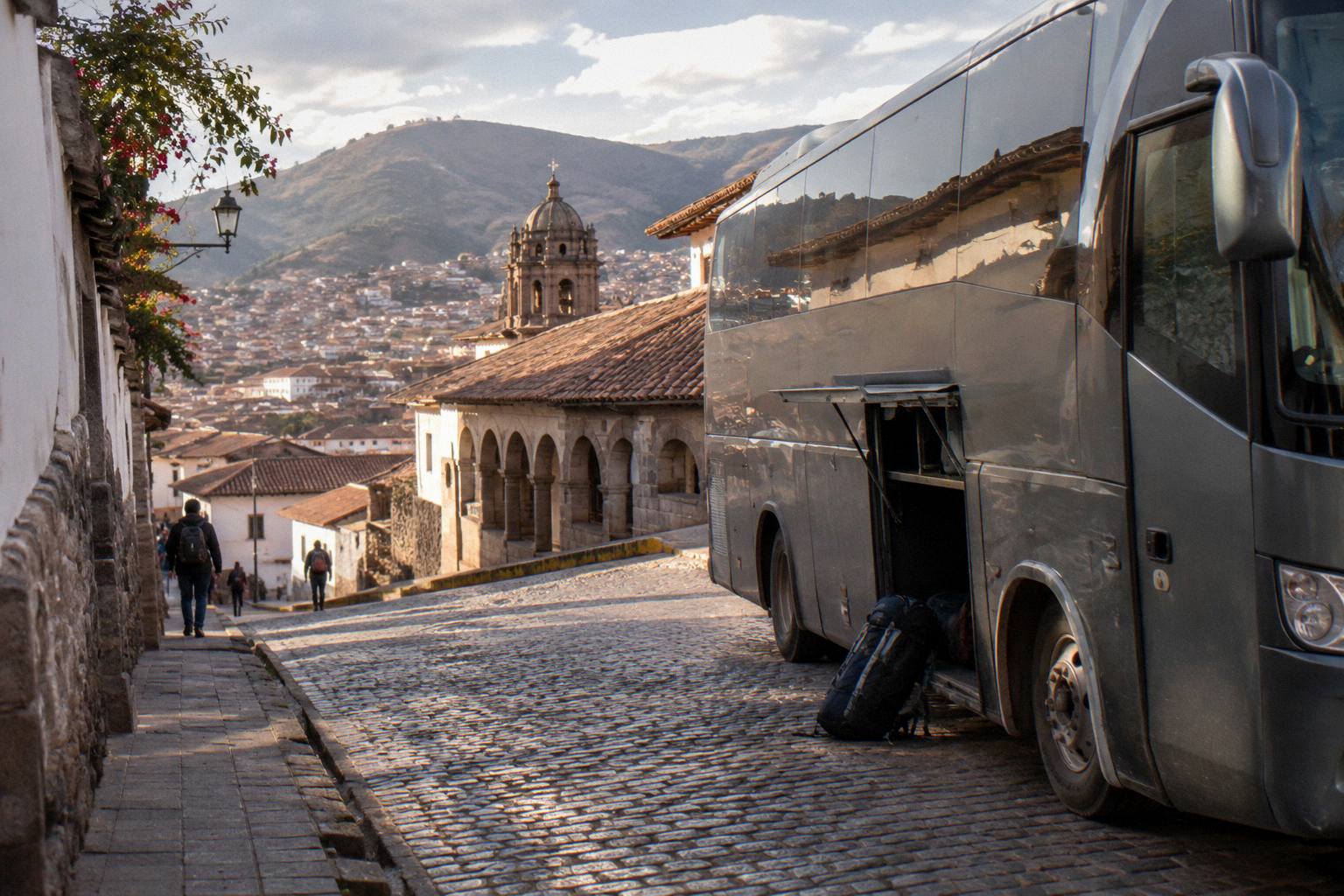
How To Get Around Peru On Buses: The National Overview
Peru is a bus country. The distances are enormous, the road network threads through desert, high sierra and cloud forest, and an interprovincial bus system regulated by SUTRAN connects nearly every city a visitor wants to reach.
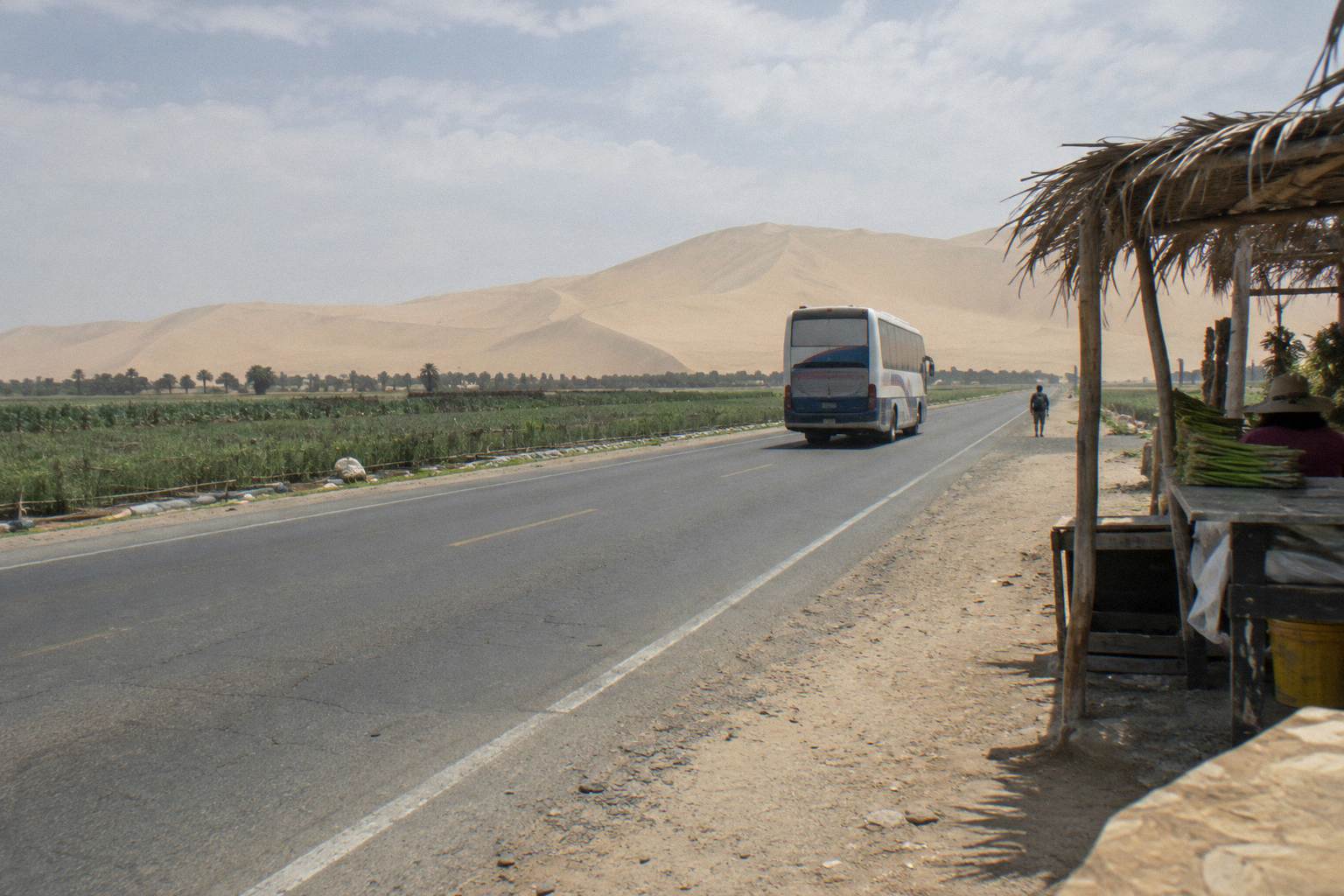
Short answer
Peru is covered by a regulated interprovincial bus network: Cruz del Sur and Oltursa link Lima to the south coast and Arequipa, Linea and Movil Bus serve the north, and tourist buses link Lima, Paracas, Arequipa, Puno and Cusco. Free-flow drive estimates range from about 3.5 hours Lima to Paracas to about 14.3 hours Lima to Arequipa, so plan multi-day stages.
Peru is a bus country. The road network runs down the desert coast, climbs over high passes into the sierra, drops into cloud forest on the way to the jungle, and almost every city on that map is connected by scheduled interprovincial service. The rail network covers a small fraction of it. For a visitor working out how to move between Lima, Paracas, Arequipa, Cusco, Puno, Huaraz and the northern coast, the bus is the default answer, and the choice is not whether to use one but which network, which class and which ticket.
This overview from Peru By Bus covers the whole country in one place: which operators and services run in which region, how terminals and tickets work, what a sleeper seat gets you, and what to check before booking. The detailed cluster pages carry the route-by-route versions.
How Do You Get Around Peru Without Flying?
You get around Peru without flying primarily by scheduled interprovincial buses, which serve as the country's backbone for long-distance travel between cities; these are supplemented by tourist buses and hop-on hop-off passes on the southern corridor, letting you cover the country overland from start to finish. Every major city pair is served by licensed carriers operating from terminals, regulated by SUTRAN, Peru's transport authority, and the system is formal, ticketed and widely used by Peruvians and visitors alike. A free-flow drive estimate for Lima to Arequipa is about 1,002 km and 14.3 hours, and real timetabled journeys run longer, so the country breaks naturally into stages of one night or one long day each. The southern corridor, Lima to Paracas to Arequipa to Cusco and Puno, carries the heaviest tourist traffic and the widest choice of services.
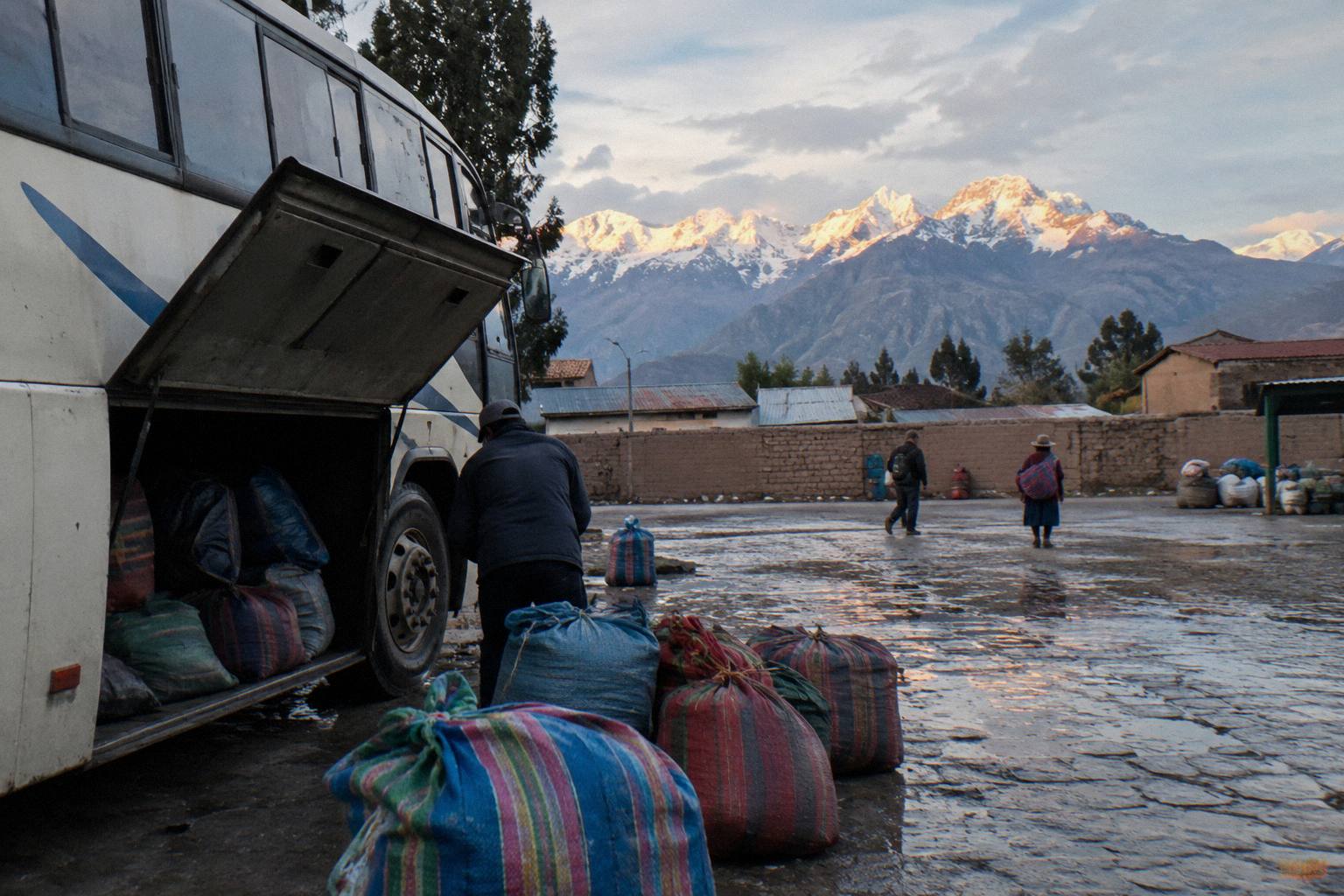
Scale is the first thing to understand. Peru is nearly twice the size of France, and the Andes sit between the capital and the main archaeological sites. Nothing about the network is a quick hop. A free-flow drive estimate for Arequipa to Cusco is about 487 km and 9.4 hours, for Lima to Trujillo about 557 km and 9.1 hours, for Lima to Huaraz about 402 km and 5.5 hours, and for Cusco to Puerto Maldonado about 669 km and 12.2 hours. Real bus journeys exceed every one of these figures, because free-flow estimates exclude stops, mountain grades and terminal time. Plan on those pairs as overnight or full-day legs, never as afternoon transfers.
Within that frame, three kinds of service matter to a visitor. Regular interprovincial carriers, Cruz del Sur, Oltursa, Civa, Movil Bus and Linea among them, sell point-to-point tickets from their own terminals. Tourist buses, booked as products with a defined meeting point and drop-off, run on the southern corridor and the Cusco back door to Hidroelectrica. And a hop-on hop-off product, covered in its own section below, wraps the southern corridor into a pass. The rest of this guide works through each layer and the practical rules underneath them: terminals, tickets, luggage, classes, and disruption.
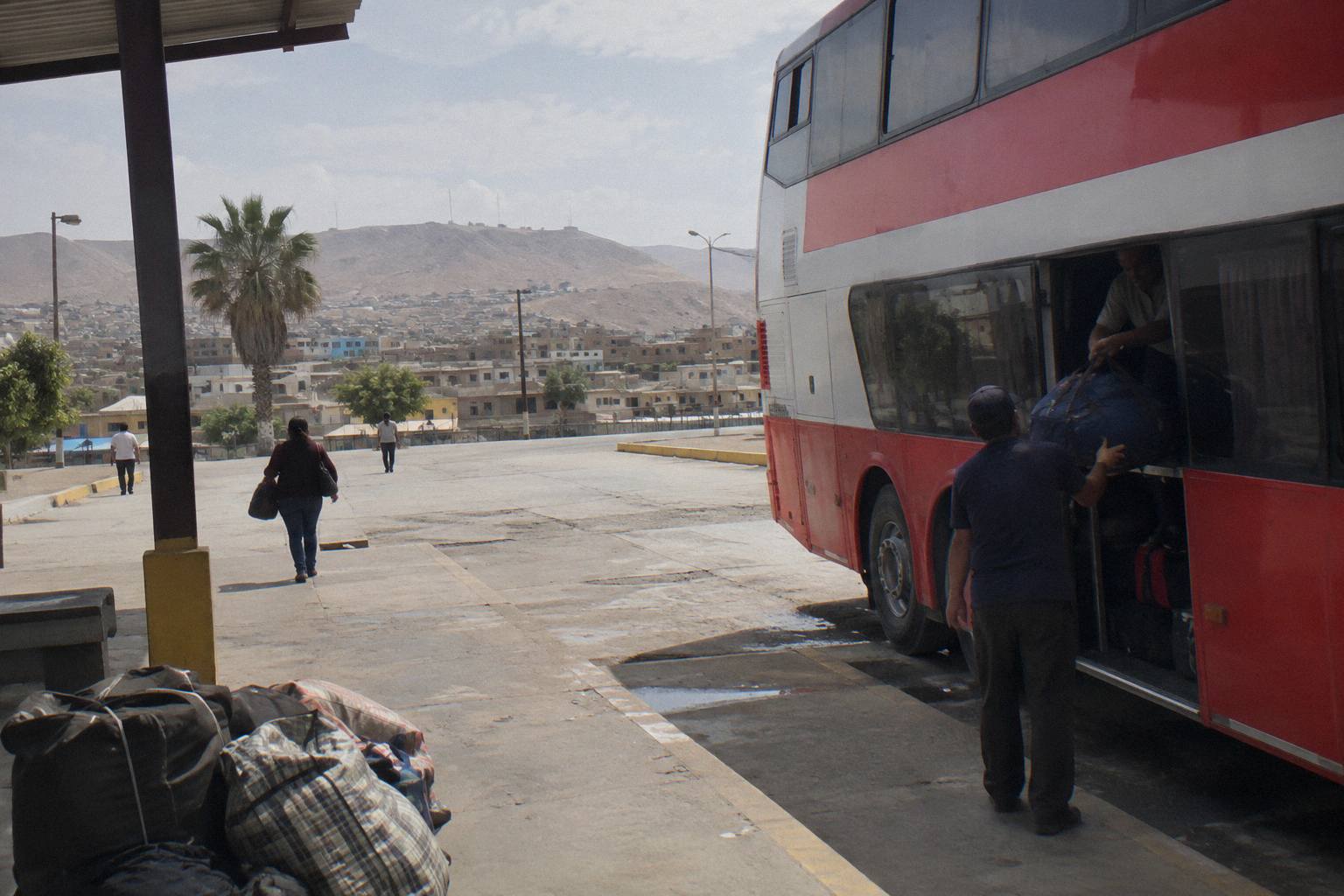
Which Bus Network Covers Which Part Of Peru?
Peru's bus coverage splits into distinct zones: the south forms the country's densest corridor, the north is operated by its own set of carriers, and the jungle and central highlands are reached through long specialised routes that run out of Lima and Cusco. Cruz del Sur and Oltursa run the Lima to Arequipa to Cusco spine alongside local companies; Linea and Movil Bus concentrate on the northern network, Lima to Trujillo, Chiclayo, Piura, Cajamarca and Huaraz; and the jungle connections run as long services to Tarapoto and Puerto Maldonado. No single operator covers the whole country, so a three-week itinerary touches three or four different companies, and knowing which network owns which region is the first filter on any plan.
The southern corridor is where a first-time visitor spends the most time. Lima to Paracas, a free-flow drive estimate of 251 km and 3.5 hours, is served by regular carriers and by tourist buses such as the Wayki Bus Peru one-way from Miraflores, rated 4.2 across 62 reviews, which drops at El Chaco in Paracas and lists a 3 hour duration. From Paracas the road continues to Huacachina, Nazca, Arequipa and Puno. The full spine is documented in the southern Peru bus circuit guide.
The north works differently. Linea's own route list is entirely northern, Lima through Chimbote, Trujillo, Chiclayo, Piura, Huaraz, Cajamarca and Jaen, while Movil Bus concentrates on Lima to Huaraz, Chiclayo, Trujillo, Chachapoyas, Cajamarca, Tarapoto and Oxapampa. Movil Bus's pages show no Cusco or Arequipa service, so do not look for it there. The north coast legs and the connections into Cajamarca and Chachapoyas have their own cluster pages, including the north coast Trujillo, Chiclayo and Mancora route and the Lima to Cajamarca route.
The jungle and the central highlands are the long legs. Lima to Huancayo has a free-flow drive estimate of about 301 km and 6.2 hours but crosses the Anticona pass, which INEI places above 4,700 m, so timetabled journeys are far longer. Lima to Ayacucho is about 569 km and 9.3 hours free-flow, and Cusco to Puerto Maldonado about 669 km and 12.2 hours free-flow. Each of these has a dedicated route page: Lima to Huancayo, Lima to Ayacucho and Cusco to Puerto Maldonado.
| Region | Main cities on the bus map | Free-flow drive estimate from Lima or Cusco | Who serves it |
|---|---|---|---|
| South coast | Paracas, Ica, Huacachina, Nazca | Lima-Paracas 251 km, 3.5 h | Cruz del Sur, Oltursa, tourist buses |
| South sierra | Arequipa, Puno, Cusco | Arequipa-Cusco 487 km, 9.4 h | Cruz del Sur, Oltursa, Turismo Mer, World Explorer Peru |
| North coast | Trujillo, Chiclayo, Piura, Mancora | Lima-Trujillo 557 km, 9.1 h | Linea, Movil Bus, Cruz del Sur, Oltursa |
| North highlands | Huaraz, Cajamarca, Chachapoyas | Lima-Huaraz 402 km, 5.5 h | Movil Bus, Linea, Cruz del Sur |
| Central highlands | Huancayo, Ayacucho | Lima-Huancayo 301 km, 6.2 h | Regional carriers |
| Jungle | Tarapoto, Puerto Maldonado | Cusco-Puerto Maldonado 669 km, 12.2 h | Specialised long-route carriers |
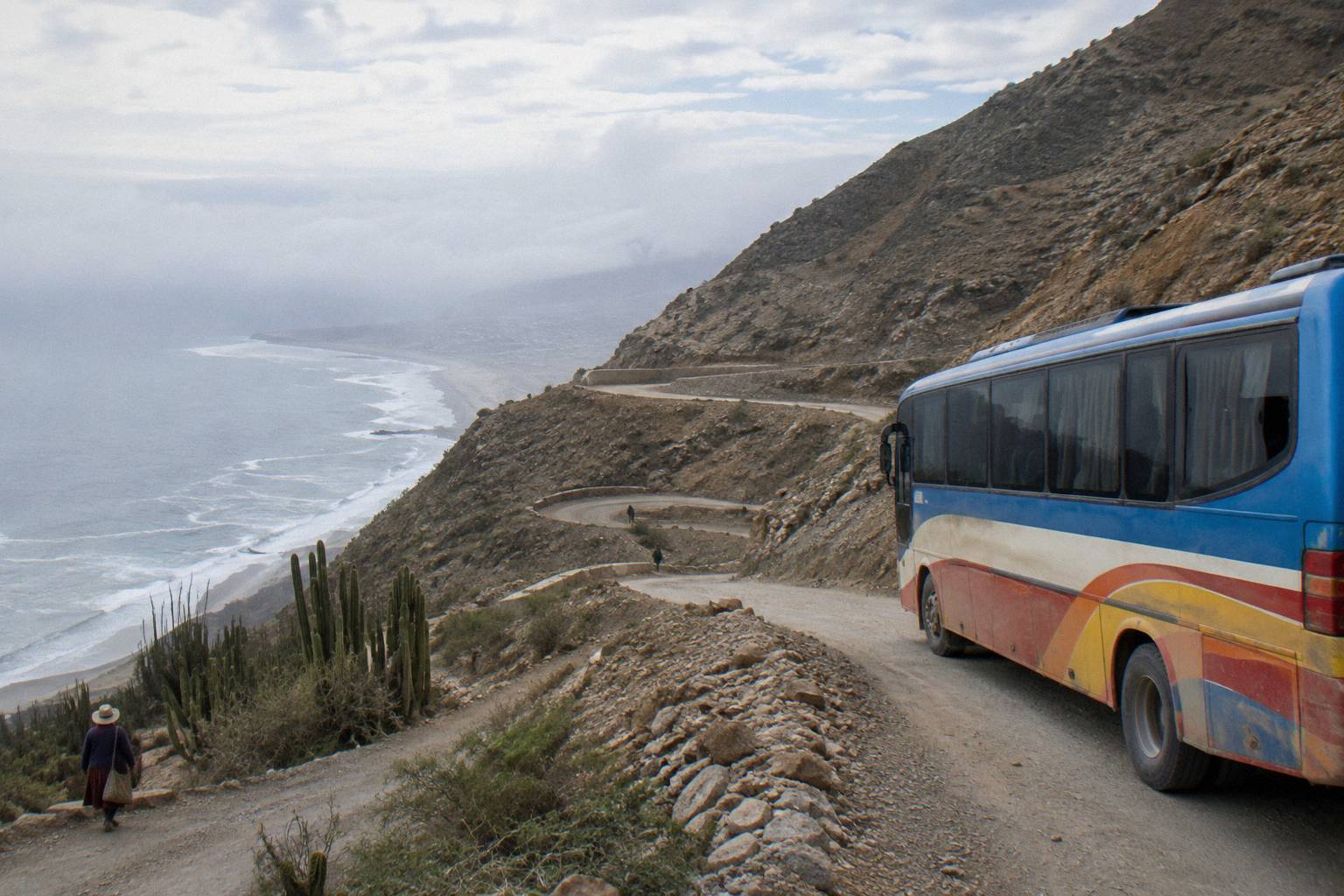
Figures in the table are OSRM free-flow drive estimates for the named pairs only; real bus journeys exceed them, and they are never timetable times.
For travellers who want the southern corridor handled end to end, Peru Hop runs a hop-on hop-off network across Peru and into Bolivia, with departure cities Lima, Cusco, Arequipa, Copacabana and La Paz, hotel or Airbnb pickup instead of terminals, and a local bilingual host on every bus. Peru Hop reports more than 395,000 passengers since 2013.
What Does A Long-Distance Bus Journey Actually Involve?
A long-distance bus journey in Peru means departing from a terminal with a licensed carrier, taking a seat in a named class, checking luggage into the hold under a ticket, and settling in for a trip that lasts a full day or a full night rather than a few hours. Peru's national transit regulation requires regular carriers to operate from habilitated terminals at origin, destination and stops, and forbids using the public road as a terminal. Passengers board only at authorised points with the bus stopped. Every stage of that structure, buying, boarding, riding, collecting luggage, is more formal than a city bus and closer to a flight without the airport, down to document checks and tagged hold bags.
The regulation behind the ride is specific. Peru's national transit regulation caps continuous driving at 5 hours by day and 4 hours at night, requires a second driver beyond those spans, and a third driver on trips over 20 hours. National buses must carry GPS monitoring that transmits to the authority, seat belts at every seat, and crew are required to announce that belts are mandatory. SUTRAN states that the 90 km/h limit for interprovincial buses applies only on roads without any other speed sign. Cruz del Sur lists a pilot change every 4 hours on its own comfort page, alongside permanent medical checks and alcohol testing before departure.
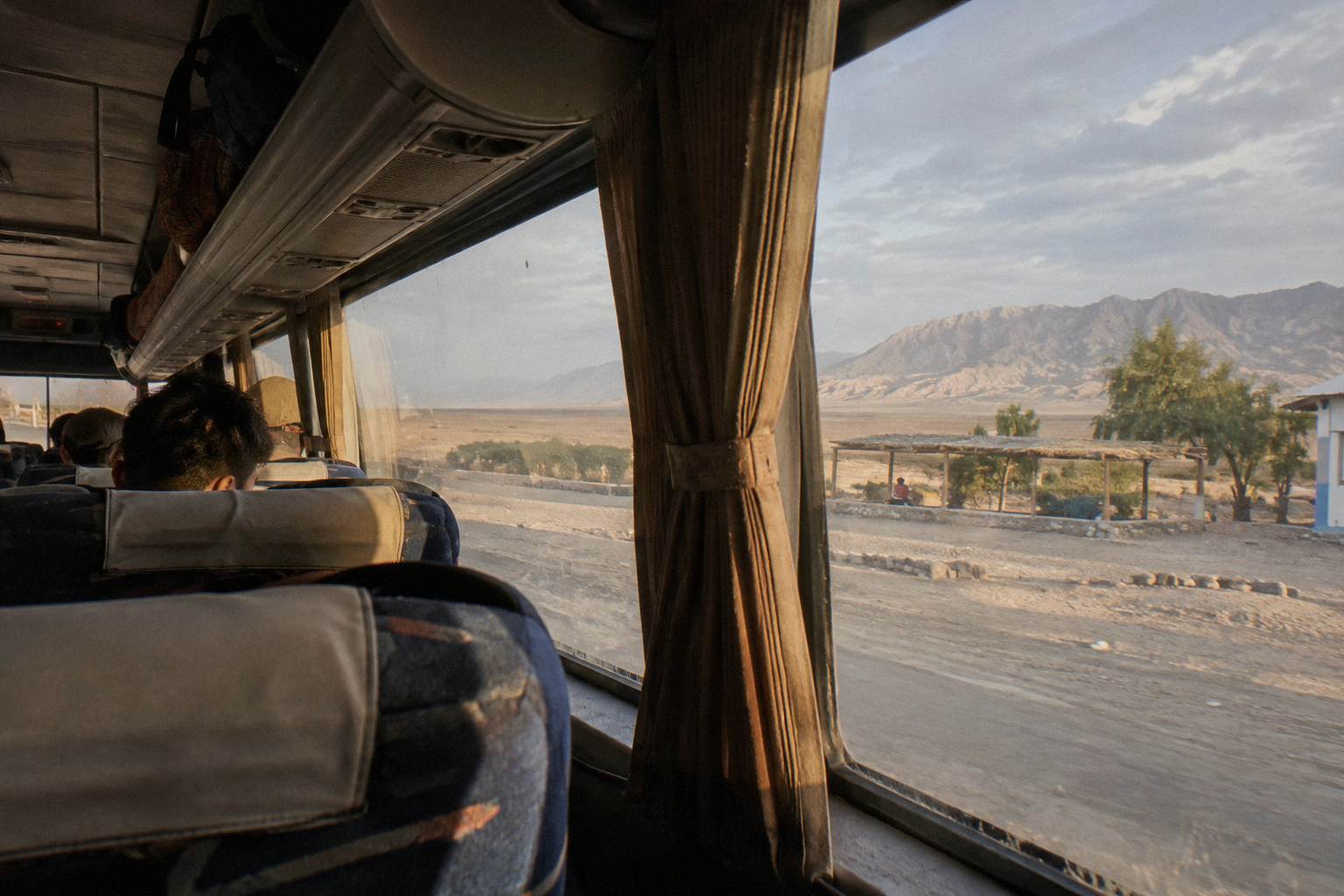
Distances dictate the shape of every plan. Lima to Arequipa, about 1,002 km and 14.3 hours free-flow, is an overnight leg. Arequipa to Cusco, about 487 km and 9.4 hours free-flow, and Puno to Cusco, about 387 km and 6.2 hours free-flow, are full-day or night legs depending on the service. Tourist-bus products on those pairs print their own durations: the Turismo Mer bus from Puno to Cusco lists 11 hours with a lunch stop, and the World Explorer Peru direct bus from Cusco to Arequipa lists 10 hours with a Cruzero Suite 160 degree seat named on its listing.
Luggage is one place the regulation is generous. Up to 20 kg travels free on national bus service, and a fare receipt is the passenger's right. Operators publish their own splits on top of that baseline, summarised in the table later in this guide. SUTRAN advises passengers to take a luggage ticket for hold bags; loss or damage caused by the carrier's fault carries a minimum compensation set by weight band in the regulation.
How Do Terminals, Tickets And Boarding Work?
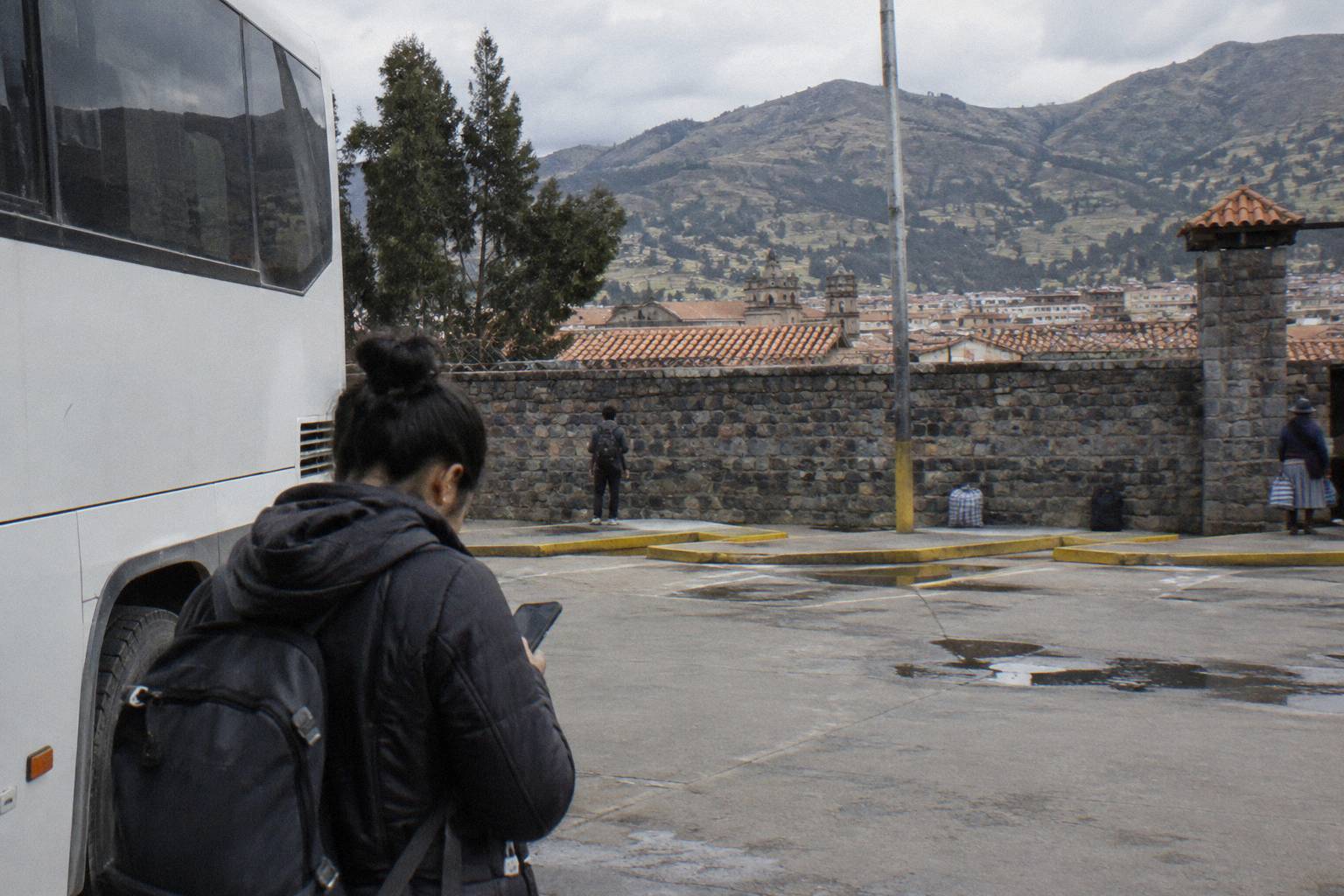
Every regular interprovincial departure leaves from a company's own terminal or an authorised stop, and boarding is controlled at the gate rather than curbside. Tickets are bought per leg, meaning each segment of a longer journey is purchased separately, so plan on a new ticket for every stage of the trip. There is no single main terminal per city: Cruz del Sur departs Lima from Terminal Javier Prado, Av. Javier Prado Este 1109, La Victoria, while Oltursa uses Jiron Manuel Portocarrero 380 in Surquillo and Movil Bus lists three separate Lima points including the Terrapuerto del Norte. A ticket names the exact terminal, and arriving at the wrong company's address is the most avoidable mistake in Peruvian bus travel, especially on an early departure with luggage in tow.
The boarding process is closer to a flight than a city commute. Terminals require a ticket and document check, companies such as Cruz del Sur list DNI control, metal detector arches and video recording of passengers at their terminals, and luggage is tagged into the hold. The UK FCDO advises on its safety and security page: "on bus journeys, keep your passport with you", and "use one of the taxis registered at bus terminals" when you arrive. The same page warns: "There is a risk of robbery by criminals posing as taxi drivers, especially at Jorge Chavez International Airport and bus terminals."
Tickets themselves have real passenger rights attached. INDECOPI states that a domestic bus ticket can be postponed or transferred with at least 24 hours notice, with only the real reissue cost chargeable and no penalty. Tourist-bus products carry their own cancellation terms: the Wayki Bus Peru, Turismo Mer and Machu Picchu by Car Vip products on this site all list free cancellation up to 24 hours before for a full refund, while the First Class Huaraz ticket from Lima to Huaraz states the opposite, non-refundable and unchangeable, so read the terms per product. Complaints about a carrier go first to the company's Libro de Reclamaciones, which has 15 working days to answer, and then to INDECOPI's Reclama Virtual portal.
Airport connections are their own micro-decision. The Airport Express Lima bus runs from Lima airport (LIM) to Miraflores from US$6.5 per person, in an air-conditioned luxury bus as the listing marks it, with a listed duration of about 1 hour and free cancellation up to 24 hours before; reviews are on the listing. For trips that start in Huaraz, the First Class Huaraz ticket from Lima, Miraflores or Lima airport to Huaraz is listed from US$50 per person, needs passport numbers and full names to print tickets, and offers hotel pickup on request by sending the address to the operator after booking.
What About Seats, Sleepers And Comfort Classes?
Peruvian buses are sold by comfort class, and the class name tells you exactly how far your seat reclines. The scale runs from semi-cama seats, through 160 degree reclining seats, up to full 180 degree flat beds on the premium services, so you can pick your level of comfort when booking. Cruz del Sur lists reclining seats at 180 degrees with a toilet, GPS monitoring, Wi-Fi marked as a courtesy service and crew on board; its Suite class on the Lima to Cusco page reclines 160 degrees. Civa's SuperCiva reclines 160 degrees on the first level and 140 on the second, per its own page. Linea sells Super VIP at 180 degrees, VIP at 160, Dorado at 160 and Especial at 145. Movil Bus tops out with a Premier class at 160 degrees on the first level and a full-flat 180 degree seat on the second, so the naming varies even where the geometry does not.
The sleeper-bus products on the southern corridor are the ones visitors book as products rather than tickets. The Turismo Mer sleeper from Arequipa to Puno is a night service whose listing gives 7 hours in a 160 degree recline seat, dropping in Puno, rated 4.3 across 20 reviews, with free cancellation up to 24 hours before as listed. The terminal boarding fee is listed as not included, so check the boarding fee line on the listing. Its sibling, the Turismo Mer bus from Puno to Cusco, is a day service listing 11 hours with a lunch stop, rated 4.6 across 24 reviews. Between them they cover the whole Arequipa to Cusco chain with one change in Puno.
Class choice maps onto journey length. On a 3.5 hour free-flow leg such as Lima to Paracas, seat recline matters little and any listed class works. On the overnight spine, Lima to Arequipa at 14.3 hours free-flow, the 180 degree services earn their place. The gap between 160 and 180 degrees is real but smaller than the gap between a reclining seat and a standard one, and prices between classes are set by date and demand, which is why this site prints none of them. The dedicated Peru bus classes, cama and semi-cama guide works through every named seat type.
Luggage allowances by operator, all stated on the operators' own pages, stack on the 20 kg national baseline:
| Carrier or rule | Hold luggage | Hand luggage | Stated by |
|---|---|---|---|
| National service rule | 20 kg free | Check the operator's page | Peru's national transit regulation |
| Cruz del Sur | 20 kg | 6 kg | Cruz del Sur Lima-Cusco page |
| Oltursa | 20 kg free | One piece, max 5 kg | Oltursa terms |
| Movil Bus | 20 kg, up to 3 pieces | 8 kg, up to 2 pieces | Movil Bus travel page |
| Linea | 20 kg | Check the operator's page | Linea conditions of travel |
Is A Hop-On Hop-Off Pass Better Than Point-To-Point Tickets?
A hop-on hop-off pass is the better choice if you want a flexible, multi-stop trip along the southern corridor, because it lets you board and break your journey wherever suits you. Point-to-point tickets serve you better when your itinerary is fixed, or when any of your stops fall outside that corridor. The two systems are not competitors on the same ground. Hop-on hop-off coverage runs Lima, Paracas, Huacachina, Nazca, Arequipa, Puno and on to Copacabana and La Paz, with day-trip extras such as Rainbow Mountain, the Ballestas Islands, buggy and sandboarding, a Nazca Lines flight, Colca Canyon tours and Lake Titicaca tours bookable alongside. It does not reach Huaraz, the north, the central highlands or the jungle, where regular carriers are the only layer and the pass conversation ends before it starts.
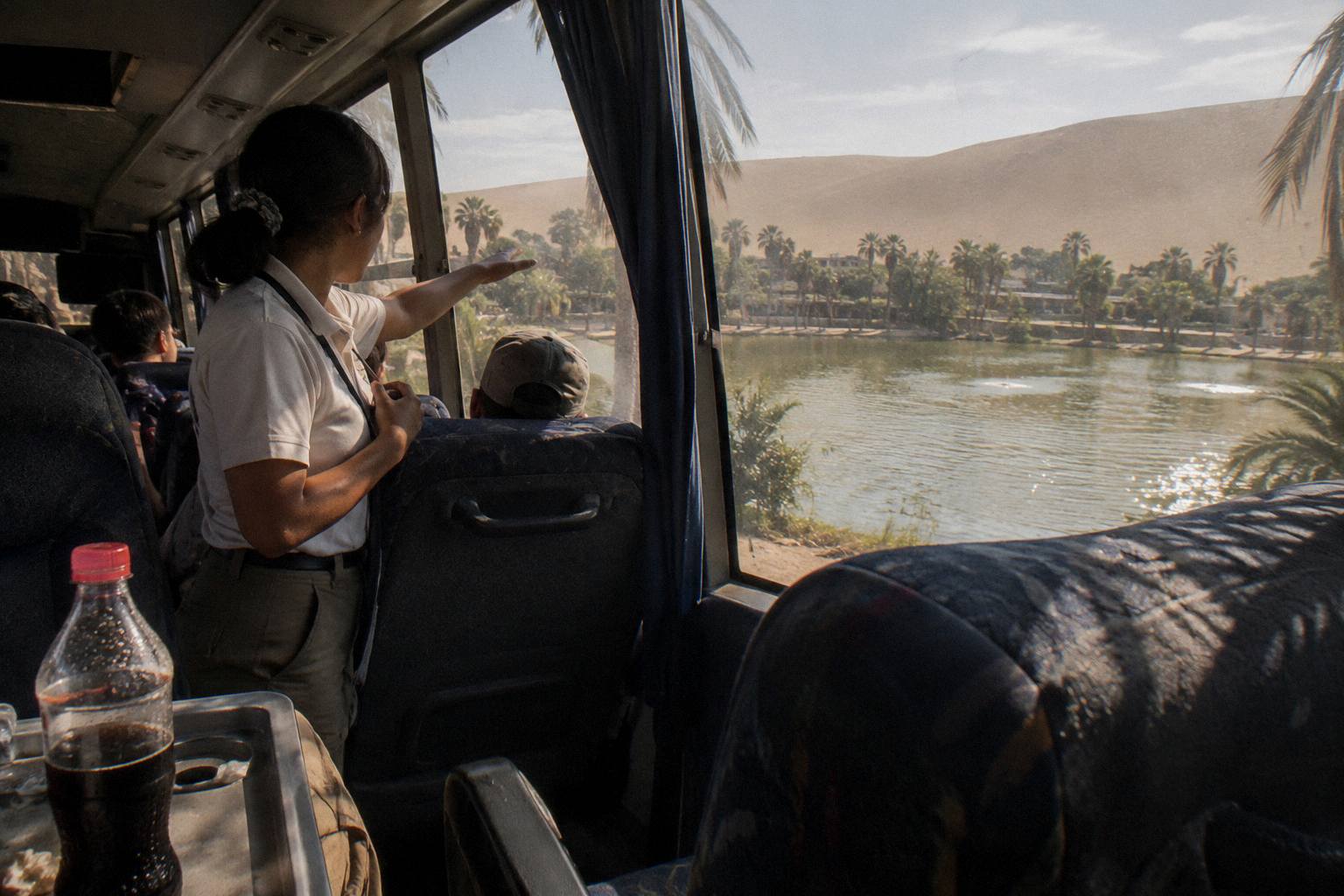
The pass mechanics are what make it a planning tool rather than just a ticket. Peru Hop tickets are valid for 1 year with hopping on and off freely, buses run every day, and a bus time can be changed in the app up to 12 hours before departure, per its pass terms. Pickup is at the hotel or Airbnb rather than a terminal. Hidden stops on Lima passes include the Secret Slave Tunnels in Chincha, the Nazca Lines Viewing Tower, the Paracas National Reserve, the Lake Lagunillas viewpoint and a Pisco vineyard in Ica. Peru Hop reports 20,000+ TripAdvisor reviews and 8,000+ Google reviews. The comparison is worked through in detail in the Peru Hop versus public bus guide; See Peru Hop Passes for the live pass list.
For the south coast's first leg, a tourist bus competes directly on convenience. The Wayki Bus Peru one-way from Miraflores in Lima to Paracas, rated 4.2 across 62 reviews, picks up in Miraflores, San Isidro and Barranco, drops at El Chaco in Paracas, lists 3 hours, and carries free cancellation up to 24 hours before as listed. A twin listing by another operator offers hotel pickup in Miraflores and Barranco from US$18 per person. A longer version, the Wayki Bus Peru one-way from Lima to Huacachina with a Paracas stop, lists 8 hours including the stop and drops at the Viajero hostel meeting point in Huacachina, rated 3.7 across 77 reviews.
Point-to-point tickets win the moment the itinerary is fixed or the destination is off the corridor. A booked tourist product locks a date, while a regular-carrier ticket can be postponed or transferred with 24 hours notice at reissue cost under the INDECOPI rule. The Peru bus tickets booking guide covers the mechanics of buying either kind.
How Do You Handle Delays, Strikes And Road Conditions?
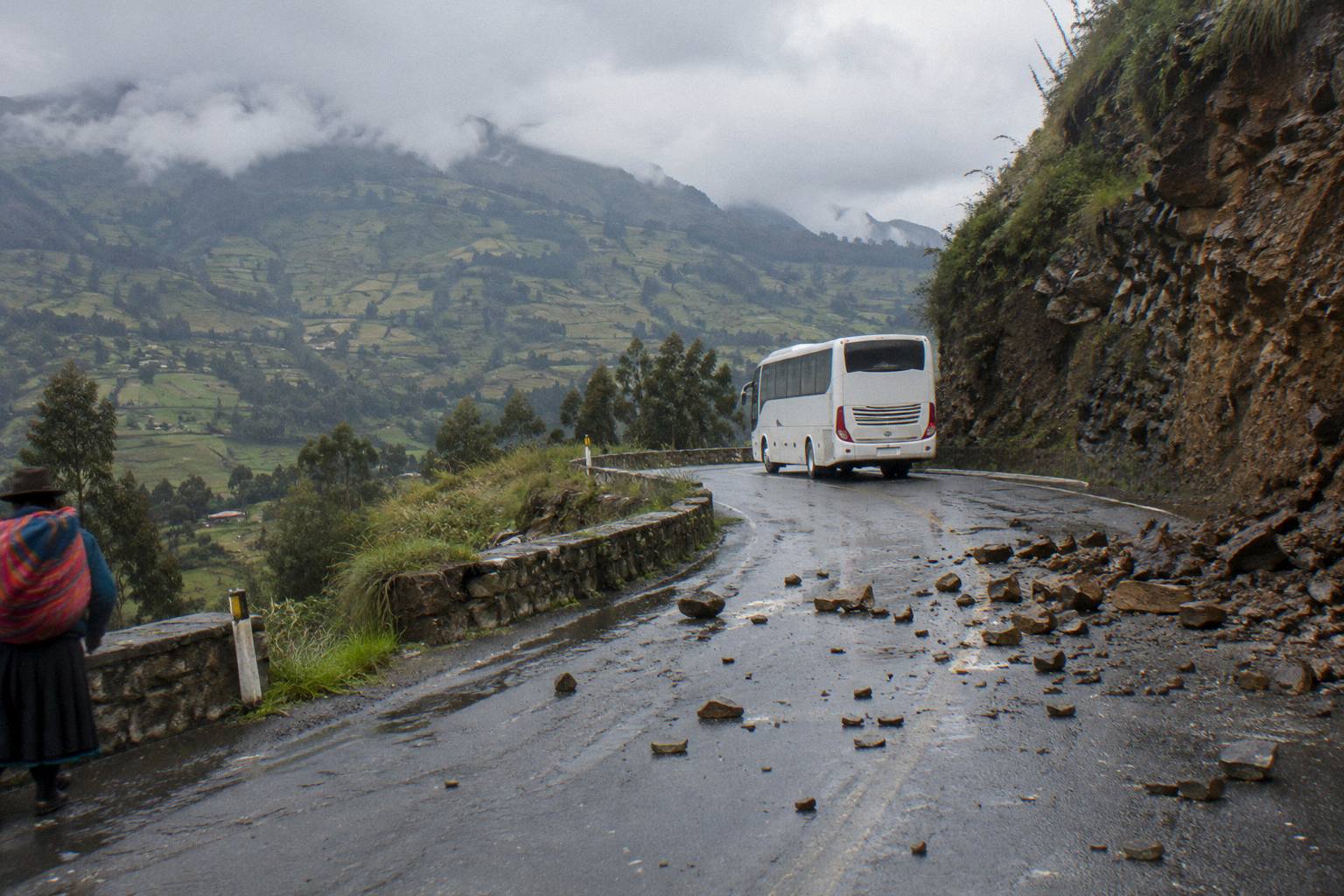
Delays in Peru generally come from three sources: road blockades during protests, seasonal rain in the Andes, and the sheer length of the routes. You handle them by running an official check on each source before travelling, so you know whether a blockade, rain, or a long route is likely to affect your trip. The FCDO states: "Political protests in Peru are unpredictable and can escalate quickly. Demonstrations can become violent and lead to roadblocks, travel disruption, including trains, and suspension of immigration services at land borders." The same advice names Arequipa, Ayacucho, Cusco, La Libertad, Madre de Dios and Puno as regions with recent protests, which is most of the tourist map. None of this means staying home; it means checking before each long leg rather than after something goes wrong on it.
The practical tool is SUTRAN's road alert map, which shows closed roads in red, restricted in yellow and open in green, with causes including natural events, accidents, infrastructure damage and human factor, the category that covers blockades. SUTRAN also runs a 24 hour WhatsApp line, 999 382 606. Before any night leg, a traveler can also check a specific bus and driver by plate or driver DNI through the SUTRAN lookup service. The strikes, blockades and rainy season guide carries the full playbook.
Season matters more in Peru than the calendar suggests. SENAMHI places the Andean rainy season from roughly September to April, with Puno holding 89 percent of its annual rain between September and March. The FCDO notice adds: "Through late 2026 to April 2027, the El Nino weather event is expected to generate heavy rainfall, possible flooding, landslides, and mudslides, especially in, but not restricted to, the northern and central coast. These could cause travel disruption, such as road closures." That is the one dated statement worth carrying into planning, because it names a season rather than a moment.
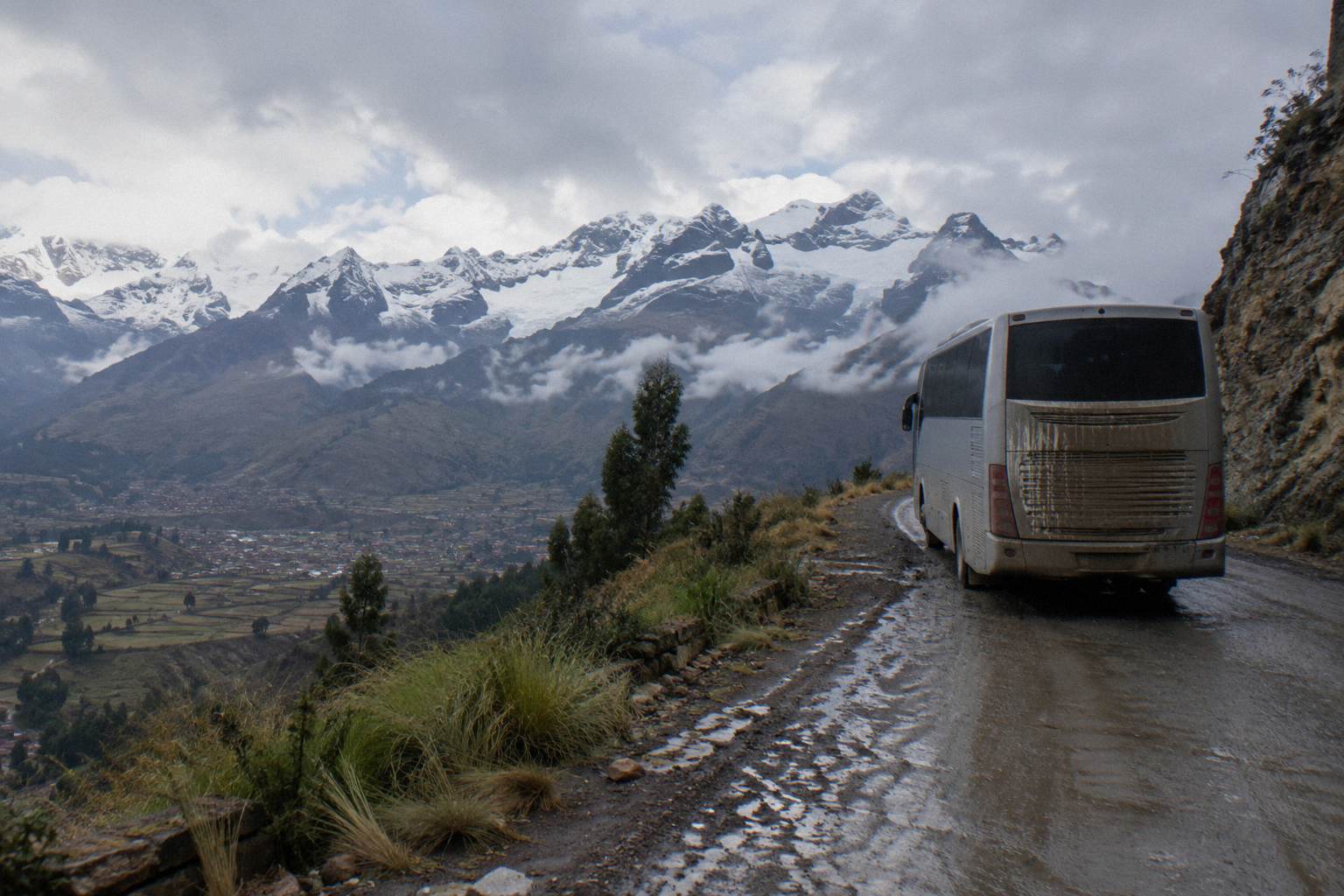
Government advice on night travel is blunt and worth quoting rather than softening. The FCDO: "Bus crashes are common, especially at night. Only use reputable transport companies, and where possible, avoid overnight travel, especially in mountainous and remote regions." Canada's advice: "Avoid taking buses and coaches at night", while also noting that intercity bus travel "can be dangerous due to the risk of bus accidents, which are usually caused by excessive speed, poor vehicle maintenance and driver fatigue". Smartraveller warns of "theft as you sleep on intercity bus routes between Lima, Ica, Nazca and Cusco". Night legs remain the standard way to cross the long spine, and thousands of tourists take them; the honest framing is that the advisories single them out, so luggage in the hold, valuables on your body, and the overnight bus in Peru guide belong in your planning.
What Should You Check Before You Book Any Bus In Peru?
Before you book any bus in Peru, check four things in order: the exact terminal or meeting point for your departure, the seat class and recline on that specific service, the cancellation terms attached to that specific ticket, and the road situation for your travel date. Each of these lives in a different place, and each catches travellers out. The terminal address differs by company within the same city. The class name differs by company even at the same recline angle. Cancellation terms differ by product, from free cancellation up to 24 hours before on the tourist buses to non-refundable on the Huaraz ticket. And road conditions change week to week, so the last check belongs to the day before departure, not the week you book.
The booking-layer differences are covered in depth across the cluster: how Peru bus travel works, the terminal guide by city, and the operator comparison of Oltursa, Civa and Movil Bus. For the Cusco end of the map, the Cusco to Machu Picchu bus via Hidroelectrica route is its own decision, with a Machu Picchu by Car Vip tourist bus listing 6 hours from Cusco's Plaza de Armas to a private terminal inside Restaurante Escobar at Hidroelectrica, with two rest stops, rated 4.3 across 53 reviews.
| Check before booking | Where it lives | Why it matters |
|---|---|---|
| Terminal or pickup address | The operator's own terminal page | No city has a single main terminal; companies use different addresses |
| Seat class and recline | The operator's class page | Names differ by company; degrees are stated only by some operators |
| Cancellation and change terms | The specific ticket's terms | Ranges from free cancellation up to 24 hours before to non-refundable |
| Road and strike status | SUTRAN road alert map | Blockades and closures appear live, colour coded |
| Luggage allowance | Operator terms plus the 20 kg national baseline | Excess and hand-luggage splits differ by carrier |
A final framing for the whole country. The bus system in Peru is formal, regulated and dense, and the honest planning posture is neither anxiety nor breeziness. Follow the advisories as written, use the FCDO's "reputable transport companies" wording as the standard, keep your passport on your body as it advises, take the luggage ticket SUTRAN recommends, and break the map into the overnight stages the distances demand. Getting around Peru by bus is not a single decision but a sequence of small ones, and every one of them has a verified source behind it.
For the southern corridor's key legs, these are the tourist-bus products that cover the main stages in one booking:
Common Questions About Travelling Across Peru On Buses
How Do You Get Around Peru Without Flying?
Scheduled interprovincial buses connect every major city, operated from company terminals and regulated by SUTRAN. The southern corridor, Lima to Paracas, Arequipa, Puno and Cusco, carries the widest choice, including tourist buses and a hop-on hop-off pass. The north and the jungle routes are served by carriers such as Linea and Movil Bus on long point-to-point legs.
How Long Does It Take To Cross Peru By Bus?
Free-flow drive estimates give about 14.3 hours Lima to Arequipa, 9.4 hours Arequipa to Cusco, 9.1 hours Lima to Trujillo and 12.2 hours Cusco to Puerto Maldonado. Real bus journeys exceed all of these, so each is an overnight or full-day stage.
Is A Hop-On Hop-Off Pass Better Than Separate Bus Tickets?
A pass suits a flexible trip along the southern corridor with stops at Paracas, Huacachina, Nazca, Arequipa and Puno; its tickets are valid 1 year and times can be changed in the app up to 12 hours before departure, per its pass terms. Fixed itineraries and anywhere off the corridor are better served by point-to-point tickets.
What Luggage Can You Take On A Peruvian Bus?
Up to 20 kg travels free in the hold on national service under Peru's national transit regulation, and a fare receipt is your right. Operators add their own splits: Cruz del Sur allows 6 kg hand luggage, Oltursa one piece up to 5 kg, Movil Bus 8 kg across two pieces. SUTRAN advises taking a luggage ticket for hold bags.
What Should You Check Before A Long Bus Journey In Peru?
The exact terminal address, since companies in the same city use different terminals; the seat class on your specific service; the cancellation terms on that ticket; and SUTRAN's road alert map for closures and blockades, which shows closed roads in red and restricted ones in yellow.
Can You Change Or Cancel A Peruvian Bus Ticket?
INDECOPI states a domestic bus ticket can be postponed or transferred with 24 hours notice at only the real reissue cost. Individual products set their own terms: many tourist buses on this site list free cancellation up to 24 hours before, while the First Class Huaraz ticket from Lima to Huaraz is listed as non-refundable and unchangeable.