
Lima To Cajamarca By Bus: The Companies And The Trujillo Link
No single timetable fact exists for a direct Lima to Cajamarca bus in the verified sources, so this page is built the honest way: the two free-flow drive legs through Trujillo, the operators whose own pages list Cajamarca, and everything the ride to 2,731 m asks of a passenger.
Short answer
Journeys between Lima and Cajamarca run through Trujillo. The free-flow drive estimates are about 557 km and 9.1 hours for Lima to Trujillo, then about 290 km and 4.1 hours for Trujillo to Cajamarca, figures real bus journeys exceed. Movil Bus and Linea both list Cajamarca on their own route pages, and Cajamarca sits at 2,731 m.
Cajamarca sits at 2,731 m in Peru's northern highlands, and the journey there from the capital is a two-step bus trip. Nothing in the verified operator and official pages supports a single direct Lima to Cajamarca timetable fact, a through fare or a named terminal for the pairing, so the honest version of this page is built from what does exist: two free-flow drive estimates that meet at Trujillo, the bus companies whose own route lists name Cajamarca, and the rules that govern any interprovincial bus in Peru. The distance is real, the operators are real, and the change of bus at Trujillo is the practical centre of the plan.
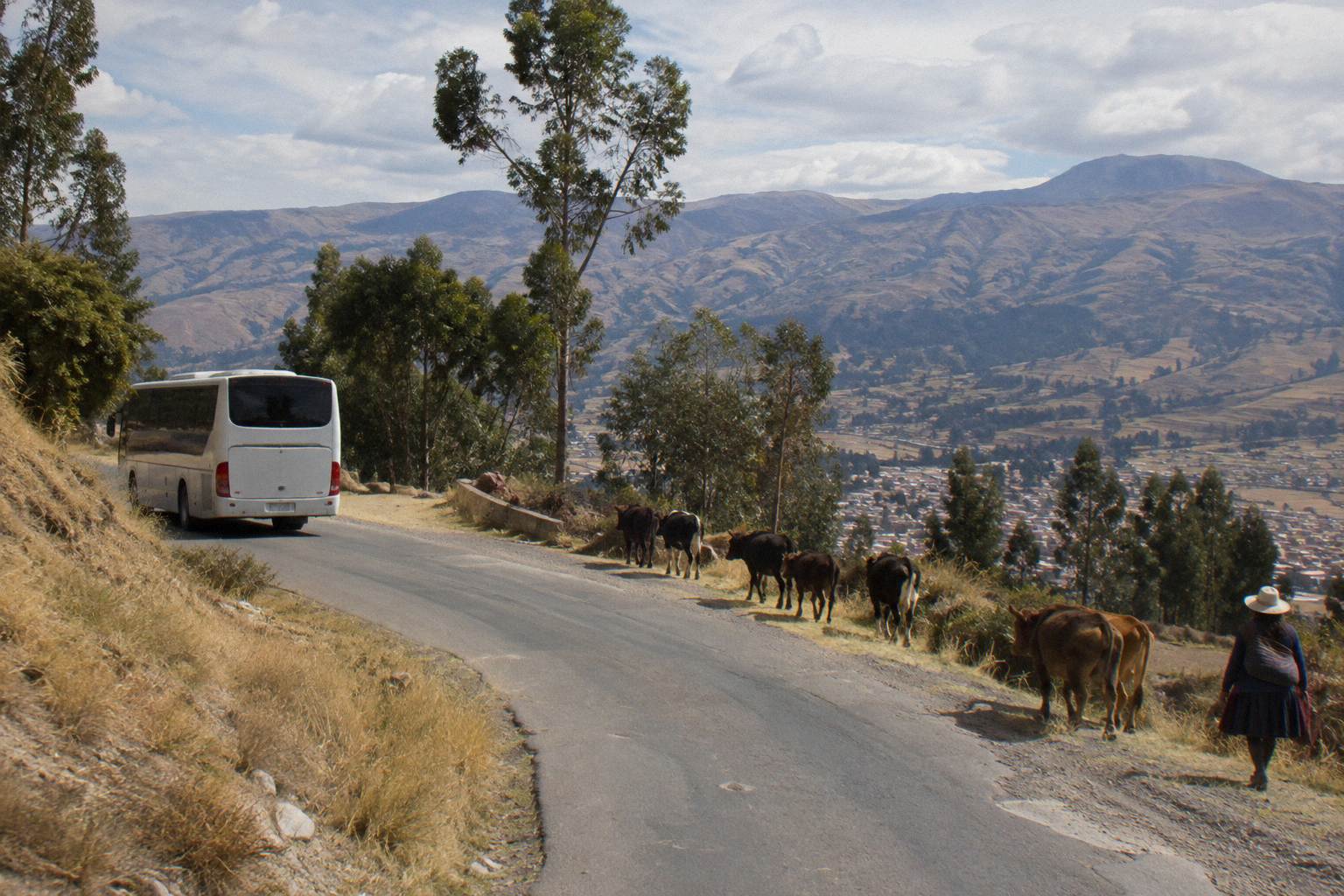
Trujillo itself is a coastal city at 74 m, and the climb from there to Cajamarca is where the journey changes character. That second leg crosses from desert plain into the northern Andes, and it is the part of the trip where altitude, luggage handling and the choice of carrier matter most. Everything below is anchored to a fact from an operator page, a government advisory or a routed distance estimate, and where a detail is not in those sources, the page says so plainly rather than filling the gap.
How Long Is The Bus From Lima To Cajamarca?
No verified timetable time exists for a Lima to Cajamarca bus. The working answer comes from two routed legs joined at Trujillo: Lima to Trujillo is about 557 km with a free-flow drive estimate of 9.1 hours, and Trujillo to Cajamarca is about 290 km with a free-flow drive estimate of 4.1 hours. These are estimates real bus journeys exceed; they describe the road, not a schedule.
Those figures come from a public routing engine run between city-centre points, and they are labelled as free-flow drive estimates for exactly that reason. A bus stops at terminals, holds luggage, slows for towns and climbs a mountain range in the second leg, so the actual hours in transit run longer than either number. The two legs must never be added and presented as a timetable promise, and neither figure transfers to any other pair of cities.
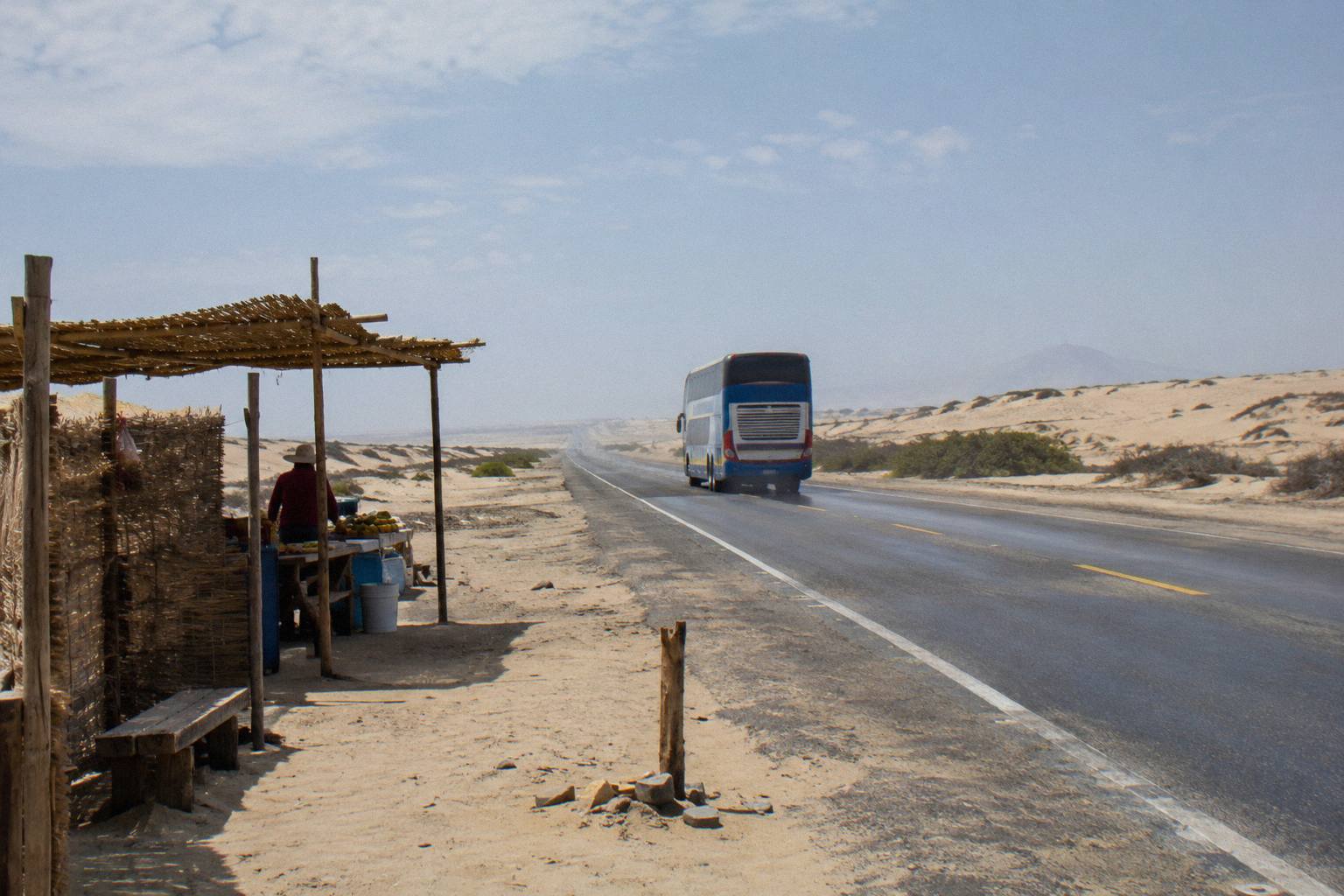
What the split does tell a reader is the shape of the trip. Lima to Trujillo follows the Pan-American Highway north along the coast, a long desert run that several companies serve as an overnight leg. Trujillo to Cajamarca is a shorter but slower mountain road, climbing from 74 m to 2,731 m. Anyone planning the journey treats these as two separate tickets, and the section on buying seats covers how.
| Leg | Distance | Free-Flow Drive Estimate |
|---|---|---|
| Lima to Trujillo | about 557 km | about 9.1 hours |
| Trujillo to Cajamarca | about 290 km | about 4.1 hours |
The table above is the only distance picture the sources support, and the free-flow column is a routing-engine figure, not an operator's schedule. Peru's transit rules add one more piece of context: the national regulation caps continuous driving at 5 hours by day and 4 at night, with a second driver required beyond that, so a leg of this length is a crewed, regulated service rather than a single-driver sprint.
Which Bus Companies Run To Cajamarca?
Two operators name Cajamarca on their own route pages: Movil Bus, which concentrates on Lima to Huaraz, Chiclayo, Trujillo, Chachapoyas, Cajamarca, Tarapoto and Oxapampa, and Linea, whose cargo and service pages list a northern network of Lima, Chimbote, Trujillo, Pacasmayo, Chiclayo, Piura, Huaraz and Cajamarca. Both lists come from the companies themselves, and neither page prints a fare or a departure hour for the route.
Movil Bus publishes its service classes on its own blog page: Economico seats recline 120 degrees, Ejecutivo VIP 140 or 160, Presidencial 160, and Premier 160 on the first level with a full-flat 180 on the second. The same operator states GPS monitoring with speed control on board. Its luggage rules, on its travel-recommendations page, allow 20 kg in the hold split across up to three pieces and 8 kg of hand luggage across up to two. Movil Bus does not serve Cusco or Arequipa as far as its pages show, which fits its northern focus.
Linea's service page lists Super VIP seats at 180 degrees described as bed-type, VIP at 160 as sofa-bed, Dorado at 160 and Especial at 145, with Wi-Fi and streaming marked as subject to the operator's availability. Linea's conditions page states a 20 kg luggage allowance, and its safety page lists GPS position and speed control, alcohol testing, driver rest verification and seat-belt control. Both operators publish class names and degrees; neither publishes a Cajamarca fare, and this page prints none.
| Operator | Classes Listed On Its Own Page | Hold Luggage Stated | Recline Degrees Stated |
|---|---|---|---|
| Movil Bus | Economico, Ejecutivo VIP, Presidencial, Premier | 20 kg, up to 3 pieces | 120, 140/160, 160, 160/180 by class |
| Linea | Super VIP, VIP, Dorado, Especial | 20 kg | 180, 160, 160, 145 by class |
Peru's national transit regulation adds a floor under every national bus service: up to 20 kg of luggage travels free, a fare receipt is the passenger's right, boarding happens only at authorised points with the bus stopped, and no more passengers board than the vehicle has seats. Those rights apply whichever of the two operators runs the leg. For the wider picture of how class names map to seats, the Peru bus classes explained guide covers cama and semi-cama terms across companies.
A note on the hop-on hop-off operator: Peru Hop does not run this route, since its passes cover the south coast and the Lake Titicaca corridor rather than Peru's north. For northern journeys the interprovincial carriers above are the relevant services.
Where Do You Change Buses At Trujillo?
Linea lists two Trujillo addresses on its contacts page, Av. America Sur N 2857 in La Perla and Jiron Orbegoso N 300, while Movil Bus publishes Lima terminals at Av. Tomas Valle 651 in the Terrapuerto del Norte, Nicolas Arriola 740 in La Victoria and Av. Paseo de la Republica 767. No Cajamarca terminal address appears in the verified sources, so the arrival point there comes from the ticket rather than any published street.
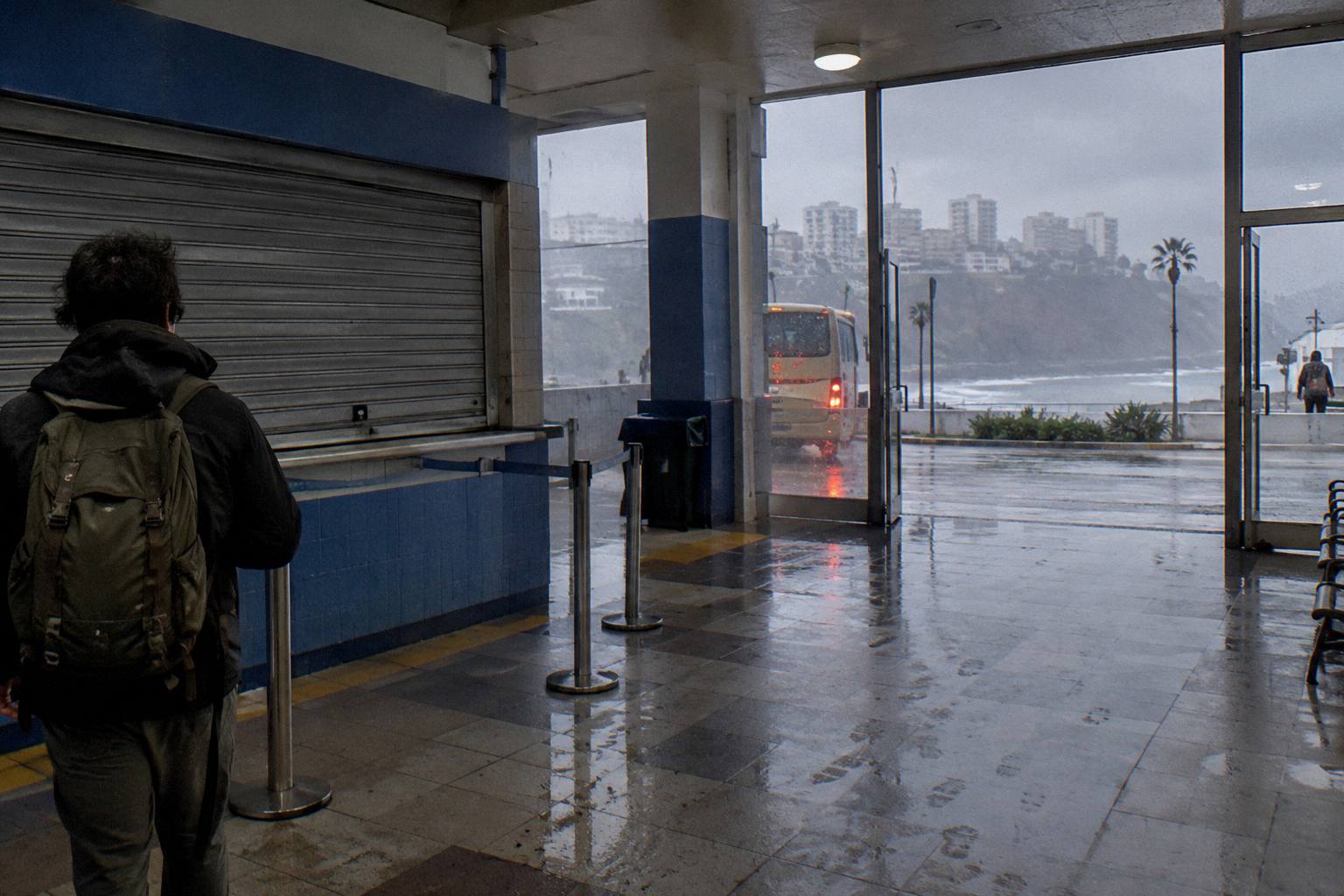
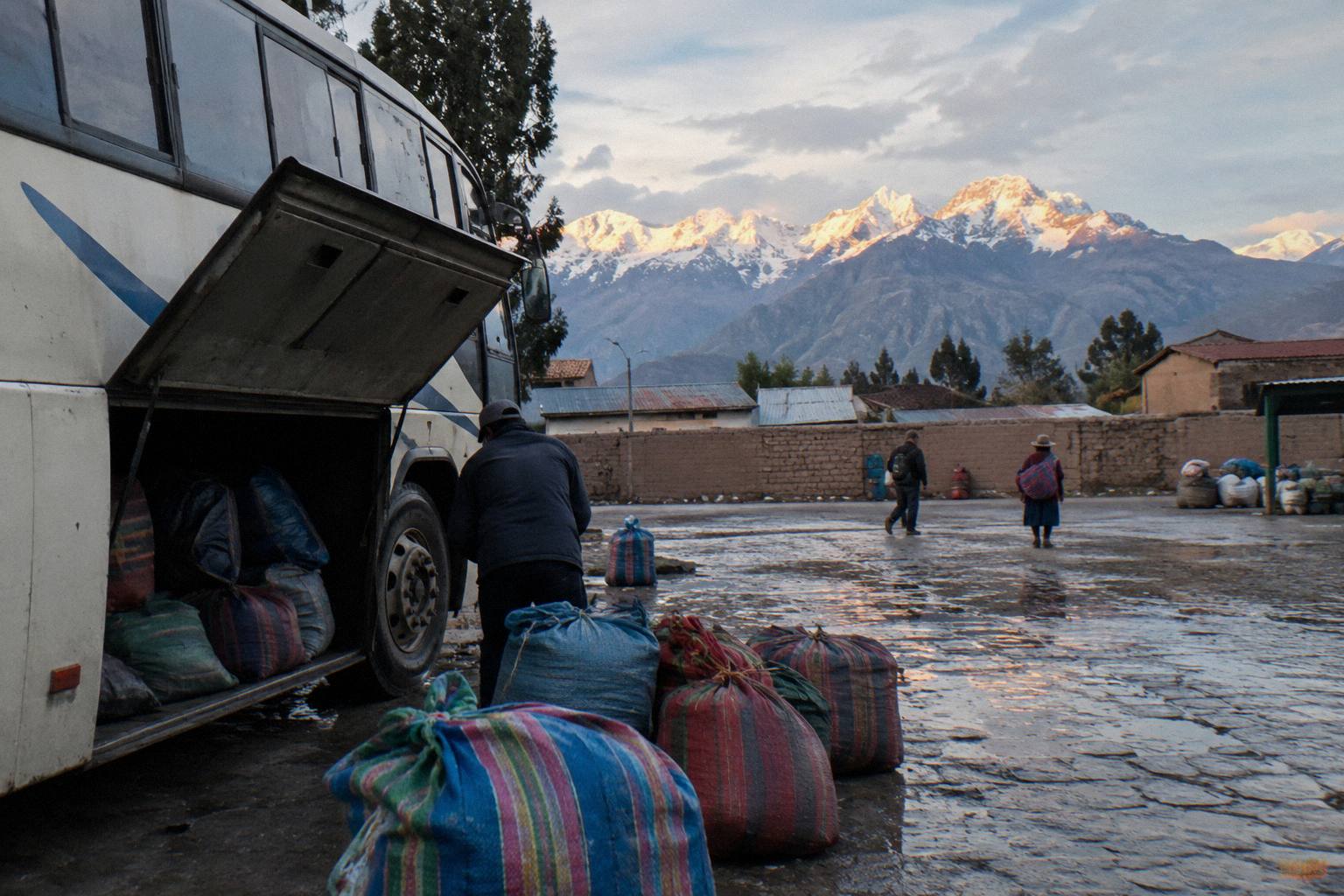
The practical rule from the transit regulation is that regular carriers must use enabled terminals at origin, destination and stops, and the public road may not serve as a terminal. That means a Trujillo connection happens inside a terminal building, not at a curbside stop, and each company keeps its own counters. There is no single main terminal in a city the size of Trujillo; the address that matters is the one printed on the ticket, and it differs by company. The terminals by city guide collects the confirmed addresses across Peru's bus cities.
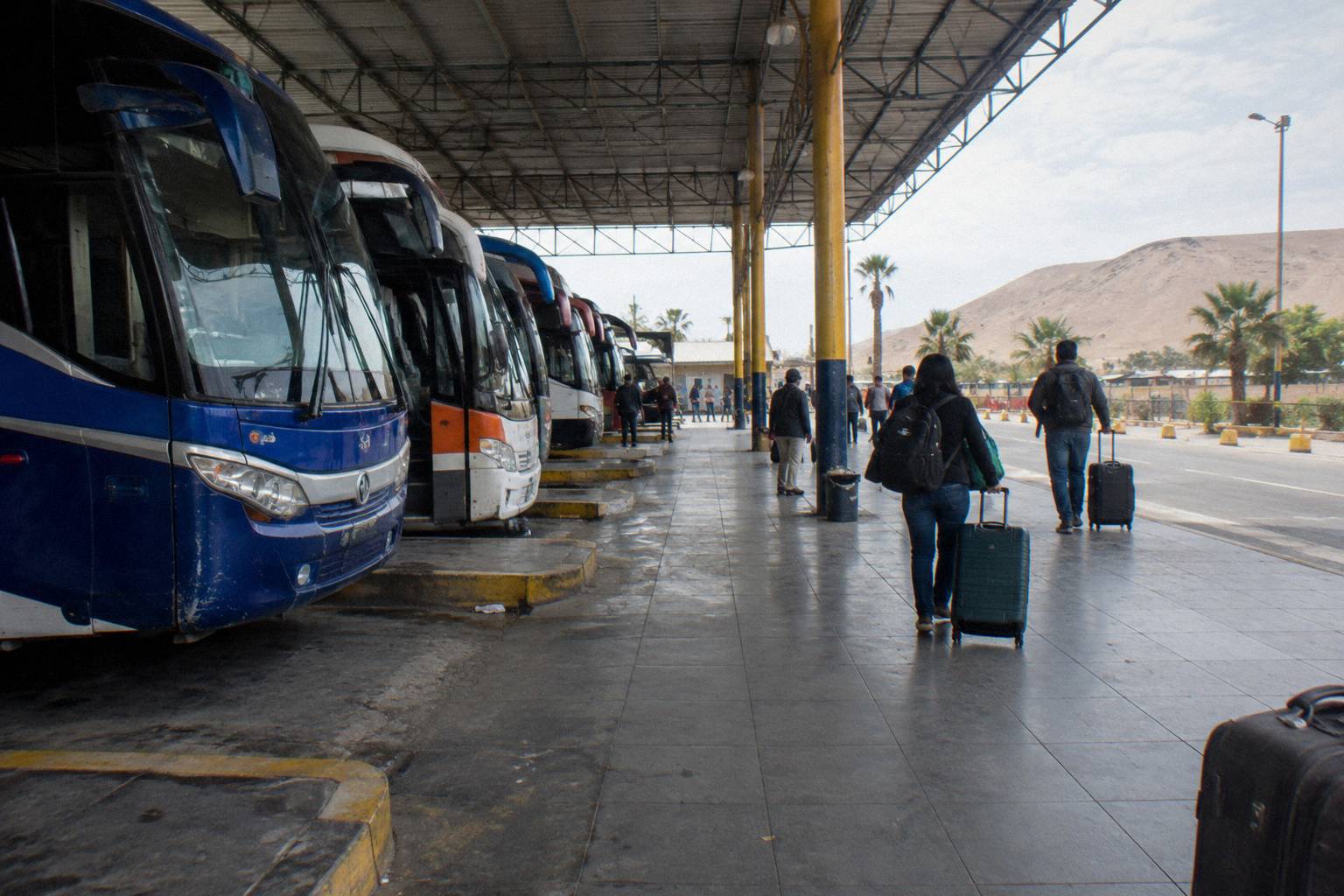
Two government advisories bear directly on time spent in terminals. The UK FCDO states: "There is a risk of robbery by criminals posing as taxi drivers, especially at Jorge Chavez International Airport and bus terminals," and advises readers to "use one of the taxis registered at bus terminals." Canada's advice for Peru echoes the terminal point with "Remain particularly vigilant at bus terminals and in taxis" and "Only use authorized cabs located inside airport terminals and bus stations." Both are quoted from the advisory pages, and both name the same countermeasure: the registered taxi rank inside the terminal, not a driver who approaches in the hall.
For the second leg, a seat search for the Trujillo to Cajamarca route shows the boarding point and the operator's own listing details before payment, which is the cleanest way to confirm where the connection happens: Check availability
What Is The Ride From Trujillo To Cajamarca Like?
The Trujillo to Cajamarca leg runs about 290 km with a free-flow drive estimate of 4.1 hours, climbing from Trujillo at 74 m to Cajamarca at 2,731 m. No verified timetable time, fare or terminal detail exists for it in the sources. What the pages confirm is the character of a road that leaves the coast and climbs the full height of the northern Andes on a leg Movil Bus and Linea both list.
The altitude figures come from INEI's statistical compendium of political-capital elevations, and the gap between them is the story of the ride. Trujillo is a low coastal city; Cajamarca is high enough that altitude deserves a paragraph of its own further down. Between the two, the road leaves the Pan-American corridor and works up into the Andes, which is why the free-flow estimate of 4.1 hours is a floor rather than a plan.
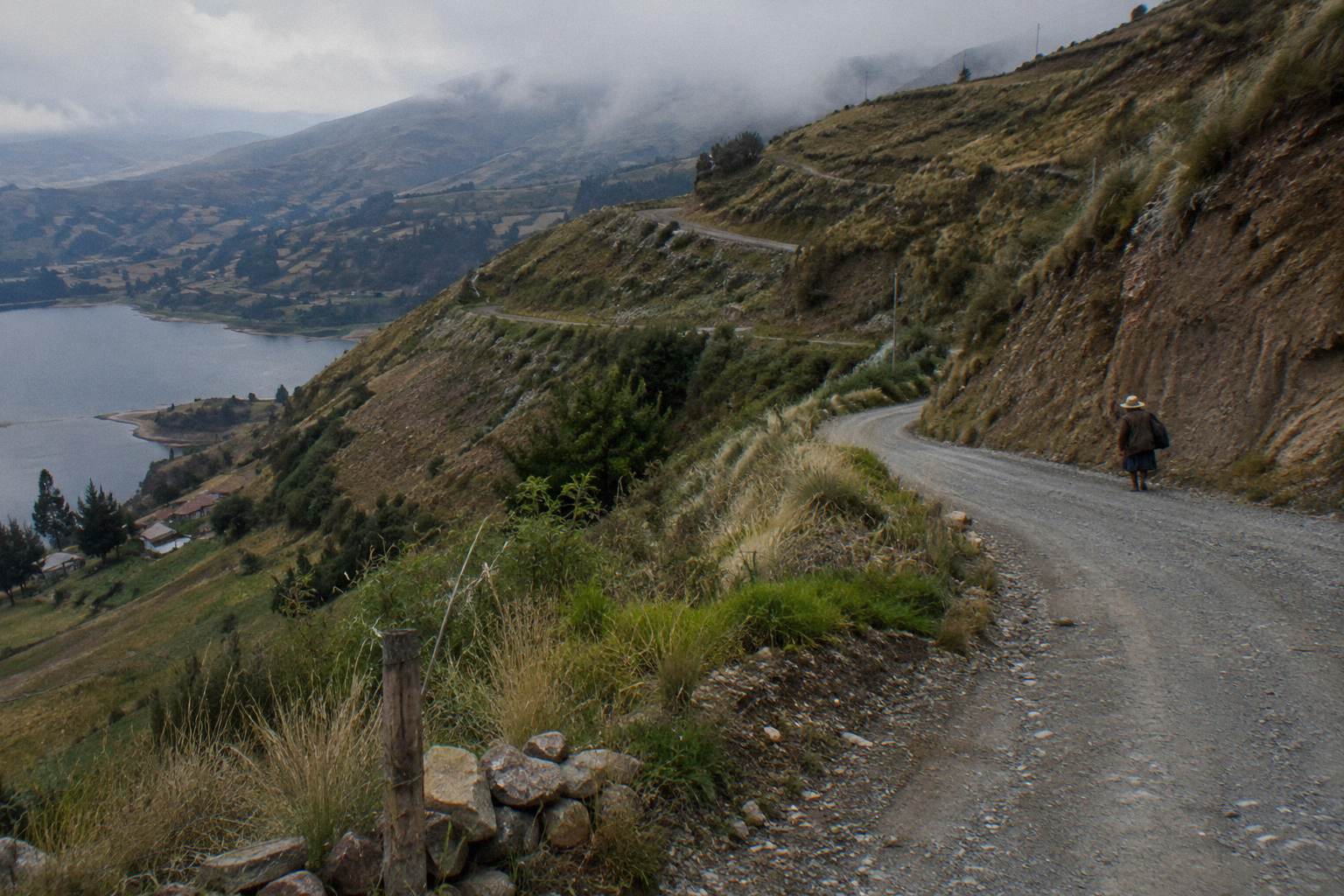
Government advice speaks directly to mountain bus travel. The FCDO states: "Bus crashes are common, especially at night. Only use reputable transport companies, and where possible, avoid overnight travel, especially in mountainous and remote regions." Canada's advisory is blunter about intercity buses: "Intercity bus travel can be dangerous due to the risk of bus accidents, which are usually caused by excessive speed, poor vehicle maintenance and driver fatigue. Armed gangs have been known to stop buses to rob travellers, especially at night," followed by "Avoid taking buses and coaches at night." Smartraveller adds "bogus roadblocks or checkpoints on roads outside major cities after dark." None of these sentences describes the Trujillo to Cajamarca road specifically, and none of them is presented here as a verdict on it; they are the published advice, quoted with their sources, and a reader weighs them when choosing a daylight connection.
One regulatory fact helps explain why mountain legs are structured the way they are: SUTRAN states the 90 km/h limit for interprovincial buses applies only on roads without any other regulatory speed sign, meaning signed mountain stretches can carry lower limits, and the regulation's continuous-driving caps of 5 hours by day and 4 at night force a second driver on legs longer than that. A rider can even check the specific bus and driver: SUTRAN's public lookup at its official service page takes a plate number or a driver's DNI.
What Does Cajamarca's Altitude Ask Of A Visitor?
Cajamarca stands at 2,731 m per INEI's compendium, and arriving from Trujillo at 74 m means climbing from sea level to highland elevation within one leg. The city is high enough that some visitors feel the elevation on arrival. No dosing or medication guidance appears in this site's sources, so the practical notes here are the plain geographic facts and where the altitude-sickness basics live.
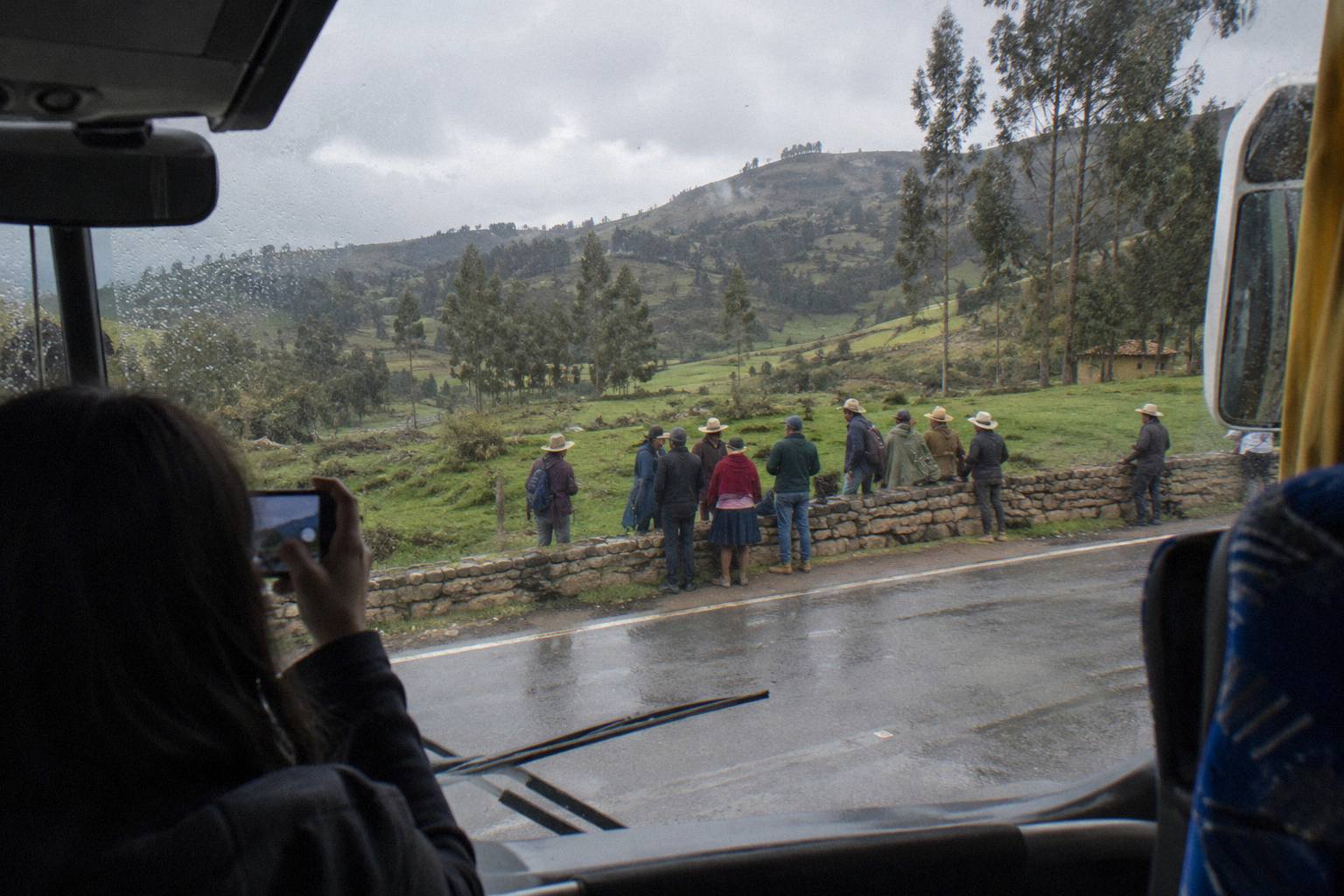
The size of the jump is the point worth planning around. A passenger who boards at sea level in Trujillo steps off in a highland city, and the ascent happens inside a single leg rather than across days of gradual travel. How any individual responds varies, and nothing in the verified sources supports specific advice beyond the geography.
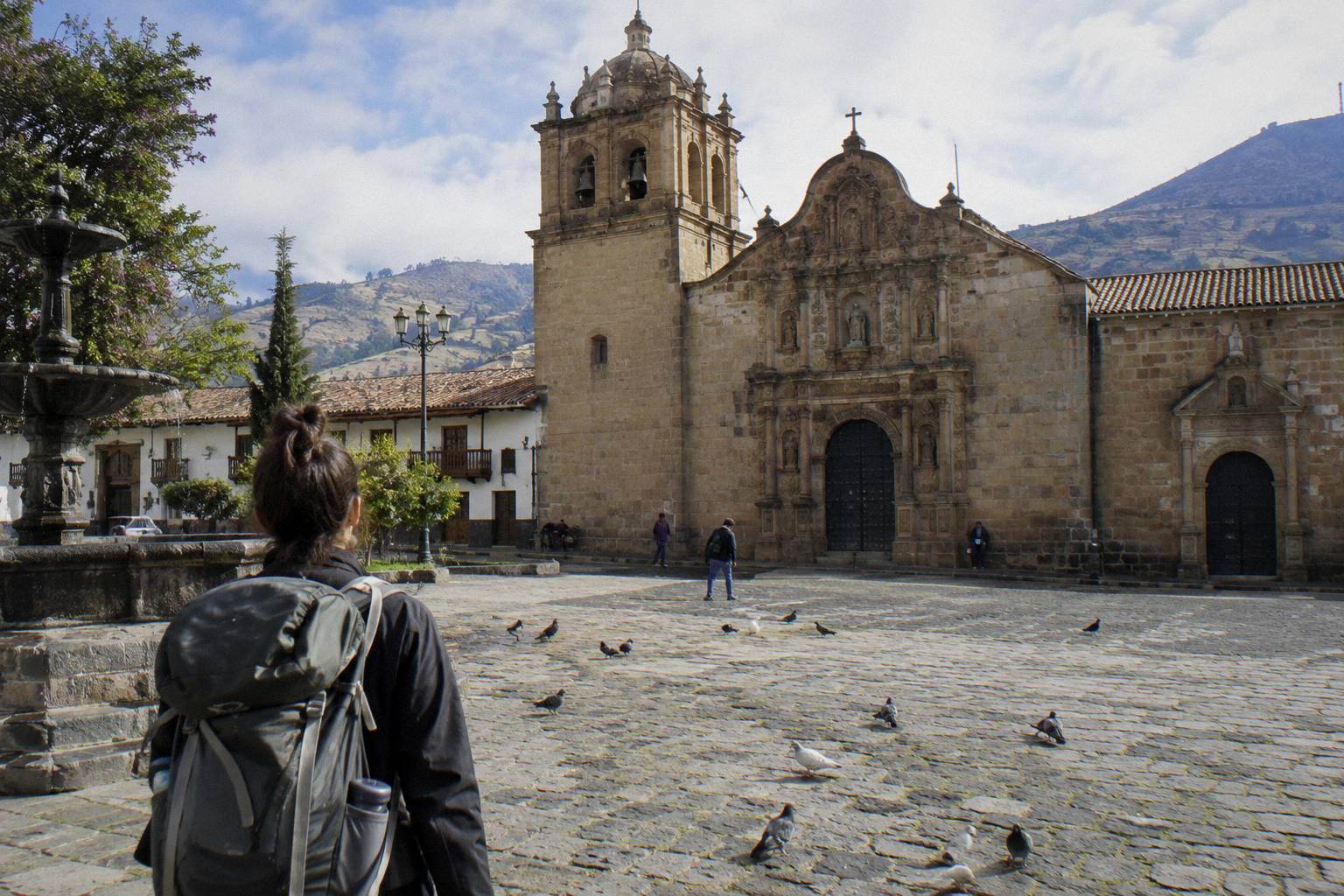
For the fuller treatment of elevation on Peru's buses, including the higher destinations on the southern network, the altitude and buses guide lays out what the geography sources say city by city. The one route-level fact this page adds: on the northern corridor the big climb is concentrated in the Trujillo to Cajamarca leg, so an arrival day without a packed schedule is the sensible shape for the first evening at 2,731 m.
How Do You Buy A Lima To Cajamarca Seat?
The trip is bought as two seats: a Lima to Trujillo ticket with a carrier serving the coast, then a Trujillo to Cajamarca ticket with Movil Bus or Linea, and each booking shows its own boarding point. A seat search for the Trujillo to Cajamarca leg confirms availability, and the operators' own pages carry the class and luggage details that decide which service to book.
For the second leg the seat search below is the direct route to a confirmed place, and it opens the operator's live listing rather than any terminal queue: Check availability
One right worth knowing before booking either leg: INDECOPI, Peru's consumer agency, states that a domestic bus ticket can be postponed or transferred with at least 24 hours notice, with only the real cost of reissue charged and no penalty, and that delay or non-performance by the company gives the passenger the right to information and to reprogramming or a refund. Complaints route through the carrier's Libro de Reclamaciones or INDECOPI's Reclama Virtual portal. SUTRAN advises passengers to take a luggage ticket for hold bags, phrased as advice rather than a statutory requirement.
The northbound plan can also end somewhere other than Cajamarca. If Huaraz is the destination instead, the First Class Huaraz bus ticket from Lima to Huaraz runs from Lima or Lima airport to Huaraz in a service the listing gives as about 9 hours, from US$50 per person on the listing's basis, with hotel pickup arranged by sending the operator the address after booking; the listing marks it non-refundable and unchangeable, and passport numbers with full names are needed to print tickets. Check availability. The Lima to Huaraz route guide covers that corridor in full.
Getting to a Lima departure point has its own ticket. The Airport Express Lima bus from Lima airport to Miraflores runs from the airport to Miraflores in a service the listing gives as about 1 hour, from US$6.5 per person on the listing's basis, on a bus the listing marks air-conditioned, with free cancellation up to 24 hours before for a full refund as listed. Reviews for it sit on the listing rather than in a verified figure here.
What Should You Know About Luggage On The Northern Buses?
Movil Bus states 20 kg of hold luggage across up to three pieces plus 8 kg of hand luggage across up to two, Linea's conditions page states 20 kg, and the national regulation sets the floor with up to 20 kg free on national service and a fare receipt as the passenger's right. Hold bags travel in the hold and overhead racks, never in the aisle or exits, per the regulation's loading rules.
The damage rule is also printed in the regulation: loss or damage from the carrier's fault pays a minimum tied to the fare and the weight band. SUTRAN and INDECOPI both advise taking a luggage ticket for hold bags, which is the practical step that makes any later claim simple. Hand-luggage liability is not settled in the sources, so nothing is claimed here about it.
| Item | Source | Figure |
|---|---|---|
| Hold luggage, national service | Peru's national transit regulation | up to 20 kg free |
| Hold plus hand, Movil Bus | Movil Bus recommendations page | 20 kg (3 pieces) + 8 kg (2 pieces) |
| Hold luggage, Linea | Linea travel conditions page | 20 kg |
| Damaged or lost hold bag | National transit regulation | minimum compensation tied to fare and weight band |
The fuller picture across operators, including the theft warnings that accompany terminal handling, is in the luggage and theft guide. For this route the short version is: stay inside the regulation's 20 kg floor, take the luggage ticket, and keep the passport on your person, the last point being FCDO advice, which states "on bus journeys, keep your passport with you."
What If Strikes Or Blockades Close The Road?
Peru's advisories warn that protests and strikes arrive with little notice, the FCDO naming Arequipa, Ayacucho, Cusco, La Libertad, Madre de Dios and Puno as regions with recent protests, and La Libertad is the region containing Trujillo. SUTRAN's interactive alert map marks roads red for closed, yellow for restricted and green for open, and checking it the day before travel is the concrete step the sources support.
The FCDO's wording is explicit: "Political protests in Peru are unpredictable and can escalate quickly. Demonstrations can become violent and lead to roadblocks, travel disruption, including trains, and suspension of immigration services at land borders," and "Local groups can announce strike action, with little or no notice, particularly in areas connected to mining." Mining matters here more than on the coast, since Cajamarca is a mining region and the advisory names that pattern directly. The instruction that follows is quoted as published: "Do not attempt to pass blockades."
The US Embassy's republication of the State Department advisory adds "Criminal groups sometimes set up roadblocks to rob people in areas outside of Lima" and "Demonstrations can shut down local roads, trains, and major highways. This often happens without warning or clear information on reopening times." Canada's page notes "Roadblocks are frequently erected during demonstrations." The single best live tool is SUTRAN's alert map, which plots closures and restrictions as they are reported, backed by a 24-hour WhatsApp line at 999 382 606. What to do when a bus is actually stopped is walked through in what to do if a bus is stopped by a road block.
Where Does This Route Fit In A Northern Peru Trip?
Cajamarca pairs naturally with the northern network: Linea's list continues to Chiclayo, Piura, Huaraz and Cajamarca from Lima, and Movil Bus serves Trujillo, Chiclayo, Chachapoyas, Cajamarca and Tarapoto, so the same two carriers carry a traveller onward after Cajamarca. The north coast Trujillo to Chiclayo to Mancora guide covers the coastal half, and the Chachapoyas guide extends the loop inland.
One booking habit worth carrying from the southern half of the country: defined tourist buses with named drop-off points. The Wayki Bus Peru one-way service from Miraflores to Paracas, rated 4.2 across 62 reviews, runs Lima to Paracas in a service the listing gives as 3 hours with a drop-off at El Chaco in Paracas and free cancellation up to 24 hours before for a full refund as listed, a model of a ticket that states exactly where boarding and arrival happen. Northern interprovincial tickets work on terminals instead, so reading the boarding address off each ticket matters more here.
For a traveller combining north and south in one pass, the two-week Peru itinerary by bus and the longer three-week itinerary sequence the corridors, and Peru By Bus keeps route pages for each leg of both plans.
Common Questions About The Lima To Cajamarca Bus
How Long Is The Bus From Lima To Cajamarca?
No verified timetable time exists. The routed legs are Lima to Trujillo at about 557 km with a 9.1-hour free-flow drive estimate, then Trujillo to Cajamarca at about 290 km with a 4.1-hour free-flow drive estimate, figures real bus journeys exceed.
Which Bus Companies Run To Cajamarca?
Movil Bus and Linea both list Cajamarca on their own route pages. Movil Bus serves a northern network including Trujillo, Chiclayo, Chachapoyas and Cajamarca, and Linea lists Lima, Trujillo, Chiclayo, Piura, Huaraz and Cajamarca.
Where Do You Change Buses Between Lima And Cajamarca?
At Trujillo. Linea lists two Trujillo addresses on its contacts page, and each carrier boards from its own terminal point, so the address on the ticket is the one that matters.
What Is The Ride From Trujillo To Cajamarca Like?
It is a mountain leg of about 290 km with a 4.1-hour free-flow drive estimate, climbing from 74 m at Trujillo to 2,731 m at Cajamarca, with no verified fare or timetable fact for the pairing.
How Much Luggage Can You Take On The Northern Buses?
The national regulation allows up to 20 kg free on national service. Movil Bus states 20 kg of hold luggage plus 8 kg of hand luggage, and Linea's conditions page states 20 kg.
Does Peru Hop Go To Cajamarca?
No. Its passes cover the south coast and the Lake Titicaca corridor, and the northern highlands are served by the interprovincial carriers named above.