Backpacking Peru On A Bus Budget: The Southern Loop And Beyond
The southern loop, Lima to Paracas to Arequipa to Puno to Cusco, is the backbone of a Peru backpacking trip, and buses connect every stop of it. Here is how the legs stack up, what a pass covers, and what to sort before boarding.
Short answer
The classic loop runs Lima to Paracas, Huacachina, Nazca, Arequipa, Puno and Cusco, with Copacabana and La Paz as an extension. Individual bus seats cover it in stages; a hop-on hop-off pass adds hotel pickup and stops between towns. Free-flow drives range from about 3.5 hours Lima to Paracas to about 6.2 hours Puno to Cusco, and real bus journeys take longer.
What Does A Backpacking Route Through Peru Look Like By Bus?
Peru's backpacking geography splits into three bands: the desert coast from Lima south through Paracas, Huacachina and Nazca; the southern highlands at Arequipa, Puno and Cusco; and extensions north to Trujillo and Mancora or east to the jungle edge. Buses link every one of these towns. The southern loop, down the coast, up to Arequipa, across to Puno and Cusco, is the itinerary most first visits are built around.
The loop works because each leg is a manageable hop rather than a marathon. The coast section stacks three stops inside a single day of driving; the highland section spaces Arequipa, Puno and Cusco a long bus ride apart, which is why backpackers break the journey in each town for a few days. Cusco sits at about 3,400 m and Puno higher still, so the standard southbound direction, coast first, mountains after, also gives most bodies a gentler climb. Towns on the loop are small enough to walk, and each one repays a pause: Paracas for the bay and boats, Huacachina for dunes, Arequipa for the canyon country, Puno for the lake.
A first decision shapes everything after it: buy individual seats town by town, or ride a hop-on hop-off pass that covers the same corridor with pickup at your lodging. Both are real options on the southern loop, and neither owns the route outright. Individual seats suit travellers who fix dates per town; a pass suits travellers who want to decide the next leg as they go. Many backpackers mix the two, riding booked tourist tickets on the legs with limited departures and buying counter seats where services run thick.
For the wider picture of how the network fits together, the southern Peru bus circuit guide maps the same corridor stop by stop, and the Peru bus routes overview covers corridors beyond it.
| Quick fact | Detail |
|---|---|
| Classic loop | Lima, Paracas, Huacachina, Nazca, Arequipa, Puno, Cusco |
| Common extension | Puno to Copacabana and La Paz, Bolivia |
| Highest sleep on the loop | Puno, at 3,848 m per INEI |
| Cusco altitude | About 3,400 m |
| Free-flow drive, Lima to Paracas | About 251 km, roughly 3.5 h |
| Free-flow drive, Puno to Cusco | About 387 km, roughly 6.2 h |
How Long Does Each Leg Of The Southern Loop Take By Bus?
Expect the coastal legs to be short hops: free-flow drive estimates run about 3.5 hours from Lima to Paracas, 1.3 hours from Paracas to Huacachina, and 2.4 hours using Ica to Nazca as a stand-in for Huacachina to Nazca, though actual bus journeys take longer. Nazca to Arequipa and Arequipa to Puno, by contrast, are full-day or overnight distances.
The highland legs are where the loop earns its length. Nazca to Arequipa is about 566 km with a free-flow estimate of 7.8 hours; Arequipa to Puno about 273 km and 5.5 hours; Puno to Cusco about 387 km and 6.2 hours. Treat these as floor values, not schedules. A touring bus that stops for lunch, a viewpoint or a border runs longer, and operators publish their own durations on each listing: the tourist bus from Puno to Cusco with a lunch stop gives 11 hours in its listing, and the direct bus from Cusco to Arequipa gives 10 hours. The Puno to Copacabana estimate excludes any border wait, which adds its own margin on the day.
| Leg | Free-flow drive estimate (OSRM) |
|---|---|
| Lima to Paracas | About 251 km, 3.5 h |
| Paracas to Huacachina | About 74 km, 1.3 h |
| Ica to Nazca | About 142 km, 2.4 h |
| Nazca to Arequipa | About 566 km, 7.8 h |
| Arequipa to Puno | About 273 km, 5.5 h |
| Puno to Cusco | About 387 km, 6.2 h |
| Puno to Copacabana | About 142 km, 2.5 h, excludes border wait |
For backpackers stacking the coast in one push, a one-way ticket from Lima to Huacachina with a Paracas stop is the efficient shape: it covers the capital's exit, the Paracas stop and the arrival at the Huacachina meeting point in a single seat, with the listing giving 8 hours including the Paracas stop.
Should You Buy Individual Bus Seats Or A Hop-On Hop-Off Pass?
Both work on the southern loop, and the choice comes down to how fixed your dates are. Individual seats give the widest choice of operators and departure styles, from local lines to touring buses with stops. A hop-on hop-off pass covers the same corridor with pickup at your hotel or Airbnb, a host on board and freedom to decide the next leg as you travel, with tickets valid for a year per its pass terms.
Peru Hop runs the pass network on this corridor, with departure cities Lima, Cusco, Arequipa, Copacabana and La Paz, buses every day and stops at Chincha, Paracas, Huacachina, Nazca, Arequipa, Lagunillas, Puno, Cusco, Copacabana and La Paz across its passes. Hidden stops on Lima passes include the Secret Slave Tunnels in Chincha, the Nazca Lines Viewing Tower, the Paracas National Reserve, the Lake Lagunillas viewpoint and a Pisco vineyard in Ica. Passes are named for their shape rather than numbered tiers, so the decision is which stops you want, not which class you buy.
| Pass name | What it covers | Fastest time (Peru Hop lists) |
|---|---|---|
| Full South To Cusco | Chincha, Paracas, Huacachina, Nazca, Arequipa, Lagunillas, Puno, Cusco | 6 days |
| Get To Cusco Quick | Coast stops to Cusco, skipping Arequipa and Puno | 3 days |
| Canyon To Lima | Arequipa, Nazca, Huacachina, Paracas, Chincha, Lima | 3 days |
| Canyon To The Lake To La Paz | Arequipa, Lagunillas, Puno, Copacabana, La Paz | 2 days |
| Cusco To La Paz | Cusco through Puno and Copacabana to La Paz | 24 hours |
| Cusco To Canyon To La Paz | Cusco, Arequipa, then north to the lake and La Paz | 5 days |
| Lima To Cusco To La Paz | The full chain, Lima to La Paz | 10 days |
Other named passes include To Cusco Without The Canyon, Lima To La Paz To Cusco, Full South To Lima, Get To Lima Quick, Cusco To The Oasis To Lima and Copacabana To Puno To Cusco, so the network covers the reverse direction and shorter slices of the same loop. Peru Hop reports more than 395,000 passengers since 2013, with buses offering semi-cama reclining seats, toilets, GPS tracking and a team of drivers. Note one network limit before you plan around it: the pass network does not reach Machu Picchu, Huaraz or the far north, so those legs are individual-ticket territory. A bus time can be changed in the app up to 12 hours before departure, per the pass terms, which is the flexibility that draws undecided itineraries toward a pass.
The clearest way to decide is to count your legs. One or two fixed rides with firm dates sit naturally in the individual-seat column, while a long, loose run down the corridor suits a pass, where the same booking keeps working as the plan changes. The two systems mix, too: a pass for the southern loop plus individual tickets for Machu Picchu, Huaraz or the far north is a workable shape for trips that outgrow the network.
Nothing forces a Lima start. Departures run from five cities on this corridor, so a trip that begins in Cusco or La Paz can still ride the loop, and the reverse-direction passes mean the direction of travel is your call rather than the network's.
When comparing passes, treat the names as a map exercise rather than a price ladder: list the stops you actually want along the corridor, then match them against the pass whose coverage fits, because there is no tier system to climb. And if the hidden stops are a big part of the draw, remember they attach to Lima passes, which makes the starting city the first real decision of the itinerary.
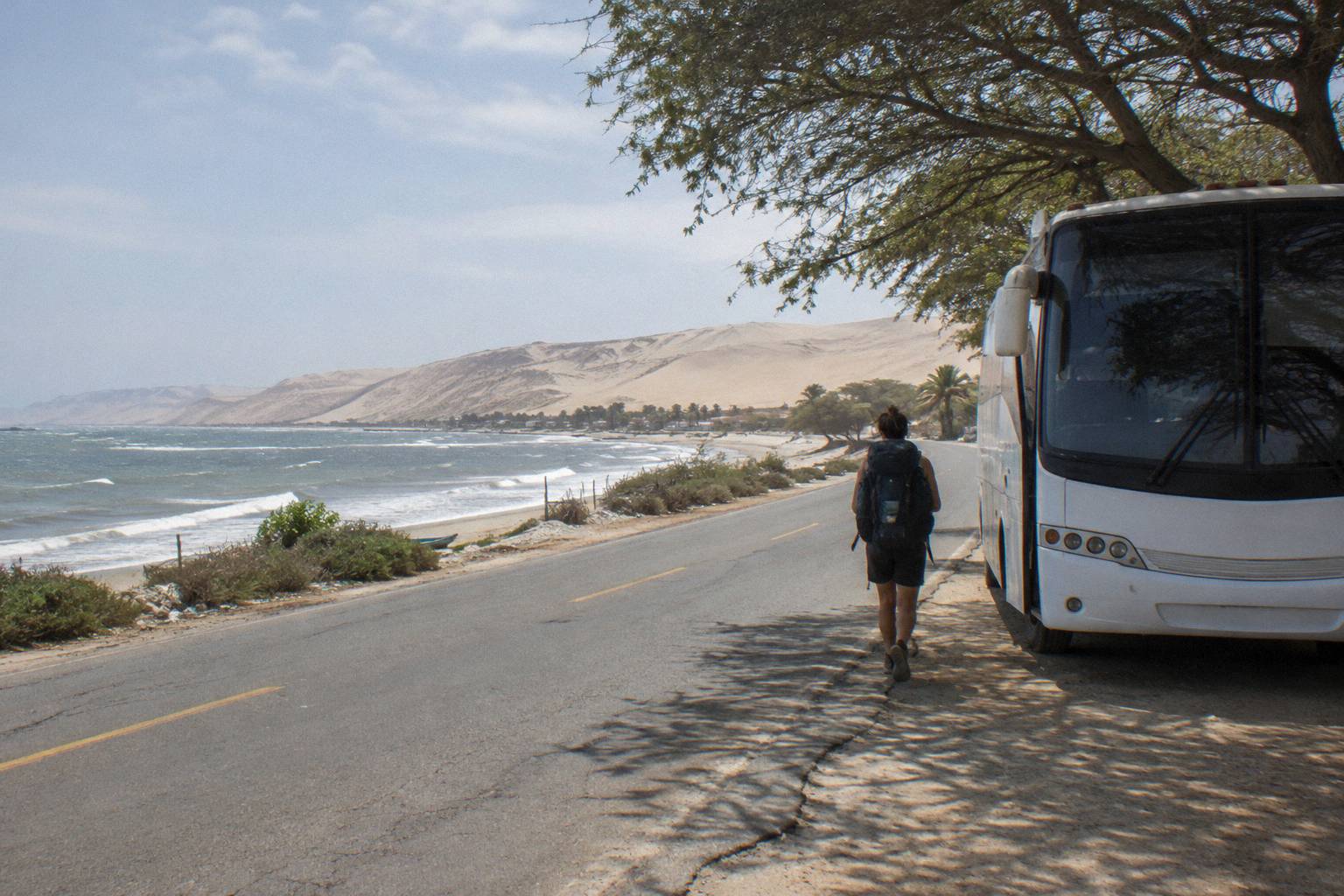
If a fixed first leg appeals more than a full pass, a dedicated tourist bus can carry you from Miraflores to the coast's first stop in one booking.
Which Bus Tickets Suit A Backpacker Budget On Key Legs?
Three legs reward a booked tourist ticket rather than a terminal counter: the Lima exit to Paracas, the Lima to Huacachina run with its Paracas stop, and the Arequipa to Puno overnight. On the first, the Wayki Bus Peru one-way tourist bus from Miraflores, rated 4.2 across 62 reviews, runs from Barranco and Miraflores to El Chaco in Paracas, with the listing giving 3 hours and free cancellation up to 24 hours before.
That Paracas ticket solves the backpacker's real problem on day one: leaving Lima without crossing the city to a terminal. Boarding happens in Miraflores and Barranco, and the drop-off is El Chaco, the bay-side strip of Paracas where lodging and boat tours to the Ballestas Islands cluster. A second listing by another operator covers the same direction with hotel pickup in Miraflores and Barranco from US$18 per person, a separate product with its own basis, not a merged option.
The One-Way Bus from Miraflores, Lima to Paracas is the seat most backpackers book first, and check availability before locking accommodation, since the pickup points are fixed.
For the two-stop coast day, the One-Way Bus from Lima (Miraflores) to Huacachina covers Miraflores, San Isidro and Barranco to the Viajero hostel meeting point in Huacachina with a Paracas stop, rated 3.7 across 77 reviews, its listing giving 8 hours. It ends at the oasis itself rather than in the city of Ica, which saves a taxi leg on arrival and puts you walking distance from the dune buggy outfits.
From Huacachina the loop continues overland to Nazca and Arequipa. On the highland half, a booked tourist ticket again pays for itself: the Turismo Mer bus from Puno to Cusco with a lunch stop, rated 4.6 across 24 reviews, turns the 11-hour listing duration into a sightseeing day, ending at Turismo Mer's private terminal in Cusco. For a deeper comparison of booking channels and ticket types, the Peru bus tickets how-to-book guide walks through the mechanics.
What Is It Like Riding The Overnight Legs Of The Loop?
Two loop legs are natural overnight candidates: Nazca to Arequipa and Arequipa to Puno. Sleeper and semi-cama seats make them restful, with recline degrees printed by some operators, Turismo Mer's sleeper lists a 160 degree recline, and the regulation caps continuous driving at 5 hours by day and 4 at night, with a second driver required beyond that. Government advice tells travellers to weigh night travel carefully.
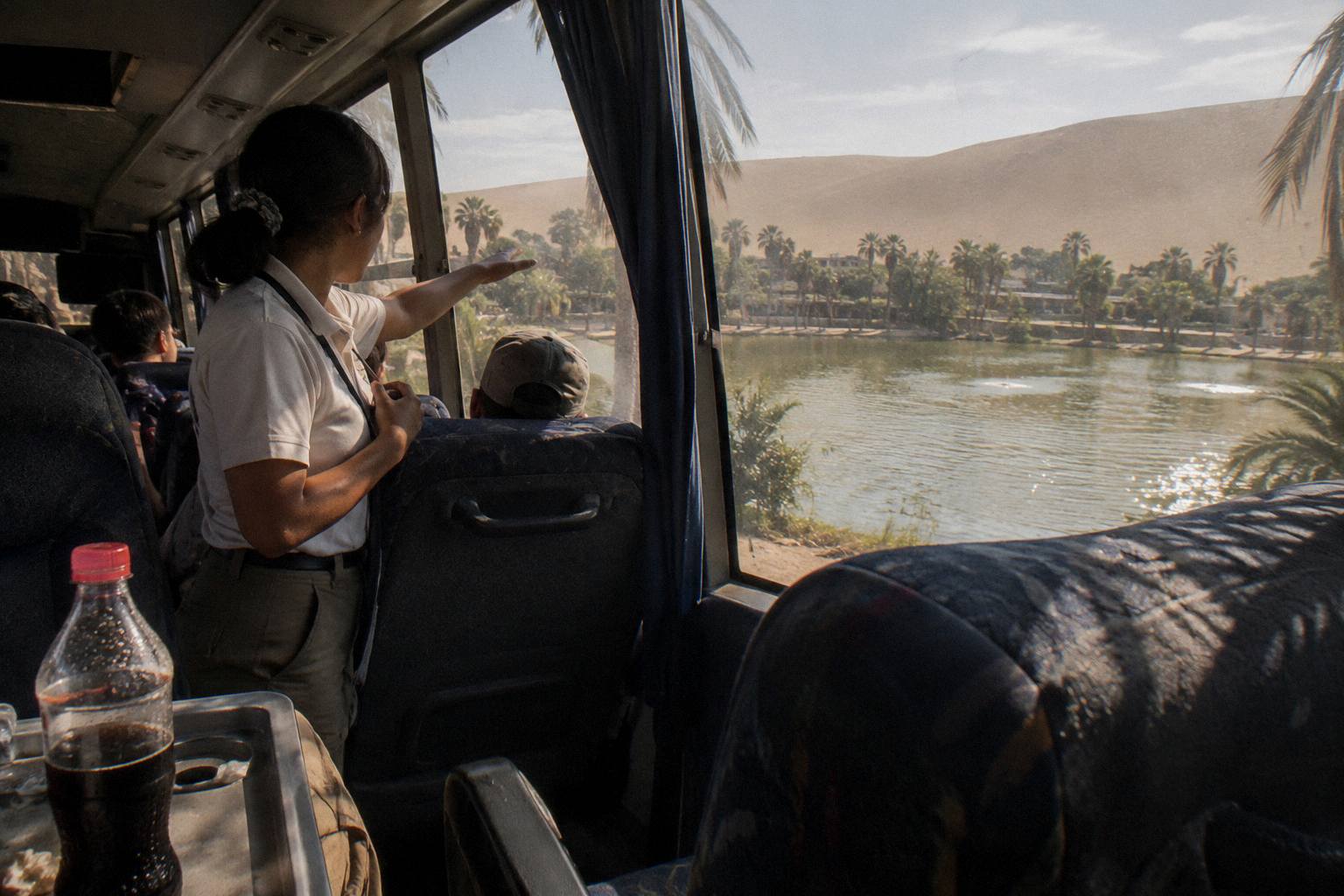
The UK FCDO states plainly on its safety and security page: "Bus crashes are common, especially at night. Only use reputable transport companies, and where possible, avoid overnight travel, especially in mountainous and remote regions." Smartraveller adds that "robberies and assaults occur frequently on intercity buses, including while passengers are sleeping", naming routes between Lima, Ica, Nazca and Cusco. Neither advisory bans night buses, and the Lima-Arequipa-Cusco corridor is the road US government employees are permitted to travel at night with commercial bus companies, per the US Embassy in Lima's advisory. The decision is yours; the advice is to use established companies and stay alert while sleeping.
On equipment: the Direct Sleeper Bus from Arequipa to Puno, rated 4.3 across 20 reviews, lists a 160 degree recline on a night service, with the boarding fee shown as not included on its listing, so check the boarding fee line when booking. The direct Cusco to Arequipa bus lists a Cruzero Suite seat at 160 degrees. More on seats, decks and picking a position is in the overnight bus in Peru guide and the Peru bus classes explained guide.
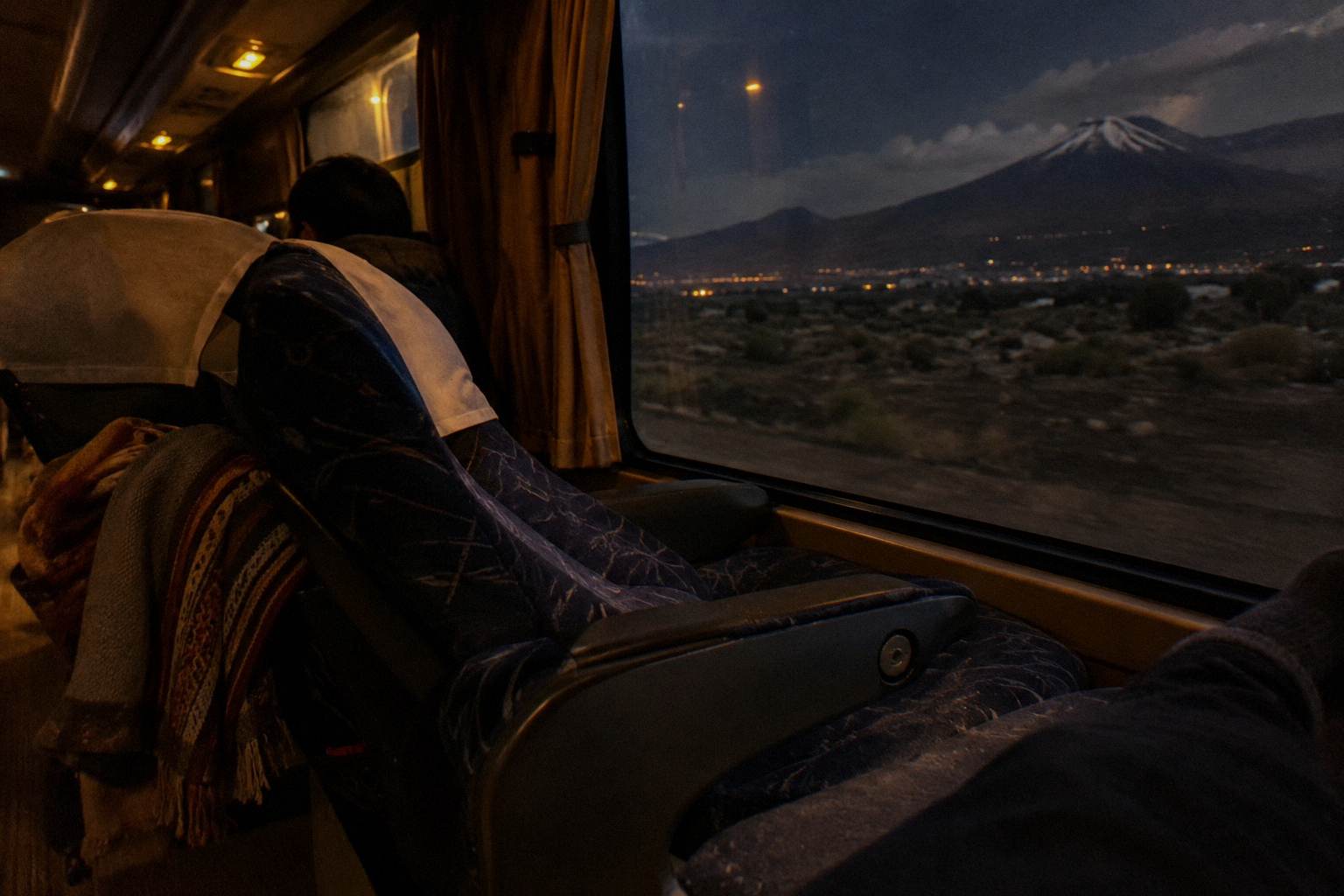
The Arequipa to Puno sleeper is the one overnight most loop itineraries keep, since it saves a daylight day on a leg whose free-flow estimate is 5.5 hours and whose listing gives 7 hours.
How Do Altitude And The Rainy Season Shape A Bus Backpacking Plan?
Altitude climbs steeply along the loop: Lima sits at 162 m, Arequipa at 2,429 m, Cusco about 3,400 m and Puno at 3,848 m per INEI, so the southbound order eases the ascent. Rain matters as much: SENAMHI data shows Puno holds 89 percent of its annual rain between September and March, and the FCDO warns of heavy rainfall, flooding and landslides through April 2027, with possible road closures.
The altitude fix is pacing rather than pharmacy: sleeping a night in Arequipa before Puno, and a night or two in Cusco before any big hike, gives bodies time to adjust. No dosing advice belongs on a bus page; the Peru bus altitude guide covers acclimatisation order in detail. The route itself crosses real passes, and the Puno to Cusco leg crests Abra La Raya at about 4,300 m, a photo stop on touring buses.
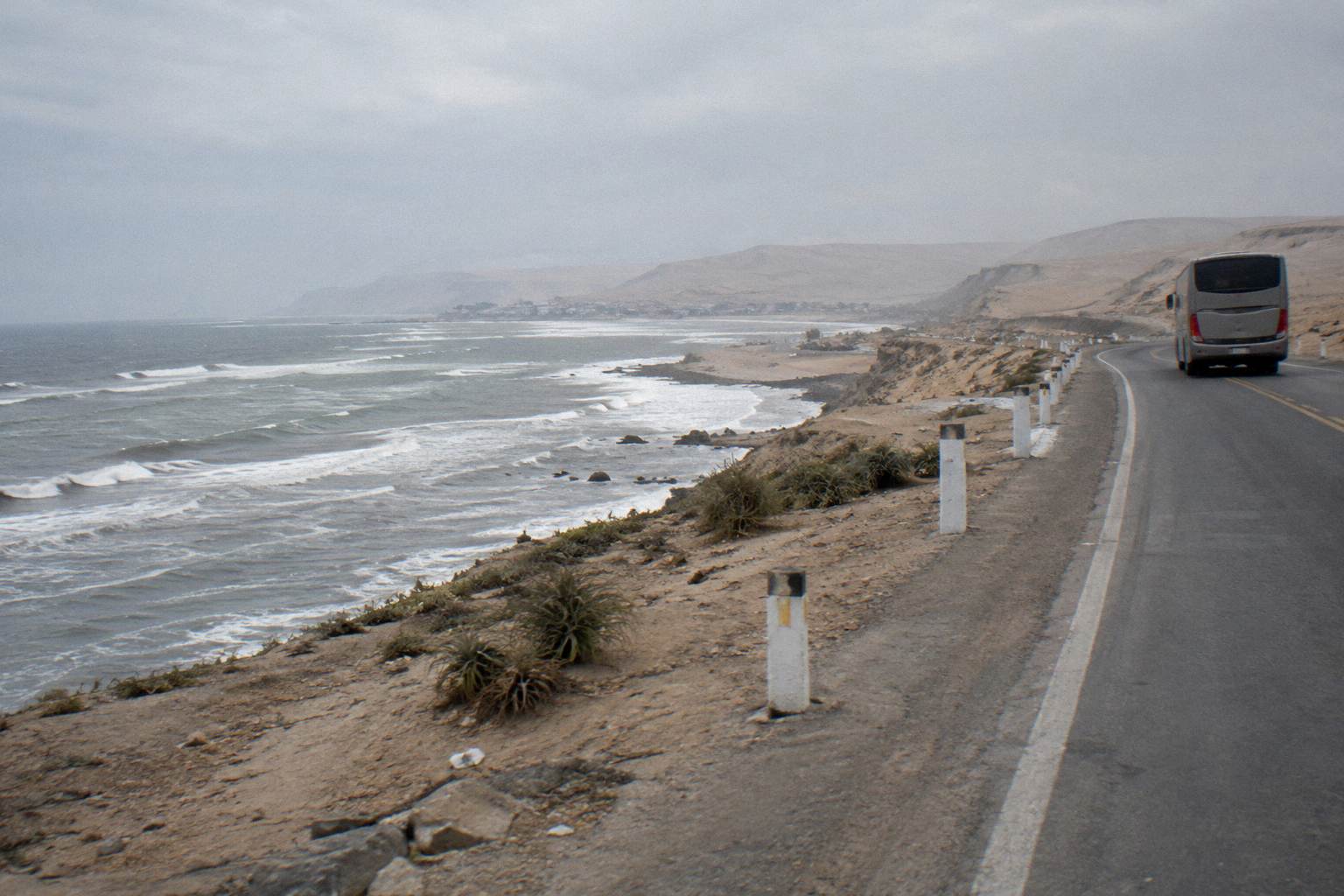
For rain, the practical tools are official. SUTRAN's interactive alert map at alertasviales.sutran.gob.pe shows closed roads in red, restricted in yellow and open in green, with a 24-hour WhatsApp line for reports. The FCDO's El Nino notice reads: "Through late 2026 to April 2027, the El Nino weather event is expected to generate heavy rainfall, possible flooding, landslides, and mudslides, especially in, but not restricted to, the northern and central coast. These could cause travel disruption, such as road closures." Build slack into coast legs in the wet months and check the map the day before each long ride.
What Should You Know About Terminals, Luggage And Safety?
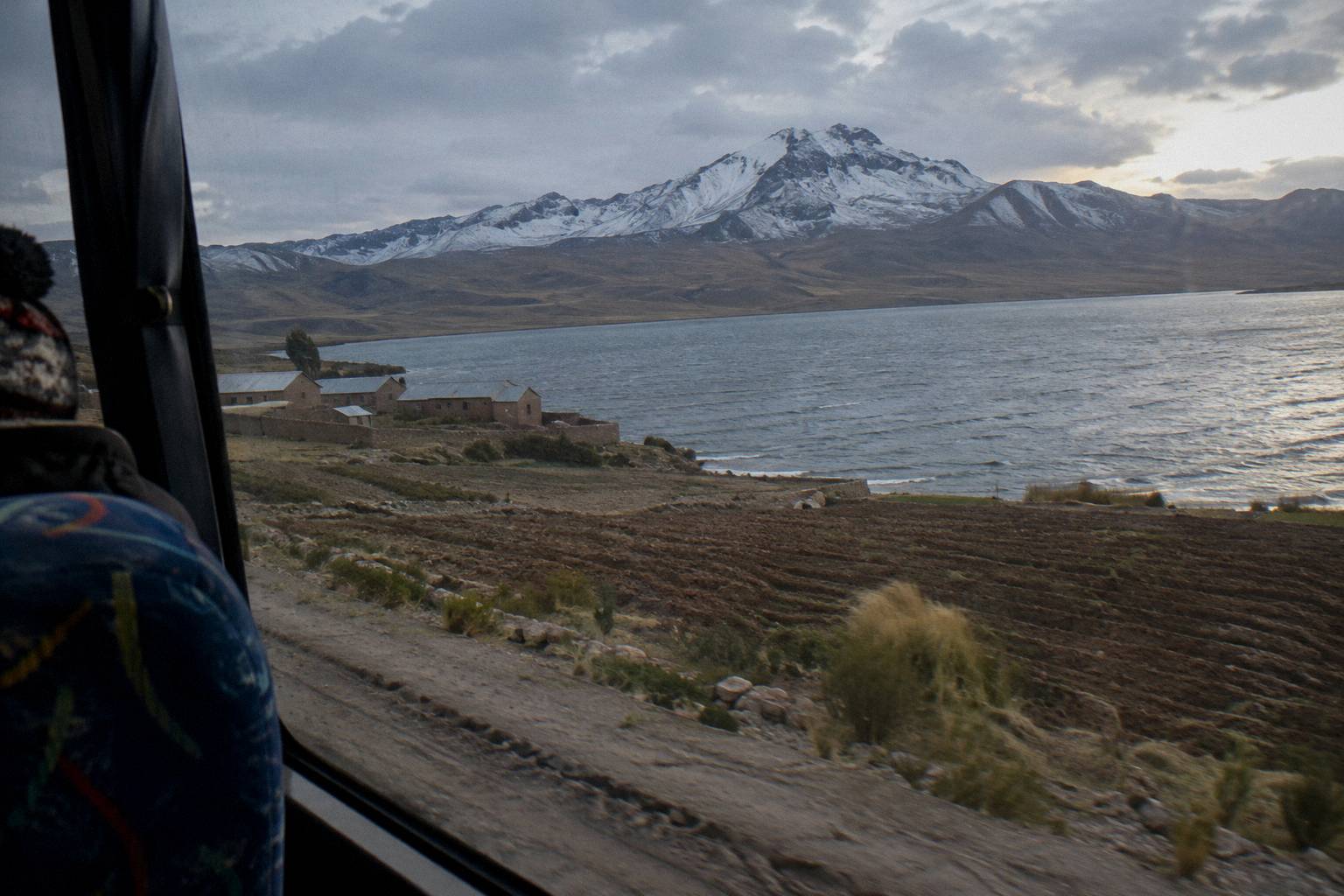
Peruvian regulation allows up to 20 kg of free hold luggage on national buses, with operators adding their own limits: Cruz del Sur allows 20 kg plus 6 kg hand, Oltursa 20 kg plus a 5 kg single piece, and Movil Bus 20 kg across up to three pieces plus 8 kg hand. For safety, four governments warn of night crashes and terminal taxi robbery, so use reputable companies and registered terminal taxis.
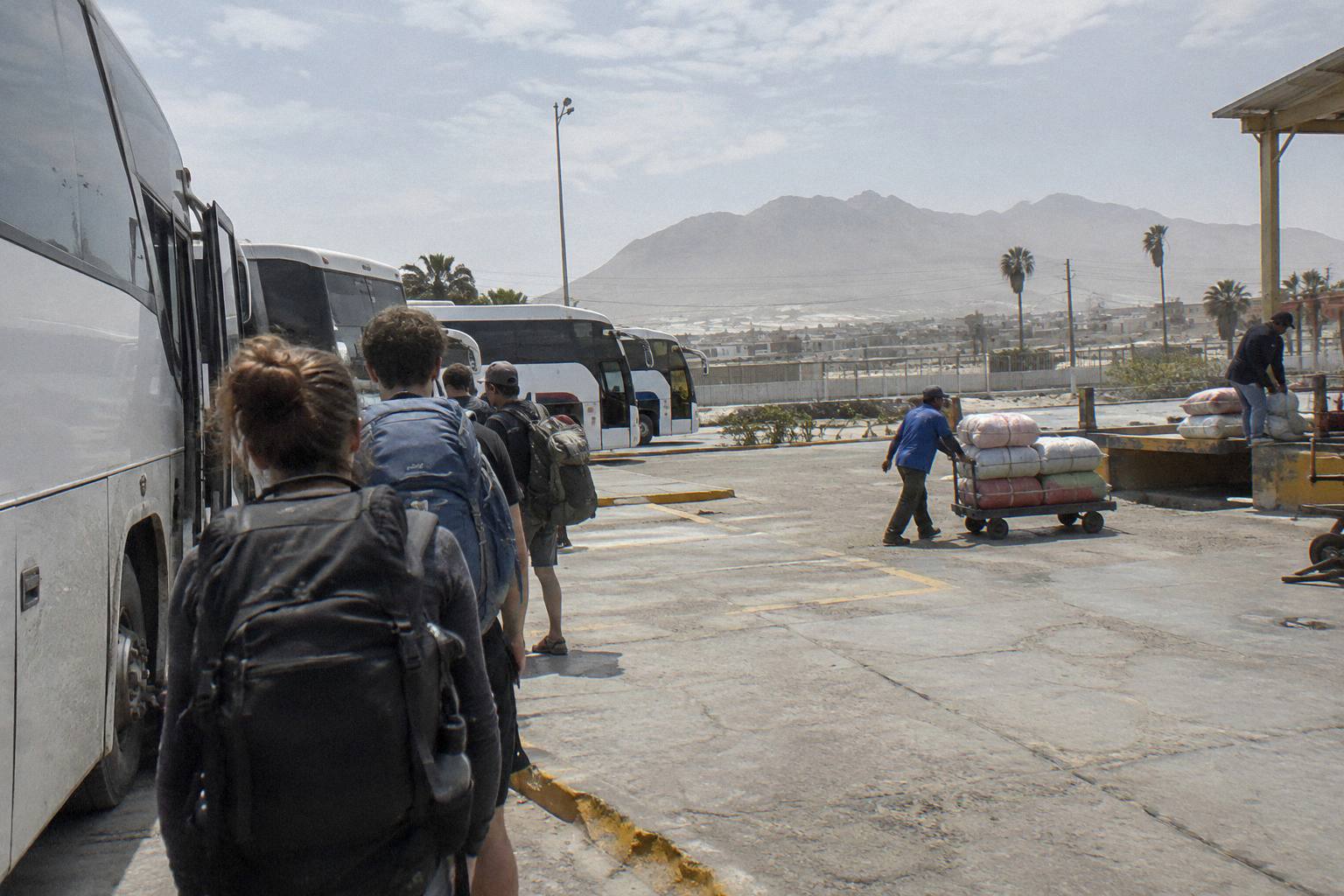
Terminals differ by company, not by city: Cruz del Sur departs Lima from Terminal Javier Prado at Av. Javier Prado Este 1109, La Victoria, while Oltursa uses Jiron Manuel Portocarrero 380 in Surquillo, so a "main terminal" does not exist in most cities. The Peru bus terminals by city guide collects the addresses. The FCDO's terminal-specific warnings are worth the original words: "There is a risk of robbery by criminals posing as taxi drivers, especially at Jorge Chavez International Airport and bus terminals", and it advises readers to "use one of the taxis registered at bus terminals" and "on bus journeys, keep your passport with you".
| Operator | Hold luggage | Hand luggage | Stated by |
|---|---|---|---|
| RNAT national rule | Up to 20 kg free | Not specified | Peru's national transit regulation |
| Cruz del Sur | 20 kg | 6 kg | Cruz del Sur listing |
| Oltursa | 20 kg | One piece, max 5 kg | Oltursa terms page |
| Movil Bus | 20 kg, up to 3 pieces | 8 kg, up to 2 pieces | Movil Bus page |
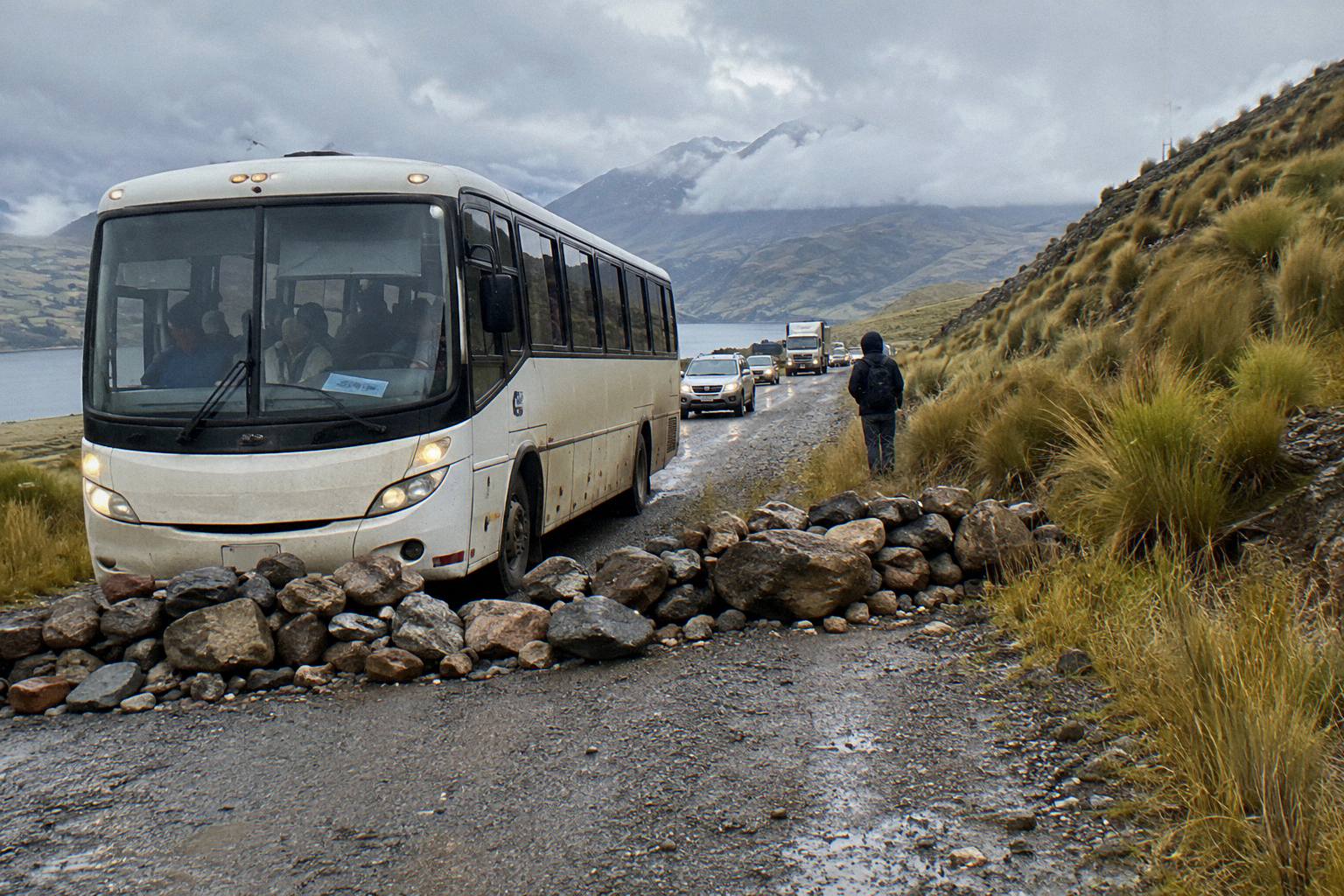
Government of Canada advice frames the road risk in one line: "Intercity bus travel can be dangerous due to the risk of bus accidents, which are usually caused by excessive speed, poor vehicle maintenance and driver fatigue. Armed gangs have been known to stop buses to rob travellers, especially at night", followed by "Avoid taking buses and coaches at night" and "Follow the main roads used by bus tour companies" on its Peru page. Strikes and blockades are the other disruption, announced with little notice in regions including Arequipa, Cusco and Puno; the FCDO instructs "Do not attempt to pass blockades", and the strikes and roadblocks guide covers what to do if one stops your bus.
For packing and hold-bag security, including the SUTRAN advice to obtain a luggage ticket, see the Peru bus luggage and theft guide.
Where Can The Loop Extend Beyond Cusco?
Two extensions matter for backpackers: north and east from Cusco, and across the Bolivian border at the lake. The Puno to Copacabana leg is about 142 km with a free-flow estimate of 2.5 hours excluding any border wait, and Peru's Migraciones pages describe the Kasani post at Yunguyo as the connection to Copacabana. East of Cusco, a back-door route runs by bus to Hidroelectrica, about 212 km and a 5.1-hour free-flow estimate.
The Bolivia extension is the common one. Border formalities at Kasani or Desaguadero involve the Tarjeta Andina de Migracion, which Migraciones describes as obligatory for entry and exit across CAN countries; ask at the post whether a paper form is issued, and check the Bolivian consulate for your passport before assuming visa-free entry. Strike action can close the Bolivia border with little notice, per Canadian advice, so keep a spare day. Onward buses to La Paz cross the lake at the Strait of Tiquina, where passengers leave the bus for a separate boat, and Bolivia Hop vehicles carry no onboard toilet because of the lake-crossing weight limit.
The Cusco extensions suit a second or third week. The Machu Picchu by Car Vip tourist bus from Cusco's Plaza de Armas to Hidroelectrica, rated 4.3 across 53 reviews, runs with two rest stops and takes a listing-given 6 hours, ending at a private terminal inside Restaurante Escobar; from there the walking route to Aguas Calientes follows the rail line. Round-trip variants of the same transfer are listed at 4.0 across 46 reviews, and the Cusco to Machu Picchu by bus guide covers the full back-door route. North from Lima, Trujillo, Chiclayo and Mancora chain together along the Pan-American Highway, covered in the north coast bus guide.
If one long trip is the plan rather than a single loop, the backpacking itinerary options stack these same legs into day-by-day sequences, and Peru By Bus keeps route-level pages for every corridor named here.
Common Questions About Backpacking Peru On Buses
What Does A Backpacking Route Through Peru Look Like By Bus?
The classic loop runs Lima, Paracas, Huacachina, Nazca, Arequipa, Puno and Cusco, with Copacabana and La Paz as the common extension. Roughly two weeks covers it at an unhurried pace, and the north coast is a separate corridor for longer trips.
Should You Buy Individual Bus Seats Or A Hop-On Hop-Off Pass?
Individual seats suit fixed dates and the widest operator choice; a pass suits flexible travel with hotel pickup and the option to change plans, valid for a year with app changes up to 12 hours before departure per its pass terms. Both cover the same southern corridor.
How Long Does Each Leg Of The Southern Loop Take By Bus?
Free-flow drive estimates run from about 3.5 hours Lima to Paracas to about 7.8 hours Nazca to Arequipa and 6.2 hours Puno to Cusco, and real bus journeys exceed every figure. Tourist listings give their own durations, such as 11 hours for the Puno to Cusco bus with a lunch stop.
What Is It Like Riding The Overnight Legs Of The Loop?
Sleeper seats with 160 to 180 degree reclines are listed on several operators, and regulation caps continuous night driving at 4 hours with a second driver required beyond that. FCDO and Smartraveller both caution about night travel and advise established companies and alertness while sleeping.
How Do Altitude And The Rainy Season Shape A Bus Backpacking Plan?
The loop climbs from Lima at 162 m to Puno at 3,848 m, so the southbound order eases the ascent with a night in Arequipa. Puno holds 89 percent of its annual rain from September to March, and SUTRAN's alert map shows closures in red before each long ride.
Where Can The Loop Extend Beyond Cusco?
West of Puno, Copacabana and La Paz sit about 142 km and a 2.5-hour free-flow estimate past the Kasani border. East of Cusco, buses reach Hidroelectrica in a listing-given 6 hours for the Machu Picchu back door, and the north coast chains Trujillo, Chiclayo and Mancora for longer trips.