What Time Do Overnight Buses Leave Lima?
Departure hours for Lima night buses vary by operator, route and date. Here is where to read the exact time for your date, which Lima terminals buses leave from, and what the night-travel advice says.
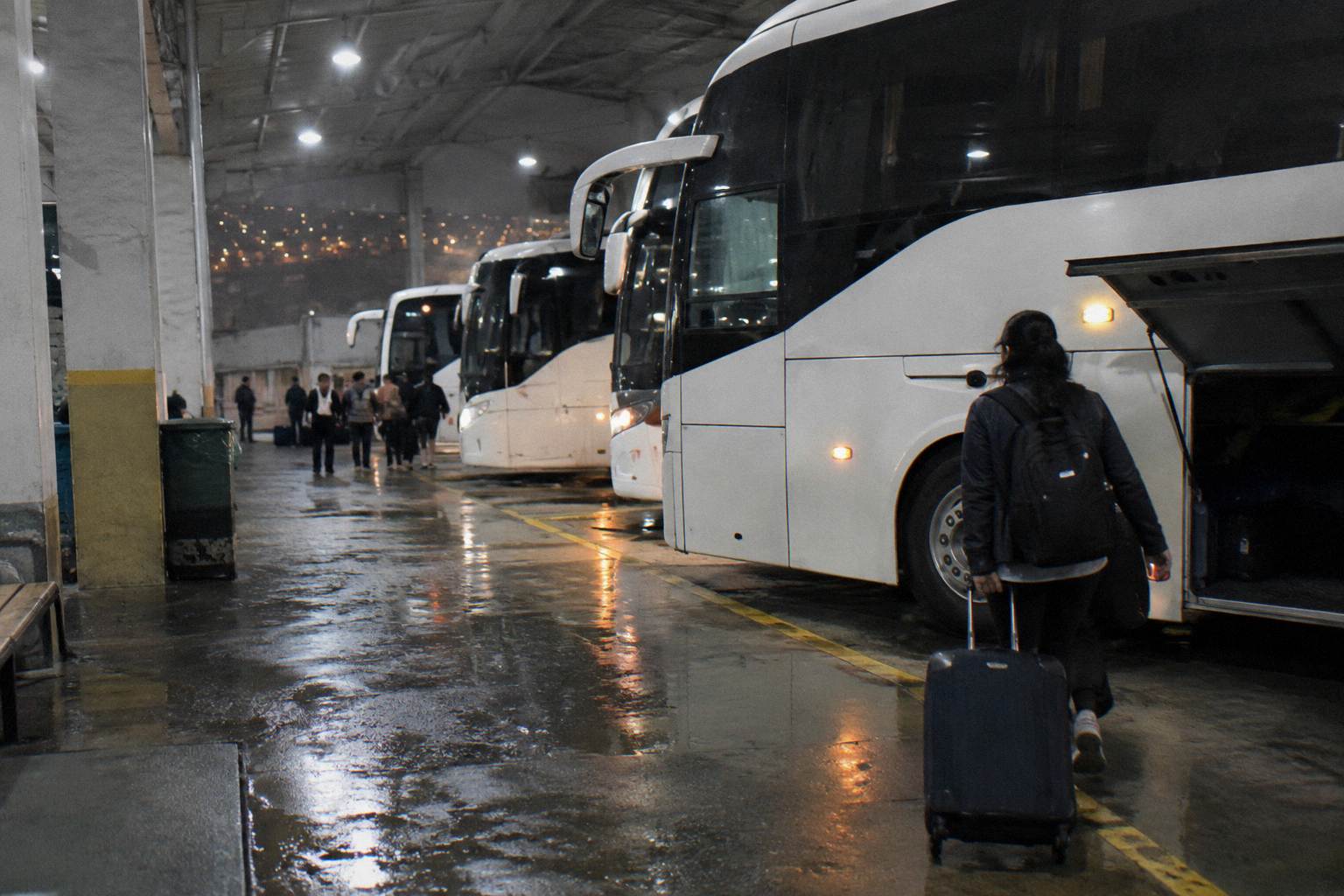
Overnight buses leave Lima at whatever hour each operator schedules, because Peru has no shared night-bus timetable: every company sets its own departure times for each route and date, and those hours shift with season and demand. To find your exact departure, check the operator's booking page for your date or ask at the company counter. Cruz del Sur, for instance, lists seven daily departures on its Lima to Cusco service.
That answer frustrates people who want a fixed number, and it is still the truthful one. Lima is served by several interprovincial operators, each running from its own terminal, each publishing its own timetable, and each adjusting that timetable across the year. A Lima to Arequipa departure and a Lima to Huaraz departure are set by two different companies answering to two different schedules. Any website that prints "night buses leave Lima at X" is quoting one operator on one route on one date and presenting it as a rule.
The productive question is therefore a different one: how do you find the exact departure hour for the specific bus you are about to book? The method is short. Open the operator's own booking page, choose your route and your date, and the timetable appears with the departure hours attached to that date. The same search at a company counter in Lima does the same thing in person. If a route matters to your planning, the overnight bus in Peru guide walks through the whole night-bus decision, and the how to book Peru bus tickets guide covers the booking mechanics.
A third option removes the terminal from the picture entirely. Peru Hop runs a hop-on hop-off pass network with hotel or Airbnb pickup rather than terminal boarding, and its app shows each pass holder the departure details for the leg they have selected. Passes are valid for one year, and a bus time can be changed in the app up to 12 hours before departure, per its pass terms.
For travellers whose real goal is the south coast, the schedule question dissolves a little. Tourist bus products publish their own schedule on their listing, such as the Wayki Bus Peru one-way tourist bus from Miraflores in Lima to Paracas, a 3 hour listed service rated 4.2 across 62 reviews that picks up in Miraflores and Barranco and drops off at El Chaco in Paracas, with free cancellation up to 24 hours before for a full refund as listed. Check availability and the listing shows the schedule for your date. Where that bus fits a daytime coast plan, it removes the need for a night departure from Lima altogether, which matters for reasons the safety section below makes plain.
Where Do Overnight Buses Depart From In Lima?
Overnight buses in Lima depart from company-specific terminals, not from one central station, so the departure point depends on which operator you book. Cruz del Sur departs from its own Terminal Javier Prado at Av. Javier Prado Este 1109, La Victoria. Oltursa departs from Jiron Manuel Portocarrero 380, Surquillo. Northern routes also use the Gran Terminal Terrestre Plaza Norte on Panamericana Norte between Av. Tomas Valle and Av. Tupac Amaru. There is no single main terminal for the city.
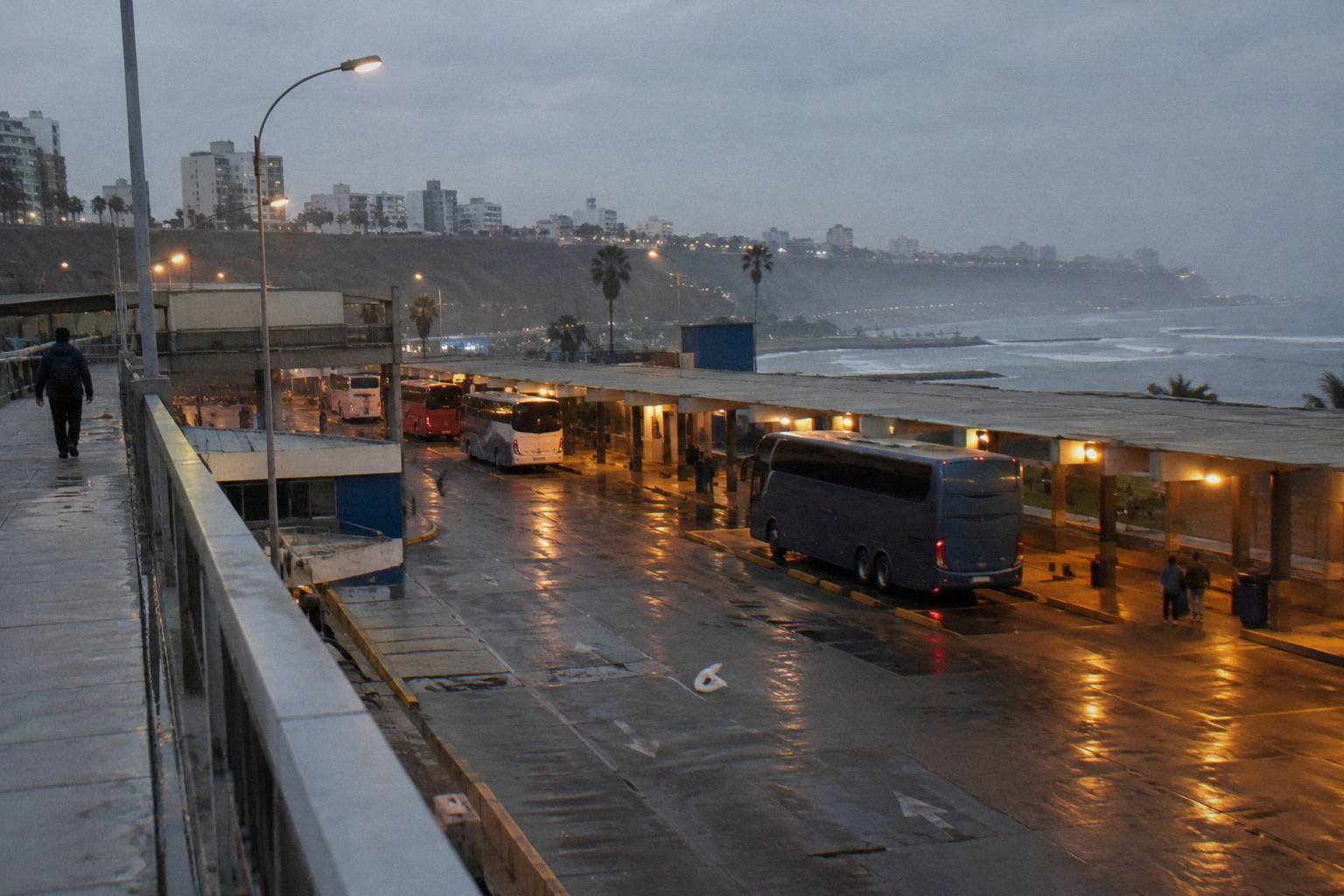
This is the detail that catches arriving travellers out. Two passengers booked on two different companies can be leaving from terminals twenty minutes apart, and a traveller who heads to "the bus station" without checking which one has booked the wrong half of the city. The address each company uses is printed on its own ticket confirmation, and the Peru bus terminals by city guide collects the company-specific addresses for Lima and the other main cities on the network.
The terminals themselves are where your ticket is checked and your hold luggage is tagged. Peru's national transit regulation requires regular carriers to use habilitated terminals at origin, destination and stops, and SUTRAN advises passengers to take a luggage ticket for anything placed in the hold. Cruz del Sur lists DNI control, a metal detector and video recording of passengers at its terminals, alongside a pilot change every four hours on long services on its comfort page. Arriving with time to spare matters more than the departure hour itself, because boarding closes on the operator's own schedule.
| Operator or terminal | Address in Lima | Notes |
|---|---|---|
| Cruz del Sur | Av. Javier Prado Este 1109, La Victoria | Terminal Javier Prado, the company's own page |
| Oltursa | Jiron Manuel Portocarrero 380, Surquillo | Company page address |
| Gran Terminal Terrestre Plaza Norte | Panamericana Norte, between Av. Tomas Valle and Av. Tupac Amaru | Multi-operator terminal beside Plaza Norte mall |
Should You Take A Night Bus Or A Day Bus From Lima?
Every government advisory covering Peru recommends avoiding night bus travel where possible, and the reason is written in their own words rather than in a comfort comparison. The UK FCDO states: "Bus crashes are common, especially at night. Only use reputable transport companies, and where possible, avoid overnight travel, especially in mountainous and remote regions." A daytime departure answers that advice directly, and on the Lima to Paracas and Huacachina coast runs, day tourist buses exist as a real alternative.
The advisories are specific about the risks, and they deserve direct quotation. The UK FCDO adds: "Armed robbers sometimes hold up provincial and inter-city buses." The Government of Canada writes: "Intercity bus travel can be dangerous due to the risk of bus accidents, which are usually caused by excessive speed, poor vehicle maintenance and driver fatigue. Armed gangs have been known to stop buses to rob travellers, especially at night," and it advises travellers to "avoid taking buses and coaches at night" (Government of Canada travel advice). The FCDO's own safety page carries the full set of its bus-related warnings (gov.uk FCDO Peru safety and security).
None of that says a night bus is impossible, and the US Embassy Lima republication of the State Department advisory notes that U.S. government employees "may travel at night with commercial bus companies along the Pan-American Highway, to Huaraz, and on the Lima-Arequipa-Cusco corridor." That sentence is a useful marker: the corridors named are the major commercial routes. Reading the exact advisory text yourself is worth the two minutes, since the advisories are updated and regional advisories sit beneath the national level.
The practical translation for a Lima departure is a daytime preference. On the south coast, that means looking at the Wayki Bus Peru one-way tourist bus from Lima to Huacachina with a Paracas stop, an 8 hour listed service rated 3.7 across 77 reviews that travels by day with a stop in Paracas, picking up in Miraflores, San Isidro and Barranco and dropping at the Viajero hostel meeting point in Huacachina. Free cancellation applies up to 24 hours before for a full refund as listed. For a deeper comparison of the two travel styles, the bus versus flight in Peru guide sets out the trade-offs, and the night bus safety questions are handled at length in the Peru bus safety guide.
For the mountains north of Lima, the day-versus-night choice looks different because the routes are long. The OSRM free-flow drive estimate for Lima to Huaraz is 5.5 hours over 402 km, and real bus journeys exceed free-flow estimates, so a listed 9 hour service on that route is a full daytime commitment. The First Class Huaraz bus ticket from Lima to Huaraz is priced from US$50 per person on its listing basis, with hotel pickup on request arranged by sending the operator the hotel address after booking; the listing itself states the ticket is non-refundable and cannot be changed, and passport numbers with full names are needed to print tickets. That inflexibility is a reason to read the whole listing before paying.
How Do You Find The Exact Departure Time For Your Date?
Open the operator's own booking page for your route and select your travel date, and the timetable for that day appears with its exact departure hours attached. This is the one reliable method, because operators adjust schedules by season and demand, so a second-hand timetable from a blog or forum may not match the day you travel, and these booking pages are public, free, and show times before any payment step.
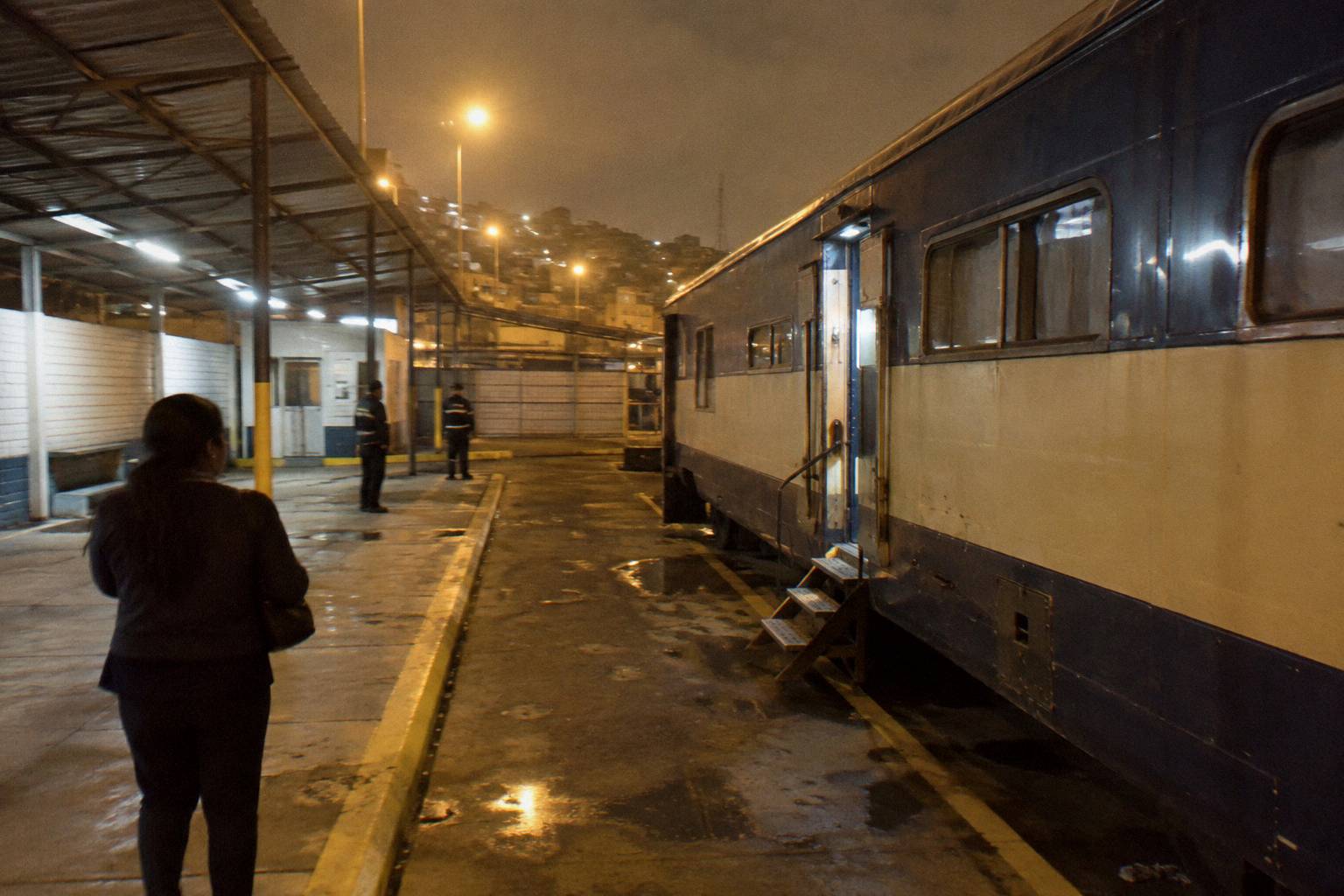
The same logic applies at a counter. Lima's company terminals have ticket windows where staff quote the current timetable for the route you ask about, and buying in person means the hour you were told is the hour printed on your ticket. Online, the operator's page is the equivalent window: Cruz del Sur's own Lima to Cusco page, for example, is where its seven listed daily departures are shown (Cruz del Sur Lima to Cusco). The count of departures is the operator's own statement, and the hours themselves sit on the page rather than in an article.
Two habits make the search honest. First, check the timetable again a day or two before travel, because strikes and road closures do move services. The Peru bus delays, strikes and road closures guide explains the disruption patterns and how to check live road status. Second, treat any third-party copy of a timetable as a hint, not a fact, and finish the search on the operator's own page every time.
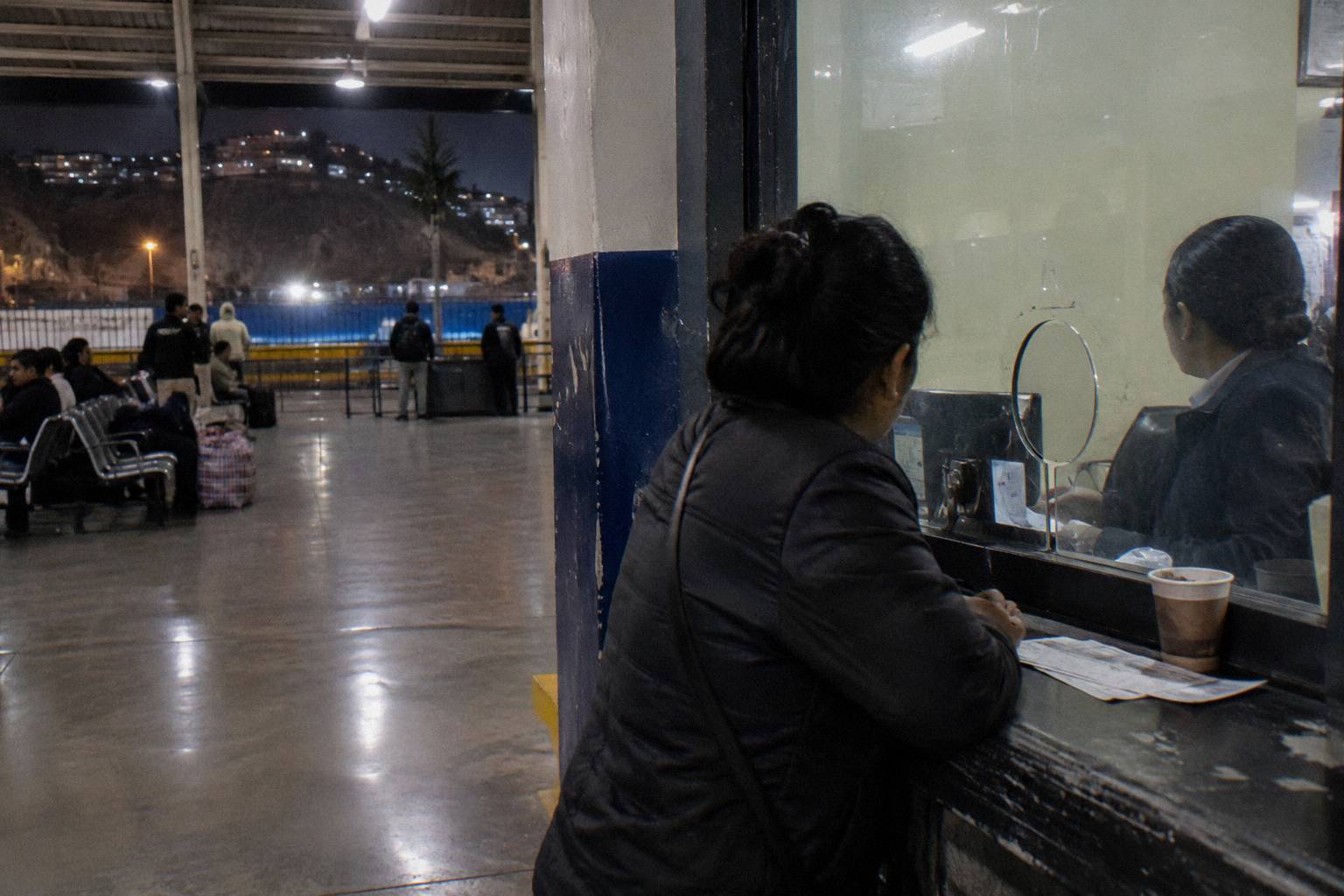
The distance context helps set expectations for how long each direction of travel takes, though none of these figures is a bus time. They are OSRM free-flow drive estimates, which real bus journeys exceed. The rest of the planning pages sit on Peru By Bus.
| Route from Lima | Distance | OSRM free-flow drive estimate |
|---|---|---|
| Lima to Paracas | 251 km | 3.5 h |
| Lima to Ica | 297 km | 4.3 h |
| Lima to Huaraz | 402 km | 5.5 h |
| Lima to Trujillo | 557 km | 9.1 h |
| Lima to Arequipa | 1,002 km | 14.3 h |
| Cusco to Lima via Abancay and Nazca | 1,103 km | 17.8 h (routing assumption) |
Long routes are where overnight services cluster, which is exactly why the advisory language in the section above matters most on the mountain corridors. On the Cusco to Lima routing assumption through Abancay and Nazca, timetabled trips run 20 hours or more against a 17.8 hour free-flow estimate, and the mountain sections are the parts the advisories single out.
What Does The Peru Hop Pickup Model Look Like In Lima?
Peru Hop's Lima model skips the bus terminal entirely: the operator picks you up directly at your hotel or Airbnb, so your accommodation becomes the departure point, with pickup details shown in the pass app for your selected leg. Peru Hop reports passes valid for one year, and you can change the bus time in the app up to 12 hours before departure under its pass terms.
The pass network covers a Lima to Cusco to La Paz chain of routes with hop-on hop-off stops, and Peru Hop lists passes with fastest completion times, for instance six days for the Full South to Cusco pass and three days for Get to Cusco Quick, as operator-stated figures. Peru Hop reports a local bilingual host on every bus, semi-cama reclining seats, toilets, GPS tracking, speed-restriction software, seatbelts and a team of drivers. Its hidden stops on Lima passes include the Secret Slave Tunnels in Chincha, the Nazca Lines viewing tower, the Paracas National Reserve, the Lake Lagunillas viewpoint and a pisco vineyard in Ica.
For a reader whose core question is a departure hour, the pass model answers it differently: the hour belongs to the leg and the app rather than to a public timetable, and the booking page for each pass states the pickup arrangement. See Peru Hop Passes for the pass list and the pickup terms. It does not serve every destination, so a route check comes first; the Peru Hop passes explained guide compares the individual passes, and the Peru Hop versus public bus guide sets the pass model against ordinary scheduled services.
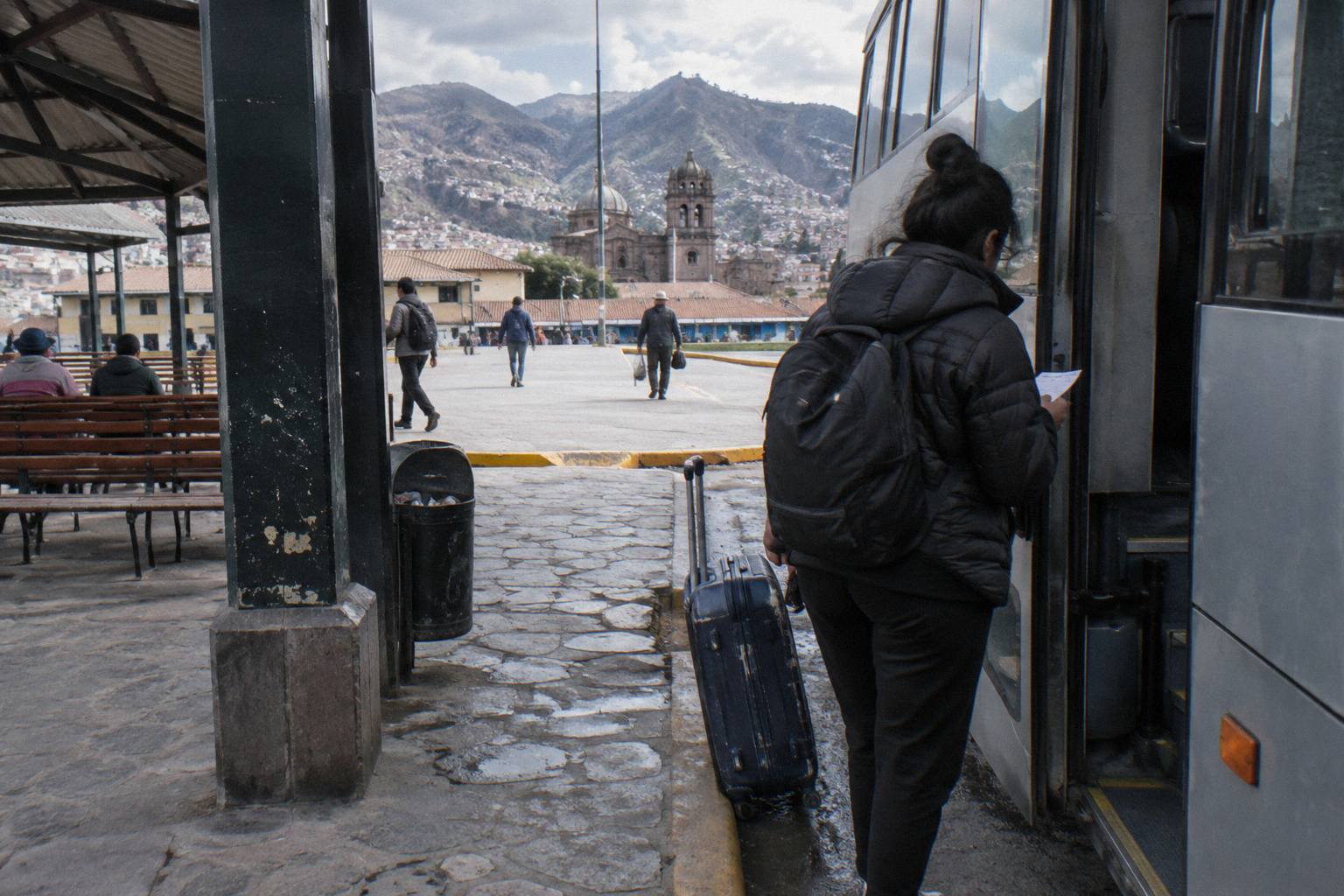
What Should You Do At The Terminal Before An Overnight Bus?
Arrive early, confirm the boarding gate against your ticket, keep your passport with you rather than in hold luggage, and take a luggage ticket for anything in the hold. The FCDO states: "on bus journeys, keep your passport with you," and it also advises travellers to "use one of the taxis registered at bus terminals," because, in its words, "there is a risk of robbery by criminals posing as taxi drivers, especially at Jorge Chavez International Airport and bus terminals."
The terminal routine is short and worth doing in order. Check the departure screen or counter for your service's bay. Hand over hold luggage and take the tag SUTRAN advises passengers to obtain. Keep documents, money and electronics in a day bag that stays with you, which is the same logic behind the packing advice in the Peru bus luggage and theft guide. Board when the operator calls the service, since regulation requires boarding only at authorised points with the bus stopped.
The walk to and from the terminal is the part the advisories flag hardest. Canada's advice to "remain particularly vigilant at bus terminals and in taxis" and to "only use authorized cabs located inside airport terminals and bus stations" is written for exactly this moment: the transfer between terminal and accommodation, at the hours when terminals are quietest. A registered terminal taxi or a pickup arranged through your accommodation answers it. The background on why the advisories are worded this way sits in the who is the safest bus company in Peru post, and the seat-choice questions that follow are covered in the best seat on a Peru overnight bus post.
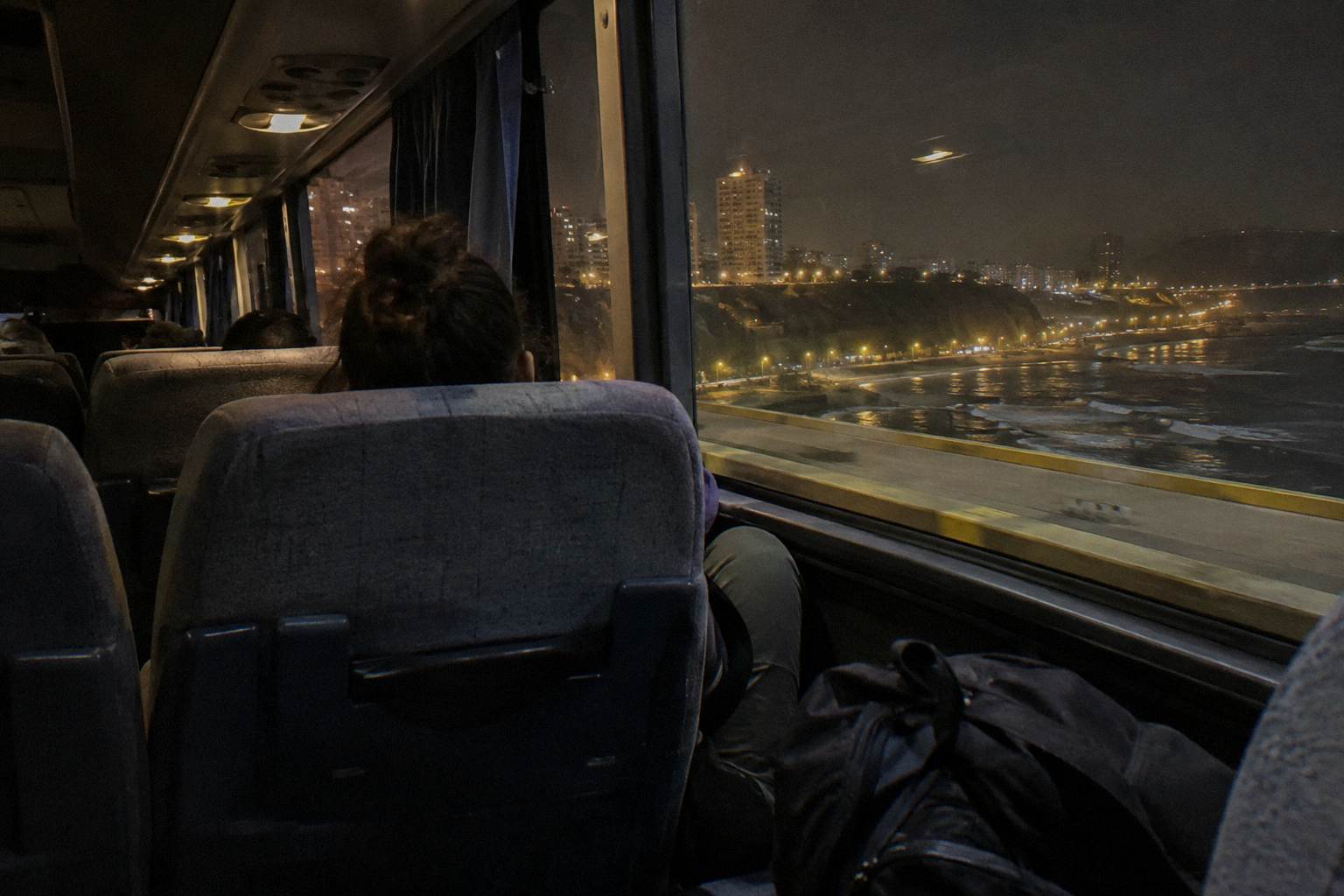
One strike-and-blockade check completes the routine. The FCDO warns that "political protests in Peru are unpredictable and can escalate quickly" and can lead to roadblocks, and that travellers should not attempt to pass blockades. Before any long night departure, a look at SUTRAN's alert map shows closed roads in red and restricted roads in yellow, and a message to the operator confirms whether the service is running as scheduled.
For routes where a night departure is the only realistic option, the terminal routine above stands, and the what to do if a Peru bus is stopped by a road block post covers the rare bad case in detail. The short version is that the driver and the company manage the situation, and the FCDO's own instruction is not to attempt to pass a blockade on foot or by vehicle.
Which Lima Night Routes Do The Long Distances Serve?
Lima's long overnight routes serve the north coast toward Trujillo and Chiclayo, the mountains toward Huaraz, and the deep south toward Arequipa and Cusco, with free-flow drive estimates of 9.1 hours to Trujillo, 5.5 to Huaraz and 14.3 to Arequipa, each of them exceeded by real bus journeys. The short south coast hops to Paracas, 3.5 hours free-flow, and Ica, 4.3, remain day-trip territory, which is why tourist day buses concentrate there.
That geography explains the timetable pattern without needing a single hour. The routes of ten hours and more are the ones where operators schedule overnight services, because a daytime bus would consume an entire day of a short trip. The routes of three to five free-flow hours are the ones where daytime tourist buses compete directly with scheduled coaches, and where the schedule question is answered by a listing rather than by a night timetable. The southern Peru bus circuit guide strings those coast legs together, and the Lima to Huaraz national route guide covers the northern mountain run in detail.
Altitude is part of the planning on the mountain routes, since Huaraz sits at about 3,073 m and the Conococha pass at 4,087 m per INEI, and Cusco at about 3,400 m. Those figures belong to the acclimatisation question rather than the departure-hour question, and the Peru bus altitude guide handles them properly.
Common Questions About Overnight Buses Leaving Lima
What Time Do Overnight Buses Leave Lima?
Each operator sets its own departure hours per route and per date, so there is no single Lima night-bus time. The exact hour for your trip appears on the operator's own booking page when you select your date, or at the company counter. Cruz del Sur lists seven daily departures on Lima to Cusco, but the hours belong to its timetable.
Where Do Lima Overnight Buses Leave From?
From company-specific terminals: Cruz del Sur at Av. Javier Prado Este 1109, La Victoria; Oltursa at Jiron Manuel Portocarrero 380, Surquillo; and northern routes from the Gran Terminal Terrestre Plaza Norte. There is no single main terminal, so match the address on your ticket.
Do Tourist Buses From Lima Run At Night?
The listed tourist services to the south coast run by day, such as the Wayki Bus Peru one-way bus to Paracas, a 3 hour listed service, and its 8 hour listed run to Huacachina with a Paracas stop. Their listings show the schedule for each date, with free cancellation up to 24 hours before for a full refund as listed.
Is It Better To Take A Day Bus From Lima?
The government advisories recommend avoiding night bus travel where possible. The UK FCDO states: "Bus crashes are common, especially at night. Only use reputable transport companies, and where possible, avoid overnight travel, especially in mountainous and remote regions." A daytime departure answers that advice directly.
How Early Should I Arrive At A Lima Bus Terminal?
Arrive early enough to check the boarding bay, tag hold luggage and keep your passport with you, as the FCDO advises. Counter staff and departure screens confirm the service, and boarding happens only at authorised points with the bus stopped.