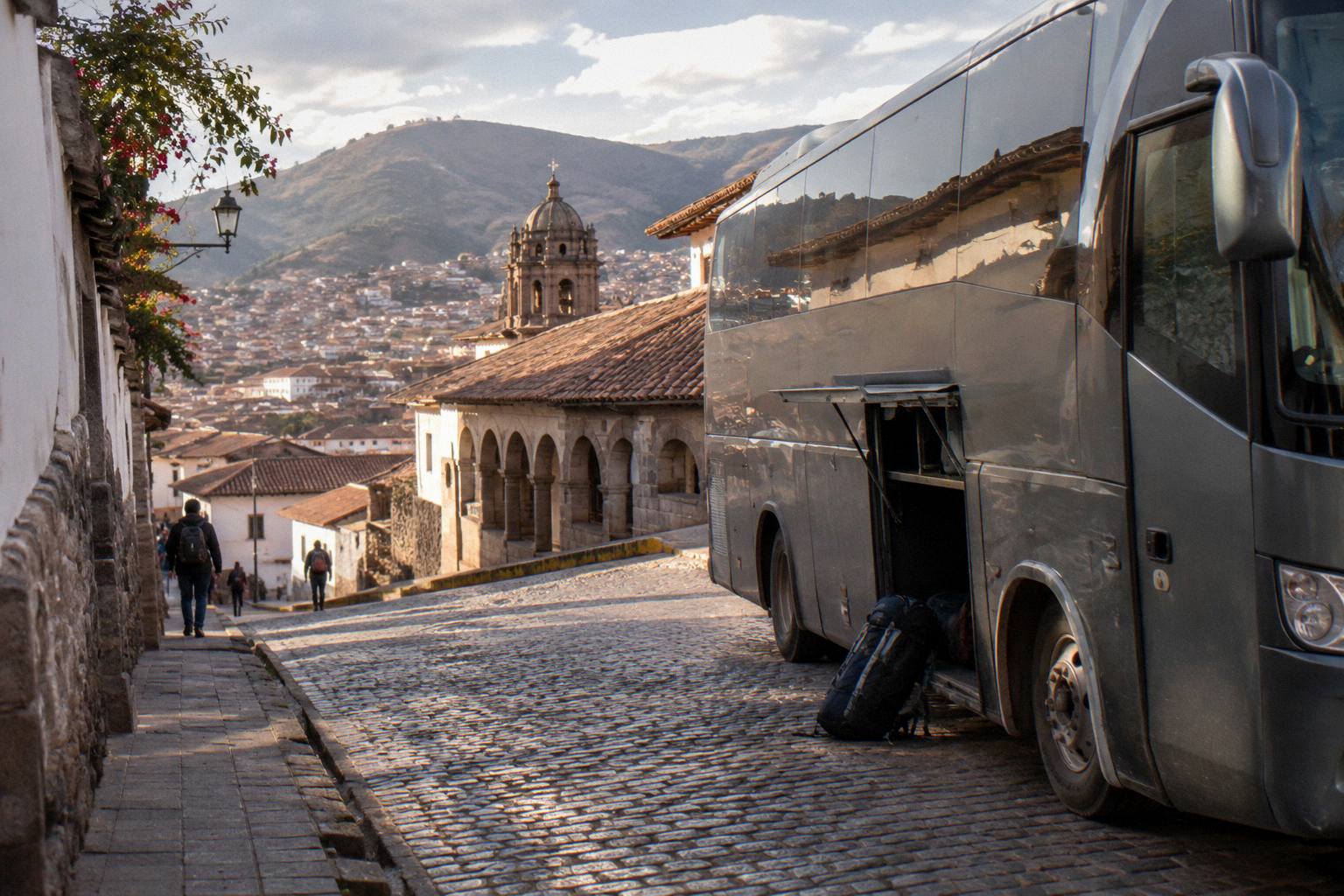
Peru Itinerary 3 Weeks By Bus: South, Highlands And North
Three weeks is enough to link the southern loop, the central highlands and the northern coast by bus, if the legs are chosen in the right order and the long drives are given full days rather than half ones.
Short answer
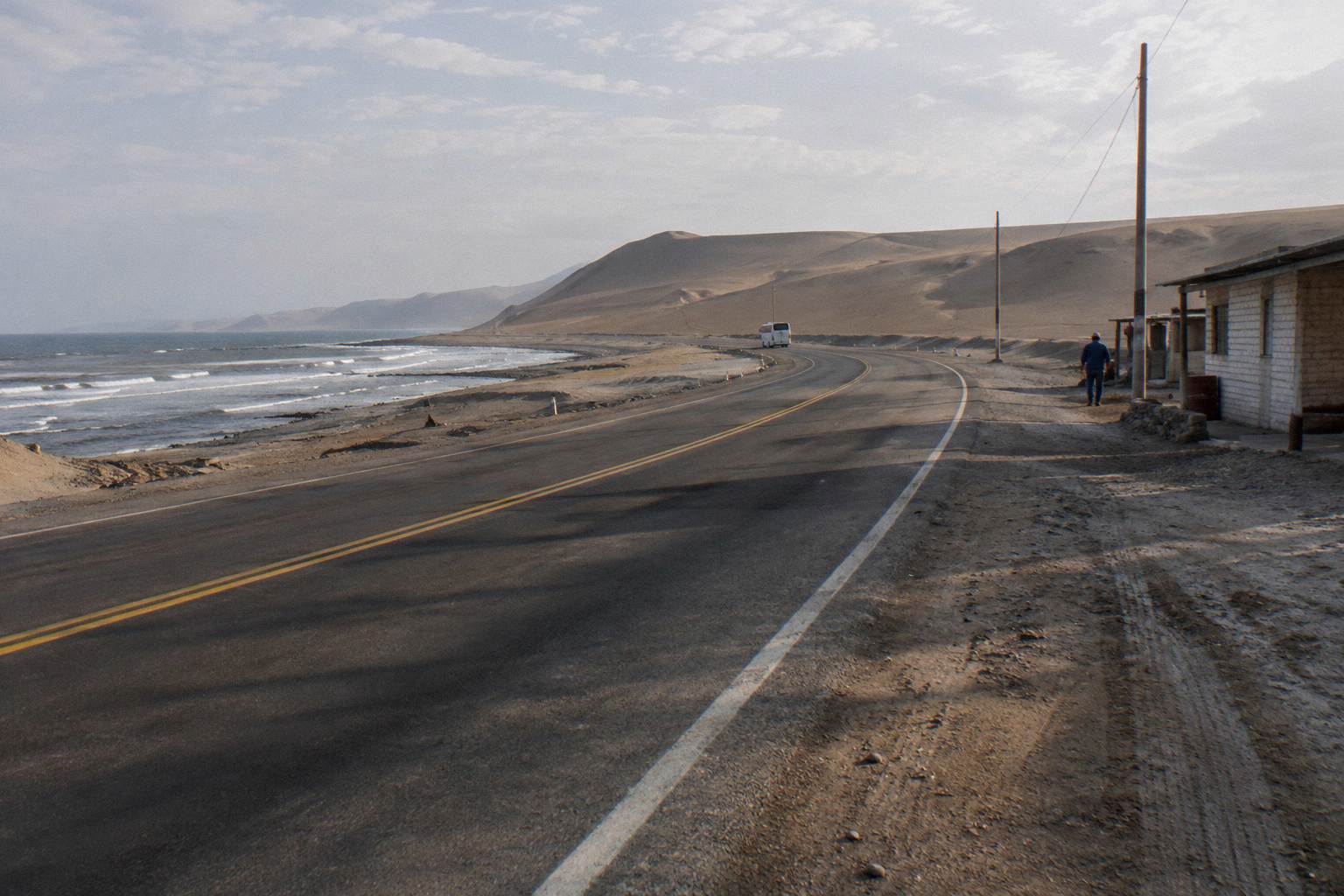
A three-week bus itinerary works as a loop: Lima to Paracas and Huacachina, on to Arequipa, Puno and Cusco with a Machu Picchu side trip, then a central highlands leg or the northern coast from Trujillo to Mancora. Key free-flow drive estimates include about 566 km Nazca to Arequipa and about 557 km Lima to Trujillo, distances real bus journeys exceed.
What Does A Three-Week Peru Bus Itinerary Look Like?
A three-week Peru bus itinerary splits the country into three blocks: a southern loop from Lima down the desert coast to Arequipa, Puno, and Cusco taking ten to twelve days, a two to four day Machu Picchu side trip from Cusco, and a final block of five to seven days in either the central highlands or the northern coast. The two final blocks cannot both be done well, so the choice is made before any ticket is bought.
The southern loop is the spine of the trip and the part where the distances stack up fastest. Lima to Paracas is about 251 km with an OSRM free-flow drive estimate of about 3.5 hours, a figure real bus journeys exceed because of stops and traffic leaving the capital. From there the route hops down the coast, climbs to Arequipa at 2,429 m per INEI, crosses the altiplano to Puno, and finishes in Cusco at about 3,400 m. That sequence has a logic beyond sightseeing: it climbs gradually, which matters for how the body handles altitude, a point covered in full later in this guide.
The final week is a genuine fork. The central highlands, reached by bus from Lima to Huancayo or Ayacucho, keep you high in quiet Andean cities that see a fraction of the southern crowds. The northern coast, from Trujillo to Chiclayo to Mancora, drops to near sea level and trades mountains for ruins, dunes and beach. Either works as a closing act; mixing both in one week produces a trip that is more about buses than places.
Which Route Should Your Three Weeks Follow?
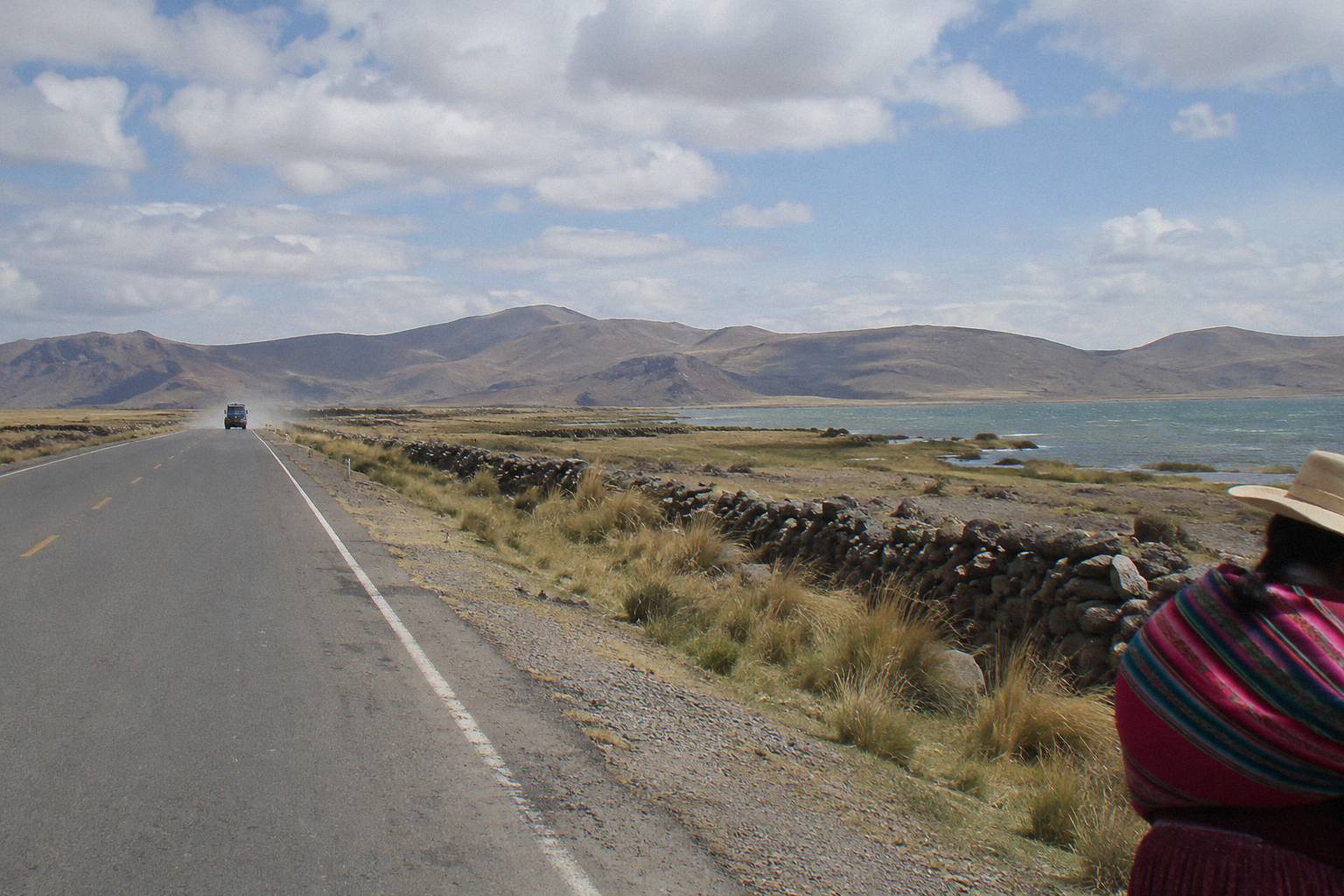
The strongest ordering is Lima, Paracas, Huacachina, Nazca, Arequipa, Puno, Cusco, a Machu Picchu side trip, then a return to Lima before the final block in the central highlands or on the north coast. Running the south first puts the highest sleeping altitude, Puno at 3,848 m per INEI, in week two rather than week one, giving the body time to adjust before the altiplano. Reversing the loop is possible but means climbing to Puno within days of landing.
On the southern loop a hop-on hop-off pass covers the Lima to Cusco chain with hidden stops at Chincha, the Nazca Lines viewing tower, the Paracas National Reserve, the Lagunillas viewpoint and a pisco vineyard in Ica. Peru Hop lists departure cities as Lima, Cusco, Arequipa, Copacabana and La Paz, and its pass pages name stops including Paracas, Huacachina, Nazca, Arequipa, Puno and Cusco. Tickets are valid for one year and a bus time can be changed in the app up to 12 hours before departure, per its pass terms, which suits a three-week plan that may drift by a day. Peru Hop reports more than 395,000 passengers carried since it started in 2013, a scale that shows in the number of daily departures on the southern chain.
Peru Hop lists these operator-stated fastest times for its passes, useful when matching a pass to a fixed three-week window:
| Pass | Fastest time to complete (Peru Hop lists) |
|---|---|
| Full South To Cusco | 6 days |
| Get To Cusco Quick | 3 days |
| Canyon To Lima | 3 days |
| Canyon To The Lake To La Paz | 2 days |
| Cusco To La Paz | 24 hours |
| Cusco To Canyon To La Paz | 5 days |
| Lima To Cusco To La Paz | 10 days |
The important caveat: the passes cover the south and the Bolivia extension. The central highlands and the northern coast in week three are separate seat tickets, not pass territory, so a three-week plan that ends in Huancayo or Mancora combines a pass with point-to-point bookings. The southern Peru bus circuit guide walks the southern legs in more detail, and the Peru Hop passes explained guide compares the individual pass names, including Get To Cusco Quick, which skips Arequipa and Puno, and To Cusco Without The Canyon.
How Do You Cover The Southern Loop, Lima To Cusco?
The southern loop breaks into six bus legs: Lima to Paracas, Paracas to Huacachina, Ica to Nazca, Nazca to Arequipa, Arequipa to Puno and Puno to Cusco. Only two are long drives by free-flow estimate, Nazca to Arequipa at about 566 km and 7.8 hours, and Arequipa to Puno at about 273 km and 5.5 hours, and real journeys exceed those figures. Give each long leg a full day and treat the rest as half-day hops.
| Leg | Distance (km) | Free-flow drive estimate |
|---|---|---|
| Lima to Paracas | 251 | 3.5 h |
| Paracas to Huacachina | 74 | 1.3 h |
| Ica to Nazca | 142 | 2.4 h |
| Nazca to Arequipa | 566 | 7.8 h |
| Arequipa to Puno | 273 | 5.5 h |
| Puno to Cusco | 387 | 6.2 h |
These are OSRM free-flow drive estimates, not timetable times, and every real bus journey runs longer because of terminals, stops and mountain roads.
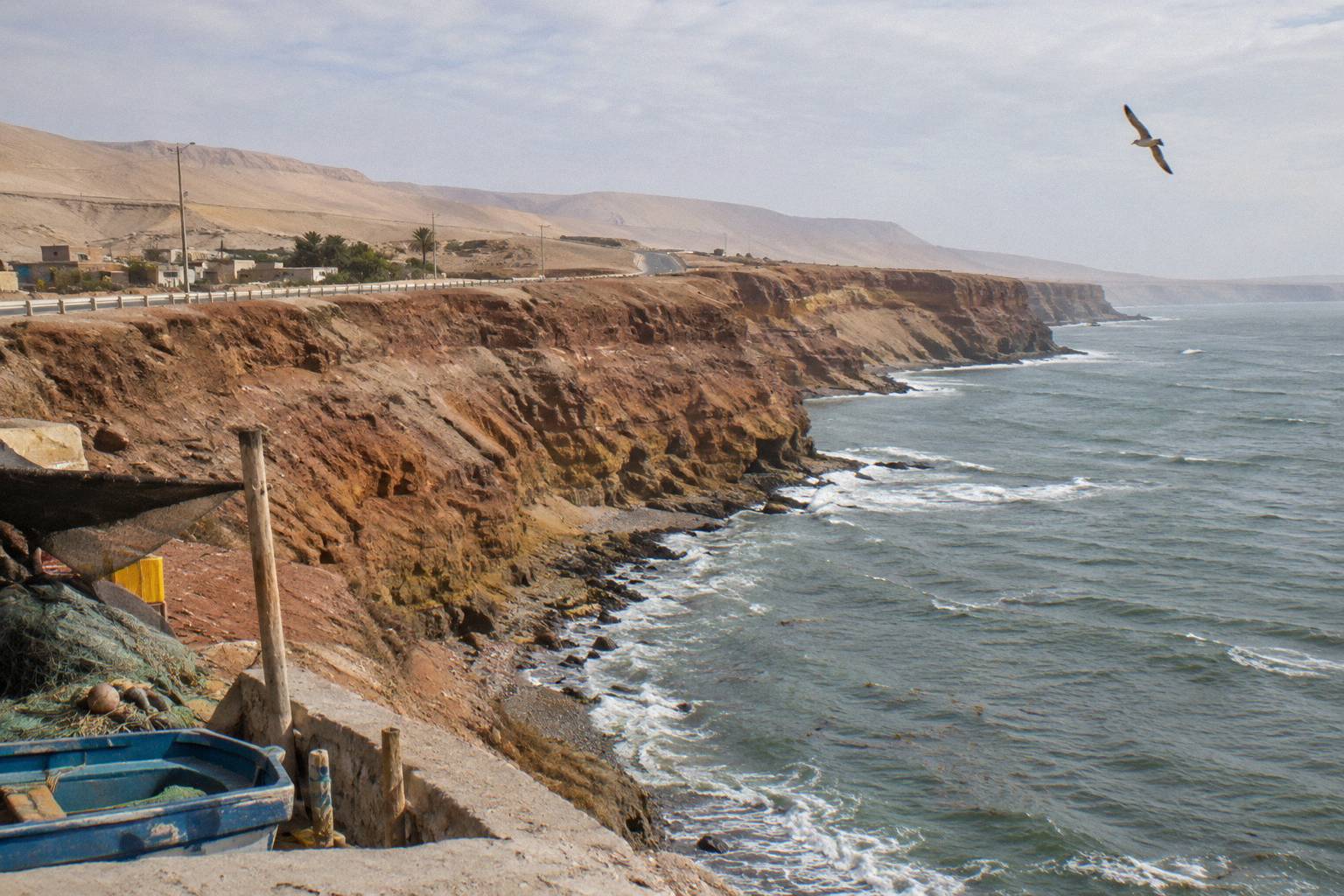
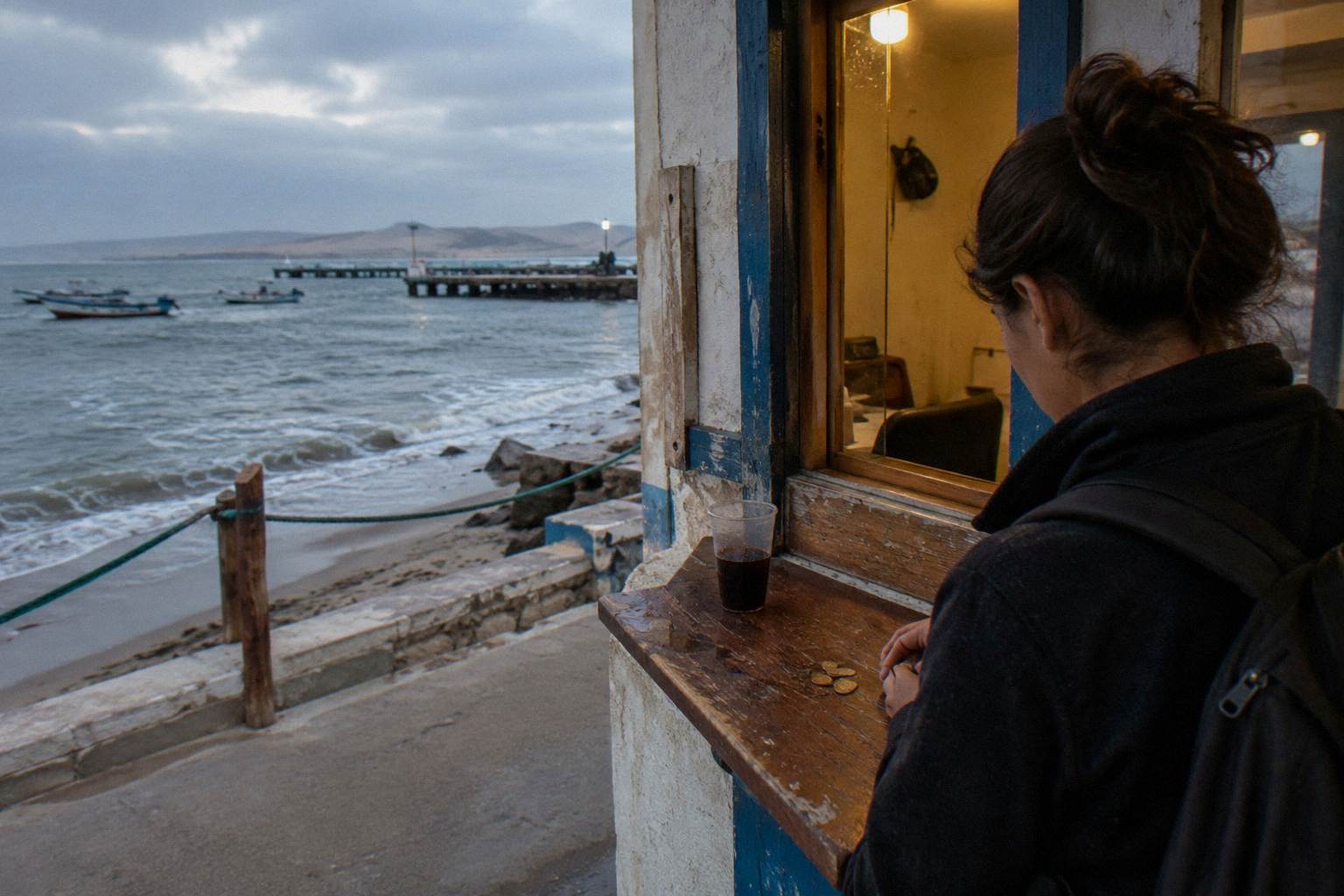
The first leg sets the tone of the trip. The Wayki Bus one-way tourist bus from Miraflores to Paracas is rated 4.2 across 62 reviews, departs the Miraflores and Barranco area, and drops off at El Chaco in Paracas; the listing gives 3 hours and free cancellation up to 24 hours before for a full refund, and its price is on the live listing. Check availability for your arrival window, since a fixed-date tourist bus behaves differently from a hop-on pass. A second booking page by another operator runs the same corridor with hotel pickup in Miraflores and Barranco from US$18 per person, a separate listing with its own basis.
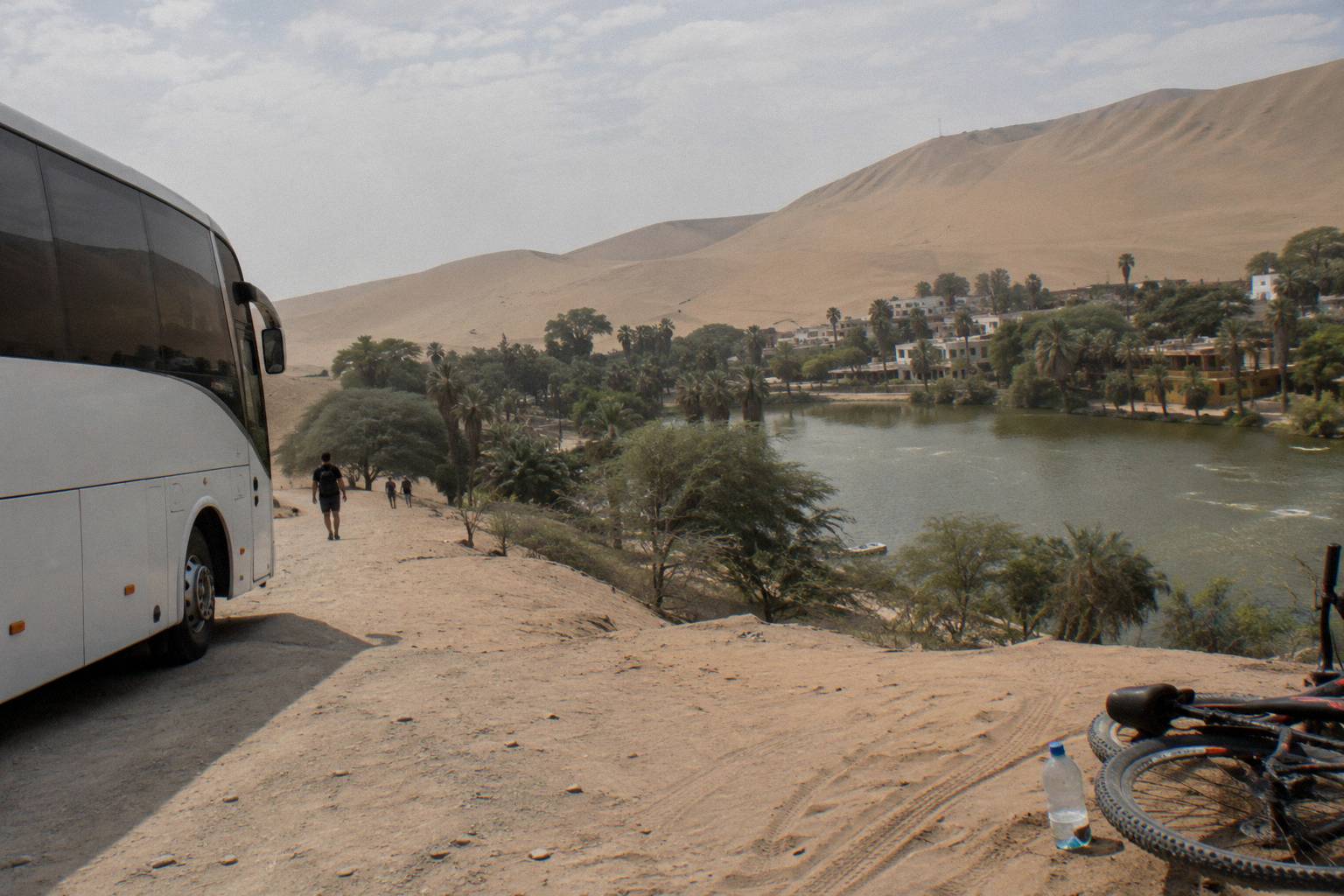
From Paracas the natural pairing is Huacachina. The Wayki Bus one-way bus from Lima to Huacachina with a Paracas stop, rated 3.7 across 77 reviews, runs from Lima through San Isidro and Barranco with a stop in Paracas and drops at the Viajero hostel meeting point in Huacachina; the listing gives 8 hours including the Paracas stop. That single ticket collapses two legs into one, which is worth considering when the calendar is tight.
Between Arequipa and Puno the listed tickets offer the Turismo Mer sleeper bus, rated 4.3 across 20 reviews, with the listing naming a 160 degree recline on its night service and a drop-off in Puno in 7 hours as the listing gives it. The terminal boarding fee is not included, so check the boarding fee line on the listing. On the last leg of the loop, the Turismo Mer bus from Puno to Cusco with a lunch stop, rated 4.6 across 24 reviews, turns the altiplano crossing into a sightseeing day with an all-you-can-eat lunch stop, dropping at the company's private terminal in Cusco; the listing gives 11 hours.
Cusco is also the base for the back-door route to Machu Picchu. The free-flow drive estimate for Cusco to Hidroelectrica is about 5.1 hours over 212 km, and the Cusco to Hidroelectrica bus route guide covers that corridor in full, including the walk-in option from the hydroelectric station. The Machu Picchu by Car Vip tourist bus on that corridor, rated 4.3 across 53 reviews, runs from Cusco's Plaza de Armas with two rest stops and drops at a private terminal at Hidroelectrica in a listing-given 6 hours.
Where Do Buses Fit In The Central Highlands?
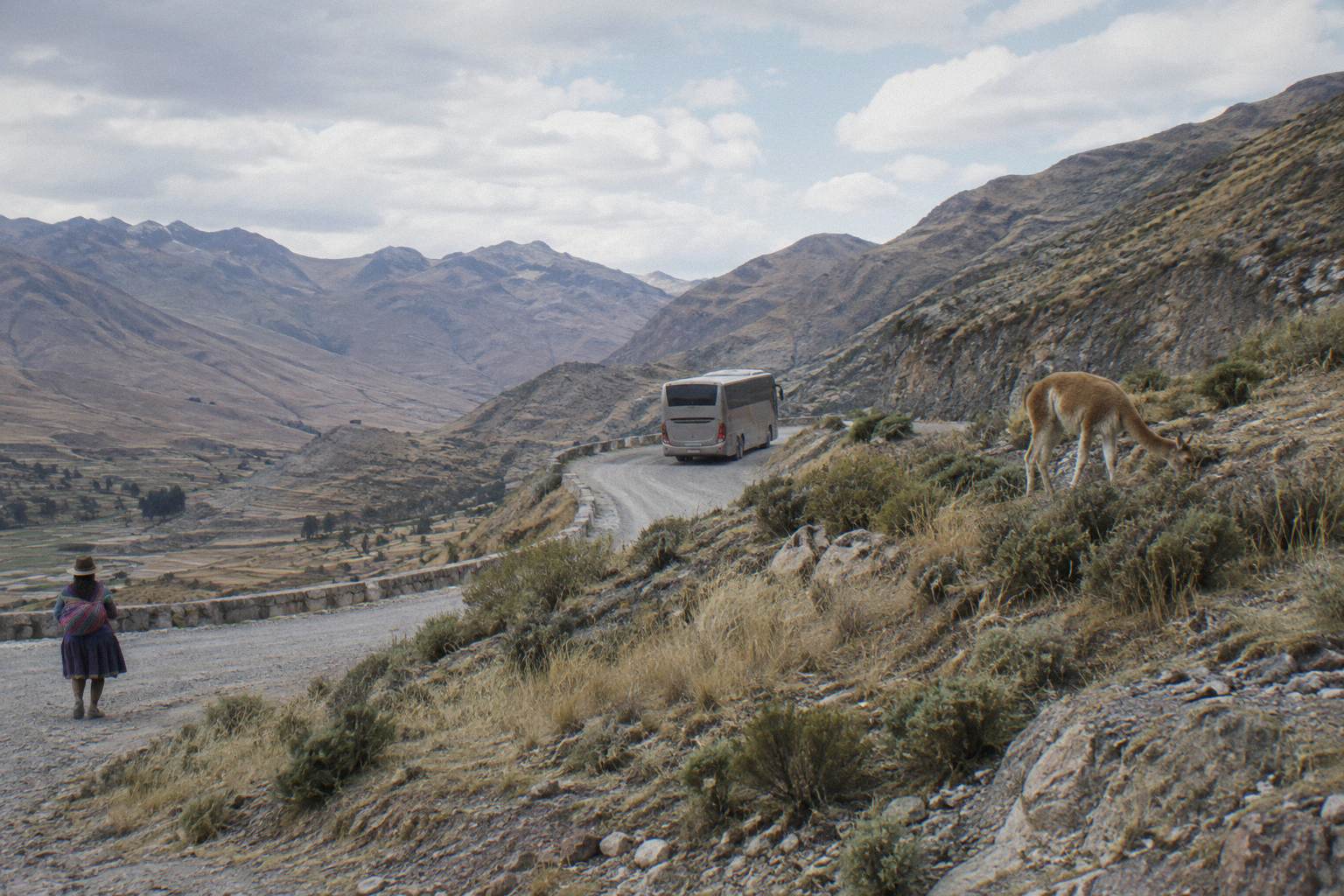
Buses are the backbone of week three, linking Lima with Huancayo at 3,294 m and Ayacucho at 2,797 m per INEI, two of the highest and least visited provincial capitals on the network. The Lima to Huancayo leg runs about 301 km with a free-flow estimate of 6.2 hours, Lima to Ayacucho about 569 km and 9.3 hours, and real journeys run longer on mountain switchbacks, all on ordinary seat tickets rather than passes.
Huancayo sits on the line that crosses Anticona, the pass INEI places above 4,700 m, making the Lima to Huancayo drive one of the highest scheduled bus journeys in the world. That single fact is reason enough for some travellers to choose it, and reason enough for others to leave it out. The Lima to Huancayo bus guide covers operators and terminals for the run. Ayacucho, reached by a leg of about 9.3 free-flow hours from Lima, is a colonial city at 2,797 m with a Semana Santa reputation; the Lima to Ayacucho bus guide has the detail, and an onward Ayacucho to Cusco bus link exists for anyone building an Andean loop instead.
| Central highlands leg | Distance (km) | Free-flow drive estimate |
|---|---|---|
| Lima to Huancayo | 301 | 6.2 h |
| Lima to Ayacucho | 569 | 9.3 h |
| Lima to Huaraz | 402 | 5.5 h |
Huaraz belongs to this block too, at 3,073 m per INEI, reached from Lima in a leg of about 5.5 free-flow hours. The Lima to Huaraz bus route guide covers it, and a booked seat can be held through Check availability for the Lima to Huaraz pair. A three-week plan that has already spent two weeks in the south should pick one central highlands base, not all three. The First Class Huaraz ticket from Lima, from US$50 per person on its listing, runs from Miraflores or Lima airport with hotel pickup on request, though the listing marks it non-refundable and cannot be changed, and passport numbers are needed to print tickets.
A short callout on the south: a pass covers the Lima to Cusco chain with hidden stops and app changes up to 12 hours before departure, per its pass terms, and See Peru Hop Passes for the pass names that match a fixed window. The central highlands legs above are separate tickets with no pass option.
How Does The Northern Coast Leg Work By Bus?
The northern option runs Lima to Trujillo, about 557 km with a free-flow drive estimate of about 9.1 hours, then Trujillo to Chiclayo at about 199 km and about 3.2 hours, then Chiclayo to Mancora at about 401 km and about 5.3 hours. Mancora sits near sea level, a complete change from the Andes, and the whole block is served by scheduled carriers using city terminals rather than tourist passes.
| Northern coast leg | Distance (km) | Free-flow drive estimate |
|---|---|---|
| Lima to Trujillo | 557 | 9.1 h |
| Trujillo to Chiclayo | 199 | 3.2 h |
| Chiclayo to Mancora | 401 | 5.3 h |
| Mancora to Tumbes | 104 | 1.5 h |
Trujillo, at 74 m per INEI, anchors the block with Chan Chan and the Moche temples; Chiclayo, at 28 m, adds the Royal Tombs museum at Sipan. The north coast Trujillo, Chiclayo and Mancora guide covers carriers and terminals along the whole chain, and the border extension to Ecuador, Mancora to Tumbes at about 104 km and about 1.5 free-flow hours, is covered in the Peru to Ecuador bus border guide, where Aguas Verdes-Huaquillas is the main crossing and the smaller posts call for a check before you go. Northern operators include Linea, whose northern network runs Lima, Trujillo, Chiclayo, Piura, Huaraz, Cajamarca and Jaen, with Super VIP seats at 180 degrees on its own service page.
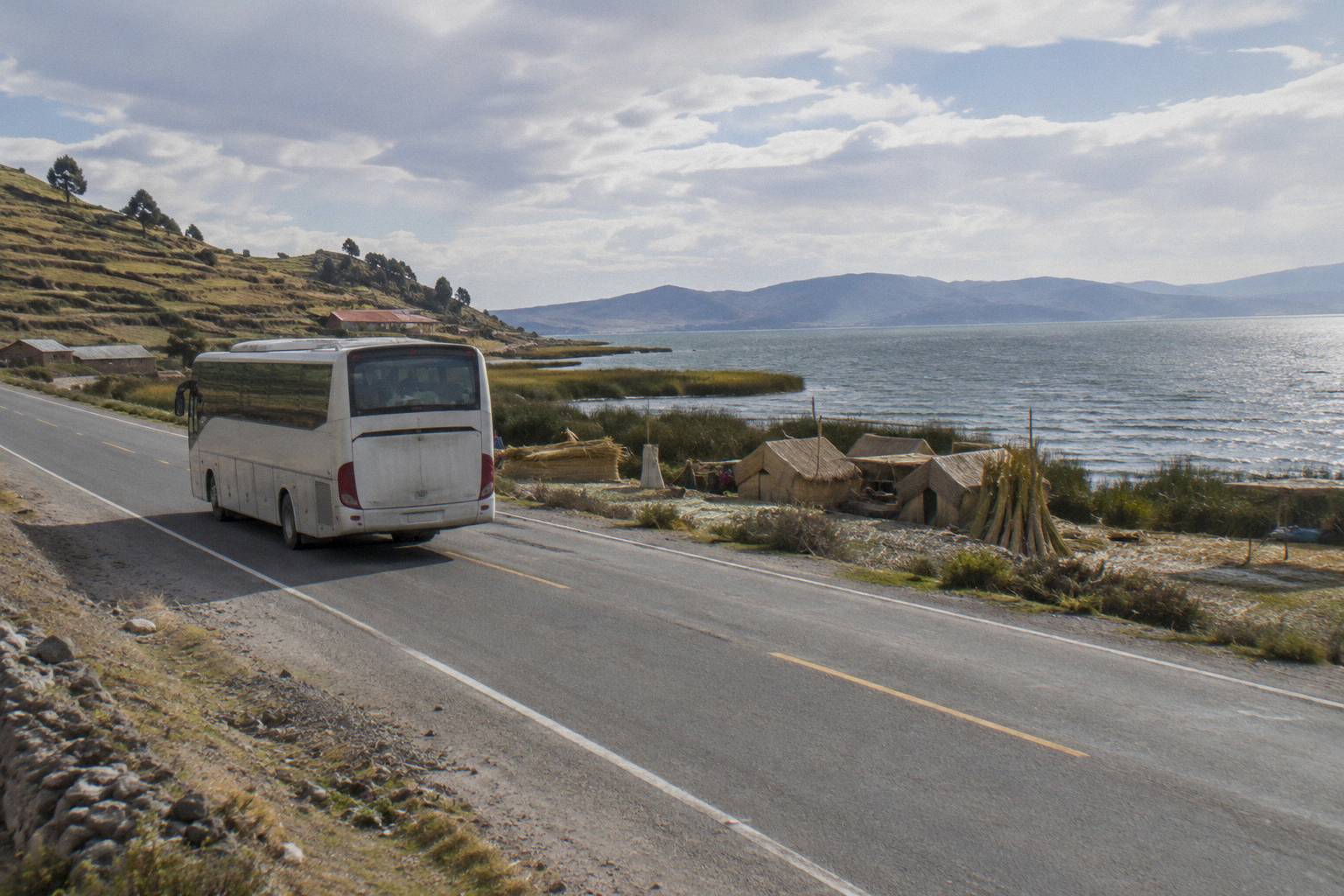
Two things make the northern block attractive in week three. First, the altitude is near sea level the whole way, a physical relief after Puno and Cusco. Second, the Pan-American Highway is the corridor the US Embassy advisory singles out: its republication of the State Department advisory notes that US government employees "may travel at night with commercial bus companies along the Pan-American Highway, to Huaraz, and on the Lima-Arequipa-Cusco corridor." That is a statement about which corridors see routine official travel, not a safety verdict, but it marks the main arteries of this itinerary as the roads the formal network itself uses. Everything else covered here is indexed on Peru By Bus.
What About Altitude, Weather And Strikes On These Routes?
This itinerary sleeps high for most of its middle: Arequipa at 2,429 m, Puno at 3,848 m, Cusco at about 3,400 m, all per INEI, with the Puno to Cusco leg passing the high ground around La Raya at about 4,300 m. Climbing gradually through the southern loop is itself the standard acclimatisation strategy, and the Andean rainy season, roughly September to April, falls inside the trip window for many visitors.
| Place | Altitude (INEI) |
|---|---|
| Lima | 162 m |
| Arequipa | 2,429 m |
| Ayacucho | 2,797 m |
| Huancayo | 3,294 m |
| Cusco | about 3,400 m |
| Puno | 3,848 m |
| Huaraz | 3,073 m |
| Trujillo | 74 m |
The altitude notes above matter most on the Puno nights, the highest sleeping point of the trip at 3,848 m. The altitude and bus travel guide covers the sequencing logic in depth; the short version is that the loop order in this itinerary puts Puno in week two, not week one.
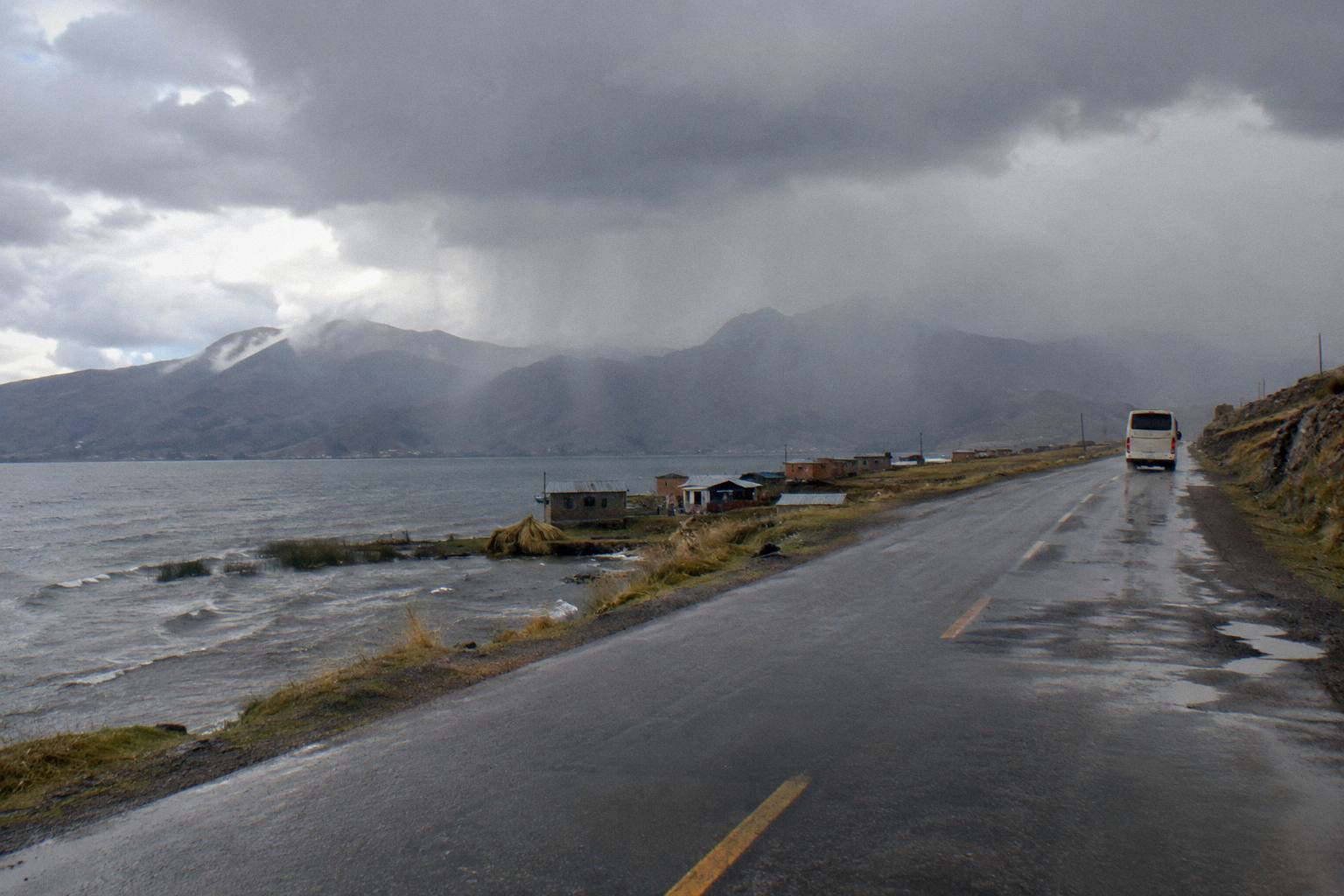
Weather and protest disruption are the two things a fixed three-week window cannot flex around. SENAMHI data shows Puno holds 89 percent of its annual rain from September to March, with January to March the heaviest. The FCDO adds a specific notice: "Through late 2026 to April 2027, the El Nino weather event is expected to generate heavy rainfall, possible flooding, landslides, and mudslides, especially in, but not restricted to, the northern and central coast. These could cause travel disruption, such as road closures". For road conditions on the day, SUTRAN's alert map shows closed roads in red, restricted in yellow and open in green.
Political disruption works the same way: check before travel, never push through. The FCDO states that "Political protests in Peru are unpredictable and can escalate quickly. Demonstrations can become violent and lead to roadblocks, travel disruption, including trains, and suspension of immigration services at land borders," and names Arequipa, Ayacucho, Cusco, La Libertad, Madre de Dios and Puno as regions with recent protests. Four of those six sit on this itinerary, which is the strongest argument for building a day of slack into each week. The strikes, roadblocks and rainy season guide has the fuller playbook, and the FCDO's instruction is blunt: "Do not attempt to pass blockades."
Which Seats And Tickets Should You Book First?
Book in this order: the Lima to Paracas or Huacachina leg for your arrival dates, since those tourist buses run fixed schedules; the Machu Picchu side trip, which has the tightest capacity of anything on the itinerary; then the long southern legs, Nazca to Arequipa and the Arequipa to Puno sleeper, where a 160 degree seat sells out before an upright one. The central highlands and north coast legs can wait until you are in country.
Class choice is the real decision on the long legs. The bus classes explained guide covers the cama and semi-cama categories, and operator pages state the recline degrees worth knowing: Cruz del Sur lists reclining seats at 180 degrees and its Suite at 160 degrees on the Lima to Cusco page, while Movil Bus publishes 120 to 180 degree classes on its northern and highland network. The Turismo Mer sleeper names a 160 degree recline, and the World Explorer Peru Cusco to Arequipa direct bus, rated 3.7 across 16 reviews, names a Cruzero Suite 160 degree seat with a 10 hour listing duration. Luggage is the quiet constant: up to 20 kg travels free on national service, and the luggage and theft guide covers how to handle the rest.
Night buses deserve one honest paragraph, in the government's own words. The FCDO states: "Bus crashes are common, especially at night. Only use reputable transport companies, and where possible, avoid overnight travel, especially in mountainous and remote regions." Canada's advisory goes further: "Avoid taking buses and coaches at night." A three-week plan can respect both while keeping the sleeper legs that are hardest to avoid, by choosing the sleeper classes above, which exist precisely for the corridors where night driving is common, and by checking the driver and vehicle before boarding on SUTRAN's lookup by plate or driver DNI.
The day-by-day detail of the shorter version of this trip is in the two-week Peru itinerary by bus guide, and the booking mechanics are in how to book Peru bus tickets. For the opening leg, the Paracas tourist bus already discussed, rated 4.2 across 62 reviews with a drop-off at El Chaco, is the ticket that anchors day one.
For the southern spine, the second listed option rounds out the set: the Lima to Huacachina one-way with its Paracas stop, discussed above at 3.7 across 77 reviews with a listing-given 8 hours, collapses the first two legs of the loop into a single ticket and is worth holding for the arrival week.
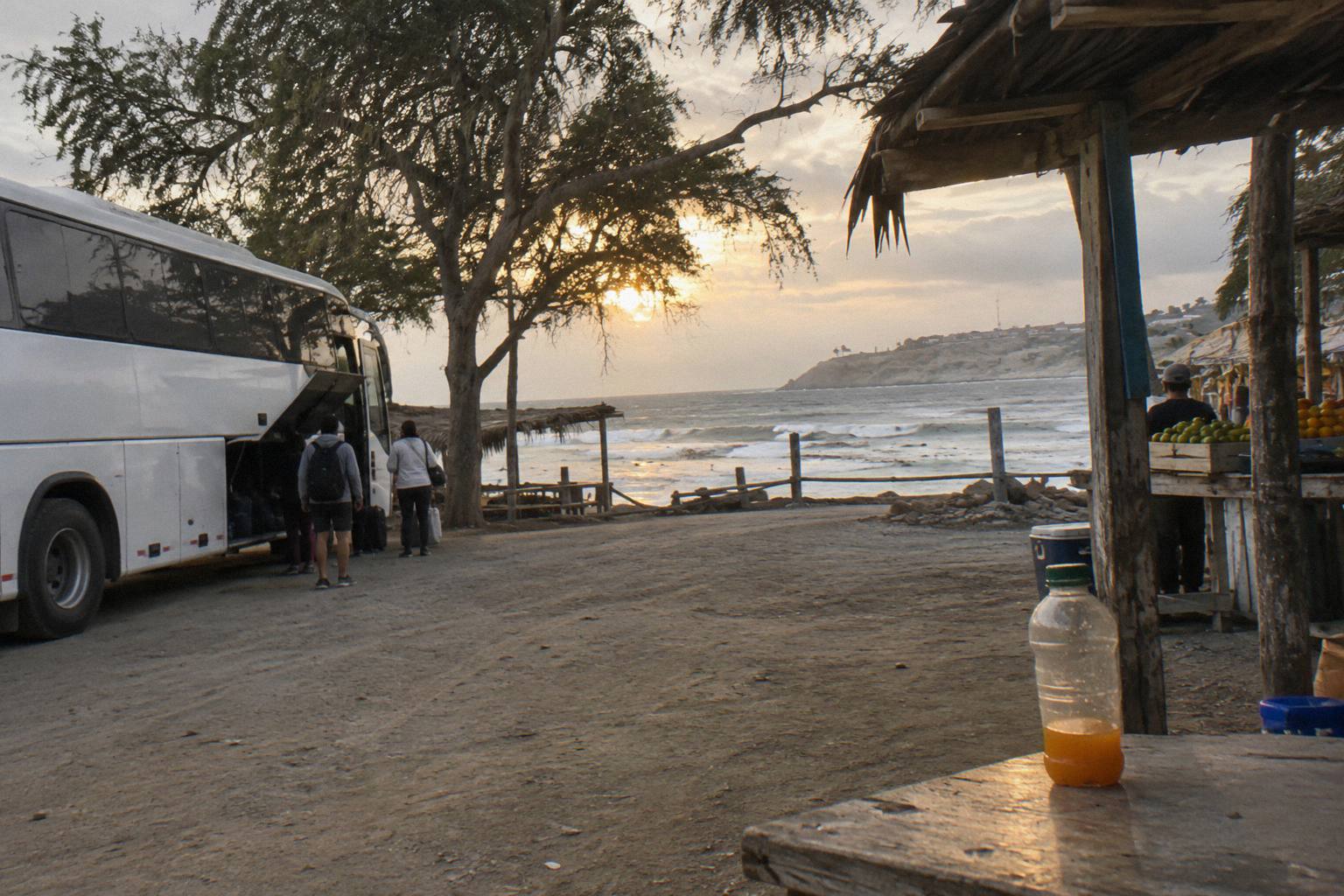
Three weeks, six southern legs, one side trip and a final fork: the frame holds together because the bus network in Peru is dense on exactly the corridors this route uses, and because the legs were counted against free-flow distances before anything else. Whether the final week goes to the Andes of Huancayo or the beaches of Mancora, the first two weeks follow the same line south, and every ticket on that line can be held or changed under the rules above.
Common Questions About A Three-Week Peru Bus Trip
Is Three Weeks Enough To See Peru By Bus?
Yes, for a loop of the south plus one final block. Ten to twelve days covers Lima, Paracas, Huacachina, Nazca, Arequipa, Puno and Cusco with a Machu Picchu side trip, and the remaining five to seven days fit either the central highlands or the northern coast, not both.
What Is The Longest Bus Leg On A Three-Week Peru Itinerary?
By free-flow drive estimate, Lima to Trujillo at about 557 km and 9.1 hours on the northern block, and Nazca to Arequipa at about 566 km and 7.8 hours on the southern loop. Real bus journeys exceed those figures, so each deserves a full day rather than a half.
Should I Do The South Or The North Of Peru First?
The south first. Climbing gradually through Arequipa at 2,429 m before sleeping in Puno at 3,848 m gives the body an adjustment sequence, and the south carries the headline sights. The north coast, near sea level, then works as physical relief in the final week.
Does A Hop-On Hop-Off Pass Cover A Three-Week Route?
It covers the southern chain, Lima to Paracas, Huacachina, Nazca, Arequipa, Puno, Cusco, with hidden stops, and extensions toward Copacabana and La Paz. Peru Hop lists Full South To Cusco at a fastest time of 6 days and Lima To Cusco To La Paz at 10 days. The central highlands and the northern coast are separate seat tickets.
How High Does This Itinerary Sleep?
The highest sleeping point is Puno at 3,848 m per INEI, with Cusco at about 3,400 m and Huancayo at 3,294 m. The Lima to Huancayo road crossing sits above 4,700 m at Anticona, per INEI, but that is a pass, not a sleeping altitude.
What Happens If A Strike Or Roadblock Hits My Itinerary?
Check SUTRAN's alert map the day before each long leg, and do not attempt to pass blockades, which is the FCDO's verbatim instruction. INDECOPI rules let a domestic bus ticket be postponed or transferred with 24 hours notice at only the real reissue cost, so a blocked day costs time rather than the fare. Build one slack day into each week.