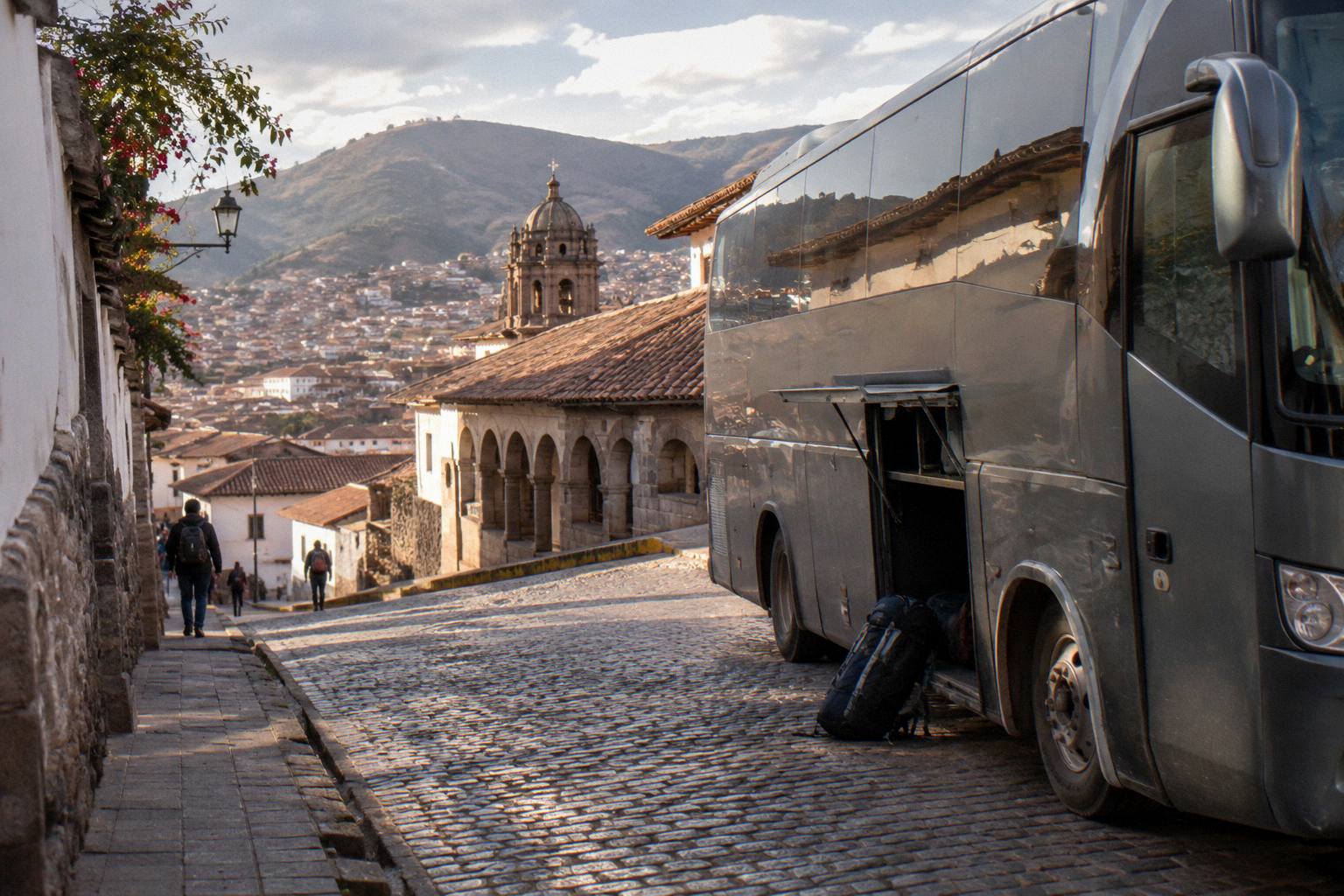
Peru Itinerary 2 Weeks By Bus
Two weeks is enough for the full southern arc, Lima to Paracas to Arequipa to Puno to Cusco, with spare days for a northern leg or a slower Colca Canyon stop, if the bus seats are booked in a sensible order.
Short answer
A two week bus itinerary runs Lima to Paracas, Huacachina, Nazca, Arequipa, Puno and Cusco, with free-flow drive estimates from 3.5 hours on the Lima-Paracas leg to 7.8 hours on Nazca-Arequipa. Peru Hop lists its Full South To Cusco pass as a 6 day minimum, leaving the rest of the fortnight for the north or extra nights in Cusco.
What Does A Two Week Peru Bus Itinerary Look Like?
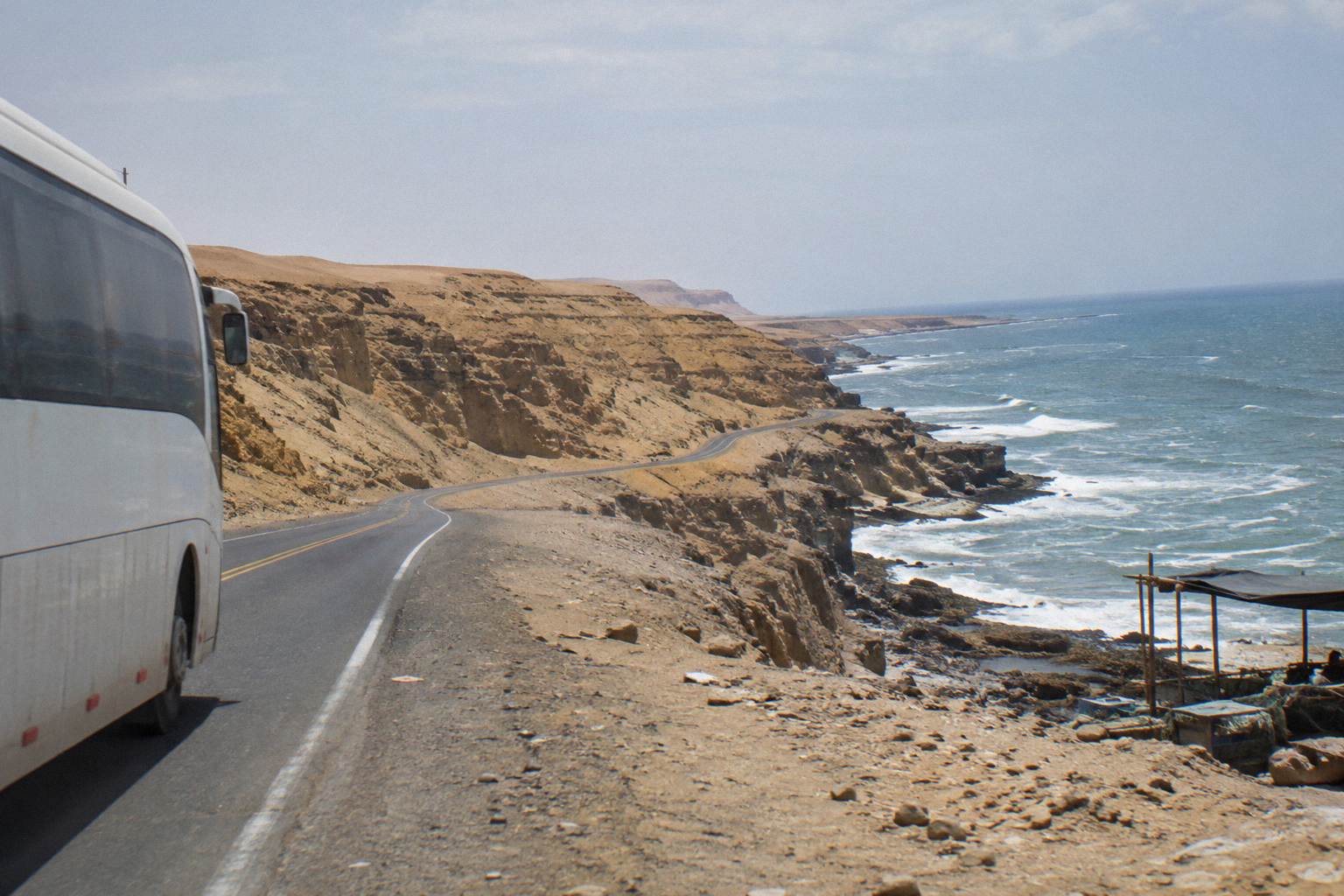
The shape that works is a southbound spine, Lima to Paracas to Huacachina to Nazca to Arequipa to Puno to Cusco, spread across the first nine or ten days, then a choice between a northern add-on on separate seat tickets or extra nights in the Arequipa and Cusco region. The southern chain is the part of Peru that buses serve in a continuous line, with short hops on the desert coast and longer climbs into the sierra. Two weeks gives enough slack to spend two nights somewhere instead of one without breaking the chain, and enough margin to absorb a delayed departure or a closed road without losing the whole plan.
Peru Hop lists its Full South To Cusco pass as needing a minimum of 6 days, and its Get To Cusco Quick version, which skips Arequipa and Puno, as 3 days. That gap between 3 and 6 days is the planning lever: a fortnight lets you take the full pass and still have days left over. Peru By Bus treats the southern spine as the default two week route precisely because the connections are dense and the stops line up in one direction.
The free-flow drive estimates below set expectations for how the distances feel. They are road-engineering figures for a car running empty roads, and real bus journeys exceed them, by a wide margin on the mountain legs.
| Leg | Distance | Free-flow drive estimate |
|---|---|---|
| Lima to Paracas | about 251 km | about 3.5 h |
| Huacachina to Nazca (Ica-Nazca pair) | about 142 km | about 2.4 h |
| Nazca to Arequipa | about 566 km | about 7.8 h |
| Arequipa to Puno | about 273 km | about 5.5 h |
| Puno to Cusco | about 387 km | about 6.2 h |
The Puno to Cusco leg is the one where a tourist bus earns its keep, because the standard highway route crosses the Abra La Raya pass at about 4,300 m and a sightseeing departure turns the transfer into the day's activity. The full route logic, including which operators run which corridor, is laid out in the southern Peru bus circuit guide.
How Do You Split Two Weeks Between South And North?
The clean split is eleven or twelve days south and two or three days north, because the north is reached from Lima on separate seat tickets rather than as part of the southern hop-on hop-off network, and the journey to Trujillo alone has a free-flow estimate of about 9.1 hours over about 557 km. Travellers who want the north as more than a taste should instead cut Cusco to three nights and give Trujillo and the Chiclayo side four days, accepting that the two halves meet in Lima rather than in a single loop.
Peru Hop does not serve Huaraz, Trujillo or the northern coast, so the northern legs are separate seat tickets with national carriers. The free-flow drive estimate for Lima to Huaraz is about 5.5 hours over about 402 km, and for Lima to Trujillo about 9.1 hours over about 557 km. Both are printed as road figures, not bus schedules, and Andean legs in particular run well past them.
A northern add-on pairs well with a shorter southern pass. If the fortnight opens with three or four days in the Huaraz region, the Get To Cusco Quick pass, which skips Arequipa and Puno and which Peru Hop lists as a 3 day minimum, compresses the south into the remaining days. Travellers set on the full chain should treat the north as a separate trip or as a pre-trip bolt-on before the southern pass starts.
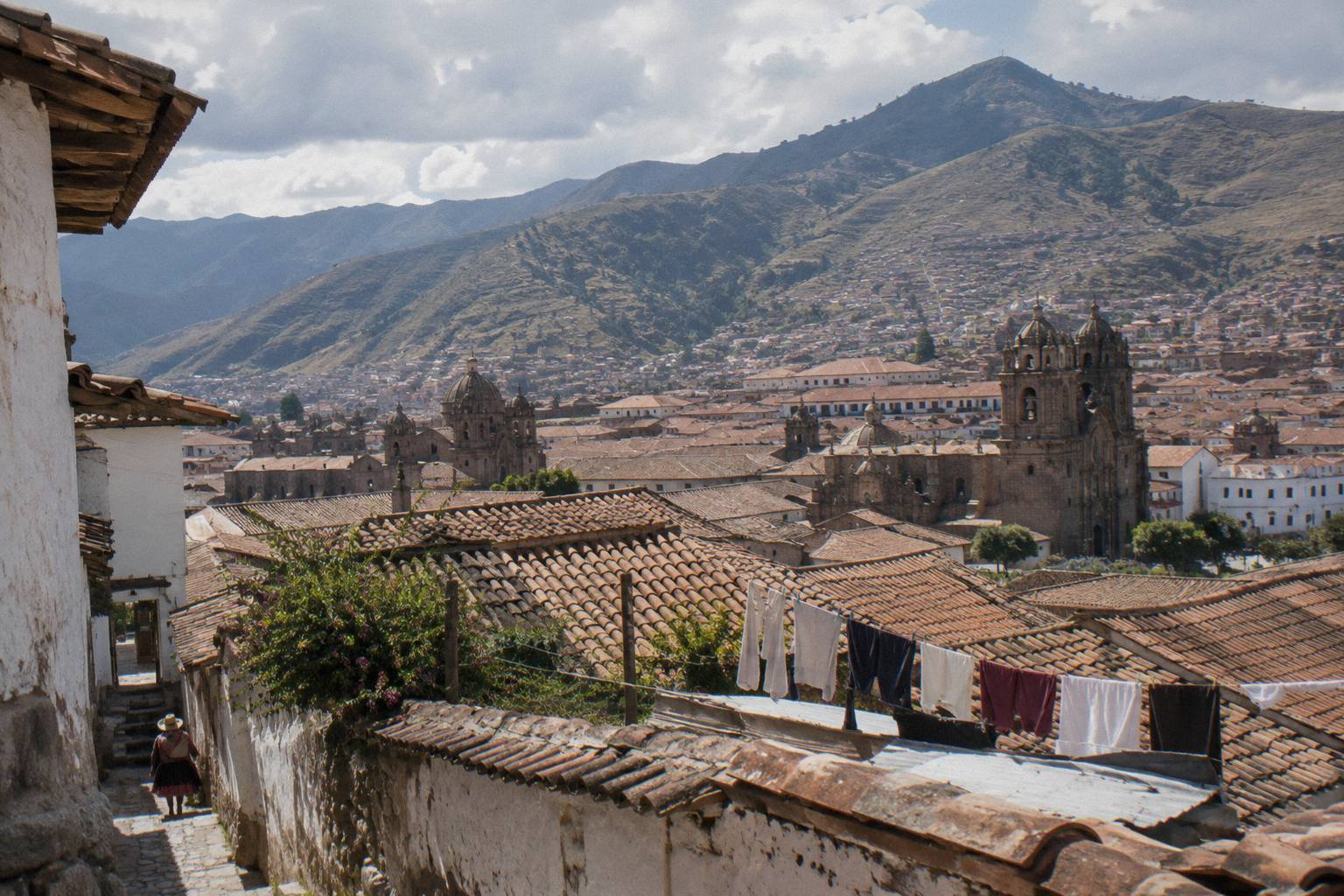
For the Huaraz leg a seat search for the route can be booked directly: Check availability. For the Lima to Trujillo pair, named carriers sell seats on their own pages. The choice between the two halves is a choice between desert archaeology and the deepest part of the southern circuit, and a fortnight does not stretch to both at full depth.
What Are The Core Bus Legs Of The Southern Circuit?
The core legs are Lima to Paracas, Paracas to Huacachina, Huacachina to Nazca, Nazca to Arequipa, Arequipa to Puno and Puno to Cusco, and the first three are short enough that dedicated tourist buses sell them as one-way sightseeing transfers rather than as line services. Booking those as individual tourist-bus tickets gives fixed drop-off points in the resort towns, and the operators run them with cancellation terms printed on the listing, free cancellation up to 24 hours before for a full refund as listed on the products below.
The first leg, Lima to Paracas, is sold as the one-way tourist bus from Miraflores to Paracas, rated 4.2 across 62 reviews, picking up in Miraflores and Barranco and dropping at El Chaco in Paracas, with a listed duration of 3 hours: Check availability. A second booking page by another operator covers the same corridor with hotel pickup from US$18 per person, and two private shuttle rows exist for the same pair, so read which product you are on before paying.
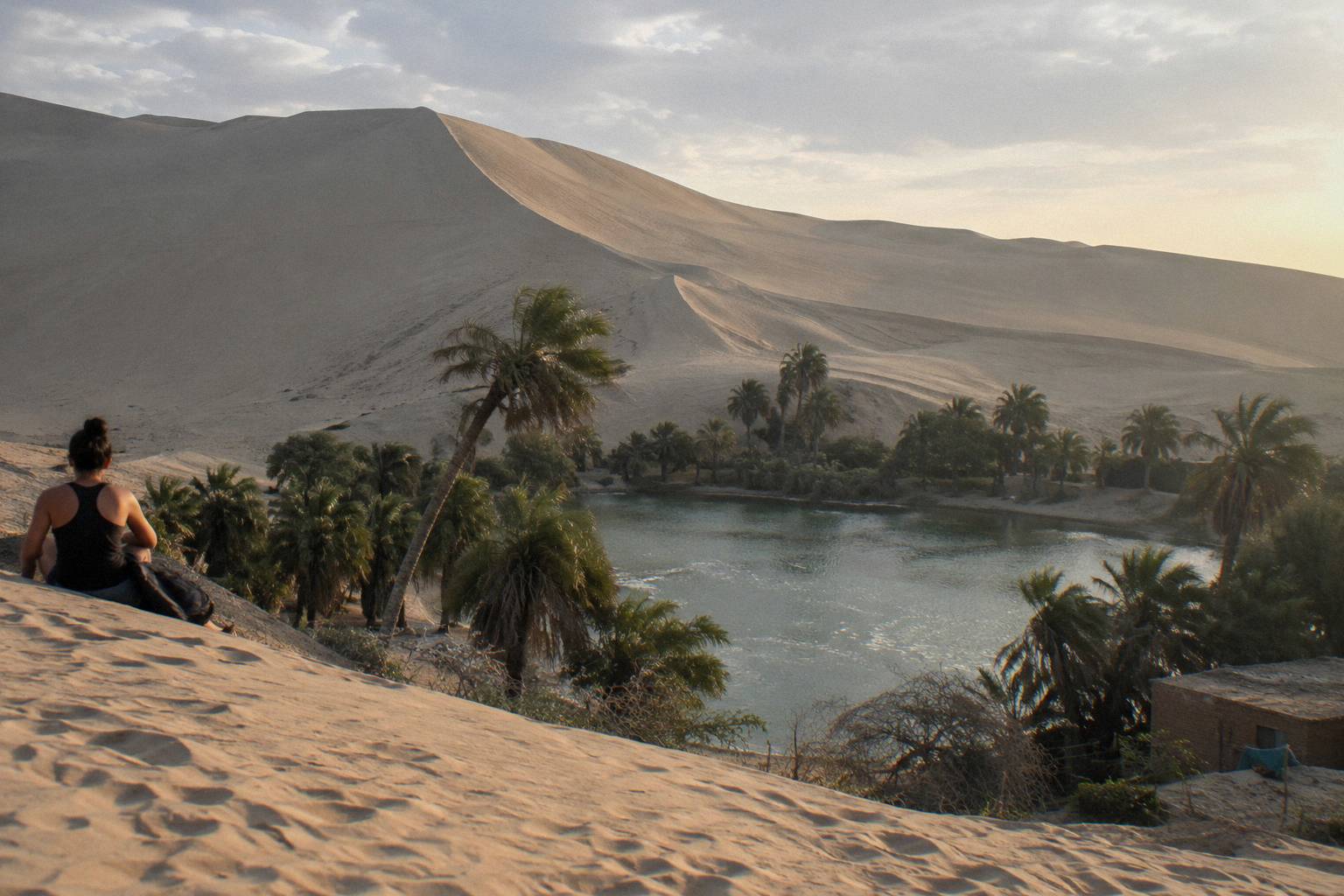
The middle leg combines the coast in one ticket. The one-way tourist bus from Lima to Huacachina, rated 3.7 across 77 reviews, runs from Miraflores, San Isidro and Barranco to a meeting point in Huacachina with a stop in Paracas, and the listing gives 8 hours for the full run including that stop. For travellers splitting the fortnight finely, that single ticket replaces the Lima-Paracas and Paracas-Huacachina legs, at the cost of a shorter Paracas visit.
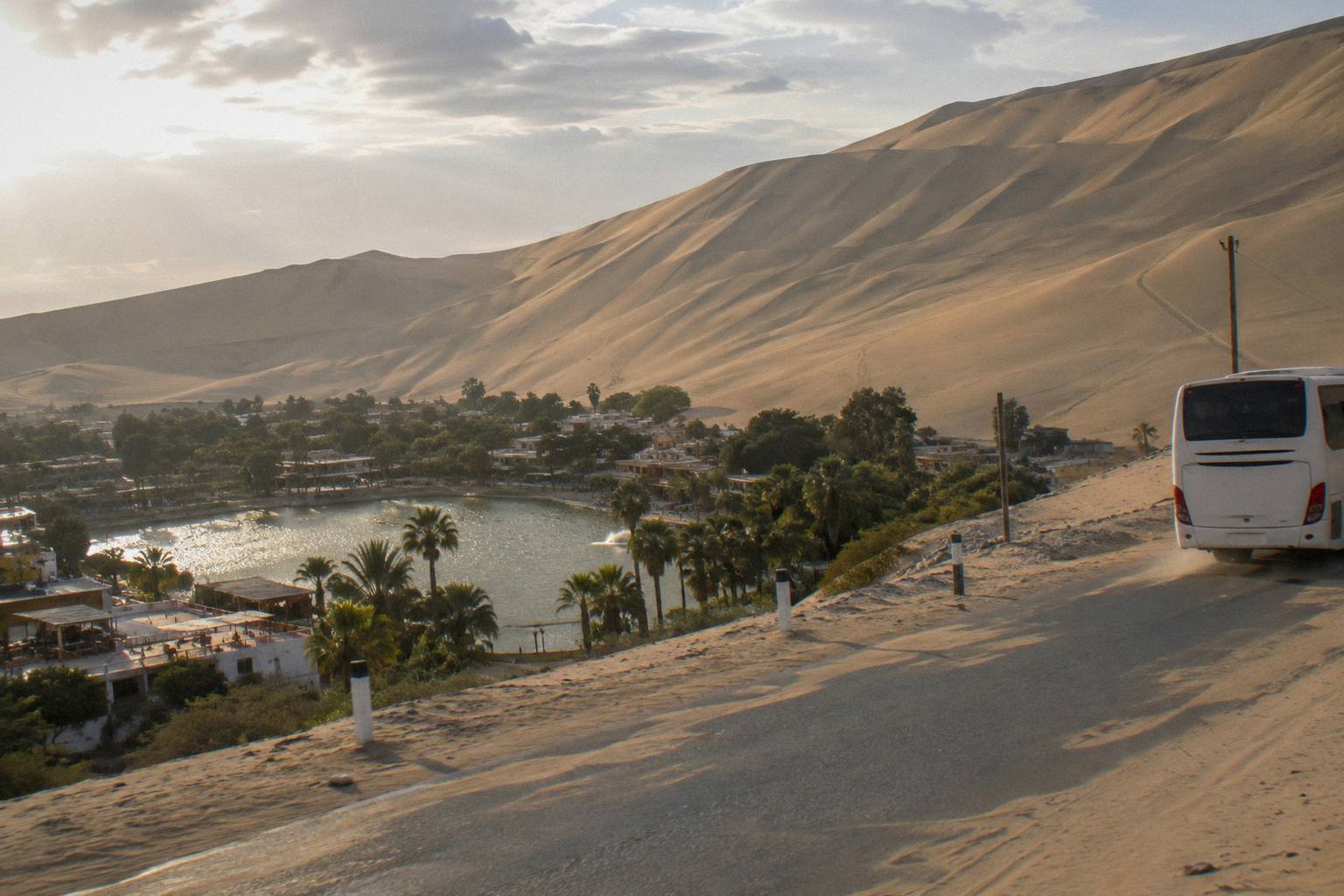
From Huacachina the corridor continues to Nazca, with the Ica-Nazca pair at about 142 km and a free-flow estimate of about 2.4 hours, and then the long haul: Nazca to Arequipa at about 566 km, about 7.8 h free-flow. On that stretch an overnight seat saves a daylight day, and the UK FCDO advice to "avoid overnight travel, especially in mountainous and remote regions" applies with full force, so the compromise many plans land on is a daytime departure on the desert section and a night stop in Arequipa.
Arequipa to Puno is served by a dedicated sleeper, the Turismo Mer sleeper bus from Arequipa to Puno, rated 4.3 across 20 reviews, with a 160 degree recline named on the listing and a listed duration of 7 hours; the boarding fee at the terminal is not included, so check the boarding fee line on the listing. Puno to Cusco closes the spine: the Turismo Mer tourist bus with a lunch stop is rated 4.6 across 24 reviews over a listed 11 hours, and the World Explorer Peru direct bus from Cusco to Arequipa, rated 3.7 across 16 reviews with a 160 degree seat named on the listing, covers the reverse direction with a listed duration of 10 hours.
Altitude climbs along the spine: Lima sits near sea level, Arequipa at about 2,429 m per INEI, Puno about 3,848 m and Cusco about 3,400 m. The gentle ramp matters more than the timetable on this chain: the body adapts to altitude over days, not hours, and a route that reaches Puno before Cusco gives it more of both.
How Does The Hop-On Hop-Off Pass Fit A Two Week Trip?
A hop-on hop-off pass fits a two week trip as the spine ticket for the southern chain, with tickets valid for 1 year and bus times changeable in the app up to 12 hours before departure, per its pass terms, which suits a fortnight with undecided stop lengths. The passes run Lima, Cusco, Arequipa, Copacabana and La Paz as departure cities, and the stop set named on the pass pages is Chincha, Paracas, Huacachina, Nazca, Arequipa, Lagunillas, Puno, Cusco, Copacabana and La Paz: the same spine as the core legs above, with the Bolivia extension included in some passes.
The pass names relevant to a fortnight, as listed on the operator's pass pages, and their operator-stated fastest times:
| Pass (name as listed) | Fastest time to complete | Skip logic |
|---|---|---|
| Full South To Cusco | Peru Hop lists 6 days | the full chain |
| Get To Cusco Quick | Peru Hop lists 3 days | skips Arequipa and Puno |
| To Cusco Without The Canyon | check the pass page | skips the Arequipa canyon side |
| Canyon To Lima | Peru Hop lists 3 days | Arequipa northbound to Lima |
| Canyon To The Lake To La Paz | Peru Hop lists 2 days | Arequipa to La Paz |
| Lima To Cusco To La Paz | Peru Hop lists 10 days | full chain plus Bolivia |
| Cusco To La Paz | Peru Hop lists 24 hours | lake crossing to Bolivia |
| Cusco To Canyon To La Paz | Peru Hop lists 5 days | reverse with canyon |
Peru Hop reports hotel or Airbnb pickup with no terminal transfers, a bilingual host on the bus, and hidden stops on Lima passes including the Secret Slave Tunnels at Chincha, the Nazca Lines viewing tower, the Paracas National Reserve, the Lagunillas viewpoint and a pisco vineyard in Ica. Those stops sit outside the standard bus network, which is the practical argument for the pass on a first fortnight.
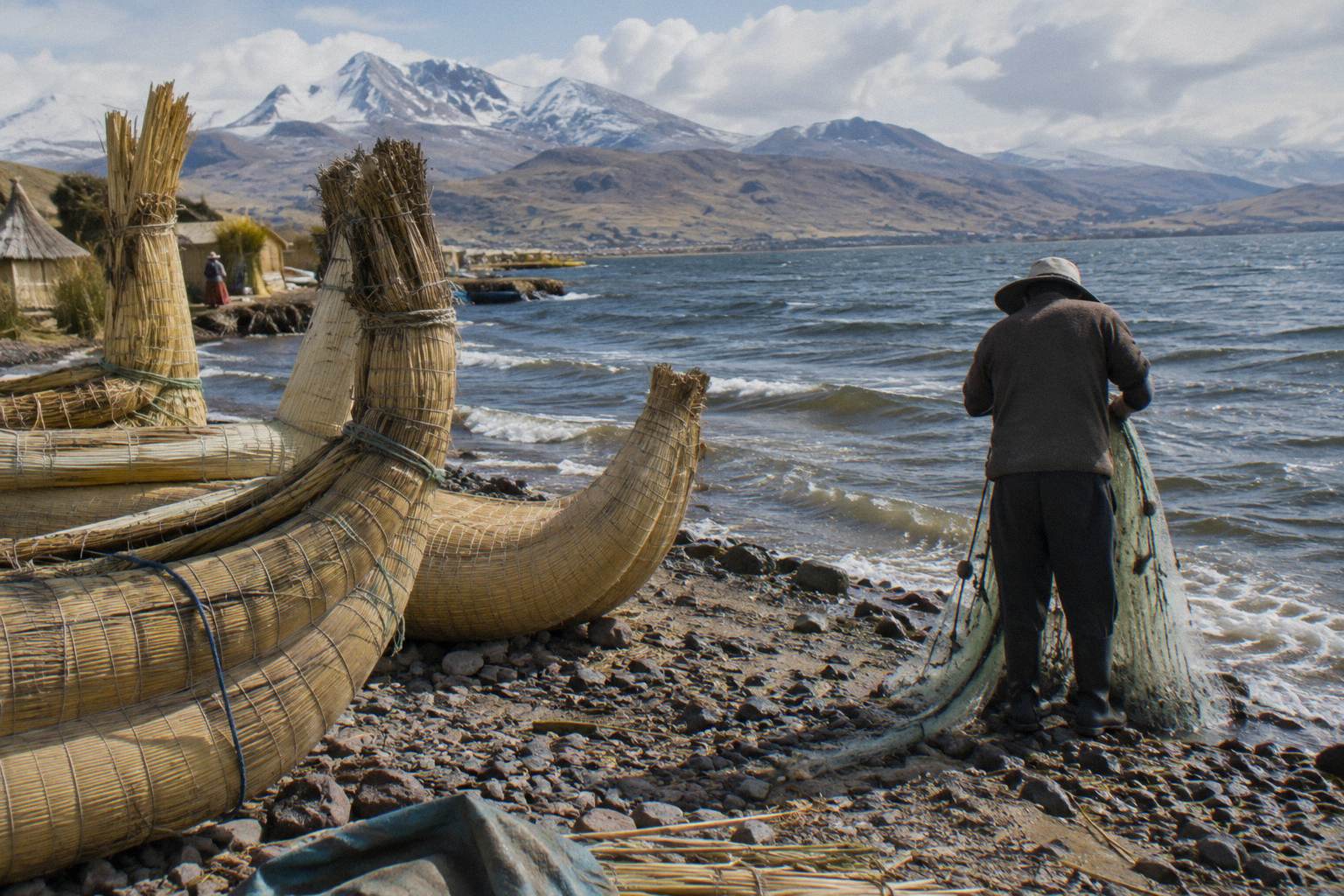
A short callout on fit: for a two week plan whose priority is Cusco and Machu Picchu, with the coast as scenery, See Peru Hop Passes and compare the 3 day Get To Cusco Quick against the 6 day Full South; the difference is four nights that can go to the north, to the Colca Canyon or to a second Cusco block. Peru Hop does not reach Machu Picchu, Huaraz or the north, so those stay outside the pass.
Which Seats And Classes Should You Book For Each Leg?
Match the class to the length of the leg: the coast tolerates a standard seat, the Nazca-Arequipa and Puno-Cusco mountain legs reward a 160 degree recline or better, and operators state their own figures, with Cruz del Sur listing 180 degree reclining seats, Civa's SuperCiva listing 160 degrees on the first level and 140 on the second, and Movil Bus listing 120 degrees up to a 180 degree full flat in its top class. Oltursa publishes no recline degrees, so judge that carrier on its cama VIP class name rather than on a number nobody states.
Luggage is more standardised than seats: Peru's national transit rules allow up to 20 kg in the hold free on national service, and the operator pages line up behind it, Cruz del Sur listing 20 kg hold plus 6 kg hand, Oltursa 20 kg plus one hand piece at 5 kg, and Movil Bus 20 kg in up to three pieces plus 8 kg in two. SUTRAN advises taking a luggage ticket for the hold, and the fare receipt is a passenger right under the regulation. The full allowance picture, and the theft precautions that go with it, are in the Peru bus luggage and theft guide.
| Operator | Hold allowance | Hand allowance | Recline as stated by the operator |
|---|---|---|---|
| Cruz del Sur | 20 kg | 6 kg | 180 degree reclining seats listed |
| Oltursa | 20 kg | one piece, max 5 kg | no degrees published |
| Movil Bus | 20 kg (up to 3 pieces) | 8 kg (up to 2 pieces) | 120 to 180 degrees by class |
| Linea | 20 kg | check the operator's page | 145 to 180 degrees by class |
| National transit rule | up to 20 kg free | seat rights under RNAT art. 76 | regulation sets no recline |
Seat choice on a night leg follows one rule: keep the passport on your body. FCDO states plainly: "on bus journeys, keep your passport with you", and "There is a risk of robbery by criminals posing as taxi drivers, especially at Jorge Chavez International Airport and bus terminals", with the advice to "use one of the taxis registered at bus terminals". The best seat on the overnight fleet is its own small science, from stairs to wheel arch to exit row, and worth a read before the long sierra legs.
How Do Strikes, Rain And Road Closures Affect A Two Week Plan?
Strikes and blockades are the single biggest schedule risk on a fortnight bus plan, because they appear with little notice and can close roads and land borders, and the practical defence is a day of slack at Cusco end plus a check of SUTRAN's live road alert map the day before each long leg. FCDO states that "Political protests in Peru are unpredictable and can escalate quickly" and can lead to "roadblocks, travel disruption, including trains, and suspension of immigration services at land borders", and that "Local groups can announce strike action, with little or no notice, particularly in areas connected to mining", with the direct instruction "Do not attempt to pass blockades". Canada's advice adds that "Roadblocks are frequently erected during demonstrations" and that strikes "could also lead to border closures, including with Bolivia".
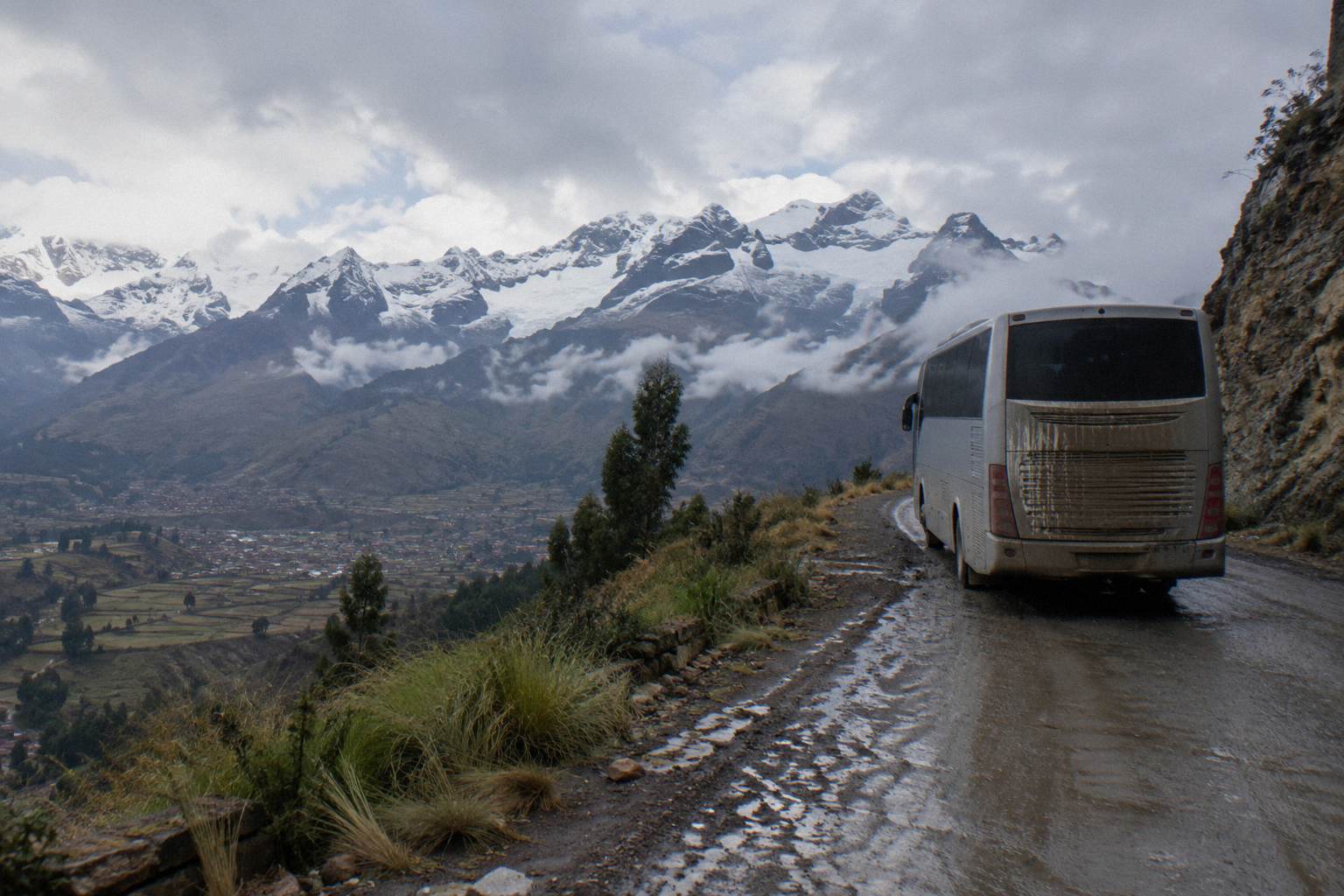
The Andean rainy season runs roughly September to April, and Puno holds 89 percent of its annual rain across September to March, per SENAMHI, with January the peak. For a fortnight that touches Puno and Cusco, that means the sierra legs carry the weather risk even when Lima is dry. SUTRAN's alert map at alertasviales.sutran.gob.pe shows closed roads in red, restricted in yellow and open in green, and SUTRAN runs a 24 hour WhatsApp line on 999 382 606.
Delays and rebookings have a real mechanism: INDECOPI's rule that a domestic ticket can be postponed or transferred with 24 hours notice at no more than the real reissue cost, and complaints go to the carrier's Libro de Reclamaciones or to INDECOPI's Reclama Virtual page. Government advice from the FCDO's Peru safety and security page is the reference to reread before a fortnight that crosses the sierra in the wet months.
What Should You Book Before You Leave?
Book three things in advance: the first leg out of Lima, the Cusco-region day that anchors the trip's end, and the long mountain seats, because those are the ones with fixed capacity and the ones a sold-out calendar kills. The coastal hops have multiple daily alternatives, the Cusco to Hidroelectrica back-door bus is a single-seat product, and the sleeper from Arequipa is the one 160 degree night seat on the route.
The back door to Machu Picchu from Cusco runs through Hidroelectrica, about 212 km with a free-flow estimate of about 5.1 h, and the Machu Picchu by Car Vip tourist bus from Cusco to Hidroelectrica, rated 4.3 across 53 reviews, covers it from Cusco's Plaza de Armas with two rest stops as its title says, a listed 6 hour duration, and a drop-off at a private terminal at Hidroelectrica. It ends at the hydroelectric station, from where the walk or rail leg to Machu Picchu begins. Round-trip variants exist from US$30 per person on another operator's listing with its own basis, and the listing text names Machu Picchu tickets under both included and excluded wording, so state nothing about tickets.
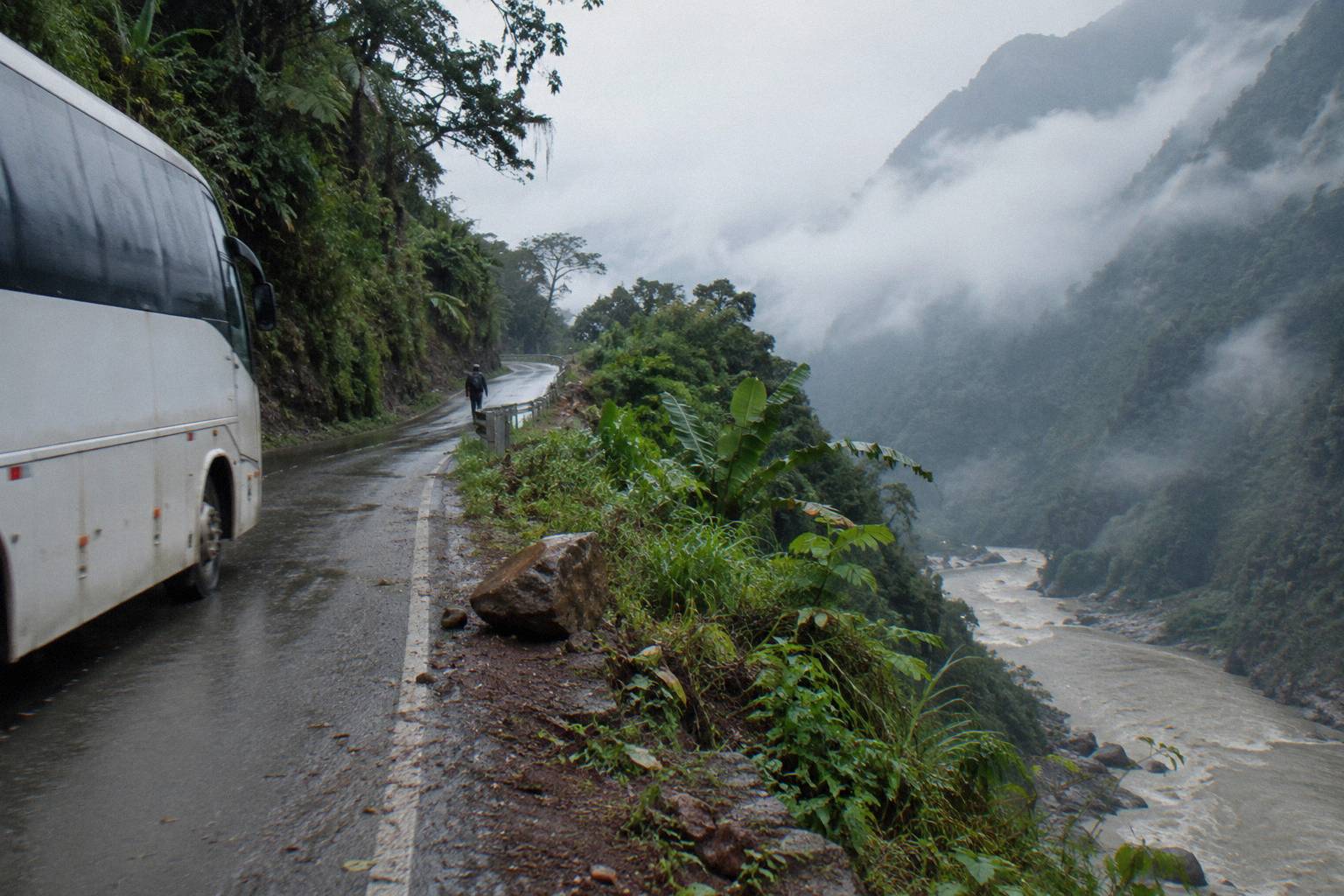
Closer to the start, the Airport Express Lima bus from Lima airport to Miraflores sells from US$6.5 per person on its own listing basis, in an air-conditioned luxury bus as the listing marks it, with a listed duration of about 1 hour, which settles the arrival-to-Miraflores handoff that the first long leg depends on.
The booking mechanics, payment and ticket types, plus the class ladder from semi cama to full flat, are worth reading before you pay for anything. The order that matters: lock the spine seats first, add the day tours second, and leave the coastal hops loose enough to shift a day either way.
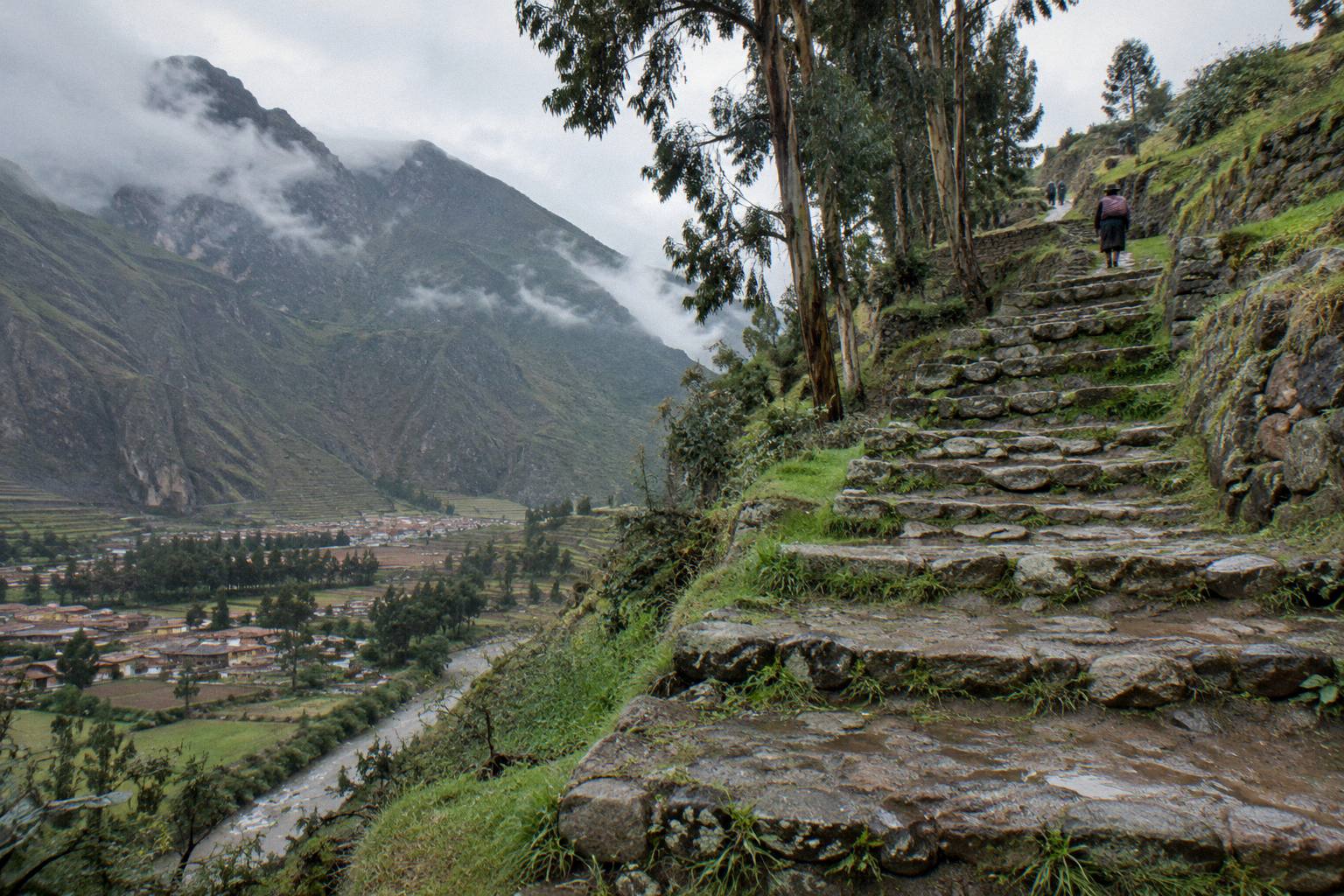
How Do The Drive Distances Add Up Across The Fortnight?
Across the full southern spine the bus covers a long staircase of road kilometres, dominated by the 566 km Nazca-Arequipa leg and the 1,002 km Lima-Arequipa total, and every figure below is an OSRM free-flow drive estimate that real bus journeys exceed, not a timetable. Two weeks divided across those distances averages out at two significant drives every three days, with full days off the bus in Paracas, Arequipa, Puno and Cusco between them. Two rules from Peru's national transport regulation help when a long leg shifts the plan: up to 20 kg of luggage travels free on national service, and under the consumer protection authority INDECOPI a domestic bus ticket can be postponed or transferred with at least 24 hours notice, with only the real cost of reissuing charged.
The infographic below stacks the southern legs against the two northern options so the fortnight's geometry is visible at a glance: the coast is a staircase of short hops, the sierra is two long climbs, and the north is one long line out of Lima.
A fortnight that respects those numbers plans no more than one long drive per day, and puts a full night after the two worst ones. The southern chain as a sequence of free-flow estimates:
| Day block | Leg | Free-flow drive estimate |
|---|---|---|
| Days 1-2 | Lima to Paracas | about 3.5 h |
| Days 3-4 | Paracas to Huacachina | about 1.3 h |
| Day 5 | Huacachina to Nazca (Ica pair) | about 2.4 h |
| Days 6-7 | Nazca to Arequipa | about 7.8 h |
| Days 8-9 | Arequipa to Puno | about 5.5 h |
| Days 10-11 | Puno to Cusco | about 6.2 h |
| Days 12-14 | Cusco block, Hidroelectrica side trip | about 5.1 h each way |
That skeleton leaves the last block for the Cusco region and the Hidroelectrica side trip, and it is the version to copy if the fortnight is a once-only trip. The shorter one week and longer three week versions of the same spine show how it stretches or compresses, and the northern Peru itinerary by bus page covers the add-on in depth.
Common Questions About A Two Week Peru Bus Trip
Is Two Weeks Enough For Lima To Cusco By Bus?
Yes. Peru Hop lists its Full South To Cusco pass at a 6 day minimum, and independent buses cover the same chain with more schedule freedom, so a fortnight leaves four to six spare days for the Colca Canyon, a slower Cusco block or a northern add-on.
Does Peru Hop Cover The Northern Legs Of This Itinerary?
No. Peru Hop's network runs the southern chain and Bolivia; Huaraz, Trujillo and the north are separate seat tickets with national carriers.
What Is The Longest Bus Leg In A Two Week Peru Itinerary?
Nazca to Arequipa, about 566 km with a free-flow drive estimate of about 7.8 hours, which real bus journeys exceed. The Lima to Trujillo northern leg is comparable at about 557 km with about 9.1 free-flow hours.
Should The Mountain Legs Be Overnight Or Daytime?
FCDO advice says "avoid overnight travel, especially in mountainous and remote regions", so the sierra legs suit daytime seats, and the sleeper from Arequipa to Puno, with a 160 degree recline named on its listing, is the night product on this chain if a night leg is unavoidable.
How Much Luggage Can I Carry On These Buses?
Up to 20 kg in the hold travels free on national service under Peru's transit rules, with operators listing 5 to 8 kg hand allowances on top; SUTRAN advises taking a luggage ticket for hold bags.
Can Bus Tickets Be Changed If A Strike Closes A Road?
INDECOPI states a domestic bus ticket can be postponed or transferred with 24 hours notice at no more than the real reissue cost, and the tourist-bus products listed carry free cancellation up to 24 hours before, as listed.