
North Peru Itinerary By Bus: Trujillo, Chiclayo, Chachapoyas And Mancora
The north of Peru is a bus country: colonial Trujillo, the pyramids around Chiclayo, the cloud forest of Chachapoyas and the beaches of Mancora sit on one long chain of paved corridors. This itinerary strings those stops together leg by leg, using free-flow drive estimates, terminal addresses and operator facts so the route can be planned before a single seat is bought.
Short answer
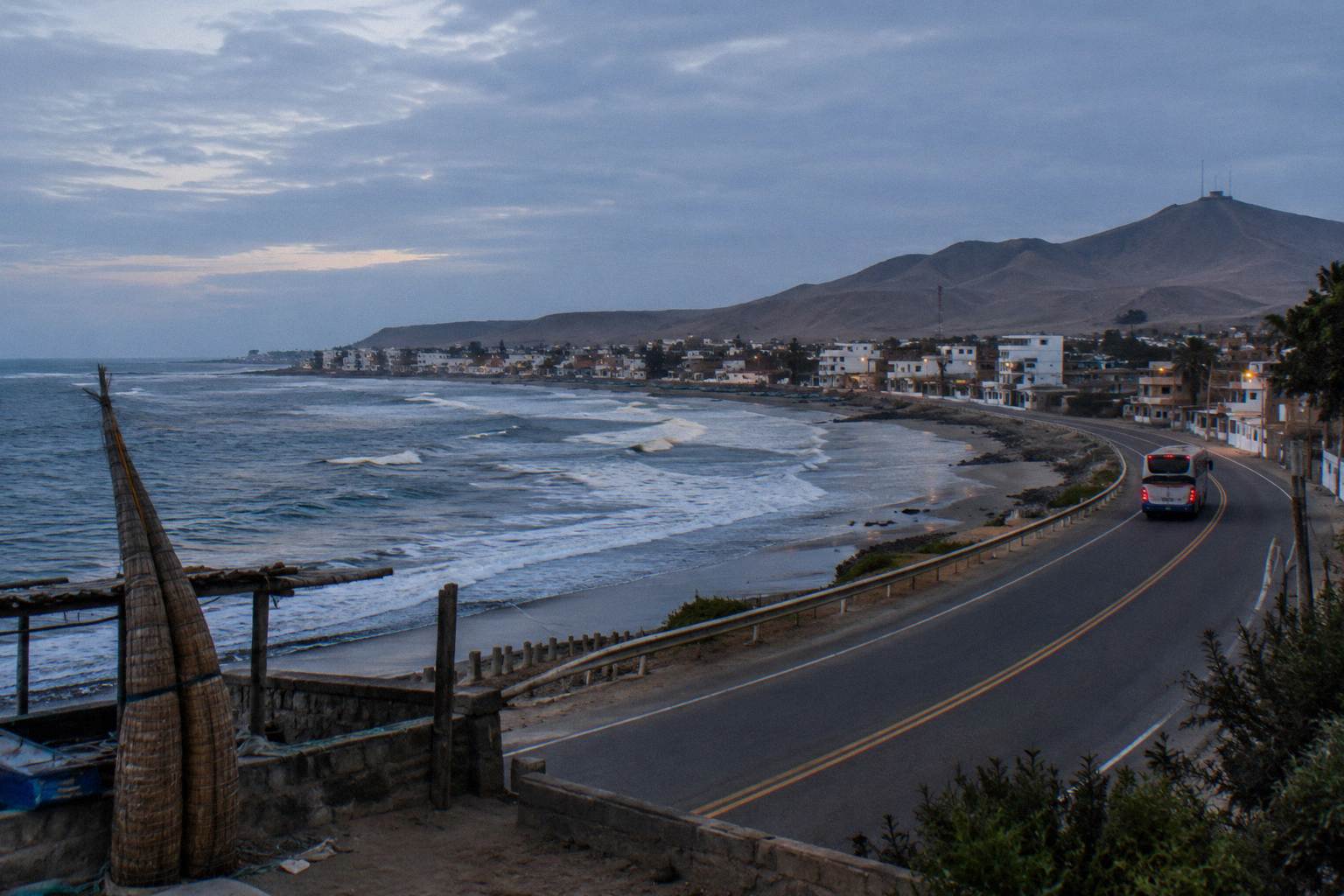
A workable north Peru bus circuit runs Lima to Trujillo (about 557 km, free-flow about 9.1 h), Trujillo to Chiclayo (about 199 km, about 3.2 h), then a branch to Chachapoyas (about 450 km, about 7.0 h) or straight to Mancora (about 401 km, about 5.3 h). Trujillo sits at 74 m and Chiclayo at 28 m; Chachapoyas climbs to 2,338 m.
Northern Peru gets a fraction of the attention the south receives, and the buses there are quieter for it. Trujillo holds colonial mansions and the adobe city of Chan Chan, Chiclayo opens onto the Lord of Sipan tombs at Lambayeque, Chachapoyas guards Kuelap in cloud forest, Cajamarca keeps Inca baths and colonial churches, and Mancora ends the line with warm Pacific water. The whole chain rides on Peru's northern bus corridor, one of the busiest in the country, laid out here as an itinerary: which leg connects where, how far each one runs, what the ground does to the schedule, and where each ticket fits.
Distances below are OSRM free-flow drive estimates: what a car needs on an empty road. A real bus takes longer, because real buses stop at terminals, work through traffic leaving Lima, and hold to speed limits. The figures set a floor for planning, never a promise. Before the route details, one sentence settles a common question about hop-on passes: Peru Hop does not run buses in the north, so this itinerary runs on conventional carriers and their terminals.
Why Build A North Peru Itinerary Around Buses?
Buses are the backbone of northern Peru, and the corridor is built for them: Lima to Trujillo is about 557 km with a free-flow drive estimate of about 9.1 hours, Trujillo to Chiclayo about 199 km and 3.2 hours, Chiclayo to Mancora about 401 km and 5.3 hours. The coastal legs run on paved Panamericana highway with multiple carriers competing on them, and no flight fact is needed to make the case.
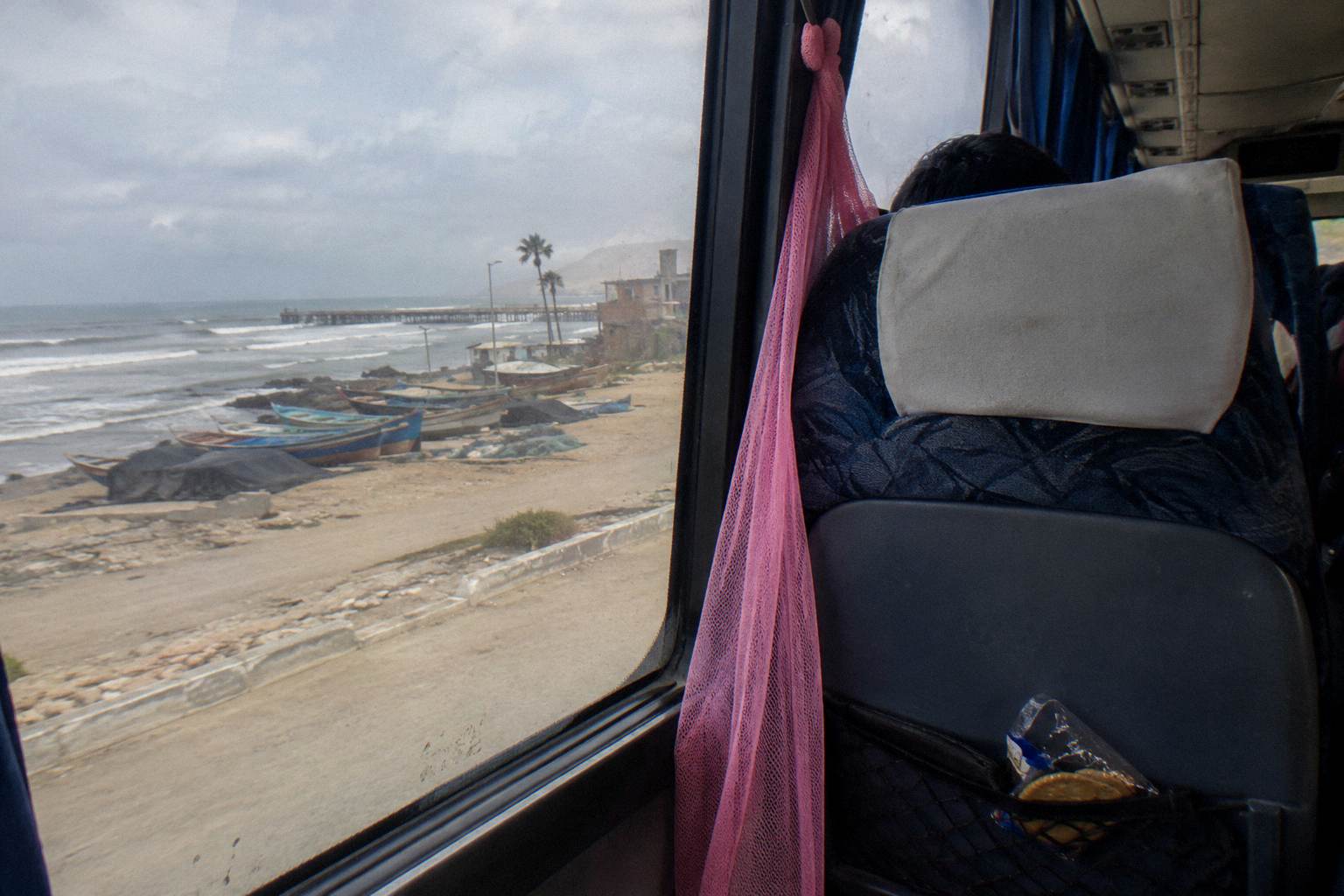
The economics and the geography both point the same way. The Panamericana Norte hugs the coast for the whole Lima to Tumbes run, so the surface route adds up leg by leg rather than demanding one long haul. A traveller can break the corridor at Trujillo for Chan Chan and Huanchaco, at Chiclayo for the Royal Tombs Museum, at Chachapoyas for Kuelap and Gocta, and at Mancora for the beach, riding a few hours at a time. The mountain branches to Cajamarca and Huaraz leave from the corridor, which makes a loop possible: north on the coast, back through the highlands.
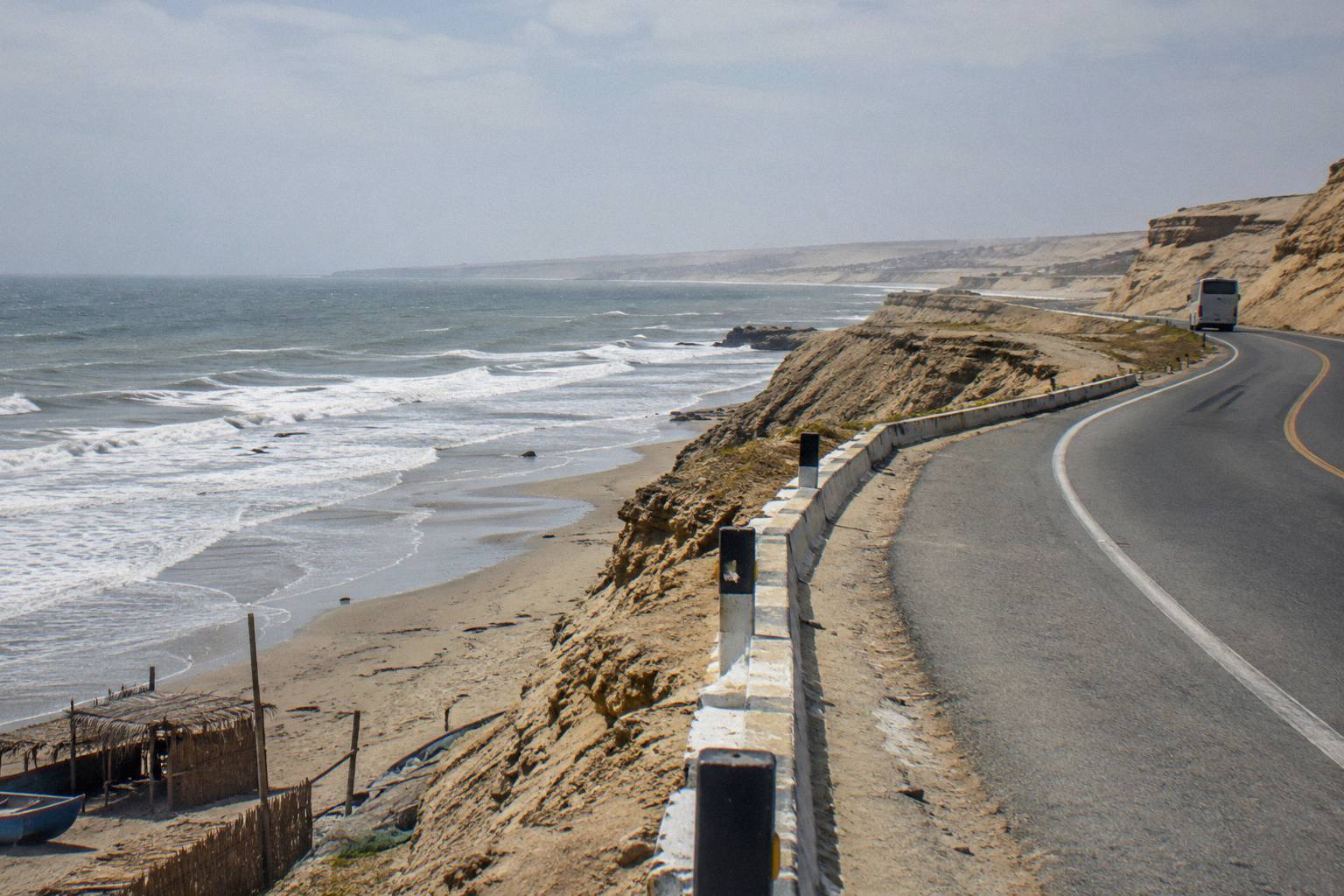
Altitude behaves differently here than in the south. Trujillo sits at 74 m and Chiclayo at 28 m, both near sea level on flat coastal desert, so no acclimatisation matters on the coastal legs. That changes at the branches: Chachapoyas stands at 2,338 m per INEI's compendium, Cajamarca at 2,731 m, and Huaraz at 3,073 m. The climb is gradual on a bus, which is the gentlest way to gain those metres. For the coastal spine, the planning problem is not altitude but distance: the legs are long, flat and dry.
A first pass at the route, using the free-flow drive estimates and INEI altitudes:
| Leg | Distance | Free-flow drive estimate | Altitude at destination |
|---|---|---|---|
| Lima to Trujillo | about 557 km | about 9.1 h | 74 m |
| Trujillo to Chiclayo | about 199 km | about 3.2 h | 28 m |
| Trujillo to Cajamarca | about 290 km | about 4.1 h | 2,731 m |
| Chiclayo to Chachapoyas | about 450 km | about 7.0 h | 2,338 m |
| Chiclayo to Mancora | about 401 km | about 5.3 h | near sea level |
| Mancora to Tumbes | about 104 km | about 1.5 h | near sea level |
Real journeys exceed the free-flow column: a bus holds to SUTRAN's interprovincial rules, stops at authorised terminals, and crosses town traffic at each end. Treat the hours as the floor, then pad a day around them.
How Do You Get From Lima To Trujillo By Bus?
Lima to Trujillo is the anchor leg of any north Peru itinerary, about 557 km with a free-flow drive estimate of about 9.1 hours, which real buses exceed. Seats are sold by the northern carriers from Lima's terminals, and carriers including Cruz del Sur, Oltursa and Linea serve the leg from their own Lima points. The ride follows the Panamericana Norte through coastal desert the whole way.
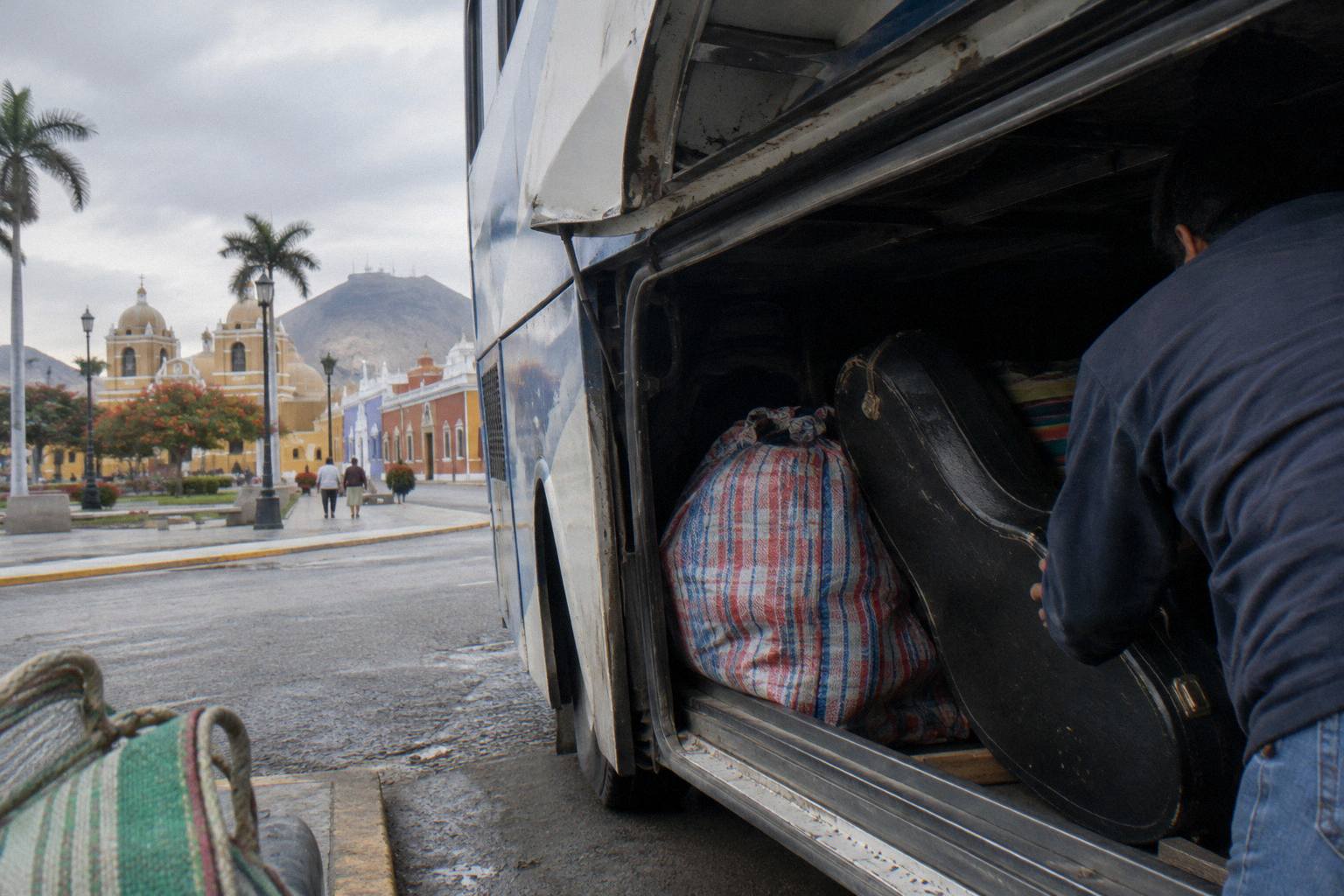
The ticket is the first buy of the trip, and a seat search for this route is the cleanest way to compare what runs on a given date: Check availability. Where you board matters as much as which carrier you pick. Lima has no single main terminal: Cruz del Sur departs from Terminal Javier Prado at "Av. Javier Prado Este 1109, Urb. Sta. Catalina, La Victoria, Lima", per its own Lima to Cusco page, while Oltursa lists "Jiron Manuel Portocarreros No 380, Surquillo" on its Lima page, and the Gran Terminal Terrestre Plaza Norte sits between Av. Tomas Valle and Av. Tupac Amaru beside the Plaza Norte mall, which puts it at the northern edge of the city, closer to the Panamericana. Linea lists Lima boarding at "Av. Paseo de La Republica 979" plus Plaza Norte at "Gerardo Unger 6917". Choosing a terminal that matches where you sleep in Lima saves a cross-city taxi with luggage.
| City | Carrier | Address the operator lists |
|---|---|---|
| Lima | Cruz del Sur | Av. Javier Prado Este 1109, Urb. Sta. Catalina, La Victoria |
| Lima | Oltursa | Jiron Manuel Portocarreros No 380, Surquillo |
| Lima | Linea | Av. Paseo de La Republica 979 |
| Lima | Linea, Plaza Norte | Gerardo Unger 6917 |
| Trujillo | Cruz del Sur | Av. Amazonas 437 |
| Trujillo | Oltursa | Av. del Ejercito 342, Urb. El Molino |
| Trujillo | Oltursa, Terrapuerto | Panamericana Norte Km 558 |
| Trujillo | Linea | Av. America Sur N 2857, La Perla |
The FCDO's Peru safety and security page, gov.uk, notes: "There is a risk of robbery by criminals posing as taxi drivers, especially at Jorge Chavez International Airport and bus terminals", and advises readers to "use one of the taxis registered at bus terminals". That bears on the Lima end of this leg: arrive at the terminal with time to spare and use the registered ranks rather than street cabs. The same page says "on bus journeys, keep your passport with you".
Trujillo's arrival end is easier. Any of the terminals listed above lands you within a taxi ride of the centre, and a hotel in the historic centre puts the Plaza de Armas, the colonial mansions and the buses to Huanchaco within a short radius. Chan Chan, the largest adobe settlement in the Americas, sits on the road out toward the beach town.
If the trip starts with a landing at Jorge Chavez airport rather than a night in the city, two tickets do the airport work. The First Class Huaraz bus ticket from Lima airport to Huaraz picks up in Miraflores or at Lima airport, and the Airport Express Lima bus from Lima airport to Miraflores, an air-conditioned luxury bus per its listing, runs the airport to Miraflores leg with the listing giving about 1 hour, from US$6.5 per person on that listing, with free cancellation up to 24 hours before for a full refund as listed.
Where Does The Huaraz Spur Fit Before You Head North?
Huaraz is the highland detour that hangs off the start of this itinerary: Lima to Huaraz is about 402 km with a free-flow drive estimate of about 5.5 hours, and Huaraz stands at 3,073 m, the highest point of any branch of this itinerary. Movil Bus serves Huaraz from Lima, listing terminals at "Av. Confraternidad Internacional Oeste 451, Independencia" and "Jr Simon Bolivar 452" there. Linea lists Huaraz at "Jr. Simon Bolivar N 450".
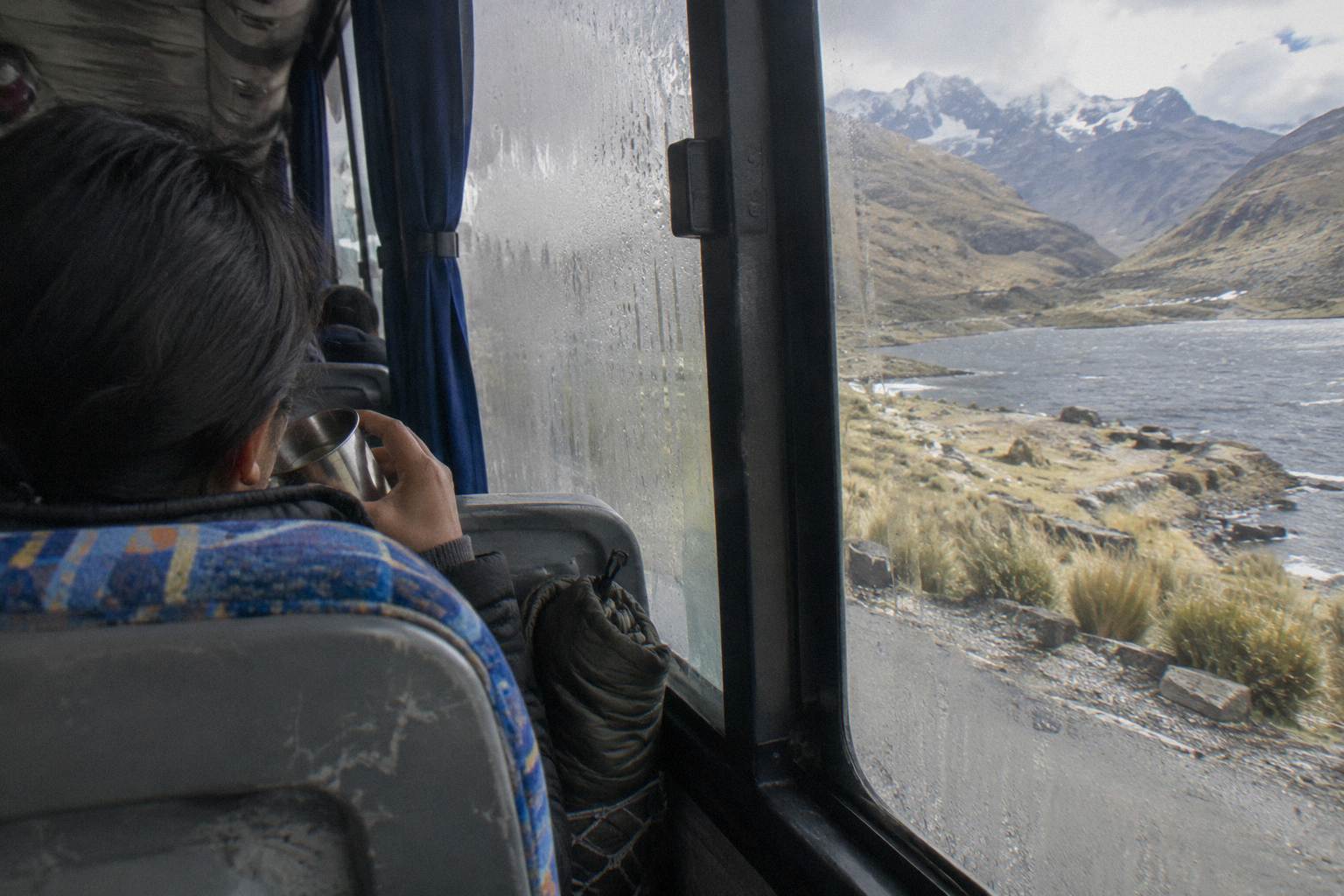
The spur adds altitude and mountain road to an otherwise coastal route, and that is the trade to weigh. The ticket worth naming here is the First Class Huaraz bus ticket from Lima airport to Huaraz, from US$50 per person on the operator's listing, with the listing giving about 9 hours for the run. Two details from that listing matter before booking: hotel pickup is on request and you send the hotel address to the operator after booking, and the listing marks the ticket non-refundable and unchangeable. Passport numbers and full names are needed to print the tickets. Check availability
Movil Bus's own service page lays out its northern classes: Economico seats recline 120 degrees, Ejecutivo VIP 140 or 160, Presidencial 160, and Premier 160 on the first level with a full flat 180 on the second. Its travel recommendations page allows 20 kg of hold luggage across up to three pieces and 8 kg of hand luggage across up to two. Those are the operator's own figures, printed as the operator states them; whether a given departure matches a given class is a question for the booking screen.
For readers whose trip is coastal and whose connection with the north begins at Lima airport rather than a Miraflores hotel, the Airport Express Lima airport to Miraflores bus handles the city transfer first, with free cancellation up to 24 hours before for a full refund as listed and reviews on the listing. From there the northern carriers' own terminals take over.
How Do You Ride Trujillo To Chiclayo And On To Cajamarca?
Trujillo to Chiclayo is the short, busy connector of the north: about 199 km with a free-flow drive estimate of about 3.2 hours on flat coastal highway, arriving at Chiclayo, 28 m above sea level. From Trujillo, the Cajamarca branch climbs instead: about 290 km and about 4.1 hours free-flow, finishing at 2,731 m. The two legs frame the first real fork of the route: coast, or highlands.
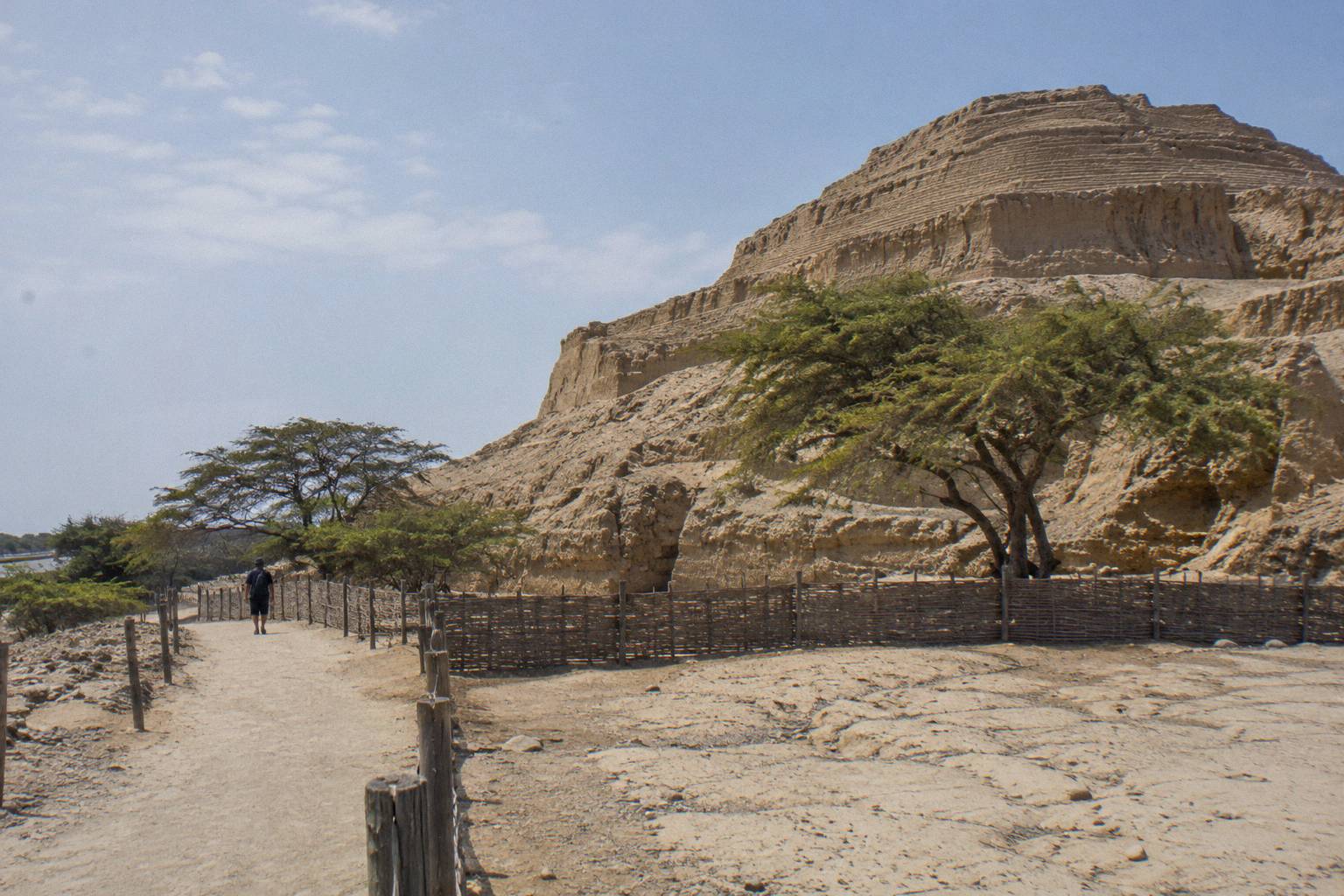
Chiclayo is the market hub of the north, and the archaeological weight sits just outside it: the Royal Tombs of Sipan Museum at Lambayeque holds the Moche material that made the region famous, and Tucume's adobe ridges sit on the plain beyond. Terminal addresses are carrier-specific here too. Cruz del Sur lists Chiclayo at "Av. Bolognesi 888"; Oltursa lists "Av. Vicente de la Vega 101"; Linea lists "Av. Francisco Bolognesi N 638" and "Carretera Panamericana Norte N 4200, Jose Leonardo Ortiz". Any of them lands you within a taxi ride of the centre. Other pages covering the same trip are gathered on Peru By Bus.
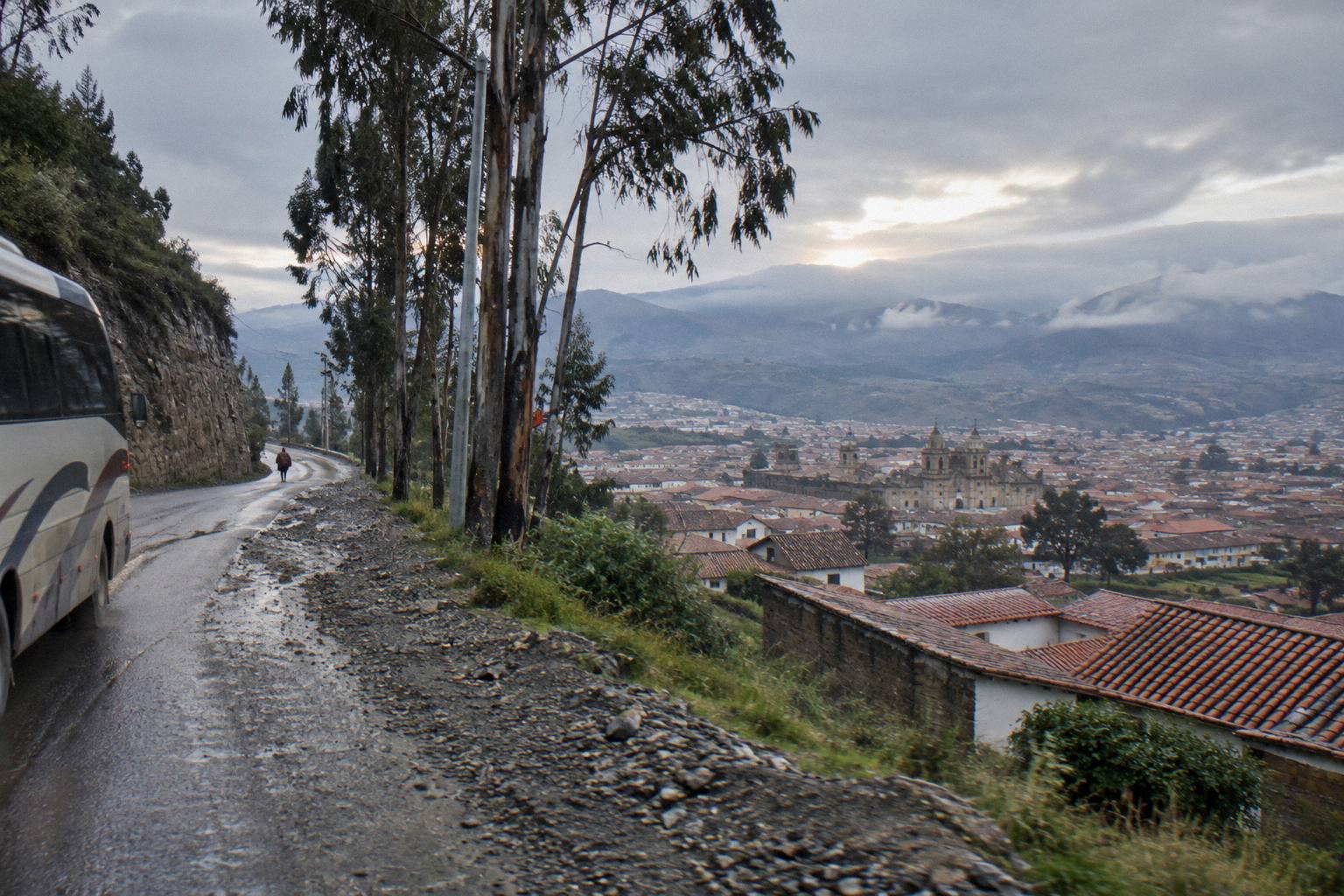
Cajamarca changes the character of the trip. Linea lists Cajamarca on its northern network, and Movil Bus runs routes concentrated on Lima to Huaraz, Chiclayo, Trujillo, Chachapoyas, Cajamarca, Tarapoto and Oxapampa, per its own pages. The town holds the Inca baths at Baños del Inca, the Ransom Room associated with Atahualpa, and a colonial core at 2,731 m where the air is thinner than anything on the coast. If a long leg lands at night, the advice below on night travel is the part to read first.
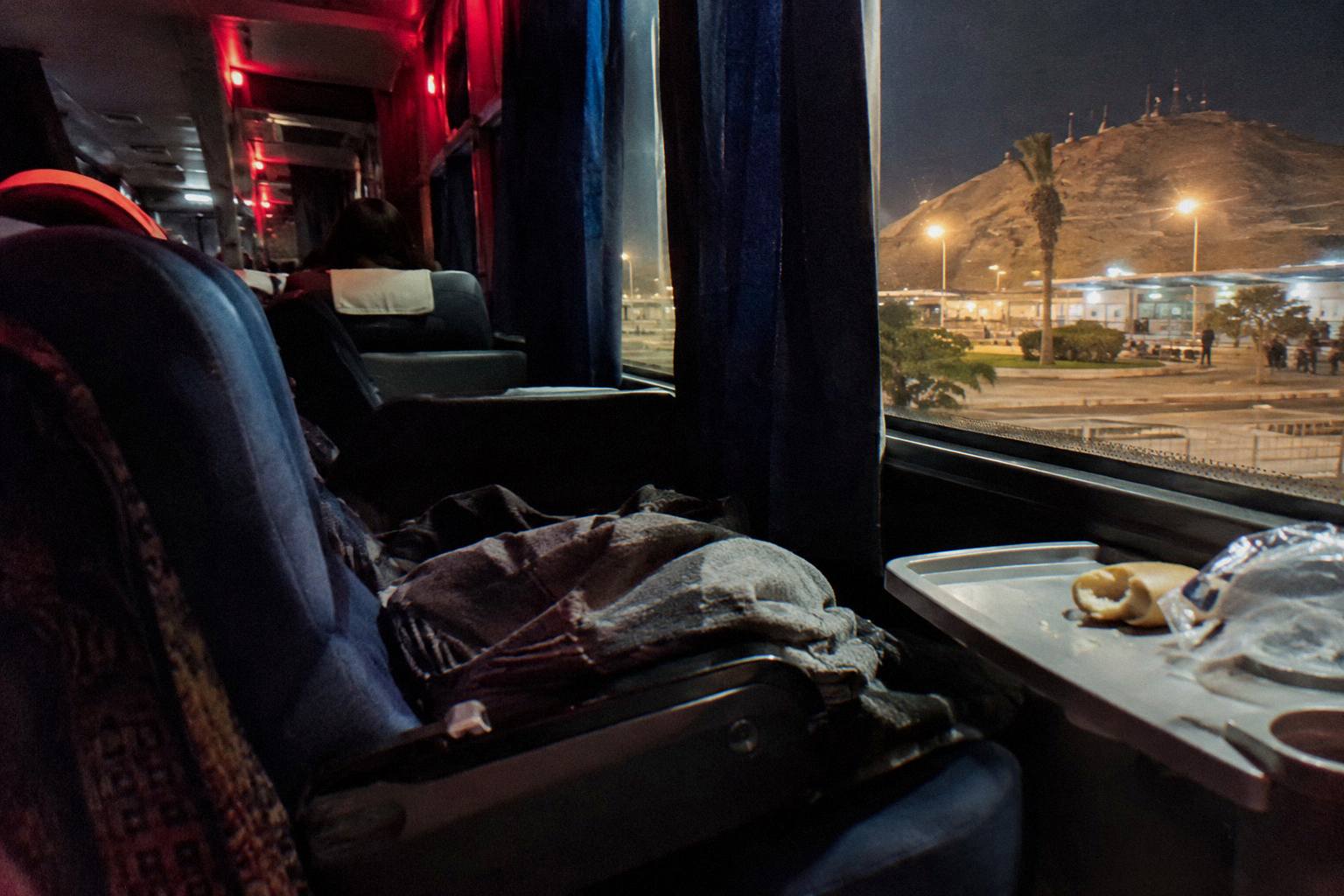
Government advice on night travel is worth quoting rather than paraphrasing. The Government of Canada's Peru page, travel.gc.ca, states: "Avoid taking buses and coaches at night" and "Intercity bus travel can be dangerous due to the risk of bus accidents, which are usually caused by excessive speed, poor vehicle maintenance and driver fatigue. Armed gangs have been known to stop buses to rob travellers, especially at night." The UK FCDO, on gov.uk, says: "Bus crashes are common, especially at night. Only use reputable transport companies, and where possible, avoid overnight travel, especially in mountainous and remote regions."
Is Chiclayo To Chachapoyas The Hardest Leg Of The Itinerary?
Chiclayo to Chachapoyas is the longest single push of this route: about 450 km with a free-flow drive estimate of about 7.0 hours, and the leg leaves the flat coast for mountain road as it approaches Chachapoyas at 2,338 m. Movil Bus names Chachapoyas among its route concentrations, per its own pages. Real journeys exceed the free-flow figure by a wide margin here, because the last stretch is winding ascent rather than Panamericana cruising.
A seat search for this route is the way to compare what runs on a given date. Chachapoyas is the reward: Kuelap's stone walls sit above the Utcubamba valley, Gocta's waterfall drops in two tiers, and the town itself is a quiet grid of balconied houses. The how to get to Chachapoyas by bus guide works through this leg in detail, including the approach roads and the connection from Jaen for readers coming from other angles. This itinerary keeps it simple: Chiclayo is the natural jumping-off point, and the branch from Trujillo through Cajamarca meets the region from the south if the loop runs that way.
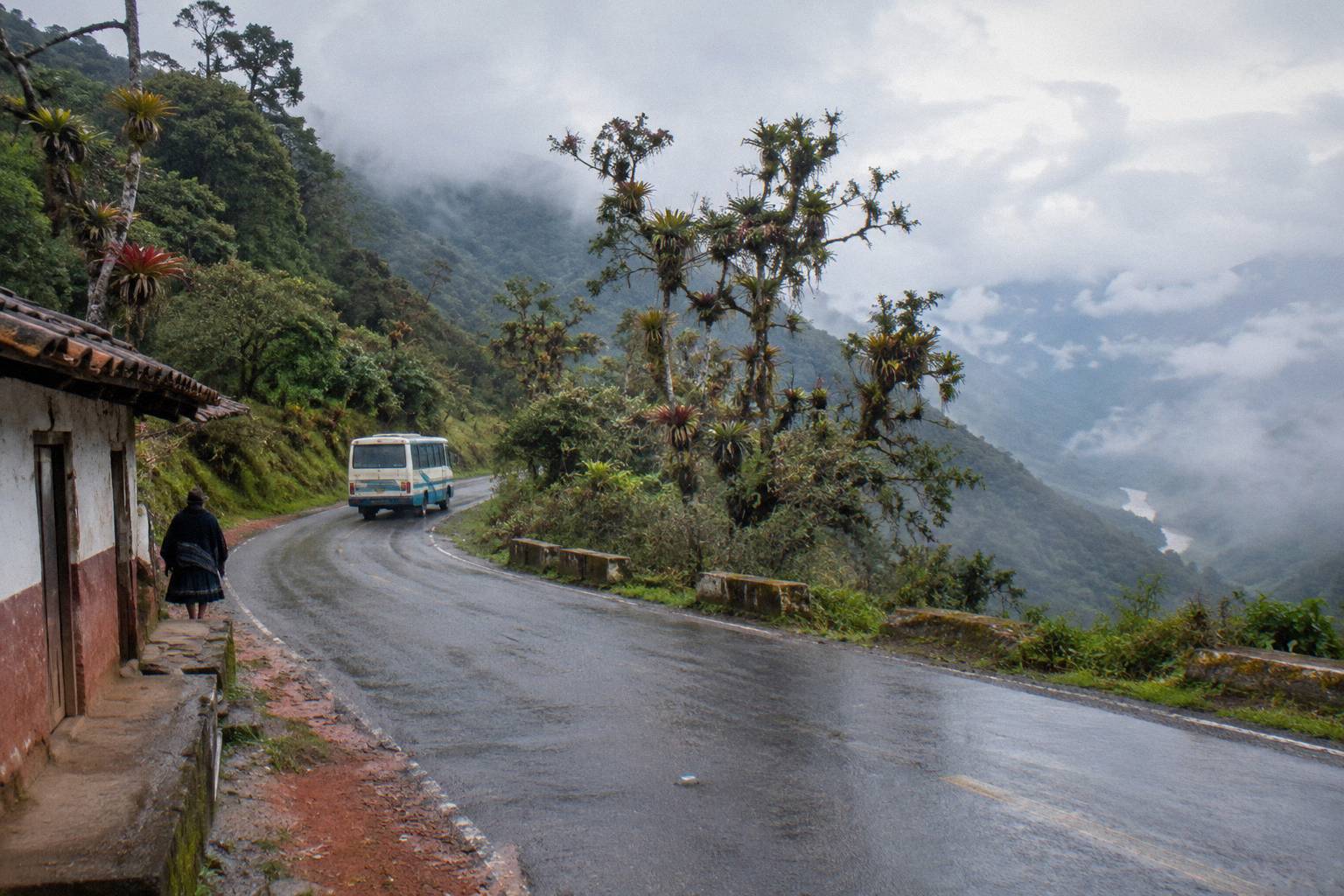
What makes the leg demanding is not distance alone. Transit between coast and cloud forest means the bus trades desert flat for switchbacks, and the regulation context matters: SUTRAN, on gob.pe, states the 90 km/h ceiling applies on roads without other speed signage, and Peru's national transit regulation caps continuous driving at 5 hours by day and 4 at night, requiring a second driver beyond that. A mountain leg is where driver-change rules and speed governance earn their keep, and where SUTRAN's alert map at alertasviales.sutran.gob.pe is worth a look the day before travel: red means closed, yellow restricted, green open.
Budget extra time at the Chachapoyas end rather than the Chiclayo end. The town is compact and walkable, tour operators cluster around the Plaza de Armas, and the road to Kuelap climbs from the valley, so the arrival day is better spent settling than sprinting. The north coast bus guide covers the coastal half of this corridor in more depth.
How Do You Finish The Route At Mancora And Tumbes?
Chiclayo to Mancora is about 401 km with a free-flow drive estimate of about 5.3 hours up the coast, and Mancora to Tumbes adds about 104 km and about 1.5 hours, both near sea level. Cruz del Sur lists Piura at "Av. Loreto 1195" and Oltursa lists Piura at "Av. Bolognesi 801" for the midway stop, and Oltursa lists Mancora at "Av. Grau 509" at the beach end of the line.
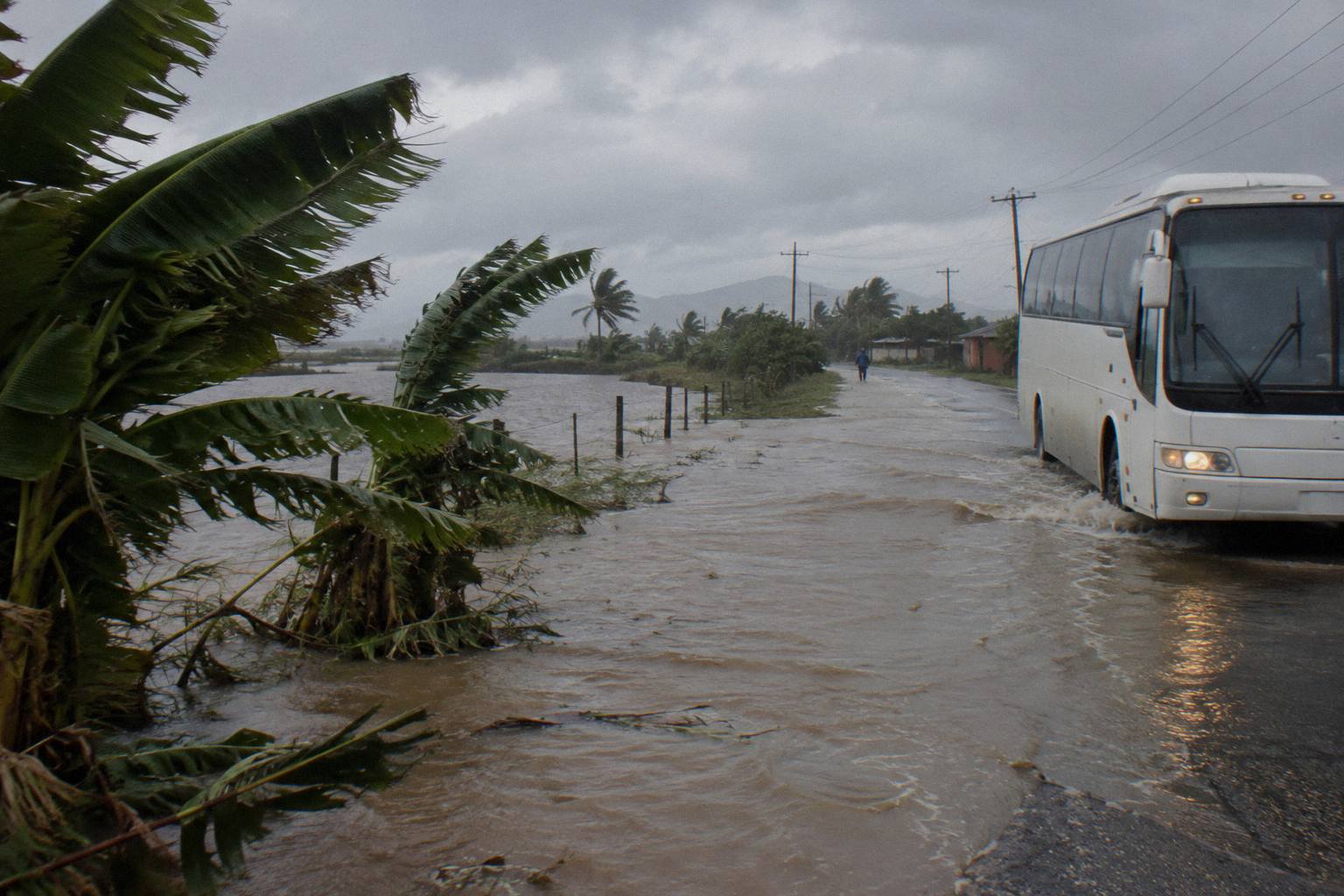
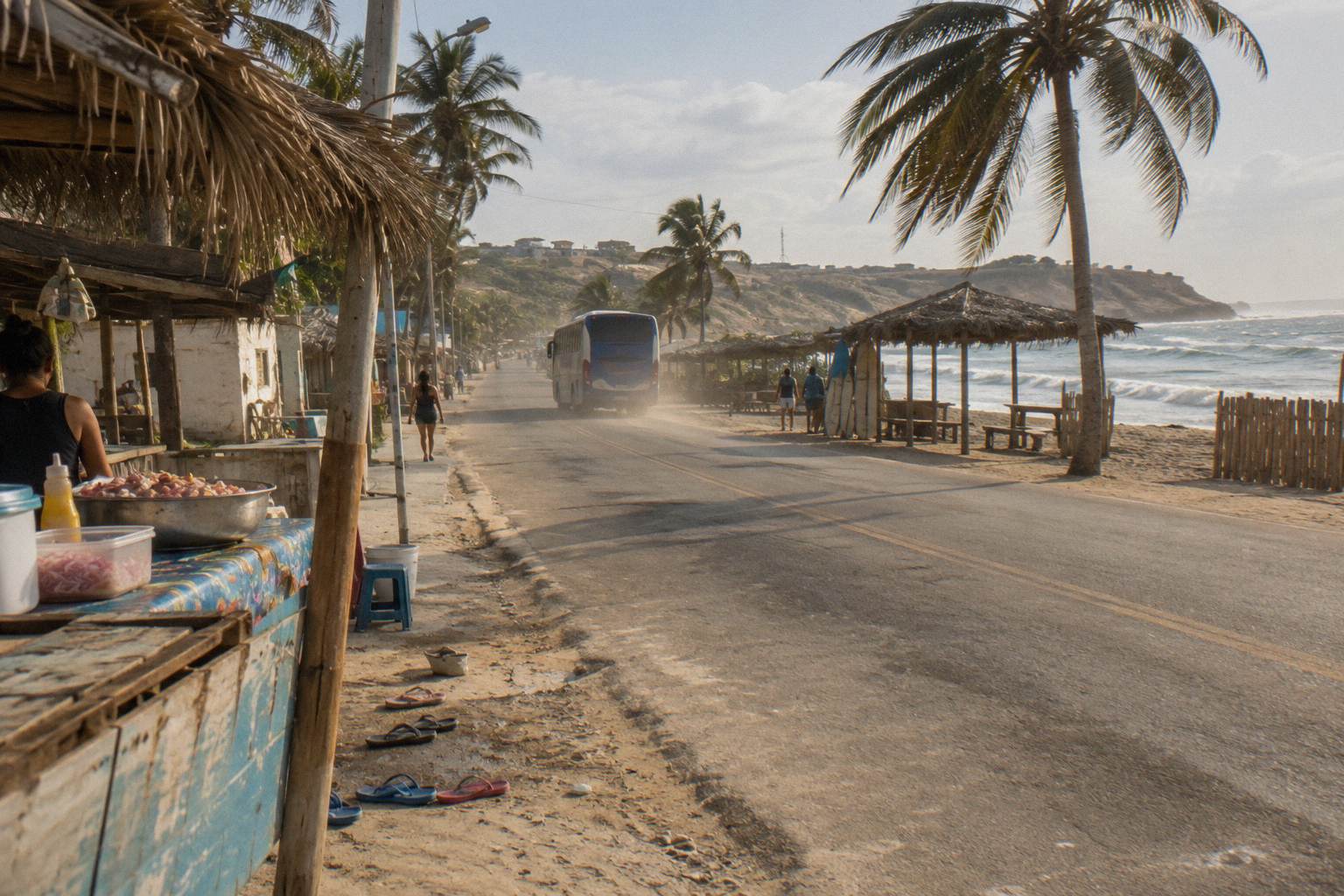
From Tumbes, the Aguas Verdes-Huaquillas crossing is the main point into Ecuador, with La Tina and La Balsa also listed by Ecuador: check those posts before you go. Mancora is where the itinerary exhales: a long beach, warm water, ceviche, and buses that deposit you a short walk from the sand. The Panamericana runs straight through town, which is why Oltursa's Mancora address sits on the highway itself. Sun is the planning variable rather than altitude, and the FCDO's El Nino notice is quoted with its period intact, because the source contains it: "Through late 2026 to April 2027, the El Nino weather event is expected to generate heavy rainfall, possible flooding, landslides, and mudslides, especially in, but not restricted to, the northern and central coast. These could cause travel disruption, such as road closures". The northern coast is named in that notice, so read it before pinning beach days to the calendar.
At Tumbes, the Tarjeta Andina de Migracion is "de uso obligatorio" for CAN-country movement per Migraciones. What can be said plainly is that Aguas Verdes-Huaquillas is the main crossing, CEBAF Tumbes is staffed year-round per Migraciones, and Canada's advisory to cross at the official point near Tumbes sits alongside Peruvian and Ecuadorian notices listing Macara (La Tina) and La Balsa, so a traveller with a preference for a quieter post should confirm its status directly before committing.
Which Bus Companies Run The Northern Routes?
Linea is the specialist of the north, with a network confined to Lima, Chimbote, Trujillo, Pacasmayo, Chiclayo, Piura, Huaraz, Cajamarca, Chepen and Jaen, per its own route pages. Movil Bus concentrates on Lima to Huaraz, Chiclayo, Trujillo, Chachapoyas, Cajamarca, Tarapoto and Oxapampa. Cruz del Sur and Oltursa run the coastal corridor with terminals in each northern city listed on their own pages.
The class ladder is where the money goes on a long northern leg, and the degrees below are operator-stated:
| Operator | Classes the operator names | Recline the operator states | Luggage the operator allows |
|---|---|---|---|
| Linea | Super VIP, VIP, Dorado, Especial | 180 (Super VIP), 160 (VIP, Dorado), 145 (Especial) | 20 kg per its terms page |
| Movil Bus | Economico, Ejecutivo VIP, Presidencial, Premier | 120 to 180 by class | 20 kg hold, 8 kg hand |
| Cruz del Sur | Suite, Cruzero Suite, Evolution, Confort | Suite 160, Cruzero Suite 160, Evolution 160/140, Ica Express 140 | 20 kg hold plus 6 kg hand on the Lima to Cusco page |
| Oltursa | Economico, Bus Cama VIP | Check the operator's page for degrees | 20 kg hold, one hand piece max 5 kg |
Two honesty notes on that table. Oltursa states no recline degrees anywhere its own pages show, so the cell says where to look rather than inventing a number. And Wi-Fi and streaming, which Linea lists as "sujeto a disponibilidad del operador", are service-of-courtesy items on several carriers rather than guarantees; the Peru bus classes explained guide unpacks what each class name buys you in practice.
The 20 kg figure that repeats across the table is not coincidence: up to 20 kg of luggage travels free on national bus service under Peru's national transit regulation, and a fare receipt is the passenger's right. SUTRAN and INDECOPI both advise taking a luggage ticket for hold bags, phrased as advice rather than a legal order. INDECOPI additionally holds that a domestic bus ticket can be postponed or transferred with at least 24 hours notice, with no more than the real cost of reissuing charged, which is the rule behind any rebooking argument at a counter.
What Should You Know About Season, Strikes And Road Blocks In The North?
The north is dry desert, yet weather and unrest still shape this route: the FCDO's El Nino notice flags heavy rain and road closures on the northern and central coast through April 2027, protests named by the FCDO include La Libertad, home to Trujillo, and demonstrations can escalate quickly into roadblocks with little notice, so check SUTRAN's live alert map and call your carrier the day before each leg.
The FCDO's full wording, quoted above in the Mancora section for the El Nino period, also says: "Political protests in Peru are unpredictable and can escalate quickly. Demonstrations can become violent and lead to roadblocks, travel disruption, including trains, and suspension of immigration services at land borders." Rain in the north is not the Andean pattern of afternoon showers over Cusco; it is episodic El Nino-driven flooding that closes the Panamericana when it comes. When a road shuts, the map shows it in red and the carrier rebooks, and the delays, strikes and rainy season guide covers what to do when a block lands on your route, including the FCDO's instruction "Do not attempt to pass blockades".
The US Embassy in Lima's republication of the State Department advisory, pe.usembassy.gov, carries "Level 2 - Exercise Increased Caution" and notes: "Criminal groups sometimes set up roadblocks to rob people in areas outside of Lima." It also states U.S. government employees "may travel at night with commercial bus companies along the Pan-American Highway, to Huaraz, and on the Lima-Arequipa-Cusco corridor", a corridor list that happens to name the northern spine.
Altitude is the other seasonal-feeling variable, though it is fixed by geography. The itinerary's coastal days, Trujillo at 74 m, Chiclayo at 28 m, Mancora near sea level, ask nothing of the lungs. The branches do: Chachapoyas at 2,338 m, Cajamarca at 2,731 m, Huaraz at 3,073 m, all per INEI's compendium. The safe sequencing rule is to climb gradually, which this route does naturally if the coast comes first and the highlands after.
One last planning aid that costs nothing: SUTRAN's lookup at gob.pe lets any passenger check a bus by plate or a driver by DNI before boarding, and its 24 hour WhatsApp line at 999 382 606 takes speeding reports. On a corridor as long as this one, that check plus the alert map is the whole toolkit for the night before each leg.
How Does The Northern Loop Connect Back, Or Continue South?
You have two endings here: close the loop by returning through Cajamarca and the highlands to Trujillo and then Lima, or push south by bus along the coast toward the start of the southern circuit. The return leg runs about 290 km from Cajamarca to Trujillo (4.1 hours free-flow), then 557 km on to Lima, while continuing south means the 251 km, 3.5-hour hop from Lima to Paracas.
Readers continuing south after the north have a straight tourism ticket for the first southern hop: the Wayki Bus one-way tourist bus from Miraflores in Lima to Paracas, rated 4.2 across 62 reviews, running Miraflores and Barranco to Paracas with drop-off at El Chaco, the listing giving 3 hours and free cancellation up to 24 hours before for a full refund as listed. A twin listing by another operator offers a Lima to Paracas bus with hotel pickup in Miraflores and Barranco from US$18 per person, a separate product with its own basis, not a merge with the first. The southern Peru bus circuit guide maps what follows.
Whichever ending you choose, the booking pattern for the north stays the same: buy each leg as its own ticket, keep the legs separable, and lean on the free-cancellation window most listings carry. A north Peru itinerary by bus is not one booking; it is five or six small ones, each cancellable, each replaceable, and each short enough that a road closure costs a day instead of a trip.
Common Questions About A North Peru Bus Itinerary
How Long Does The Bus From Lima To Trujillo Take?
The Lima to Trujillo leg is about 557 km, with an OSRM free-flow drive estimate of about 9.1 hours. Real bus journeys exceed that figure because of terminal stops, city traffic and speed limits, so plan the arrival day with slack rather than to the minute. A seat search for the route shows the day's departures.
Can You Do Trujillo, Chiclayo And Chachapoyas In One Trip By Bus?
Yes, and the free-flow estimates show why it hangs together: Trujillo to Chiclayo about 199 km and 3.2 hours, Chiclayo to Chachapoyas about 450 km and 7.0 hours. The Chachapoyas leg is the longest single push and the one that leaves the coast for mountain road, approaching a town at 2,338 m. Allow a minimum of two nights at Chachapoyas for Kuelap and Gocta.
Is Chiclayo To Mancora A Long Bus Ride?
Chiclayo to Mancora is about 401 km with a free-flow drive estimate of about 5.3 hours, and Mancora sits near sea level at the end of flat coastal highway. Piura sits midway, with Cruz del Sur listing "Av. Loreto 1195" and Oltursa listing "Av. Bolognesi 801" there, and Oltursa lists Mancora itself at "Av. Grau 509". A short walk from the drop-off reaches the beach strip.
Does Peru Hop Serve Northern Peru?
No. Peru Hop's hop-on network does not include Trujillo, Chiclayo, Chachapoyas, Cajamarca, Huaraz or Mancora, so a northern itinerary rides on conventional carriers such as Linea, Movil Bus, Cruz del Sur and Oltursa, booked leg by leg from their terminals.
What Altitude Is Chachapoyas Compared With The Coast?
Chachapoyas stands at 2,338 m per INEI's compendium, while Trujillo is at 74 m and Chiclayo at 28 m. The climb from the coast is gradual on a bus, which is the gentlest way to gain that altitude. Cajamarca, at 2,731 m, and Huaraz, at 3,073 m, sit higher still on the branches.