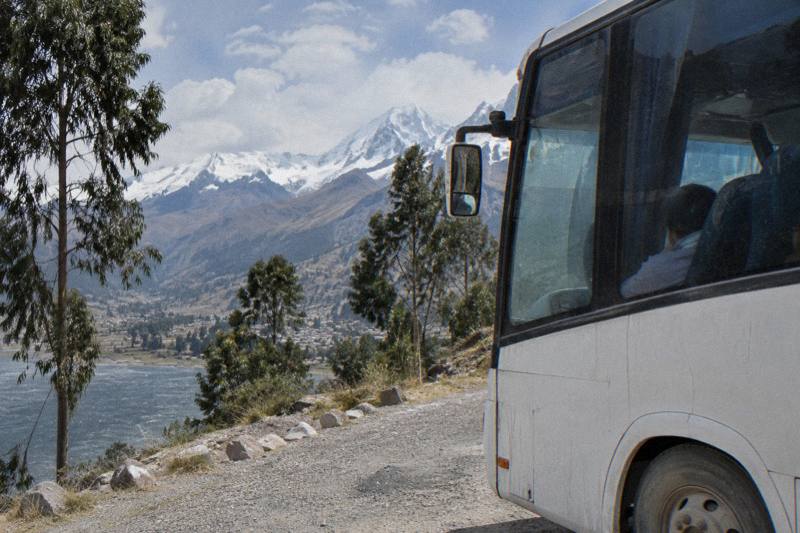
Lima To Huaraz By Bus: Companies, Drive Distance And The Cordillera Blanca Arrival
The Lima to Huaraz bus run climbs from sea level to the heart of the Cordillera Blanca in a single day. Here is what the route involves, which companies run it, where the terminals sit and how the altitude changes.
Short answer
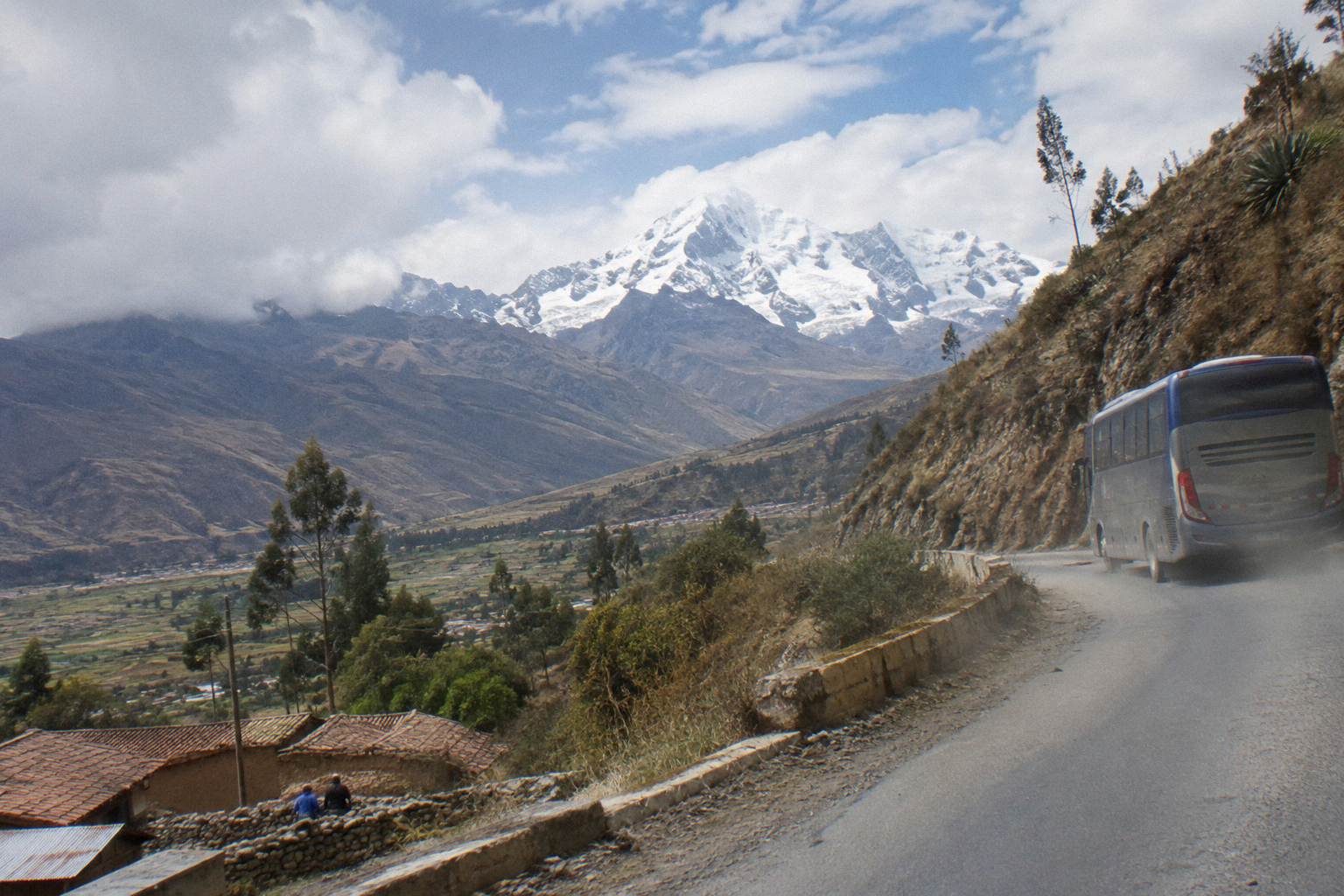
The Lima to Huaraz route covers about 402 km, an OSRM free-flow drive estimate of about 5.5 hours that real bus journeys exceed. Huaraz sits at 3,073 m and the road crosses the Conococha pass at 4,087 m. Movil Bus, Linea and Cruz del Sur all run the corridor, each from its own Lima terminal.
Huaraz is the trekking capital of the Cordillera Blanca, and nearly everyone who reaches it arrives by road from Lima. The route is one of Peru's great vertical climbs: it leaves a coastal capital at 162 m, crosses the Conococha pass at 4,087 m per INEI, and finishes in a valley town at 3,073 m, all in one sitting. That geography shapes everything about the trip, from which seat you want to how you should spend your first afternoon at altitude. This guide lays out the route, the companies, the terminals and the ticket choices, using figures from operator pages, INEI and Peru's transit authority.
One thing to settle at the start: Peru Hop does not run this route. Its hop-on hop-off network covers the southern corridor between Lima, Paracas, Huacachina, Nazca, Arequipa, Puno and Cusco, and Huaraz is not on any of its passes. Travellers heading to the Cordillera Blanca book a conventional interprovincial carrier or a pre-booked tourist ticket instead. The same publisher behind this page, Peru By Bus, covers the hop-on network separately for readers whose plans run south rather than north.
How Far Is Lima From Huaraz By Bus?
The Lima to Huaraz pair measures about 402 km, which OSRM prices at a free-flow drive estimate of about 5.5 hours; real bus journeys exceed that figure because the road climbs the Andes on switchbacks, stops at terminals and slows for mountain traffic. No single timetable number applies, since operators publish their own schedules and those change. The distance figure is a routing estimate, not a promise of journey length. The practical reading: plan for a full travel day. The free-flow estimate is useful for one thing only, comparing this corridor against other Peruvian routes on the same yardstick. Lima to Paracas is a shorter 251 km at 3.5 hours free-flow, Lima to Trujillo 557 km at 9.1 hours, and each of those pairs is measured the same way.
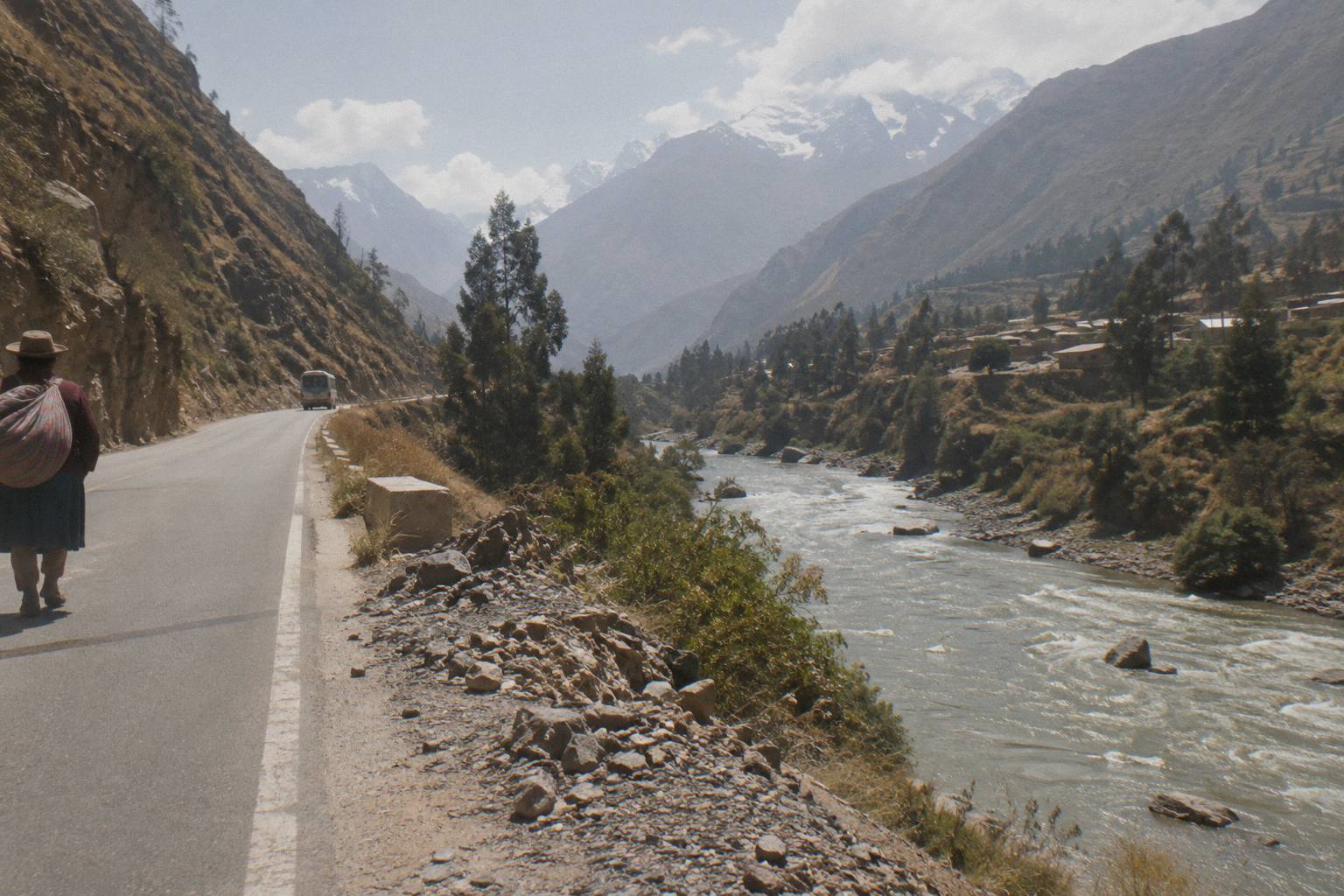
What the raw kilometres do not capture is the vertical work. Lima sits at 162 m. The road climbs the Pativilca canyon system on the northern Pan-American Highway stretch, then turns inland at the coast and rises continuously to the Conococha pass, which INEI lists at 4,087 m. That pass is the high point of the drive and the moment many passengers feel the altitude for the first time. From Conococha the road descends into the Callejon de Huaylas, the long green valley between the Cordillera Blanca and the Cordillera Negra, and rolls the final stretch to Huaraz at 3,073 m.
| Route Pair | Distance | Free-Flow Drive Estimate (OSRM) |
|---|---|---|
| Lima to Huaraz | 402 km | 5.5 h |
| Lima to Trujillo | 557 km | 9.1 h |
| Trujillo to Cajamarca | 290 km | 4.1 h |
| Lima to Paracas | 251 km | 3.5 h |
| Lima to Huancayo | 301 km | 6.2 h |
Every figure in the table is a free-flow drive estimate for the exact pair named, and real bus journeys exceed them. None of these numbers is a bus timetable; operators publish their own running times and those vary by service and season. The comparisons exist to show how the Huaraz corridor stacks against other mountain runs of similar character, not to forecast your arrival hour.
Which Bus Companies Run Lima To Huaraz?
Three carriers serve the corridor from their own Lima terminals: Movil Bus, Linea and Cruz del Sur. Movil Bus concentrates on the northern network including Huaraz, Linea runs a northern-only network that lists Huaraz at Jr. Simon Bolivar 450, and Cruz del Sur lists a Huaraz office at Jr. Teresa Gonzales de Faning 457. Each company departs from its own terminal, so the first practical decision is which departure point suits you. There is no single main terminal in Lima for this route, and the addresses differ by company, a point worth checking on each operator's own page before travel. Oltursa, which serves much of the north, also lists Lima points, and its northern services are covered in the north coast Trujillo, Chiclayo and Mancora route guide.
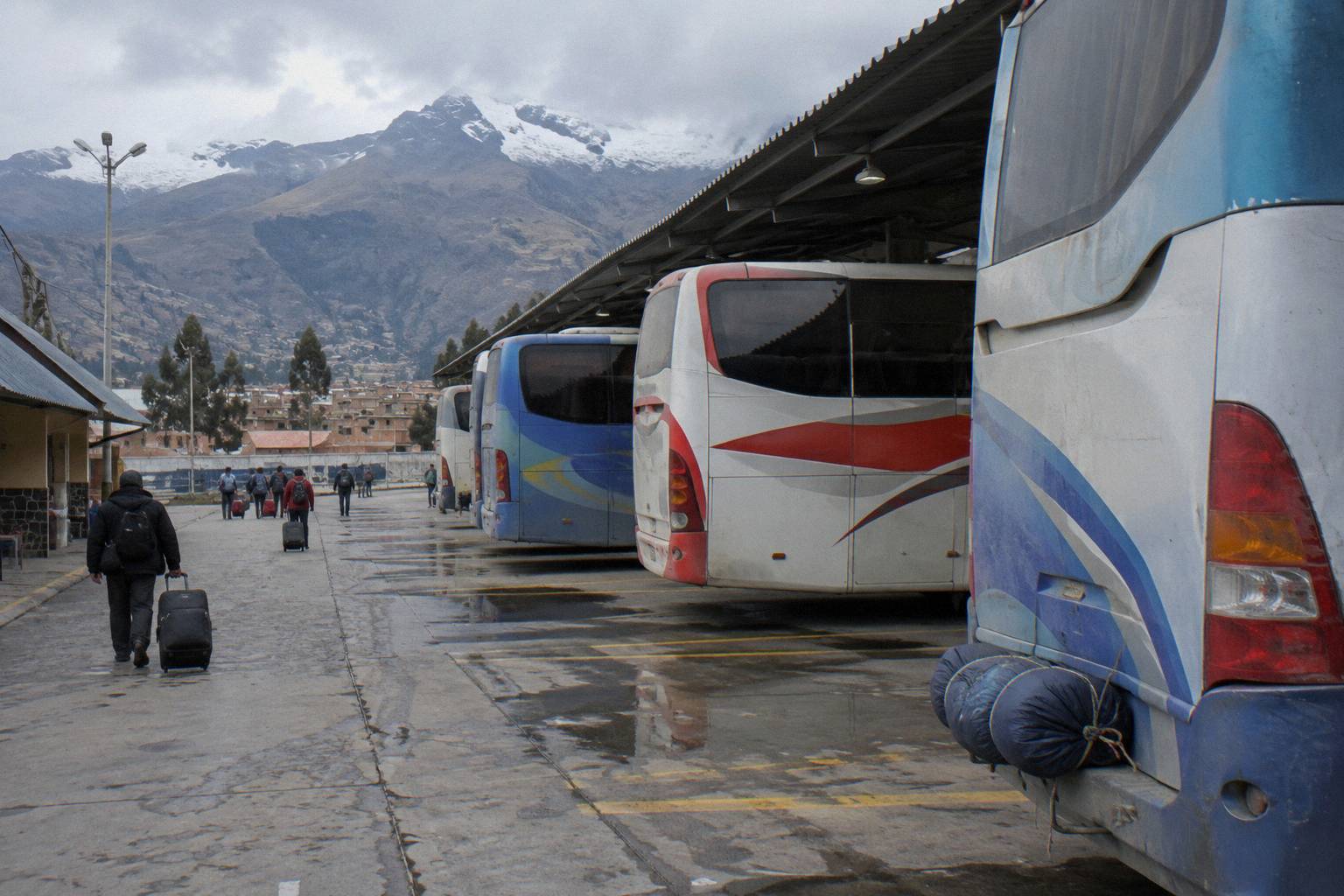
Movil Bus's own pages list Huaraz among its core destinations alongside Chiclayo, Trujillo, Chachapoyas, Cajamarca, Tarapoto and Oxapampa, and its Huaraz addresses are Av. Confraternidad Internacional Oeste 451 in Independencia and Jr Simon Bolivar 452. Its blog details the class ladder on its buses: Economico seats recline 120 degrees, Ejecutivo VIP 140 or 160, Presidencial 160, and Premier 160 on the first level with a "full flat" 180 on the second. Those figures are the operator's own claims, printed on its service pages.
Linea's northern network is explicit on its contacts sheet: Lima, Chimbote, Trujillo, Pacasmayo, Chiclayo, Piura, Huaraz, Cajamarca, Chepen and Jaen, with no southern destinations at all. Its service page lists Super VIP seats at 180 degrees "tipo cama", VIP at 160 "sofa cama", Dorado at 160 and Especial at 145. Wi-Fi and streaming are marked "subject to availability of the operator", which is honest phrasing worth remembering wherever a bus service promises connectivity.
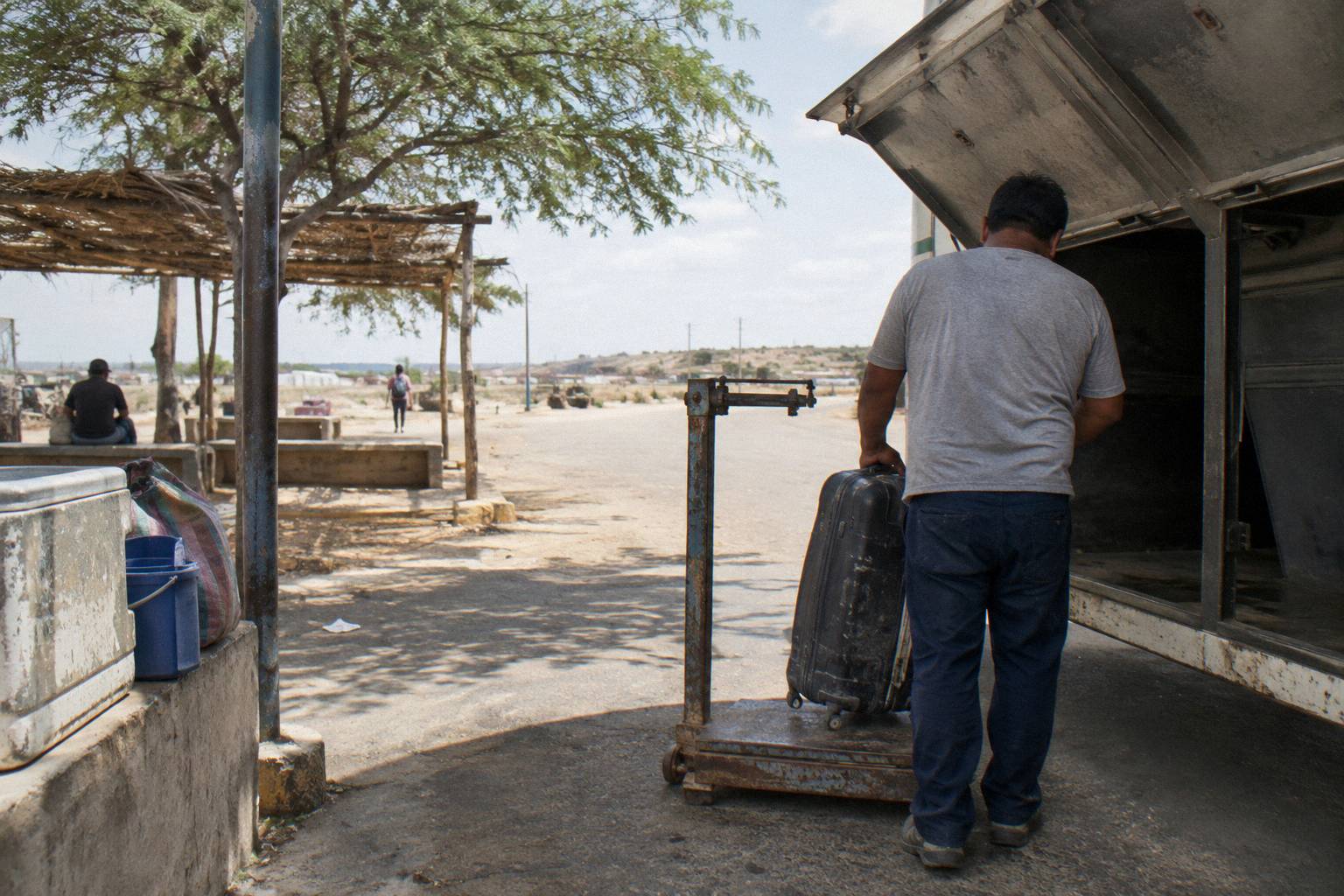
Cruz del Sur lists a Huaraz office at Jr. Teresa Gonzales de Faning 457, and its comfort page details a safety regime that includes a pilot change every 4 hours, permanent medical checks, alcohol testing and GPS monitoring. Its seat classes on the marketing pages include Suite at 160 degrees and reclining seats at 180, with a toilet on board. For a fuller comparison of these operators' classes and recline figures across the country, see the Peru bus classes explained guide.
Beyond the big three, a pre-booked tourist ticket is a different way onto the same road. The First Class Huaraz bus ticket from Lima to Huaraz, Lima Airport, Huaraz BusTickets, collects you in Miraflores or at Lima airport and runs to Huaraz in a trip the listing gives as about 9 hours, from US$50 per person on that listing's basis. It exists for travellers who want the mountain leg handled before they land, and check availability shows the live listing. Be clear about the terms before booking: this particular listing says it is non-refundable and cannot be changed, unlike the standard domestic tickets that INDECOPI says can be postponed or transferred with 24 hours notice. It also asks for full names and passport numbers to print the tickets, and hotel pickup can be arranged by sending your address to the operator after booking.
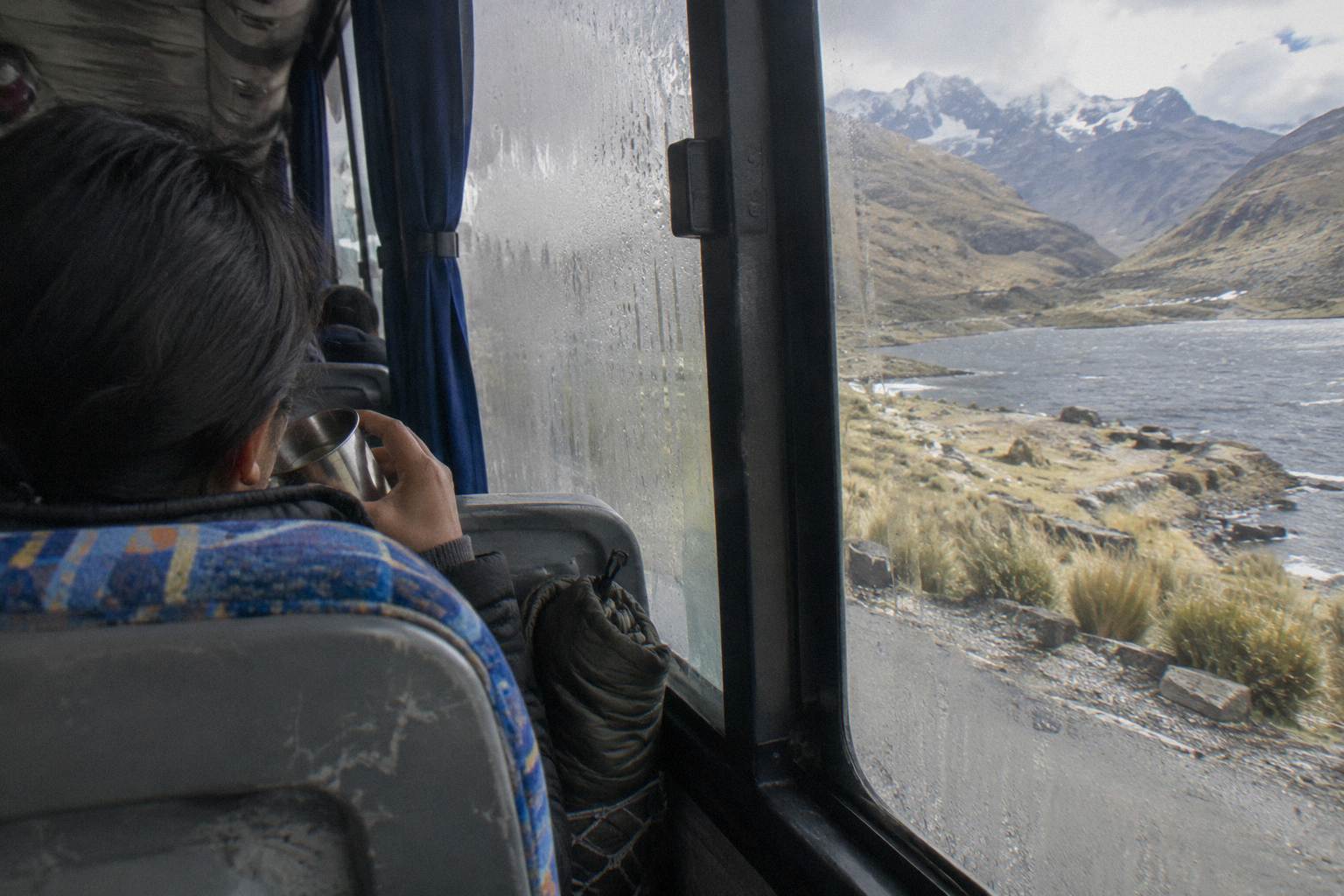
Where Does The Lima To Huaraz Bus Leave From?
Each company departs from its own terminal, and the Lima addresses are Movil Bus at Av. Tomas Valle 651 in the Terrapuerto del Norte, Nicolas Arriola 740 in La Victoria, or Av. Paseo de la Republica 767; Linea at Av. Paseo de la Republica 979 or Plaza Norte at Gerardo Unger 6917; and Cruz del Sur at Terminal Javier Prado, Av. Javier Prado Este 1109, La Victoria. Those are the company-listed boarding points for this corridor, and the one you get depends entirely on which carrier you book. Nothing on this route leaves from a single shared terminal, so confirm the address on your ticket and give yourself time to cross Lima traffic to reach it. The capital's congestion is a real cost on any departure day.
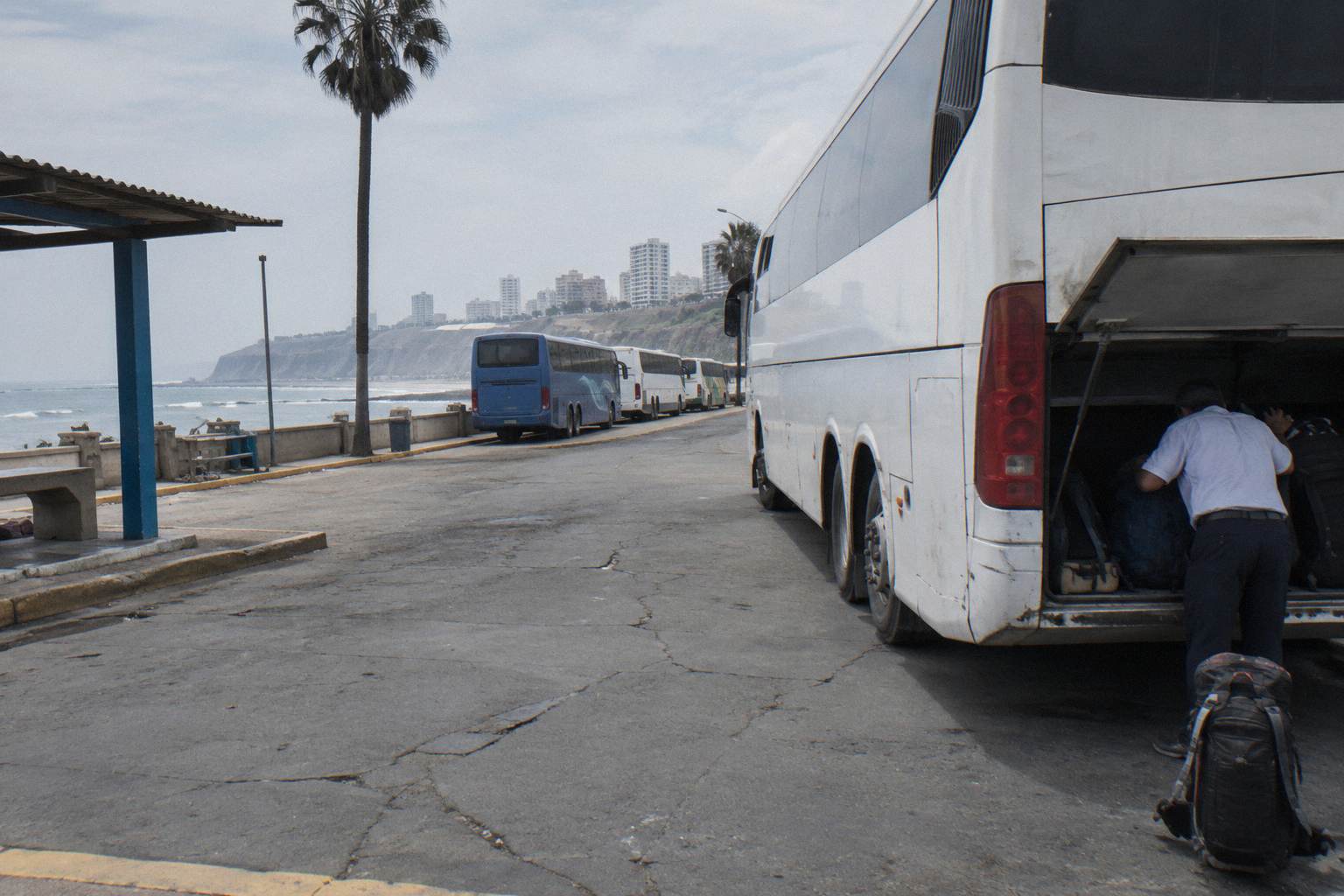
Peru's transit regulation shapes this terminal picture. Regular carriers must use habilitated terminals at origin, destination and stops, the public road may not be used as a terminal, and boarding happens only at authorised points with the bus stopped. That is why you will not flag a Lima to Huaraz coach on a street corner: Peru's national transit regulation routes passengers through company facilities, and in towns of 200,000 or more people a terminal is mandatory at origin and destination. For a city-by-city picture of where companies actually board, the Peru bus terminals by city guide collects the addresses.
The taxi leg to the terminal deserves care. The UK FCDO states plainly: "There is a risk of robbery by criminals posing as taxi drivers, especially at Jorge Chavez International Airport and bus terminals", and its advice continues, "use one of the taxis registered at bus terminals". Government of Canada advice echoes it: "Remain particularly vigilant at bus terminals and in taxis" and "Only use authorized cabs located inside airport terminals and bus stations". Both are quoted verbatim from their advisory pages, and both point at the same practical habit: use a registered or app-based cab, not an informal one, for the ride to your departure point.
| Company | Lima boarding point (as listed) | Huaraz point (as listed) |
|---|---|---|
| Movil Bus | Av. Tomas Valle 651, Terrapuerto del Norte; Nicolas Arriola 740, La Victoria; Av. Paseo de la Republica 767 | Av. Confraternidad Internacional Oeste 451; Jr Simon Bolivar 452 |
| Linea | Av. Paseo de la Republica 979; Plaza Norte, Gerardo Unger 6917 | Jr. Simon Bolivar 450 |
| Cruz del Sur | Terminal Javier Prado, Av. Javier Prado Este 1109, La Victoria | Jr. Teresa Gonzales de Faning 457 |
Addresses come from each operator's own contact pages and can change, so re-check the booking confirmation before departure day. If your ticket names a terminal you do not recognise, the carrier's page, not a search result, is the authority. The same rule applies in Huaraz: all three companies list their own arrival points in the city, and your onward lodging may be closer to one than another.
What Is The Road Like And How High Does It Go?
The route crosses the Conococha pass, listed by INEI at 4,087 m, between the coast and the Callejon de Huaylas, and the altitude swing from Lima's 162 m to Huaraz's 3,073 m is the defining feature of the drive. The climb is steady rather than sudden, but the pass sits well above both endpoints, and passengers feel it. Height, not distance, is what makes this route different from a coastal run of the same length. Anyone with a heart or lung condition, or a history of severe altitude sickness, should talk to a doctor before booking, because there is no low-altitude alternative road into the valley.
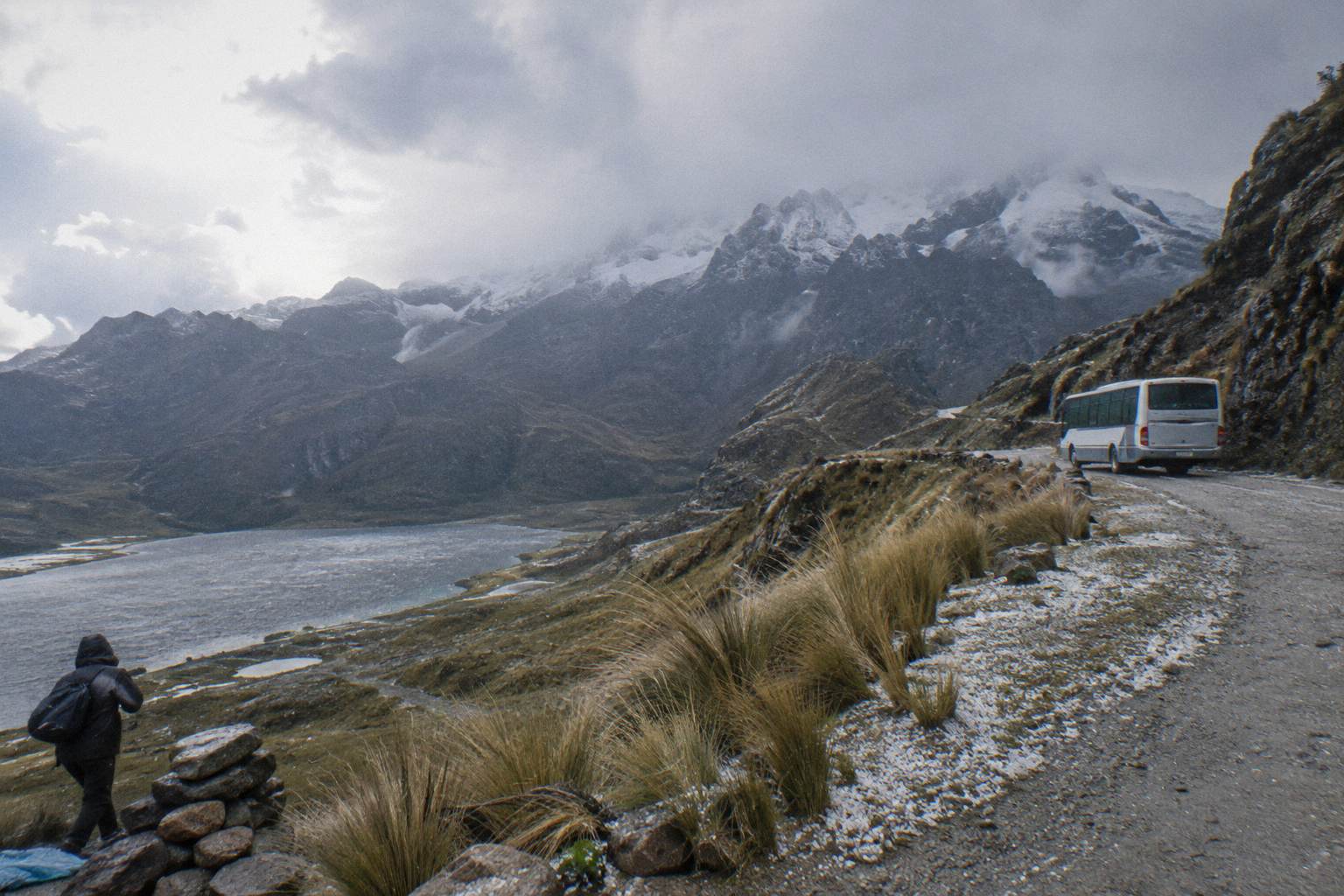
The pass has a practical safety dimension. Peru's national transit framework caps continuous driving at 5 hours by day and 4 at night, and a second driver is required on trips that exceed those spans. SUTRAN also states that the 90 km/h limit for interprovincial buses applies only on roads without other speed signage, and mountain roads like this one post their own lower limits. Speed on a canyon road with hairpins is regulated by the road itself as much as by the rulebook, and drivers who run this corridor weekly know it in a way no visitor can.
| Place | Altitude (INEI) | Note |
|---|---|---|
| Lima | 162 m | Coastal capital, route start |
| Conococha (Shoclla) pass | 4,087 m | High point of the drive |
| Huaraz | 3,073 m | Route end, Cordillera Blanca base |
| Cusco | about 3,400 m | Comparison: the southern trekking hub |
On arrival, the standard advice applies: take the first evening gently, drink water, and do not plan a trek for the morning after a bus day. Altitude affects people unpredictably regardless of fitness, and Huaraz at 3,073 m is high enough to matter even though it is lower than Cusco. The Peru bus altitude and acclimatisation guide covers arrival routines in detail. If your plan is to push straight on to higher trailheads, a rest day in the valley first is the conservative choice.
Should You Take A Day Bus Or An Overnight Bus To Huaraz?
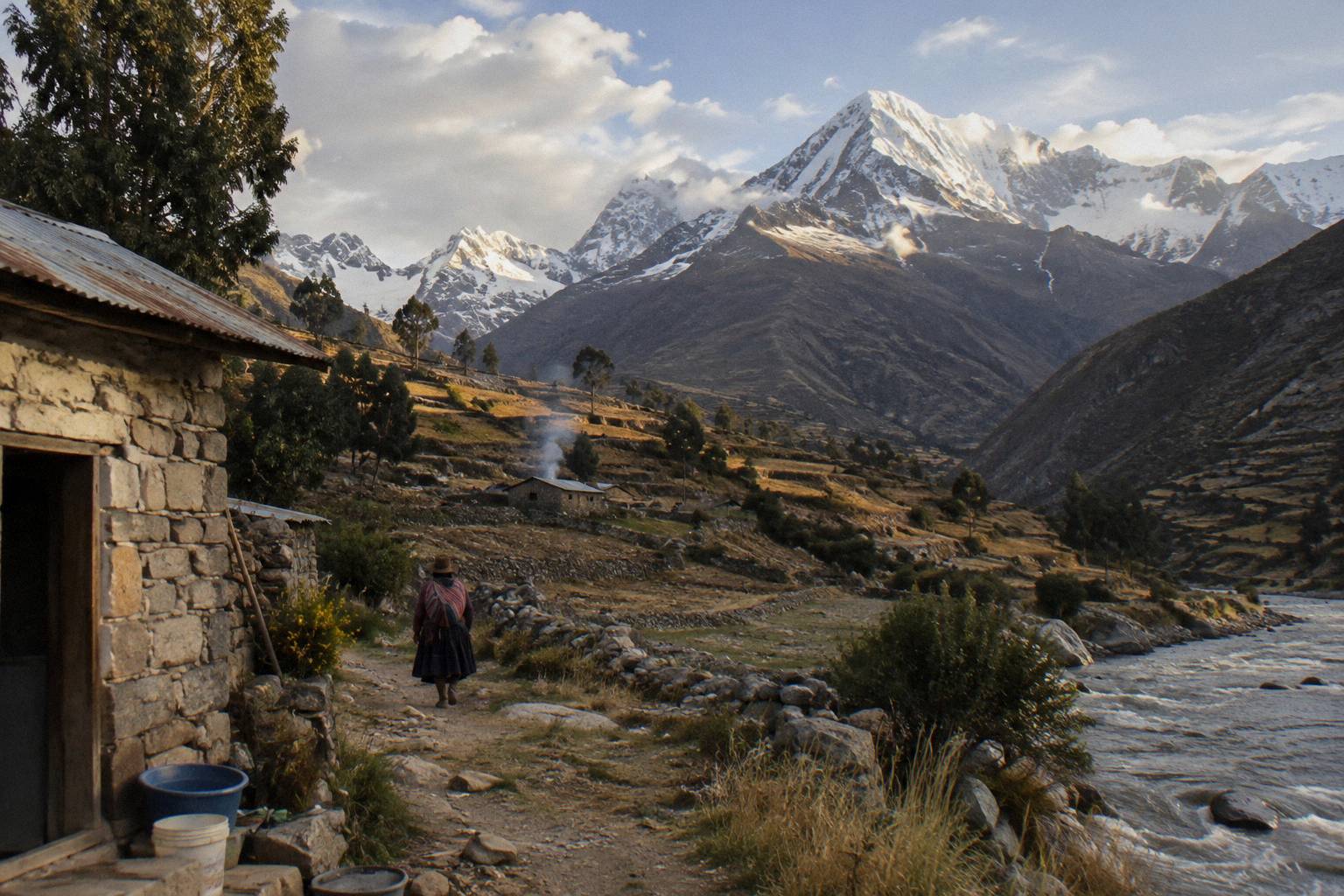
Government advice leans toward daylight travel on this corridor: the UK FCDO states "Bus crashes are common, especially at night. Only use reputable transport companies, and where possible, avoid overnight travel, especially in mountainous and remote regions", and the Government of Canada says "Avoid taking buses and coaches at night". The Huaraz road is mountainous for most of its length, which is exactly the terrain those advisories single out. A day departure also gives you the Cordillera views. That said, the US Embassy's advisory notes that US government employees "may travel at night with commercial bus companies along the Pan-American Highway, to Huaraz, and on the Lima-Arequipa-Cusco corridor", which shows night travel on this specific route is not off-limits for its own staff. How you weigh those two signals is your call.
The night-bus question is big enough on Peruvian roads that it has its own guide, the overnight bus in Peru guide. The short version for this route: the coastal half of the run is Pan-American Highway, the mountain half is canyon and switchback, and the advisories' night warnings are aimed at the second half. Smartraveller adds a sleeping-passenger warning that applies to any long bus night: "Robberies and assaults occur frequently on intercity buses, including while passengers are sleeping", and it names "theft as you sleep on intercity bus routes between Lima, Ica, Nazca and Cusco" as a pattern. Keep valuables on your body, not in the hold, and keep your passport with you, as the FCDO advises.
If you do travel overnight and arrive in Huaraz before dawn, plan your accommodation arrival in advance: the terminals are a short ride from most lodging, and registered taxis at the terminal are the advised option, echoing the same FCDO terminal guidance quoted earlier. Day arrivals avoid the problem entirely and let the acclimatisation start in daylight.
How Do You Buy A Lima To Huaraz Ticket?
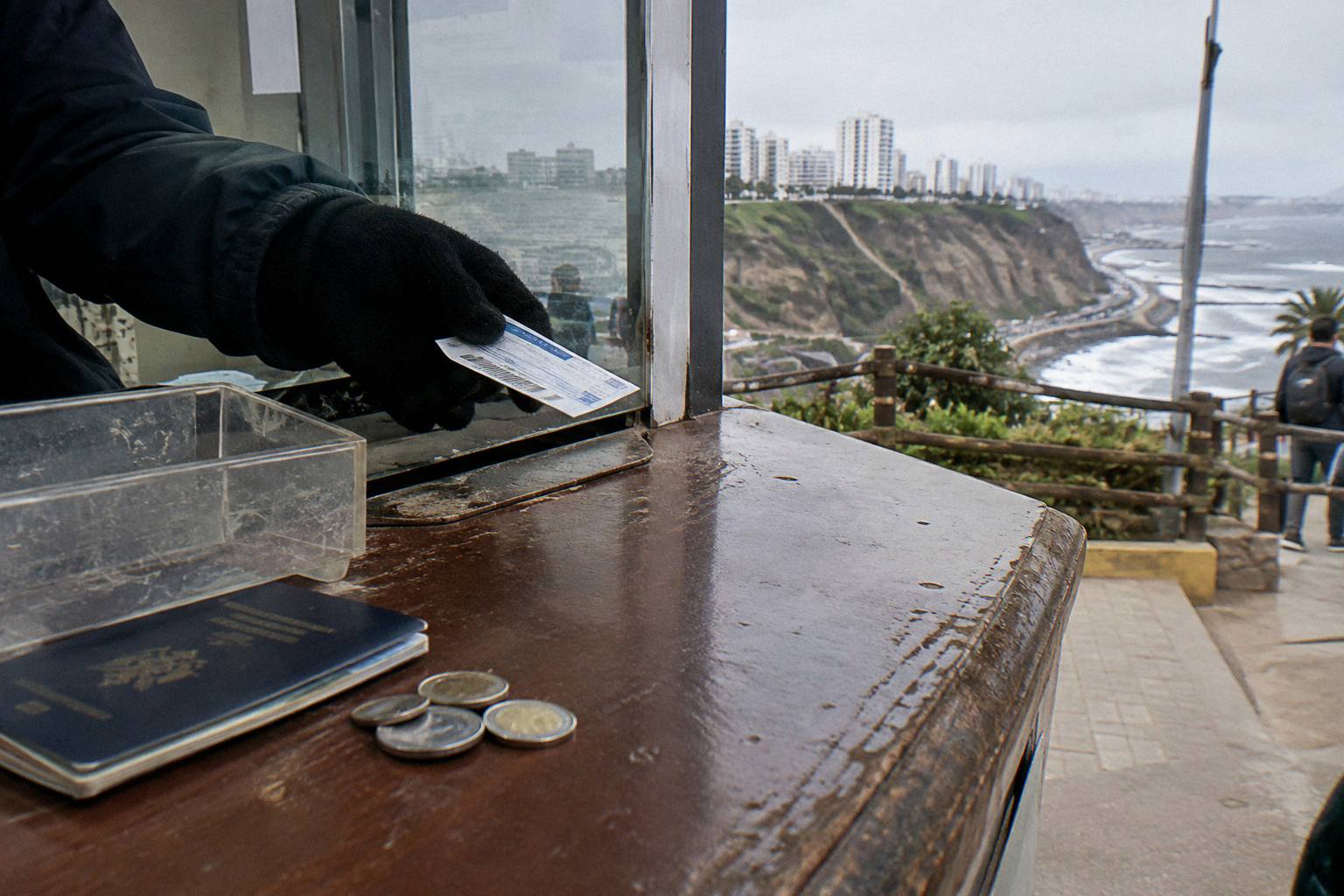
You can buy a Lima to Huaraz ticket through three main channels: directly on each operator's website, at the terminal counter, or via a seat search site that compares departures, with non-refundable pre-booked tourist tickets from US$50 per person as a fourth option. Whichever channel you choose, the name on the ticket must match your passport, the tourist listing requires full names and passport numbers at booking, and 20 kg of hold luggage travels free by regulation. The booking process itself is covered step by step in the Peru bus tickets how to book guide, including what to check on a confirmation before travel day.
For comparing scheduled departures across carriers, a seat search for this route is the practical starting point: Check availability. It shows the operators running the corridor on your date without you having to open three company sites. Whichever way you buy, SUTRAN offers a check worth doing before boarding: any bus and driver can be looked up by plate number or driver DNI on SUTRAN's own public lookup service, confirming the vehicle's papers are in order.
Luggage rules are uniform at the regulatory floor but vary in the extras. The regulation guarantees 20 kg free on national service and a fare receipt as your right. Cruz del Sur lists 20 kg hold plus 6 kg hand luggage on its Lima to Cusco page, Oltursa's terms give 20 kg plus one hand piece at 5 kg maximum, and Movil Bus allows 20 kg in up to 3 hold pieces plus 8 kg in up to 2 hand pieces. SUTRAN advises taking a luggage ticket for anything you check; no regulation article mandates it, so treat it as strong advice rather than law.
If something goes wrong, the complaint path is defined. Carriers must keep a Libro de Reclamaciones and answer within 15 working days, and INDECOPI runs the national consumer line at 0800 4 4040 with an online claims portal at Reclama Virtual. INDECOPI also states that a domestic bus ticket can be postponed or transferred with at least 24 hours notice, with only the real reissue cost charged and no penalty, a right worth knowing when plans shift.
What About The Airport Connection And Onward Travel From Huaraz?
If you land at Lima airport and are heading straight to the mountains, two pre-bookable options cover the legs: the Lima airport to Huaraz ticket from US$50 per person that picks up at the airport itself, and the Airport Express Lima bus from the airport to Miraflores from US$6.5 per person, which connects an overnight stay in Miraflores to a next-day mountain departure. Each price is that listing's own basis, and the two are not compared or combined into a fare estimate. Which one fits depends on whether you want to sleep at altitude zero before the climb or ride up the same day.
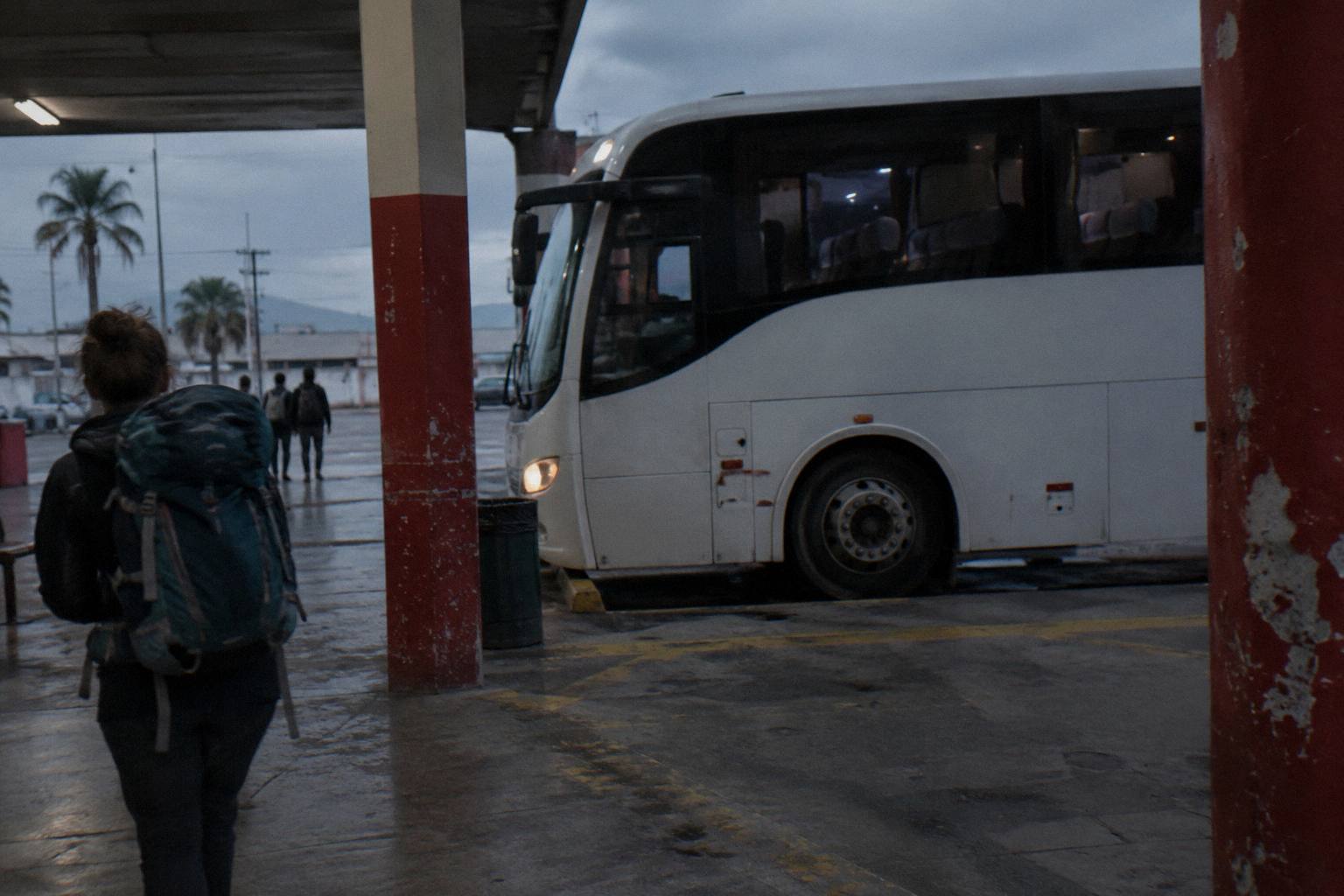
The airport connection has its own caution attached. The FCDO names Jorge Chavez International Airport specifically in its taxi warning, quoted earlier, and the US Embassy advisory for Peru rates the country "Level 2 - Exercise Increased Caution". Neither argues against the trip; both argue for using authorised transport at the terminal rather than informal cabs outside it. The airport bus drops in Miraflores, where the city terminals and most lodging sit within a short registered-cab ride.
Once you are in Huaraz, the bus story continues in two directions, and both are covered elsewhere. Eastward, the road to the Chavin de Huantar archaeological site is the classic day trip from the valley; northward, the corridor continues toward Trujillo on the coast, and the connections are laid out in the route guide linked earlier. Trekkers heading higher should build the acclimatisation days in before any trailhead, as the arrival routine section above explains. Huaraz is the base, not the summit.
What Disrupts This Route, And How Do You Check Before You Go?
Road blockades from protests and weather-driven closures are the two recurring disruptors on the Lima to Huaraz corridor, and SUTRAN's interactive alert map lets you check both before departure, marking closed roads in red, restricted in yellow and open in green. The FCDO warns that protests "can escalate quickly" into roadblocks, while its El Nino notice covers heavy rainfall, flooding, landslides and mudslides on the northern and central coast through April 2027, spanning the route's coastal half. A two-minute map check the evening before travel is the cheapest insurance on this road.
Protest activity in Peru is regional and unpredictable. The FCDO names Arequipa, Ayacucho, Cusco, La Libertad, Madre de Dios and Puno as regions with recent protests, and adds the operational rule that matters most on a mountain road: "Do not attempt to pass blockades." The US Embassy advisory echoes the mechanism: "Demonstrations can shut down local roads, trains, and major highways. This often happens without warning or clear information on reopening times." Strikes, the FCDO notes, can be announced with little or no notice, particularly in areas connected to mining, which describes parts of the central highlands.
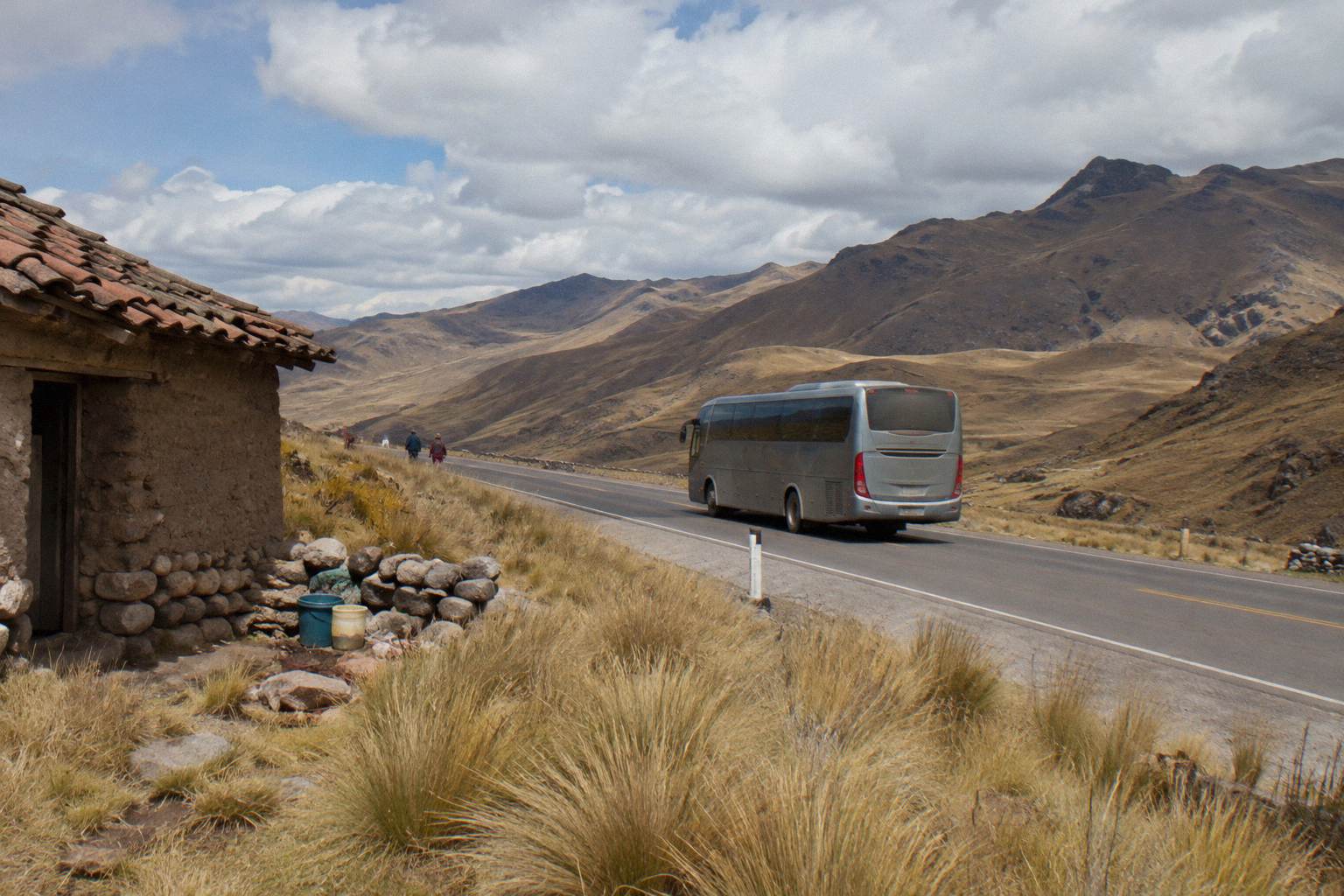
The practical protocol is simple. Check the SUTRAN map at alertasviales.sutran.gob.pe the night before and again in the morning. Confirm with your carrier that the service is running; companies suspend runs when a blockade sits on the line. If a blockade appears mid-journey, stay with the bus and follow the crew's instruction, a scenario covered in detail in the what to do when a Peruvian bus meets a road block article. Weather closures follow the same map, and the rainy-season timing is covered alongside in the delays, strikes and rainy season guide.
Cancellation rights differ by ticket type, which is why the distinction matters. A conventional domestic ticket carries the INDECOPI postponement right with 24 hours notice. The pre-booked airport ticket discussed above does not: its listing says non-refundable and cannot be changed, that product only. Read the terms of whatever you buy before you buy it, on the operator's live listing.
Which Ticket Should You Actually Book For Lima To Huaraz?
The answer depends on timing: book the pre-booked airport pickup ticket from US$50 per person if your Huaraz bus leaves the same day you land or the next morning, since it removes the terminal-crossing problem entirely; if you are spending a night or two in Lima first, book a conventional Movil Bus, Linea or Cruz del Sur ticket, which allows postponement with 24 hours notice under INDECOPI rules, unlike the pre-booked listing. Neither choice is wrong; they solve different problems. What is wrong is buying the non-refundable product for an arrival whose flight may shift, or buying a walk-up terminal ticket at midnight because nothing was arranged.
Think in terms of your whole Peru route rather than this leg alone. Travellers pairing the Cordillera Blanca with the southern circuit often fly between Lima and the mountains and bus the south, or the reverse, and the trade-offs between bus and plane on long Peruvian legs are laid out in the Peru bus vs flight comparison. If your trip runs Lima north to Huaraz and on to Trujillo and the coast, the northern itinerary guides on this site string the legs together. The mountains reward the travellers who arrive rested, which circles back to the day-bus preference the government advisories point toward on this corridor.
However you book, keep the three checks in your head for travel week: the SUTRAN alert map for the road, the carrier for the departure, and your passport on your body rather than in the hold. The FCDO's "on bus journeys, keep your passport with you" is one of its shortest advisories and one of the easiest to follow. The Peru bus safety guide expands on all of it.
The same three tickets that fit this corridor also cover the common first legs of a wider Peru route: the mountain run itself, the airport-to-Miraflores connection that starts it, and the coast-bound alternative for travellers whose plans change.
Common Questions About The Lima To Huaraz Bus
How Far Is Lima From Huaraz By Bus?
About 402 km, an OSRM free-flow drive estimate of about 5.5 hours. Real bus journeys exceed that estimate because the road climbs into the Andes; treat it as a routing figure, not a timetable.
Which Companies Run Lima To Huaraz?
Movil Bus, Linea and Cruz del Sur all serve the corridor, each from its own Lima terminal and each with its own Huaraz arrival point. A pre-booked tourist ticket from Lima airport or Miraflores is a fourth option.
How High Is The Road Between Lima And Huaraz?
The route crosses the Conococha pass at 4,087 m per INEI. Lima sits at 162 m and Huaraz at 3,073 m, so the pass is the high point of the drive and the altitude is noticeable there.
Does Peru Hop Go To Huaraz?
No. Peru Hop's hop-on hop-off network covers the southern corridor between Lima, Paracas, Huacachina, Nazca, Arequipa, Puno and Cusco, and no pass in its live listing reaches Huaraz.
Is The Lima To Huaraz Bus Refundable?
Conventional domestic tickets can be postponed or transferred with at least 24 hours notice at only the real reissue cost, per INDECOPI. The pre-booked Lima airport to Huaraz ticket from US$50 per person is the exception: its listing states it is non-refundable and cannot be changed.
Should I Take A Day Or Overnight Bus To Huaraz?
Government advisories favour daylight on mountain roads: the UK FCDO says to avoid overnight travel "especially in mountainous and remote regions" and Canada says to avoid buses at night. A day departure also shows you the Cordillera Blanca on the way in.