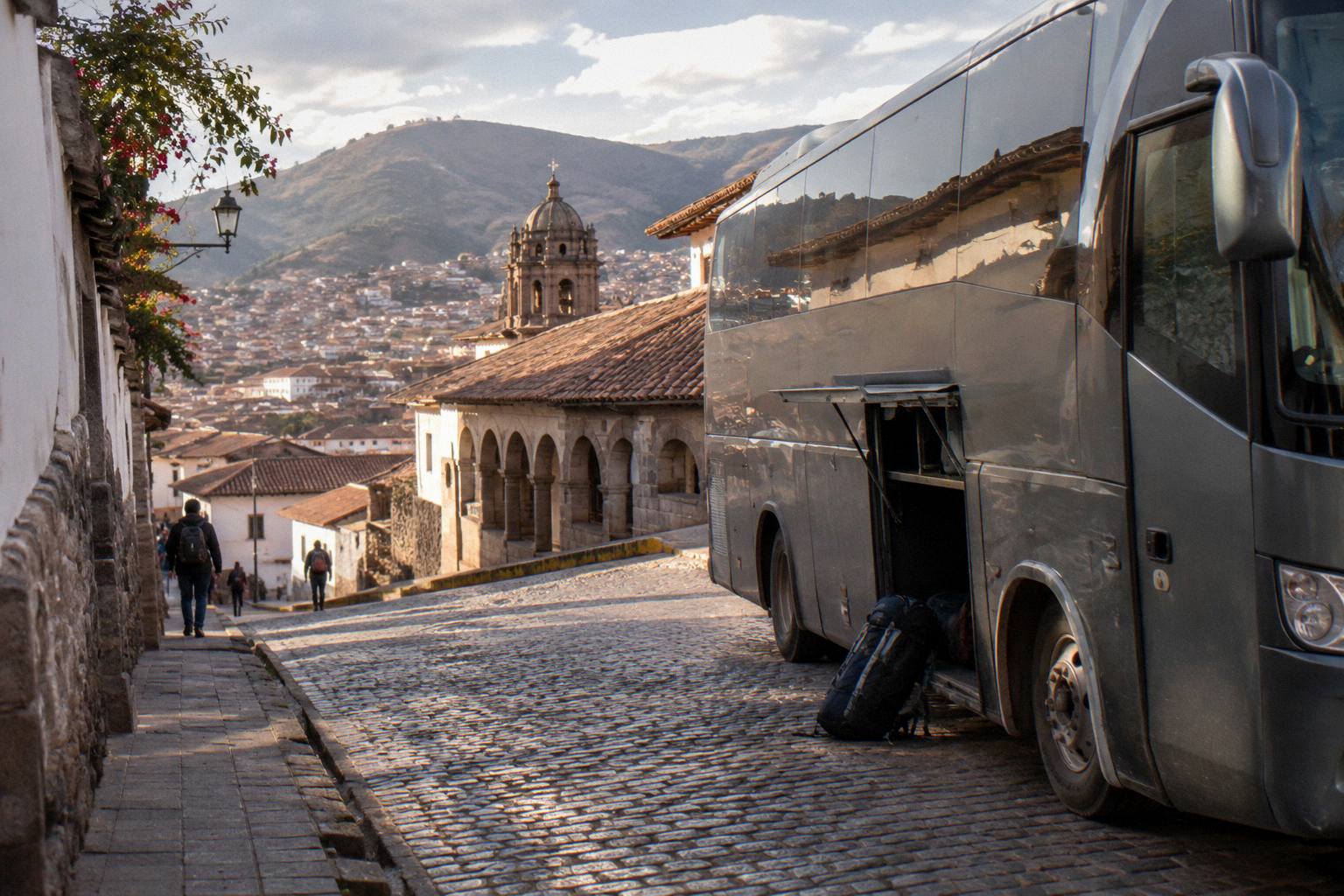
Bolivia Hop From Peru: Copacabana, La Paz And Beyond By Bus
The hop network between Peru and Bolivia runs through Puno to Copacabana and La Paz, with a lake crossing, a land border at Kasani and passes that let riders break the journey anywhere along the chain.
Short answer
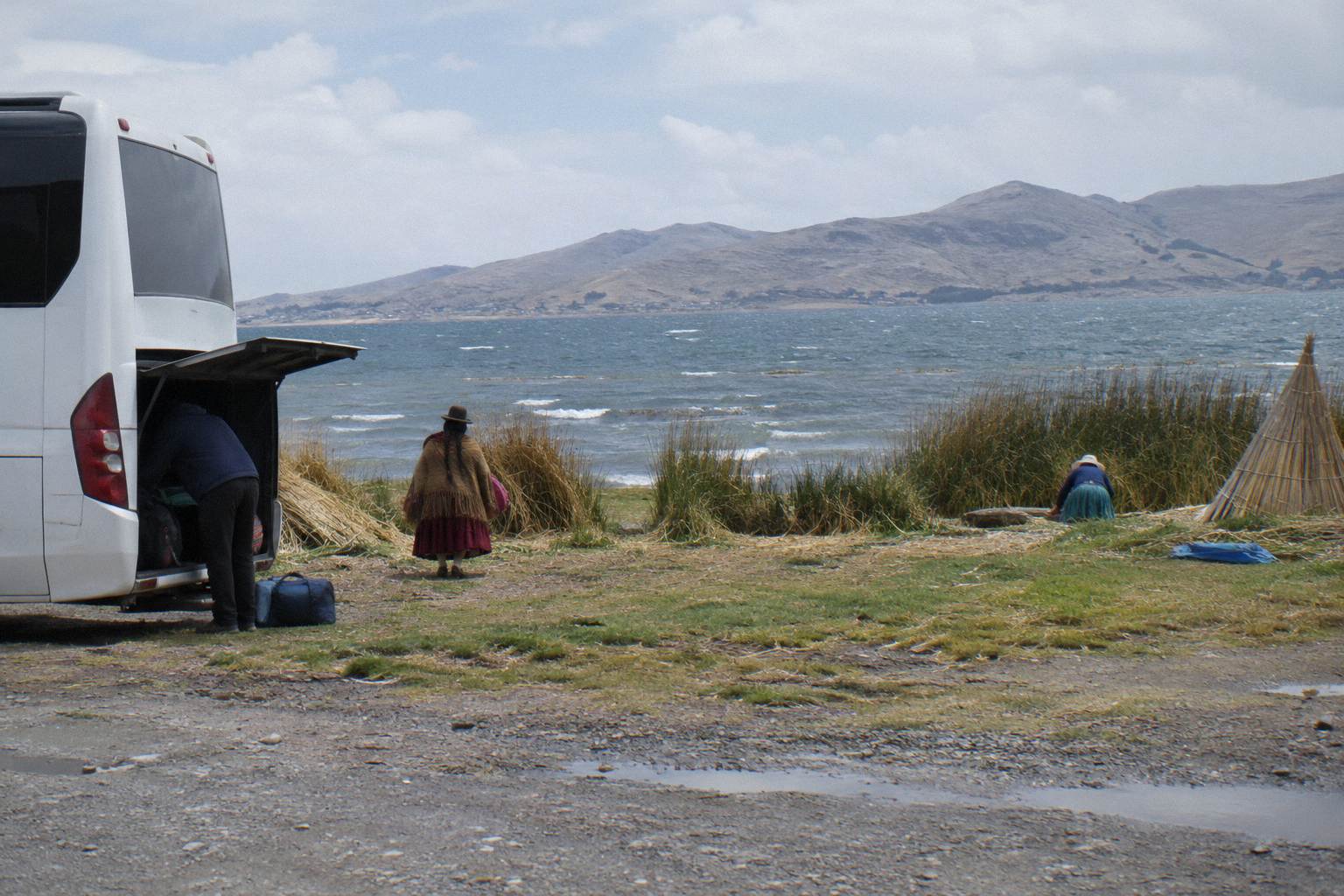
The hop network links Lima, Cusco, Arequipa and Puno with Copacabana and La Paz through linked passes, crossing the Peru-Bolivia border at Kasani for Copacabana or Desaguadero for a direct La Paz run. The Puno to Copacabana leg is a free-flow drive estimate of about 142 km, roughly 2.5 hours before any border wait.
The hop-on hop-off network between Peru and Bolivia is a chain of daily buses, not a single route. Riders buy a pass, board in Lima, Cusco, Arequipa, Copacabana or La Paz, and break the journey wherever the stops allow, then catch a later bus on the same ticket. This guide covers the Peru side of that chain: how the passes run to Copacabana and La Paz, what happens at the Kasani border, why the Bolivia-leg buses have no toilet, and how to stitch the network onto regular Peruvian buses through Puno and Cusco. Peru By Bus covers the domestic legs of the same corridor in depth, from the coast to the altiplano, so this page stays on the border-and-beyond part.
| Quick fact | Detail |
|---|---|
| Network | Hop-on hop-off buses across Peru and Bolivia, passes valid 1 year |
| Departure cities | Lima, Cusco, Arequipa, Copacabana, La Paz |
| Peru to Bolivia border posts | Kasani (Yunguyo) for Copacabana; Desaguadero for the direct La Paz run |
| Border hours | Check the official page before travel; no standing year-round schedule |
| Puno to Copacabana distance | About 142 km, OSRM free-flow about 2.5 h, excludes any border wait |
| Puno to La Paz distance | About 260 km, OSRM free-flow about 4.5 h, excludes any border wait |
| Toilets | No onboard toilet on the Bolivia-leg buses; public toilets at the Strait of Tiquina |
| Lake crossing | Passengers cross Lake Titicaca on a separate boat at the Strait of Tiquina |
What Is Bolivia Hop And How Does It Connect To Peru?
Bolivia Hop is the Bolivian arm of the same hop-on hop-off network that Peru Hop runs in Peru, described as a sister brand under the same umbrella, with linked passes that carry a rider from Lima, Cusco or Arequipa through Puno to Copacabana and La Paz. The passes are sold as one product covering both countries: a Full South To Cusco rider can continue north again, while a Lima To Cusco To La Paz pass carries the whole chain in one ticket. Passes are valid for 1 year, and the operator reports that a bus time can be changed in the app up to 12 hours before departure, per its pass terms. Buses run every day, and hotel or Airbnb pickup replaces terminal boarding on the network, with no terminals or taxis involved.
The practical difference from a regular bus ticket is the stopping. A conventional Puno to La Paz coach runs the border and arrives; a hop pass names a chain of stops, Chincha, Paracas, Huacachina, Nazca, Arequipa, Lagunillas, Puno, Cusco, Copacabana and La Paz among them, and lets the rider spend a night or a week at each one. A local bilingual host rides each bus, the operator states, and the hidden stops on the Peru legs, such as the Secret Slave Tunnels at Chincha and the Nazca Lines viewing tower, sit between the cities rather than at the end of them.
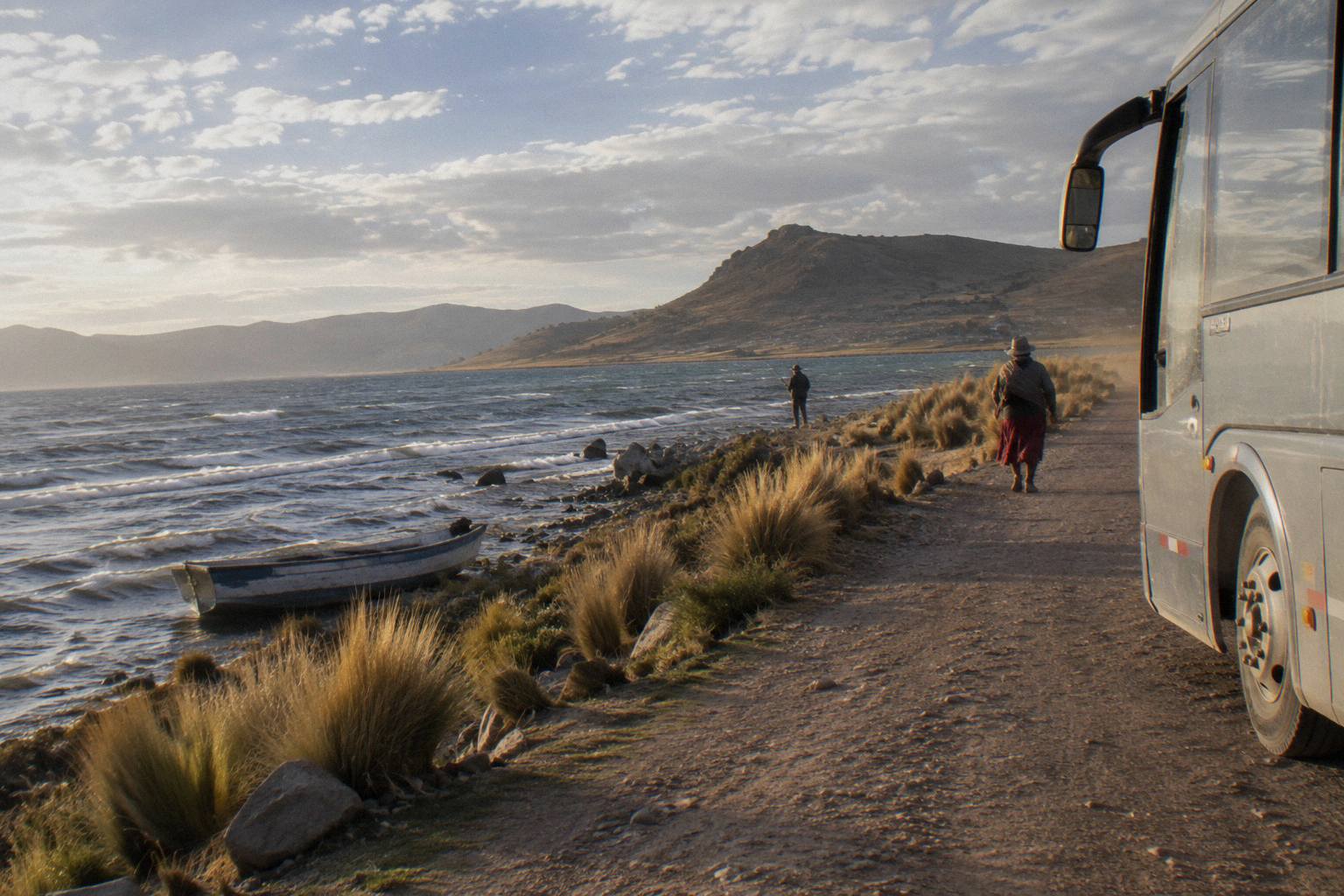
What the network does not do matters as much as what it does. It does not reach Machu Picchu, Huaraz, the north coast or the jungle; its own pages route Machu Picchu travellers from Cusco by train, trek or a partner bus operator. Riders heading to the back-door bus from Cusco toward Hidroelectrica, the hydroelectric station that anchors the walking and rail approach to Machu Picchu, buy that separately, and the Cusco to Machu Picchu by bus guide covers that leg in full. Likewise the passes do not serve Tacna or the Chile border, which is a separate route with its own crossing at Santa Rosa. To see the Peru-side passes that feed the Bolivia legs, See Peru Hop Passes on the operator's own pages.
Which Passes Run From Peru To Copacabana And La Paz?
The passes that cross from Peru into Bolivia are Canyon To The Lake To La Paz, Lima To Cusco To La Paz, Lima To La Paz To Cusco, Cusco To La Paz and Cusco To Canyon To La Paz, and each is sold on its own page with a fastest-completion time the operator states rather than a timetable. Peru Hop lists Canyon To The Lake To La Paz as 2 days at its fastest, Cusco To La Paz as 24 hours, Cusco To Canyon To La Paz as 5 days and Lima To Cusco To La Paz as 10 days. Those are operator-stated completion times for a rider who never hops off, not the length of any single bus ride, and a pass used to its full year validity looks nothing like them.
The Peru-side passes that feed the Bolivia legs are the same ones domestic riders use: Full South To Cusco, named by its pass page as Chincha, Paracas, Huacachina, Nazca, Arequipa, Lagunillas, Puno and Cusco, with a listed fastest time of 6 days; Get To Cusco Quick, which skips Arequipa and Puno and lists 3 days; Canyon To Lima, listing 3 days; To Cusco Without The Canyon; Canyon To The Lake To La Paz; Full South To Lima; Get To Lima Quick; Cusco To The Oasis To Lima; and Copacabana To Puno To Cusco for riders starting in Bolivia and finishing in Peru. No price is printed here: each pass page carries its own fare, and fares vary by pass and by travel date.
| Pass | Direction | Stops named on the pass page | Fastest time, as the operator lists |
|---|---|---|---|
| Full South To Cusco | Lima to Cusco | Chincha, Paracas, Huacachina, Nazca, Arequipa, Lagunillas, Puno, Cusco | 6 days |
| Get To Cusco Quick | Lima to Cusco | Chincha, Paracas, Huacachina, Nazca, Lagunillas, Cusco | 3 days |
| Canyon To Lima | Arequipa to Lima | Arequipa, Nazca, Huacachina, Paracas, Chincha, Lima | 3 days |
| Canyon To The Lake To La Paz | Arequipa to La Paz | Arequipa, Lagunillas, Puno, Copacabana, La Paz | 2 days |
| Cusco To La Paz | Cusco to La Paz | Cusco, Puno, Copacabana, La Paz | 24 hours |
| Cusco To Canyon To La Paz | Cusco to La Paz | Cusco, Arequipa, Copacabana, La Paz | 5 days |
| Lima To Cusco To La Paz | Lima to La Paz | The full chain, Lima to Copacabana and La Paz | 10 days |
| Copacabana To Puno To Cusco | Bolivia into Peru | Copacabana, Puno, Cusco | Check the operator's page |
A rider comparing this against point-to-point buses should read the pass pages against the stops they actually want. The single biggest difference is time: a pass that names Paracas, Huacachina and Nazca builds them in, while a rider on regular buses books each leg separately and decides at each terminal whether to stop. The Southern Peru bus circuit guide lays out the same chain on scheduled carriers for comparison, and the hop passes explained guide breaks the pass types down stop by stop.
For riders who want the lake at the end of the Peru side rather than a pass, scheduled tourist buses cover the same spine. The Turismo Mer tourist bus from Puno to Cusco with a lunch stop, rated 4.6 across 24 reviews, runs the 11 hours its listing gives and drops at the Turismo Mer private terminal in Cusco, with free cancellation up to 24 hours before as listed; you can check availability beside the Puno to Cusco lunch-stop bus page.
How Does The Kasani Border Crossing Work By Bus?
Riders bound for Copacabana cross at Kasani, the border control post in the Yunguyo district of Puno region that Migraciones describes as connecting Peru with the Bolivian city of Copacabana, and the post sits about 10 km from Copacabana itself; riders bound straight for La Paz can instead cross at Desaguadero, whose control post sits 25 metres from the bridge. Hop buses use Kasani for the Copacabana route. The bus stops at the post, riders exit with their passports for exit and entry stamps on foot, and the bus waits. The UK FCDO notes that political protests in Peru "can escalate quickly" and may cause "suspension of immigration services at land borders", and Canadian advice adds that strikes "could also lead to border closures, including with Bolivia", so the state of the post on the day governs, not any standing schedule.
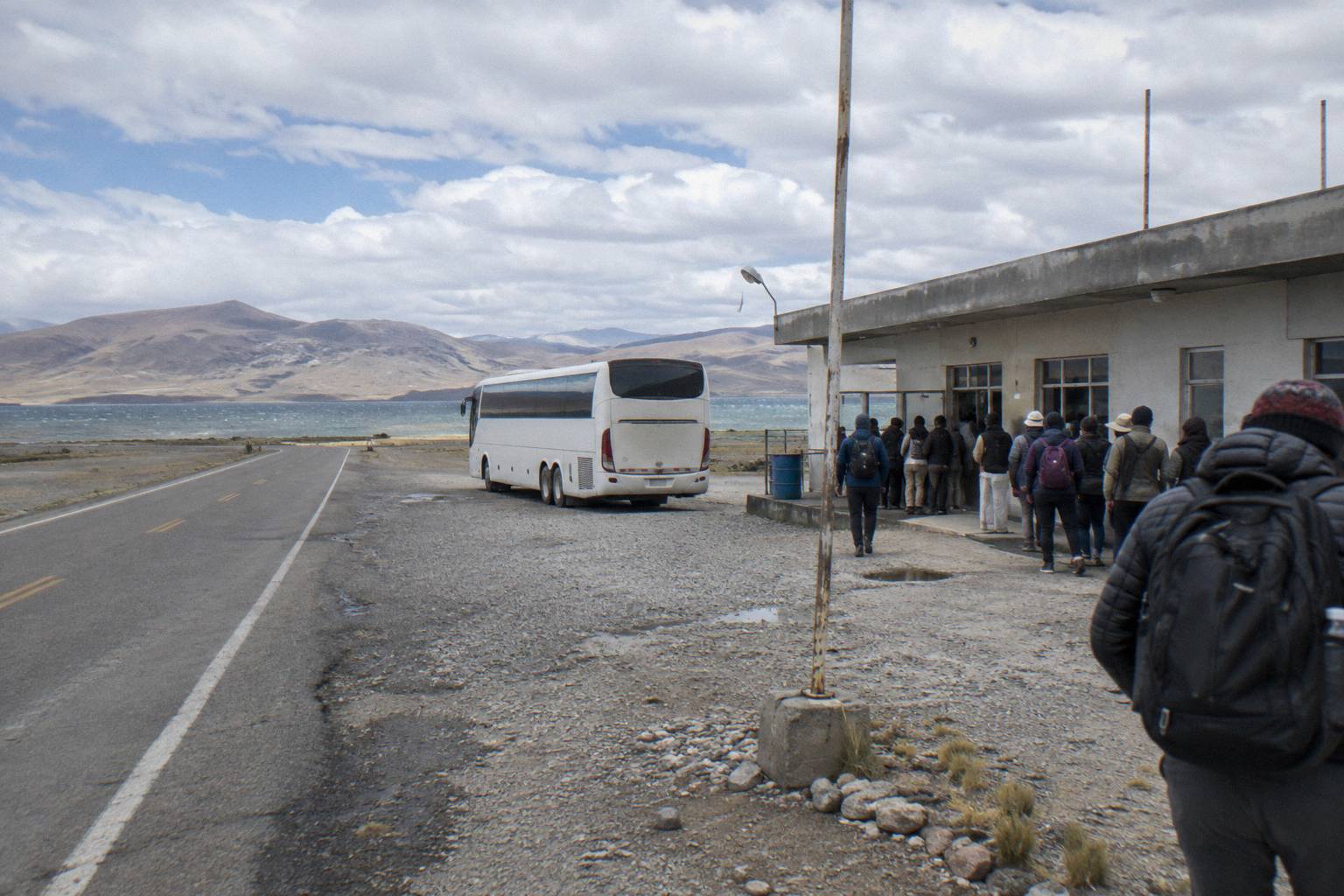
No standing year-round opening hours are printed for either post. Festival-period notices have set temporary schedules at both, but those apply to the festival window and are not a rule for the rest of the year; the honest answer is on the official pages. Migraciones publishes post information at gob.pe/migraciones, and the FCDO's Peru page, gov.uk/foreign-travel-advice/peru, carries live advice on border disruptions. Bolivian entry rules depend on the passport: a December 2025 Bolivian foreign-ministry notice exempts some nationalities from visas with what it calls gradual implementation, so check the Bolivian consulate for your passport rather than relying on a forum thread.
| Border post | Where it leads | What to know |
|---|---|---|
| Kasani (Yunguyo) | Copacabana, about 10 km away | The hop route's crossing for the Copacabana leg; hours vary, check the official page |
| Desaguadero | Direct La Paz corridor | Control post 25 m from the bridge; used by direct La Paz services; hours vary, check the official page |
The other document question is the Tarjeta Andina de Migracion, the TAM. Peru's official page calls it a control and statistical document "de uso obligatorio" for entering and leaving CAN-country territory, and states that printed forms are suppressed at Lima's Jorge Chavez airport and cruise ports under TAM Virtual. What is handed out at land posts can differ: ask at the post, and keep the card for the exit stamp. The FCDO's plain instruction for bus journeys in the region is "keep your passport with you", meaning on your body rather than in hold luggage.
The distances here are short but the waits are not predictable. Puno to Copacabana is about 142 km, an OSRM free-flow drive estimate of about 2.5 hours excluding any border wait, and real bus journeys exceed that figure. Puno to La Paz is about 260 km, about 4.5 hours free-flow excluding the border, and again the real crossing takes longer. Neither number is a bus time, and no bus time is promised here: the border, the lake crossing and road conditions set the arrival.
What Are The Buses Like, Toilets And The Lake Crossing?
The Peru-leg buses are listed with semi-cama reclining seats, air-conditioning and heating, TVs, USB ports, toilets, GPS tracking, speed-restriction software, seatbelts and a team of drivers, while the Bolivia-leg buses carry no onboard toilet at all because of the lake-crossing weight limit, and passengers cross the Strait of Tiquina on a separate boat. That toilet difference is the single most asked practical question about the border leg, and it has a physical cause: the boats that ferry buses and passengers across the strait have weight limits, so the operator runs the Bolivia buses without the tank. Public toilets sit at the strait, and the bus meets its passengers on the far shore.
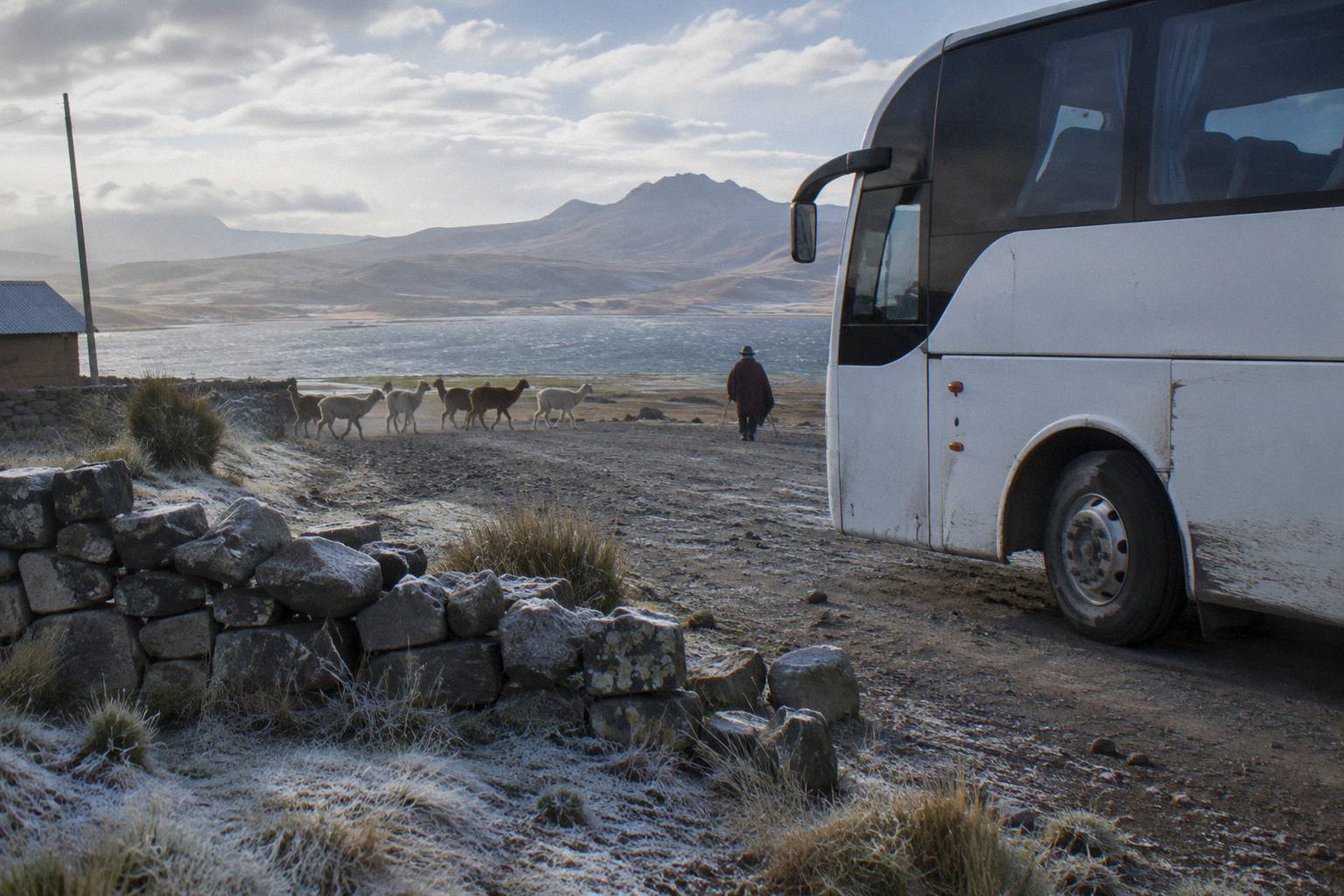
The operator claims Starlink satellite Wi-Fi on every bus; that is a marketing claim, attributed here rather than stated as fact, and riders should treat connectivity as a bonus rather than a plan. The same applies to the "local bilingual host on every bus" line: it is what the operator states. What the FCDO states, independently, is cautionary: "Bus crashes are common, especially at night. Only use reputable transport companies, and where possible, avoid overnight travel, especially in mountainous and remote regions", and "Armed robbers sometimes hold up provincial and inter-city buses." The Peru to Bolivia corridor is high-altitude road the whole way, Puno sits at 3,848 m on the INEI altitude table and La Paz at about 3,600 m, and altitude changes how any bus ride feels regardless of the operator.
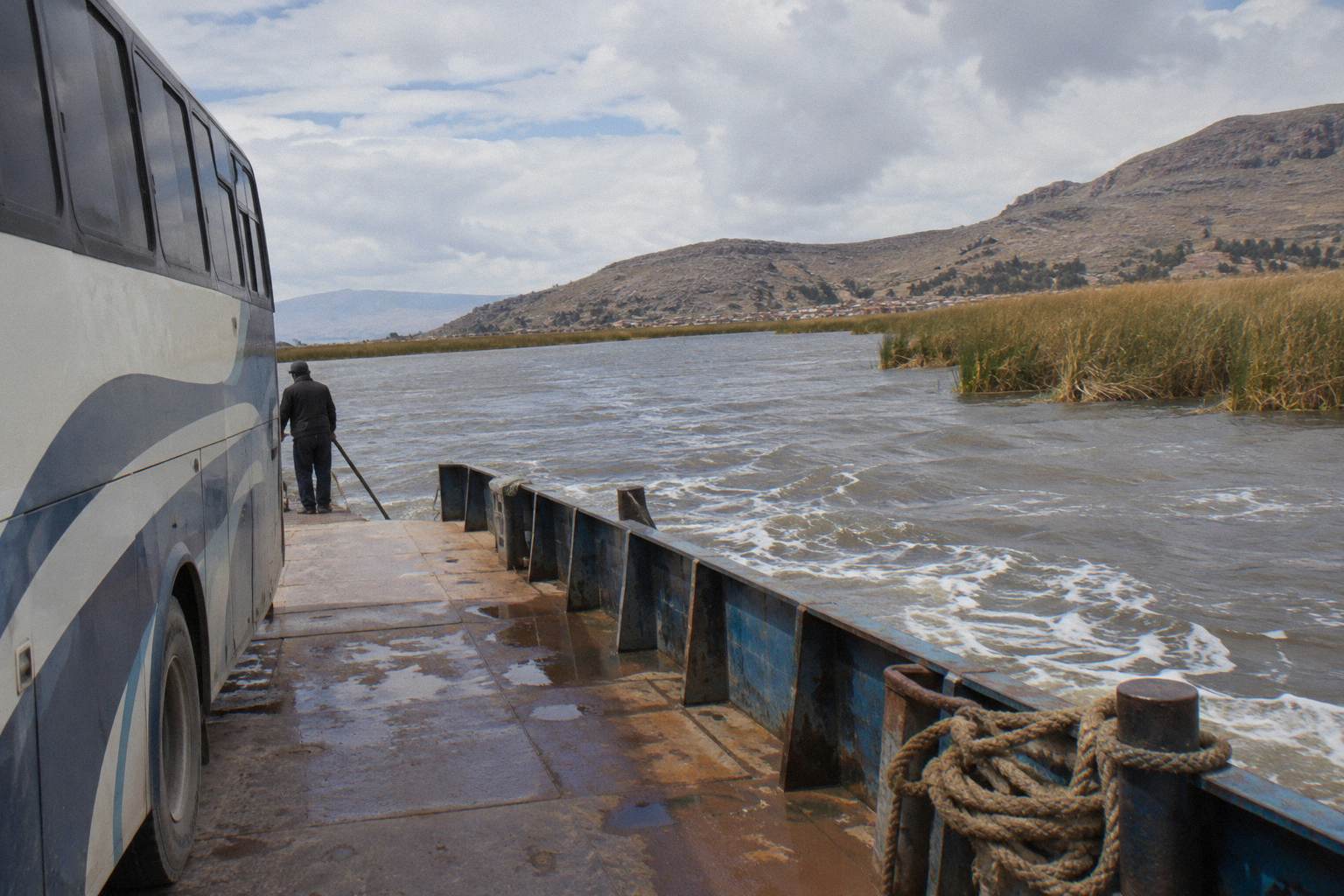
Altitude deserves its own sentence before the bus does. Riders coming up from the coast go from near-sea-level Lima to a pass above 4,700 m at Anticona on the Lima-Huancayo side or to Puno's plateau within days, and the altitude and acclimatisation guide covers the sequencing. No medical dosing advice belongs on a bus page; the practical points are water, slow first days at the lake, and knowing that Cusco, at about 3,400 m, is lower than Puno, which surprises riders who assume the famous city is the high point of the trip.
Where Do You Board, And How Do Puno And Cusco Connections Work?
The hop network boards by hotel or Airbnb pickup rather than at terminals, but riders stitching it onto regular Peruvian buses use the city terminals, and in Puno the connection point is the Terminal Terrestre, while in Cusco scheduled carriers arrive at the Terminal Terrestre on Av. Vallecito 538 and the Turismo Mer tourist bus uses its own private terminal. Regular service rules matter here: Peru's national transit regulation requires regular carriers to use authorised terminals at origin, destination and stops, and the public road may not be used as a terminal, so a scheduled bus will not pick you up at a hotel the way the hop network does. That is the core structural difference between the two products.
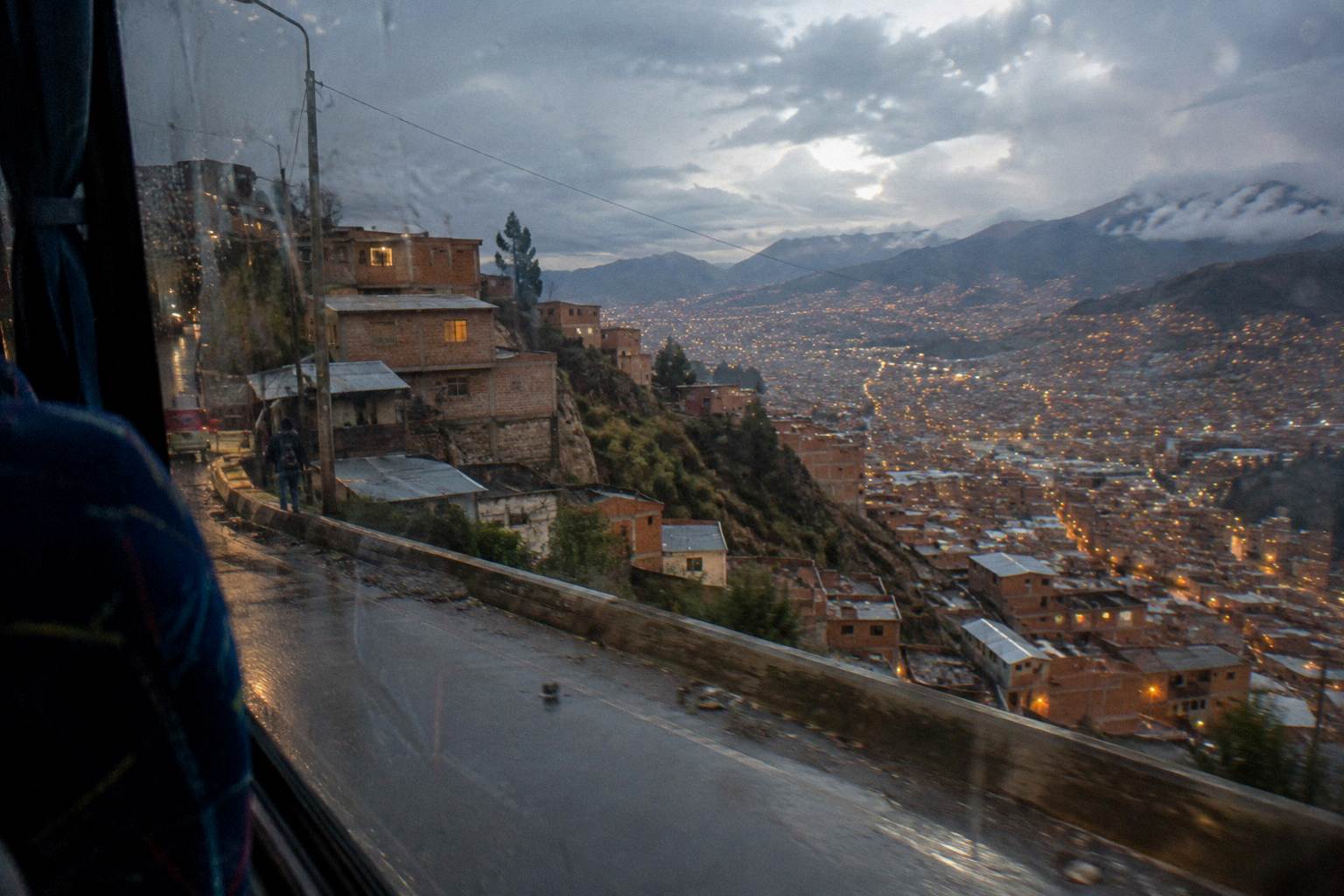
The most useful stitch for a lake-bound rider is the Arequipa to Puno sleeper. The Turismo Mer sleeper bus from Arequipa to Puno, rated 4.3 across 20 reviews, is a night service whose listing names a 160 degree recline, gives 7 hours for the run, and drops in Puno; the listing gives free cancellation up to 24 hours before, and the terminal boarding fee is listed as not included, so check the boarding fee line on the listing rather than expecting it in the fare. Riders can Check availability on the Arequipa to Puno sleeper bus page.
From Puno the onward options split three ways: the hop pass to Copacabana and La Paz, a scheduled bus across the same Kasani border, described stop by stop in the Puno to Copacabana bus guide, or a turn back north to Cusco on the lunch-stop tourist bus named above. Southbound riders coming up the coast reach the chain through Lima: the Wayki Bus Peru one-way tourist bus from Miraflores in Lima to Paracas, rated 4.2 across 62 reviews, gives 3 hours for the run and drops at El Chaco in Paracas, with free cancellation up to 24 hours before as listed; details are on the Miraflores to Paracas tourist bus page.
A second booking page by another operator runs the same Lima to Paracas leg with hotel pickup in Miraflores and Barranco, from US$18 per person on that listing's own basis, and it is a separate product, not a merged option; two private shuttle listings on the same route carry prices this page does not print. The point of listing the coastal leg on a Bolivia page is simple: most lake-bound riders start in Lima, and the coast-to-sierra chain is one ticket chain whether it is bought as a pass or as four separate seats.
One callout on the pass side, since riders ask: passes, times and stop lists are on the operator's own pages, and the network's flexibility terms, 1 year validity and app changes up to 12 hours before departure, are reported by the operator per its pass terms. See Peru Hop Passes for the live pass pages. No price appears on this page, because pass fares vary by date and pass and belong to the operator's own listing.
How Do Rain, Strikes And Blockades Affect The Route?
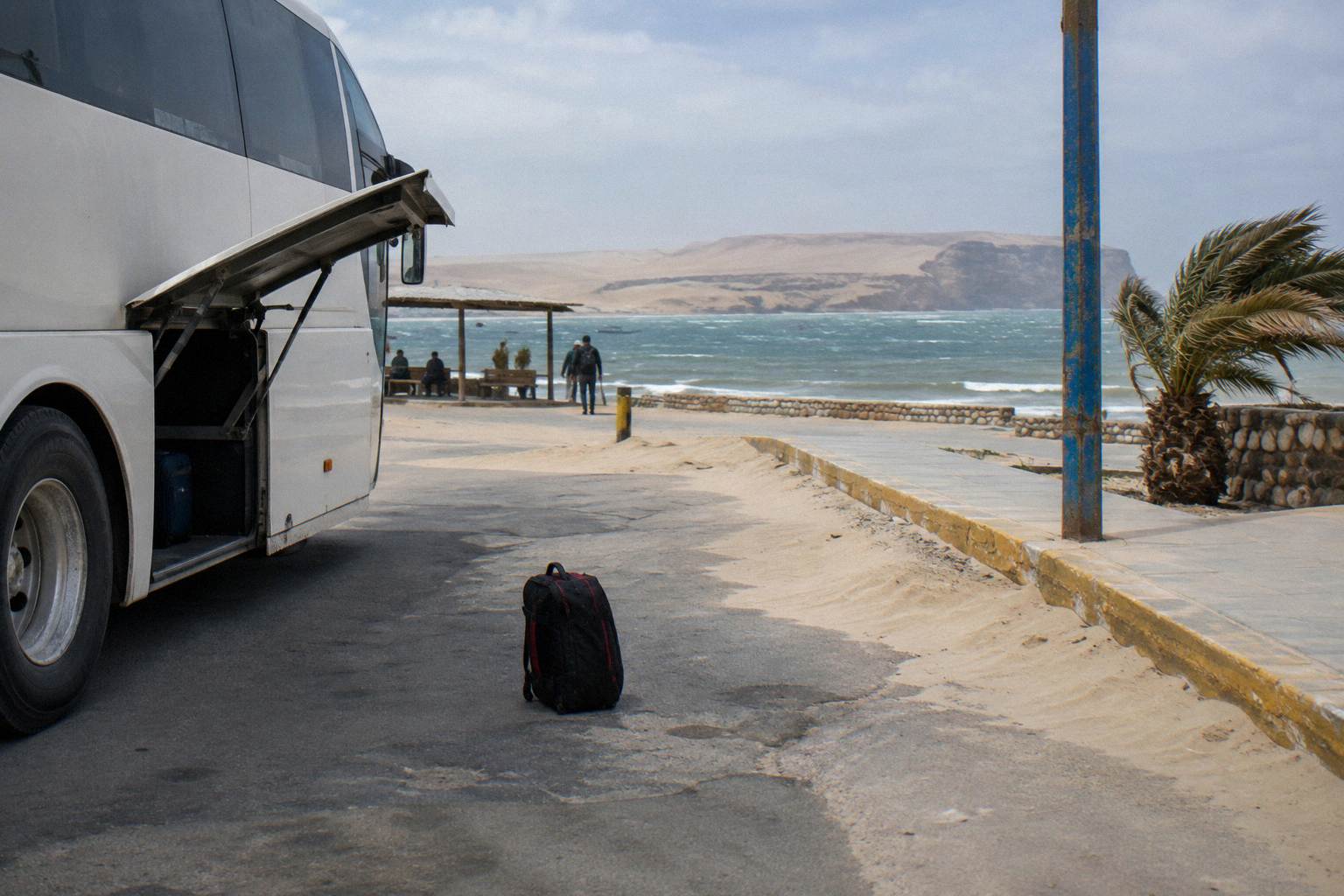
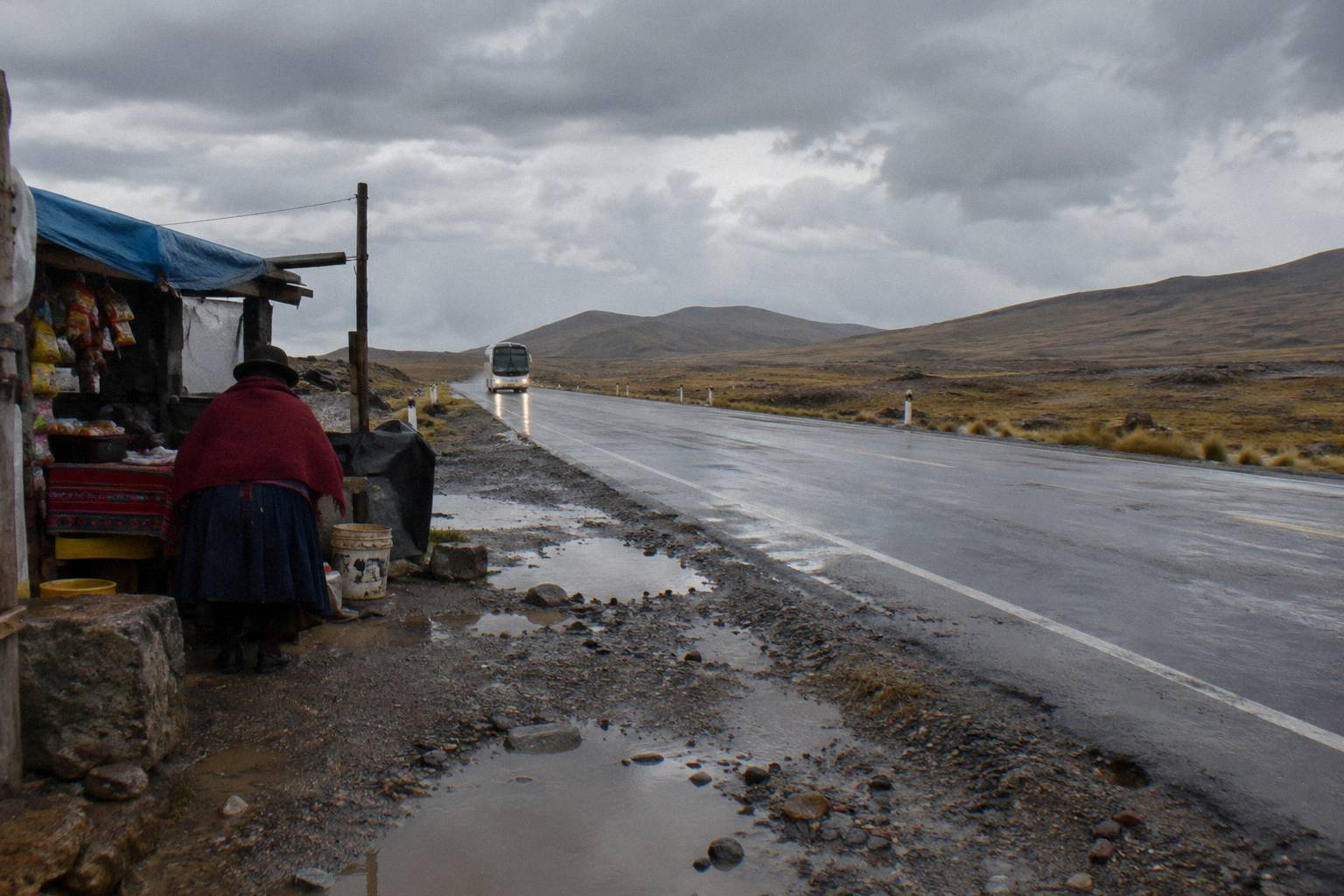
The altiplano and lake region concentrates its rain from September to March, with SENAMHI data showing Puno holding 89 percent of its annual rain in those months, and strikes and road blockades can close the route or the border with little notice, so the working tools are SUTRAN's live road-alert map and a check with the carrier the day before travel. The FCDO states that "Local groups can announce strike action, with little or no notice, particularly in areas connected to mining", and names Puno, Cusco and Arequipa among regions with recent protests. Its instruction is blunt: "Do not attempt to pass blockades."
SUTRAN's interactive alert map at alertasviales.sutran.gob.pe shows closed roads in red, restricted roads in yellow and open roads in green, with causes including natural events, accidents, infrastructure damage and what SUTRAN calls the human factor, which is where blockades appear. The same agency runs a 24 hour WhatsApp line, 999 382 606, for reporting and queries. Canadian advice adds a frame for planning: "Roadblocks are frequently erected during demonstrations", and Smartraveller warns of "bogus roadblocks or checkpoints on roads outside major cities after dark". The strikes, blockades and rainy season guide covers the response playbook in depth.
Is A Hop Pass The Right Fit Versus Regular Buses?
A hop pass fits a rider who wants the named stops, hotel pickup and a single ticket across the border, while regular buses fit a rider with fixed dates, a tighter budget discipline or destinations the network does not name, and the two combine well, since a pass can cover Lima to Copacabana while a scheduled tourist bus covers Puno to Cusco. The pass buyer trades fare control for structure: one ticket, stops that include the Paracas reserve and the Lagunillas viewpoint, and no terminal logistics. The scheduled-bus buyer trades structure for control: chosen seats, chosen operators, chosen stops, and the terminal system that Peru's regulation actually builds around.
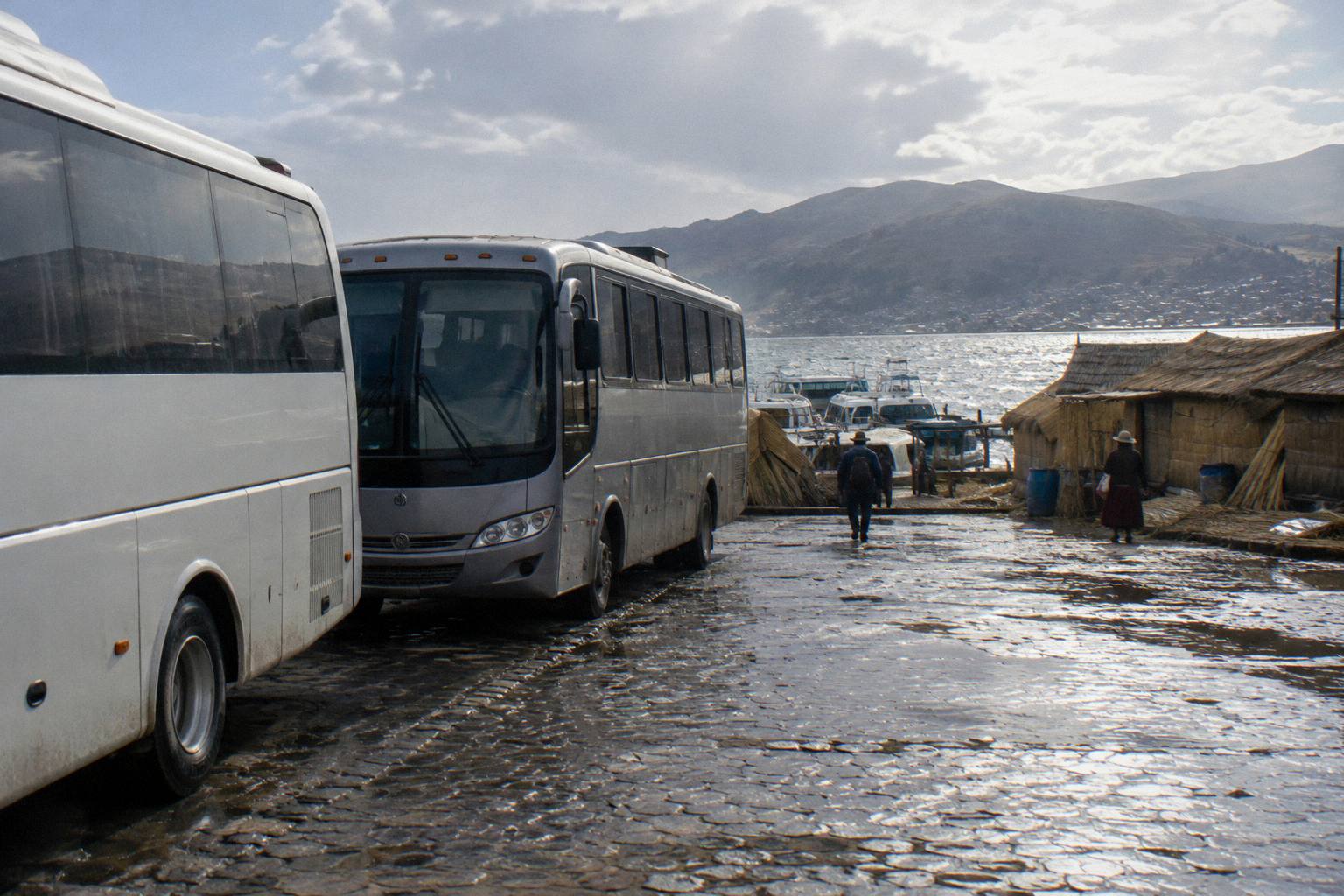
The honest comparison questions are three. First, stops: if the itinerary is Lima, Puno, La Paz and nothing between, a pass that names Chincha, Paracas, Huacachina and Nazca sells stops the rider will not use, and point-to-point buses serve that plan directly. Second, the border: the pass crosses at Kasani with the host handling the process, which reduces the walking-and-stamping legwork but does not remove the wait. Third, the return: riders finishing in La Paz who want to come back through Peru should check which return passes serve their dates, since the return-direction pass list differs from the outbound one. The hop versus public bus comparison lays out this trade-off seat by seat.
| Free-flow drive estimate | km | OSRM free-flow time | Excludes |
|---|---|---|---|
| Puno to Copacabana | 142 | About 2.5 h | Border wait at Kasani |
| Puno to La Paz | 260 | About 4.5 h | Border wait |
| Arequipa to Puno | 273 | About 5.5 h | Terminal and stop time |
| Puno to Cusco | 387 | About 6.2 h | Andean passes and stops |
| Arequipa to Cusco | 487 | About 9.4 h | Terminal and stop time |
Every figure in that table is a free-flow drive estimate from the OSRM router, a measure of the road itself, and real bus journeys exceed every one of them, none more than the border pairs, where the wait is the variable no router can price. Treat them as a scale for comparing legs, never as a promise of arrival.
Common Questions About Bolivia Hop From Peru
Does Bolivia Hop Run From Peru?
Yes, as the Bolivian arm of the same hop-on hop-off network, described as a sister brand under the same umbrella. Linked passes carry riders from Lima, Cusco or Arequipa through Puno to Copacabana and La Paz, with departure cities listed as Lima, Cusco, Arequipa, Copacabana and La Paz.
Which Border Does The Bus Cross To Copacabana?
The Kasani post at Yunguyo, which Migraciones describes as connecting Peru with the Bolivian city of Copacabana, sits about 10 km from Copacabana. Riders exit the bus with their passports for stamps on foot. No standing year-round hours apply, so check the official page before travel.
Is There A Toilet On The Bolivia Bus?
No. The Bolivia-leg buses carry no onboard toilet because of the lake-crossing weight limit at the Strait of Tiquina. Public toilets sit at the strait, and passengers cross the lake on a separate boat before rejoining the bus.
Do I Need A Visa For Bolivia?
That depends on your passport. A Bolivian foreign-ministry notice exempts some nationalities from visas, with what the notice calls gradual implementation, so check the Bolivian consulate for your passport before relying on any exemption.
How Long Is The Bus From Puno To La Paz?
No timetable time is printed here. The road distance is about 260 km, an OSRM free-flow drive estimate of about 4.5 hours excluding the border wait, and real journeys take longer because of the crossing, the lake strait and road conditions.
Can I Combine The Pass With A Regular Bus To Cusco?
Yes, and many riders do. The Turismo Mer tourist bus from Puno to Cusco with a lunch stop, rated 4.6 across 24 reviews, runs the 11 hours its listing gives and drops at its own private terminal in Cusco, with free cancellation up to 24 hours before as listed.