
Ayacucho To Cusco By Bus: The Abancay Road
The road from Ayacucho to Cusco runs through Abancay on one of the highest bus corridors in Peru. Here is what the verified figures show, and what they do not.
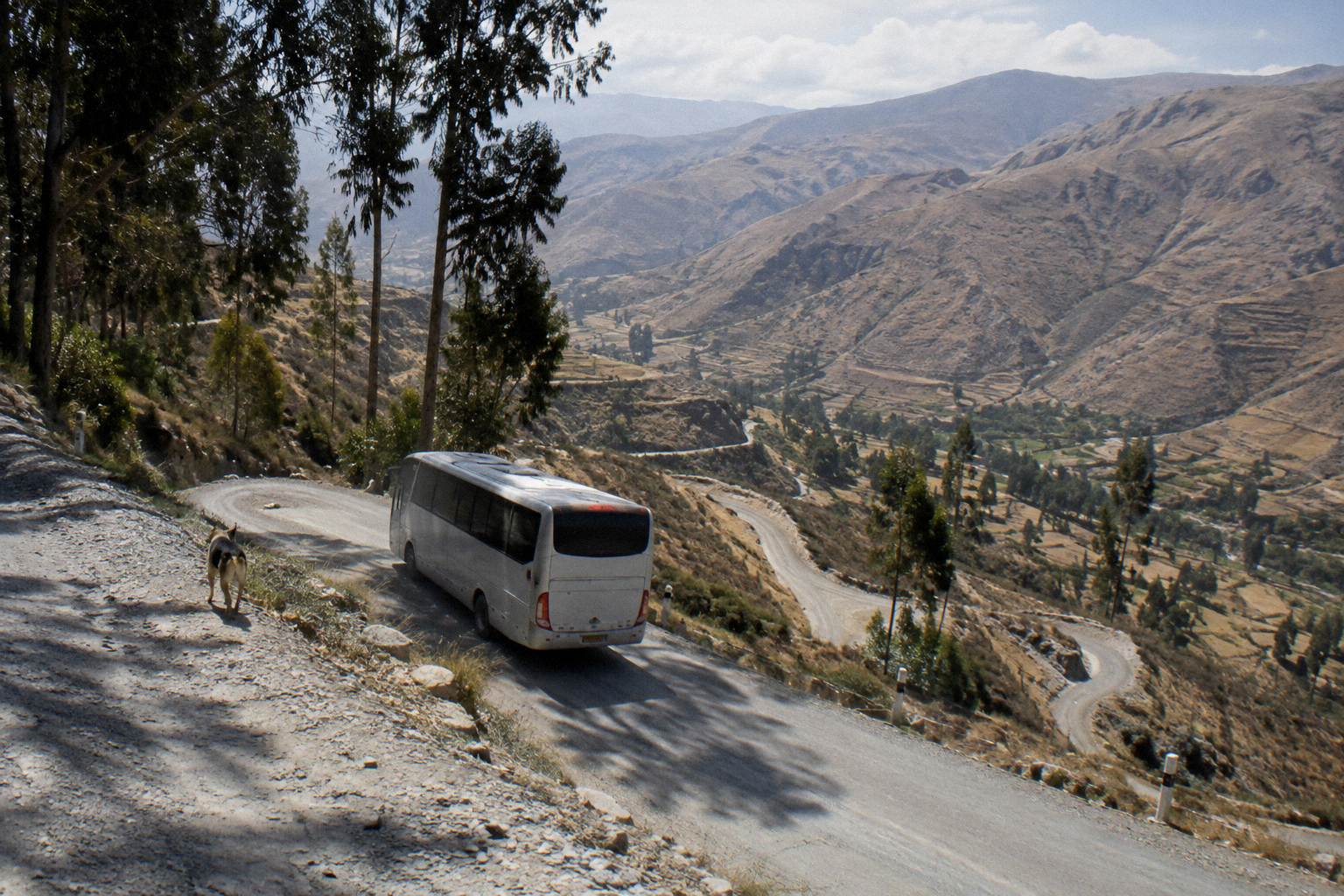
Short answer
Ayacucho sits at 2,797 m, Abancay at 2,500 m and Cusco at about 3,400 m. The Cusco to Lima routing through Abancay and Nazca measures about 1,103 km with an OSRM free-flow drive estimate of 17.8 h, while timetabled trips on that line run 20 h or more. No verified Ayacucho to Cusco distance, operator or terminal figure exists.
Ayacucho and Cusco are two of the great highland cities of southern Peru, and the road that joins them crosses some of the most demanding terrain in the country. The corridor runs through Abancay, the capital of Apurimac, at altitudes measured in the thousands of metres for the length of the drive. Peru By Bus tracks what can be printed with confidence about this route, and the honest answer is that the verified record for the direct Ayacucho to Cusco leg is thin: the altitudes are confirmed, the Cusco to Lima line through Abancay and Nazca has a measured routing length, and beyond that, caution is warranted.
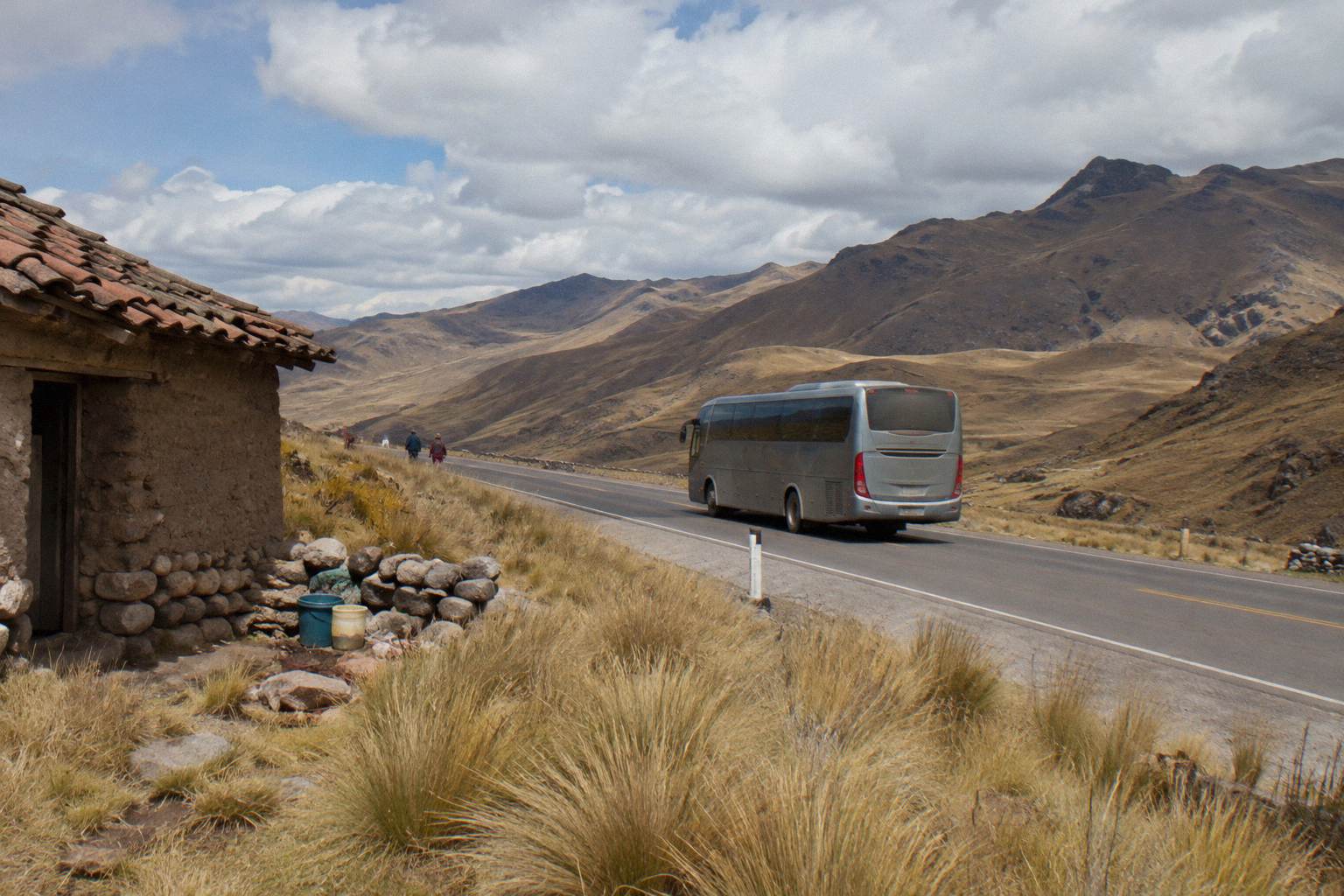
How Do You Travel Between Ayacucho And Cusco?
The two cities are joined by the road through Abancay, the same corridor that carries the long Cusco to Lima bus line. The OSRM routing for Cusco to Lima through Abancay and Nazca measures about 1,103 km with a free-flow drive estimate of 17.8 h, a routing assumption rather than a bus schedule, and timetabled trips on that line run 20 h or more. No verified distance or operator detail exists for the direct leg itself.
That last sentence deserves emphasis, because it shapes everything on this page. The distance tables used across this site come from an OSRM free-flow routing engine, and the engine was queried for named city pairs. Ayacucho to Cusco was not one of the measured pairs, so any kilometre figure or hour figure for the direct leg would be invented. The only measured line that touches both cities is the Cusco to Lima route, which runs via Abancay and Nazca. That figure belongs to the full Cusco to Lima journey and cannot be split into an Ayacucho to Cusco segment.
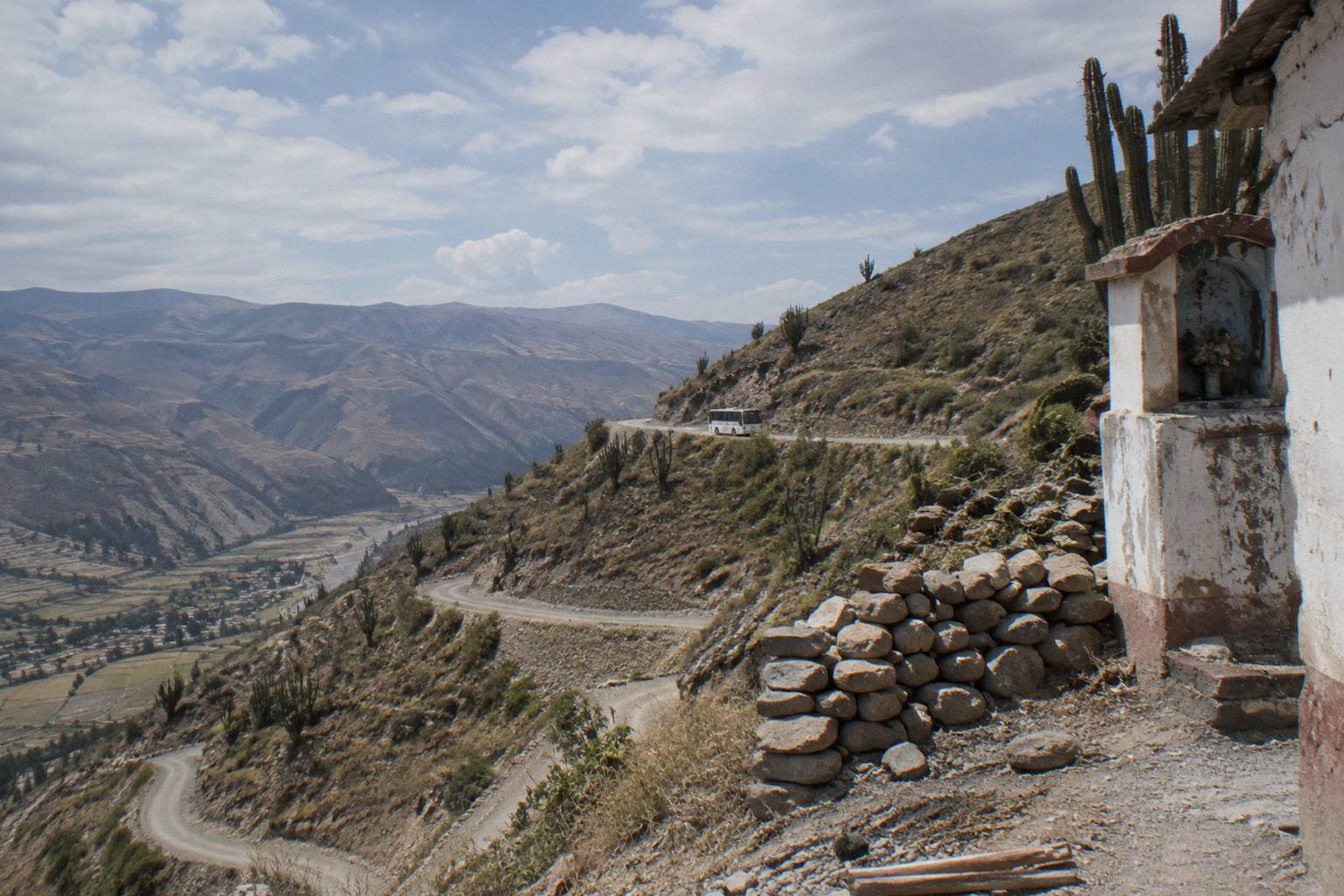
What can be said with confidence is the shape of the journey. Ayacucho lies at 2,797 m, Abancay at 2,500 m and Cusco at about 3,400 m, all figures from Peru's national statistics institute. The road between them is a high mountain corridor for its whole length, not a highway with a coastal section to break up the climb. Readers planning the wider southern loop may find the southern Peru bus circuit guide useful for how the pieces fit together.
For context on the two feeder legs that are measured: Lima to Ayacucho measures 569 km with a free-flow drive estimate of 9.3 h, and that figure is explained in full in the Lima to Ayacucho bus guide. Both numbers are free-flow drive estimates that real bus journeys exceed, since they assume no stops, no terminal time and no mountain-road speeds. The distinction sounds pedantic until you are sitting on a hairpin above a river valley, watching a loaded bus take the same bend in second gear.
What Does The Abancay Road Look Like?
The corridor is a high Andean road that crosses the Apurimac region through Abancay at 2,500 m, linking Ayacucho at 2,797 m with Cusco at about 3,400 m. The measured Cusco to Lima routing through Abancay and Nazca spans about 1,103 km and carries a 17.8 h free-flow drive estimate, flagged as an assumption, with real timetabled trips running 20 h or more.
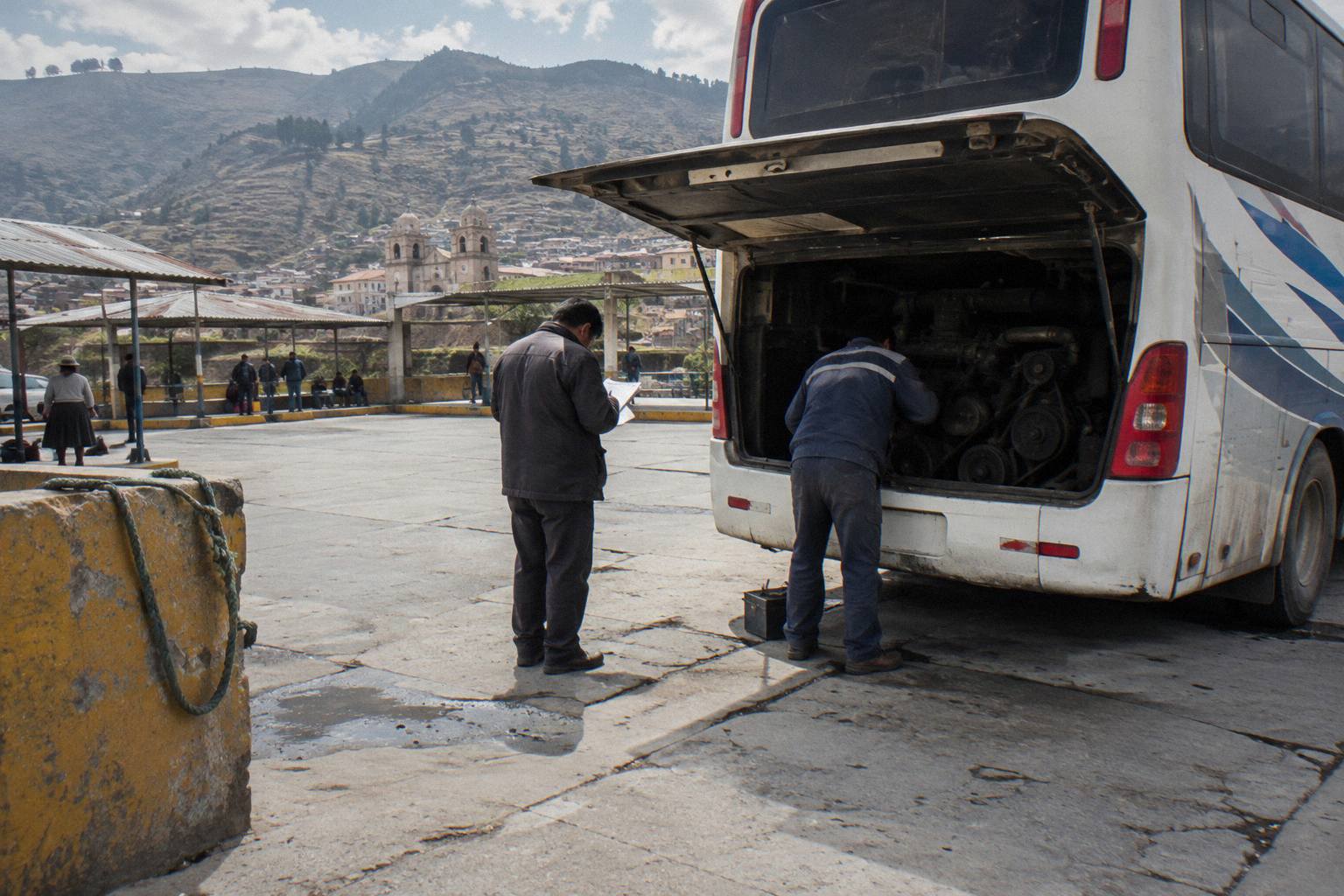
The Abancay section is the reason the Cusco to Lima line is treated with care. Free-flow routing assumes a car running at open-road speeds without stopping; a loaded bus on a mountain corridor with hairpins, towns and checkpoint stops will not match it. The facts file states plainly that timetabled trips on the Cusco to Lima line run 20 hours or more, and that the routing itself is an assumption through Abancay and Nazca rather than a single operator's path. Pass heights along the corridor are not printed here either, because the official editions disagree by tens of metres and this site does not choose between conflicting government figures.
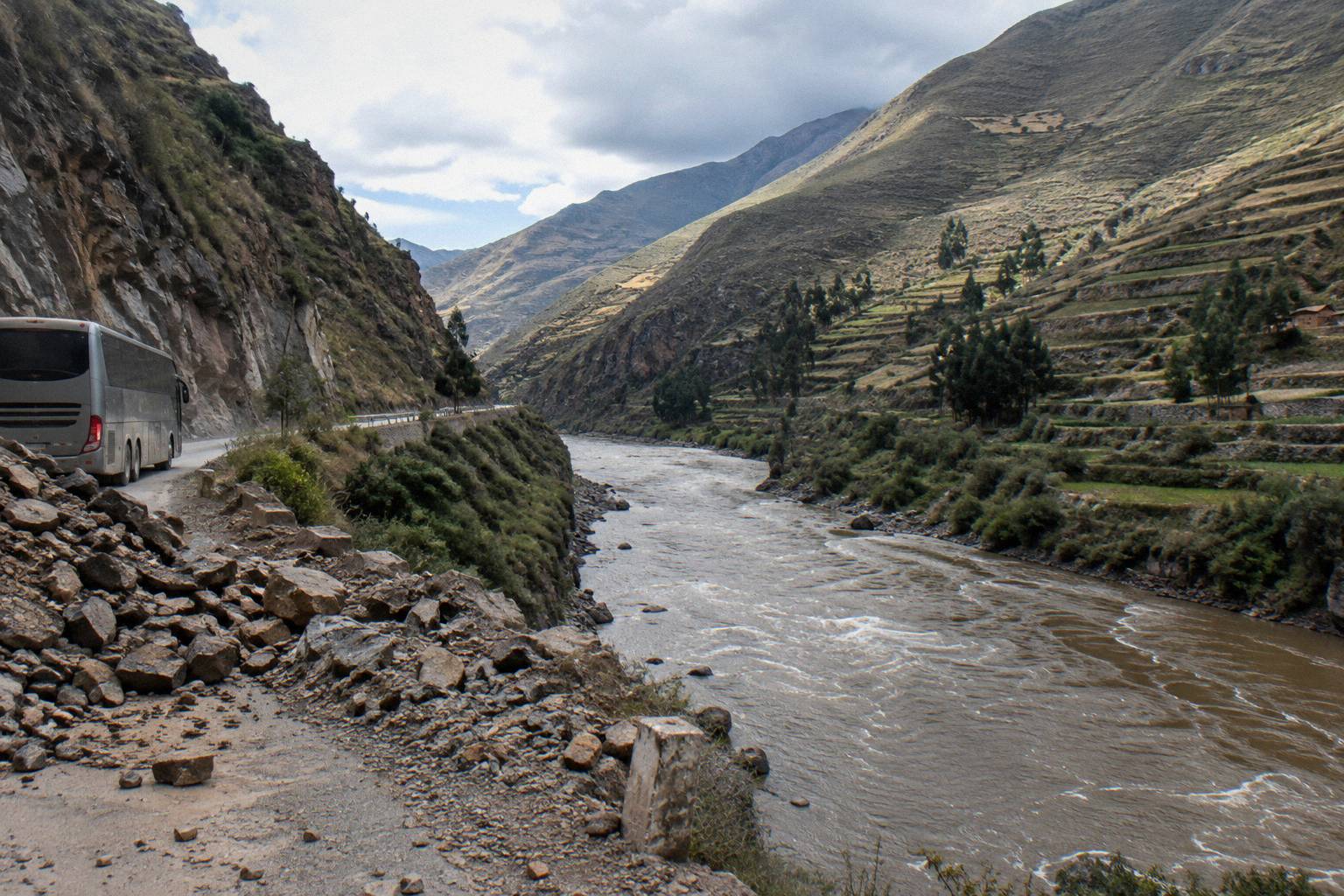
Nothing on this page should be read as a departure time or an arrival promise. Peru's regulators and the routing data behind this article support distance and altitude facts, not timetables, and the operators that run highland corridors publish schedules that change by season. For the regulation that governs how such long trips are crewed, see the section on bus rules below.
| Route | Kilometres | OSRM free-flow drive estimate | Note |
|---|---|---|---|
| Cusco to Lima via Abancay and Nazca | About 1,103 km | About 17.8 h | Routing assumption; timetabled trips run 20 h or more |
| Lima to Ayacucho | 569 km | 9.3 h | Free-flow estimate, real bus journeys exceed it |
| Arequipa to Cusco | 487 km | 9.4 h | Free-flow estimate, not a bus time |
| Lima to Ayacucho alternative feed | 569 km | 9.3 h | Same pair, printed once |
That table deliberately prints no fare column. Bus fares in Peru are variable by date and season, operators describe their own tariffs as indicative, and this site prints no fare except where a single product listing gives a firm figure with its basis. A fare quoted by a reseller on one day can differ from the operator's own price the next, which is why the column simply does not exist on this page.
How Does The Abancay Road Fit A Southern Peru Bus Trip?
Most travellers who link Ayacucho and Cusco are building an overland route across the southern Andes, and the corridor sits between two better-documented legs: the Lima to Ayacucho line and the Cusco, Puno and Arequipa network. The Cusco end is where the verified tourist products concentrate, including the Turismo Mer tourist bus from Puno to Cusco with a lunch stop, rated 4.6 across 24 reviews.
The Puno to Cusco leg is the natural companion to any Abancay road itinerary, because it delivers you into Cusco from the lake side. The Turismo Mer bus from Puno to Cusco with a lunch stop is rated 4.6 across 24 reviews, runs a one-way direction from Puno, and its listing gives 11 hours for the trip, with free cancellation up to 24 hours before for a full refund as listed. Its price sits on the operator's live listing rather than in print here. Check availability if the lunch-stop format suits a long highland crossing.
The Arequipa side of the south is covered by the World Explorer Peru direct bus from Cusco to Arequipa, rated 3.7 across 16 reviews, whose listing names a Cruzero Suite 160 degree seat and gives 10 hours for the one-way trip, again with free cancellation up to 24 hours before as listed. Between them, these two products bracket Cusco from west and south-east, which is where the verified record for comfortable tourist buses is strongest. Neither product touches the Abancay road itself, and no listed product does, which is consistent with the thin facts picture described above.
How High Is The Ayacucho To Cusco Corridor?
Ayacucho sits at 2,797 m, Abancay at 2,500 m and Cusco at about 3,400 m, all from Peru's national statistics institute. The corridor never drops to a low resting altitude, and the passes crossed between the cities reach higher still, though this page prints no pass height because official editions disagree by tens of metres. Readers sensitive to altitude should treat the whole route as high-altitude travel.
The Cusco figure needs its caveat spelled out. The national statistics institute publishes two values for Cusco, 3,439 m in one edition and 3,414 m in another, so this site prints "about 3,400 m" rather than choosing between them. Ayacucho's 2,797 m and Abancay's 2,500 m are single published values and are printed as given. For what these numbers mean for how you feel on arrival and how to pace the first days, the Peru bus altitude guide covers the practical side without medical dosing advice.
| Place | Altitude | Source note |
|---|---|---|
| Ayacucho | 2,797 m | INEI published value |
| Abancay | 2,500 m | INEI published value |
| Cusco | About 3,400 m | Two INEI editions differ, rounded per site policy |
| Route passes | Not printed | Official editions disagree by tens of metres |
Altitude affects the bus ride itself as well as the arrival. High corridors mean sustained climbing and descending, and the regulation on driver hours, explained below, is written around exactly this kind of route, where fatigue on mountain roads is a named risk in foreign government advice. Anyone arriving in Cusco from Ayacucho by road has spent the whole journey at elevations close to or above the destination, which changes how the first evening in the city tends to feel compared with flying in from the coast.
What About Protests And Blockades On This Corridor?
The UK FCDO lists Ayacucho and Cusco among the regions with recent protests, and states: "Political protests in Peru are unpredictable and can escalate quickly. Demonstrations can become violent and lead to roadblocks, travel disruption, including trains, and suspension of immigration services at land borders." The same advice says "Do not attempt to pass blockades." A highland corridor with few alternative roads makes this the single most important planning factor on the route.
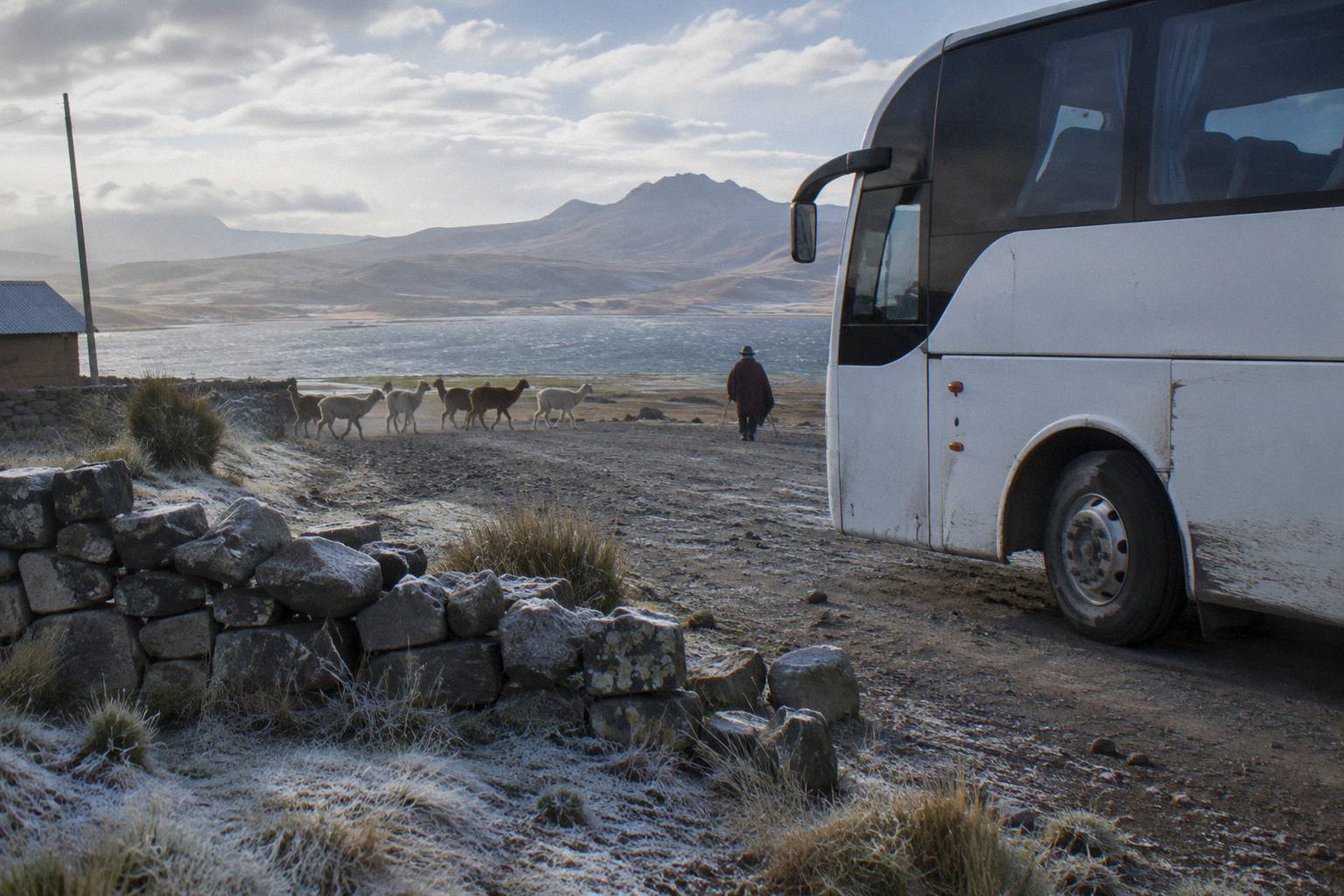
That is a verbatim quote from the FCDO's Peru travel advice, and the regional list it appears with also names Arequipa, La Libertad, Madre de Dios and Puno. Canada's advice adds that "Roadblocks are frequently erected during demonstrations" and that strikes "could also lead to border closures, including with Bolivia". None of this says a specific road is closed on a given day; it says the risk is real and the information is live. The FCDO also notes that local groups "can announce strike action, with little or no notice, particularly in areas connected to mining", a warning that matters in the Apurimac highlands.
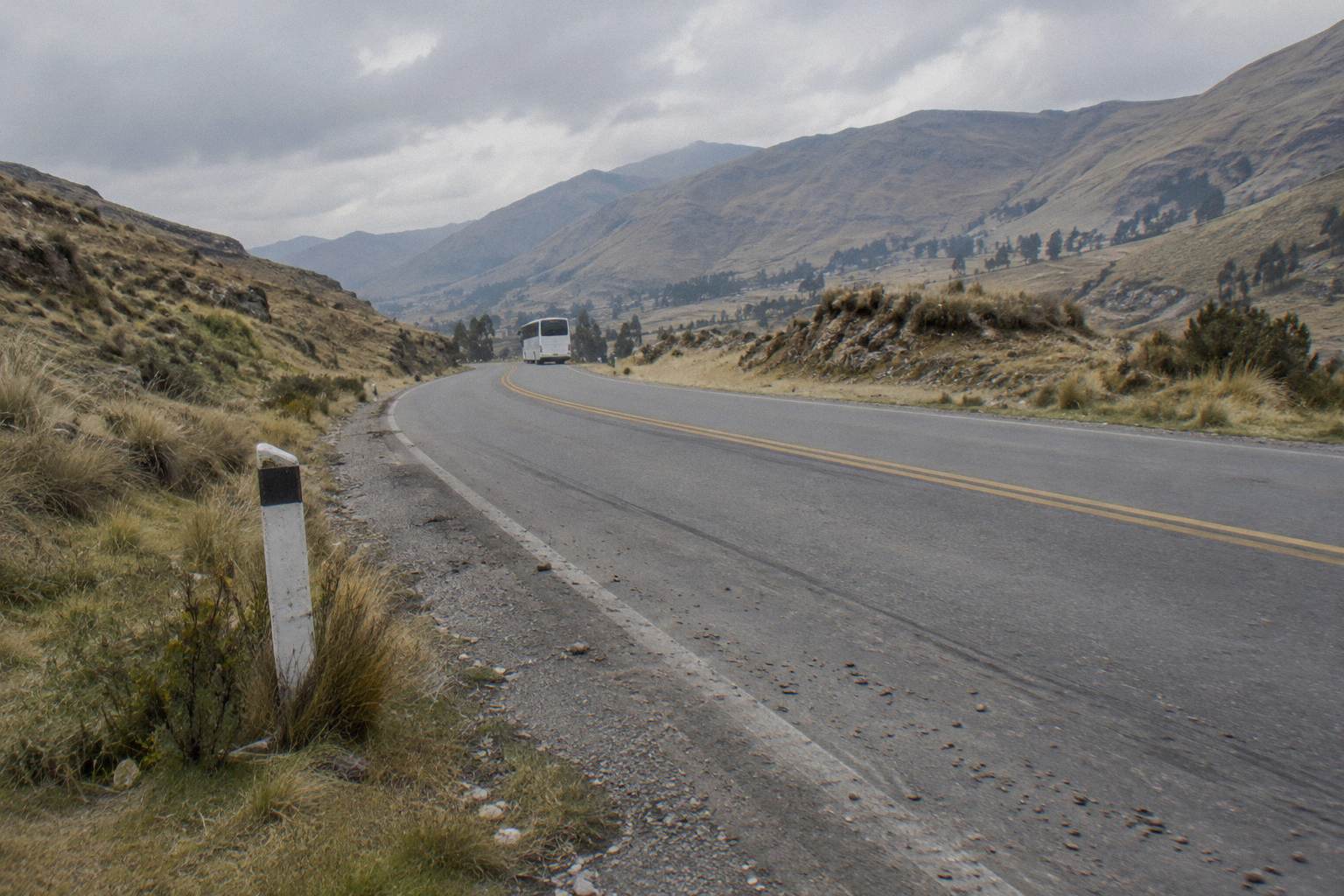
The practical tool is SUTRAN's road alert map at alertasviales.sutran.gob.pe, which shows closed roads in red, restricted roads in yellow and open roads in green, and lists blockades under a human-factor category. SUTRAN also runs a 24-hour WhatsApp line, 999 382 606, for road-status queries. Checking the map the day before travel, and again on the morning of departure, is the routine this site recommends on every highland route. The Peru bus delays and roadblocks guide expands on what to do when a blockade appears.
Which Bus Rules Protect You On A Long Mountain Trip?
Peru's national transit regulation requires two drivers when a trip exceeds 5 hours of continuous driving by day or 4 hours at night, and a third driver on trips over 20 hours. National buses must carry GPS monitoring that transmits to the authority permanently, and SUTRAN states that the 90 km/h interprovincial limit applies only on roads without another speed sign. Boarding is allowed only at authorised points with the bus stopped.
These rules are the quiet backbone of mountain bus travel in Peru, and they are worth knowing before you board any long highland service. The driver-hours rule matters on a corridor like Abancay, where the full Cusco to Lima timetabled line runs 20 hours or more and therefore crosses the third-driver threshold. Cruz del Sur, one of the operators on the Lima to Cusco line, lists a pilot change every 4 hours on its own comfort page, a company policy that mirrors the regulation's rhythm.
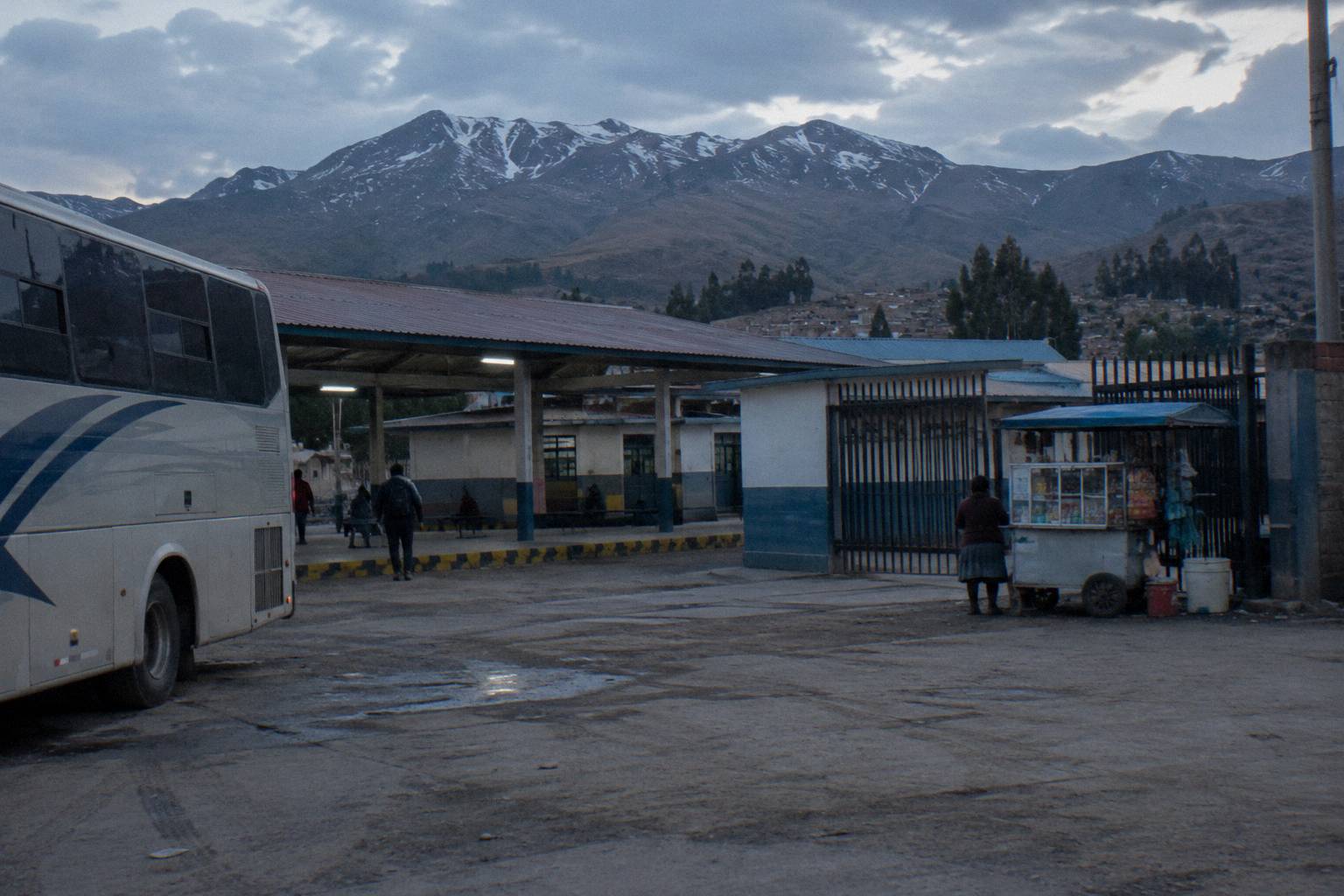
The passenger-rights article of the regulation also gives every rider a licensed vehicle with technical inspection and insurance, a seat for every passenger with no standing, a receipt for the fare, and up to 20 kg of luggage free on national service. SUTRAN advises passengers to get a luggage ticket for hold bags, and the consumer agency INDECOPI runs an online complaint portal at its Reclama Virtual page, where a domestic ticket can also be formally disputed. Before boarding, a bus and its driver can be checked by plate or driver document number through SUTRAN's public lookup service.
| Right or rule | What it says | Who states it |
|---|---|---|
| Free luggage | Up to 20 kg on national service | Peru's national transit regulation |
| Ticket changes | Postpone or transfer with 24 hours notice, real reissue cost only | INDECOPI |
| Driver hours | Second driver beyond 5 h day or 4 h night, third over 20 h | Peru's national transit regulation |
| Speed limit | 90 km/h applies only where no other sign sets a speed | SUTRAN |
| Boarding | Only at authorised points with the bus stopped | Peru's national transit regulation |
What Should You Know About Bus Safety Advice For This Region?
The UK FCDO states: "Bus crashes are common, especially at night. Only use reputable transport companies, and where possible, avoid overnight travel, especially in mountainous and remote regions." Canada advises "Avoid taking buses and coaches at night", and Smartraveller reports "Robberies and assaults occur frequently on intercity buses, including while passengers are sleeping." These are the source's words, not a verdict from this page.
Foreign government advice on Peruvian buses is consistent across four countries, and the mountain corridor between Ayacucho and Cusco falls squarely inside the terrain the warnings describe. The US Embassy in Lima's republication of the State Department advisory notes that U.S. government employees "may travel at night with commercial bus companies along the Pan-American Highway, to Huaraz, and on the Lima-Arequipa-Cusco corridor", a list that does not include the Abancay road. The FCDO also warns of "a risk of robbery by criminals posing as taxi drivers, especially at Jorge Chavez International Airport and bus terminals", and advises travellers to "use one of the taxis registered at bus terminals". Full advice is at the FCDO's Peru safety and security page.
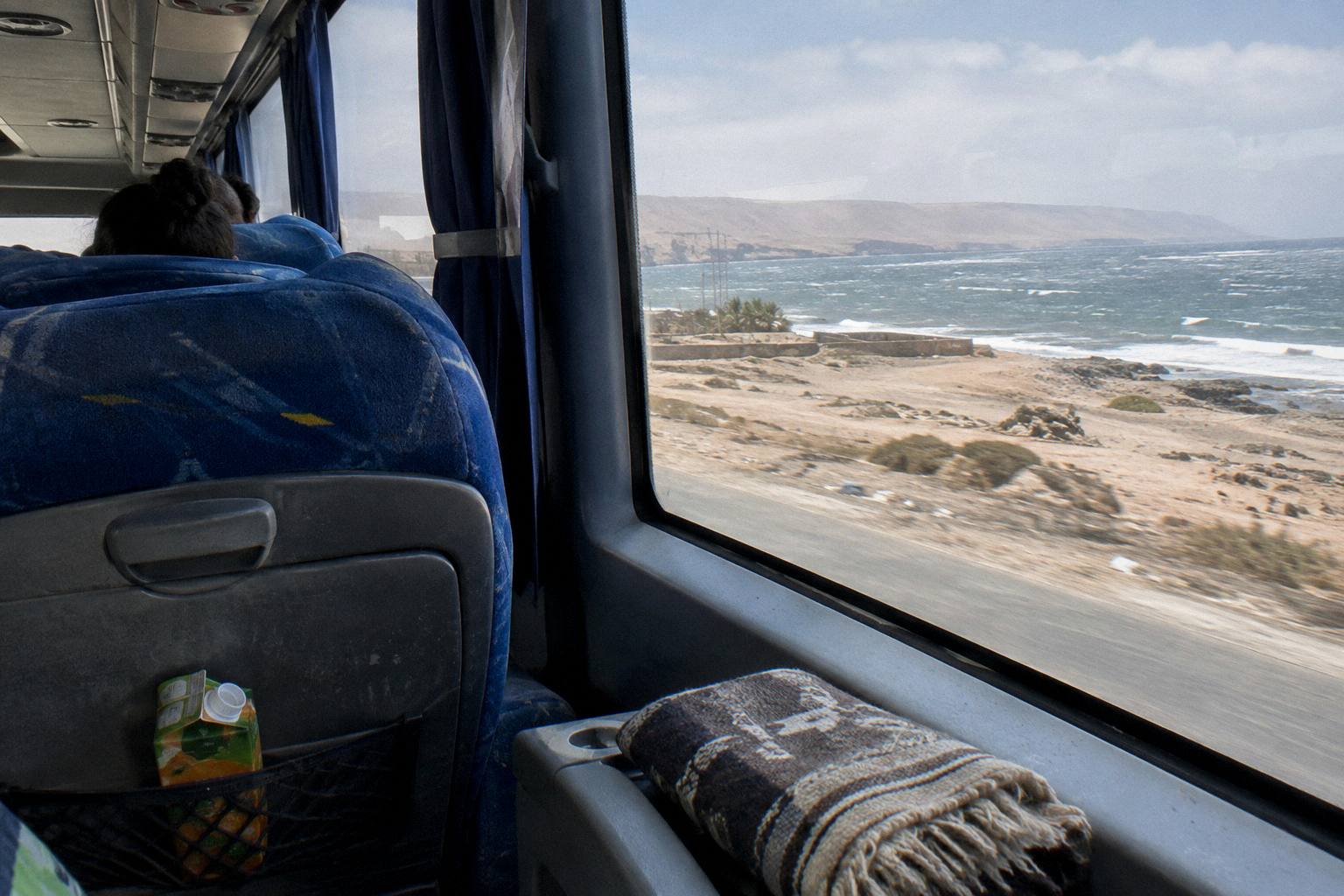
None of this amounts to a claim that any specific trip is dangerous or otherwise. It is quoted advice, offered so the reader can weigh it. The Peru bus safety guide gathers the full set of government quotes and the regulation in one place, and the overnight question specifically is covered in the overnight bus in Peru guide.
Which Seat And Service Class Suit A Mountain Bus?
Recline degrees are printed only where an operator's own page states them: Cruz del Sur lists 180 degree reclining seats on its comfort page, Linea lists Super VIP seats at 180 degrees and VIP at 160, and Movil Bus lists classes from 120 to 180 degrees. Oltursa states no degrees at all. On a highland corridor, a full recline matters for long trips, and a seat away from the toilet door matters for any trip.
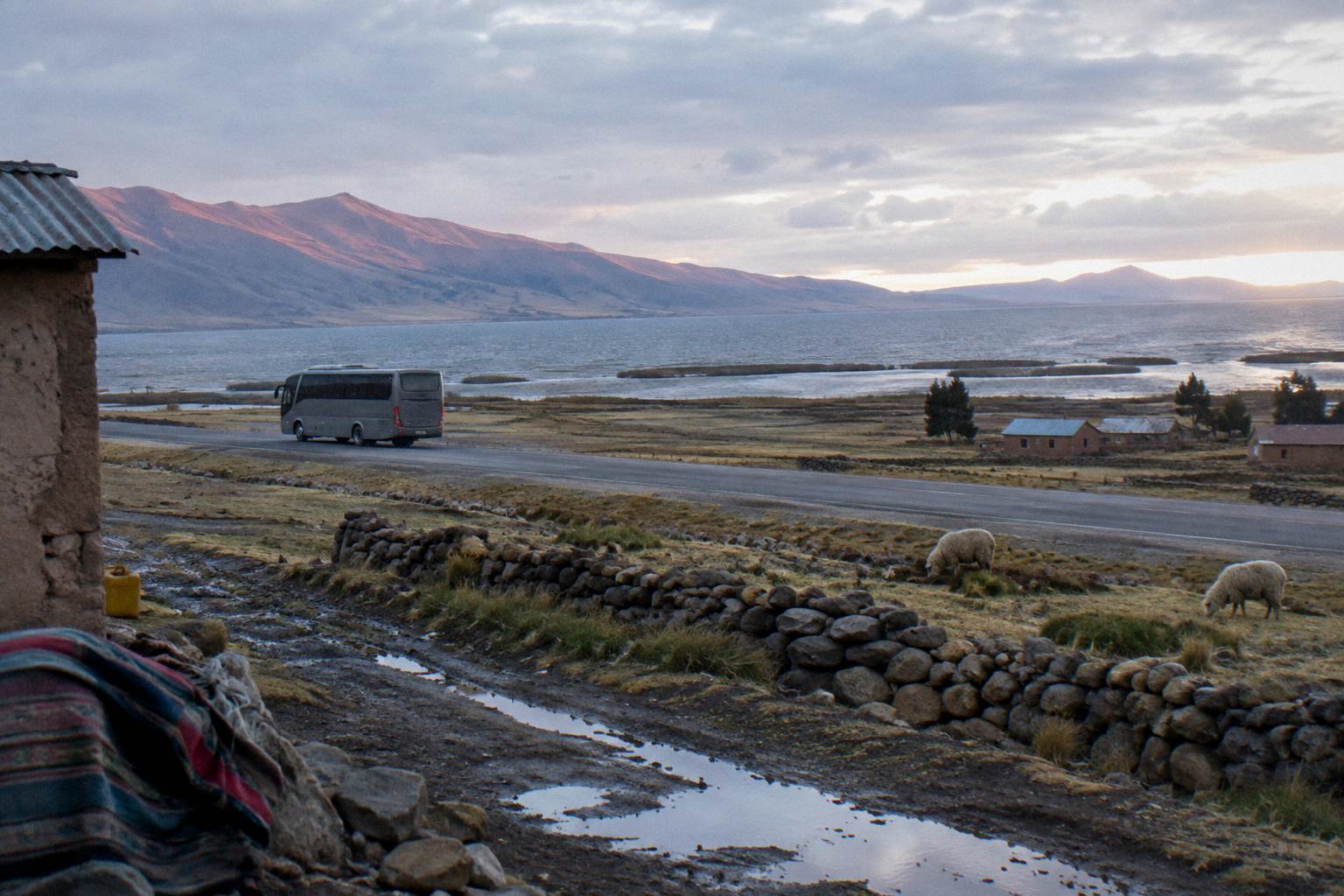
Service classes in Peru carry names rather than standards, so the degree figure is the honest comparison point, and only where the operator publishes it. The tourist bus products among the tickets listed on this site describe their seating plainly: the Turismo Mer Puno to Cusco bus is a tourist bus with a lunch stop, the World Explorer Peru Cusco to Arequipa listing names a Cruzero Suite 160 degree seat, and the Machu Picchu by Car Vip bus to Hidroelectrica is a tourist bus with two rest stops as its title states. Where a listing says nothing about the seat, this page says nothing about the seat either.
For the back-door route out of Cusco, the Machu Picchu by Car Vip tourist bus from Cusco to Hidroelectrica is rated 4.3 across 53 reviews, runs one way from Cusco's Plaza de Armas to a private terminal at Hidroelectrica, and its listing gives 6 hours with two rest stops. Free cancellation up to 24 hours before is listed, and the price sits on the live listing. It ends at Hidroelectrica, the hydroelectric station used as the back-door start for the walk or rail leg toward Machu Picchu, which is exactly how its listing frames it.
Luggage is the other seat-side question. The national free allowance is 20 kg on national service, and operator allowances print with attribution where stated: Cruz del Sur lists 20 kg hold plus 6 kg hand on its Lima to Cusco page, Oltursa's terms list 20 kg hold plus one hand piece at 5 kg, and Movil Bus lists 20 kg hold and 8 kg hand. The full picture, including how theft reports are handled, is in the Peru bus luggage and theft guide.
How Do You Check A Road, A Bus And A Ticket Before You Go?
Check the SUTRAN alert map for the road, the SUTRAN plate lookup for the bus and driver, and the operator's own page for the ticket terms. INDECOPI states that a domestic bus ticket can be postponed or transferred with 24 hours notice at only the real reissue cost, and SUTRAN advises getting a luggage ticket for hold bags. These three checks take minutes and cover the risks that government advice actually names.
The order matters. Road status is the live variable on the Abancay corridor, and the alert map answers it with a colour. The bus and driver check answers whether the vehicle is licensed, inspected and insured, which the regulation entitles every passenger to. The ticket check answers what happens if plans change, and the INDECOPI rule on reissue cost is the strongest passenger right on the books, stronger than most riders realise.
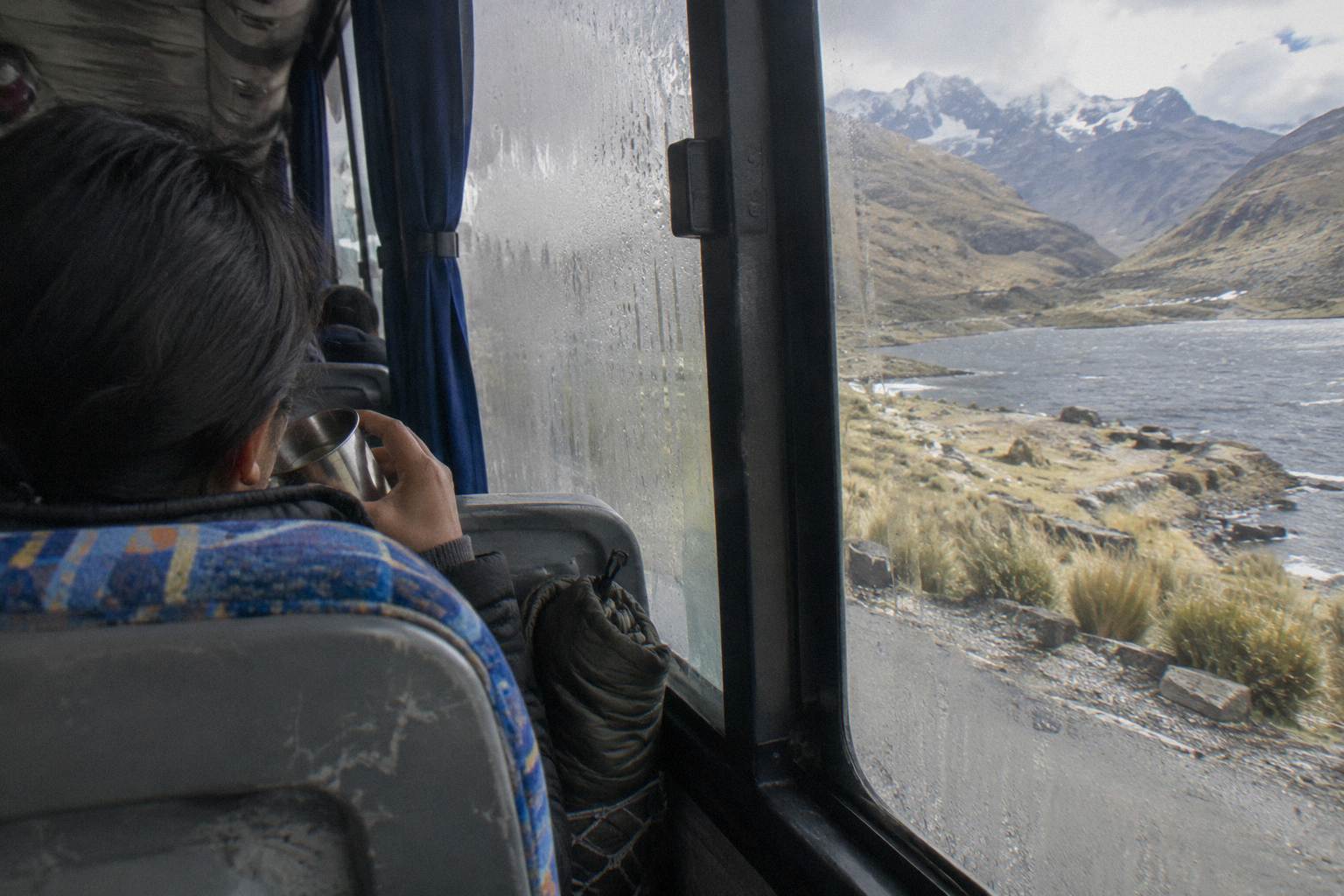
Booking terms differ by product, and the listings make the contrast plain. The tourist buses on this page carry free cancellation up to 24 hours before for a full refund as listed, while the First Class Huaraz ticket from Lima, a northern product with no connection to this corridor, states on its own listing that it is non-refundable and cannot be changed. Reading the cancellation line before paying, not after, is the habit worth forming.
One operator page worth reading in full is Cruz del Sur's Lima to Cusco fare page, which shows the shape of a long highland line: seven daily departures as the operator lists them, online sales until one hour before departure, and luggage terms printed with the ticket. It is a Lima to Cusco page, not an Ayacucho page, and it is offered here as a window onto how a major operator documents the corridor this article is about.
Common Questions About The Ayacucho To Cusco Bus Route
How Far Is It From Ayacucho To Cusco By Bus?
No verified distance or driving figure exists for the direct Ayacucho to Cusco leg. The measured line that touches both cities is Cusco to Lima through Abancay and Nazca, about 1,103 km with an OSRM free-flow drive estimate of 17.8 h, and timetabled trips on that line run 20 hours or more. Any specific Ayacucho to Cusco kilometre figure you see should be treated with caution.
How High Are Ayacucho, Abancay And Cusco?
Ayacucho sits at 2,797 m, Abancay at 2,500 m and Cusco at about 3,400 m, all figures from Peru's national statistics institute. The Cusco value is printed as an approximate because two official editions differ.
Is The Abancay Road Affected By Protests?
The UK FCDO lists Ayacucho and Cusco among regions with recent protests and states that demonstrations "can become violent and lead to roadblocks". SUTRAN's road alert map shows closures and restrictions in real time, and the FCDO advises "Do not attempt to pass blockades."
What Do Government Advisories Say About Buses On Mountain Routes?
The FCDO states "Bus crashes are common, especially at night" and advises avoiding overnight travel in mountainous and remote regions where possible. Canada advises avoiding buses and coaches at night. These are the advisories' own words, quoted rather than summarised.
Can I Change A Peruvian Bus Ticket After Buying It?
INDECOPI states that a domestic bus ticket can be postponed or transferred with at least 24 hours notice, with only the real cost of reissue charged and no penalty. Some tourist products, including the Puno to Cusco bus on this page, list free cancellation up to 24 hours before for a full refund.
What Is The Free Luggage Allowance On Peruvian Buses?
Up to 20 kg travels free on national bus service under Peru's national transit regulation, and a fare receipt is the passenger's right. SUTRAN advises getting a luggage ticket for hold bags. Operator allowances print with attribution where the operator states them.