
Lima To Ayacucho By Bus: Routes Via Pisco Or Huancayo
The Lima to Ayacucho bus run crosses from sea level to nearly 2,797 m on roads that wind through the central Andes. This guide sets out the distance, the altitude change, how routing varies, what the ticket rules give you, and what to check before booking.
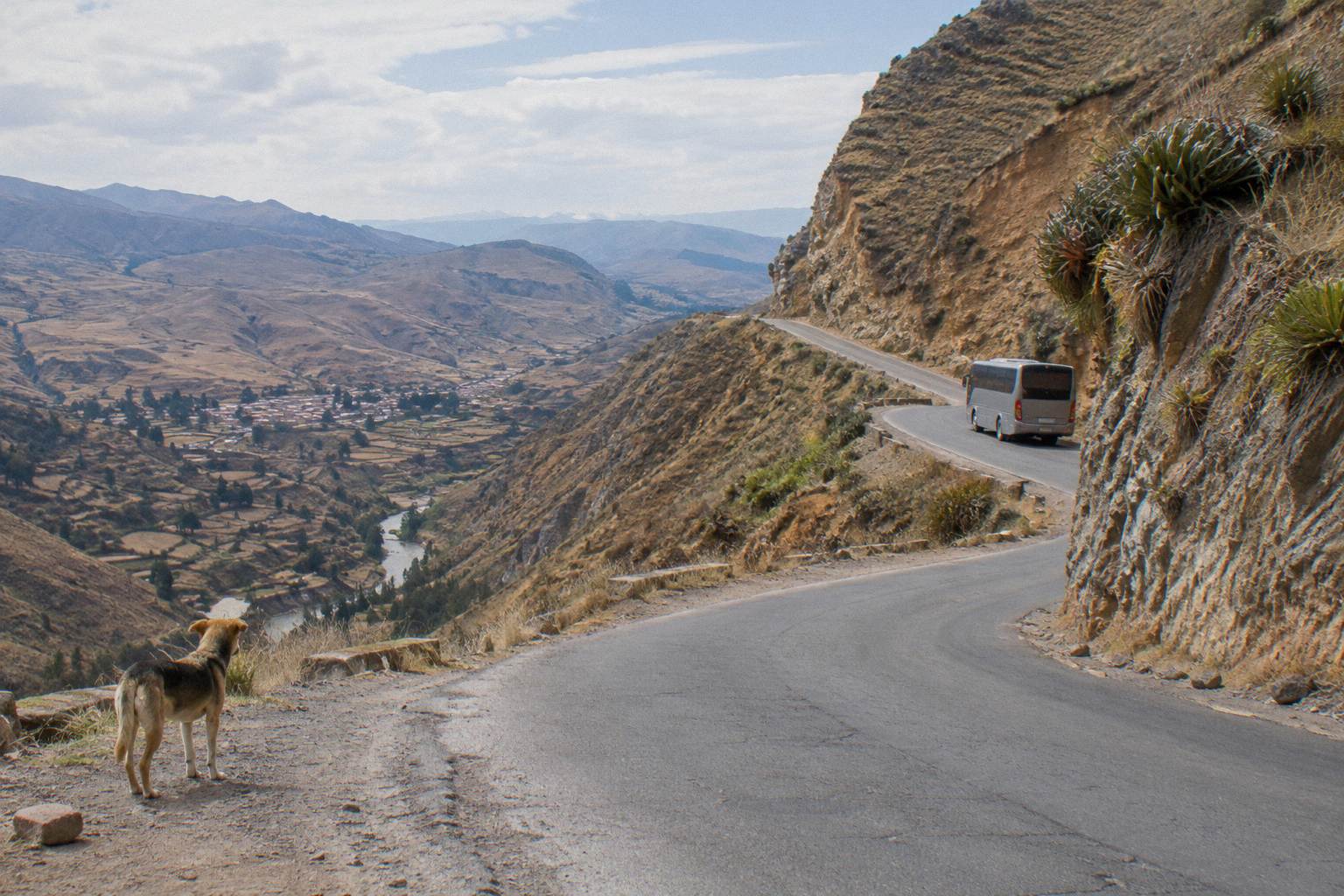
Short answer
Lima to Ayacucho measures about 569 km, a free-flow drive estimate of about 9.3 hours that real bus journeys exceed. Ayacucho sits at 2,797 m while Lima is at 162 m. No single verified road routing exists, so describe options with the carrier. Buy a seat through the operator's own listing and check SUTRAN's road alert map before departure.
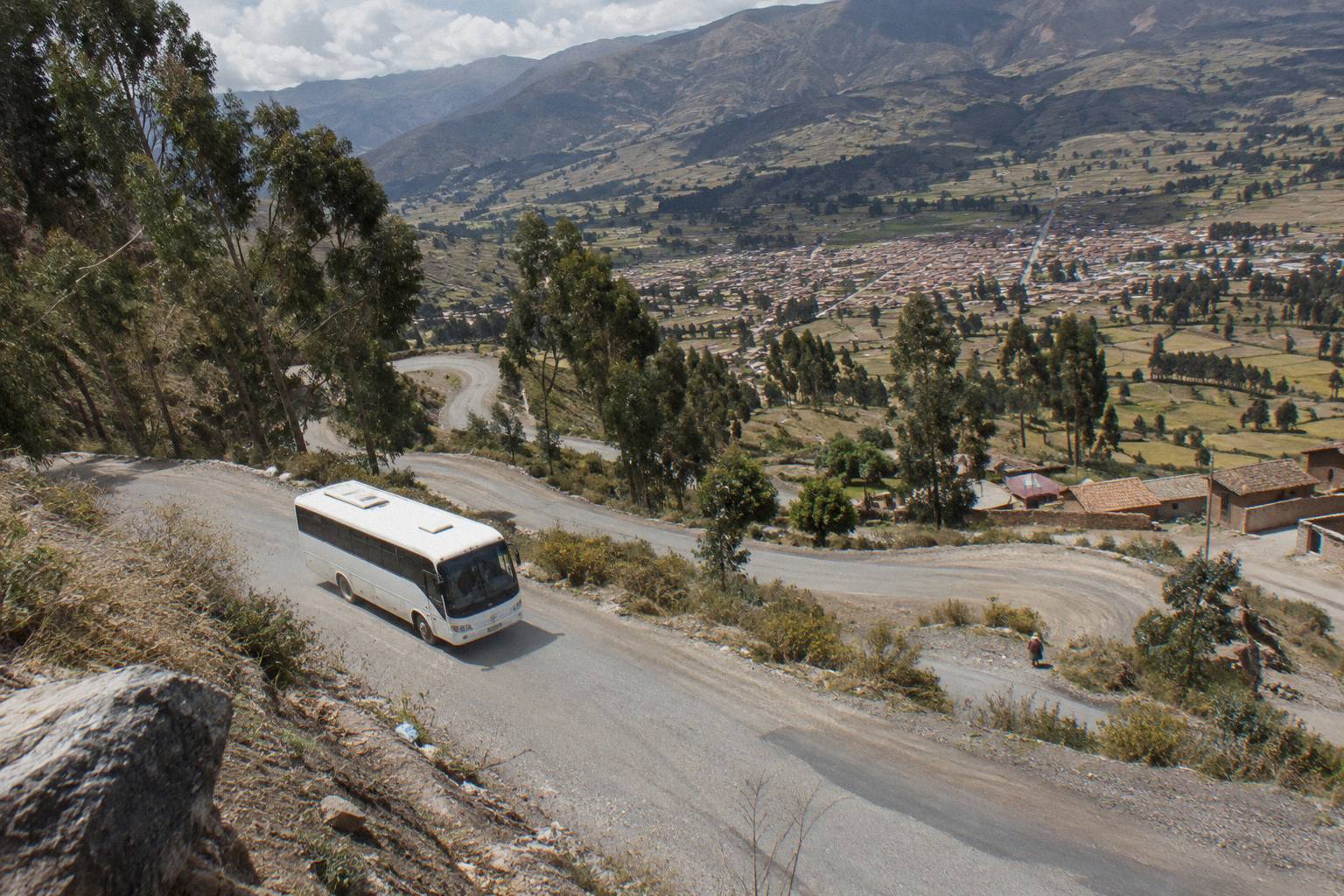
The Lima to Ayacucho bus run is one of the least documented long routes in southern-central Peru. It leaves the coast at Lima, at 162 m above sea level per INEI figures, and finishes in Ayacucho at 2,797 m, a climb of more than two and a half vertical kilometres. Carriers sell it as a single ticket, but the road behind that ticket varies by operator and season, and the practical questions a buyer asks, how far, how high, where from, and what happens when the road closes, have answers that change with the weather and the protest calendar.
This guide works through those questions in order. It sticks to figures that come from official or operator sources: the OSRM free-flow drive estimate for the pair, the INEI altitude values, the passenger-rights rules in Peru's national transit regulation, and the government travel advice that names Ayacucho among regions with recent protests.
How Far Is Lima To Ayacucho By Bus?
The straight road distance from Lima to Ayacucho is about 569 km, and the OSRM free-flow drive estimate for that pair is about 9.3 hours. That is a routing-engine estimate of driving with no traffic, no stops and no road works, not a bus timetable promise, and real timetabled journeys on mountain roads run well beyond it. Treat every published bus duration on this corridor as the operator's own claim rather than a fixed fact.
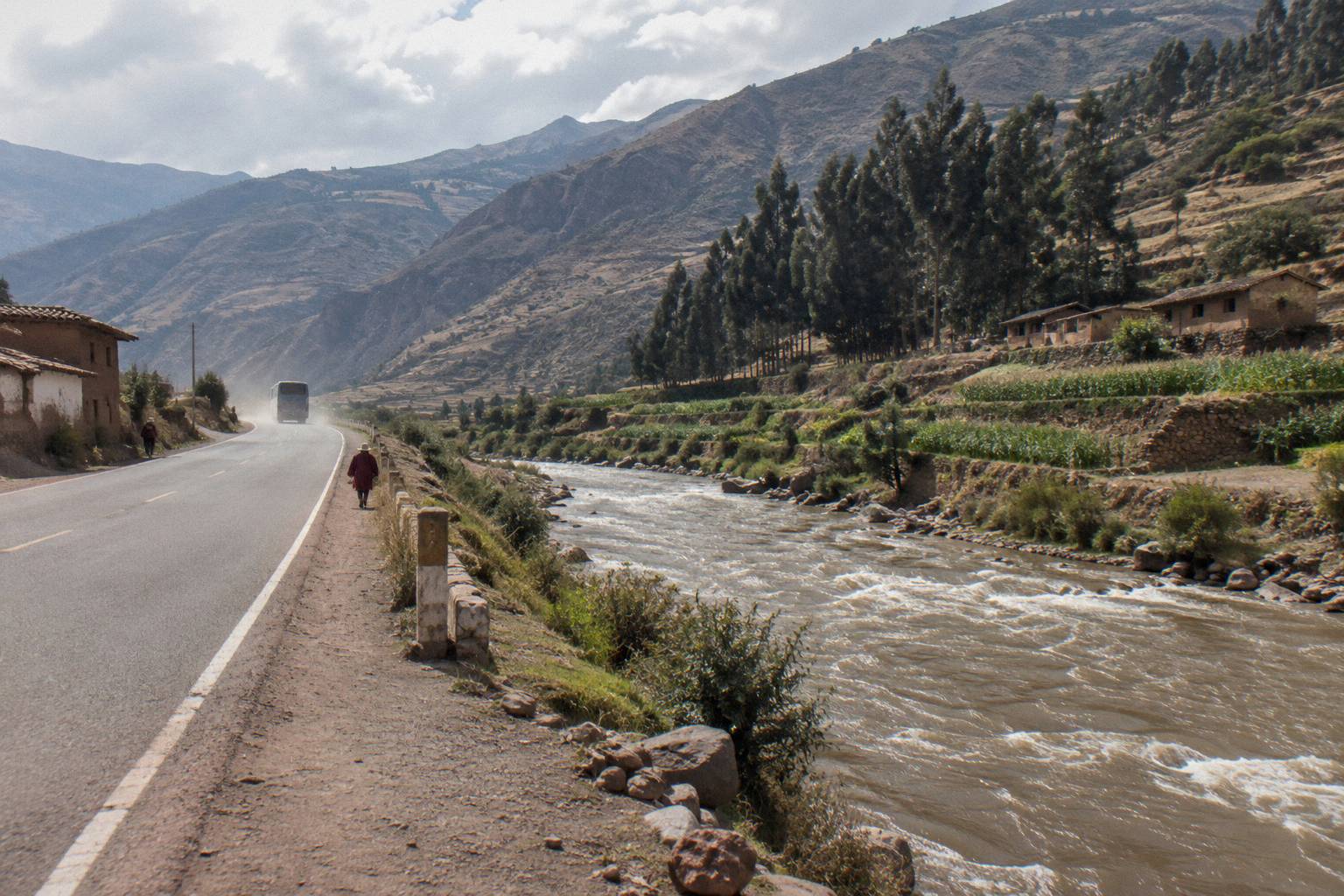
Peru's central sierra roads carry hairpins, gradients, single-lane stretches and periodic closures, so a routing engine's clean run bears little relation to how a loaded bus actually covers the ground. The UK FCDO's road advice for Peru notes that "Bus crashes are common, especially at night. Only use reputable transport companies, and where possible, avoid overnight travel, especially in mountainous and remote regions", and the Lima to Ayacucho corridor is exactly the mountainous category that sentence describes. When a carrier quotes a duration for this run, read it as that operator's own estimate, and compare several listings rather than trusting one.
A related caution on speed: SUTRAN, Peru's land transport regulator, states that the 90 km/h limit for interprovincial buses applies only on roads that carry no other speed sign, which on Andean descents is rarely the case. So even the legal ceiling is lower than the round number suggests, and the free-flow estimate quietly assumes speeds the terrain will not allow.
It also helps to set this route beside its neighbours on the map of pairs. Lima to Huancayo measures about 301 km with a free-flow estimate of about 6.2 hours, and Lima to Huaraz about 402 km at about 5.5 hours. Ayacucho, at about 569 km, is the longer commitment of the three central-range runs out of Lima, which is why the advance-booking question at the end of this guide matters more here than on a coastal hop.
| Pair | Distance | Free-flow drive estimate |
|---|---|---|
| Lima to Ayacucho | about 569 km | about 9.3 h |
| Lima to Huancayo | about 301 km | about 6.2 h |
| Lima to Huaraz | about 402 km | about 5.5 h |
The table above is the whole distance picture for these routes. Any other figure you see on a booking page belongs to that operator's own routing claim, and each free-flow number describes its own city pair only.
Which Road Does The Lima To Ayacucho Bus Take?
There is no single road routing for the Lima to Ayacucho bus. Some services run the mountain road up through the central highlands, others swing down the coast and climb inland, and operators change routing with road conditions and season. The honest answer is to ask the carrier which road a specific service takes before you book, because the one fixed fact is the 569 km city-pair distance, not the itinerary.
The route description in this article's title, "via Pisco or Huancayo", reflects the two broad approaches travellers discuss: a coastal-leg option that turns inland from the Pan-American corridor, and an inland option that climbs through the central sierra toward Huancayo territory before dropping to Ayacucho. Neither leg has a operator page behind it, so this guide prints no kilometre figure for either approach, no climb profile and no pass heights. What can be said is that routing choice changes the altitude profile a great deal: the coastal leg stays near sea level for hours before a long single climb, while the inland route crosses sustained high ground earlier.
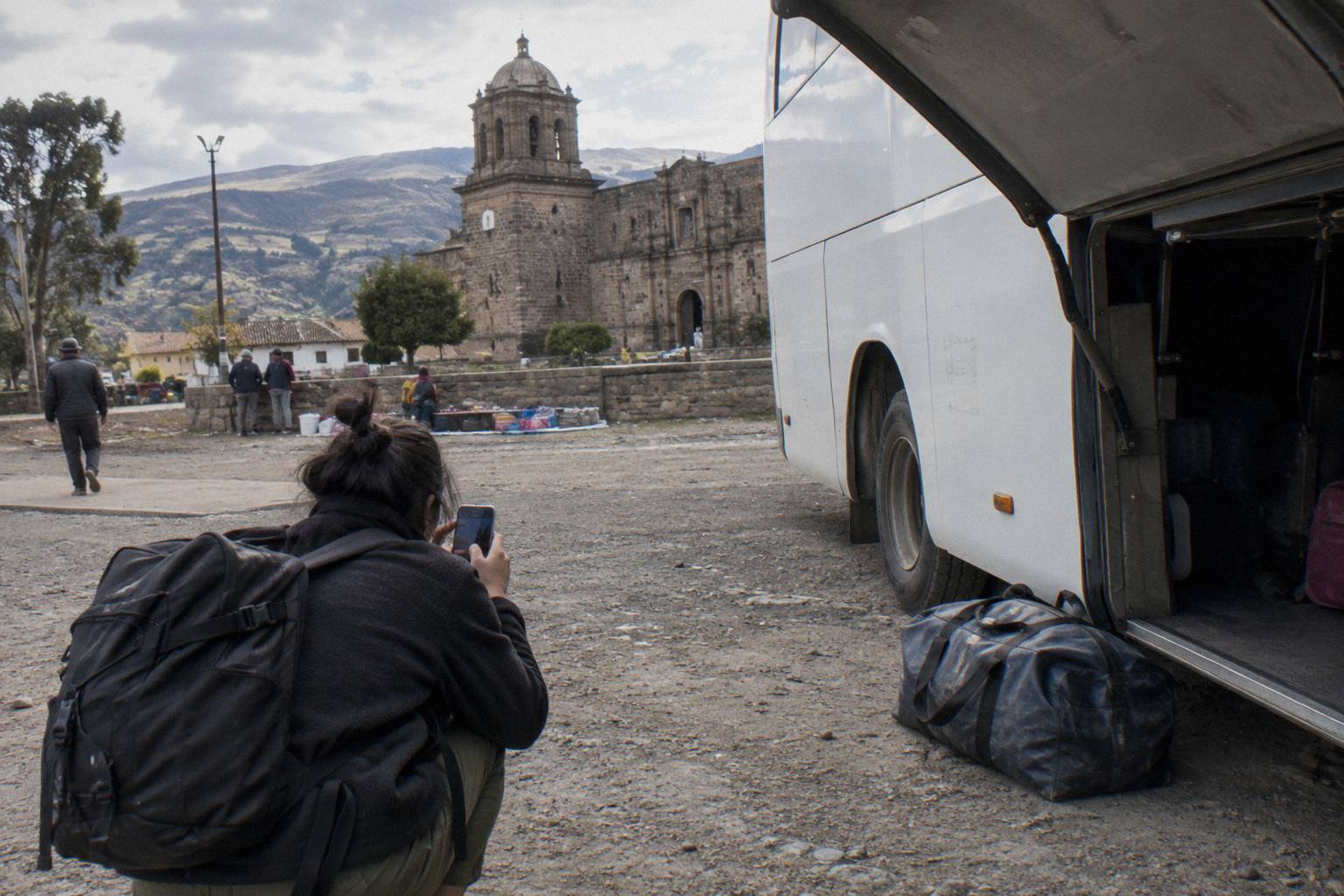
Peru's transit regulation adds a rule that shapes routing without naming roads: regular carriers must use habilitated terminals at origin, destination and stops, and may not use the public road as a terminal. So a Lima to Ayacucho service boards at defined points rather than curbside, and the terminal question below matters as much as the road question.
There is a practical way to settle the routing question when you buy. Ask the operator two things: which road the service takes, and whether that changes in the rainy season. A carrier that answers both without hesitation is telling you it runs the corridor regularly; one that hedges is telling you something too. The confirmation email is also the place to verify the boarding address in Lima and the arrival point in Ayacucho, since both belong to the operator's own network rather than to a city-wide terminal system.
If you are weighing this route against other ways out of Lima, the guides on how Peru bus travel works and the Peru bus routes overview set out the wider network. For buying the seat itself, a seat search for this route is the practical next step: Check availability.
Before any mountain leg, plenty of travellers first need to get from Lima airport into the city. The Airport Express Lima bus from Lima airport to Miraflores lists from US$6.5 per person on its listing, runs an air-conditioned luxury bus, and carries free cancellation up to 24 hours before for a full refund. The listing gives about 1 hour for the run, and reviews are on the listing.
What Is The Altitude Change On This Route?
Lima sits at 162 m above sea level and Ayacucho at 2,797 m, both INEI figures, so the route makes a full climb from the coast to nearly 2,800 m, with even higher ground crossed on an inland routing. Ayacucho's elevation is high enough to affect sleep and breathing on the first night, though it stays below Cusco's roughly 3,400 m, making an easy arrival day the smarter plan.
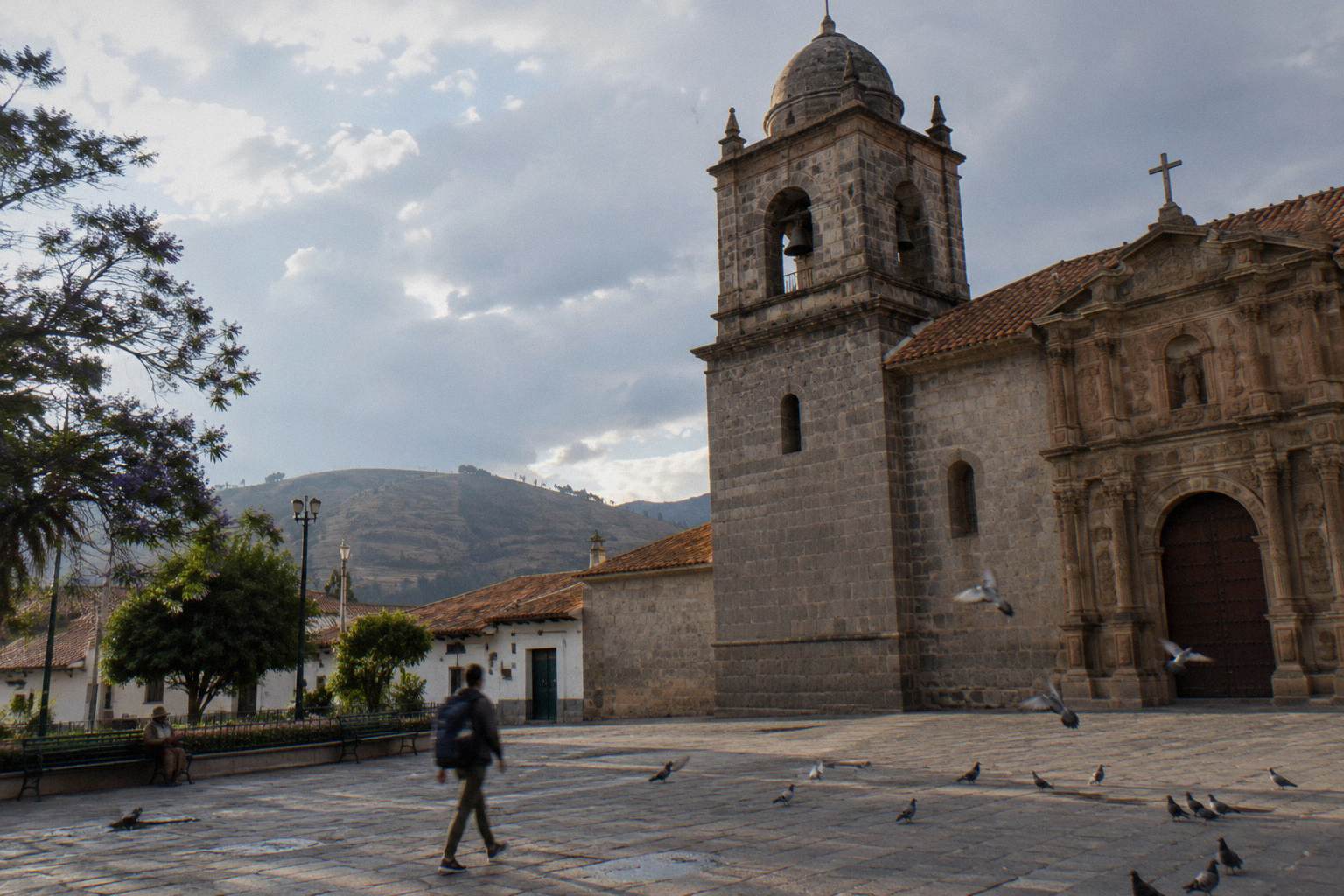
The net climb understates the trip, because the inland routing crosses terrain well above Ayacucho's own elevation before descending. What the INEI table does give is a clean comparison of the endpoints, and it is worth setting beside the other high cities travellers pair with this route.
| City | Altitude (INEI) |
|---|---|
| Lima | 162 m |
| Ayacucho | 2,797 m |
| Huancayo | 3,294 m |
| Cusco | about 3,400 m |
| Huaraz | 3,073 m |
Huancayo appears in that table because it is one of the two routing references for this corridor, and its 3,294 m INEI value shows what a fully inland Lima journey can involve. Huaraz appears because it is the destination of the featured ticket out of Lima, the First Class Huaraz bus ticket from Lima to Huaraz, which departs from Miraflores or Lima airport and lists from US$50 per person. That ticket is non-refundable and cannot be changed, and it needs passport numbers and full names to print, so it suits a firm itinerary rather than a loose one. For altitude preparation itself, the Peru bus altitude sickness guide goes into arrival-day planning in detail.
A word on what altitude does to a bus seat choice. On a climb of this size, the aisle-side seats give easier movement if a headache builds, and the front of the cabin rides more smoothly on descending switchbacks, which helps anyone whose stomach disagrees with sustained curves. None of that is medical advice, and none of it substitutes for a slow first day; it is seat selection, which is a comfort question rather than a treatment.
Where Does The Bus Leave From In Lima And Arrive In Ayacucho?
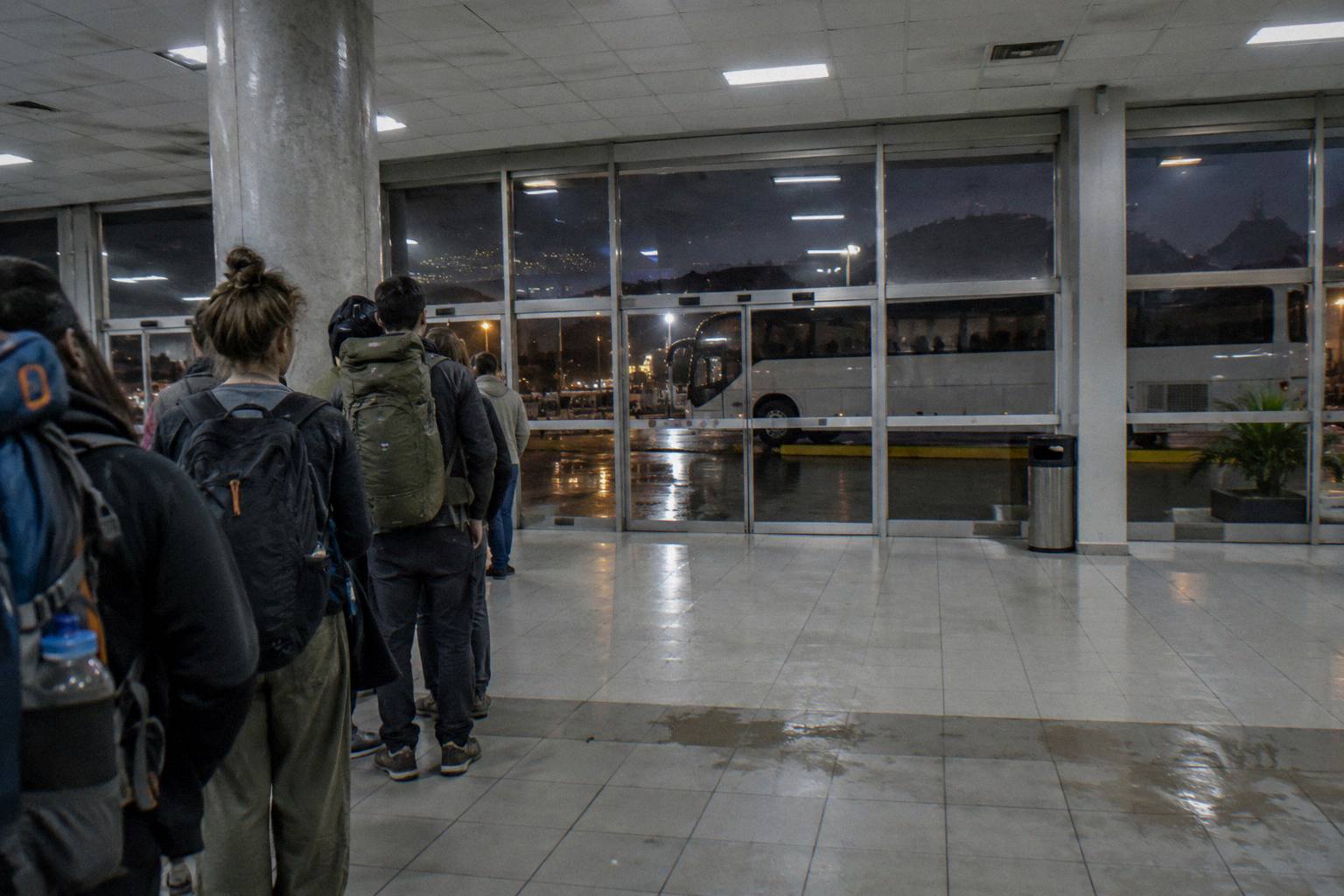
Lima has no single main bus terminal: each carrier uses its own address, and regular services must board inside habilitated terminals under Peru's transit regulation. The Lima terminal addresses on record are company-specific, such as Cruz del Sur at Av. Javier Prado Este 1109, La Victoria, and Oltursa at Jiron Manuel Portocarrero No 380, Surquillo. For Ayacucho, no terminal street address exists, so confirm the arrival point with the carrier.
The company-specific point matters more than it sounds. A traveller who books a seat and then searches "Lima bus terminal" on the morning of departure can end up at the wrong end of a city of ten million people. Peru's national transit regulation requires regular carriers to use terminals at origin, destination and stops, and forbids using the public road as a terminal, so boarding points are fixed and published, but they are fixed per company, not per city. Print your carrier's own address, not a generic one. The rest of the planning pages sit on Peru By Bus.
| City | Carrier | Terminal address |
|---|---|---|
| Lima | Cruz del Sur | Av. Javier Prado Este 1109, Urb. Sta. Catalina, La Victoria |
| Lima | Oltursa | Jiron Manuel Portocarrero No 380, Surquillo |
| Lima | Movil Bus | Av. Tomas Valle 651, Terrapuerto del Norte, SMP |
| Ayacucho | any carrier | Check the operator's page |
When you buy, the confirmation should name the arrival terminal; if it does not, ask before travel day. The wider Peru bus terminals by city guide collects the addresses that are on record.
Getting to your departure terminal has its own caution. The FCDO warns "There is a risk of robbery by criminals posing as taxi drivers, especially at Jorge Chavez International Airport and bus terminals", and advises travellers to "use one of the taxis registered at bus terminals". Budget the last kilometre of any Lima departure with the same care as the ten-hour leg after it.
Canada's advice reinforces the same habit at both ends of the route: "Remain particularly vigilant at bus terminals and in taxis" and "Only use authorized cabs located inside airport terminals and bus stations." Arriving in Ayacucho after dark follows the same rule in reverse, so a registered cab from the terminal to your accommodation, arranged at the terminal itself, is the pattern the advice points to.
What Do The Ticket Rules Give You?
Peru's national transit regulation gives every domestic bus passenger a licensed, inspected vehicle, a seat rather than standing, up to 20 kg of hold luggage free on national service, and a receipt for the fare. INDECOPI adds that a domestic ticket can be postponed or transferred with 24 hours notice, with only the real reissue cost charged. Cancellation refunds depend on the fare type, and the regulation's voluntary-cancellation refund rule is not clearly published.
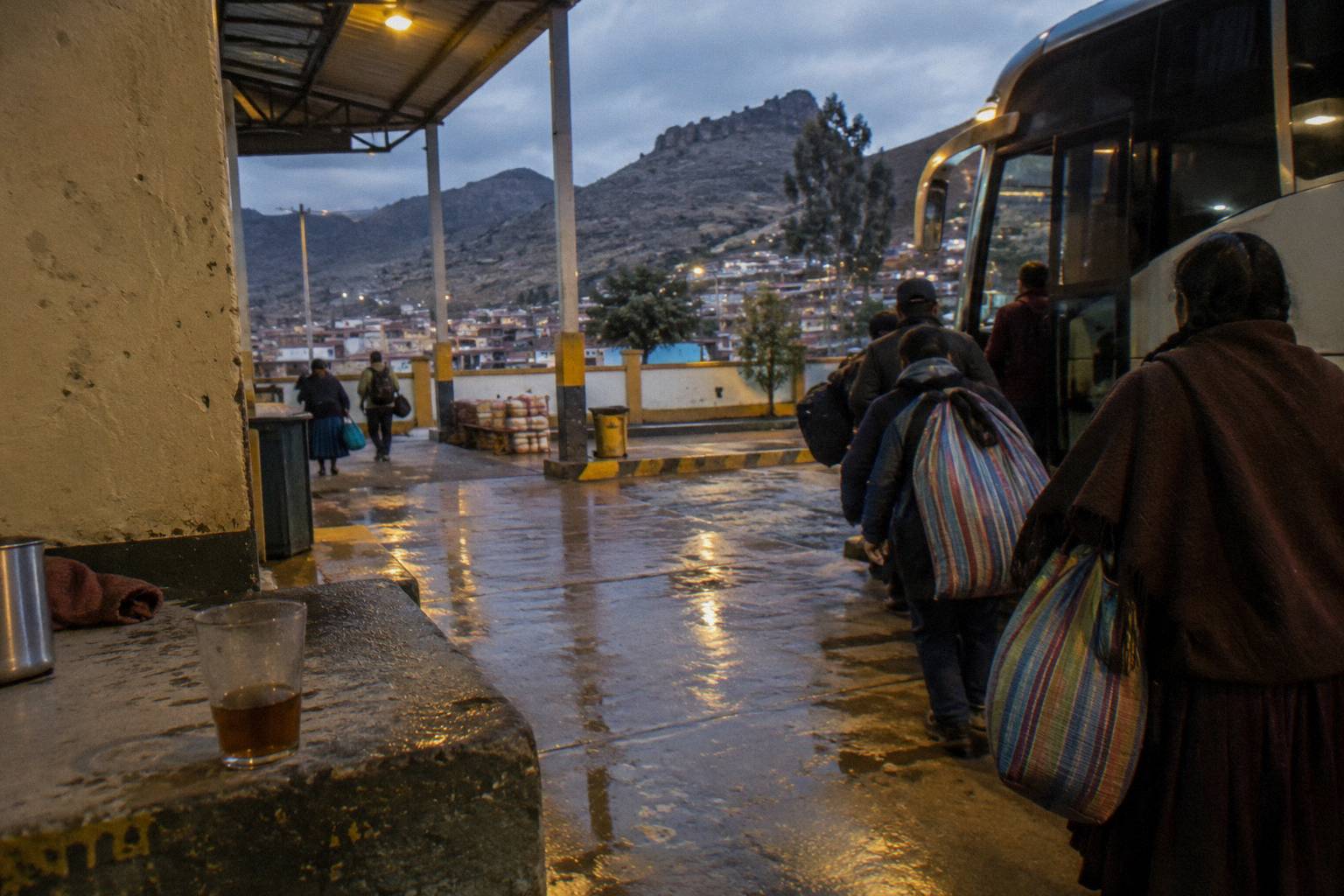
Those rights travel with the ticket regardless of carrier. The 20 kg luggage allowance on national service is a regulation figure, not a marketing perk, and it is worth knowing that individual operators publish their own splits: Cruz del Sur lists 20 kg hold plus 6 kg hand luggage, Oltursa lists 20 kg plus a single hand piece up to 5 kg, and Movil Bus lists 20 kg hold in up to three pieces plus 8 kg hand luggage in up to two. SUTRAN also advises passengers to obtain a luggage ticket for hold bags.
The postponement right is the one travellers use least and should know best. INDECOPI, Peru's consumer authority, states that a domestic bus ticket can be postponed or transferred with at least 24 hours notice, that only the real cost of reissuing may be charged, and that no penalty applies. If a road closure or a strike moves your dates, that is the lever. Complaints that a carrier will not resolve go to the company's Libro de Reclamaciones first, then to INDECOPI's Reclama Virtual portal.
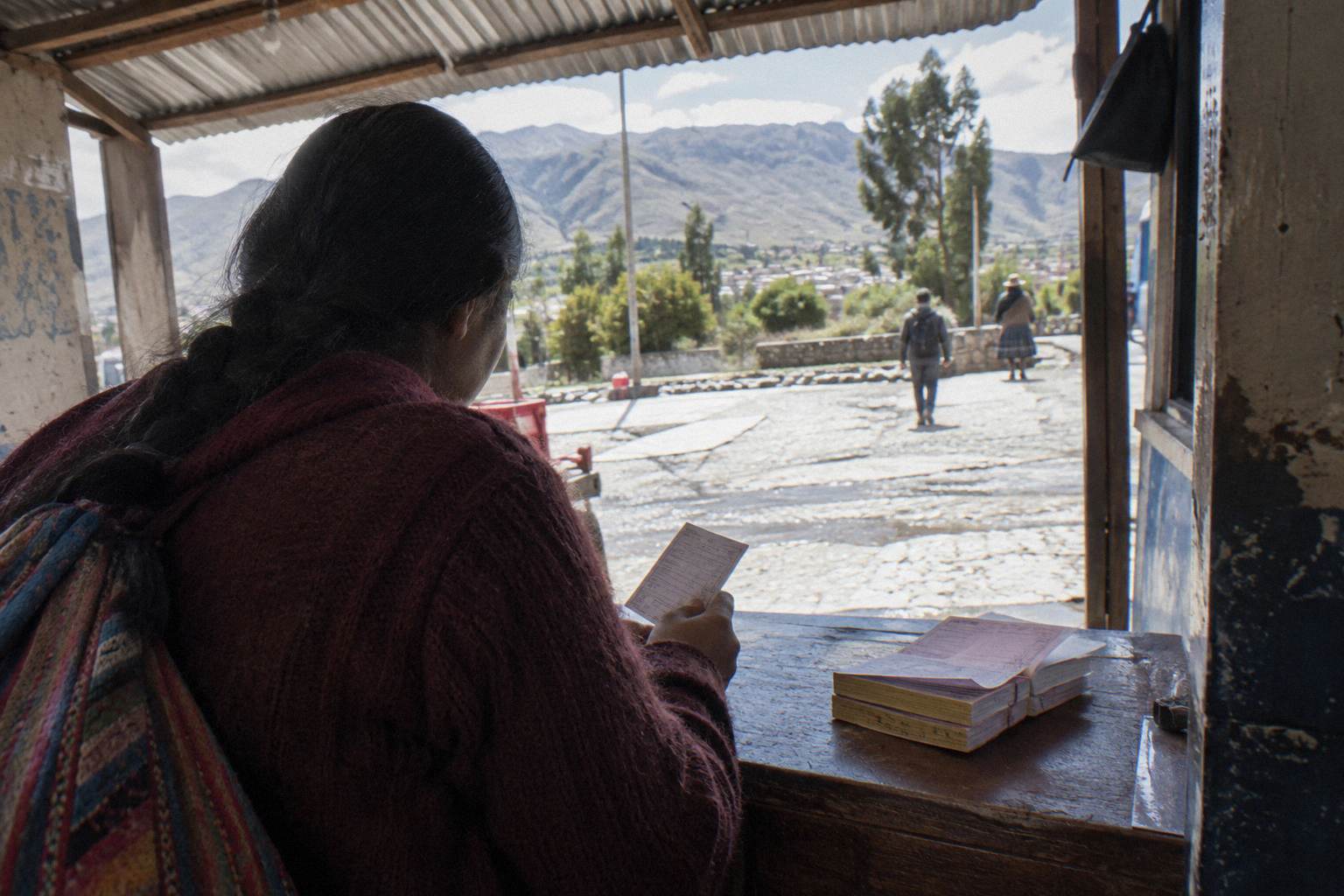
A second right sits inside the same rule set and is worth quoting exactly: Peru's national transit regulation entitles a passenger to a licensed vehicle with technical inspection and insurance, boarding only at authorised points with the bus stopped, an own seat from age five, a receipt for the fare, and never more passengers than the manufacturer's seat count. Standing is not permitted on national service, which is a meaningful protection on a mountain route where aisle crowding would be more than an annoyance.
Before travel day there is also a check most passengers never run. SUTRAN publishes a bus and driver lookup service where a plate number or driver DNI confirms the vehicle's papers are in order. It takes a minute and it is the regulator's own tool.
| Right or allowance | Source |
|---|---|
| Up to 20 kg hold luggage free, national service | Peru's national transit regulation |
| Postpone or transfer with 24 h notice, real reissue cost only | INDECOPI |
| Seat, licensed vehicle, fare receipt | Peru's national transit regulation |
| Luggage ticket for hold bags | SUTRAN advises |
How Do Strikes And Road Closures Affect The Ayacucho Route?
Ayacucho is one of the regions the UK FCDO names as having seen recent protests, and Peru's central mountain roads are exactly where blockades bite. The FCDO states "Political protests in Peru are unpredictable and can escalate quickly" and advises "Do not attempt to pass blockades." The practical defence is checking SUTRAN's road alert map, which shows closed roads in red and restricted roads in yellow, the day before and the morning of travel.
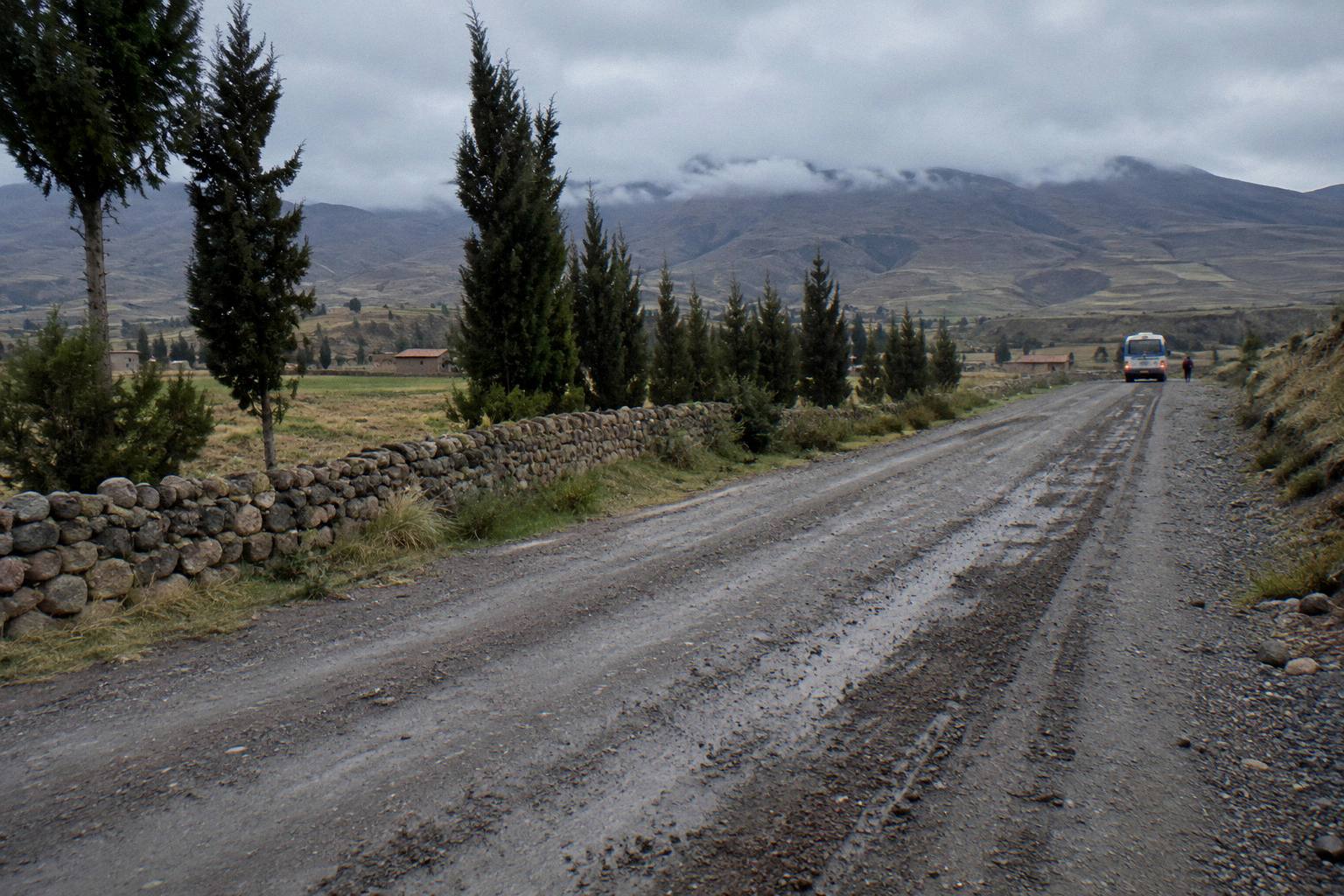
The government advice on this point is unusually specific. The FCDO lists Arequipa, Ayacucho, Cusco, La Libertad, Madre de Dios and Puno as regions with recent protests, and adds that local groups "can announce strike action, with little or no notice, particularly in areas connected to mining", a description that fits parts of the central sierra closely. The US Embassy's republication of the State Department advisory notes that "Demonstrations can shut down local roads, trains, and major highways. This often happens without warning or clear information on reopening times." Canada's advice for Peru similarly warns that "Roadblocks are frequently erected during demonstrations." None of this says a trip will go wrong; it says the trip's plan needs a disruption branch.
That branch is short. SUTRAN's interactive alert map plots closures in red, restrictions in yellow and open roads in green, updated through the day, and the regulator runs a 24 hour WhatsApp line for road-status queries. Pair the map with a call to the carrier, because an operator knows its own service suspensions before any map does. The deeper planning detail, including what to do if your bus is stopped, is in the Peru bus delays, strikes and rainy season guide.
If a blockade does catch your service on the road, the FCDO's instruction is plain: "Do not attempt to pass blockades." Stay with the vehicle, follow the crew's direction, and let the carrier arrange the return or the reroute; the INDECOPI postponement right covers the ticket once dates move. The personal-safety questions in that scenario are covered in the Peru bus safety guide, which works through the government advice line by line.
Season compounds politics on this corridor. Peru's Andean rainy season runs roughly September to April, and the FCDO's El Nino notice warns that "Through late 2026 to April 2027, the El Nino weather event is expected to generate heavy rainfall, possible flooding, landslides, and mudslides, especially in, but not restricted to, the northern and central coast. These could cause travel disruption, such as road closures." A wet-season Ayacucho ticket deserves a flexible arrival plan and a day of slack on the far end.
Should You Book This Seat In Advance?
Yes, for three reasons: long mountain routes have fewer departures than coastal runs, dates around holidays and post-strike recoveries fill first, and the INDECOPI postponement right means an early ticket is changeable rather than locked. Book early, keep the 24 hour transfer window in mind, and screenshot your terminal address before travel day.
Booking also separates the two halves of this trip that travellers often blur. The mountain leg to Ayacucho is one purchase, and the airport-to-city or city-to-departure legs are separate ones. For the airport end, the Lima airport bus ticket above handles the transfer with free cancellation up to 24 hours before. For a coastal alternative out of Lima if the Ayacucho dates do not work, the Wayki Bus Peru one-way tourist bus from Miraflores in Lima to Paracas runs from Miraflores and Barranco to El Chaco in Paracas, rated 4.2 across 62 reviews, with the listing giving 3 hours and free cancellation up to 24 hours before. A longer coastal-and-sierra combination is the Wayki Bus Peru one-way tourist bus from Lima to Huacachina with a Paracas stop, rated 3.7 across 77 reviews, which the listing gives as 8 hours including the Paracas stop. The Peru bus tickets booking guide walks through the purchase steps in full.
One plain fact on the alternative networks: Peru Hop does not run a Lima to Ayacucho service, so a hop-on hop-off pass is not an option on this route. The Peru Hop bus network guide covers where that product does run.
Common Questions About The Lima To Ayacucho Bus
How Far Is Lima To Ayacucho By Bus?
About 569 km by road, with an OSRM free-flow drive estimate of about 9.3 hours for that pair. The estimate assumes no traffic, no stops and no closures, and real timetabled journeys on the mountain roads exceed it, so treat any operator's duration figure as that operator's own claim.
How High Is Ayacucho?
Ayacucho sits at 2,797 m above sea level per INEI, against Lima at 162 m. That is a climb of more than two and a half vertical kilometres, high enough to affect sleep on the first night, though lower than Cusco's about 3,400 m. Plan an easy arrival day.
Which Road Does The Bus Take, Via Pisco Or Via Huancayo?
No single road routing is for this corridor. Some services run a coastal leg before climbing inland, others take the central highlands road, and carriers adjust with conditions. Ask the operator which road your specific service takes before booking; the fixed fact is the 569 km city-pair distance, not the itinerary.
Where Does The Bus Leave From In Lima?
There is no single main terminal in Lima. Each carrier uses its own address, for example Cruz del Sur at Av. Javier Prado Este 1109 in La Victoria and Oltursa at Jiron Manuel Portocarrero No 380 in Surquillo, and regulation requires boarding inside terminals. Print your carrier's own address, and for Ayacucho's arrival point, check the operator's page.
Can I Change Or Postpone My Lima To Ayacucho Ticket?
INDECOPI states that a domestic bus ticket can be postponed or transferred with at least 24 hours notice, with only the real cost of reissuing charged and no penalty. Refund terms for voluntary cancellation depend on the fare type, so read the listing's cancellation line before paying.
How Do I Check For Road Closures Before Travelling?
Check SUTRAN's interactive alert map, which shows closed roads in red and restricted roads in yellow, the day before and the morning of departure, and confirm with your carrier. The FCDO names Ayacucho among regions with recent protests and advises "Do not attempt to pass blockades."