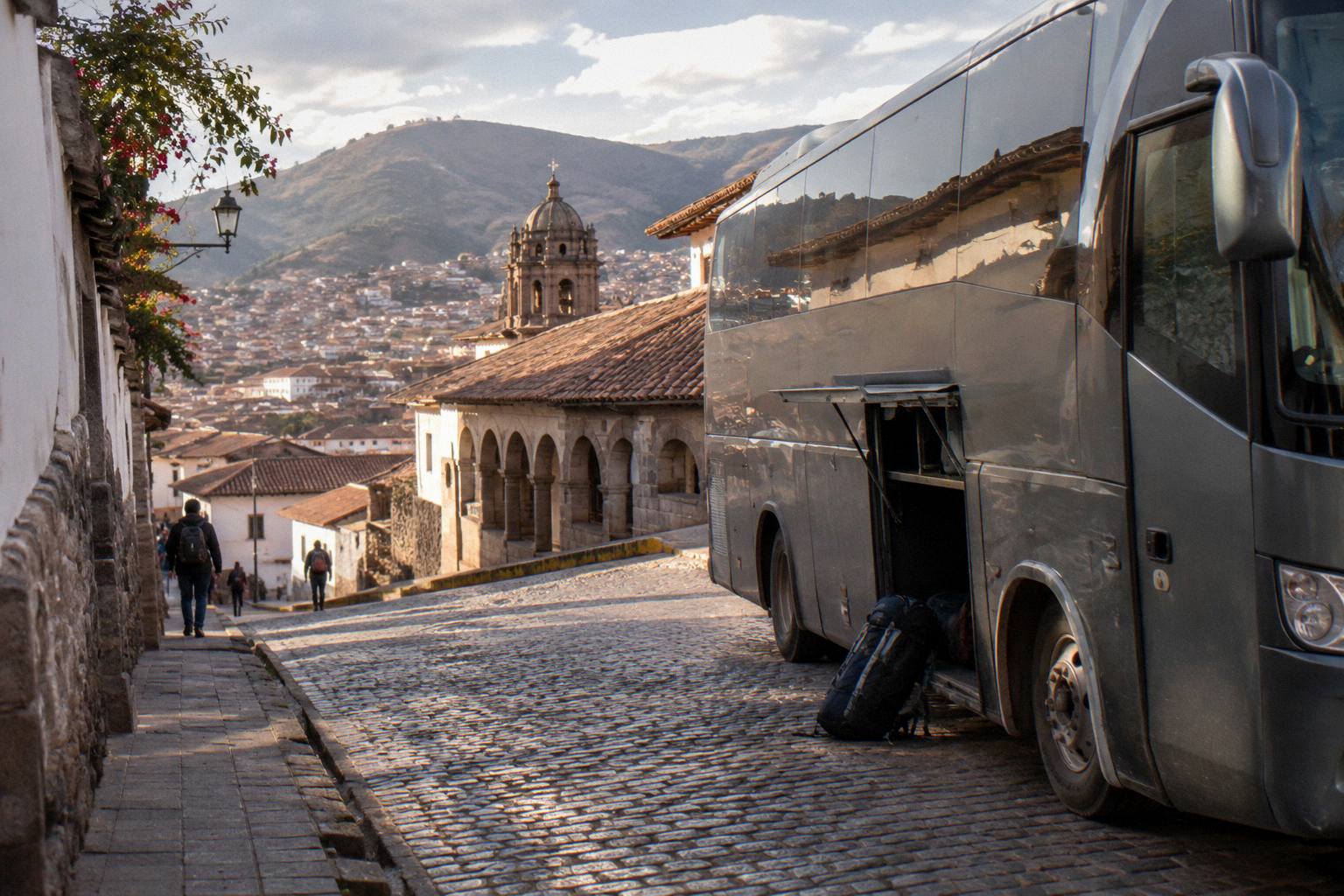
Does The Peru Hop Bus Have Bathrooms On Board?
The hop-on hop-off operator lists toilets on its Peru fleet, while its Bolivia sister service runs buses without them. Here is what the operator states, what other Peruvian operators offer, and how rest stops fill the gaps.
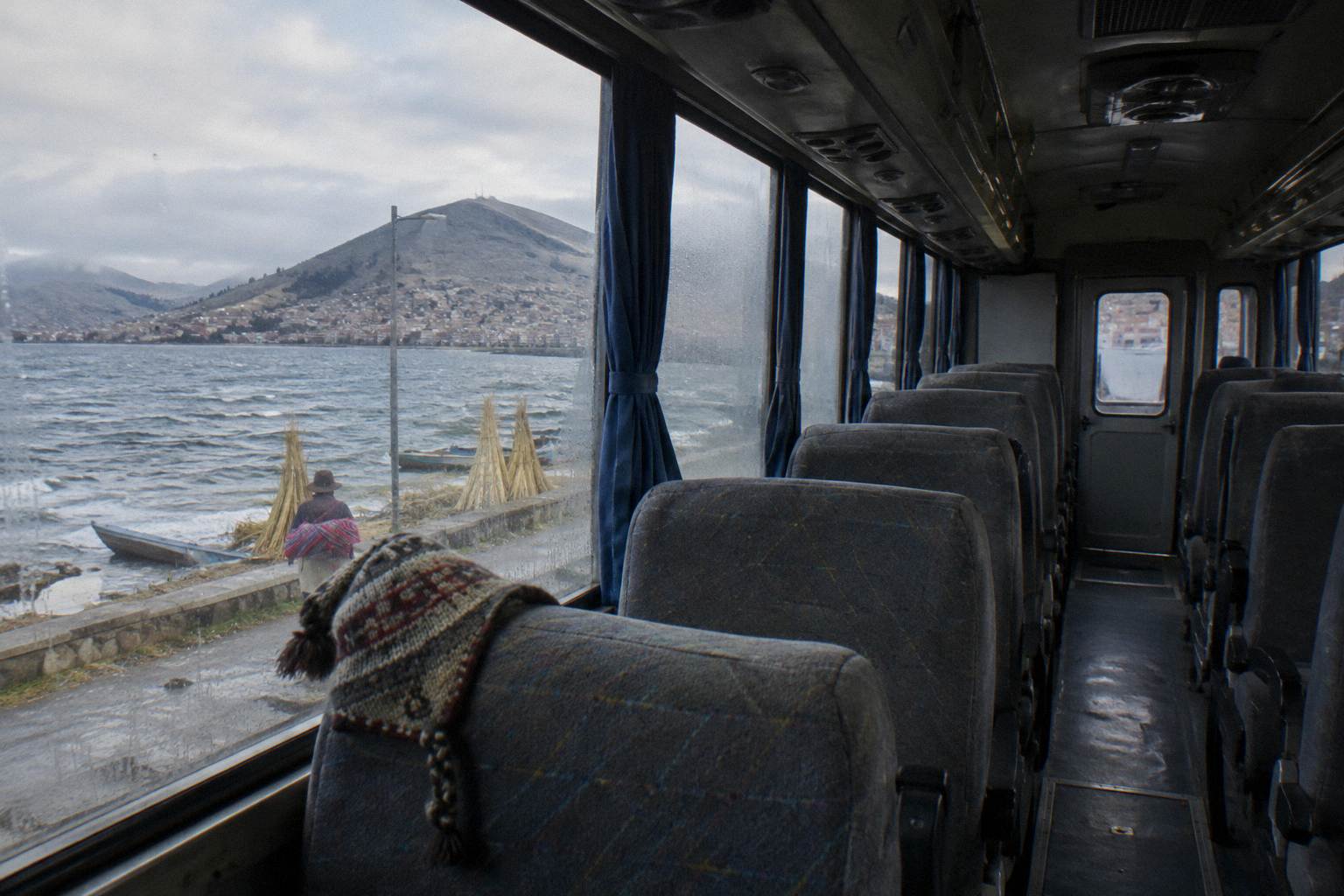
Yes, in Peru and no, into Bolivia. The operator's own fleet pages list toilets among the standard equipment of its Peru buses, alongside semi-cama reclining seats, air conditioning and heating, televisions, USB charging, GPS tracking, speed-restriction software, seatbelts and a team of drivers. The sister service that crosses Lake Titicaca into Bolivia runs buses with no onboard toilet at all, because of the lake-crossing weight limit, and public toilets stand at the Strait of Tiquina instead.
Both halves of that answer come from the operator's own pages, so both carry the same weight: they are the company describing its own fleet, not an independent inspection. Peru Hop reports a hop-on hop-off network across Peru and Bolivia, tickets valid for one year with free hopping on and off, daily buses, and a bus time that can be changed in the app up to 12 hours before departure. Peru Hop reports 395,000 or more passengers carried since 2013, drawn from more than 85 nationalities, with review pools of 20,000 or more on TripAdvisor, 8,000 or more on Google and 1,500 or more on Trustpilot.
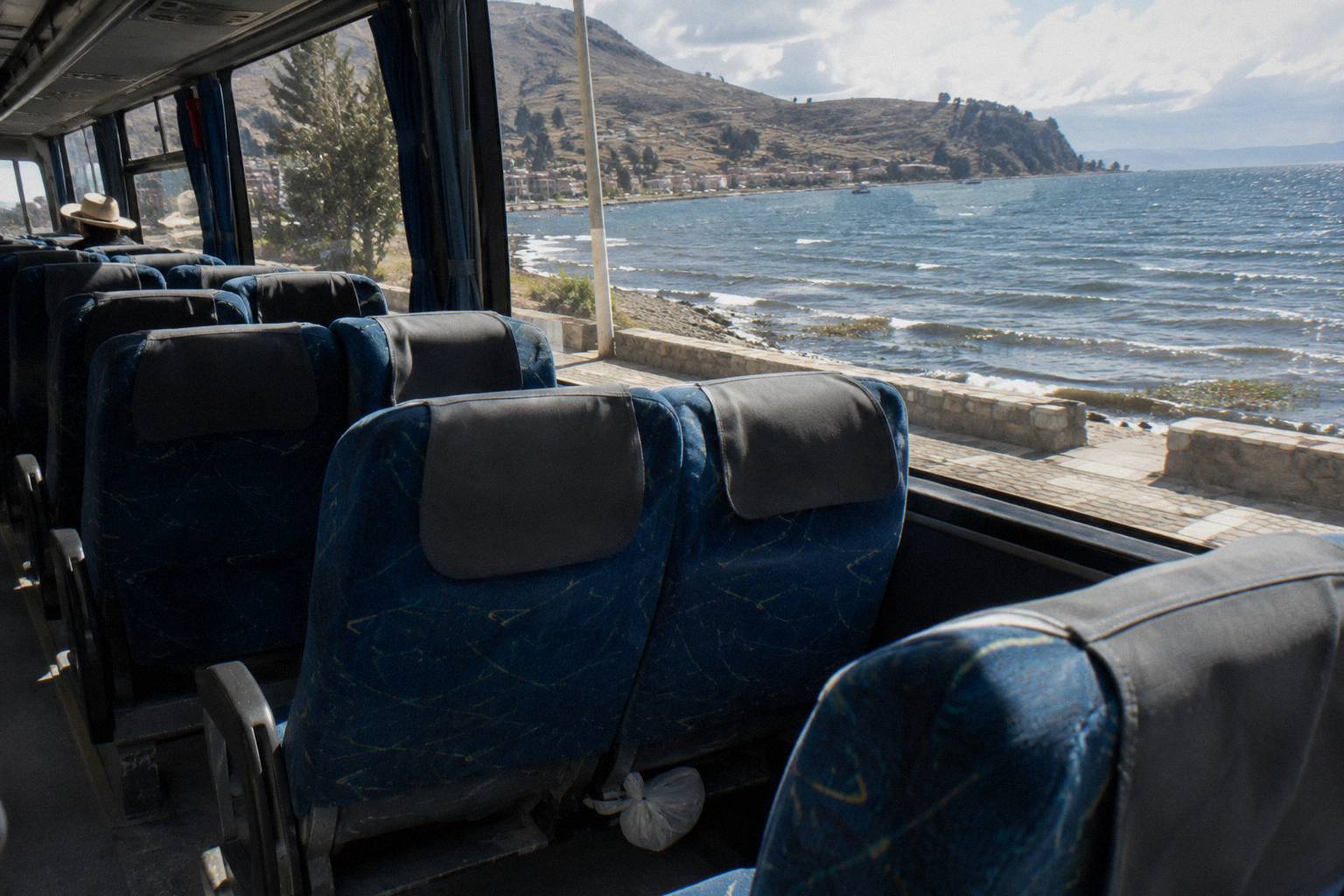
A toilet on a long-haul coach sounds like a small thing until the first mountain leg. The Lima to Cusco chain of stops that the operator's Full South pass names, Chincha, Paracas, Huacachina, Nazca, Arequipa, Lagunillas, Puno and Cusco, spans the kind of distances where a rest-room door at the back of the bus stops being a comfort detail and starts being part of the plan. The free-flow drive estimate between Nazca and Arequipa alone is 566 km and 7.8 hours, and real bus journeys exceed free-flow estimates.
For readers who want a single-seat alternative on part of that same south-coast chain, the operator's network is not the only tourist-bus option. The Wayki Bus Peru one-way tourist bus from Miraflores in Lima to Paracas is rated 4.2 across 62 reviews and runs the 251 km Lima to Paracas leg, a 3.5 hour free-flow drive estimate, in the 3 hours its listing gives. You can compare it against the other tourist-bus seats below.
The distinction between the two fleets matters because the pass network sells itself as one continuous product. A traveler holding a Lima to La Paz style pass rides Peru buses with toilets for most of the journey and then transfers to a Bolivia-bound bus that has none, and the change comes at the point where the route leaves the road and crosses the lake by boat. Knowing where the toilet disappears is part of packing for that leg.
Why The Bolivia Buses Have No Toilet
Bolivia-bound buses from Puno have no toilet because they cross Lake Titicaca on a ferry at the Strait of Tiquina, and that crossing carries a weight limit that rules out an onboard toilet and its water load. The operator confirms this on its own pages, and public toilets are available at the strait while the bus makes the crossing.
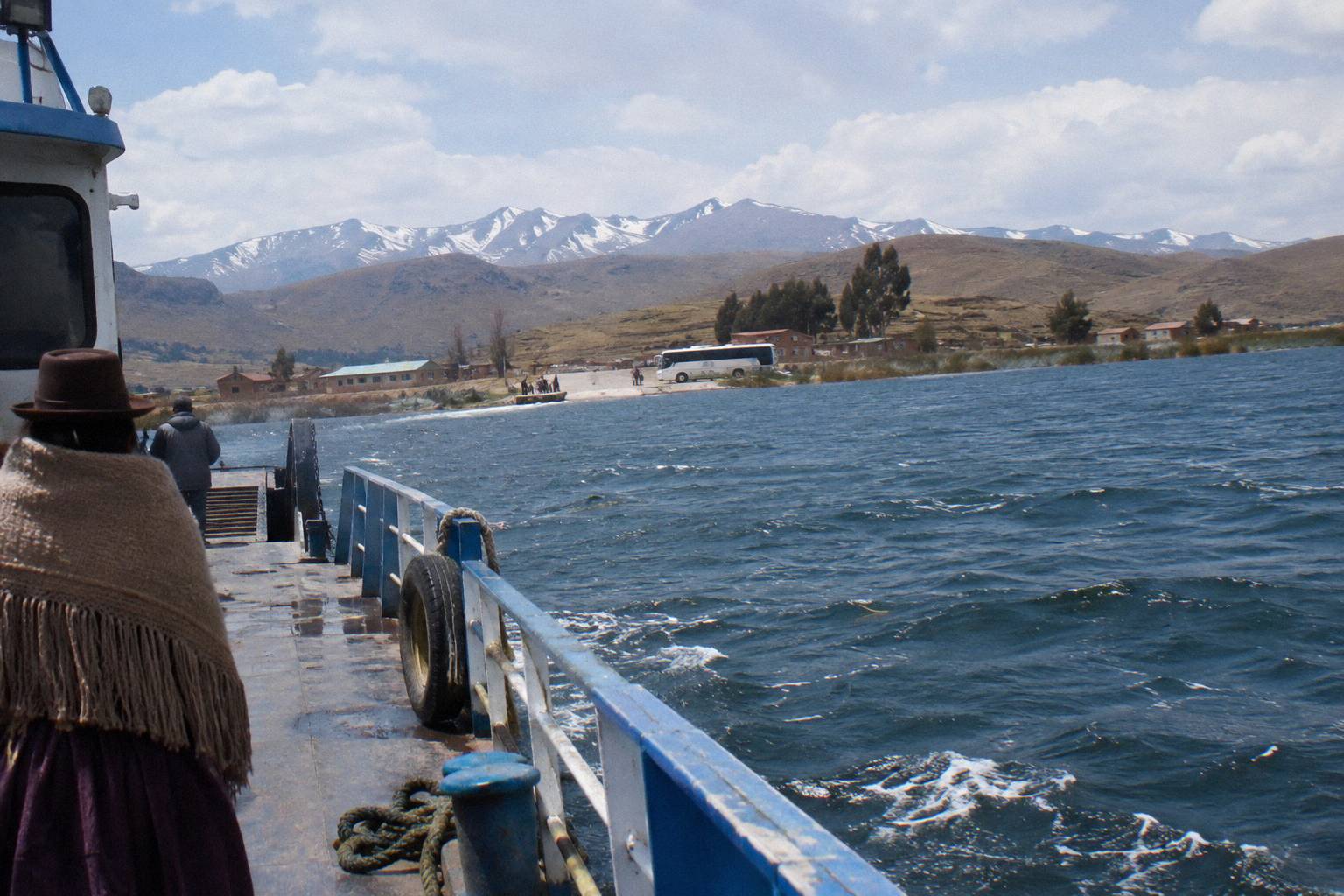
The Strait of Tiquina is not a footnote on this route. The Puno to Copacabana leg is a 142 km run with a 2.5 hour free-flow drive estimate, and that figure excludes any border wait, because the crossing from Puno toward Copacabana passes through Peruvian and Bolivian migration posts on the way. The lake crossing sits inside that journey, and the operator's guidance is to use the public toilets at the strait while the vehicles load and unload. Copacabana itself sits on the Bolivian shore, and from there the network continues toward La Paz, a further 260 km and 4.5 hours of free-flow driving from Puno, again with no border time counted.
Altitude is the other planning fact on this leg. Puno stands at 3,848 m on the INEI figures used across the Peru By Bus route pages, and Lake Titicaca itself at 3,812 m, which makes hydration part of the day and makes the location of every toilet on the route a reasonable thing to research before boarding. The operator does not publish a stop-by-stop toilet map, and this article does not invent one: the firm facts are the onboard toilets in Peru, the none onboard into Bolivia, and the public toilets at the strait.
For the leg before the lake, the Turismo Mer tourist bus from Puno to Cusco with a lunch stop covers the opposite direction from Puno, rated 4.6 across 24 reviews, with the listing giving 11 hours for the run and a drop-off at the Turismo Mer private terminal in Cusco. It pairs with the Arequipa to Puno sleeper bus from the same operator, whose listing names a 160 degree recline for the night run.
If a reader's bathroom question is really a comfort question about the whole south-coast corridor, the corridor also carries fixed tourist-bus seats that can be booked one leg at a time, which is what the box below compares.
What Every Peru Bus Must Carry By Rule
Toilets are not a legal requirement on an interprovincial bus, and the regulation does not order them fitted. What Peru's national transit regulation does require of national-service buses is safety equipment: a speed limiter that stops the bus passing 110 km/h, GPS-based control and monitoring that transmits to the authority permanently, three-point belts at the driver seat and at minimum two-point belts at all passenger seats, with the crew announcing that belts are mandatory.
That is why toilet claims belong to the operator, not to the rulebook. When a company says its buses carry toilets, that is a fleet statement, and fleets change vehicle by vehicle. Peru's regulation takes a different route to passenger comfort on long journeys: it caps continuous driving at 5 hours by day and 4 hours at night, requires a second driver beyond that, and requires a third driver on trips over 20 hours. Those driver rules are what force rest stops on the very longest routes, whatever the vehicle carries in its washroom.
SUTRAN, the national transport regulator, also publishes tools a passenger can use before boarding. Any bus and driver can be checked by plate number or driver document number on the regulator's public lookup service, and the regulator's alert map shows closed roads in red, restricted roads in yellow and open roads in green, with a 24-hour WhatsApp line for reporting.
| Requirement | What the rule says | Source |
|---|---|---|
| Speed limiter | Device stops the bus passing 110 km/h | Peru's national transit regulation |
| Interprovincial speed | 90 km/h ceiling applies where no sign sets another speed | SUTRAN |
| GPS | Permanent transmission to the authority | Peru's national transit regulation |
| Seat belts | Minimum 2-point at all seats, crew announces use | Peru's national transit regulation |
| Driver rotation | Second driver beyond 5 h day or 4 h night, third over 20 h | Peru's national transit regulation |
| Luggage | Up to 20 kg free on national service, fare receipt is the passenger's right | Peru's national transit regulation |
None of that replaces a toilet, but it frames the honest answer. A reader choosing between a tourist bus with a listed toilet and a regular-service coach without one is choosing between a fleet promise and a regulation floor, and the two answer different questions. The deeper guide to equipment and classes is the Peru bus classes explained article, and the safety background sits in the Peru bus safety guide.
How Toilet Claims Compare Across Operators
Operators that state a toilet state it as a fleet feature, and operators that stay silent cannot be assumed either way. Cruz del Sur lists a toilet among the onboard services on its comfort page, alongside 180 degree reclining seats, Wi-Fi marked as a courtesy service and GPS satellite monitoring. Oltursa publishes its classes and luggage rules but prints no toilet line on its Lima pages. No operator page consulted here breaks a toilet claim down by individual bus.
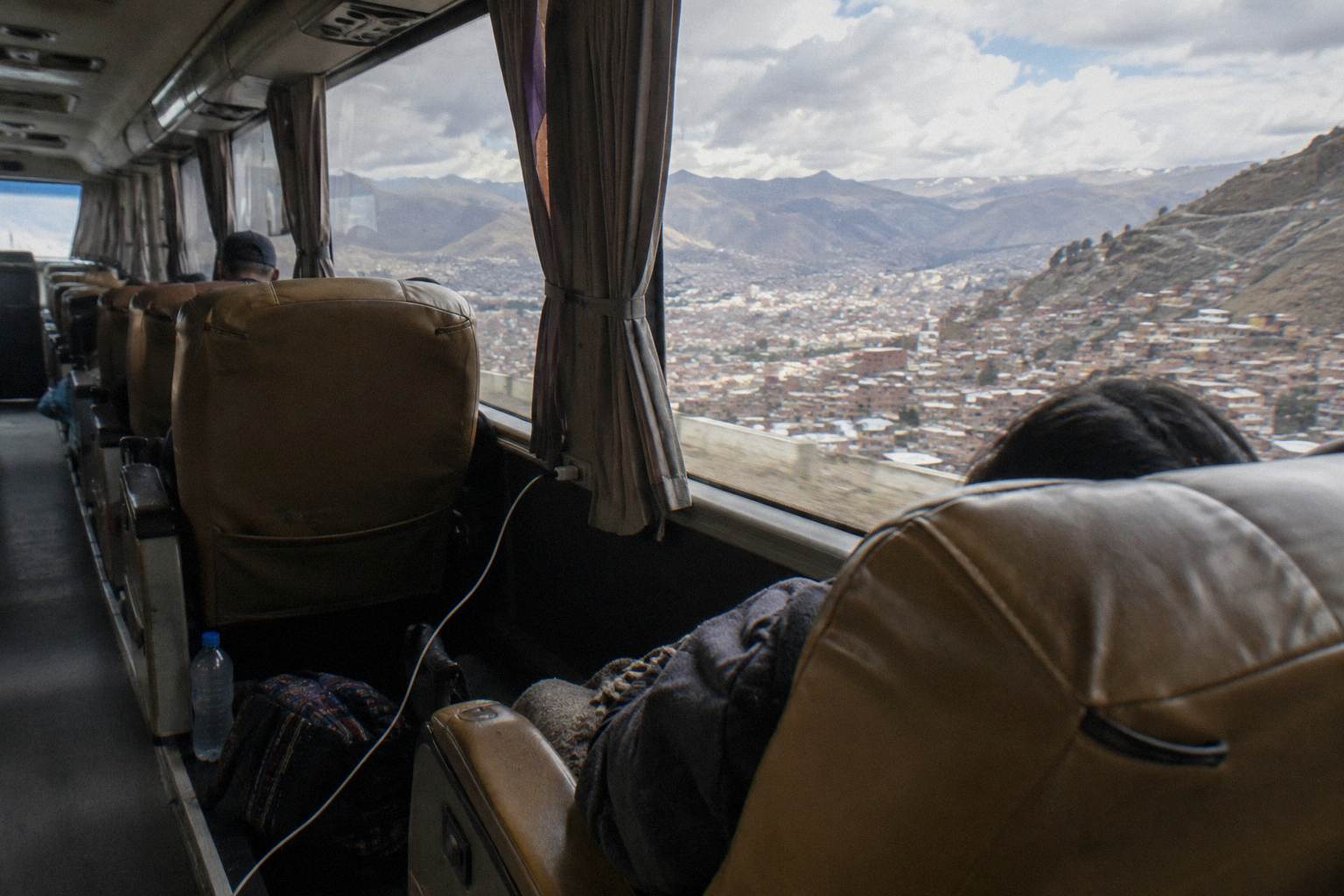
That last point is the practical one. A fleet-level toilet claim covers the service, not the specific vehicle that turns up on the day, and maintenance windows, substitutions and route changes can all put a different bus on a given departure. A reader with a hard requirement, a medical need, a small child, a long leg, should treat the listing as the claim to confirm and ask the operator directly, and the pass service runs phone and WhatsApp help for exactly that kind of question.
| Operator | What the operator states about toilets | Where the claim sits |
|---|---|---|
| Hop-on hop-off Peru fleet | Toilets listed as standard fleet equipment | Operator's own fleet pages |
| Hop-on hop-off Bolivia fleet | No onboard toilet, lake-crossing weight limit, public toilets at the Strait of Tiquina | Operator's own fleet pages |
| Cruz del Sur | Toilet listed among onboard services | Operator's comfort page |
| Oltursa | No toilet line printed on its Lima pages | Check the operator's page |
| Other national carriers | Check the operator's page | Check the operator's page |
The comfort ladder at Cruz del Sur is documented in the Cruz del Sur operator guide, and the class-by-class comparison across Oltursa, Civa and Movil Bus, including the recline degrees each operator publishes, sits in the Oltursa, Civa and Movil Bus comparison. Toilets are one comfort line among several, and recline degrees, luggage allowances and boarding points all weigh more on a 10-hour leg than a washroom door does.
The UK FCDO, for its part, frames the onboard question differently from the comfort question: "Bus crashes are common, especially at night. Only use reputable transport companies, and where possible, avoid overnight travel, especially in mountainous and remote regions", per its Peru safety and security page. A toilet does not change that advice, and neither does a reclining seat.
Where The Toilets Are When The Bus Has None
Rest stops carry the load. The fixed tourist-bus products on these corridors print their stop counts and stop types on their listings, and the back-door Machu Picchu bus is the clearest example: its listing title advertises two rest stops across the Cusco to Hidroelectrica run, a 212 km journey with a 5.1 hour free-flow drive estimate. On routes where no stop list is published, the driver-rotation rules are the honest fallback.
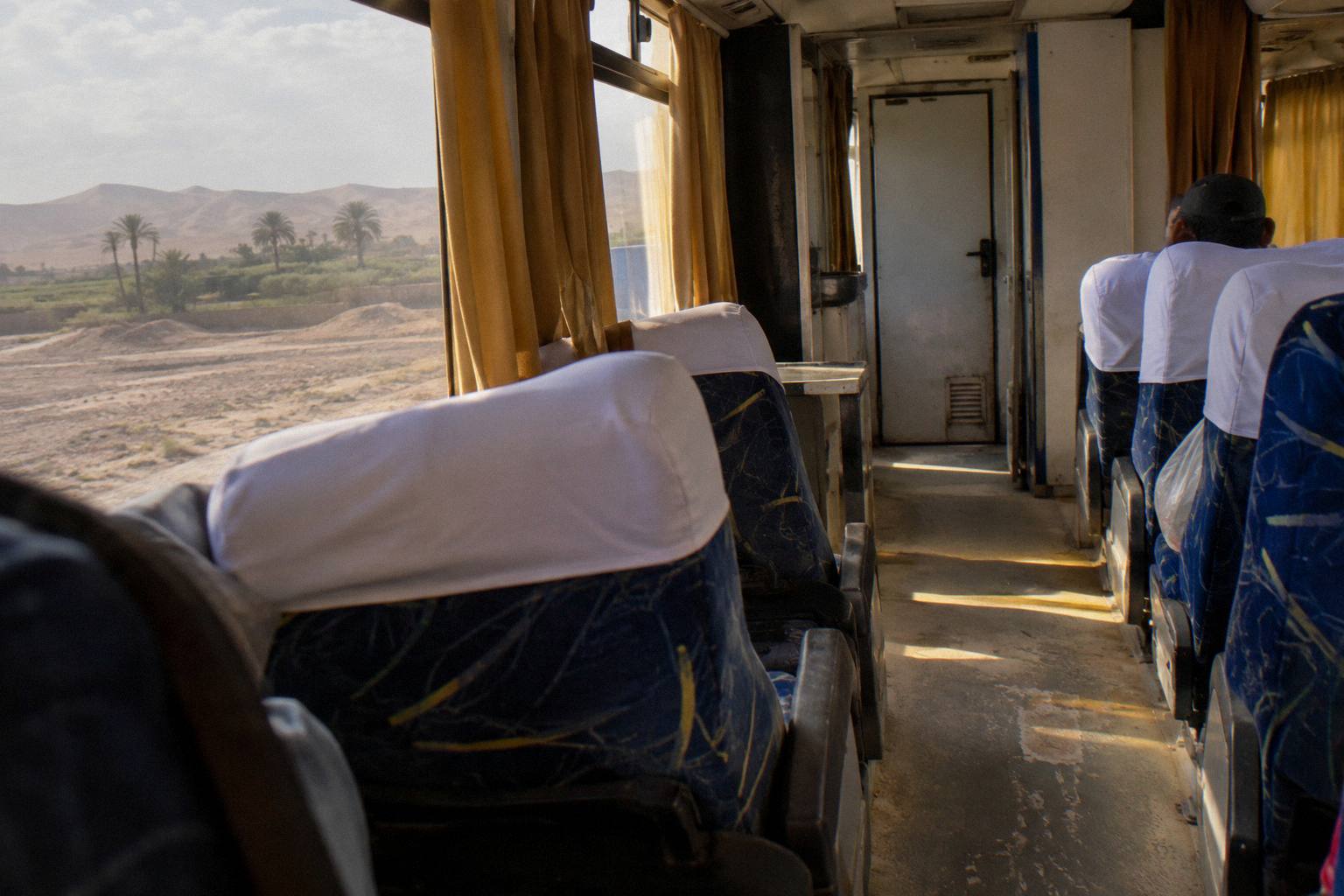
The stop question is worth asking before any long leg, not just the lake crossing. Continuous driving is capped at 5 hours by day and 4 at night, so legs longer than that break somewhere, and where is the carrier's information to give. The Puno to Cusco corridor runs 387 km with a 6.2 hour free-flow estimate and crosses the La Raya pass at about 4,300 m, and the Cusco to Lima corridor, routed through Abancay and Nazca, is a 1,103 km assumption on which timetabled trips run 20 hours or more. On legs of that scale, every operator breaks the journey, and the difference between a listed rest stop and an unlisted one is the difference between planning and hoping.
| Route pair | Free-flow drive estimate | Real journeys |
|---|---|---|
| Lima to Paracas | 251 km, 3.5 h | Exceed the estimate |
| Nazca to Arequipa | 566 km, 7.8 h | Exceed the estimate |
| Arequipa to Puno | 273 km, 5.5 h | Exceed the estimate |
| Puno to Cusco | 387 km, 6.2 h | Exceed the estimate |
| Cusco to Hidroelectrica | 212 km, 5.1 h | Exceed the estimate |
| Puno to Copacabana | 142 km, 2.5 h | Exceed the estimate, border wait not counted |
Every figure in that table is a free-flow drive estimate, not a timetable time, and border pairs exclude the border wait. A restroom strategy built on them should assume the bus takes longer, which is the direction that matters for a bladder.
What Else Rides With The Toilet
The toilet rides with the operator's full comfort case on its Peru fleet: semi-cama reclining seats, air conditioning and heating, televisions, USB charging, GPS tracking, speed-restriction software, seatbelts and a team of drivers. Wi-Fi is claimed for every bus, though that is operator-stated rather than tested, and hotel or Airbnb pickup replaces terminals and taxis entirely.
That pickup model is the quieter half of the bathroom question's answer. Terminals are, on the official advice, the places to keep your guard up: Smartraveller advises, "Exercise a high degree of caution in Peru overall due to the threat of violent crime", and warns of "Robberies and assaults occur frequently on intercity buses, including while passengers are sleeping", on its Peru page.
The pass model also carries its own flexibility terms, and the operator reports them as: tickets valid one year, hopping on and off freely, buses every day, and a bus time changeable in the app up to 12 hours before departure, per its pass terms. A local bilingual host rides every bus. Readers weighing that against fixed seats can work through the full argument in the Peru Hop versus public bus comparison.
One short callout for the reader whose bathroom question has become a comfort question: See Peru Hop Passes for the operator's own fleet and stop information, including the lake-crossing toilet note, before committing to a multi-direction pass.
Does A Toilet Decide The Ticket
On the shortest legs, no, and on the lake crossing it cannot, because the Bolivia fleet has none regardless of what you pay. Where the question bites is on the long southern legs, Nazca to Arequipa and Puno to Cusco, where a listed toilet plus a hop-on hop-off structure competes with fixed tourist-bus seats that publish their own stop lists, drop-off points and cancellation terms.
The fixed-seat model shows its own flexibility on the Wayki Bus Peru one-way tourist bus from Lima to Huacachina with a Paracas stop, rated 3.7 across 77 reviews, an 8-hour listed run with a Paracas stop built in. Fixed seats can also be cheaper to test. Each of the three products compared below carries free cancellation up to 24 hours before for a full refund as listed, so a reader who values a toilet can trial one leg before deciding whether a year-long pass suits the rest of the trip. The Wayki Bus Peru one-way tourist bus from Miraflores in Lima to Paracas, bookable here as the Miraflores to Paracas tourist bus, drops at El Chaco in Paracas, Check availability.
On the Puno side, the Puno to Cusco lunch-stop bus turns the 387 km corridor into a listed 11-hour day with a meal break, rated 4.6 across 24 reviews, and its drop-off at the Turismo Mer private terminal in Cusco spares the municipal terminal arrival. That is the kind of product that competes with a pass leg on its own terms: named stop, named meal, named drop-off.
The honest summary is that a toilet is a tiebreaker, not a verdict. The regulation floor, the driver rules and the rest-stop pattern shape the comfort of a Peruvian bus day as much as the washroom door does, and the reader who confirms the fleet claim, checks the stop list and reads the cancellation terms has done the three things that actually decide the ticket.
Common Questions About Peru Hop Bathrooms
Does The Peru Hop Bus Have Bathrooms On Board?
On its Peru fleet, yes: the operator lists toilets as standard equipment alongside semi-cama reclining seats, USB charging and GPS tracking. On the Bolivia fleet, no: those buses carry no onboard toilet because of the lake-crossing weight limit, with public toilets at the Strait of Tiquina.
Why Do The Bolivia-Bound Buses Have No Toilet?
The route crosses Lake Titicaca at the Strait of Tiquina, and the crossing carries a weight limit that rules out the onboard toilet and its water load. Passengers cross the lake on a separate boat from the bus and can use the public toilets at the strait while vehicles load.
Are Toilets Required By Law On Peruvian Buses?
No. Peru's national transit regulation requires safety equipment such as the 110 km/h speed limiter, permanent GPS transmission and seat belts at all seats, but it does not order toilets fitted. A toilet claim is an operator's fleet statement, worth confirming on the operator's page.
Do The Fixed Tourist Buses Have Toilets?
The listings for the fixed tourist-bus seats on the south coast and the Puno corridor do not state toilet availability either way. What they do state is stop structure, drop-off point and duration, such as the two rest stops on the Cusco to Hidroelectrica listing and the lunch stop on the Puno to Cusco listing.
Where Are The Toilets On The Lake-Crossing Route?
Public toilets stand at the Strait of Tiquina, per the operator's own guidance, and the Puno to Copacabana leg is a 142 km run with a 2.5 hour free-flow drive estimate that excludes the border wait. Plan hydration around the crossing, since Puno sits at 3,848 m on INEI figures.
Can I Check A Bus Before Boarding?
Yes. SUTRAN runs a public lookup where any bus and driver can be checked by plate number or driver document number, and its alert map shows road closures, restrictions and openings with a 24-hour WhatsApp reporting line.