Do Overnight Buses In Peru Have Toilets?
Which Peru night buses list a toilet on board, which do not, and what to check before booking a sleeper ticket on the southern routes.
Often yes, but not always: many long-haul operators in Peru list an onboard toilet as part of the service, yet no Peruvian regulation requires one, so the answer depends on the operator and the ticket you buy. Cruz del Sur and Peru Hop both list toilets on board, while Bolivia Hop carries none because of the lake-crossing weight limit.
The honest starting point is that Peru's national transit regulation says nothing about toilets. It sets out seat belts, speed limiters, GPS monitoring, driving hours and luggage rights, and an onboard bathroom appears nowhere in those articles. That means a toilet exists on a Peru night bus only because the operator chose to fit one, and the only reliable way to know is the operator's own page or the ticket listing.
This matters more on a night service than a day one. On the southern circuit, the stretches are long: the OSRM free-flow drive estimate between Arequipa and Cusco is 487 km and 9.4 hours, and that is a free-flow figure that real bus journeys exceed. Between Cusco and Lima via Abancay and Nazca the free-flow estimate is 1,103 km and 17.8 hours, with timetabled trips running 20 hours or more. A journey of that length without a bathroom is a different product from a three-hour coastal hop, and the operators know it, which is why several build rest stops into the service.
For readers planning a night leg on the Arequipa, Puno and Cusco triangle, there are booked tourist tickets that state exactly what you get. The sleeper listing between Arequipa and Puno, for example, names a 160 degree recline and a night service, and its inclusions name Hygienic Services. Those tickets are worth reading line by line before booking, because the toilet answer is written there or it is not written anywhere.
If you are still choosing how to cover the south, these three tickets cover the classic night and long-day legs:
The alternative model is a hop-on hop-off pass, which mixes operator-provided buses with hotel pickup and no terminals. Peru Hop lists toilets on its Peru fleet alongside semi-cama reclining seats, USB ports and GPS tracking, and its buses run every day of the week on the southern chain from Lima through Paracas, Huacachina, Nazca and Arequipa to Puno, Cusco and on to Bolivia. It does not reach Machu Picchu, Huaraz or the north, so the toilet question there is confined to the south and the Titicaca crossing.
Which Operators List A Toilet On Board?
Cruz del Sur and Peru Hop are the operators that list a toilet on board: Cruz del Sur names it on its comfort page alongside 180 degree reclining seats, seat belts, GPS satellite monitoring and courtesy Wi-Fi, while Peru Hop states its buses have toilets. Movil Bus, Linea, Oltursa and Civa stay silent either way, so confirm with them before booking.
The pattern across the operator pages is uneven, and that unevenness is itself useful information. Cruz del Sur's comfort page is the most explicit in the country: toilet on board, crew on board, ECO3 air purifier, a pilot change every 4 hours, permanent medical checks and alcohol testing, DNI control and a metal detector at boarding. The same operator's Lima to Cusco fare page adds 20 kg of hold luggage plus 6 kg of hand luggage and lists seven daily departures on that corridor. For a night journey, a page that itemises the onboard service this thoroughly is the easiest place to confirm a bathroom exists.
The other large operators say plenty about seats and luggage and nothing about toilets. Oltursa's pages describe its economico and bus cama VIP classes, 20 kg of hold luggage free, one hand piece at a maximum of 5 kg, and GPS monitoring around the clock, with tariffs marked as reference prices that shift by season. Its recline degrees are not stated anywhere on its own pages, and neither is a toilet. Movil Bus lists recline degrees by class with precision, Economico at 120 degrees through Presidencial at 160 and a full flat 180 on the second level of its Premier class, plus GPS and speed control, but no bathroom claim. Linea's service page names Super VIP seats at 180 degrees type cama, VIP at 160 sofa cama and Dorado at 160, with Wi-Fi subject to operator availability, and again no toilet line. Civa's SuperCiva page gives 160 degrees on the first level and 140 on the second, and no toilet fact.
| Operator | What its own page states about toilets | Where the page does state it |
|---|---|---|
| Cruz del Sur | Toilet on board | Comfort page, listed with crew, GPS and Wi-Fi |
| Peru Hop | Toilets on buses | Operator's own bus and safety page |
| Bolivia Hop | No onboard toilet | Operator page, attributed to the lake-crossing weight limit |
| Oltursa | No toilet fact stated | Class and luggage pages make no bathroom claim |
| Movil Bus | No toilet fact stated | Class comparison and travel tips pages |
| Linea | No toilet fact stated | Interprovincial services page |
| Civa | No toilet fact stated | SuperCiva class page |
None of those absences means the bus lacks a bathroom. It means the marketing pages do not answer the question, and the practical advice is to check with the operator, or book a class whose page does answer it. The site's comparison of Oltursa, Civa and Movil Bus works through what each of those pages does and does not commit to, seat by seat.
One more layer matters on the booked tourist tickets. The Turismo Mer sleeper bus from Arequipa to Puno is a night service with a 160 degree recline, rated 4.3 across 20 reviews, and its listing names Hygienic Services among the inclusions. The listing is worth reading before the fare is paid. Check availability
Why Do Bolivia Hop Buses Have No Toilet?
Bolivia Hop buses from Puno toward Copacabana and La Paz have no onboard toilet because the operator attributes the restriction to the weight limit on the vessel that carries the bus across Lake Titicaca. Passengers leave the bus and cross the Strait of Tiquina on a separate boat, where public toilets are available.
This is the single most useful piece of toilet planning on the whole southern circuit, because it is counterintuitive. A reader who has confirmed bathrooms on the Peru fleet can assume the linked Bolivia service matches, and it does not. The operator's own explanation is the lake crossing: the bus goes onto a boat, weight is constrained, and the bathroom is left out. The crossing itself is a scheduled part of the journey rather than a disruption, and the toilets at the Strait of Tiquina are the planned facility.
The practical reading is that the Copacabana and La Paz legs are short enough for this to be manageable. The free-flow figures above are estimates without border time, and the border posts at Kasani and Desaguadero add their own processing. For a longer southern itinerary that mixes the two fleets, the pattern to remember is simple: bathrooms on the Peru legs, none on the Bolivia legs, planned toilets at the strait. The site's guide to the Puno to Copacabana bus route covers the crossing in detail.
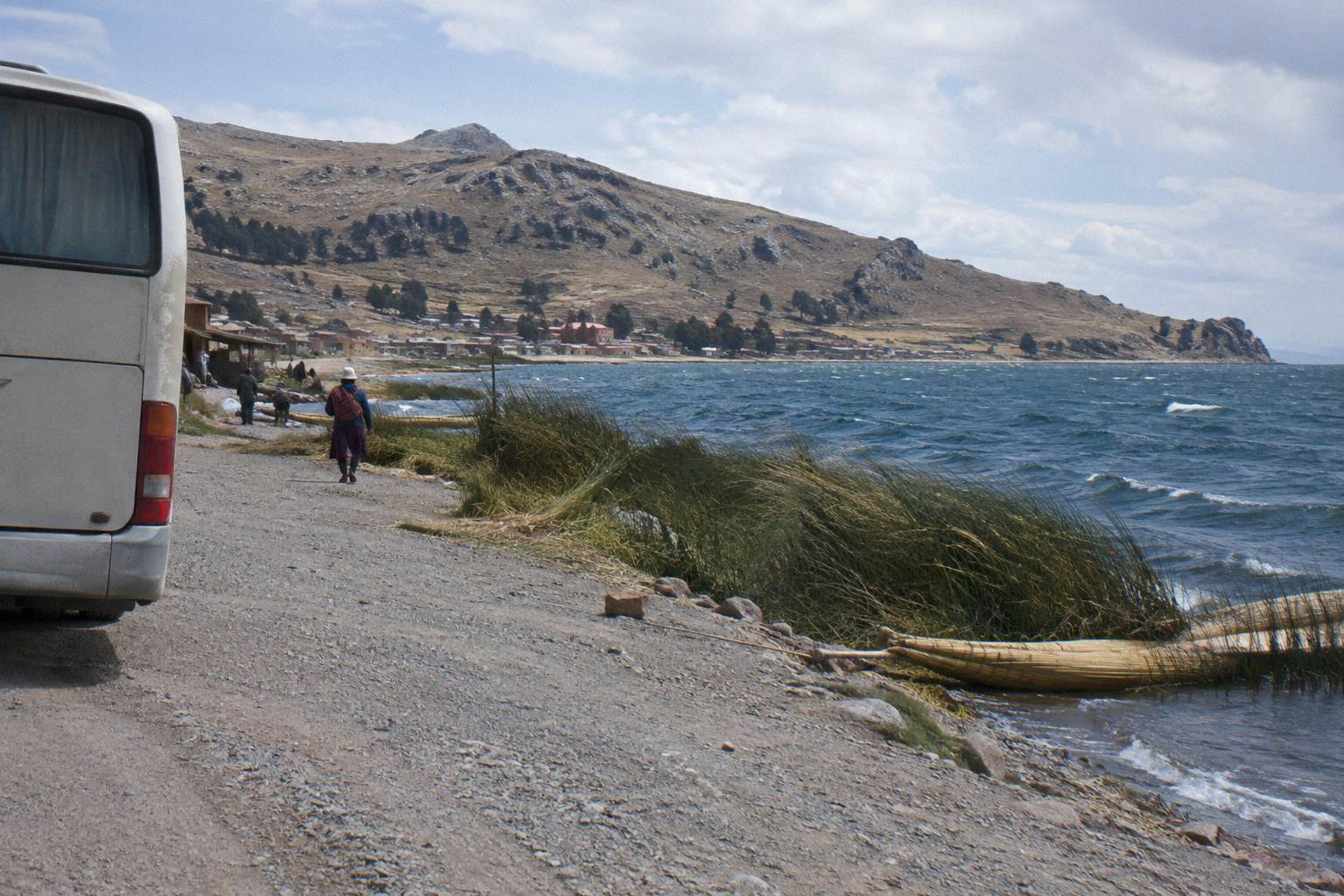
If you are weighing a pass against individual night tickets for the whole south, a pass handles this corridor with hotel pickup and no terminal transfers. See Peru Hop Passes for the current stop chains; passes are valid for a year and a bus time can be changed in the app up to 12 hours before departure, per its pass terms.
What Do The Booked Night Tickets Actually List?
Only one of the three tickets on the Arequipa, Puno and Cusco triangle addresses the toilet directly: the Turismo Mer Arequipa to Puno sleeper names Hygienic Services among its inclusions, with a 160 degree recline over a 7 hour night listing. The Puno to Cusco day bus lists an 11 hour run with a lunch stop and no bathroom mention, and the Cusco to Arequipa ticket names a Cruzero Suite 160 degree seat across 10 hours with no toilet line.
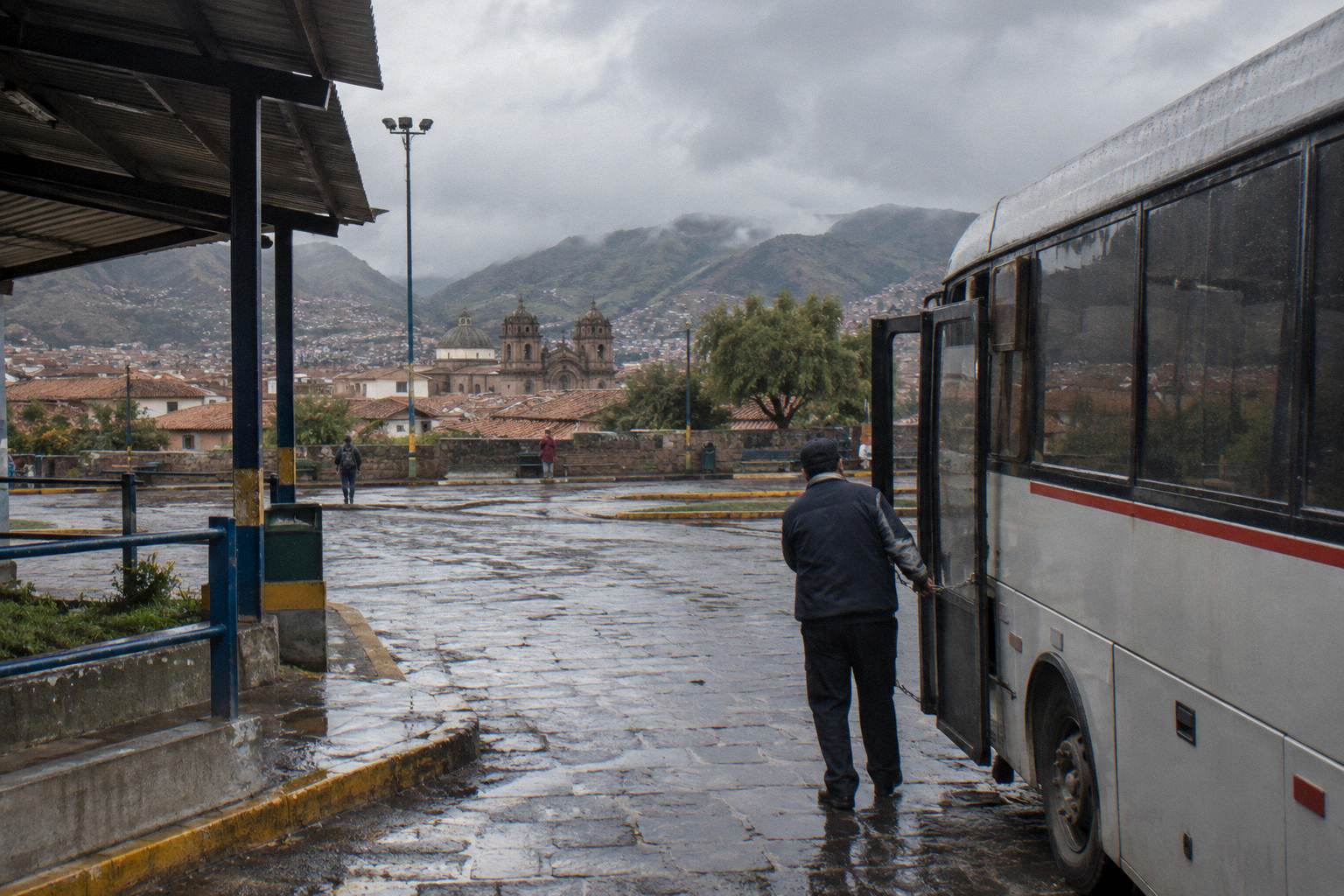
The sleeper ticket is the only one that names a facility, listing Hygienic Services among its inclusions alongside the 160 degree recline. The boarding fee at the terminal is listed as not included, and the listing directs readers to check the boarding fee line rather than quoting an amount. Free cancellation up to 24 hours before applies for a full refund, as listed. The full index of guides sits on Peru By Bus.
| Ticket | Rating and reviews | Listing duration | Seat | Toilet on the listing |
|---|---|---|---|---|
| Turismo Mer sleeper, Arequipa to Puno | 4.3 across 20 reviews | Listing gives 7 hours, night service | 160 degree recline | Names Hygienic Services among inclusions |
| Turismo Mer, Puno to Cusco with lunch | 4.6 across 24 reviews | Listing gives 11 hours | Check the operator's page | No toilet line |
| World Explorer Peru, Cusco to Arequipa | 3.7 across 16 reviews | Listing gives 10 hours | Listing names a Cruzero Suite 160 degree seat | No toilet line |
The two tickets that do not mention a bathroom are day services, which softens the omission: a lunch stop is built into the Puno to Cusco run, and rest stops are part of the Cusco to Hidroelectrica pattern on the back-door route, where the Machu Picchu by Car Vip listing carries two rest stops in its own title over a 6-hour listing duration. For the sleeper, the listing names Hygienic Services among its inclusions, so check with the operator what that means on board, use the terminal before boarding, and treat the listed 160 degrees as the comfort on offer over a 7 hour listing.
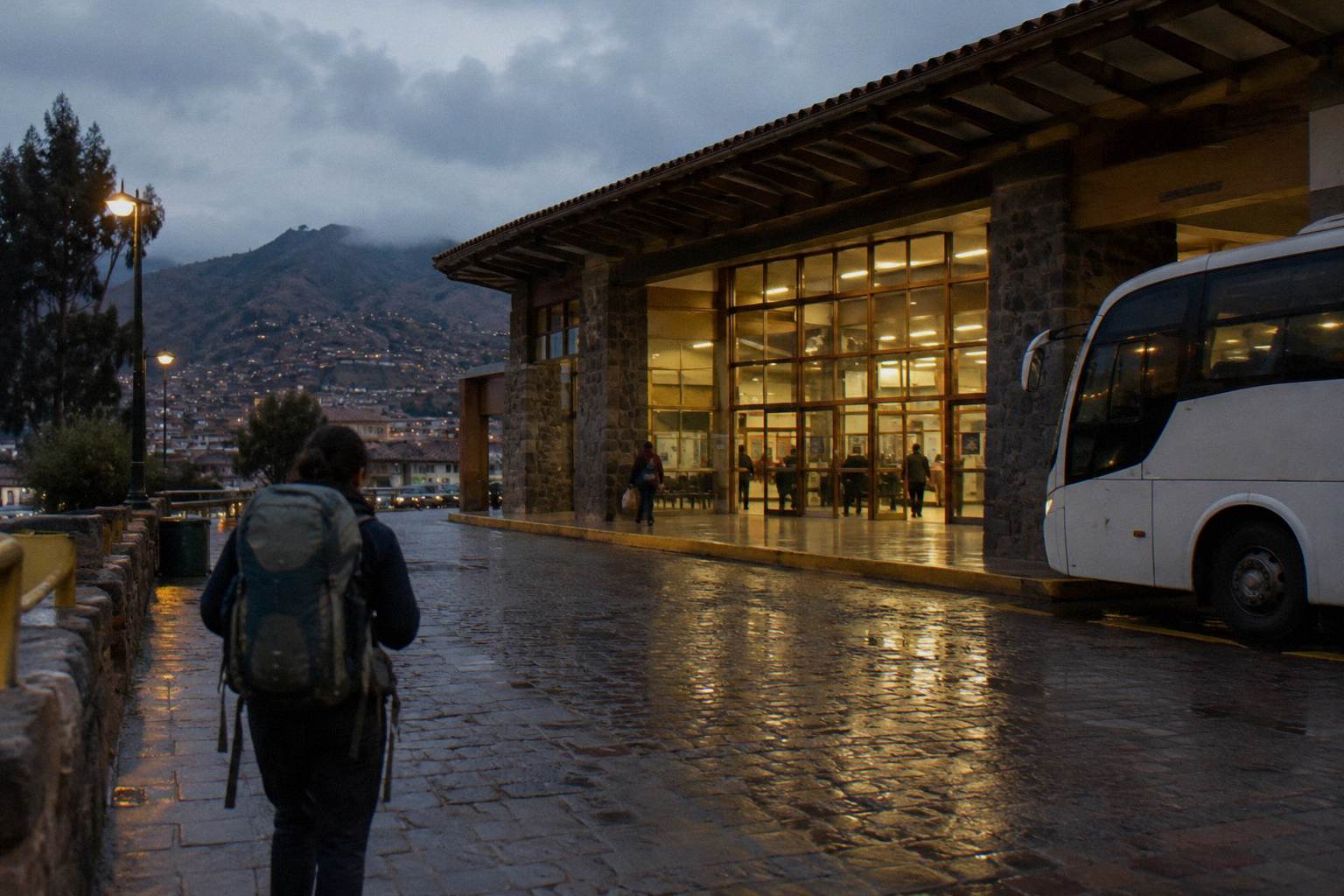
If the night sleeper does not appeal, the day alternative on the same triangle carries its own comfort feature: the Turismo Mer tourist bus from Puno to Cusco with a lunch stop runs the 387 km corridor, a 6.2-hour free-flow drive estimate that real journeys exceed, with an all-you-can-eat lunch named in the listing.
How Do Rest Stops Work On Long Night Routes?
On long night routes, operators build scheduled rest stops into the ticket itself: the Cusco to Hidroelectrica tourist bus lists two rest stops in its title, and the Puno to Cusco service includes a lunch stop. Peruvian rules require regular carriers to board passengers only at authorised points with the bus stopped, and terminals are mandatory at both ends in cities of 200,000 people or more, so breaks happen at proper facilities rather than the roadside.
The regulatory frame makes rest stops structural rather than casual. Because regular service must use habilitated terminals and the public road may not serve as one, a long-haul bus pulling in for a break does so at a point built for it, with the toilets that come with a terminal. The practical consequence for a night passenger on a bus without a bathroom is that the break points are the bathroom points, and the crew's announcements mark them.
What the operator pages add is frequency of a different kind. Cruz del Sur lists a pilot change every 4 hours, and the regulation's driving-hours cap means any trip past 5 daytime hours or 4 night hours carries a second driver, with a third required over 20 hours. A Cusco to Lima journey in the 20-hour range is a three-driver trip by rule. These driver changes and mandatory breaks are themselves chances to use a proper facility, which are real planning information on the longer corridors.
| Route leg | Free-flow drive estimate | What breaks the journey |
|---|---|---|
| Arequipa to Puno | 273 km, 5.5 h | Sleeper listing names Hygienic Services; check the operator's page for stop detail |
| Puno to Cusco | 387 km, 6.2 h | Listing names a lunch stop |
| Cusco to Arequipa | 487 km, 9.4 h | Listing names a Cruzero Suite 160 degree seat; no toilet line |
| Cusco to Hidroelectrica | 212 km, 5.1 h | Listing title carries two rest stops |
| Arequipa to Chivay | 151 km, 3.3 h | Check the operator's page |
Every figure in the table is an OSRM free-flow drive estimate, not a timetable time, and real bus journeys exceed them. The distances are what they are: the road from Nazca to Arequipa alone is 566 km, and Lima to Arequipa is 1,002 km. On legs of that scale, whether the bus has a toilet stops being a footnote and becomes the difference between a restful night and a managed one.
For more on how a night ticket differs from a day one, including the sleeper classes and what to pack within reach, the overnight bus in Peru guide covers the whole question.
Is A Night Bus In Peru A Good Idea At All?
For most travelers, no: government advisories consistently warn against night buses in Peru. The UK FCDO says bus crashes are common, especially at night, and advises avoiding overnight travel in mountainous and remote regions. Canada tells travelers to avoid buses and coaches at night, and Smartraveller reports that robberies and assaults occur frequently on intercity buses, including while passengers are sleeping.
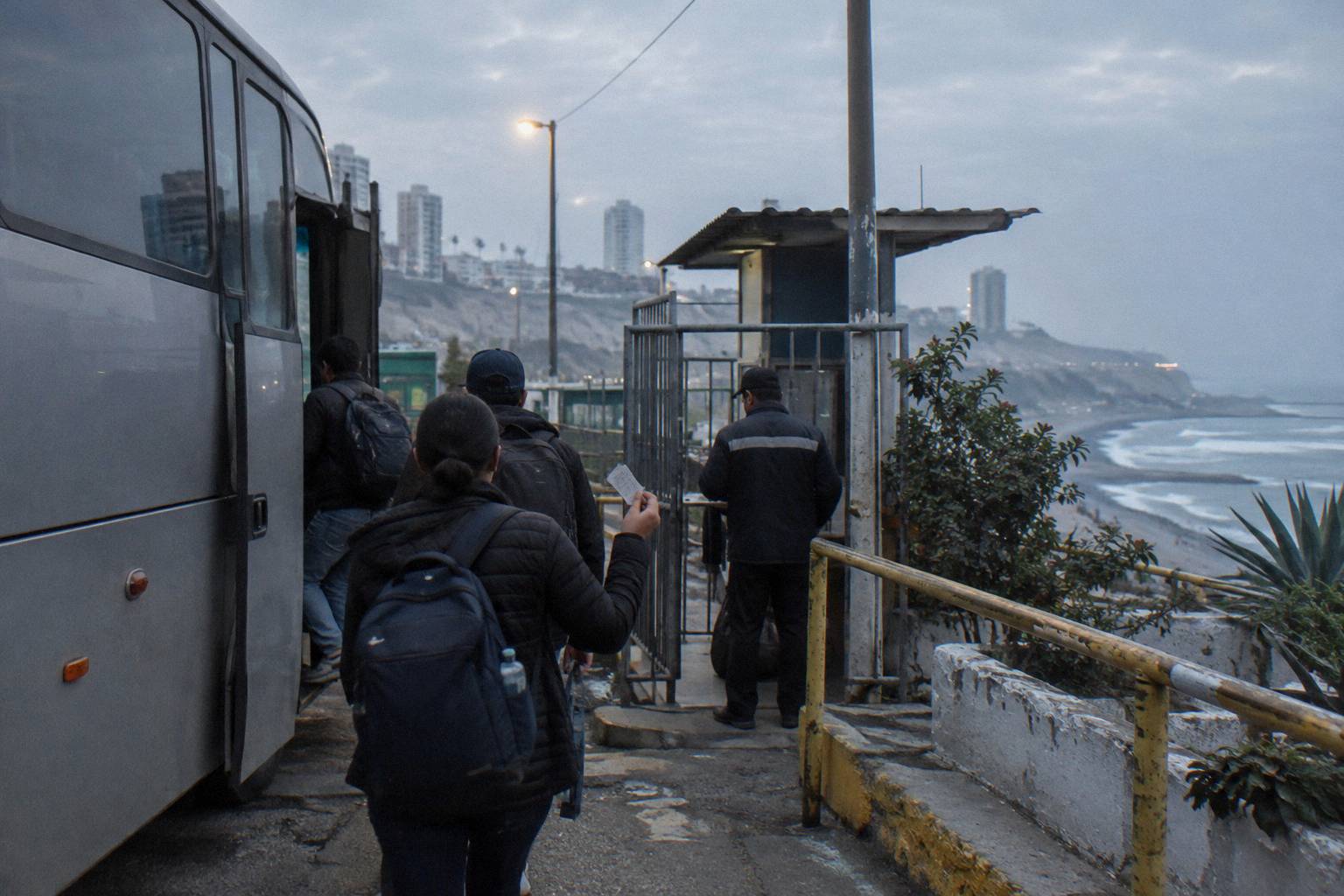
Against that backdrop, the detail from the US Embassy's republication of the State Department advisory is the most specific to the corridors a tourist actually rides: US government employees "may travel at night with commercial bus companies along the Pan-American Highway, to Huaraz, and on the Lima-Arequipa-Cusco corridor." That sentence names the main tourist arteries, and it is the closest any of the advisories comes to distinguishing corridors. The FCDO's separate headline, advising against all but essential travel to parts of Peru, refers to border and remote zones, not to this corridor.
Wait, that figure belongs to the frontmatter. The body images for this section are already placed above; what remains here is prose.
The safety advice connects to the toilet question in one direct way: sleeping passengers are a specific risk category in the advisories. Smartraveller names "theft as you sleep on intercity bus routes between Lima, Ica, Nazca and Cusco", and the FCDO adds "on bus journeys, keep your passport with you". A passenger who leaves a seat for a bathroom at the back of a night bus, or who steps off at a rest stop, is moving money and documents through exactly the moments the advisories flag. Keeping valuables on the body rather than in a bag in the rack is the standard reading of that advice.
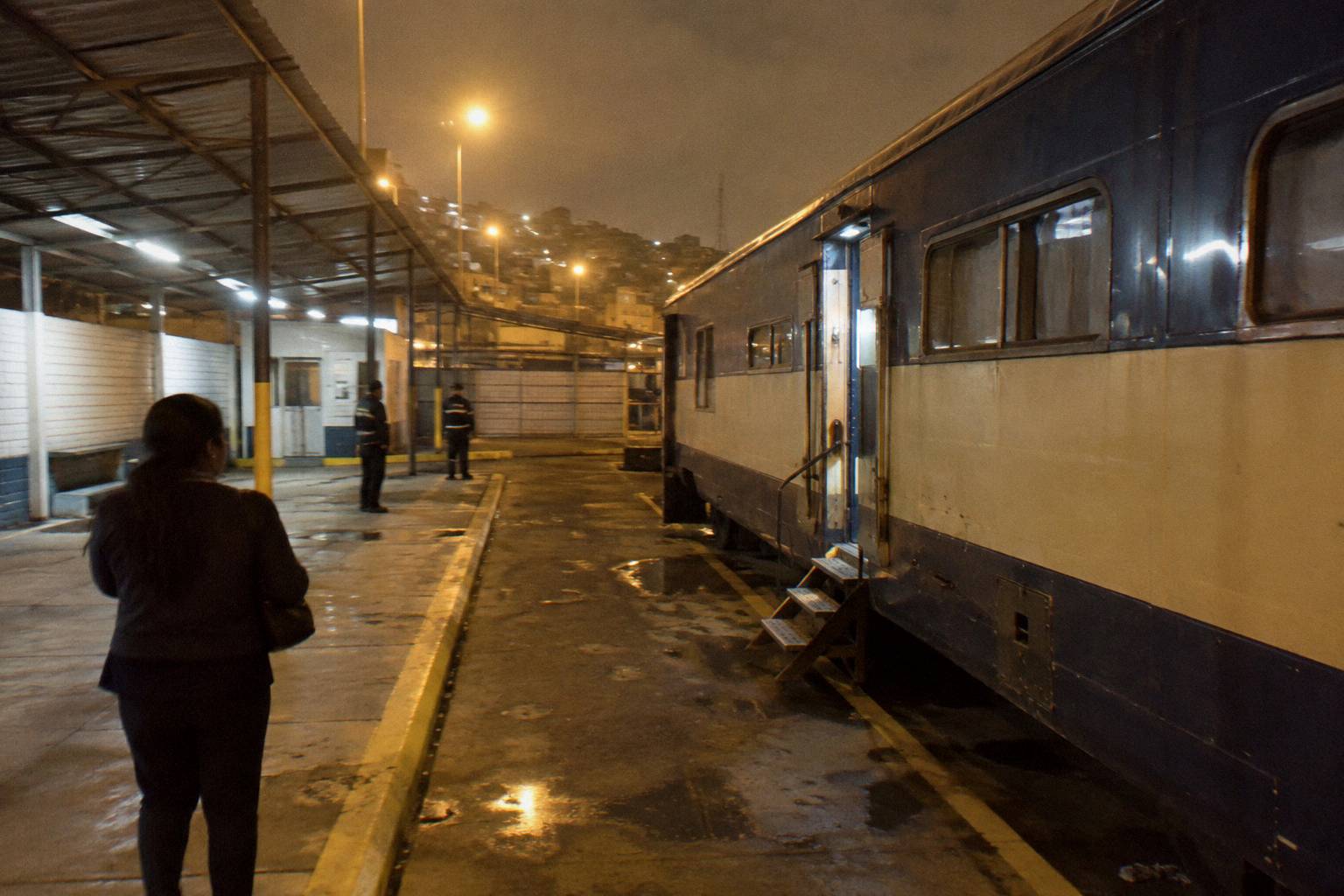
There is also a seasonal layer. The FCDO's notice states: "Through late 2026 to April 2027, the El Nino weather event is expected to generate heavy rainfall, possible flooding, landslides, and mudslides, especially in, but not restricted to, the northern and central coast. These could cause travel disruption, such as road closures." Night services on affected roads face the sharpest consequences of a closure, and SUTRAN's alert map, with roads marked closed in red, restricted in yellow and open in green, is the official way to check a route the day before travel. Political protest adds the same risk: the FCDO notes demonstrations "can escalate quickly" and lead to roadblocks, and advises "Do not attempt to pass blockades".
The site's Peru bus safety guide gathers the full advisory text and the terminal precautions, and the strikes and road blocks guide covers the disruption calendar in depth.
What Should You Check Before Booking A Night Ticket?
Before paying for a Peru night ticket, read three lines: the toilet line, the cancellation line and the boarding-point line. If the listing does not mention a toilet, plan a terminal visit before boarding; if it says nothing, ask the operator directly. Confirm free cancellation up to 24 hours before where the listing grants it, watch for excluded fees such as a sleeper's terminal boarding fee, and verify the boarding address, since terminals in Lima, Arequipa and Cusco differ by operator.
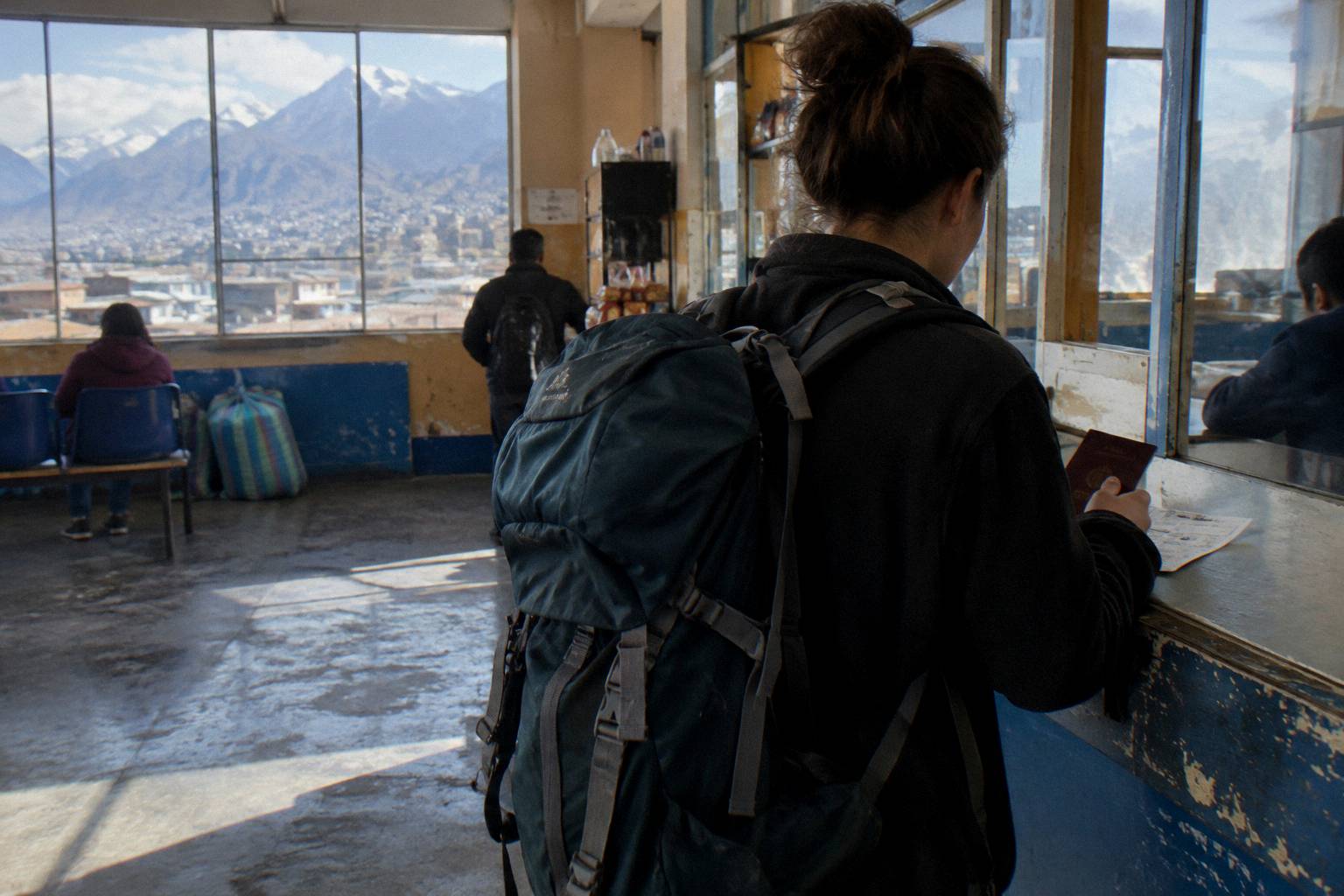
The cancellation line deserves its own attention because it varies sharply across the listed tickets. The southern tourist tickets carry free cancellation up to 24 hours before for a full refund, as listed. The First Class Huaraz ticket from Lima is the counter-example: its listing states the fare is non-refundable and cannot be changed, and it asks for passport numbers and full names to print tickets, with hotel pickup on request arranged by sending the hotel address after booking. A night bus booked with a refund window is a different commitment from a non-refundable one.
The boarding point matters for bathroom logistics more than it seems. Cruz del Sur departs Lima from its Terminal Javier Prado at Av. Javier Prado Este 1109, La Victoria, and arrives in Cusco at the Terminal Terrestre at Av. Vallecito 538. Oltursa's Lima point is Jiron Manuel Portocarrero 380, Surquillo, with a second at Av. Tupac Amaru cuadra 69, Independencia. There is no single main terminal per city; each operator keeps its own, and the site's terminals by city guide lists the confirmed addresses. Arriving at the right terminal with time to use its facilities is the simplest toilet strategy on a no-bathroom bus.
Luggage rules pair with the same planning. The regulation grants up to 20 kg free on national service, and the operator pages confirm their own versions: Cruz del Sur 20 kg hold plus 6 kg hand, Oltursa 20 kg plus one hand piece at 5 kg, Movil Bus 20 kg plus 8 kg, Linea 20 kg. The luggage travels in the hold and overhead racks, never in the aisle or at the exits, and SUTRAN advises taking a luggage ticket for the hold pieces. The luggage and theft guide works through the rules and the habits that keep a night journey uneventful.
For the reader who wants the night legs handled as part of one booking across the south, the pass option ties the corridor together with hotel pickup and daily buses, and the toilet answer on its Peru fleet is stated by the operator. The individual tickets remain the direct route to a specific night leg, and the three below cover the triangle:
Common Questions About Toilets On Peru Night Buses
Do Overnight Buses In Peru Have Toilets?
On many of them, yes, but there is no rule requiring it. Cruz del Sur lists a toilet on board, Peru Hop lists toilets on its buses, and the Turismo Mer sleeper from Arequipa to Puno names Hygienic Services among its inclusions. Where an operator's page says nothing, check with the operator before booking.
Does Peru Hop Have Bathrooms On Its Buses?
Peru Hop lists toilets on its Peru fleet, along with semi-cama reclining seats, USB ports and GPS tracking. Its Bolivia Hop sister service has no onboard toilet because of the lake-crossing weight limit, with public toilets at the Strait of Tiquina.
Do Sleeper Buses In Peru Have Toilets?
Not all of them. The Turismo Mer sleeper from Arequipa to Puno, a night service with 160 degree recline seats and a 7-hour listing duration, names Hygienic Services among its inclusions. Check the specific ticket for what it lists.
How Often Do Peru Long-Distance Buses Stop For Breaks?
Stop patterns are set by the operator, not by regulation. The Cusco to Hidroelectrica tourist bus carries two rest stops in its listing title and the Puno to Cusco ticket builds in a lunch stop. Regulation requires boarding only at authorised points, so breaks happen at terminals and proper facilities rather than the open road.
Is It Safe To Sleep On An Overnight Bus In Peru?
Government advisories urge caution: the FCDO states "Bus crashes are common, especially at night", and Smartraveller reports theft from sleeping passengers on intercity routes including Lima, Ica, Nazca and Cusco. The FCDO advises keeping your passport with you on bus journeys, and Canada advises avoiding buses at night.