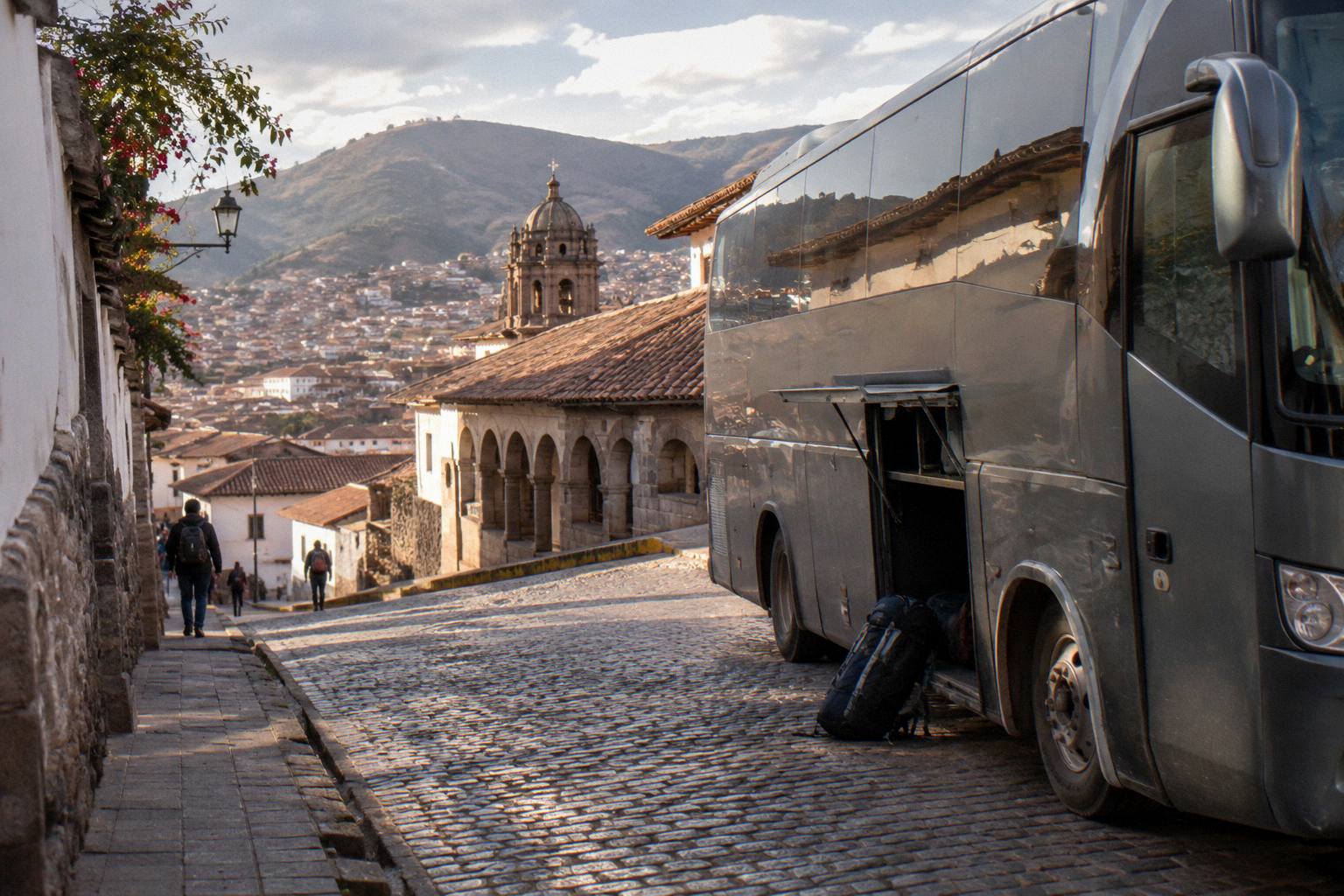
Peru Itinerary 1 Week By Bus
One week is tight for southern Peru, and the bus math explains why: here is the leg-by-leg route from Lima to Cusco, what each drive estimate really means, and which tickets fit.
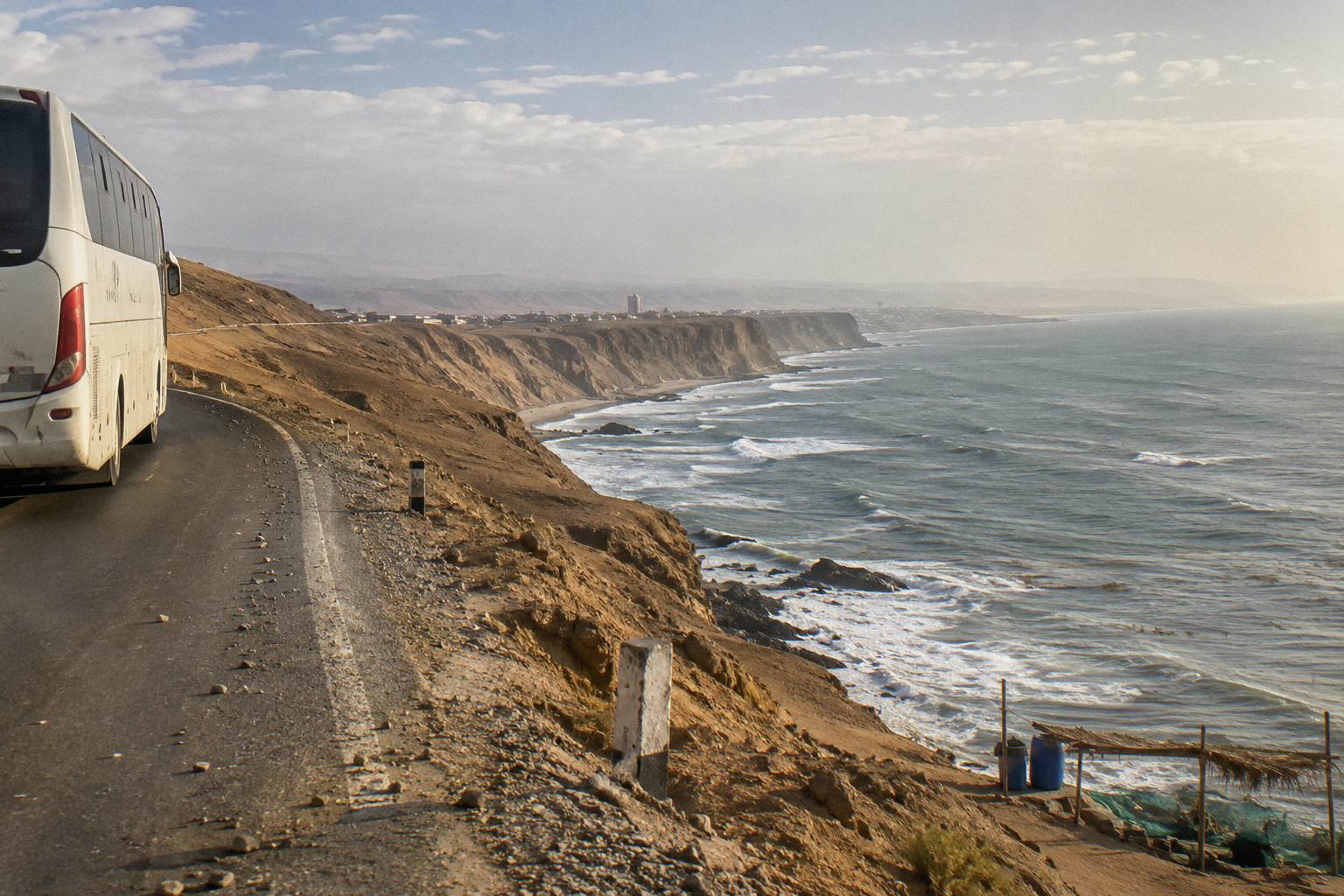
Short answer
A one week Peru bus trip works as a one-way push from Lima to Cusco over five to seven legs, about 1,350 km of road by free-flow estimate. Peru Hop lists 3 days minimum for its fastest Lima-to-Cusco pass and 6 days for the full route, so a week means choosing between stops, not adding them.
One week in Peru is enough for exactly one corridor: Lima down the desert coast to Paracas or Huacachina, inland to Arequipa, then up to Cusco, or a quicker chain that skips the canyon cities. The bus network covers every leg of that chain, and the free-flow drive estimates alone add up to more than a full day of rolling time before any stop, meal or terminal wait. That arithmetic, not marketing, is what sets the plan.
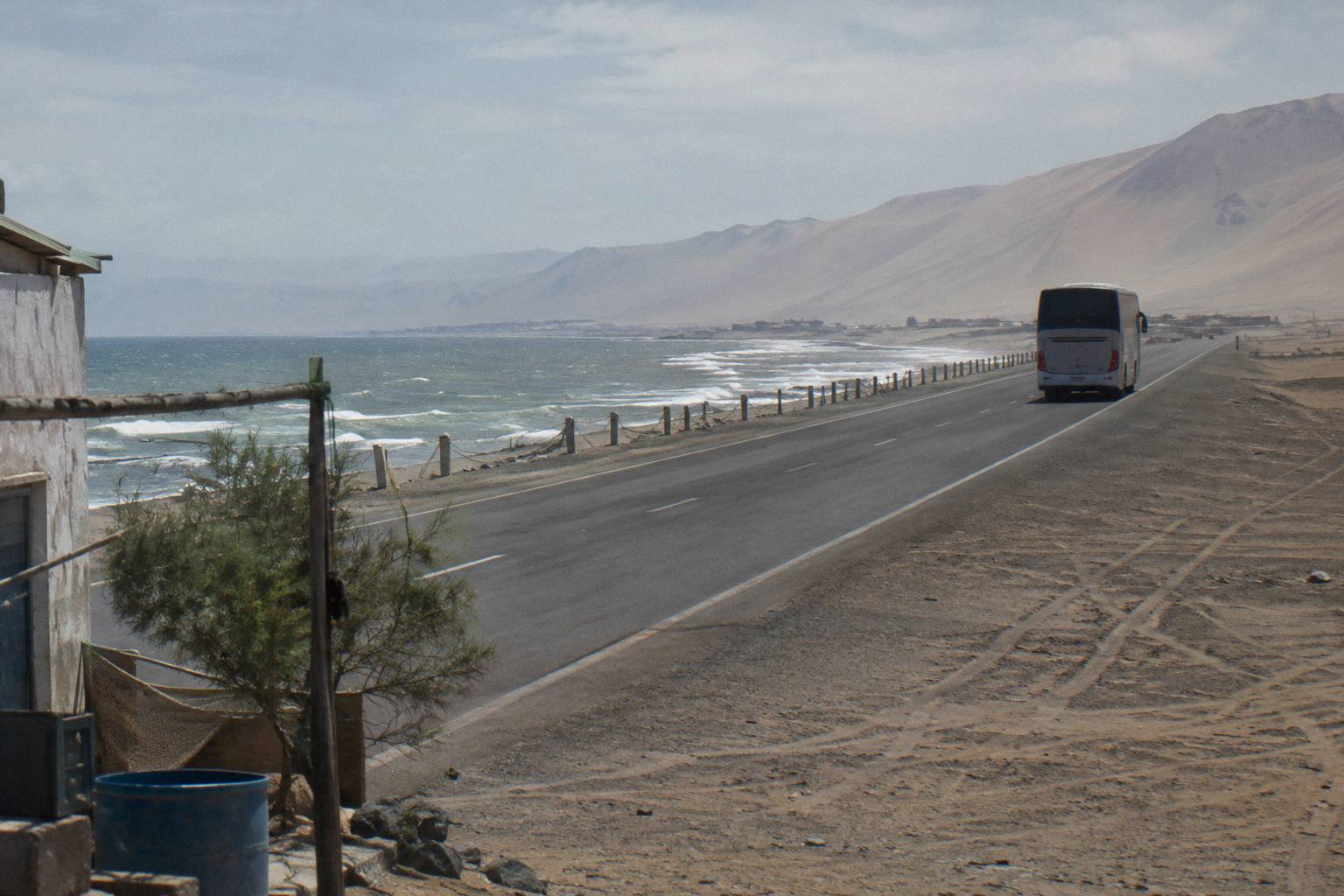
Peru By Bus builds itineraries from route facts rather than wishlists, and walks the week leg by leg: the distances, the passes that bundle the chain, the terminals you depart from, and the tickets worth booking ahead. The short version is that a week works, but only in one direction, and only if two or three stops are cut before the trip starts.
Can You Really See Southern Peru In One Week By Bus?
Yes, as a one-way corridor from Lima to Cusco, and only that way. The drive estimates in this guide sum to roughly 1,350 km of road between Lima and Cusco through Nazca and Arequipa, and real bus journeys run longer than every free-flow figure here. Peru Hop lists 6 days as the fastest completion of its Full South To Cusco pass and 3 days for Get To Cusco Quick.
Start with the honest frame. Southern Peru's highlights sit on a long chain: Paracas and Huacachina on the coast, Nazca in the desert, Arequipa under El Misti, Puno on Lake Titicaca, Cusco in the Andes. Each gap between them is a multi-hour bus leg even at free-flow pace, and buses stop, board at terminals and climb mountain roads at real speeds. A seven-day budget spends two of those days almost entirely on wheels.
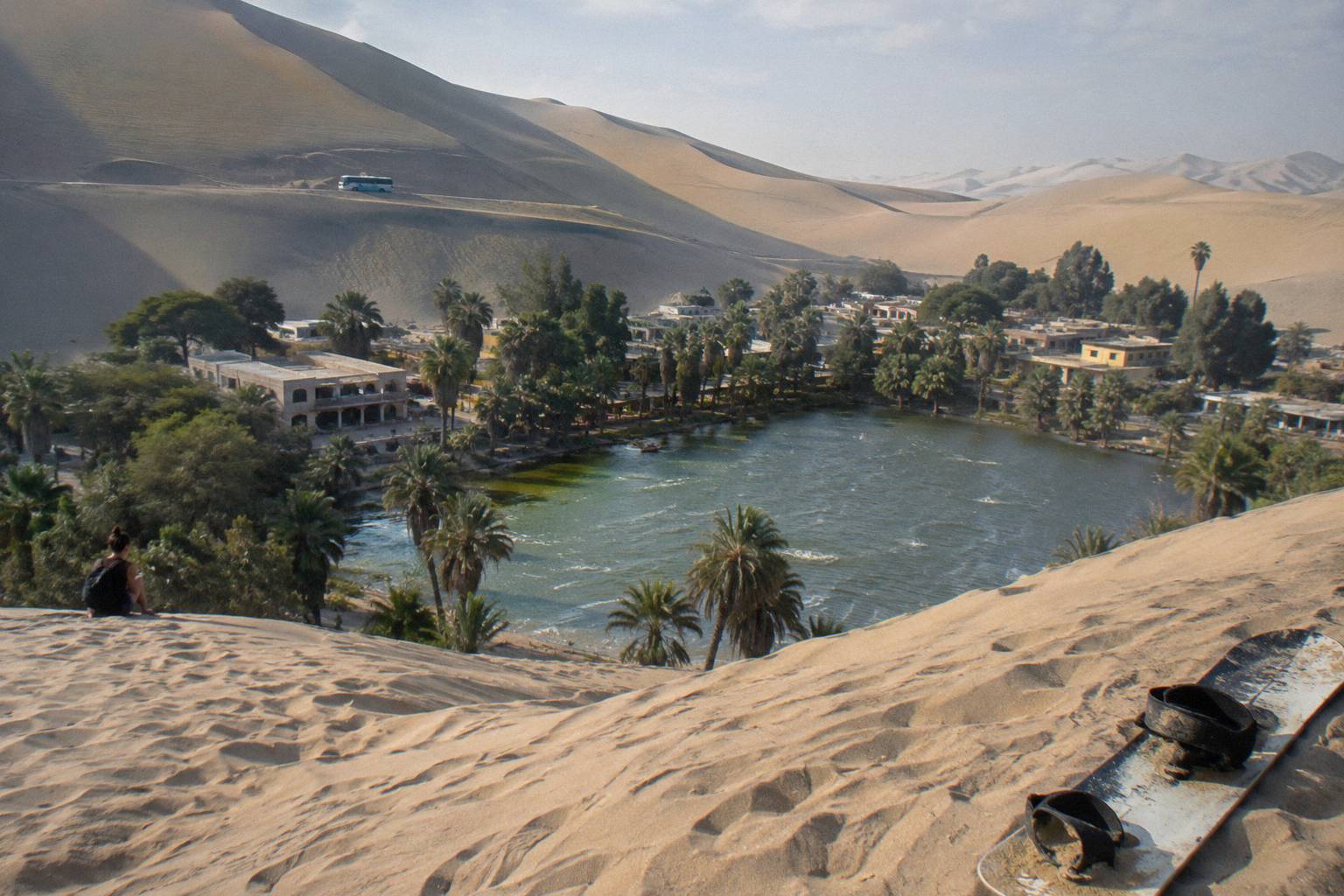
The planning decision is therefore directional. Going one way, Lima to Cusco, you ride the legs in sequence and fly back if time demands it. Trying a loop back to Lima inside seven days doubles the driving and turns the week into an endurance test.
| Leg | Distance | Free-flow drive estimate |
|---|---|---|
| Lima to Paracas | 251 km | 3.5 h |
| Paracas to Huacachina | 74 km | 1.3 h |
| Ica to Nazca (stands in for Huacachina to Nazca) | 142 km | 2.4 h |
| Nazca to Arequipa | 566 km | 7.8 h |
| Arequipa to Cusco | 487 km | 9.4 h |
| Puno to Cusco | 387 km | 6.2 h |
Every figure above is a free-flow drive estimate from a routing engine, not a timetable time, and real bus journeys on each pair take longer. Use them to compare legs against each other, not to plan an arrival hour. If the total looks heavy, that is the point: it is what forces the cuts in the next section.
Which Bus Legs Make The Best One Week Route?
The strongest seven-day route is Lima to Paracas or Huacachina on day one, Nazca as a stop or a viewing-tower pause on day two, Arequipa for two nights, then one long leg to Cusco with a full day and a half there. The alternative is the quick chain: coast stops on days one and two, then straight to Cusco, buying three nights in Cusco instead of Arequipa. Both versions ride the same first two legs.
The first leg is the one the whole week shares, and it is the easiest to book well: the Wayki Bus Peru one-way tourist bus from Miraflores in Lima to Paracas, rated 4.2 across 62 reviews, picks up in Miraflores and Barranco and drops at El Chaco in Paracas, with the listing giving 3 hours and free cancellation up to 24 hours before for a full refund. Check availability. The twin alternative is a separate listing with hotel pickup in Miraflores and Barranco from US$18 per person; it is a different operator row, not the same product.
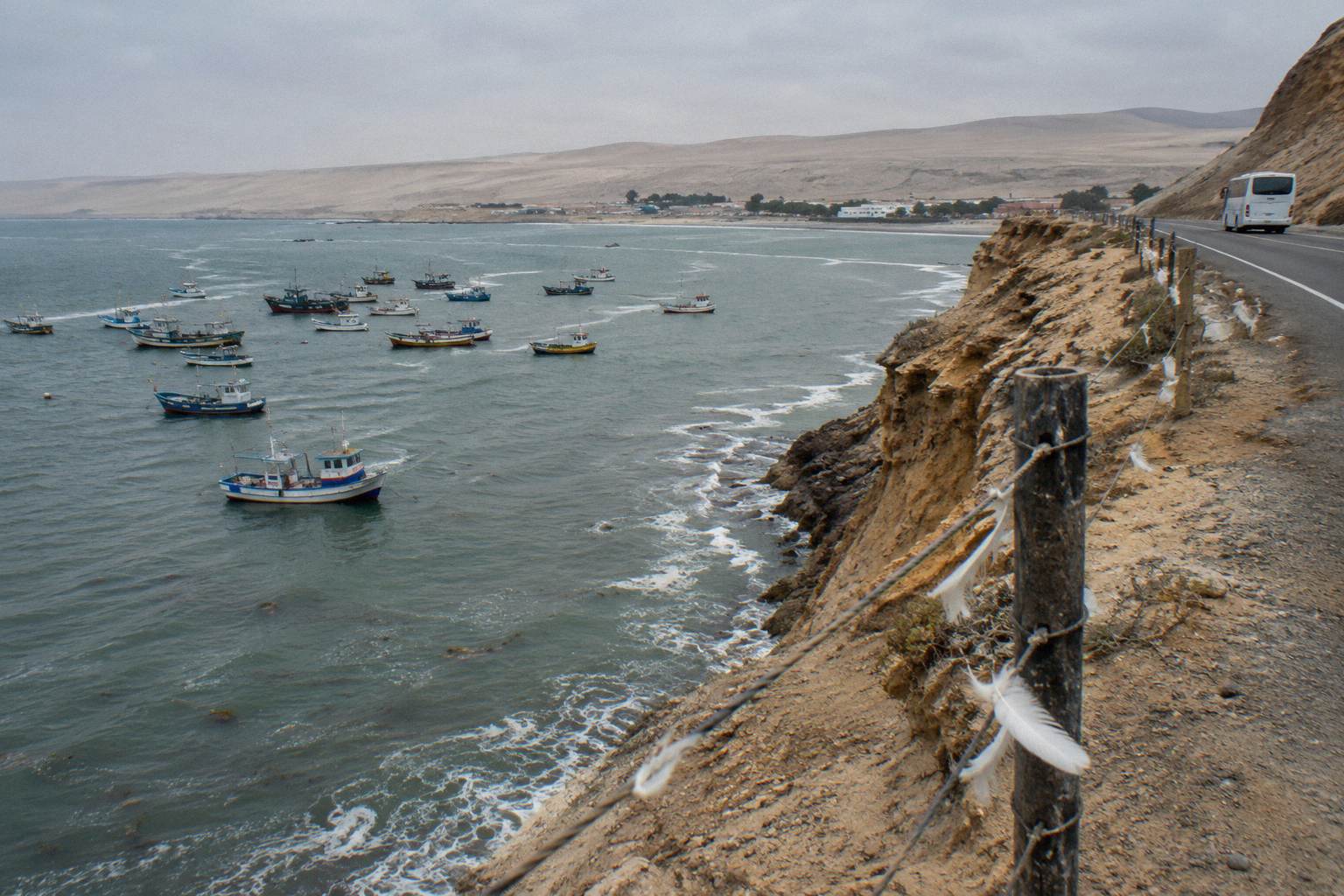
From Paracas the week forks. Keeping Huacachina means a 74 km hop, a free-flow drive estimate of about 1.3 hours. There is a ticket built exactly for that fork: the Wayki Bus Peru one-way bus from Lima to Huacachina with a Paracas stop, rated 3.7 across 77 reviews, which picks up in Miraflores, San Isidro and Barranco, stops in Paracas, and drops at the Viajero hostel meeting point in Huacachina; the listing gives 8 hours including the stop, with the same 24 hour free-cancellation terms as listed. Riders who want a night in Paracas take the first ticket and a separate hop; riders compressing the coast take the second.
After Ica the desert narrows toward Nazca, a 142 km leg by the free-flow estimate that stands in for Huacachina to Nazca, then the big one: Nazca to Arequipa, 566 km, a free-flow estimate of about 7.8 hours that real services exceed by a wide margin. Arequipa earns its two nights at 2,429 m, a useful halfway altitude before Cusco's 3,400 m. From Arequipa the direct leg to Cusco is 487 km, a 9.4 hour free-flow estimate; the Puno variant splits that into Arequipa to Puno and Puno to Cusco, adding Lake Titicaca at 3,848 m and one more night.
| Route version | Day shape | Keep | Cut |
|---|---|---|---|
| Canyon week | Lima, coast, Nazca, Arequipa x2, Cusco x2 | Arequipa, El Misti views | Puno and Lake Titicaca |
| Lake week | Lima, coast, Arequipa, Puno, Cusco x2 | Titicaca, the altiplano | A full Arequipa stay |
| Quick week | Lima, coast, Nazca pause, Cusco x3 | Three full Cusco days | Arequipa and Puno |
Each version keeps the same first two legs, which is why the Lima-to-Paracas and Lima-to-Huacachina tickets are the ones to lock in first. Everything after Ica can be decided a few days ahead once the week's pace is clear. The peru bus routes overview has the wider network for anyone already planning the return.
How Do The Days Break Down On The Lima To Cusco Chain?
Day one: Lima to Paracas or straight through to Huacachina. Day two: Huacachina to Nazca and the overnight-desert leg toward Arequipa. Day three: arrive Arequipa, recover, see the city. Day four: Arequipa, either the canyon road or a rest day. Day five: the long leg to Cusco, or Arequipa to Puno. Day six: Puno to Cusco, or a first Cusco day. Day seven: Cusco. That is the full version, and it is tight.
The week has almost no slack. Two legs, Nazca to Arequipa and Arequipa to Cusco, each consume the better part of a waking day even before terminal time, and both climb through high steppe where buses travel slower than any free-flow estimate. If a road closure or a strike day lands on day two or day five, the plan bends or breaks; the peru bus delays and road blocks guide explains why checking SUTRAN's live road alert map the day before each long leg is part of the routine, not paranoia.
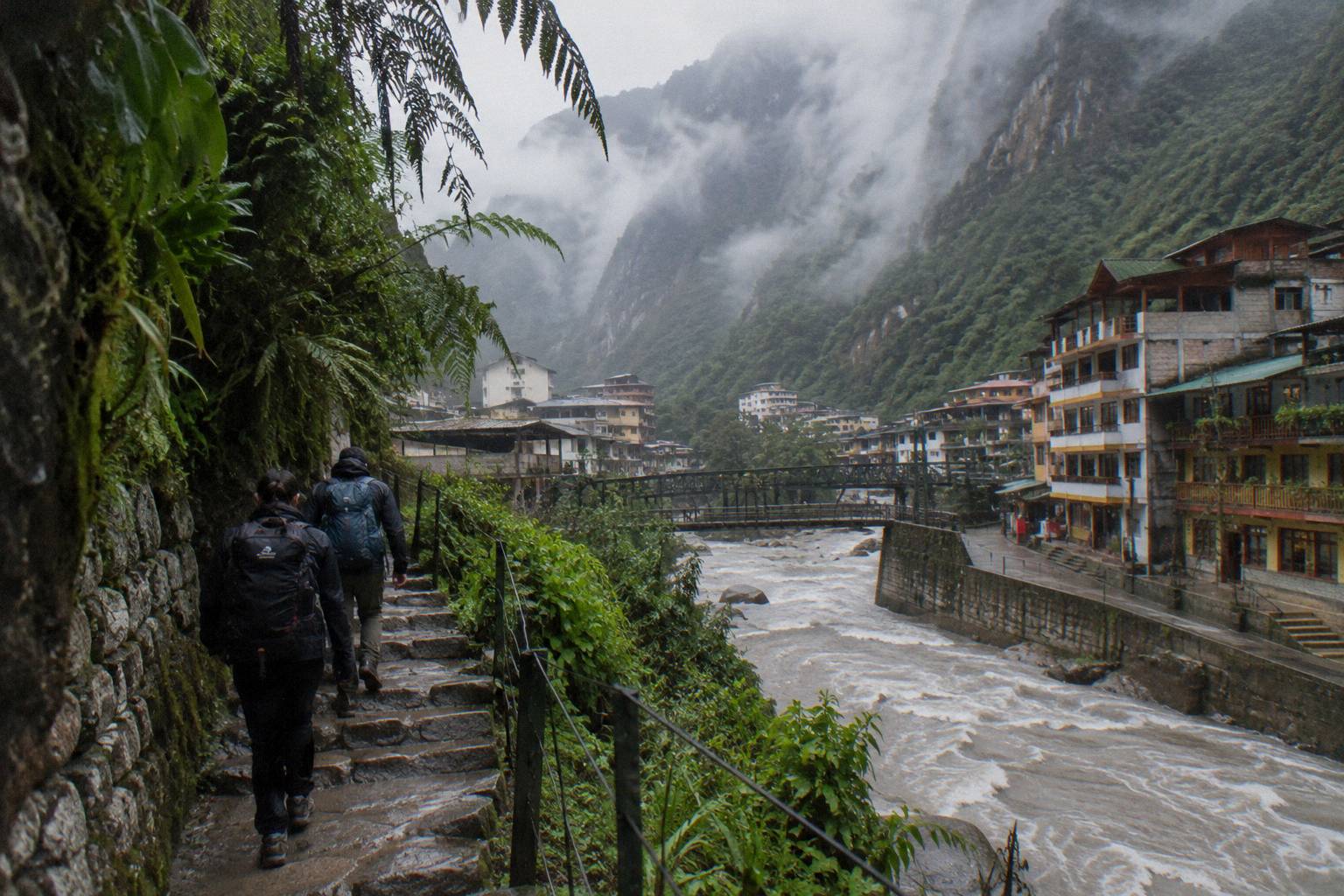
Puno changes the arithmetic. Adding the lake means the Arequipa leg stops at Puno, 273 km at a free-flow estimate of 5.5 hours, then Puno to Cusco is a further 387 km and a 6.2 hour free-flow estimate. That second leg has a ticket that turns drive time into part of the trip: the Turismo Mer tourist bus from Puno to Cusco with a lunch stop, rated 4.6 across 24 reviews, with the listing giving 11 hours and naming an all-you-can-eat lunch stop, dropping at the Turismo Mer private terminal in Cusco. Eleven listed hours against a 6.2 hour free-flow estimate is the clearest illustration on the whole route of why estimates are comparisons, not schedules.
The final day belongs to Cusco at about 3,400 m. Anyone heading onward to Machu Picchu by the back-door road should read the Cusco to Hidroelectrica bus guide, but inside a one week budget that side trip barely fits; treat it as the reason to come back.
Which Bus Ticket Fits Each Leg Of The Week?
Three legs suit pre-booked tourist-bus tickets with free cancellation, and the rest suit regular carriers bought a day or two ahead. The tourist tickets cover Lima to Paracas, Lima to Huacachina with the Paracas stop, and Puno to Cusco with lunch. The long desert and mountain legs, Huacachina to Nazca, Nazca to Arequipa, Arequipa to Cusco or Puno, are regular intercity services, booked through the operator's own sales channels.
Each listing carries free cancellation up to 24 hours before departure for a full refund, as listed, and each names a concrete drop-off: El Chaco in Paracas, the Viajero hostel meeting point in Huacachina, the Turismo Mer terminal in Cusco. On a week where plans shift, a cancelable first leg matters more than any onboard feature. The peru bus tickets booking guide walks the regular-carrier side, where sales close closer to departure and paper tickets can require passport numbers.
| Leg | Ticket type | What the listing gives |
|---|---|---|
| Lima (Miraflores, Barranco) to Paracas | Tourist bus, 4.2 across 62 reviews | 3 hours, drop at El Chaco, free cancellation up to 24 h before |
| Lima (Miraflores, San Isidro, Barranco) to Huacachina | Tourist bus, 3.7 across 77 reviews | 8 hours including a Paracas stop, Viajero hostel drop |
| Puno to Cusco | Tourist bus, 4.6 across 24 reviews | 11 hours, all-you-can-eat lunch stop, Turismo Mer terminal drop |
| Huacachina to Nazca | Regular carrier | Check the operator's page |
| Nazca to Arequipa | Regular carrier | Check the operator's page |
| Arequipa to Cusco or Puno | Regular carrier | Check the operator's page |
For the regular legs, class choice shapes the ride. The peru bus classes guide explains the cama and semi-cama tiers operators publish, and on legs longer than the Nazca-Arequipa estimate the flatter seats are worth the difference. Cruz del Sur lists 180 degree reclining seats on its comfort page and Oltursa publishes a bus cama VIP class without stating degrees; neither figure should be assumed for every service on the route.
Passenger rights also sit on your side when plans move. INDECOPI states that a domestic bus ticket can be postponed or transferred with at least 24 hours notice, with only the real reissue cost charged, and complaints about a carrier go to the company's Libro de Reclamaciones or INDECOPI's Reclama Virtual portal. Keep the fare receipt: Peru's national transit regulation makes a receipt the passenger's right.
Is A Hop-On Hop-Off Pass Better For One Week?
For a one-week trip, yes: the Full South To Cusco pass fits closely at 6 days, Get To Cusco Quick needs only 3, and the 10-day Lima To Cusco To La Paz route is beyond a week. You ride the same road either way, so the pass simply adds one booking, hotel pickup, and a host, while separate tickets keep leg-by-leg control.
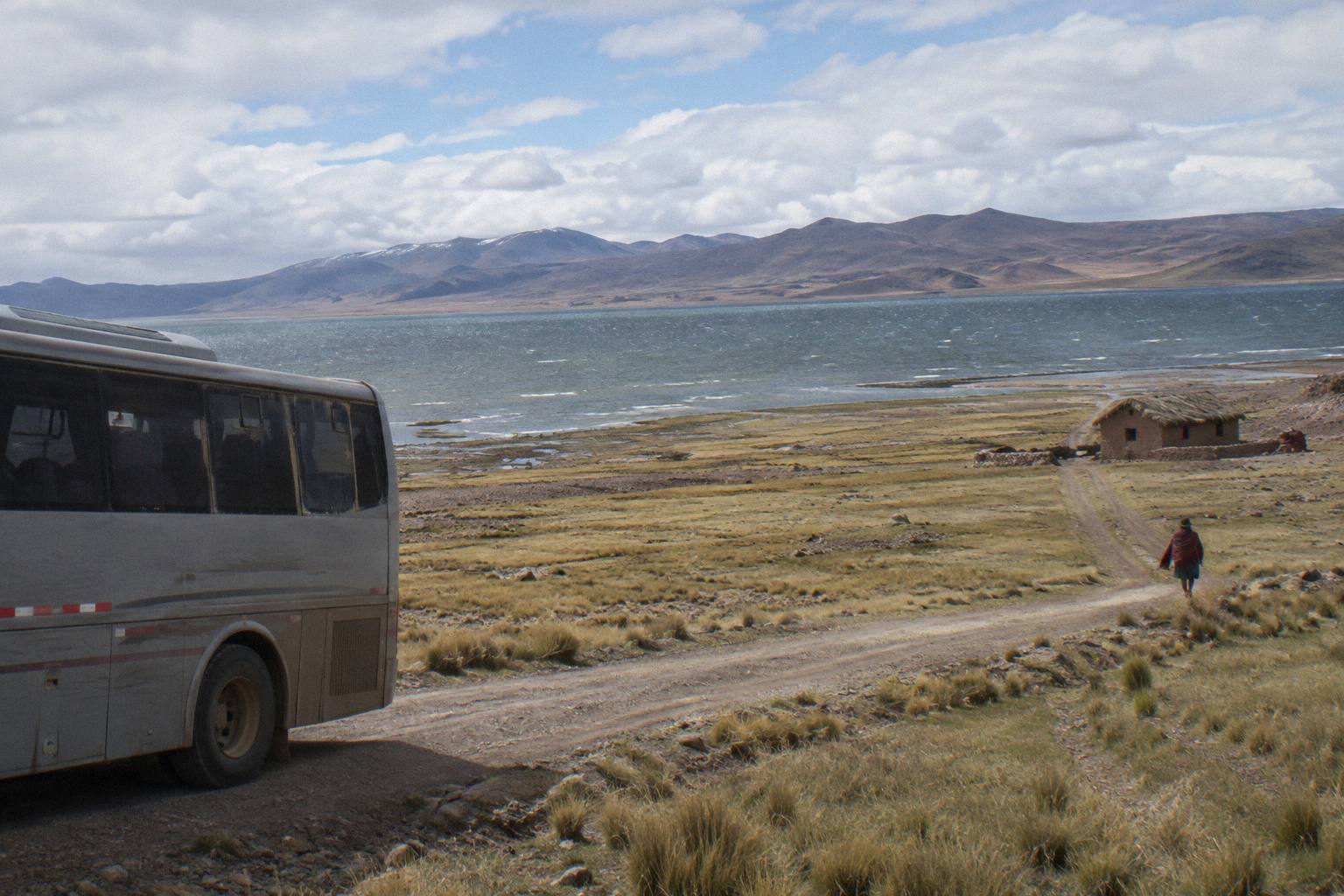
See Peru Hop Passes and the decision becomes concrete: passes on the network are valid for a year, buses run every day, and a departure time can be changed in the app up to 12 hours before, per its pass terms. Departure cities are Lima, Cusco, Arequipa, Copacabana and La Paz, and pass pages name stops at Chincha, Paracas, Huacachina, Nazca, Arequipa, Lagunillas, Puno, Cusco, Copacabana and La Paz. The quick pass skips Arequipa and Puno; the full pass keeps both. There is also a reverse direction: Peru Hop lists Full South To Lima and Get To Lima Quick for riders starting in Cusco.
| Pass (name as listed) | Direction | Fastest time (Peru Hop lists) |
|---|---|---|
| Full South To Cusco | Lima to Cusco | 6 days |
| Get To Cusco Quick | Lima to Cusco, skips Arequipa and Puno | 3 days |
| Canyon To Lima | Arequipa to Lima | 3 days |
| Canyon To The Lake To La Paz | Arequipa to La Paz | 2 days |
| Cusco To La Paz | Cusco to La Paz | 24 hours |
| Cusco To Canyon To La Paz | Cusco to La Paz via Arequipa | 5 days |
| Lima To Cusco To La Paz | Lima through to La Paz | 10 days |
The comparison is honest in both directions. A pass bundles hotel pickup, so there are no terminal departures on its legs, and Peru Hop reports tickets valid for a year with app changes up to 12 hours before departure. Individual tickets cost the week more admin, but they let you change one leg, skip a city on impulse or ride a regular carrier on the long Nazca-Arequipa stretch. The peru hop passes explained guide breaks the pass set down stop by stop, and the peru hop vs public bus comparison puts the two buying styles side by side.
One boundary matters for planners: the pass network's stops are the ten names above, and Machu Picchu is not one of them. Peru Hop's own page says Cusco to Aguas Calientes is by train, trek or a separate bus arrangement, and the pass network does not reach Huaraz or the north either.
How Do Terminals And Boarding Work Along The Route?
Regular carriers board at their own terminals, and the week's key addresses are operator-specific: Cruz del Sur departs Lima from Terminal Javier Prado at Av. Javier Prado Este 1109, La Victoria, and arrives in Cusco at Terminal Terrestre, Av. Vallecito 538; Oltursa departs Lima from Jiron Manuel Portocarrero 380, Surquillo, and Arequipa from the Terrapuerto. There is no single main terminal in any of these cities, so every leg starts from the operating company's own point.
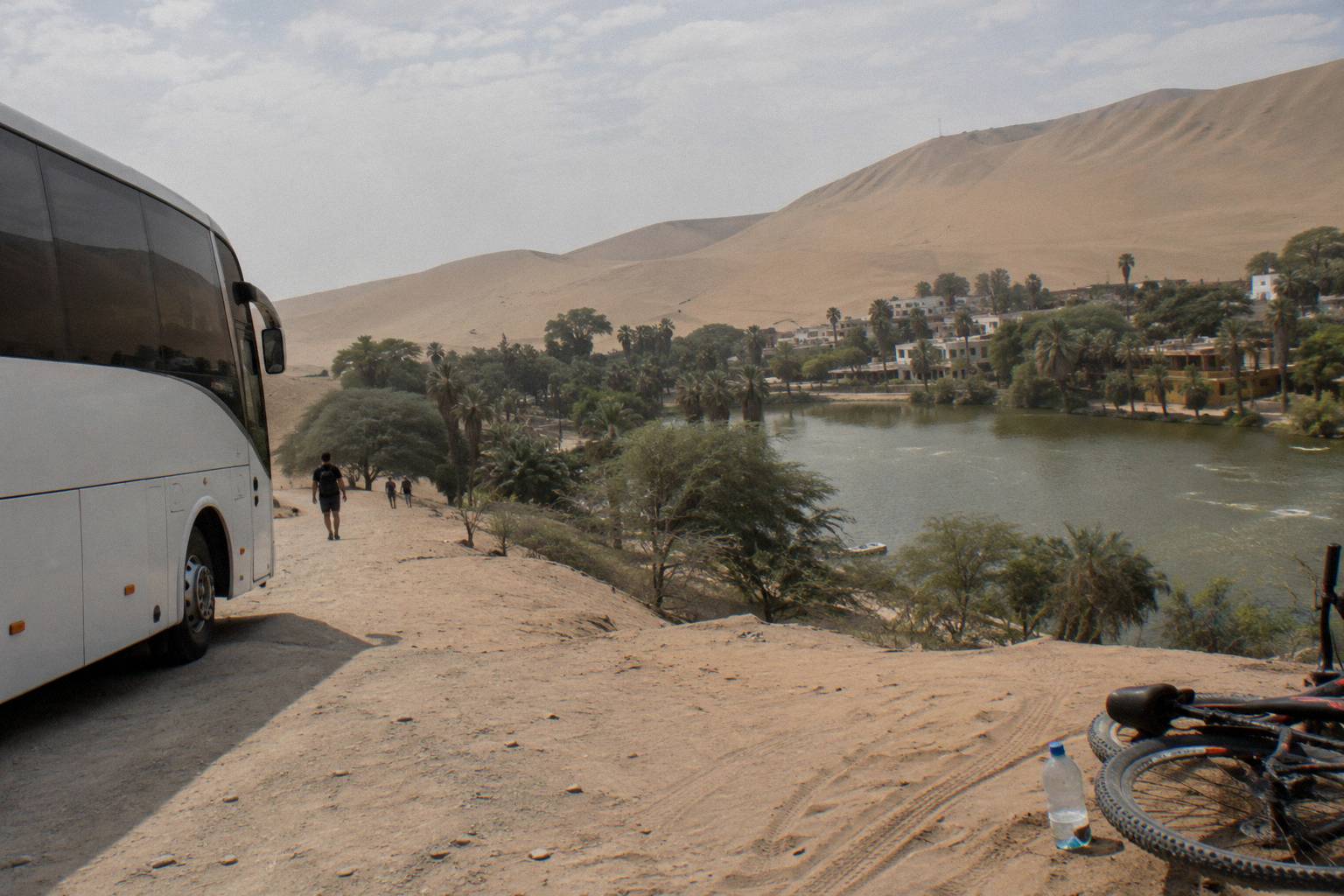
Peru's national transit regulation requires regular carriers to use habilitated terminals at origin, destination and stops, and passengers board only at authorised points with the bus stopped. In practice that means the terminal for your leg is whichever company you bought, and the address on the ticket is the address that matters. The peru bus terminals by city guide collects the rest of the chain, including Ica, Nazca and Puno points.
The tourist-bus tickets in this plan work differently: pickup is at named meeting points in Miraflores, San Isidro and Barranco rather than a terminal, and drops land at El Chaco, the Viajero hostel in Huacachina or the Turismo Mer private terminal in Cusco. Both systems are legal boarding; they simply serve different products. Whichever you ride, the UK FCDO advises travelers to "use one of the taxis registered at bus terminals" and "on bus journeys, keep your passport with you", practical rules at every point on this chain.
Two checks take minutes and catch real problems. SUTRAN's lookup by plate or driver DNI confirms the bus and driver have their papers in order, and the transit regulation entitles every passenger to up to 20 kg of luggage free on national service, with a hold-bag ticket advised by SUTRAN. Operators publish their own allowances on top: Cruz del Sur lists 20 kg hold plus 6 kg hand, Oltursa 20 kg plus one 5 kg piece.
Planning around this split gets easier once you treat every ticket as its own departure. A week that mixes Cruz del Sur and Oltursa legs, plus tourist-bus days, can spread your Lima starts across several districts, from La Victoria and Surquillo to the meeting points in Miraflores, San Isidro and Barranco, so read each ticket fresh the night before rather than assuming yesterday's terminal is today's. Build in time to locate the right entrance, since each point is a street address in a busy district rather than a signposted hub, and keep the ticket to hand during boarding. On tourist-bus legs the equivalent preparation is confirming your exact meeting point when you book, since there is no platform or gate to head for once you arrive.
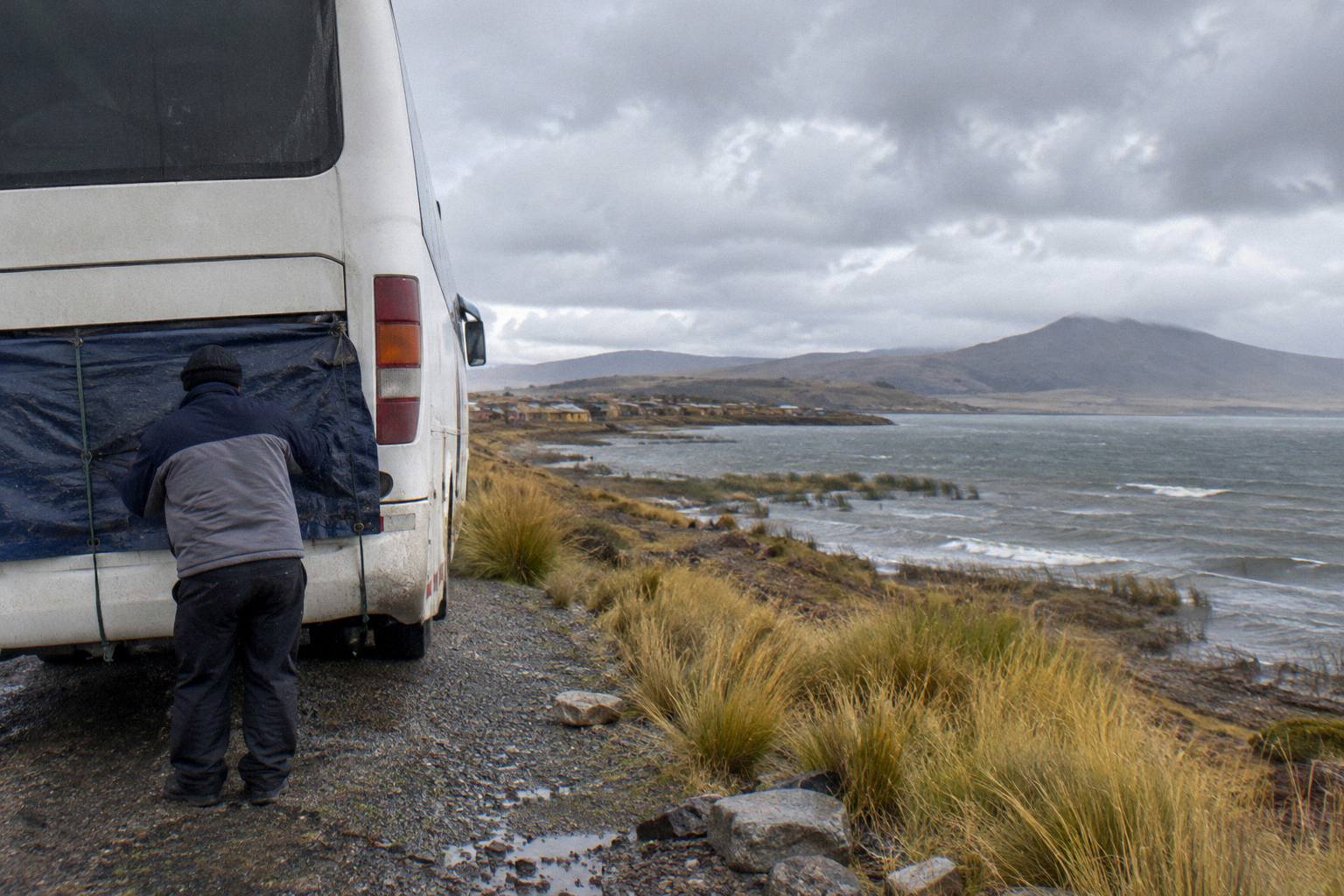
On luggage, plan to the tightest allowance anywhere in your chain. The regulation sets 20 kg free on national service, and both named operators match that figure in the hold, but the cabin rules differ: Cruz del Sur allows 6 kg of hand luggage while Oltursa permits one 5 kg piece, so a cabin bag that clears one leg can be over on the next. Weigh everything before you leave home, put the bulk of your load in the hold, and keep in the cabin anything you would not want to lose. The SUTRAN lookup is quick enough to run per departure, not just once for the week, because the papers attach to the specific bus and driver serving that leg. At each arrival, from the Terrapuerto in Arequipa to the drops at El Chaco, the Viajero hostel or Turismo Mer in Cusco, use a registered taxi stand where one exists.
What About Altitude, Safety And Strikes During The Week?
Altitude rises steadily from Lima at 162 m to Cusco at about 3,400 m, hitting 3,848 m at Puno on the lake variant, though the staged route sleeps a night at Arequipa's 2,429 m before the highest legs. For safety, the FCDO warns bus crashes are common, especially at night, so use reputable companies, avoid overnight travel in mountainous regions, and heed Canada's advice to avoid night buses and coaches.
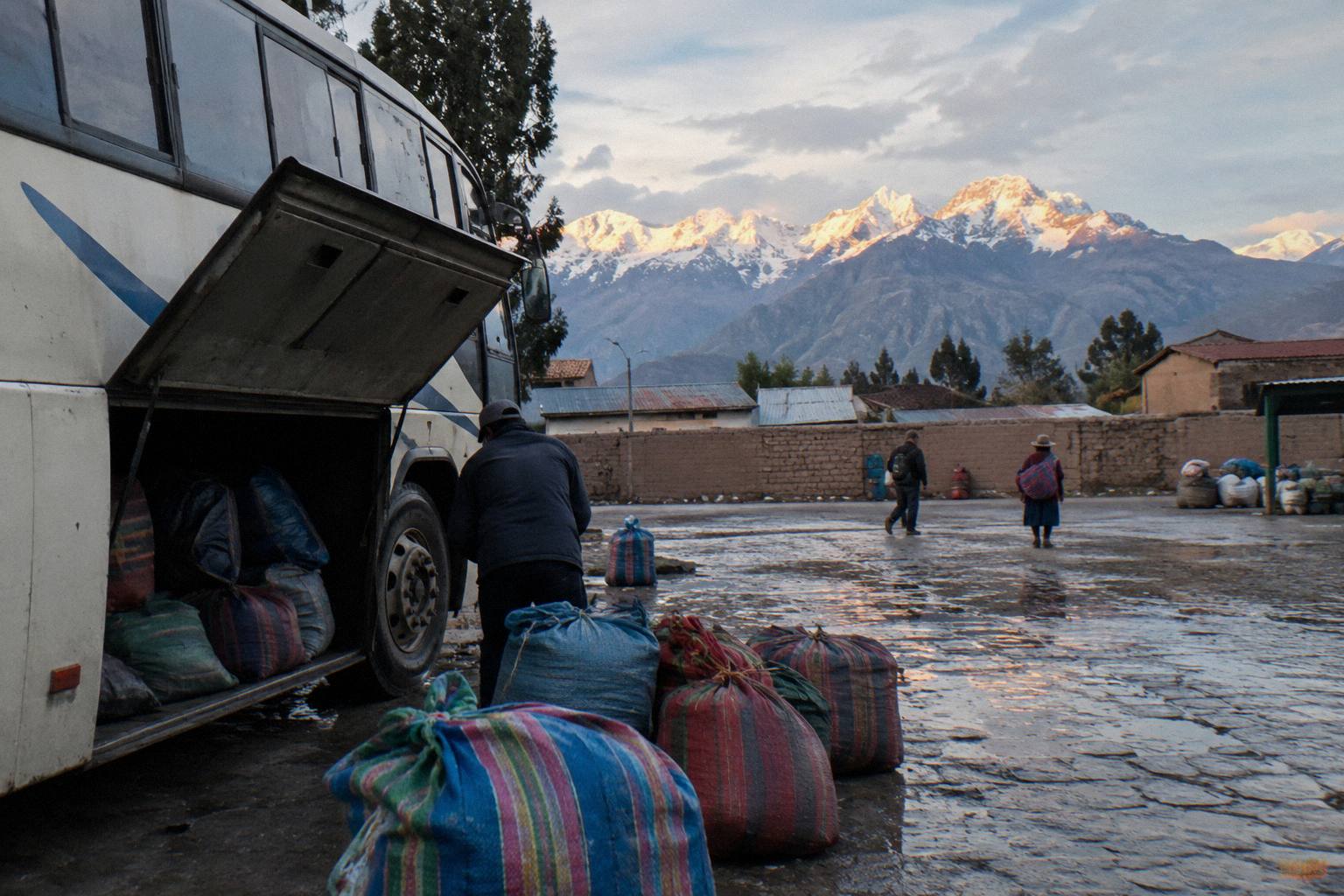
Those quotes are the honest frame, not a verdict. Armed gangs have been known to stop buses to rob travellers, especially at night", and the US Embassy's republication of the State Department advisory notes that its own employees "may travel at night with commercial bus companies along the Pan-American Highway, to Huaraz, and on the Lima-Arequipa-Cusco corridor." Read the sources directly at Canada's Peru travel advice and the FCDO safety and security page.
Altitude is the quieter constraint. The peru bus altitude guide covers acclimatisation in depth; for the week itself the practical point is that the quick version lands you in Cusco faster but from lower ground, while the Arequipa and Puno versions stage the climb. Abra La Raya, the pass on the Puno-Cusco road, reaches about 4,300 m, so that leg spends real hours high even though the endpoint is lower.
Strikes and blockades are the week's wild card. The FCDO states "Political protests in Peru are unpredictable and can escalate quickly. Demonstrations can become violent and lead to roadblocks, travel disruption, including trains, and suspension of immigration services at land borders", and names Arequipa, Cusco and Puno among regions with recent protests. The same advice is blunt about the response: "Do not attempt to pass blockades." Check the SUTRAN map and the carrier the day before each long leg, and keep one buffer half-day in the plan for exactly this.
Common Questions About A One Week Peru Bus Trip
Can You Really See Southern Peru In One Week By Bus?
Yes, as a one-way Lima-to-Cusco corridor. The free-flow drive estimates for the coastal chain total roughly 1,350 km, Peru Hop lists 3 days minimum for its quickest Lima-to-Cusco pass and 6 days for the full one, so a week fits the route only with two or three stops cut.
What Is The Best First Bus Leg To Book?
Lima to Paracas, the leg every version of the week shares. The Wayki Bus Peru one-way tourist bus is rated 4.2 across 62 reviews, drops at El Chaco, and the listing gives 3 hours with free cancellation up to 24 hours before for a full refund.
Should You Include Puno And Lake Titicaca In A One Week Trip?
Only by shortening Arequipa. Adding Puno splits the Arequipa-to-Cusco leg into 273 km and 387 km stretches, and the Puno-to-Cusco tourist bus with a lunch stop lists 11 hours for the second one. The lake earns its stop; the cost is a night elsewhere.
Do You Need To Book Peru Buses In Advance?
The tourist-bus legs on this route are worth booking early because pickup points and seats are limited and each listing carries free cancellation up to 24 hours before. Regular intercity legs can be bought a day or two ahead through the operator's own sales channels.
How High Does The Route Go?
Lima sits at 162 m, Arequipa at 2,429 m, Cusco at about 3,400 m and Puno at 3,848 m. The Puno-Cusco road crosses Abra La Raya at about 4,300 m, so the staged versions of the week climb more gently than the quick one.
Is A Hop-On Hop-Off Pass Better Than Separate Tickets For One Week?
It depends on how fixed the plan is. A pass buys the whole chain in one transaction with hotel pickup and year-long validity, while separate tickets let you change or skip a single leg.