Colectivos And Combis In Peru: How Shared Local Buses Work
Combis and colectivos are the shared vehicles that carry Peruvians on the legs the big buses do not cover. Here is what is actually verified about how licensed service works, what the national regulation says, and where a booked tourist bus fits the same journey.
Short answer
A combi in Peru is a shared minivan or van running a fixed short route, boarded at authorised points with the vehicle stopped. Peru's national transit regulation lets licensed carriers carry no more passengers than the manufacturer's seat count, seated only. Details like stands and fares are set locally, so ask at your terminal or check with the carrier.
Shared transport is the layer of Peruvian travel that guidebooks gesture at and rarely explain. A combi rolls past with the door open, a caller shouting the destination, and a visitor is left guessing whether it is meant for them, what it costs, and whether boarding is a reasonable idea. The honest answer is that most of the fine detail, fares, stand locations, schedules, is set city by city and is not recorded in any national source. What is recorded is the regulatory frame every licensed vehicle operates inside, and that frame is more specific than people expect.
This guide sticks to what can be verified. It covers what a combi and a colectivo are, what Peru's national transit regulation says about boarding, seating and terminals, how to check a bus and driver through SUTRAN's public lookup, where shared vehicles collide with the tourist corridors, and when a booked tourist bus is the better instrument for the same leg. Where a detail is genuinely local, the guide says so rather than inventing a stand or a fare.
What Is A Combi In Peru?
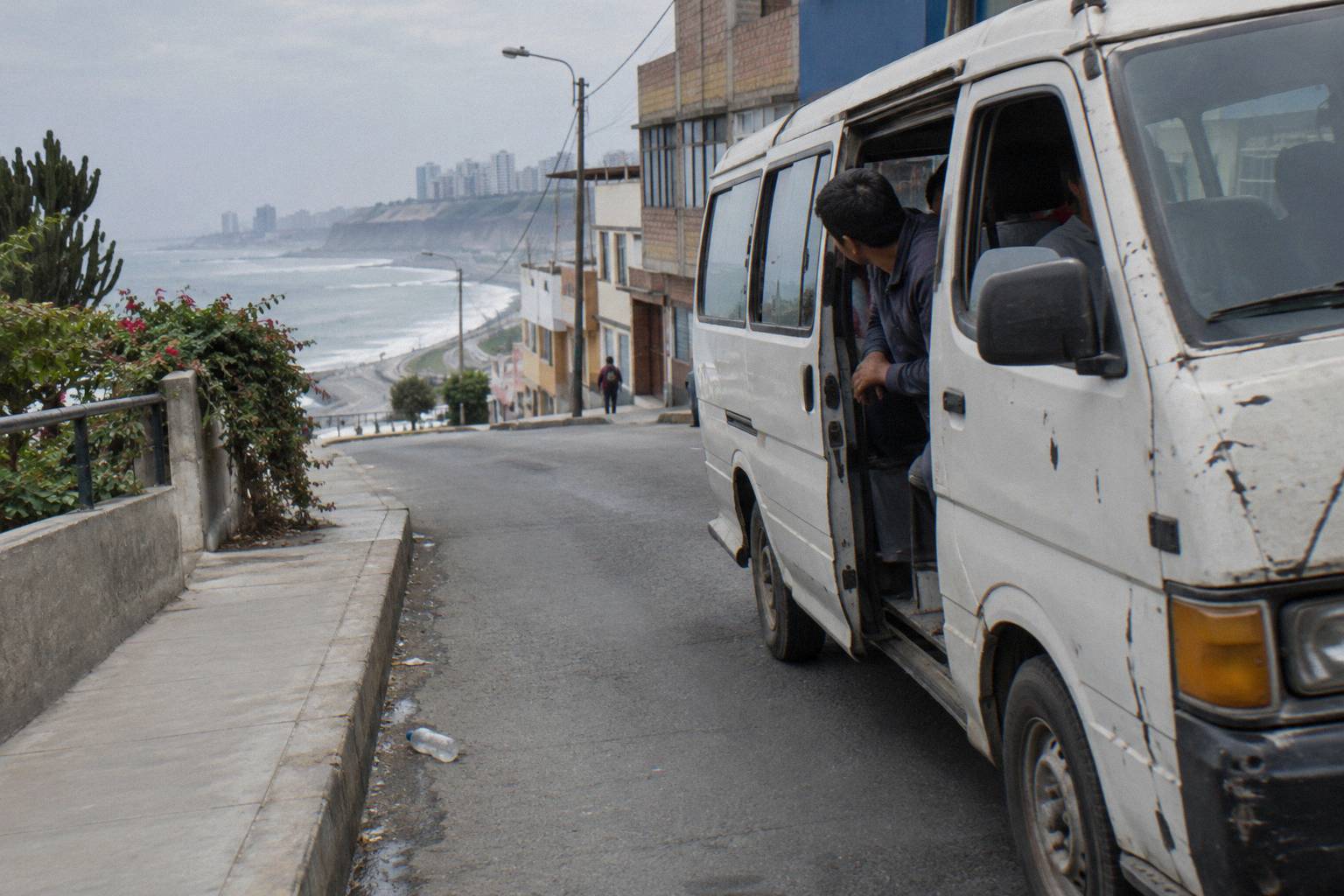
A combi in Peru is a shared minivan or small bus that runs a fixed urban or short interurban route, loading passengers along the way and charging a local fare set by the city or region rather than by a national price list. The word describes the vehicle and the informal feel of the service at once. No national page publishes combi fares or stand hours; those are municipal matters.
The vehicle side is simple. A combi is a van converted for passengers, tight seating, a sliding door, a caller hanging out of it announcing the route. The institutional side is messier. Combis sit inside a licensing system run by municipalities and regional governments, and the quality of enforcement varies with the city. That is why no honest national guide can print a combi fare: the number that held in Lima last month says nothing about Cusco.
What the national level does govern is the frame the vehicle operates in. Peru's national transit regulation sets the rules for licensed passenger service: boarding only at authorised points with the bus stopped, no more passengers than the manufacturer's seats, everyone seated, luggage in the hold or the overhead racks and never in the aisle or blocking exits. Those rules apply to licensed service generally, and they are the yardstick against which a crowded combi should be measured. The regulation also caps continuous driving at 5 hours by day and 4 at night for a single driver, with a second driver required beyond that.
For a visitor, the practical reading is this: a combi is a real part of how Peru moves, the rules exist, and the day-to-day experience depends on whether the particular vehicle and its operator respect them. The rest of this guide is about what you can verify before you board anything.
What Is The Difference Between A Colectivo And A Combi?
A colectivo in Peru is a shared car, station wagon or van that covers a specific interurban leg, filling up at a known departure point and leaving when it has enough passengers, while a combi is a city minivan working a fixed route with stops along the way. In practice the two words blur, and in some regions a colectivo is simply the shared option for a run the big buses treat as too short.
The distinction is functional rather than legal. A combi behaves like a bus: route, stops, a fare per leg. A colectivo behaves like a pooled taxi for a point-to-point trip: one origin, one destination, a shared cost, departure when full. Travellers meet colectivos at the edges of the intercity network, on legs between a terminal and a trailhead, or between towns that the major operators skip.
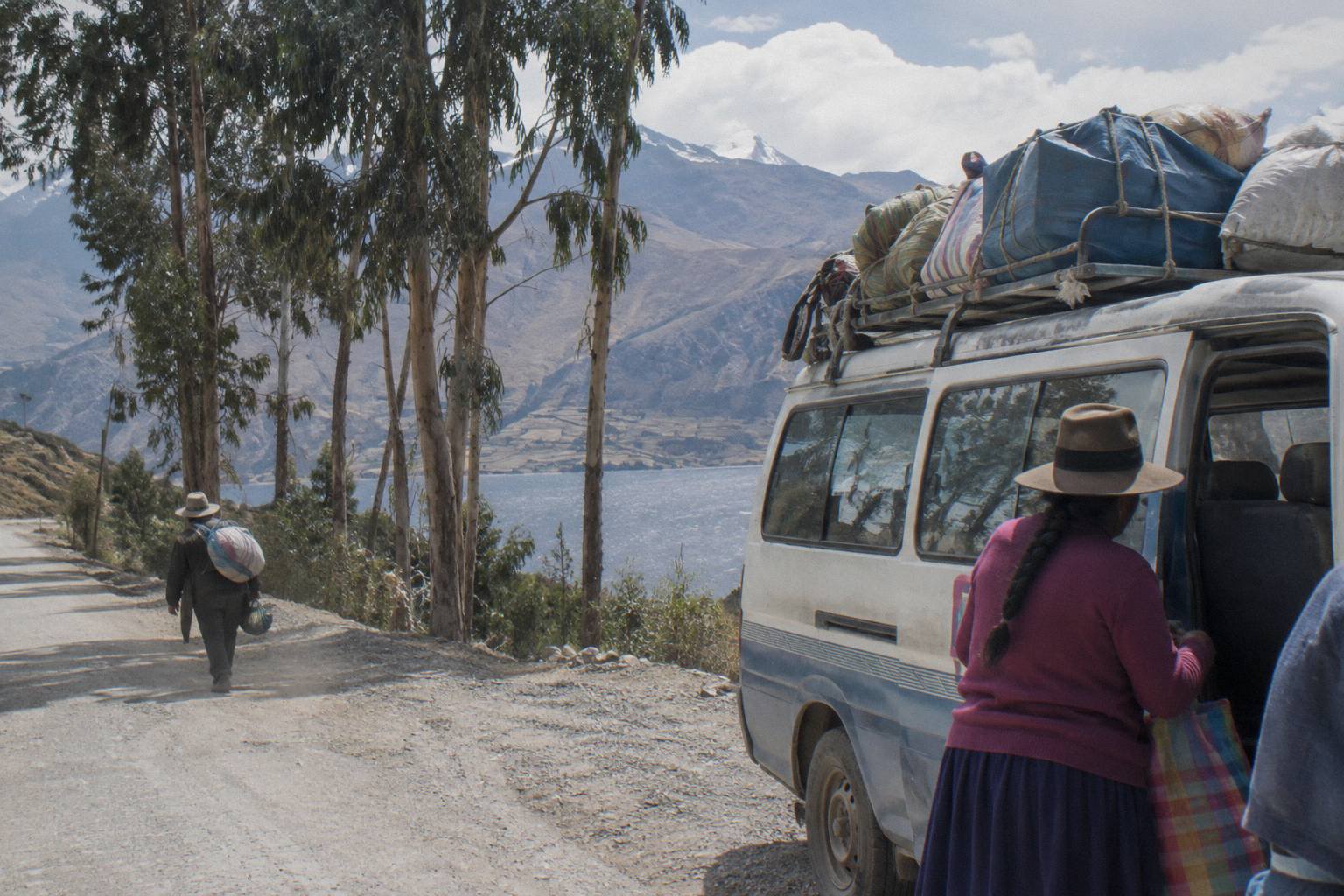
What can be said with confidence is limited, and it is worth being blunt about that. The verified record on colectivos covers the regulatory frame for licensed service and the official tools for checking a vehicle, and it records plainly that specific colectivo details, the Tacna to Arica shared-crossing fares and rules among them, are unknown. Nothing in the official pages fixes a stand address, a fare or a departure rhythm for a named colectivo route. Any page that prints those numbers for a specific route is guessing.
That leaves the traveller with two honest moves. One, use the official check tools in the next section on any vehicle you are unsure about, which works for licensed buses and drivers by plate or document number. Two, for legs where certainty about the seat, the drop-off and the cancellation terms matters more than the local price, use a booked tourist bus instead, which is exactly the trade the later sections of this guide weigh.
What Rules Apply To Licensed Shared And Intercity Service?
Peru's national transit regulation says licensed passenger service boards only at authorised points with the vehicle stopped, carries no more passengers than the manufacturer's seat count with everyone seated, requires a fare receipt, allows up to 20 kg of luggage free on national service, and obliges regular carriers to use terminals rather than the public road. SUTRAN enforces the interprovincial side of this frame.
These are the articles worth knowing as a passenger, because they are the ones you can actually see being kept or broken. Boarding points: passengers board and alight inside terminal areas or at authorised points, never by flagging a moving vehicle down. Seating: the count of passengers may not exceed the manufacturer's seats, and standing is not permitted. Receipts: a fare receipt is the passenger's right. Luggage: up to 20 kg travels free on national bus service, carried in the hold and overhead racks, and SUTRAN advises getting a luggage ticket for anything checked. Age: a child from age 5 needs their own seat.
| Rule | What the regulation says | What it means at the kerb |
|---|---|---|
| Boarding | Only at authorised points, vehicle stopped | A licensed service does not pick up mid-traffic |
| Seating | No more than manufacturer seats, seated only | A packed aisle is a breach, not a custom |
| Receipt | Fare receipt is the passenger's right | Ask for it; it is also your complaint paper |
| Luggage | Up to 20 kg free on national service | Hold and racks, never the aisle or exits |
| Terminals | Regular carriers use terminals, not the public road | Licensed intercity service leaves from a terminal |
| Drivers | 5 h continuous by day, 4 h at night, second driver beyond | Long trips are crewed, not solo endurance runs |
The terminal rule has a second edge worth knowing. Regular carriers must use enabled terminals at origin, destination and stops, and terminals are mandatory in both directions for towns of 200,000 people or more. That is why intercity journeys in Peru funnel through named company terminals and city terminal buildings rather than kerbside pickup, and it is the single biggest structural difference between a licensed intercity bus and a combi working a city route.
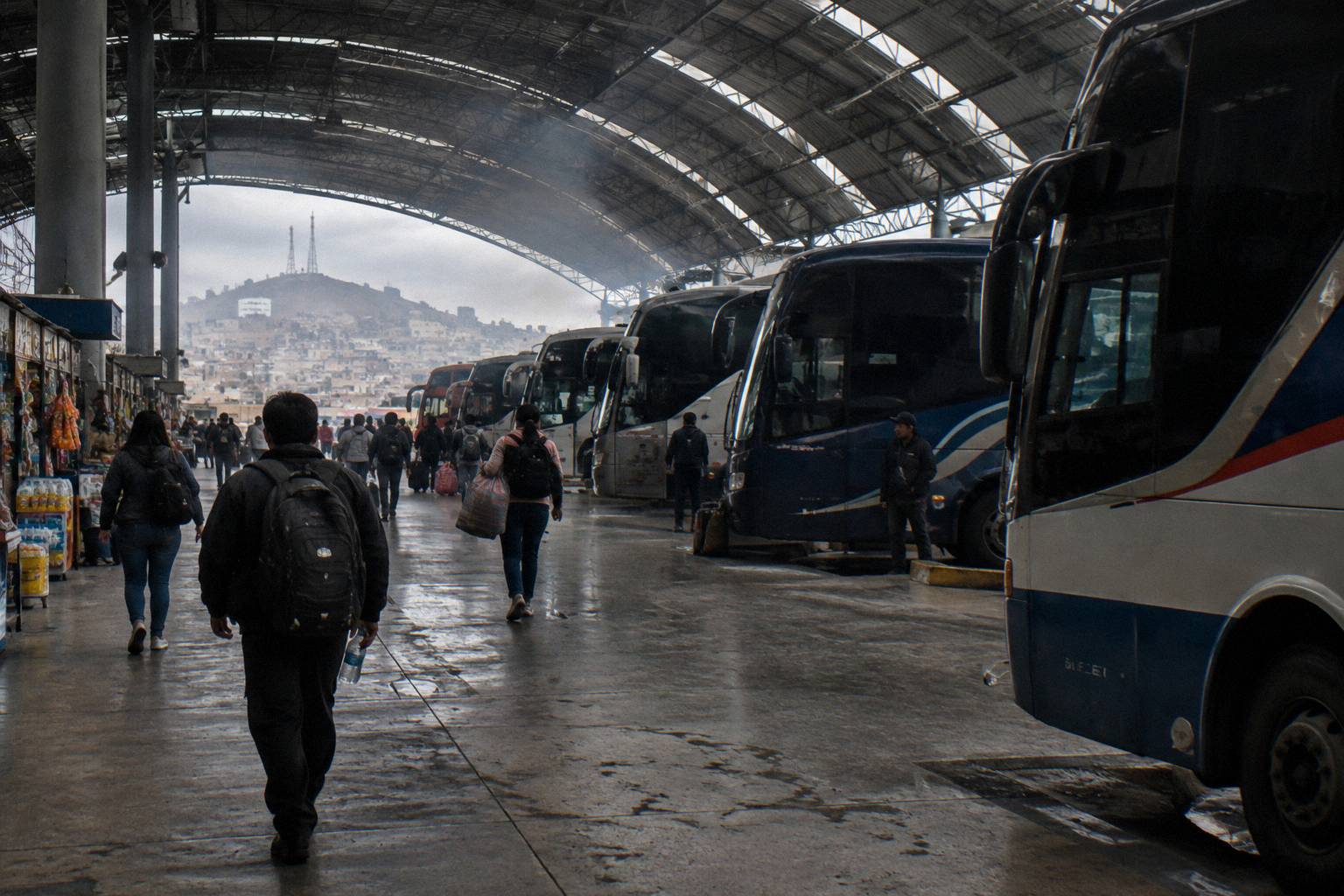
For tickets bought on domestic bus service there is a further protection many travellers never hear about. INDECOPI states that a domestic bus ticket can be postponed or transferred with at least 24 hours notice, with only the real cost of reissuing charged and no penalty, and that if the company itself delays or fails to run the service, the passenger has the right to information and to rebooking or a refund. Complaints go first to the carrier's Libro de Reclamaciones, which has 15 working days to answer, and beyond that to INDECOPI's Reclama Virtual portal.
How Do You Check A Bus Or Driver Before Boarding?
SUTRAN, Peru's transport regulator, runs a public lookup at gob.pe/11146 where anyone can check a bus by its plate or a driver by their document number and see whether papers are in order, with a 24-hour phone line and a WhatsApp reporting line also available. It takes a minute, it works from a phone, and it is the most under-used tool in Peruvian ground travel.
The lookup is exactly what it sounds like. Enter the plate of the vehicle you are about to board, or the driver's DNI, and the service reports whether the bus and the driver have their papers in order. For licensed interprovincial service this closes the loop on everything the previous section described: a bus with current papers is a bus inside the inspection and insurance system, and a driver with current papers is one whose licence and record are on file.
Alongside the lookup, SUTRAN runs a national speed rule worth understanding correctly, because it is widely misquoted. SUTRAN states that the 90 km/h limit for interprovincial buses applies only on roads without any other regulating sign; where a sign sets another speed, the sign wins. A separate device rule orders a speed limiter that stops a bus passing 110 km/h, which is a ceiling on the machine, not a permission to drive at it. The official SUTRAN note on the 90 km/h rule also carries the WhatsApp number for reporting speeding.
None of this requires the passenger to become an auditor. The realistic version is: for an intercity leg with a named company, the company carries the compliance burden and the lookup is a spare check; for a shared van on a short leg, where the carrier is an individual with a vehicle, the lookup and the boarding rules are the whole of what you can verify in advance.
When Does A Booked Tourist Bus Beat A Shared Van?
A booked tourist bus earns its place on legs where a shared van leaves the drop-off, the duration and the cancellation terms undefined: the booking fixes a pickup area, a named drop-off point and a duration the listing states, and the listed tourist services carry free cancellation up to 24 hours before for a full refund. On short city hops a combi or a taxi is the local instrument and a booked bus is overkill.
The dividing line is trip length and consequence. A 15-minute hop inside a city has low stakes; a shared van is a reasonable tool and the local fare is the point. A multi-hour leg between regions is different: you are choosing a vehicle you will sit in through mountain roads for hours, and the difference between a licensed bus with a named operator and an unnamed shared vehicle is the difference between a paper trail and none.
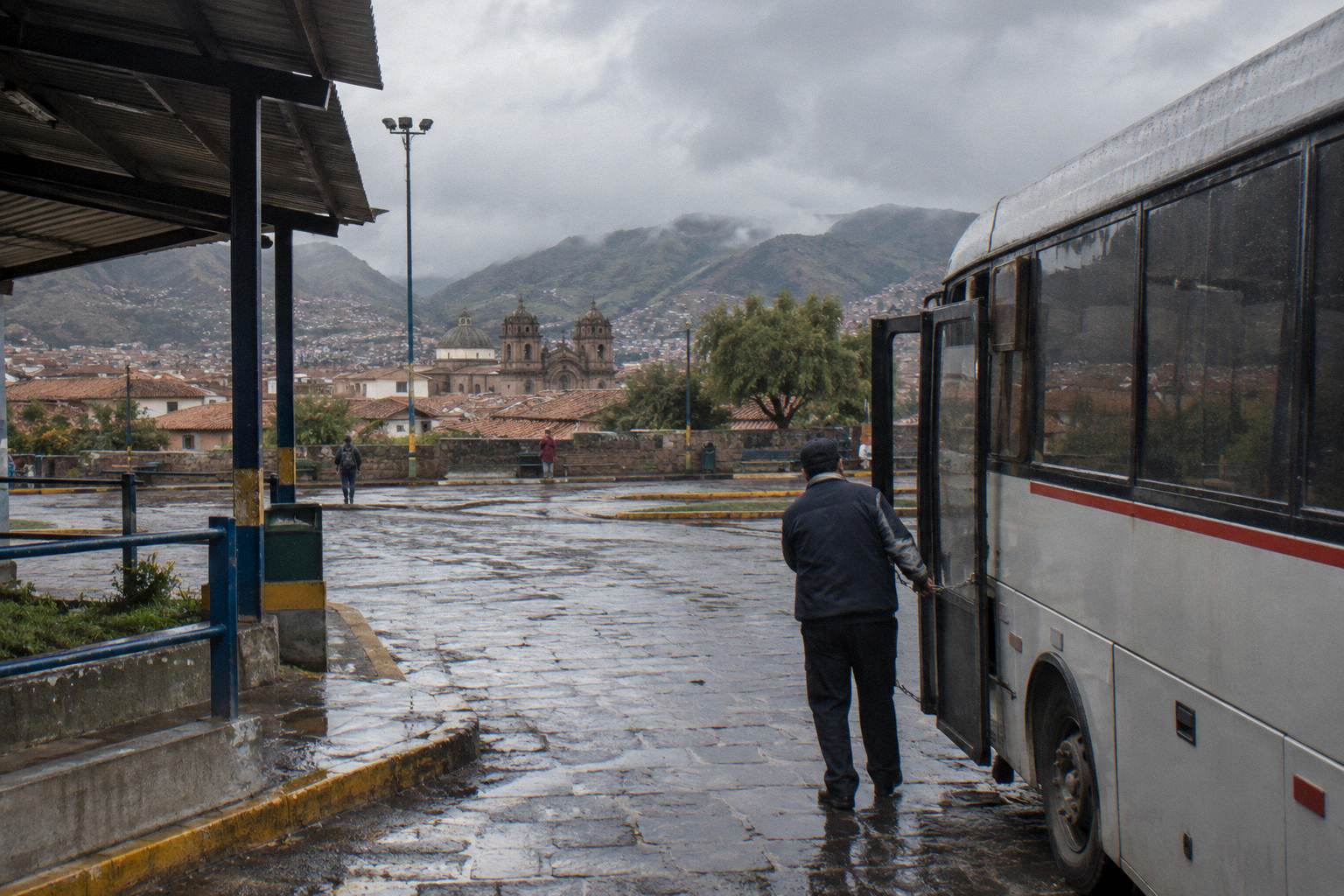
Take the southern legs one at a time. The Machu Picchu by Car Vip tourist bus from Cusco to Hidroelectrica, rated 4.3 across 53 reviews, runs one way from Cusco's Plaza de Armas to a private terminal at Hidroelectrica inside Restaurante Escobar, a listing that gives 6 hours with two rest stops, ending at the hydroelectric station used as the back-door start for the walk or rail leg toward Machu Picchu. For that corridor, the Hidroelectrica back-door route guide unpacks the full leg, and you can check availability on the operator's live listing.
On the Puno to Cusco leg, shared options exist in fragments, but the Turismo Mer tourist bus from Puno to Cusco with a lunch stop, rated 4.6 across 24 reviews, is the shape of the alternative: a single vehicle, a listing that gives 11 hours, a named terminal drop-off in Cusco, and free cancellation up to 24 hours before. The route itself, 387 km with a free-flow drive estimate of 6.2 hours that real mountain journeys exceed, is mapped in the southern Peru bus circuit guide.
How Do Combis Fit Into Longer Bus Routes?
Combis and colectivos are connectors, not competitors, on a long Peruvian itinerary: the intercity legs between regions belong to licensed bus companies running terminal to terminal, while shared vehicles cover the first and last kilometres, terminal to hotel, town to trailhead, or between stops the big operators pass at speed. Planning the two layers separately, bus tickets for the long legs, local knowledge for the short ones, is how Peruvians themselves structure the trip.
Look at any southern itinerary and the split is visible. Lima to Paracas is 251 km, a free-flow drive estimate of 3.5 hours, and it is a licensed intercity corridor with tourist-bus options. Paracas to Huacachina is 74 km, a free-flow estimate of 1.3 hours, and it is exactly the kind of short hop where shared vehicles and booked shuttles compete. Each pair belongs to a different layer of the network, and confusing the layers is how travellers end up on the wrong instrument for the leg.
| Leg | Distance | Free-flow drive estimate | Layer that serves it |
|---|---|---|---|
| Lima to Paracas | 251 km | 3.5 h | Intercity bus, licensed carriers |
| Paracas to Huacachina | 74 km | 1.3 h | Shared vans and booked shuttles |
| Arequipa to Puno | 273 km | 5.5 h | Intercity bus, sleeper service |
| Cusco to Hidroelectrica | 212 km | 5.1 h | Tourist bus, one-way listings |
| Puno to Cusco | 387 km | 6.2 h | Intercity and tourist bus |
Every figure in that table is a free-flow drive estimate from routing data, a measure of the road with no traffic, no stops and no mountain pace, and real bus journeys exceed it. Treat the column as a floor for comparing legs against each other, never as a promise about arrival. The comparison logic in the Peru bus routes overview works the same way.

On the Arequipa to Puno leg the booked side of the market offers the Turismo Mer sleeper bus from Arequipa to Puno, rated 4.3 across 20 reviews, a night service in a sleeper with a listing that gives 7 hours and names a 160 degree recline; the terminal boarding fee is not included, so check the boarding fee line on the listing. For the same corridor read the southern Peru bus circuit guide alongside the direct option from Cusco: the World Explorer Peru direct bus from Cusco to Arequipa, rated 3.7 across 16 reviews, with a listing that gives 10 hours and names a 160 degree seat, finishing at the Arequipa bus terminal.
What Should You Watch For At Stops And Terminals?
Government advice for Peru is consistent across the UK, Canada, Australia and the United States: be especially vigilant at bus terminals and in taxis, use only authorised cabs located inside terminals and stations, keep your passport with you on bus journeys, and treat roadblocks and strikes as possibilities that arise with little notice. The advice names terminals specifically, so the edges of a trip deserve as much planning as the vehicle.
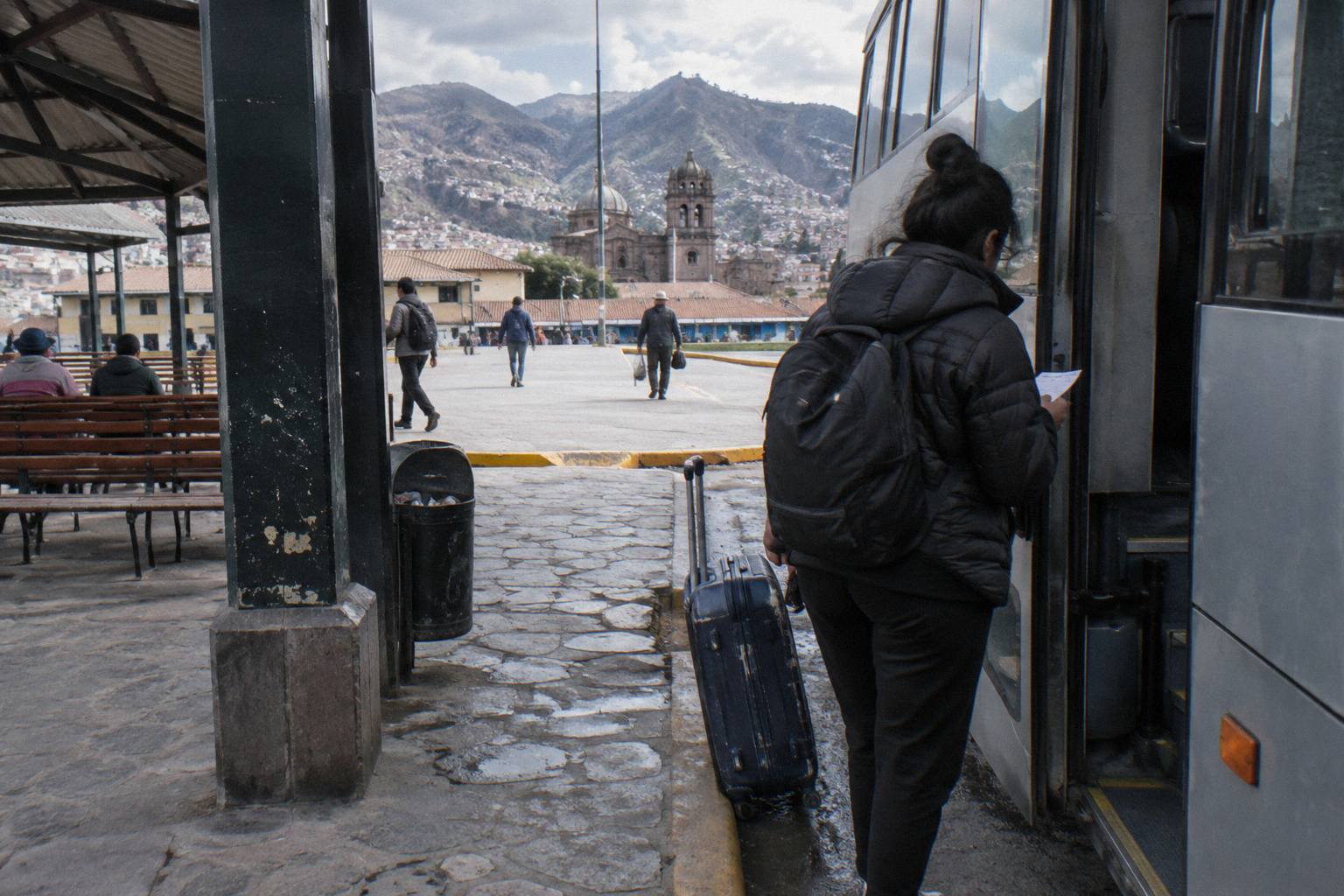
The UK FCDO puts it in plain terms: "There is a risk of robbery by criminals posing as taxi drivers, especially at Jorge Chavez International Airport and bus terminals," and its remedy is to "use one of the taxis registered at bus terminals." Canada's advice runs parallel: "Remain particularly vigilant at bus terminals and in taxis" and "Only use authorized cabs located inside airport terminals and bus stations." The full FCDO safety and security page and Canada's Peru travel advice carry the complete wording, and both are worth reading before a long itinerary rather than after something goes wrong.
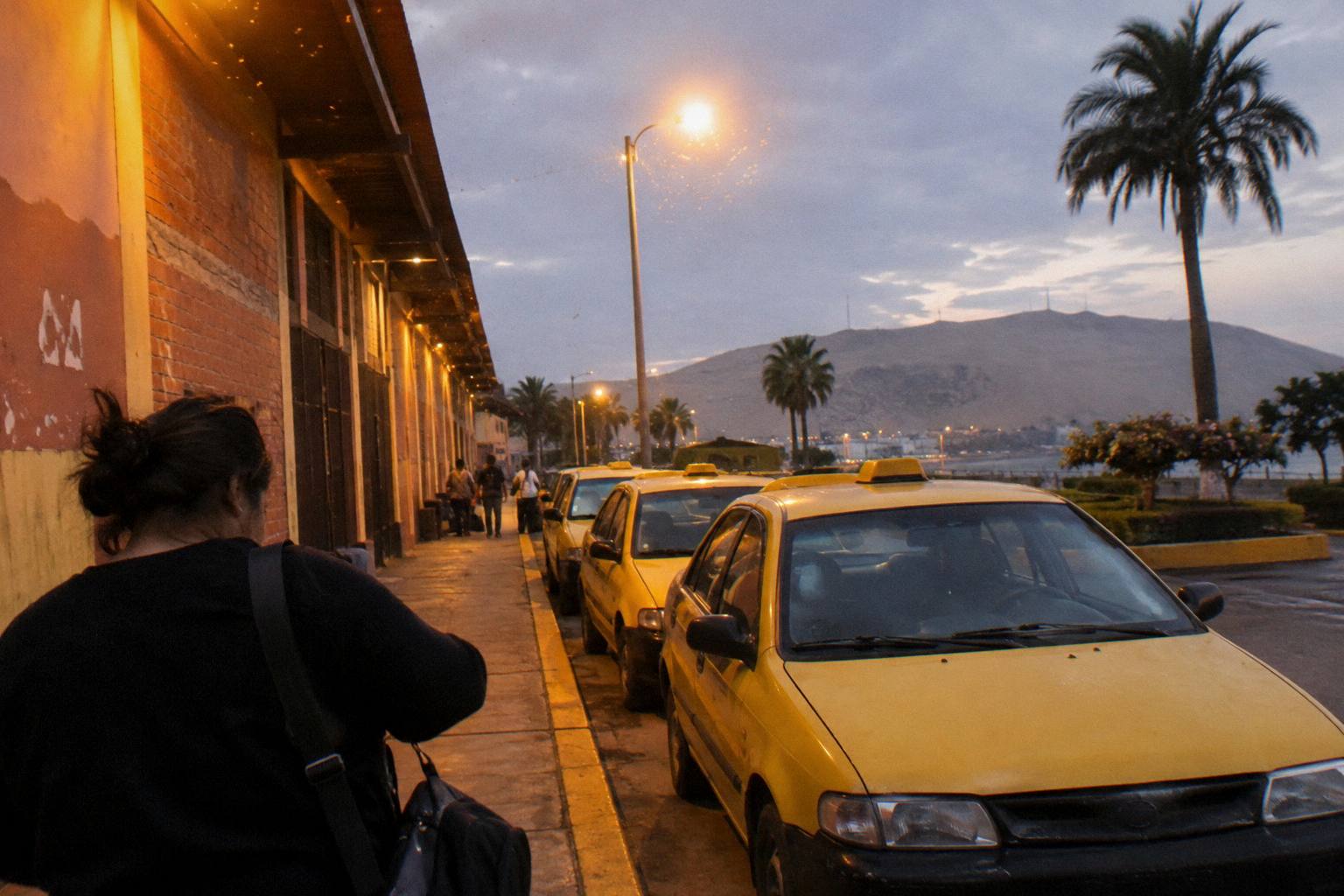
The disruption side is equally specific. The FCDO states that "Political protests in Peru are unpredictable and can escalate quickly" and can lead to roadblocks and suspension of immigration services at land borders, and its instruction is blunt: "Do not attempt to pass blockades." Canada notes that "Roadblocks are frequently erected during demonstrations." SUTRAN's alert map shows closed roads in red, restricted in yellow and open in green, updated as a live service with a 24-hour WhatsApp line, and it is the single best check the day before any long leg. The delays, strikes and roadblocks guide works through the same problem in detail.
None of this advice says shared vehicles are off limits, and none of it should be paraphrased into a verdict this site has no basis to give. What it says is that the moments of transition, terminal forecourts, taxi ranks, kerbs where a van is loading, are where attention pays. That is true in Lima and it is true at a provincial colectivo stand.
Do Shared Vehicles Work For Border Legs?
Shared vehicles do serve some border legs in the region, but the verified record on rules and fares for specific crossings is thin: the Tacna to Arica colectivo fares and rules are not recorded in official sources, and this site prints no fare or schedule for them. What is verified is the border infrastructure itself: the Santa Rosa crossing at Tacna operates around the clock per Peru's migration authority, and the Chilean side publishes its own status.
The honest structure of a border leg is three decisions in sequence: the crossing, the vehicle, the paperwork. The crossing at Aguas Verdes-Huaquillas on the Ecuador side is the main Peru-Ecuador land post, with La Tina and La Balsa as additional points whose status needs checking before you go. The Bolivia side runs through Kasani for Copacabana and Desaguadero further south, where staffing is rotating and standing hours are not published as a year-round rule. On the Chile side, Santa Rosa is the Peruvian post and Chile's official border-status page publishes live crossing information.
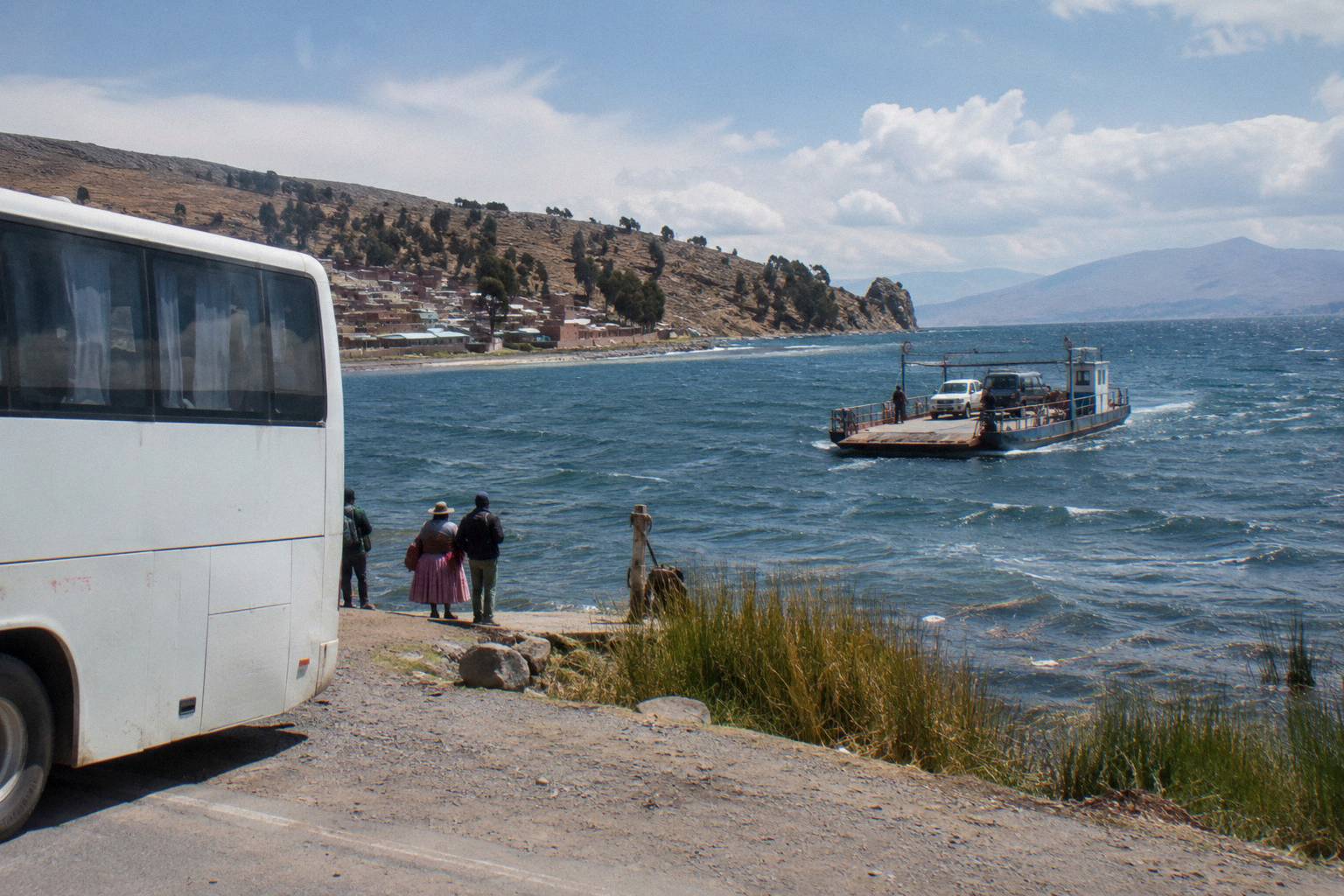
For the vehicle layer, the same rules as everywhere else apply, with an added caution: Canada's advice on Ecuador says to cross only at the official crossing point, and no official page publishes colectivo fares or departure rules for the Tacna to Arica run. Say less, check more. The Tacna to Arica border guide and the Peru to Ecuador border guide carry the full crossing detail.
Paperwork is the layer travellers most often get wrong. The Tarjeta Andina de Migracion is, in Migraciones' own words, a migration-control document "de uso obligatorio" for entering and leaving the CAN countries, and whether a paper form is handed out at a given land post varies, so ask at the post rather than assuming either way. The official TAM explainer at gob.pe is the reference. For tourist stays, print nothing beyond what that official page states, and check your own nationality's terms with the relevant consulate.
| Border leg | Crossing point | What the official record states |
|---|---|---|
| Tacna to Arica | Santa Rosa (Peru) and the Chilean complex | Peru states Santa Rosa operates around the clock; Chile publishes live status on its official page |
| Peru to Ecuador | Aguas Verdes-Huaquillas, with La Tina and La Balsa | Aguas Verdes-Huaquillas is the main crossing; check the others before you go |
| Puno to Copacabana | Kasani (Yunguyo) | Staff work rotating shifts; standing hours not published |
| Puno to La Paz | Desaguadero | Border waits are not part of any drive estimate; check before you go |
Combis As One Layer, Not The Whole Answer
No, treat combis as one layer of your Peru transport plan rather than the whole answer. They knit local movement together, yet stands, fares and departure rhythms are set locally with no official page recording a named route, so pair them with what you can verify: the SUTRAN lookup for any licensed bus and driver, plus the live alert map for the road ahead.
The national regulation gives you the yardstick: authorised boarding points, seated-only capacity, fare receipts, 20 kg of luggage free on national service, terminals for regular carriers. SUTRAN's lookup gives you the spot check on any licensed bus and driver. The alert map gives you the road. Everything else about a combi or a colectivo, the stand, the fare, the rhythm, is local knowledge you acquire on the day, and a page that pretends otherwise is selling certainty it does not have.
Where a leg matters, book the layer that comes with a paper trail. The tourist-bus listings carry named operators, stated drop-offs, durations the listing gives, and free cancellation up to 24 hours before for a full refund. On the Hidroelectrica corridor in particular, where the back door toward Machu Picchu begins, a held seat and a known terminal remove the two variables a shared run leaves open, and the Machu Picchu by Car Vip service, 4.3 across 53 reviews with a 6 hour listing and two rest stops, is the instrument built for exactly that leg, as the Hidroelectrica guide lays out.
Plan in layers and the country opens up. Long legs on licensed carriers from terminals, connectors in shared vehicles where the stakes are low, booked tourist buses where the leg is long and the drop-off matters, and the official check tools, the SUTRAN lookup and the alert map, as the habit that ties the layers together. More on structuring a full trip that way sits in how to get around Peru by bus, and the planning pages linked from Peru By Bus carry the corridor-by-corridor detail.
Common Questions About Combis And Colectivos In Peru
What Is A Combi In Peru?
A combi is a shared minivan running a fixed short route, boarded along the way, with fares and stands set locally by the city or region. Licensed service falls under the national transit regulation's rules on boarding points, seated-only capacity and fare receipts, but no national source publishes combi fares or schedules.
What Is The Difference Between A Colectivo And A Combi?
A combi works a fixed urban route with stops, like a small bus. A colectivo covers a specific point-to-point leg, filling at a departure point and leaving when full, like a pooled car. In practice the words blur, and both are local services whose fares and stands vary by region.
How Can I Check Whether A Bus Or Driver Is Legitimate?
SUTRAN's public lookup at gob.pe/11146 answers by vehicle plate or driver document number whether papers are in order, with a 24-hour phone line and WhatsApp reporting line alongside. It takes a minute from a phone and works on any licensed bus.
Is Standing Allowed On Licensed Buses In Peru?
No. The national transit regulation states that a licensed vehicle carries no more passengers than the manufacturer's seat count, with everyone seated, and boarding happens only at authorised points with the vehicle stopped.
Can A Domestic Bus Ticket Be Changed In Peru?
INDECOPI states that a domestic bus ticket can be postponed or transferred with at least 24 hours notice, with only the real cost of reissue charged and no penalty, and that company-caused delay or non-compliance gives the passenger the right to rebooking or a refund.
Do Shared Vans Serve Border Crossings Like Tacna To Arica?
Shared vehicles do serve some border legs, but no official source publishes colectivo fares or rules for the Tacna to Arica run, so this site prints none. The Santa Rosa crossing operates around the clock per Peru's migration authority, and Chile publishes live border status on its official page.