
Lima To Tarapoto By Bus: The Jungle Highway Routes
Tarapoto sits in the high jungle of Peru, and the bus there from Lima is a long mountain descent. This guide sets out what is confirmed on operator and official pages, and what has to be read from the operator at booking time.
Short answer
Movil Bus lists Tarapoto among its routes on its own page, with boarding points in Lima that include the Terrapuerto del Norte. No verified distance, driving time, terminal-at-arrival or fare for Lima to Tarapoto exists, so routing, duration and price must be read from the operator's own listing before travel.
Is There A Direct Bus From Lima To Tarapoto?
Yes, in the sense that one operator publishes the pairing: Movil Bus lists Tarapoto among its routes on its own page, alongside Lima, Huaraz, Chiclayo, Trujillo, Chachapoyas, Cajamarca and Oxapampa. What no official or operator page confirms is the shape of the run: no distance, no driving time, no arrival terminal and no fare for Lima to Tarapoto exists, so those details have to be read from the operator at booking time rather than assumed.
That last sentence is unusual on a route guide, and it deserves to be said plainly. Long-distance bus information in Peru changes with the season, the road and the operator's own timetable decisions, and a page that printed a firm hour or a firm price for this run would be guessing. This guide does the opposite: it separates the small set of facts an operator or a government body has actually published, from the questions a traveller must put to the operator directly.
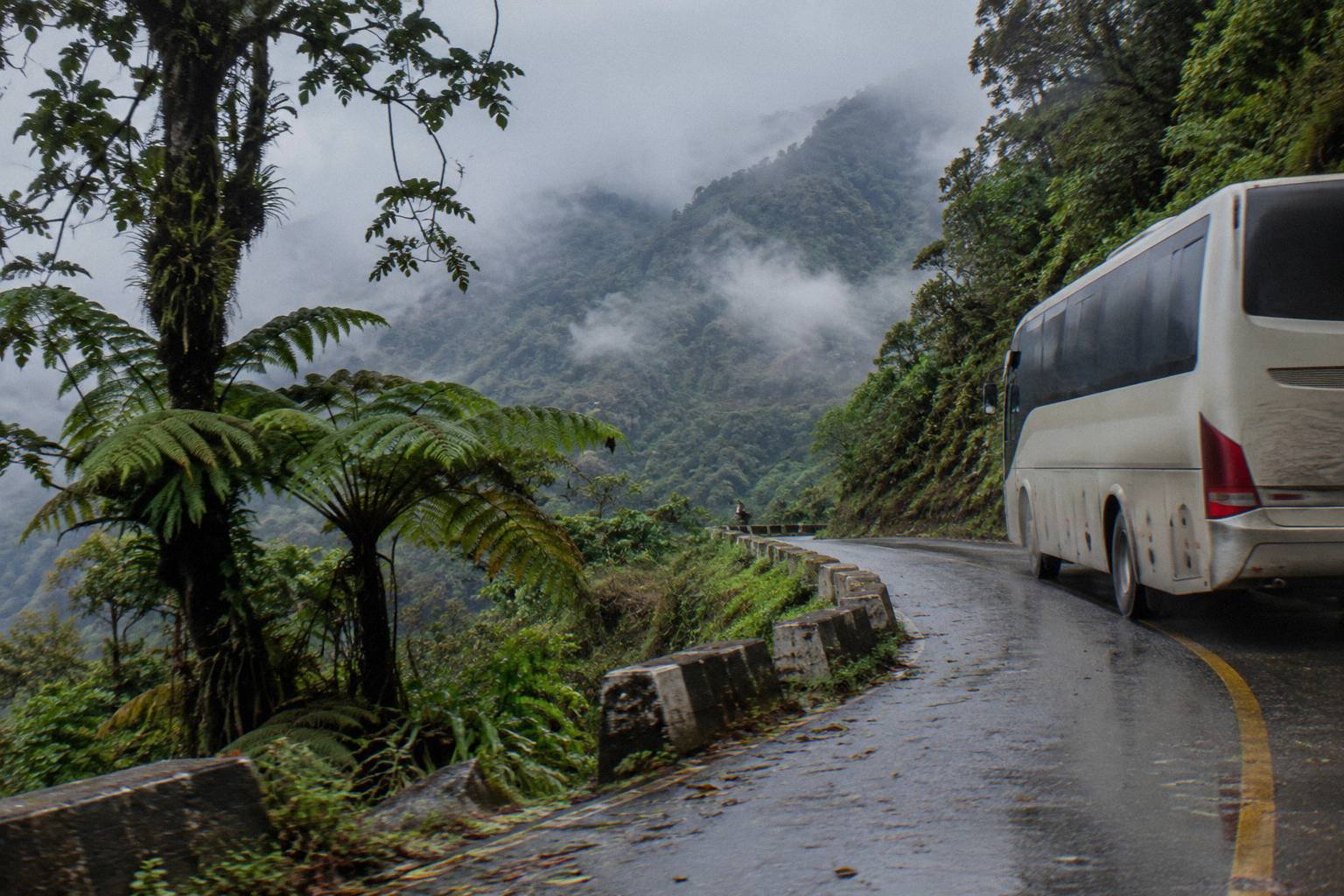
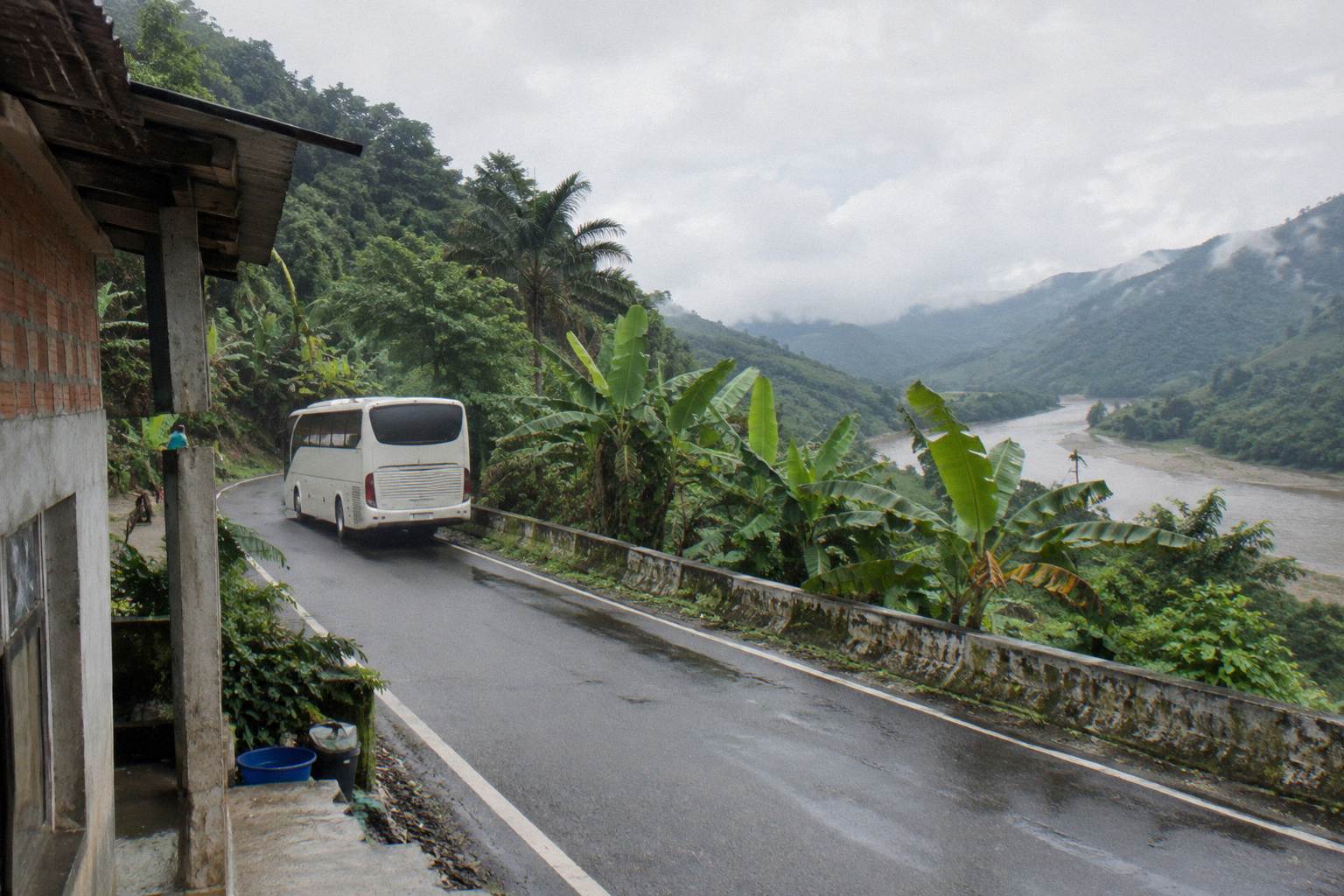
Geographically, Tarapoto is the commercial hub of the San Martin region, in the high jungle on the eastern slope of the Andes, at 204 m above sea level according to INEI's statistical compendium. Every surface route from Lima to the selva alta climbs out of the coastal desert, crosses the Andes, and descends again into rain-forest country, which is why the journey is long and why the road, not the bus, sets the pace. For a fuller picture of how Peru's long-distance network works at the ticket and terminal level, read the how Peru bus travel works guide.
Movil Bus's own route list is the anchor fact here. Its pages concentrate on Lima to Huaraz, Chiclayo, Trujillo, Chachapoyas, Cajamarca, Tarapoto and Oxapampa, a northern and jungle-oriented network rather than a southern one. For that reason the planning questions below lean on Movil Bus's published service pages, plus the national rules that apply to any licensed interprovincial carrier in Peru.
| Question about the route | What is confirmed | Where to confirm the rest |
|---|---|---|
| Does an operator publish Lima to Tarapoto? | Movil Bus lists Tarapoto among its routes | The operator's own routes page |
| Is there a distance? | No published figure for this pair | Ask the operator at booking |
| Is there a journey time? | No published figure for this pair | The operator's timetable |
| Is there a fare? | No fare is printed | The operator's booking flow |
| Is Tarapoto at altitude? | 204 m, INEI compendium | Altitude is not a concern at the destination |
Which Bus Company Runs Lima To Tarapoto?
Movil Bus is the operator this guide can name with attribution for the Lima to Tarapoto route, since it lists Tarapoto on its own service pages, which describe GPS monitoring, controlled speed, seat classes from 120-degree recline up to a 180-degree full-flat seat on the upper level of its top class, and a 20 kg hold plus 8 kg cabin luggage allowance.
The class structure on Movil Bus's own blog page is specific enough to plan a seat choice around. The Economico class reclines 120 degrees; Ejecutivo VIP offers 140 or 160 degrees depending on the service; Presidencial reclines 160 degrees; and the Premier class combines 160 degrees on the first level with a full-flat 180-degree bed on the second. Those figures are the operator's own, printed on its page, and they matter more on a mountain crossing than on a flat coastal express, because the Lima to Tarapoto run crosses high ground before dropping into the jungle.
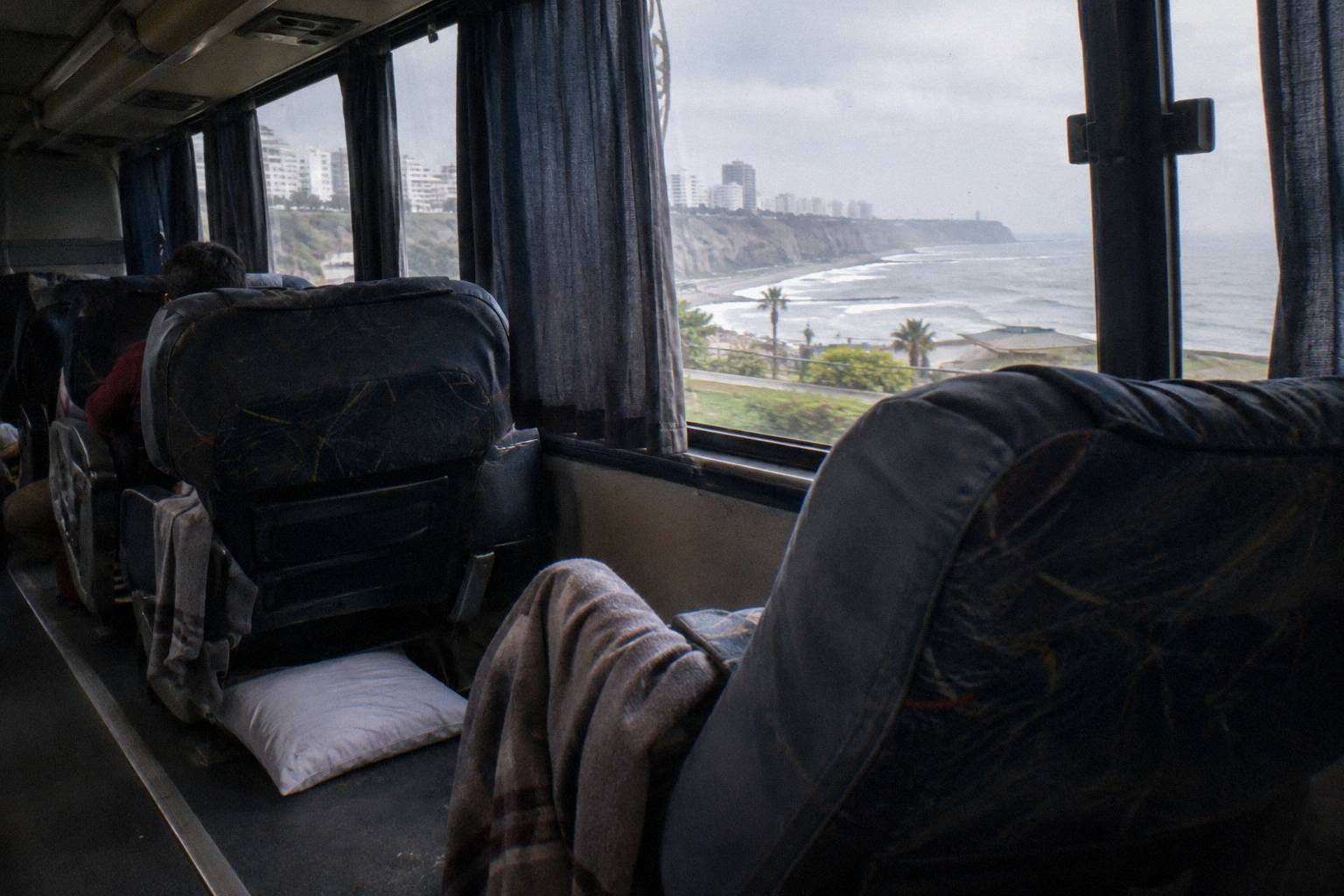
Safety equipment on the same operator's pages is described as GPS position monitoring with speed control. That sits on top of the national framework: Peru's transit regulation requires buses to carry wireless control and monitoring that transmits to the authority permanently, seat belts at every seat with a minimum two-point fit, and a crew announcement that belts are mandatory. SUTRAN, the national transport regulator, also publishes a public lookup where any bus and driver can be checked by plate number or driver DNI before travel, a step worth two minutes on any long jungle run.
For travellers assembling a bigger northern trip, the same operator family of routes connects to the guide covering buses from Lima to Huaraz, and the north coast Trujillo, Chiclayo and Mancora guide covers the coastal half of the network. A ticketed product that leaves from Lima's airport side and runs north to the Huaraz gateway is the First Class Huaraz bus ticket from Lima to Huaraz, sold from US$50 per person on its listing, a useful benchmark for what a booked northern long-haul seat with hotel pickup on request looks like on paper. You can also check the Huaraz bus ticket availability or check availability before the jungle leg of the trip.
Where In Lima Does The Tarapoto Bus Leave From?
Movil Bus lists three Lima boarding points on its own page: Av. Tomas Valle 651 at the Terrapuerto del Norte in San Martin de Porres, Nicolas Arriola 740 in La Victoria, and Av. Paseo de la Republica 767. Which of the three a Tarapoto service uses is a timetable question, so check it at booking rather than assuming.
The Terrapuerto del Norte at Tomas Valle matters for anyone landing at Jorge Chavez International Airport, because it sits on the north side of Lima, facing the direction a jungle-bound bus travels. The La Victoria points sit closer to the historic centre and the hotel districts. Deciding between them is a decision about traffic across a city of ten million people, and the honest answer is that neither choice is verifiably faster from a given hotel: Lima's congestion varies by hour, and no measured transfer time belongs on a page like this.
Getting from the airport to a terminal is its own small decision, and one ticketed product covers it directly: the Airport Express Lima bus from the airport to Miraflores, an air-conditioned luxury bus per its listing, sold from US$6.5 per person, with a listing duration of about one hour and free cancellation up to 24 hours before. It reaches Miraflores rather than the northern terrapuerto, so it suits a traveller spending a night in the capital before the jungle leg rather than one connecting on the same day.
Taxi choice at terminals carries a specific official warning. The UK FCDO states: "There is a risk of robbery by criminals posing as taxi drivers, especially at Jorge Chavez International Airport and bus terminals", and advises travellers to "use one of the taxis registered at bus terminals". Canada's advice runs the same way: "Only use authorized cabs located inside airport terminals and bus stations" and "Remain particularly vigilant at bus terminals and in taxis". Both advisories are published on the FCDO's Peru safety page.
| Movil Bus Lima boarding point | Address as listed by the operator |
|---|---|
| Terrapuerto del Norte, San Martin de Porres | Av. Tomas Valle 651 |
| La Victoria | Nicolas Arriola 740 |
| La Victoria (Paseo de la Republica) | Av. Paseo de la Republica 767 |
For context on how terminals work across the country, including why Peru has no single main terminal per city, the Peru bus terminals by city guide lays out the pattern.
How Long Is The Lima To Tarapoto Bus Ride?
No duration for the Lima to Tarapoto bus ride is printed because none exists, and the route crosses the Andes on mountain roads, so no estimate would hold for a scheduled bus anyway. For actual duration, departure times, and arrival times, check the operator's timetable when you book.
It helps to understand why the honest answer is this thin. A driving estimate measures a car on an empty road. A jungle-bound bus adds mountain gradients, fog, rain, cargo loading, a driver-change pause and the terminal routine, and on high-mountain roads the regulation itself shapes the schedule: continuous driving is capped at 5 hours by day or 4 at night, with a second driver required beyond that, which is why long Peruvian runs stop rather than press on. Any published hour that ignores all of that is decoration.
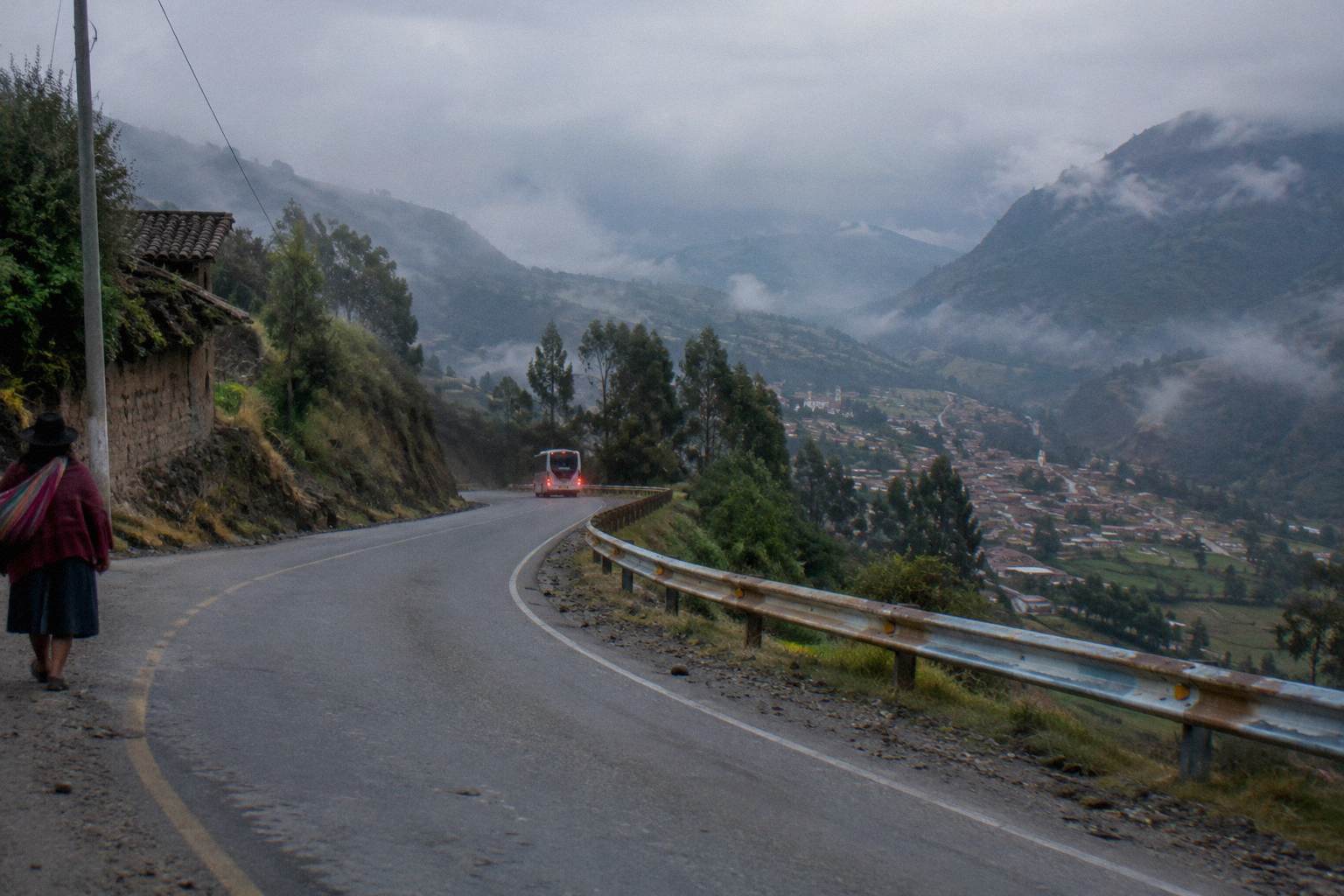
What can be said is comparative and structural. Movil Bus's published network pairs Tarapoto with the northern cities it also serves, which means a typical routing heads north along the Pan-American Highway before turning east into the mountains, rather than crossing the central range directly. The exact road, the pass and the stops are read from the operator, and this guide declines to invent them. For scale only, the free-flow drive estimate for Lima to Huaraz, a shorter and fully paved northern mountain run, is 402 km and 5.5 hours, and real buses take well beyond that.
Two planning consequences follow. First, treat any third-party website quoting a single firm duration for Lima to Tarapoto with suspicion, because operators themselves present the schedule as timetable data, not a fixed constant. Second, plan connections loosely: if a flight lands the same day a jungle bus might leave, the safe structure is a night in Lima and a next-day departure, which also answers the night-travel advice in a later section.
What Is The Bus Like, Seats And Classes?
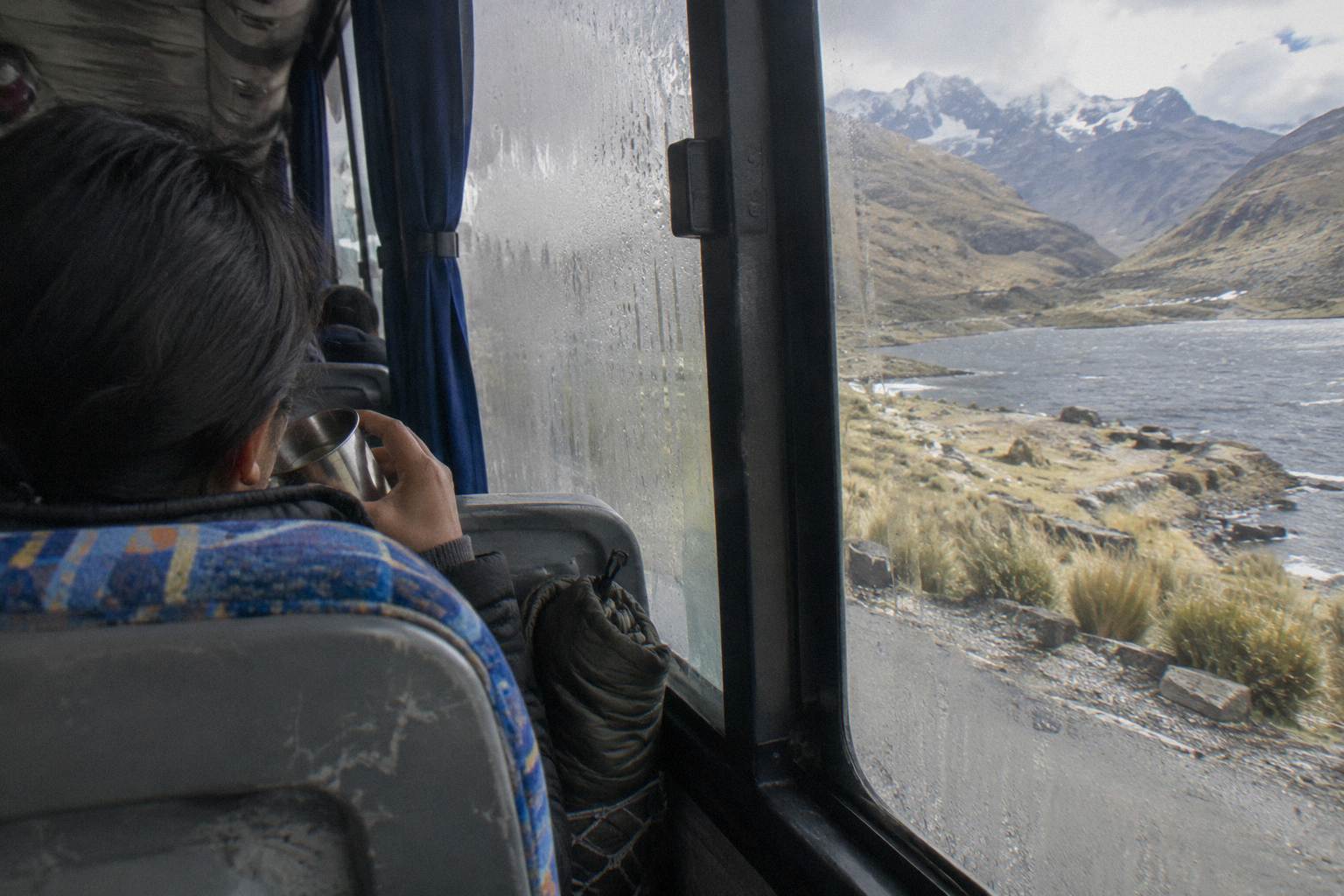
Movil Bus offers classes ranging from a 120-degree reclining Economico seat up to a Premier upper level with a 180-degree full-flat bed, with GPS monitoring and speed control; which class runs the Tarapoto service depends on the specific departure, since operators assign classes per service, not per route, while national rules require seat belts at every seat, belt announcements by the crew, and permanent GPS transmission to the transport authority.
The recline numbers deserve a plain explanation, because they drive price differences across Peru's fleet. A 120-degree seat is an upright coach seat with a deep lean; 140 degrees approaches a lounge angle; 160 degrees is the semi-cama standard that most long-haul travellers choose; and 180 degrees is a flat bed, sold in Peru as cama or full flat. On a mountain-and-jungle run of this length, the difference between 140 and 160 degrees is the difference between arriving rested and arriving crumpled, and the operator's class chart lets a traveller decide what that is worth before paying. More of these guides are collected on Peru By Bus.
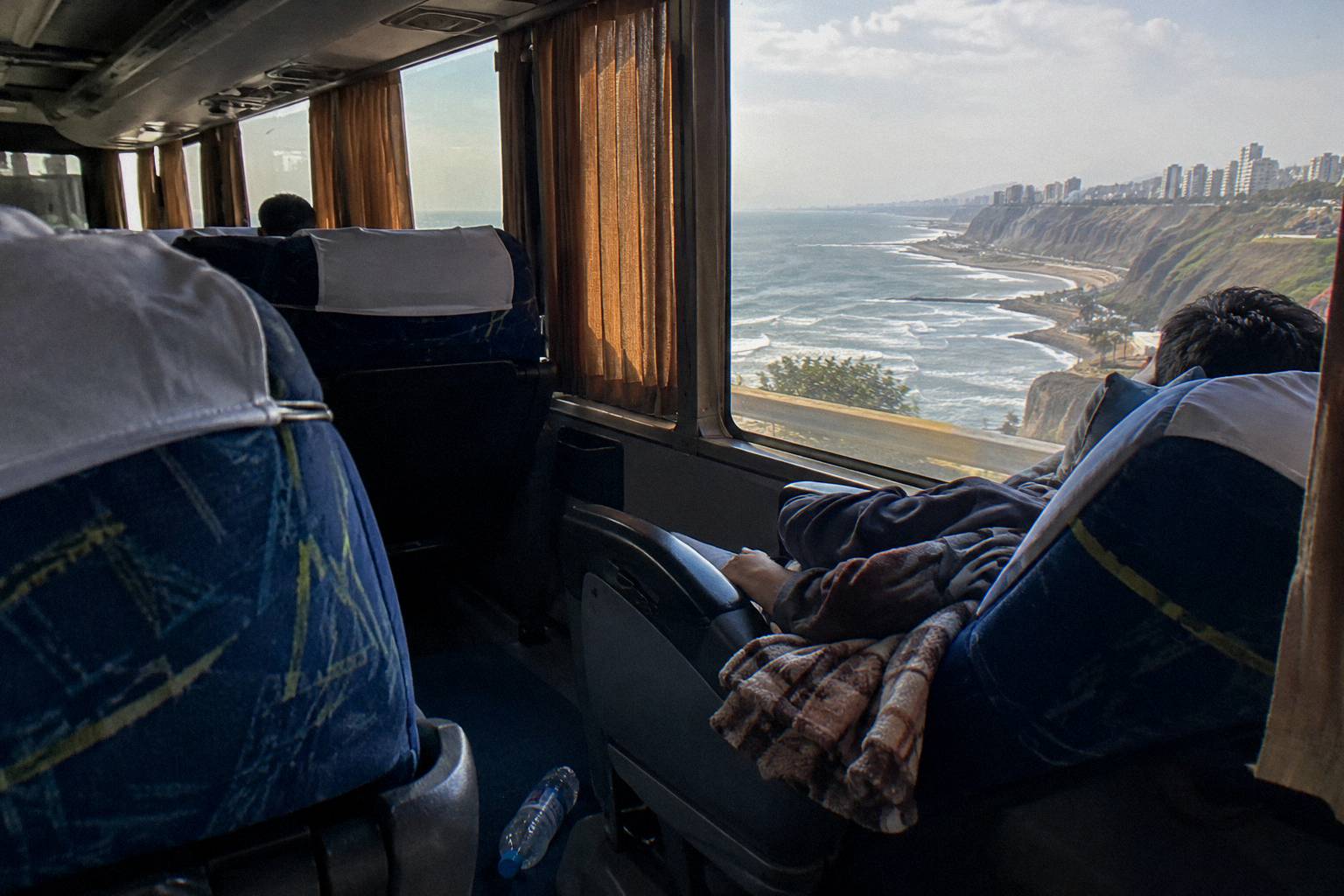
Peru's regulation backs the equipment claims with requirements rather than marketing. The national transit framework requires a speed limiter that prevents a bus exceeding 110 km/h, a device rule that sits under the traffic limit, and SUTRAN states that the 90 km/h ceiling for interprovincial buses applies only on roads without any other speed sign. Crews must announce that belts are mandatory, and buses carry recording of passenger boarding at the operator's discretion in some terminals, a measure Cruz del Sur lists on its own comfort page as part of its terminal routine.
The broader comparison of what each Peruvian operator offers class by class, including which companies publish recline degrees and which do not, is laid out in the Peru bus classes explained guide and the head-to-head comparison of Cruz del Sur, Oltursa, Civa and Movil Bus. On Movil Bus specifically, the published luggage allowance is 20 kg in the hold across up to three pieces and 8 kg in the cabin across up to two, which the next section unpacks.
How Much Luggage Can You Bring On The Tarapoto Bus?
Expect 20 kg of hold luggage plus 8 kg of hand luggage on the Tarapoto bus: Movil Bus permits 20 kg in up to three checked pieces and 8 kg in up to two carry-on pieces, Peru's national transit regulation likewise grants 20 kg free on national service, and bags must travel in the hold or overhead racks, with SUTRAN advising a luggage ticket for each checked bag.
Jungle travel adds a practical wrinkle that coastal runs do not have. Tarapoto's climate is warm and wet year round, so the packing problem is less about bulk than about what survives a long bus ride in a hold: sealed bags, valuables in the cabin, and nothing fragile checked. The regulation sets a minimum compensation for loss or damage caused by the carrier's fault, calculated as a percentage of the fare scaled by weight band, which is a floor, not a promise, and the practical protection is the luggage ticket and the receipt.
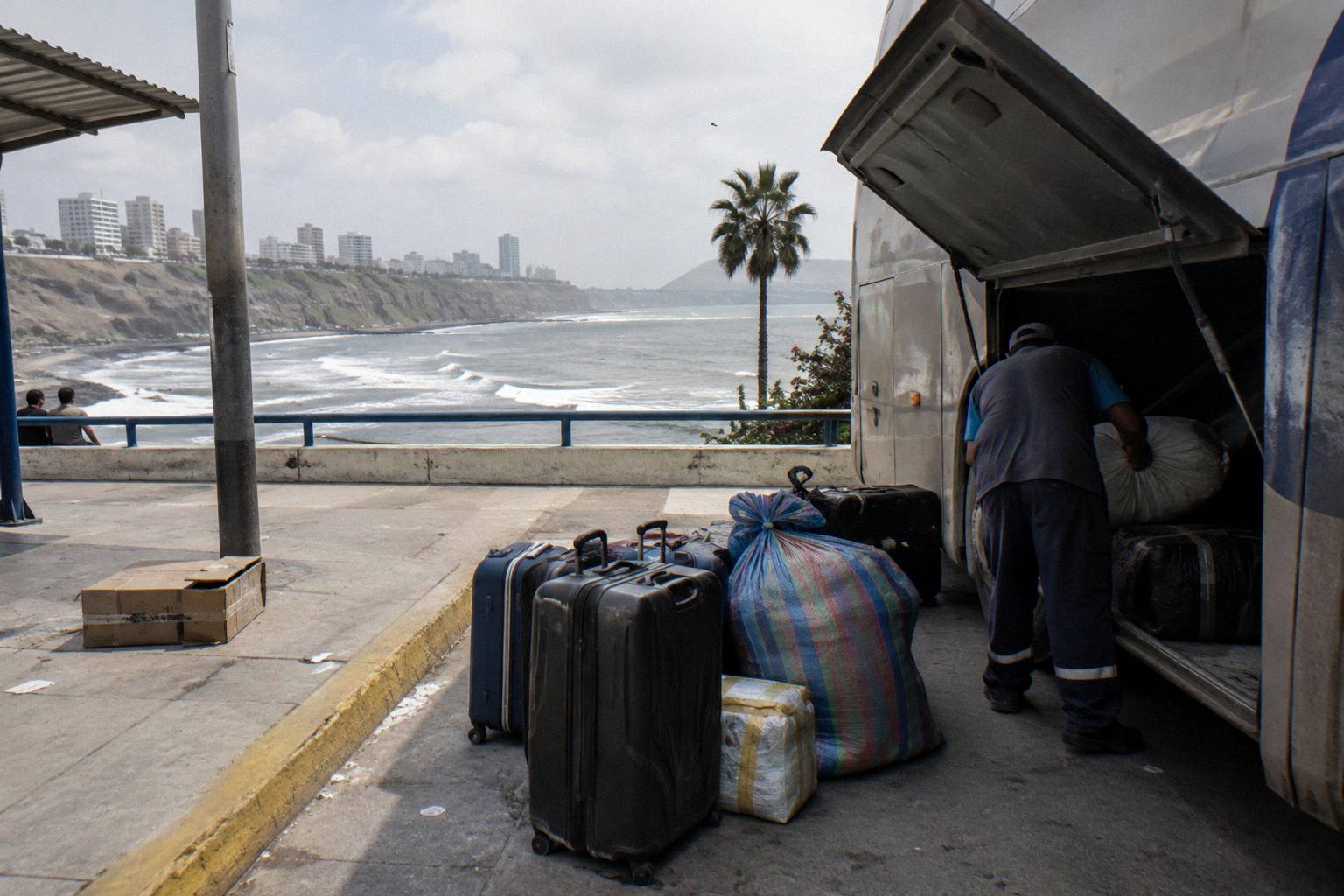
Theft prevention is covered in detail in the Peru bus luggage and theft guide, but the headline official advice belongs here too. Smartraveller warns of "theft as you sleep on intercity bus routes between Lima, Ica, Nazca and Cusco" and of "robberies and assaults occur frequently on intercity buses, including while passengers are sleeping", advice that applies to any long Peruvian run, including a jungle crossing. The FCDO's instruction for any bus journey is simple: "on bus journeys, keep your passport with you".
| Allowance | Movil Bus | National rule |
|---|---|---|
| Hold luggage | 20 kg, up to 3 pieces | Up to 20 kg free on national service |
| Hand luggage | 8 kg, up to 2 pieces | Must fit racks, never the aisle |
| Documentation | Operator luggage ticket advised | Fare receipt is the passenger's right |
| Liability | Carrier-fault minimum set by regulation | Scaled share of the fare by weight band |
Is The Lima To Tarapoto Bus Ride Advised Against At Night?
Yes, official guidance advises against it. Canada's travel advice says "Avoid taking buses and coaches at night", while the UK FCDO states that "Bus crashes are common, especially at night" and recommends avoiding overnight travel in mountainous and remote regions where possible. Since Lima to Tarapoto is a mountain-and-jungle route, a daylight departure is what the advice points to, and whether it is possible depends on the operator's schedule at booking.
The full Canadian wording names the causes: "Intercity bus travel can be dangerous due to the risk of bus accidents, which are usually caused by excessive speed, poor vehicle maintenance and driver fatigue. Armed gangs have been known to stop buses to rob travellers, especially at night." The FCDO adds that "armed robbers sometimes hold up provincial and inter-city buses", and Smartraveller reports "bogus roadblocks or checkpoints on roads outside major cities after dark". The Government of Canada's Peru advisory carries the complete text.
One nuance is worth reading precisely. The US Embassy in Lima, republishing the State Department advisory at Level 2, Exercise Increased Caution, notes that US government employees "may travel at night with commercial bus companies along the Pan-American Highway, to Huaraz, and on the Lima-Arequipa-Cusco corridor", which tells a reader where the American government draws its own line: named corridors with commercial carriers, not remote jungle roads. Tarapoto is not on that list.
How Do You Buy And Change A Lima To Tarapoto Ticket?
Buy your Lima to Tarapoto ticket directly from the bus operator's own sales channel, and change it under INDECOPI's consumer rule: with at least 24 hours' notice, a domestic bus ticket can be postponed or transferred, paying only the real cost of reissue with no penalty, and if the company delays or fails to operate the service, you are entitled to information plus reprogramming or a refund, with complaints filed through INDECOPI's Reclama Virtual portal.
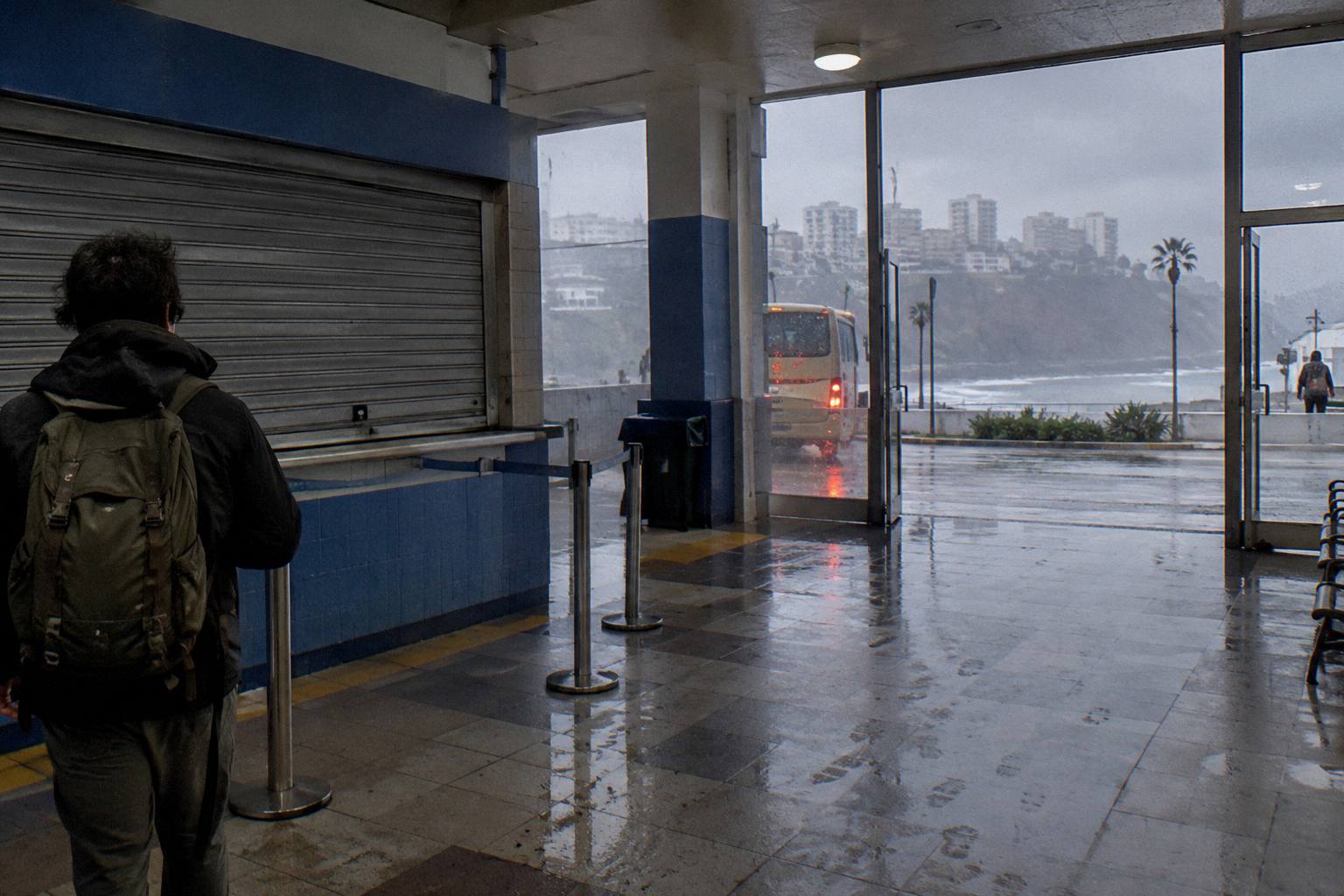
The booking mechanics matter as much as the rule. Bus tickets in Peru are issued against a name and a document number, so a passport is needed at purchase, and the boarding routine at terminals involves document checks that operators like Cruz del Sur describe on their own pages, including identification control. Online sales windows close ahead of departure on some carriers, and a seat is only guaranteed by a ticket, not by a conversation, which is why buying before arriving at the terrapuerto is the pattern the whole system is built around.
For the payment and ticketing process in general, including what to check on a ticket before leaving the counter, the Peru bus tickets booking guide walks through it step by step. If a dispute does arise at the terminal, every carrier must keep a Libro de Reclamaciones, the official complaints book, and must answer within 15 working days; INDECOPI's Reclama Virtual portal takes the complaint further when the book fails.
What Should You Do If The Road To Tarapoto Is Blocked?
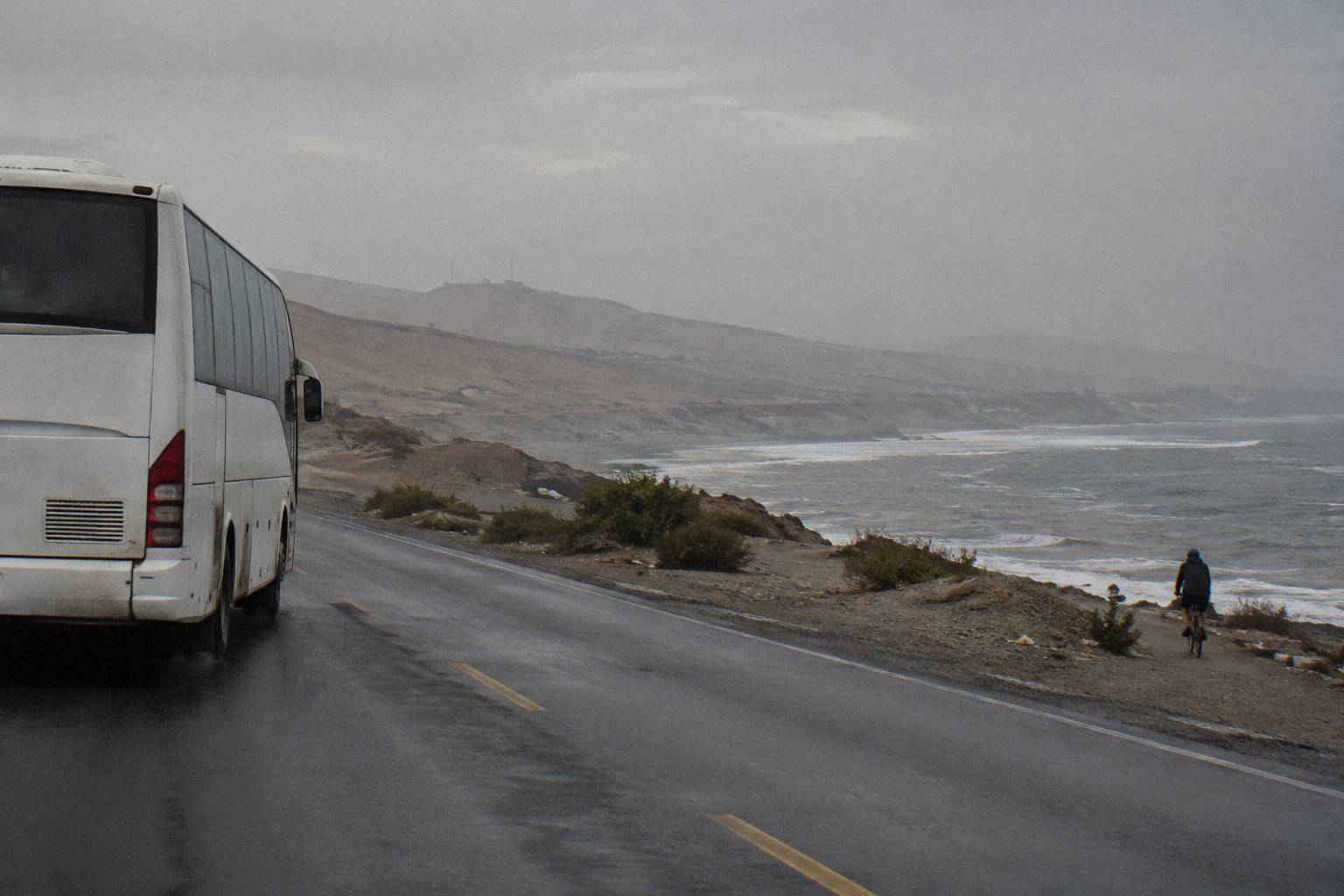
Before leaving Lima, check SUTRAN's interactive alert map, where blockades and closures appear as live points marked red for closed, yellow for restricted and green for open; if you meet a blockade on the Tarapoto road, the FCDO's instruction is blunt: "Do not attempt to pass blockades." Strikes can be called at short notice and may also close land borders, so confirm conditions again on the day you travel.
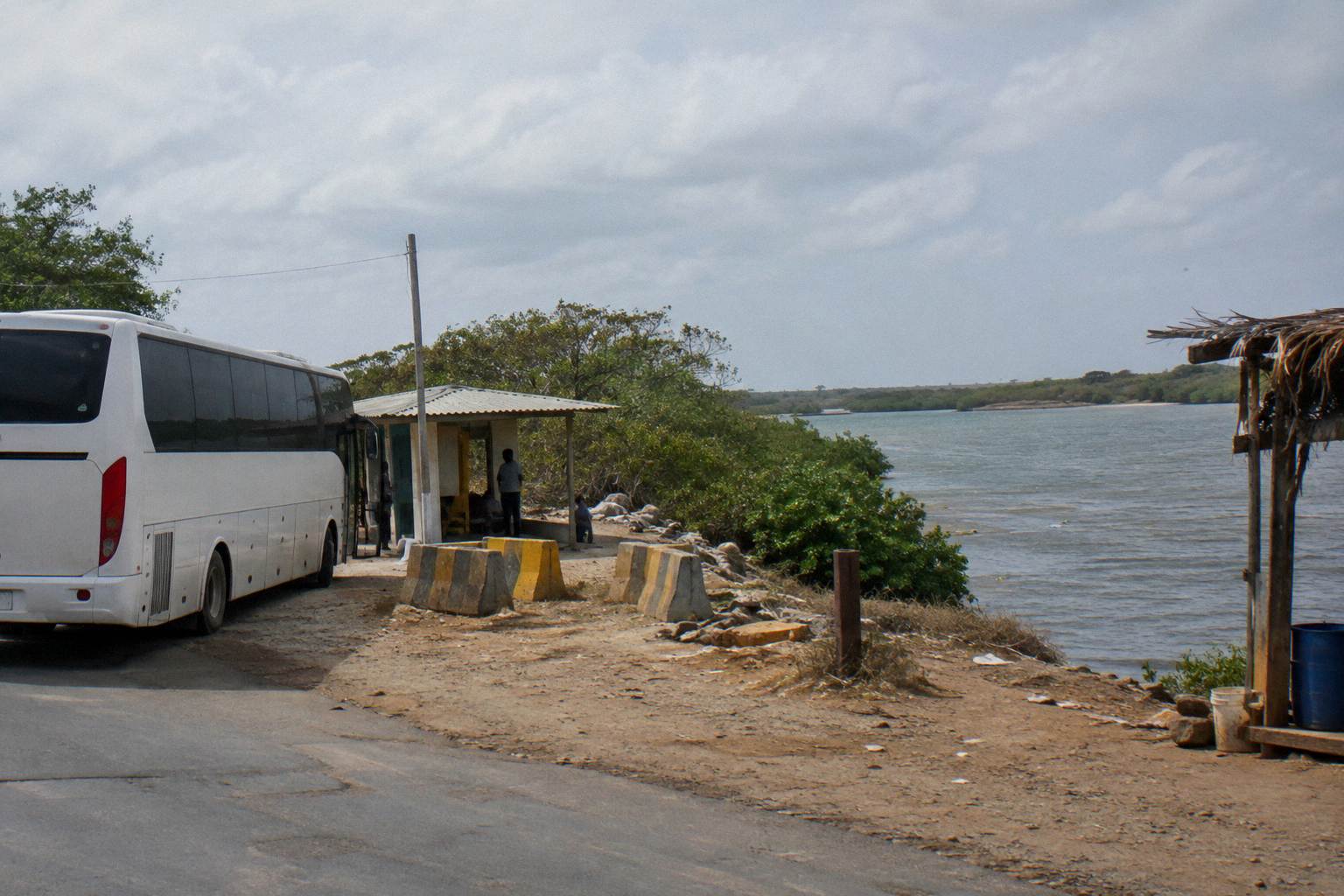
The jungle access roads are exactly the kind of route where a blockade bites, because alternatives are few and detours long. SUTRAN's map is the one official source that shows the live state of a road, and the regulator also runs a 24-hour WhatsApp line for reporting and checking. Weather compounds the political risk: the Andean and jungle rainy season runs roughly September to April, and the FCDO's current notice on the El Nino event states that "through late 2026 to April 2027, the El Nino weather event is expected to generate heavy rainfall, possible flooding, landslides, and mudslides, especially in, but not restricted to, the northern and central coast. These could cause travel disruption, such as road closures". The SUTRAN alert map and the FCDO Peru advisory are the two pages to read the day before departure.
If a trip collapses because of a closure, the passenger rights in the ticket section apply: a right to information, and to reprogramming or a refund where the company fails to operate. The practical sequence is the terminal counter first, the complaints book second, INDECOPI third. The full playbook, including what to do when a bus is stopped mid-route, sits in the guide to Peru bus delays, strikes and road blocks.
One coastal option rounds out the picture for travellers pairing a jungle trip with Peru's southern circuit: the Wayki Bus one-way tourist bus from Miraflores to Paracas, rated 4.2 across 62 reviews, with a listed duration of 3 hours and free cancellation up to 24 hours before, is the kind of short, cancellable leg that fits around a fixed-date jungle departure.
A route with no timetable attracts invented ones, and the test is attribution: an operator's own page, a regulator's page or a government advisory can be named and checked, and anything else cannot.
Common Questions About The Lima To Tarapoto Bus
Is There A Direct Bus From Lima To Tarapoto?
Movil Bus lists Tarapoto among its routes on its own page, which is the one published confirmation of the pairing. Whether a given service runs without a change, and on which road, is timetable information read from the operator at booking.
How Long Does The Bus From Lima To Tarapoto Take?
No duration exists for this pair, and none is printed here. The crossing goes from coastal desert over the Andes into the jungle, and the operator's own timetable, not a driving estimate, is the source for duration.
How Much Does A Lima To Tarapoto Bus Ticket Cost?
No fare for this route is published on any page for this guide. Prices are read from the operator's booking flow at the moment of purchase, and they vary by class and by date.
Which Bus Company Goes To Tarapoto?
Movil Bus names Tarapoto in its published route list, alongside Lima, Huaraz, Chachapoyas and other northern and jungle destinations.
Is It Safe To Take The Bus To Tarapoto At Night?
Official advice says to avoid it: Canada states "avoid taking buses and coaches at night", and the UK FCDO states that bus crashes are common especially at night and advises avoiding overnight travel in mountainous and remote regions where possible. A daylight structure is what the advisories point to.
How Much Luggage Can I Take On The Tarapoto Bus?
Movil Bus allows 20 kg in the hold across up to three pieces and 8 kg of hand luggage across up to two, per its own page, matching the national 20 kg free allowance on national service. SUTRAN advises taking a luggage ticket for each checked bag.